Asphalt vs Concrete Driveways: Advantages and Disadvantages
By Housey · Last reviewed 17th of May 2026
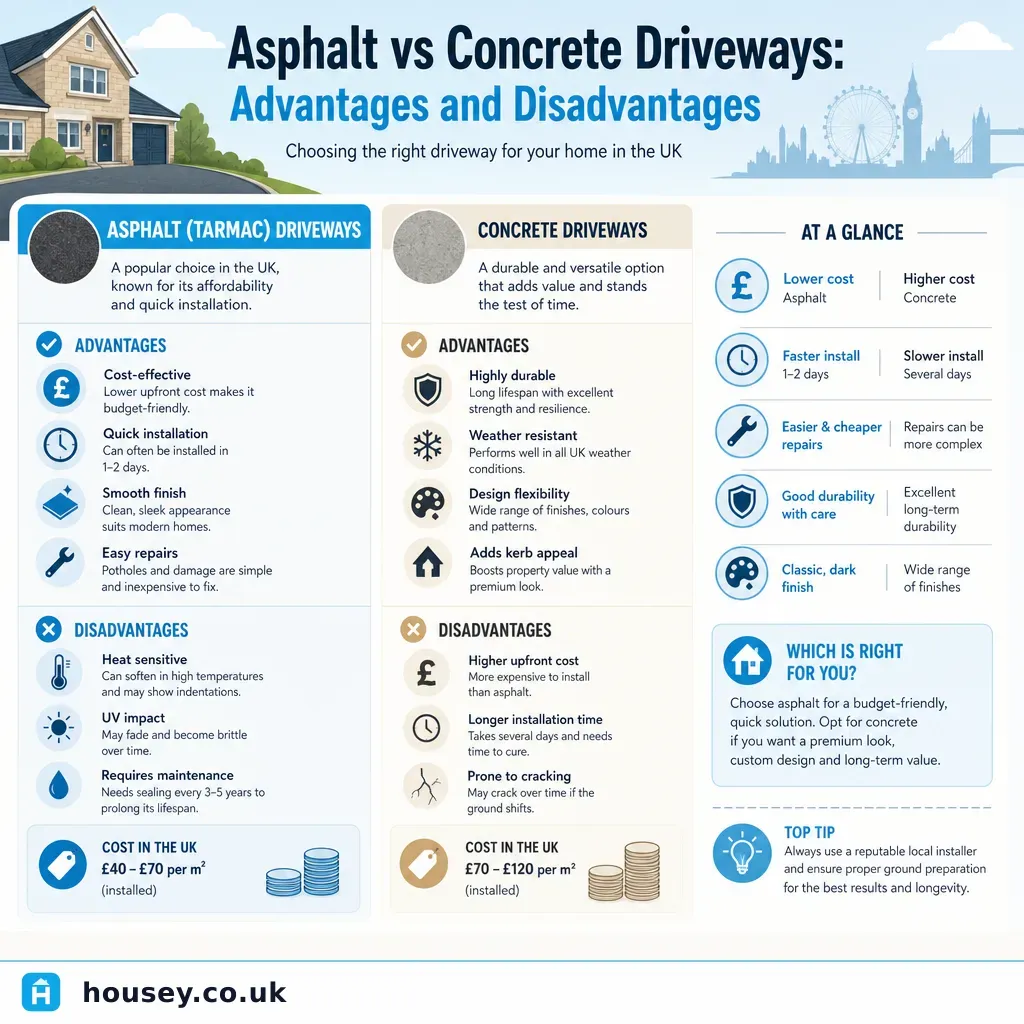
Asphalt vs Concrete Driveways: Advantages and Disadvantages
A new driveway is one of the most visible improvements you can make to a home's exterior, and the material you choose will determine how it looks, performs, and costs to maintain for the next two to three decades. Whether you are replacing a crumbling tarmac surface or laying hardstanding for the first time, understanding the differences between asphalt and concrete — alongside important UK drainage planning rules — will help you choose and budget with confidence.
Key points
- Any new driveway over 5 sq m that drains surface water towards the highway in England requires planning permission, unless the surface is permeable — a rule in force since 2008 under permitted development amendments.
- Asphalt (tarmac) driveways typically cost £40–80 per sq m installed; concrete driveways typically cost £50–100 per sq m (indicative UK costs, last reviewed 2026-05-17; quotes vary by size, access, and specification).
- Asphalt can be driven on within 24–48 hours of installation; concrete requires at least 7 days before light vehicle use and up to 28 days for full curing strength.
- Asphalt can soften in prolonged heat and is susceptible to oil staining; concrete can crack under freeze-thaw cycles if the mix specification or sub-base preparation is poor.
- Permeable alternatives such as resin-bound gravel and permeable block paving satisfy sustainable drainage (SuDS) requirements and avoid the need for planning permission for impermeable surfaces over 5 sq m.
Asphalt (tarmac) driveways: advantages and disadvantages
In the UK, asphalt driveways are almost universally referred to as tarmac or macadam — the terms are broadly interchangeable in a domestic context, though the bituminous mix specifications differ slightly. Most standard residential driveways use a hot-rolled asphalt or macadam surfacing system laid over a compacted aggregate sub-base.
Advantages:
- Lower upfront cost than concrete: typically £40–80 per sq m installed (indicative UK costs, last reviewed 2026-05-17)
- Quick turnaround: installation usually takes one to two days; vehicles are typically usable within 24–48 hours
- Flexible and resilient: asphalt flexes slightly under load, which reduces cracking from minor ground movement
- Repairs blend in reasonably well, making surface maintenance easier over time
- Dark colour absorbs heat and can help clear ice and snow more quickly in winter
Disadvantages:
- Can soften and deform in prolonged hot weather, particularly at temperatures above approximately 35°C
- Susceptible to petrol and oil staining; spills can soften the surface locally
- Requires resealing every 3–5 years to maintain weather resistance and appearance
- Limited aesthetic range compared with concrete or block paving — though coloured asphalt is available at a premium
- Typical lifespan of 20–30 years with proper maintenance
Concrete driveways: advantages and disadvantages
Concrete driveways are less dominant in the UK residential market than in North America, but they have grown in popularity as homeowners seek longer-lasting, more visually varied surfaces. Brushed, exposed-aggregate, stamped, and polished concrete finishes are all available from UK contractors.
Advantages:
- Long lifespan: a well-laid concrete driveway with a proper sub-base can last 25–40 years or more
- Very low ongoing maintenance once cured: no resealing required; jet-washing keeps it clean
- Greater design variety: brushed, stamped, polished, and exposed-aggregate finishes give more visual options
- Does not soften in heat and handles heavy vehicle loading well
- Higher perceived finish quality can contribute to kerb appeal and perceived property value
Disadvantages:
- Higher upfront cost: typically £50–100 per sq m installed; decorative finishes cost more (indicative)
- Long curing time: 24–48 hours before foot traffic, 7 days before light vehicles, 28 days for full strength
- Cracks can appear from ground movement or freeze-thaw cycling; concrete repairs are noticeable and difficult to blend
- Oil and rust stains are harder to remove than on asphalt
- Standard concrete is non-permeable, which has drainage planning implications (see below)
Asphalt vs concrete: side-by-side comparison
Feature | Asphalt (Tarmac) | Concrete |
|---|---|---|
Typical installed cost per sq m | £40–80 | £50–100 |
Usable after installation | 24–48 hours (vehicles) | 7–28 days (vehicles) |
Typical lifespan | 20–30 years | 25–40+ years |
Ongoing maintenance | Reseal every 3–5 years | Very low — periodic cleaning |
Hot weather performance | May soften above ~35°C | Unaffected |
Frost/freeze-thaw performance | Flexible; lower crack risk | Can crack if poorly specified |
Repair visibility | Reasonable blend | Noticeable patches |
Design flexibility | Limited (mainly black) | High (finishes and colours) |
Standard version permeable? | No (porous asphalt available) | No (permeable concrete available) |
Indicative UK costs, last reviewed 2026-05-17. Quotes vary by driveway size, access conditions, and local contractor rates.
UK drainage rules: what you must know before laying a driveway
This is one of the most commonly overlooked aspects of driveway replacement in England. Under Planning Portal guidance on hard standings, if you replace or lay a new front-garden driveway over 5 sq m using an impermeable surface and the surface water drains to a public road or pavement, you need planning permission.
Permeable alternatives — including permeable block paving, resin-bound gravel, and porous asphalt or concrete — avoid this requirement entirely. They also support sustainable drainage systems (SuDS), which local planning authorities and the Environment Agency encourage to reduce urban flood risk.
If your driveway accesses a classified road, you may also need separate highway authority consent regardless of the surface material. Check with your local council before starting any work.
Which driveway material should you choose?
- Choose asphalt (tarmac) if you want the lowest upfront cost, fast installation, and a practical surface for everyday vehicle use with straightforward future maintenance.
- Choose concrete if you want a longer-lasting surface with more design options and are prepared to spend more upfront and wait for full curing.
- Consider permeable block paving or resin-bound gravel if you want to avoid the planning permission requirement for an impermeable surface, want more design flexibility, or if your local council encourages SuDS-compliant drainage.
- Ask your installer about sub-base preparation — a well-compacted, properly graded sub-base is the single most important factor in preventing cracking and sinking, regardless of surface material.
- Check with your local planning authority before laying any new impermeable surface over 5 sq m that drains to the highway, to confirm whether permitted development applies.
When to get professional help
Both asphalt and concrete installation require proper plant, equipment, and sub-base expertise. Seek professional advice if:
- The driveway slopes significantly or has complex drainage requirements
- There are existing utility services running beneath the surface
- You are close to large trees with extensive root systems that may cause ground movement or heave
- The ground is soft, made-up, or shows signs of previous subsidence
- Your property is in a conservation area, where surface materials may need local authority approval before work starts
How Housey can help
Housey connects you with experienced driveway installers who can survey your plot, advise on drainage requirements and planning considerations, and provide itemised quotes for asphalt, concrete, and permeable surface options. Getting at least three written quotes lets you compare sub-base specifications, materials, and warranties before you commit.
Frequently asked questions
Do I need planning permission for a new driveway in England?
If your new driveway is impermeable — standard tarmac or concrete — and surface water drains to the public road or pavement, you need planning permission if the area exceeds 5 sq m. If the surface is permeable, such as porous asphalt, permeable block paving, or resin-bound gravel, or if drainage goes to a lawn or border within your property, permitted development rights apply and no permission is needed. Confirm with your local planning authority.
How long does a tarmac driveway last in the UK?
A well-laid asphalt (tarmac) driveway with a properly compacted sub-base typically lasts 20–30 years. Lifespan depends on traffic loading, ground conditions, and maintenance — particularly how regularly the surface is resealed. A resealing cycle every 3–5 years is typical; neglecting this accelerates surface weathering and pothole formation.
Is concrete or tarmac better for a UK driveway?
There is no single best answer. Tarmac costs less upfront and installs faster, but needs periodic resealing and may soften in extreme heat. Concrete costs more initially but lasts longer and needs little ongoing maintenance. The right choice depends on your budget, how long you plan to stay in the property, and whether a decorative finish matters to you.
What is the cheapest driveway option in the UK?
Loose gravel or shingle is usually the cheapest option, often costing £15–30 per sq m installed, and is inherently permeable. Asphalt (tarmac) is the next most affordable bound surface at £40–80 per sq m. Resin-bound and concrete surfaces cost more upfront but require less maintenance over time. Indicative UK costs, last reviewed 2026-05-17; always obtain written quotes.
Sources and further reading
- Planning Portal: Hard Standings and Driveways — Planning Portal
- GOV.UK: When Is Permission Required? — GOV.UK
- Susdrain: Sustainable Drainage for Driveways — CIRIA
- Interpave: Permeable Paving Technical Guidance — Interpave
Useful next reads
 Improvement & Build
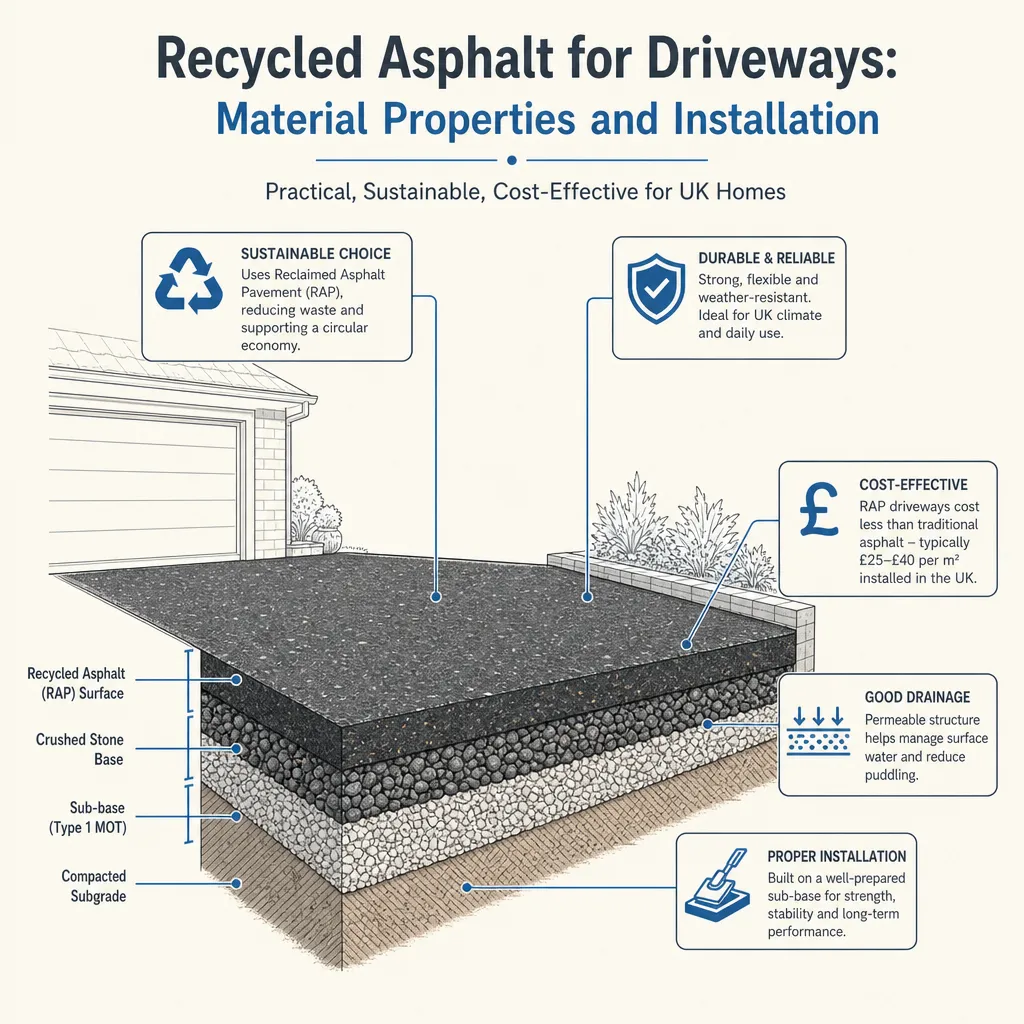
Recycled Asphalt for Driveways: Material Properties and Installation
Recycled asphalt (RAP) uses reclaimed road material and costs less than virgin asphalt, making it a budget-friendly option for UK driveways.
 Improvement & Build
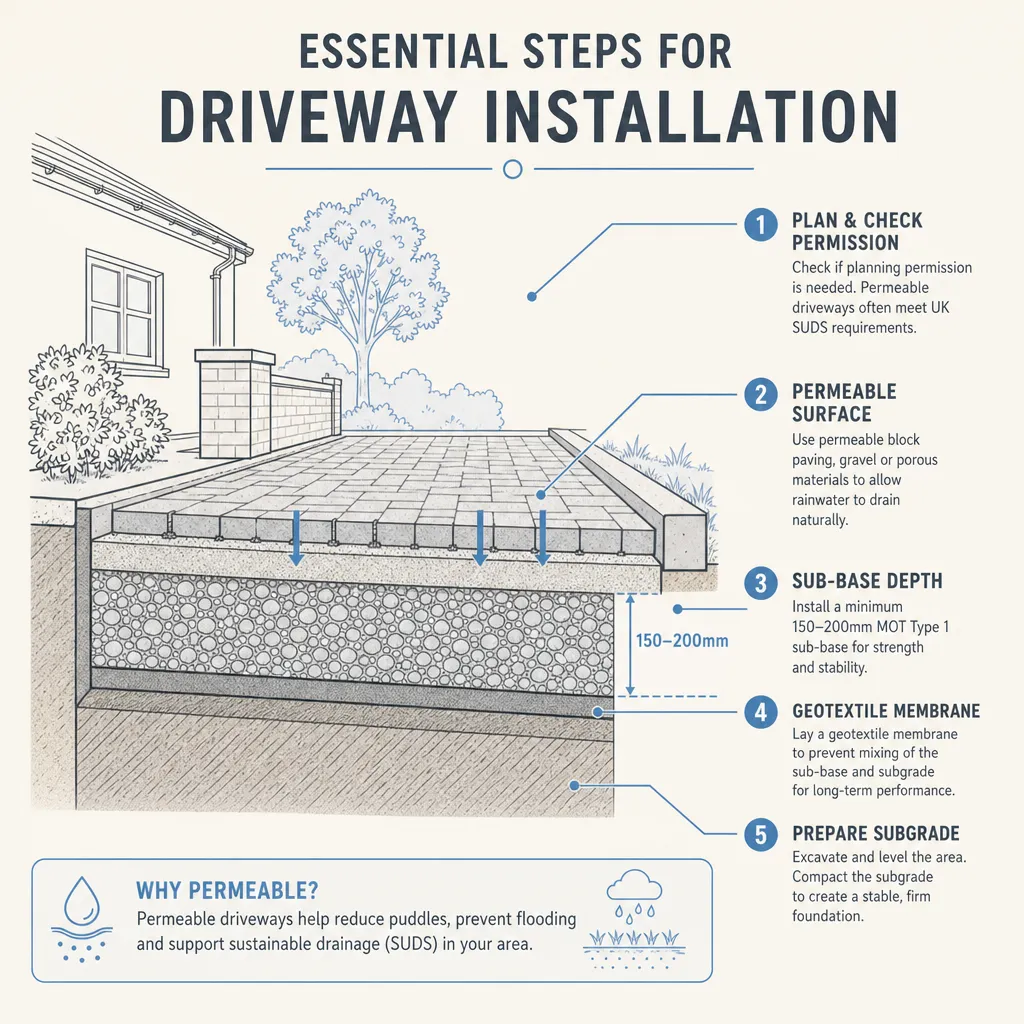
Essential Steps for Driveway Installation
Installing a driveway in England requires planning permission only when using an impermeable surface (standard tarmac, concrete, or block paving) on a front garden area over 5 m².
 Improvement & Build
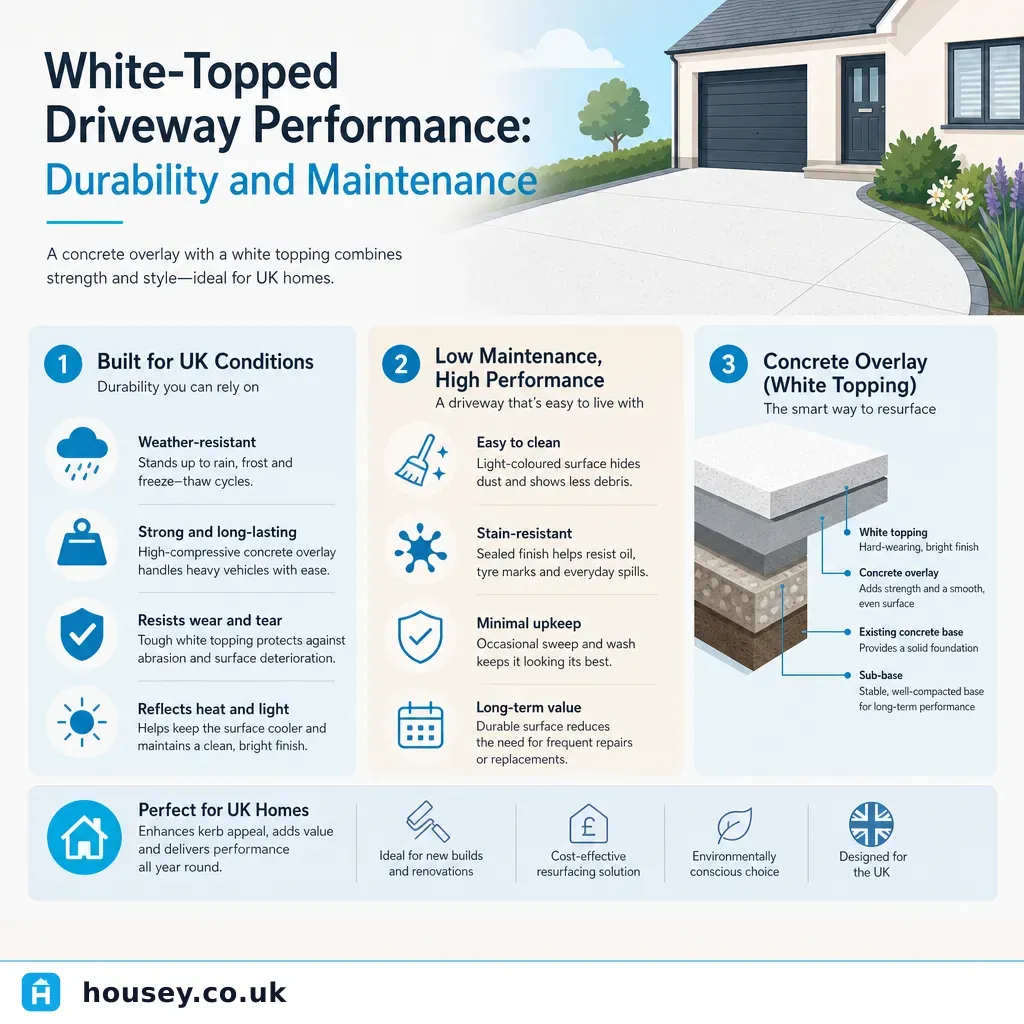
White-Topped Driveway Performance: Durability and Maintenance
A white-topped driveway uses a concrete layer placed over an existing asphalt sub-base, combining the load-spreading of asphalt with the durability of concrete.
 Improvement & Build
Window Types for Homes: A Comprehensive Overview
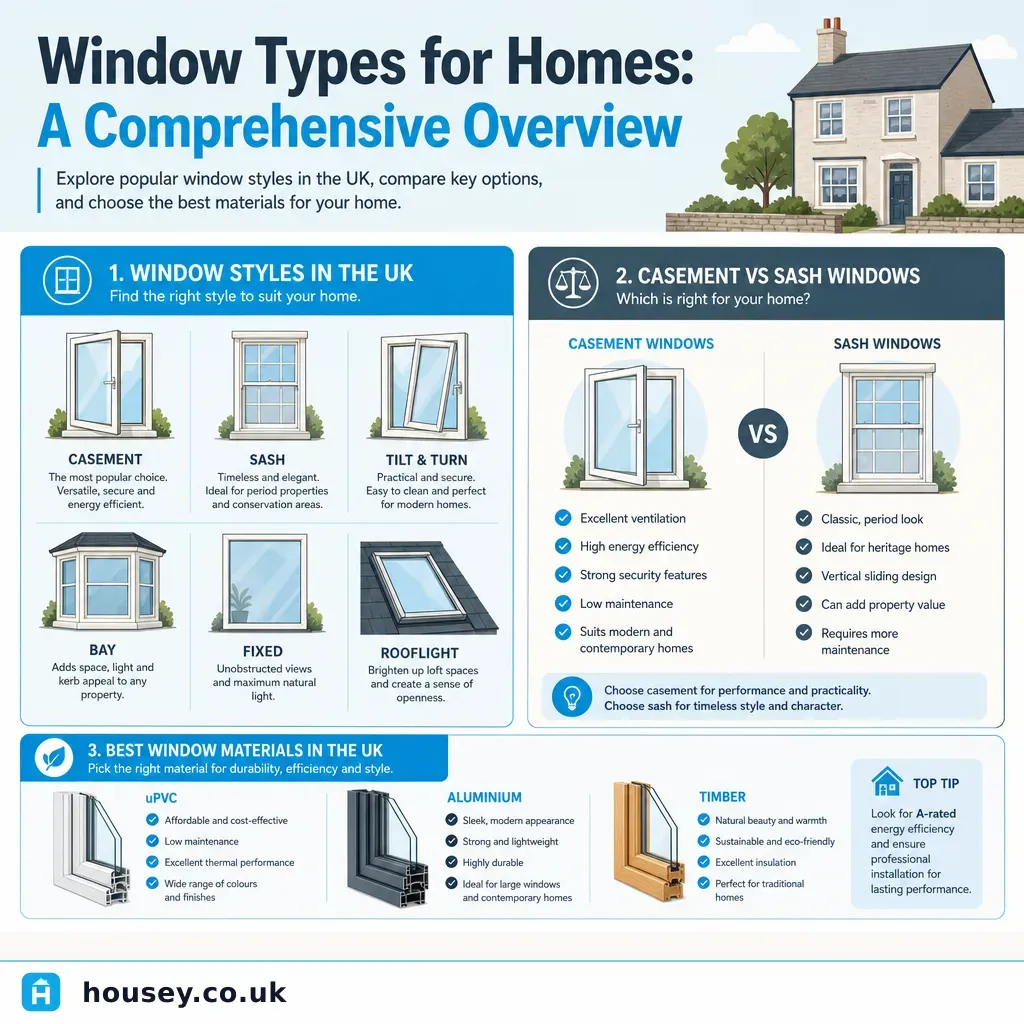
UK homes use several main window styles: casement (outward-swinging), sash (vertically sliding), tilt-and-turn, fixed light, and bay or bow.
 Improvement & Build
Installing a Garden Deck: Design, Materials and Installation Costs
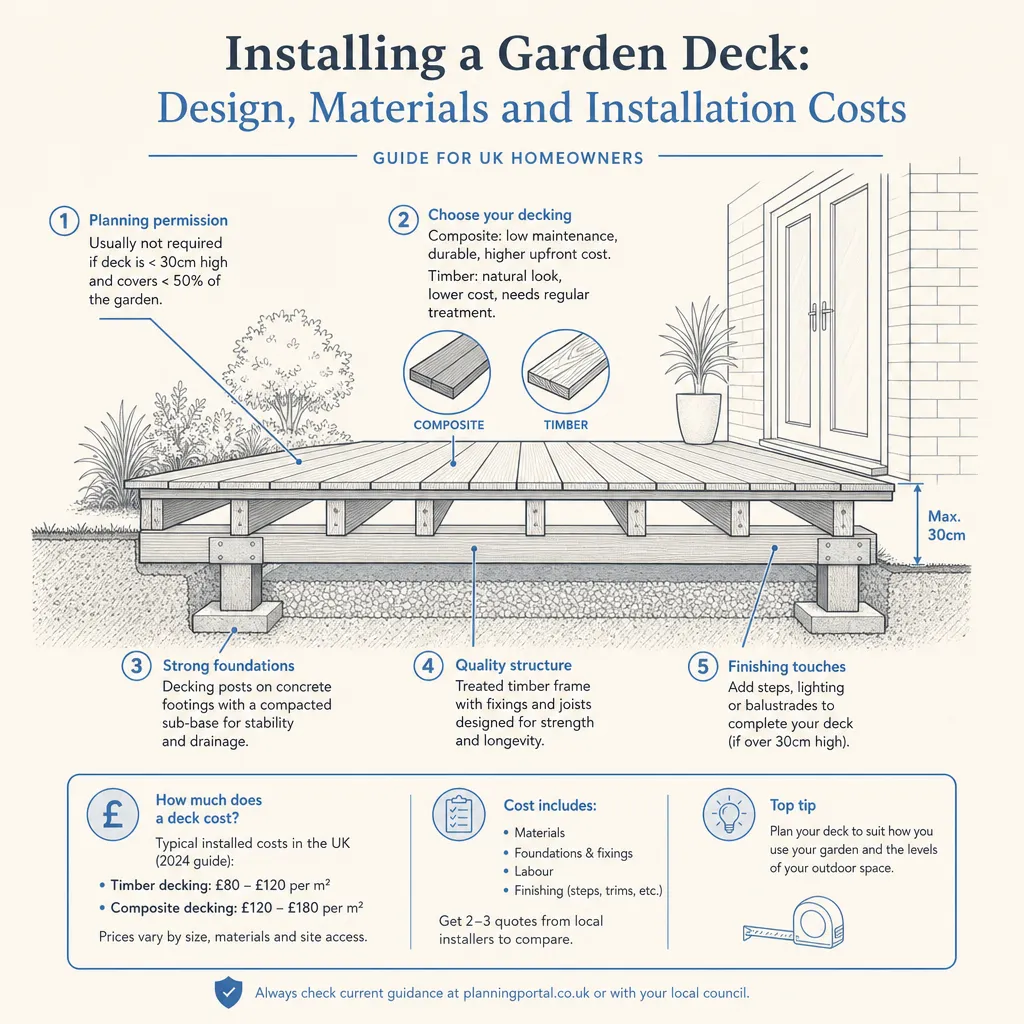
Garden decking costs £80–250 per m² installed in the UK depending on material — softwood is cheapest, composite the most durable.