Assessing Fire Damage to Buildings: Professional Inspection Guide
By Housey · Last reviewed 11th of May 2026
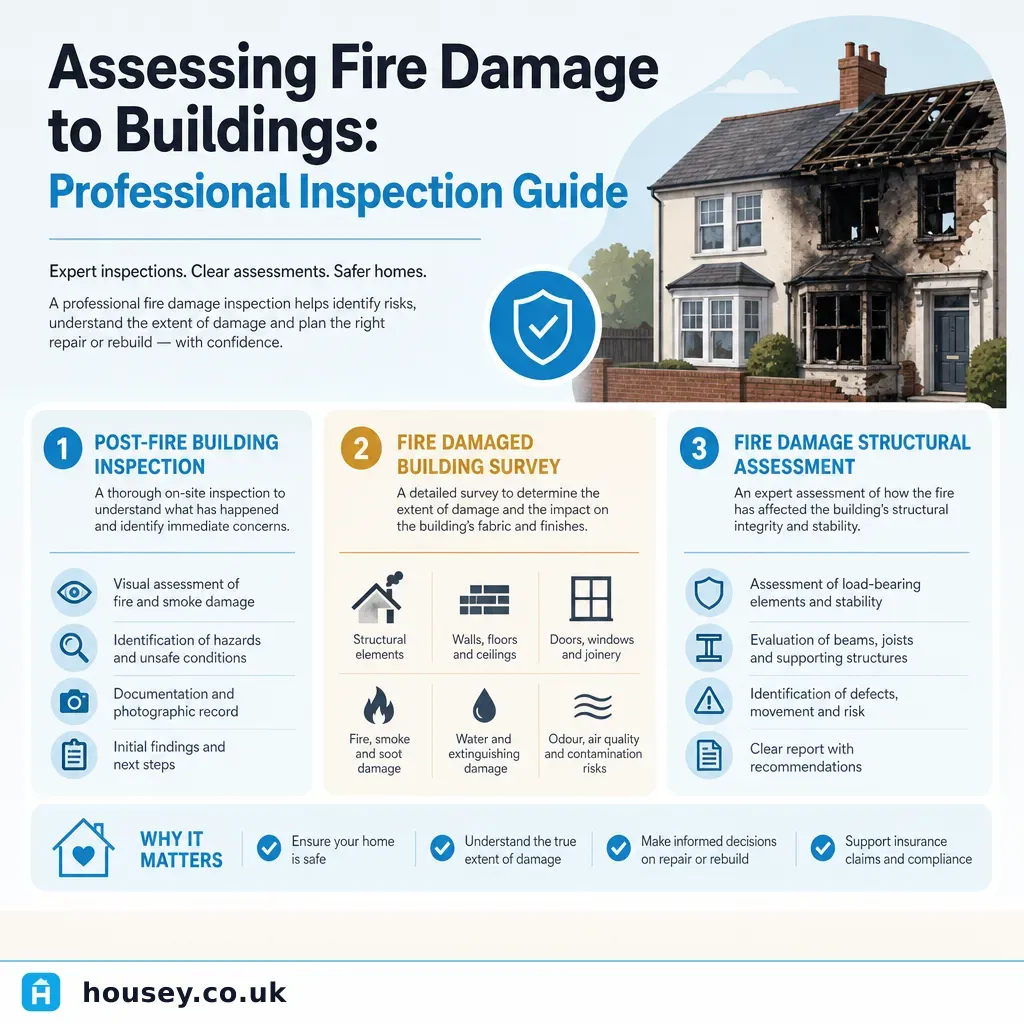
Assessing Fire Damage to Buildings: Professional Inspection Guide
A fire — however small — changes a building's structural and safety profile in ways that are not always visible on the surface. UK homeowners and landlords dealing with the aftermath of a fire face decisions about re-entry, structural stability, insurance, and the scope of remedial works that require professional guidance rather than guesswork.
Key points
- The London Fire Brigade and other UK fire and rescue services have statutory powers to restrict access to fire-damaged buildings; do not re-enter until the scene is formally released by the attending service.
- A post-fire structural assessment should be carried out by a chartered structural engineer (MIStructE or CEng) or chartered building surveyor (MRICS/FRICS); the scope differs significantly from a standard pre-purchase survey.
- Building Regulations Part A (Structure) applies to reinstatement works, meaning a building control application may be required before rebuilding or significantly repairing a fire-damaged structure.
- The Regulatory Reform (Fire Safety) Order 2005 requires that landlords of multi-occupancy buildings update their fire risk assessment following fire damage before residents return.
- Smoke, soot, and the water used by firefighters cause damage that can be separate from, and sometimes greater than, the direct fire damage — a thorough inspection must cover all three.
Why fire damage assessment differs from a standard survey
Standard pre-purchase surveys assess condition against expected deterioration over time. A post-fire inspection must evaluate sudden, concentrated damage to structural elements, services, finishes, and the building envelope — often against a backdrop of partially demolished or obscured surfaces.
Key differences include:
- Structural capacity may be compromised even where elements look intact. Steel loses around 50% of its yield strength at approximately 550°C; concrete can suffer latent micro-cracking and reinforcement corrosion from heat exposure that is not immediately visible.
- Services must be independently certified. Gas, electrical, and water installations must be inspected and confirmed safe before reconnection, regardless of visual appearance.
- Smoke and soot penetrate cavities and roof voids. A visual inspection of accessible surfaces alone understates the true extent of contamination.
- Water damage from fire suppression is often underestimated. Water used to fight the fire can introduce damp, encourage mould, and damage plasterboard, timber framing, and insulation that appears dry.
Fire damage severity levels and what they mean
Severity level | Typical characteristics | Structural concern | Typical next steps |
|---|---|---|---|
Level 1 — Superficial | Soot deposits, surface scorching, no structural involvement | Low | Clean-up and redecoration; EICR for circuits in the affected area |
Level 2 — Moderate | Charring of timber elements, plasterboard damage, single-room involvement | Moderate | Structural engineer assessment; full EICR; Gas Safe inspection; specialist decontamination |
Level 3 — Significant | Roof, floor, or wall elements involved; steel or reinforced concrete exposed to heat | High | Full structural survey; building control application for reinstatement; asbestos survey if pre-2000 property |
Level 4 — Severe | Load-bearing elements destroyed or critically compromised | Very high | Structural engineer on site before any access; possible demolition of the affected section |
Note: severity classification should be made by a qualified professional, not by visual inspection alone.
What a professional post-fire inspection covers
A thorough post-fire building inspection typically includes:
Structural assessment
- Visual inspection of all accessible structural elements (roof timbers, floor joists, beams, columns, walls).
- Assessment of steel connections and any visible deformation or buckling.
- Concrete crack mapping and assessment for spalling and reinforcement exposure.
- Foundation review where fire has been prolonged or temperatures extreme.
Services assessment (usually by specialist sub-consultants)
- Gas: a Gas Safe registered engineer inspection and gas tightness test.
- Electrical: an Electrical Installation Condition Report (EICR) by an NICEIC or NAPIT registered contractor.
- Water: a plumber's assessment for pipe integrity and potential contamination.
Contamination assessment
- Soot and smoke penetration mapping, including cavities and roof voids.
- Asbestos survey where the property was built or refurbished before 2000 and materials have been disturbed — required before any remedial or clearance works under the Control of Asbestos Regulations 2012.
Building envelope
- Roof covering, flashings, and guttering condition.
- External walls and cavity integrity.
- Windows, doors, and overall weather-tightness of the shell.
Red flags: do not re-enter without professional clearance
- Any visible deflection, lean, or displacement of walls, roofs, or floors.
- A smell of gas anywhere in or near the building.
- Exposed electrical wiring or evidence of melted cable insulation.
- Collapsed or partially collapsed roof sections.
- Bulging or cracked masonry, particularly in party walls.
- Visible asbestos-containing materials that have been disturbed — for example, artex ceilings, ceiling tiles, or pipe lagging.
- The fire and rescue service has not formally released the scene.
Which professional do you need?
Professional | When needed | Qualification to look for |
|---|---|---|
Chartered structural engineer | Suspected structural damage; steelwork, concrete, or roof and floor framing affected | MIStructE or CEng |
Chartered building surveyor | General condition assessment; specification of reinstatement works | MRICS or FRICS |
Gas Safe engineer | Any gas appliance, pipework, or meter affected | Gas Safe Register (check at gassaferegister.co.uk) |
NICEIC or NAPIT electrician | All electrical circuits in the affected area | EICR certificate issued |
Asbestos surveyor | Pre-2000 property where materials have been disturbed | UKAS-accredited surveyor |
Fire risk assessor | HMOs, flats, or commercial premises before residents return | BAFE SP205 or IFSM accredited |
Important limitations
This guide provides general information about post-fire building inspection procedures. The safety of any fire-damaged building must be assessed by a qualified professional on site — no written guide can substitute for that assessment. Rules and professional requirements vary by property type, severity of damage, tenure, and local authority. Nothing in this guide constitutes a structural or safety assessment. Do not re-enter a fire-damaged building until it has been formally released by the fire and rescue service and cleared by a qualified structural professional.
What to ask a qualified professional
Before instructing a structural engineer or building surveyor to assess fire damage, ask:
- Have you carried out post-fire structural assessments before, and can you provide references?
- What will your inspection cover, and what are its limitations?
- Will you identify any specialist sub-consultants needed — electrical, gas, asbestos?
- What format will your report take, and will it satisfy my insurer's requirements?
- Are there any areas you cannot safely inspect, and how will that affect your conclusions?
- Will you specify reinstatement works, or is a separate appointment needed for that scope?
- Do I need to notify building control before reinstatement works begin?
When to get professional help
If a fire has occurred — regardless of apparent severity — act on the following:
- Do not re-enter until the fire and rescue service has formally released the scene.
- Instruct a chartered structural engineer or building surveyor before any clearance or demolition works begin.
- Contact your insurer immediately; most property insurance policies require prompt notification and professional assessment before repair works commence.
- If the property houses tenants, a fire risk assessment update is a legal requirement under the Regulatory Reform (Fire Safety) Order 2005 before reoccupation.
How Housey can help
Housey connects you with qualified professionals who carry out post-fire building assessments and reinstatement surveys. Use Housey to find and compare specialists for a fire risk assessment or a full structural survey following fire damage — both are important steps before any repair or rebuilding work begins.
Frequently asked questions
Is a fire-damaged building safe to enter?
Not automatically — and not without formal clearance. The fire and rescue service must release the scene first. After that, a chartered structural engineer or building surveyor should assess the building before general re-entry. Load-bearing elements including hidden roof timbers and steel connections can be seriously compromised without obvious outward signs. Never assume a building is safe simply because it is still standing.
Who should carry out a fire damage assessment?
The primary assessment should be by a chartered structural engineer (MIStructE or CEng) for structural matters, or a chartered building surveyor (MRICS/FRICS) for a broader reinstatement scope. Specialist sub-consultants — a Gas Safe engineer, NICEIC or NAPIT electrician, and an asbestos surveyor — are typically needed alongside the main assessment for services and contamination.
What does a post-fire building inspection involve?
A thorough inspection covers structural elements (roof, floors, walls, steelwork, concrete), all services (gas, electrical, water), contamination including soot and smoke penetration into cavities and roof voids, and the building envelope. For properties built before 2000, an asbestos survey is required before clearance or remedial works begin under the Control of Asbestos Regulations 2012.
How long does a post-fire assessment take?
For a typical residential property, an initial structural assessment can be completed in half a day to a full day on site, with a written report within a week. Complex properties or those with severe damage requiring opening-up investigations will take longer. Your insurer's loss adjuster may wish to attend; coordinate timing with them before instructing the surveyor.
Sources and further reading
- Regulatory Reform (Fire Safety) Order 2005 — legislation.gov.uk
- Building Regulations Approved Document A (Structure) — GOV.UK
- Control of Asbestos Regulations 2012 — legislation.gov.uk
- Gas Safe Register — find a registered engineer — Gas Safe Register
- NICEIC — find a registered contractor — NICEIC
- HSE — asbestos guidance for dutyholders — HSE
Useful next reads
 Surveys & Inspections
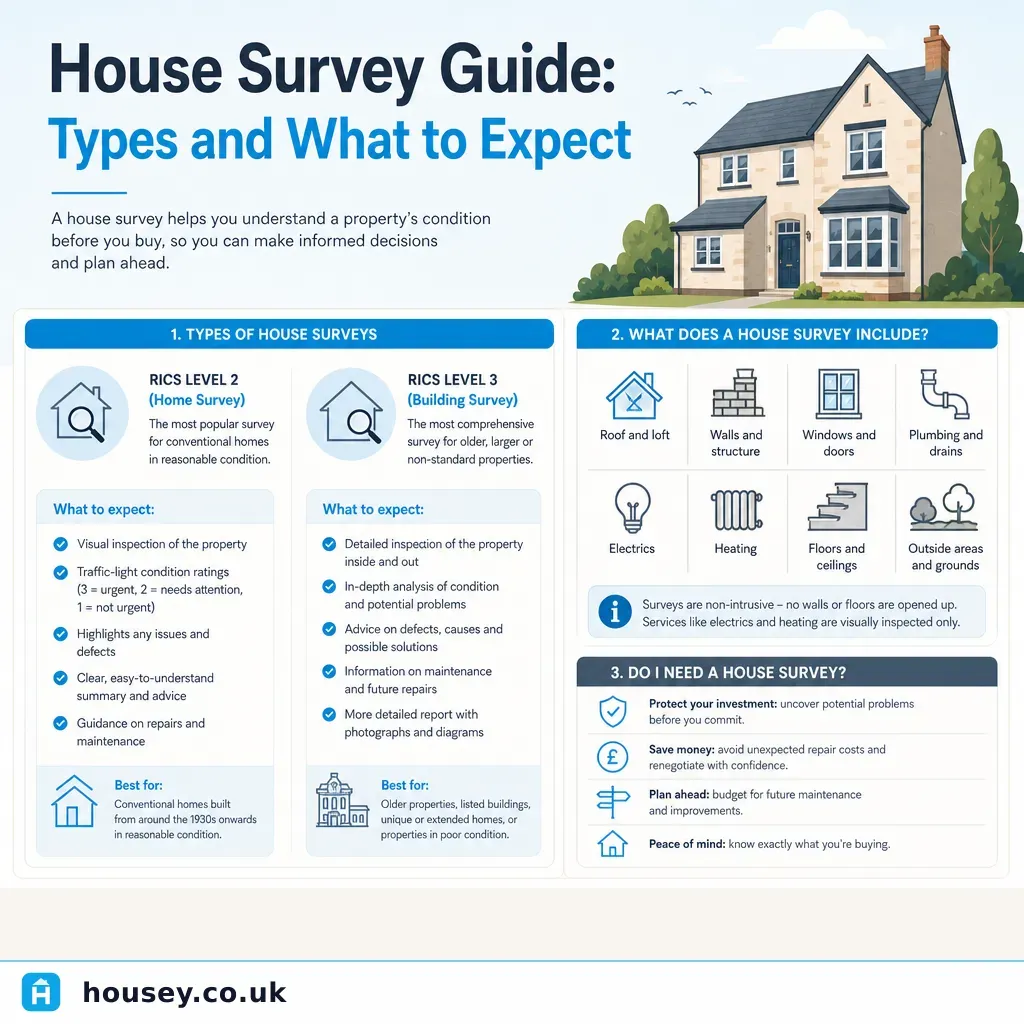
House Survey Guide: Types and What to Expect
UK house surveys come in three RICS-standardised levels: Level 1 (Condition Report) for new or near-new homes, Level 2 (Home Survey) for conventional post-war properties, and Level 3 (Building Survey) for older, altered, or defective properties.
 Surveys & Inspections
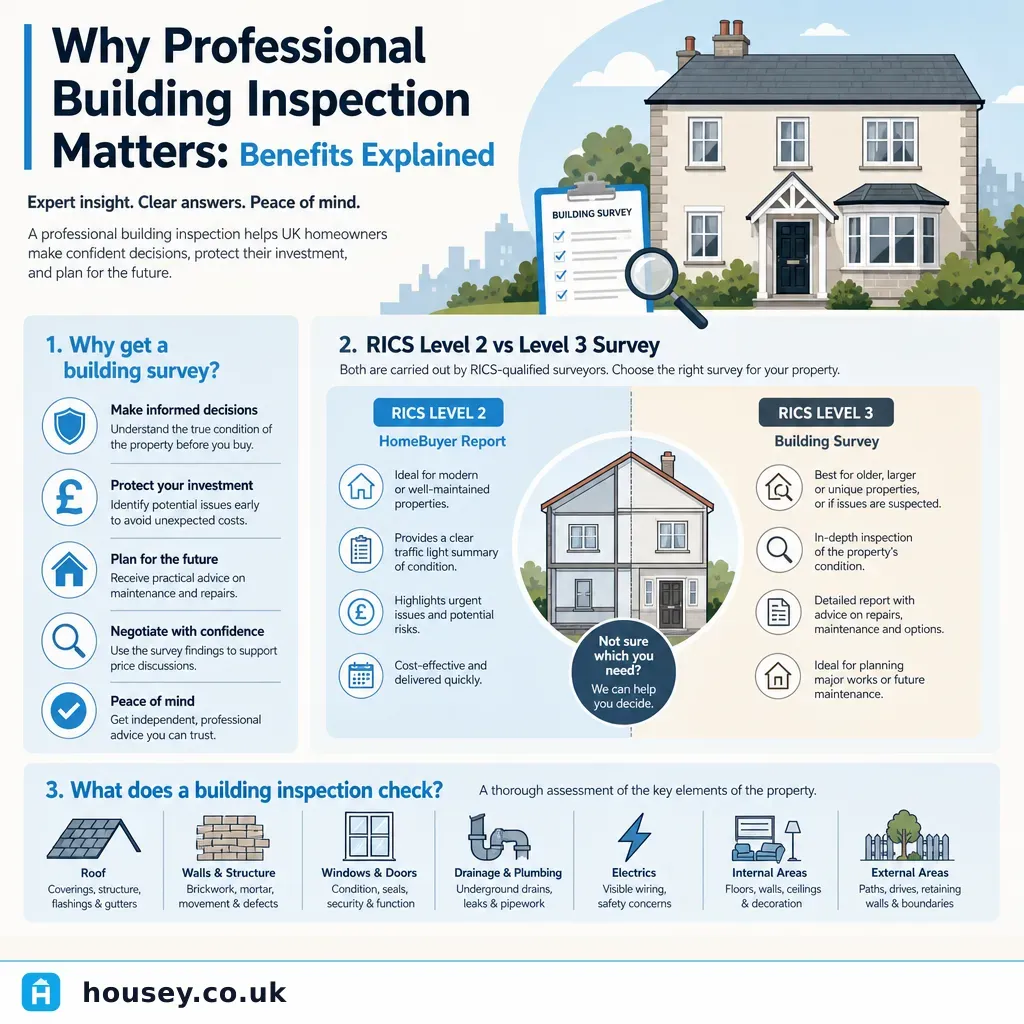
Why Professional Building Inspection Matters: Benefits Explained
Professional building inspection gives UK homeowners an independent, expert view of a property's condition and regulatory compliance.
 Surveys & Inspections
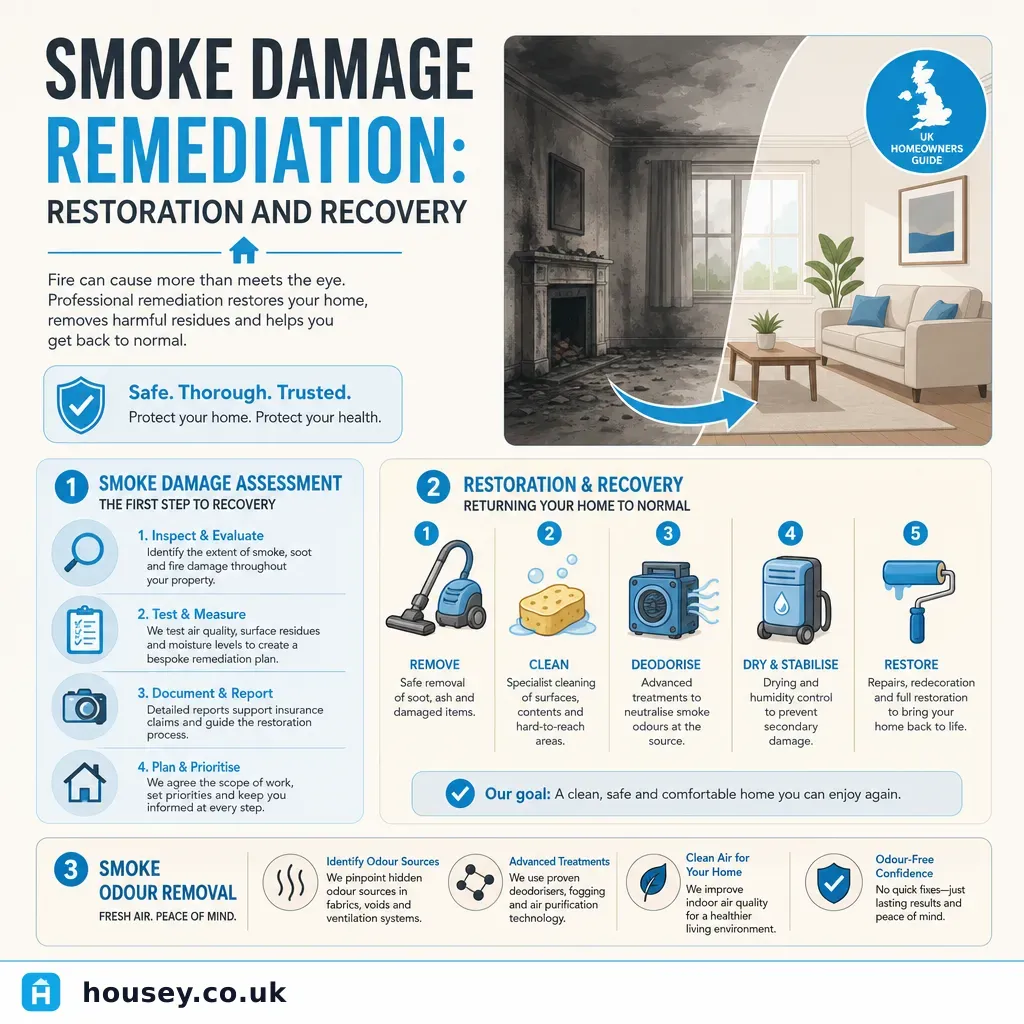
Smoke Damage Remediation: Restoration and Recovery
After a fire or smoke event, professional remediation involves safety assessment, dry cleaning to remove soot, chemical treatment, structural drying, and odour treatment.
 Surveys & Inspections
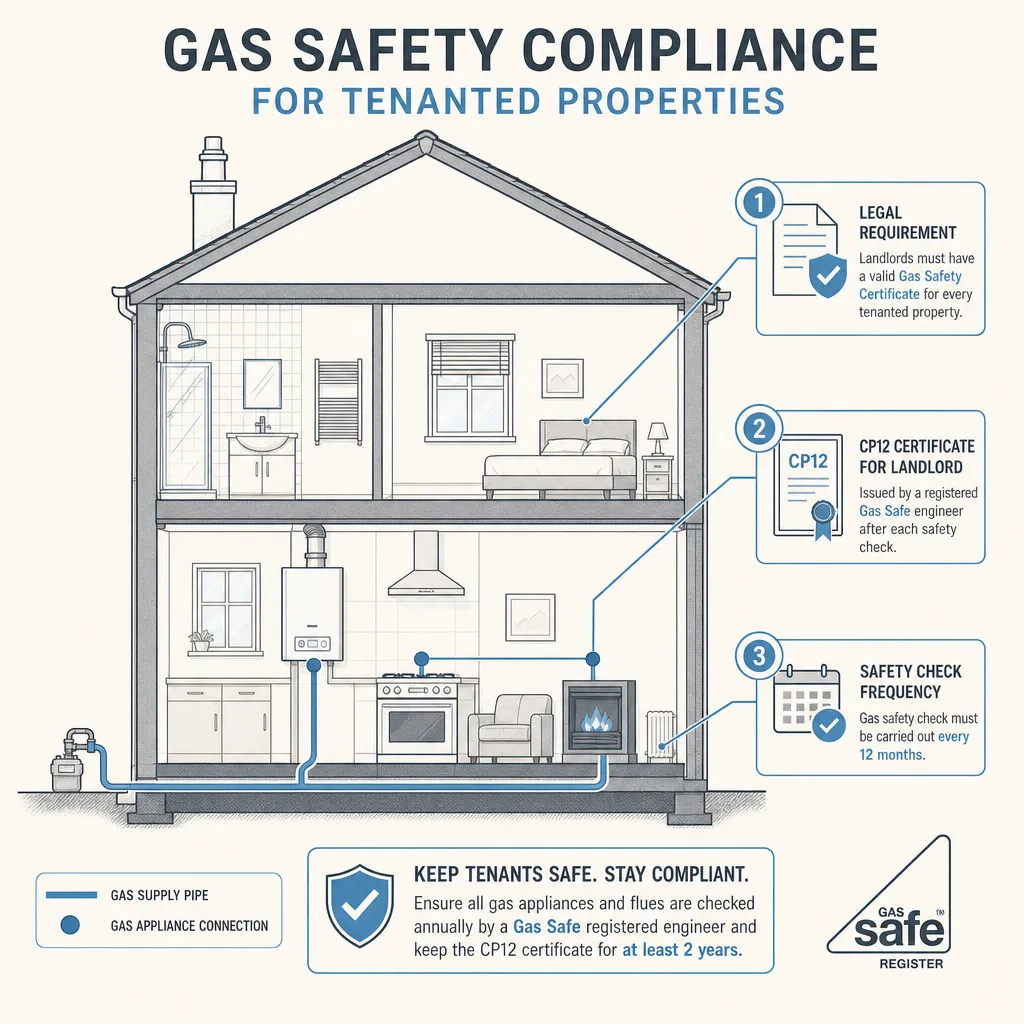
Gas Safety Compliance for Tenanted Properties
UK landlords are legally required to arrange an annual gas safety check by a Gas Safe registered engineer for every tenanted property with a gas appliance.
 Surveys & Inspections
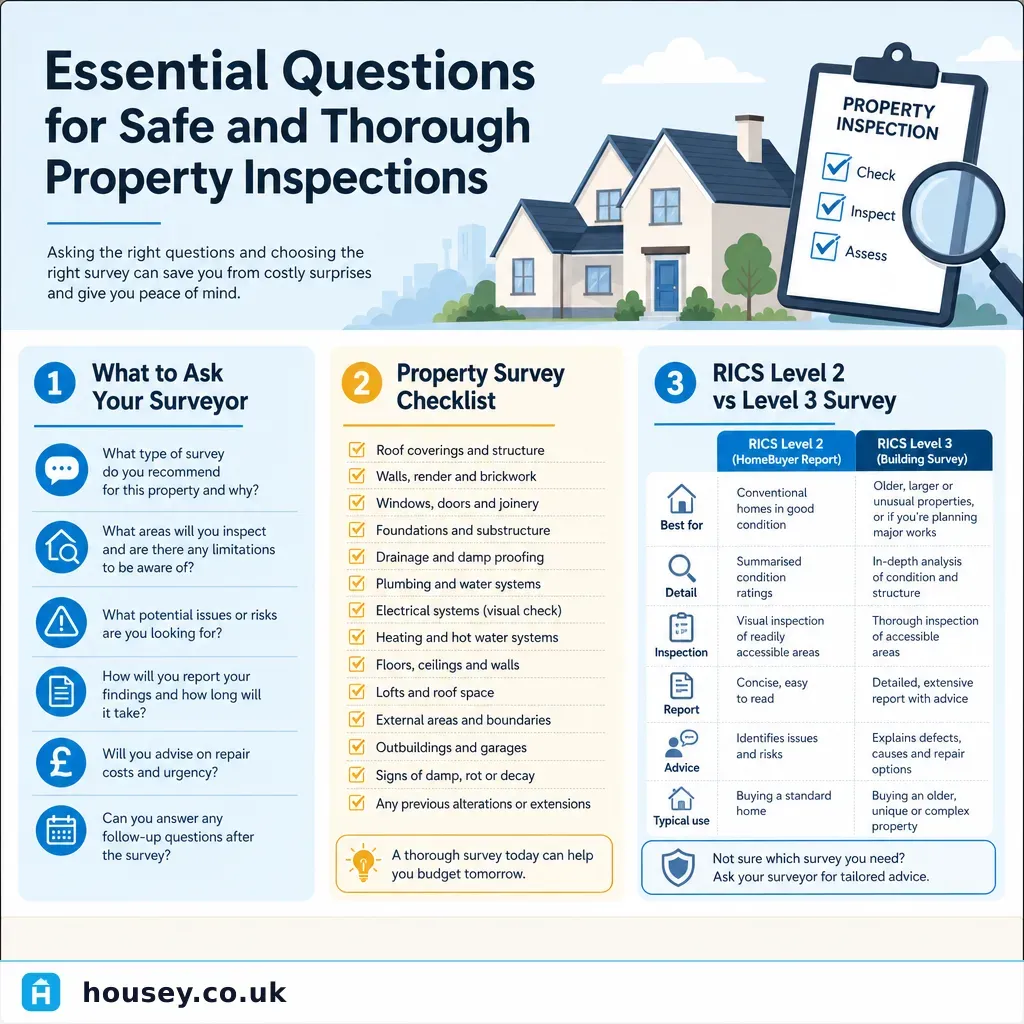
Essential Questions for Safe and Thorough Property Inspections
Before commissioning a property survey, confirm what type of inspection suits your property's age and condition, ask the surveyor what defects they will and will not assess, and understand what the report will recommend.