Why Professional Building Inspection Matters: Benefits Explained
By Housey · Last reviewed 11th of May 2026
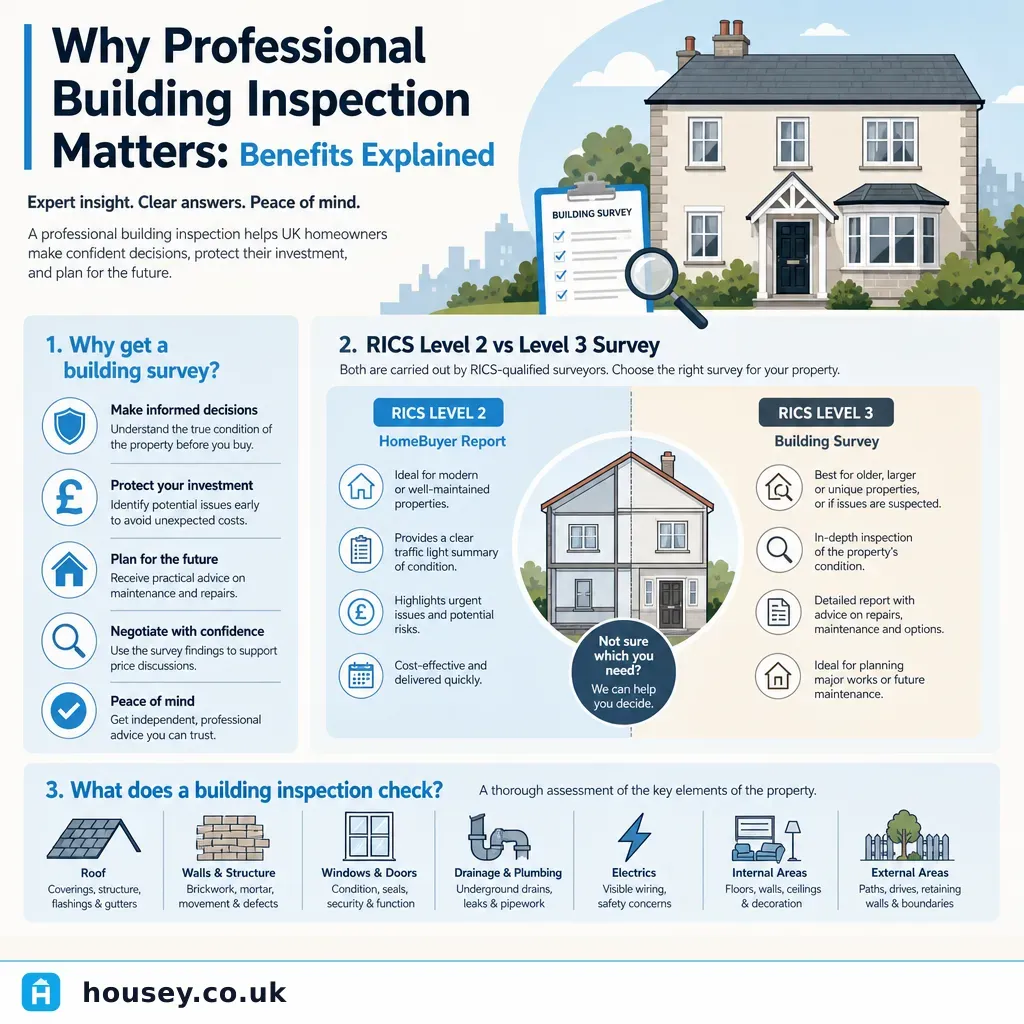
Why Professional Building Inspection Matters: Benefits Explained
Whether you are buying a property, overseeing a major renovation, or managing a rental portfolio, a professional building inspection provides an independent, expert-led assessment of a property's condition or regulatory compliance that no other party in the transaction is motivated to give you. Many UK homeowners commission inspections only at the point of purchase, but the case for independent professional scrutiny arises repeatedly across a property's life — from pre-purchase surveys and building control sign-off on extension work, to snagging inspections on new builds and the periodic safety checks required by landlord law. Knowing which type of inspection to commission, and when, is one of the most useful things a homeowner can understand.
Key points
- A RICS Level 2 Home Survey uses condition ratings (1–3) to flag visible defects; a RICS Level 3 Building Survey provides a fuller assessment of construction, hidden risks, and repair costs — and is the appropriate choice for older, altered, or visibly defective properties.
- Building Control inspections carried out by a local authority building control (LABC) body or an approved inspector verify compliance with the Building Regulations — they are a legal requirement for notifiable work, not a quality or condition assessment.
- A structural engineer's report is the right tool when a general survey identifies possible movement, cracking, or subsidence and recommends further specialist investigation.
- Snagging inspections on new-build properties should ideally be commissioned before legal completion, giving the buyer a documented defects list the developer is obliged to address under warranty.
- An independent building inspection creates a written record useful for insurance claims, sale negotiations, and dispute resolution with contractors or developers.
What is a professional building inspection?
Building inspection is a broad term covering several distinct services that are often confused by homeowners. Understanding which type you need prevents both under-inspection — missing serious defects — and over-commissioning — paying for unnecessary scope.
Inspection type | Who carries it out | When to use it | What it covers |
|---|---|---|---|
RICS Level 2 Home Survey | RICS-registered surveyor | Before buying a conventional property in reasonable condition | Condition ratings, visible defects, optional market valuation |
RICS Level 3 Building Survey | RICS-registered surveyor | Older, larger, altered, unusual, or visibly defective properties | Detailed construction, hidden risks, repair cost guidance |
Structural engineer's report | Chartered structural engineer | After a general survey flags movement, cracking, or subsidence | Engineering diagnosis, load analysis, remediation specification |
Building Control inspection | Approved inspector or LABC body | During and after notifiable building work | Compliance with Building Regulations only |
Snagging inspection | Independent snagging specialist or RICS surveyor | New-build properties before legal completion | Build quality, defects, incomplete or substandard work |
Specific defect report | RICS surveyor or specialist | Single known issue — damp, timber, drainage | Targeted diagnosis and options |
What does a pre-purchase inspection reveal?
A RICS Level 2 or Level 3 survey conducted before exchange of contracts gives the buyer an independent professional view of the property's condition — separate from the estate agent's description and the seller's property information forms.
Common findings that pre-purchase surveys surface include:
- Damp penetration: rising damp, penetrating damp through external walls, or condensation caused by inadequate ventilation or thermal bridging around window reveals.
- Roof condition: missing or slipped tiles, deteriorating felt, defective flashings around stacks and dormers, and blocked or failing guttering.
- Structural movement: cracking, distortion, or differential settlement that may indicate subsidence or inadequate foundations — a finding that typically leads to a referral to a structural engineer for specialist investigation.
- Timber defects: dry rot, wet rot, active woodworm infestation, or undersized structural timber members.
- Services condition: the survey will note the apparent age and condition of the heating system, electrical installation, and drainage, though a specialist — Gas Safe engineer, NICEIC electrician, or drainage contractor — may be needed for a detailed assessment of each.
A RICS Level 3 survey will typically include repair priority ratings and indicative cost guidance, helping buyers negotiate a price reduction or plan a renovation budget. A Level 2 survey flags the same categories with less narrative detail.
How Building Control inspections differ from surveys
Building Control inspections and property surveys serve fundamentally different purposes, and confusing them can be a costly mistake:
- Building Control checks whether work in progress or completed work meets the Building Regulations — it is a regulatory function, not a quality or market assessment. A passing inspection does not mean the work is of high commercial quality, only that it met minimum legal standards at the time of inspection.
- A surveyor's inspection assesses a property's condition, defects, and risks — it is advisory and, in a pre-purchase context, helps the buyer make an informed decision on the property and its price.
Both matter, and both are distinct. When buying a recently extended or renovated property, check whether a building regulations completion certificate was issued for the works — and consider commissioning your own surveyor's inspection as well, since completion certificates cover regulatory compliance rather than build quality or workmanship.
The value of independent inspection at key stages
Before buying
An independent survey before exchange of contracts protects buyers from inheriting undisclosed defects. Survey findings may support price renegotiation or give grounds to withdraw if serious structural or moisture problems are uncovered that the seller did not disclose.
During building work
Building Control stage inspections are mandatory for notifiable work such as extensions, loft conversions, and structural alterations. For larger or more complex projects, some homeowners also appoint an independent project monitor to check workmanship at key stages — particularly useful where the main contractor is the sole quality checkpoint on site.
On a new-build property
Developers are required to address defects reported before legal completion under NHBC Buildmark or equivalent warranties. An independent snagging inspection before you move in provides a professionally presented defects list — much harder for a developer to dismiss than a buyer's informal notes.
For rental properties
Landlords in England have legal obligations that include an Electrical Installation Condition Report (EICR) every five years in the private rented sector, an annual Gas Safe Register certificate, and fire safety obligations under the Housing Health and Safety Rating System (HHSRS). Independent inspection helps landlords evidence compliance and identify remedial work before tenants raise formal hazard reports.
Homeowner checklist: what to prepare before a survey
- Access: confirm the surveyor can reach the loft, under-floor spaces, outbuildings, and all rooms — locked or boarded areas will be noted as unexamined and excluded from the report's scope.
- Documents: gather building regulations completion certificates, planning permissions, guarantees (FENSA for windows, NHBC warranty, Gas Safe certificates), and any previous survey reports you hold.
- Known issues: note any history of damp, subsidence, drainage problems, leaks, or past structural works — surveyors welcome this context and can direct attention to specific areas of concern.
- Questions: prepare specific questions in advance; a good surveyor will address these in the written report or in a post-report call.
- Utilities: ensure electricity, gas, and water are connected and switched on so the surveyor can test accessible services where appropriate.
When to get professional help
Contact a qualified surveyor, structural engineer, or building control consultant if:
- You are buying any property over 20 years old or with visible signs of defect, extension, or significant alteration.
- You notice new or worsening cracks, sticking doors or windows, uneven floors, or damp patches in a property you already own.
- You are about to accept a new-build property from a developer without an independent snagging inspection.
- You have received a general survey report recommending further specialist investigation.
- You are a landlord and an EICR or gas safety check is approaching or overdue.
- You are planning building work and need confirmation of whether Building Control approval is required.
How Housey can help
Housey connects UK homeowners, buyers, and landlords with vetted inspection professionals. Whether you need a RICS Home Survey before exchange of contracts, a structural survey to investigate a specific crack or defect, or a building control consultant to guide a renovation through the approvals process, Housey makes it straightforward to compare and appoint the right specialist for your situation.
Frequently asked questions
What is the difference between a RICS Level 2 and Level 3 survey?
A RICS Level 2 Home Survey uses condition ratings (1–3) to flag visible defects and is generally suited to conventional properties in reasonable condition. A RICS Level 3 Building Survey provides a fuller account of construction, materials, hidden risks, and estimated remediation costs. Level 3 is recommended for older, larger, altered, unusual, or visibly defective properties where more detail is needed before exchange.
Is a building survey the same as a mortgage valuation?
No. A mortgage valuation is prepared for the lender, not the buyer — it confirms the property is adequate security for the loan, not that it is in sound condition. It is not a substitute for a buyer-commissioned survey. A RICS Level 2 or Level 3 survey is a separate instruction that gives the buyer an independent professional view of the property's condition and any defects.
Can I renegotiate the purchase price after a survey finds defects?
Yes — survey findings that were not disclosed by the seller may support a price renegotiation or a request for remedial work before exchange. Your solicitor and surveyor can advise on how to frame the negotiation. Sellers are not legally obliged to accept a revised offer, but significant undisclosed defects frequently result in an agreed price reduction or a commitment to remedy specific items.
Do I need an independent inspection on a new-build property?
New-build homes come with developer warranties such as NHBC Buildmark, but these do not prevent defects occurring. An independent snagging inspection before legal completion produces a professionally documented defects list that the developer is more likely to act on before handover than an informal buyer's note. It is a widely recommended step that many new-build buyers in the UK overlook.
Sources and further reading
- RICS Home Surveys: guidance for consumers — RICS
- Building regulations approval: what it is and when to get it — GOV.UK
- NHBC Buildmark warranty and insurance — NHBC
- Electrical safety standards in the private rented sector: guidance for landlords — GOV.UK
- Housing Health and Safety Rating System (HHSRS) — GOV.UK
Useful next reads
 Surveys & Inspections
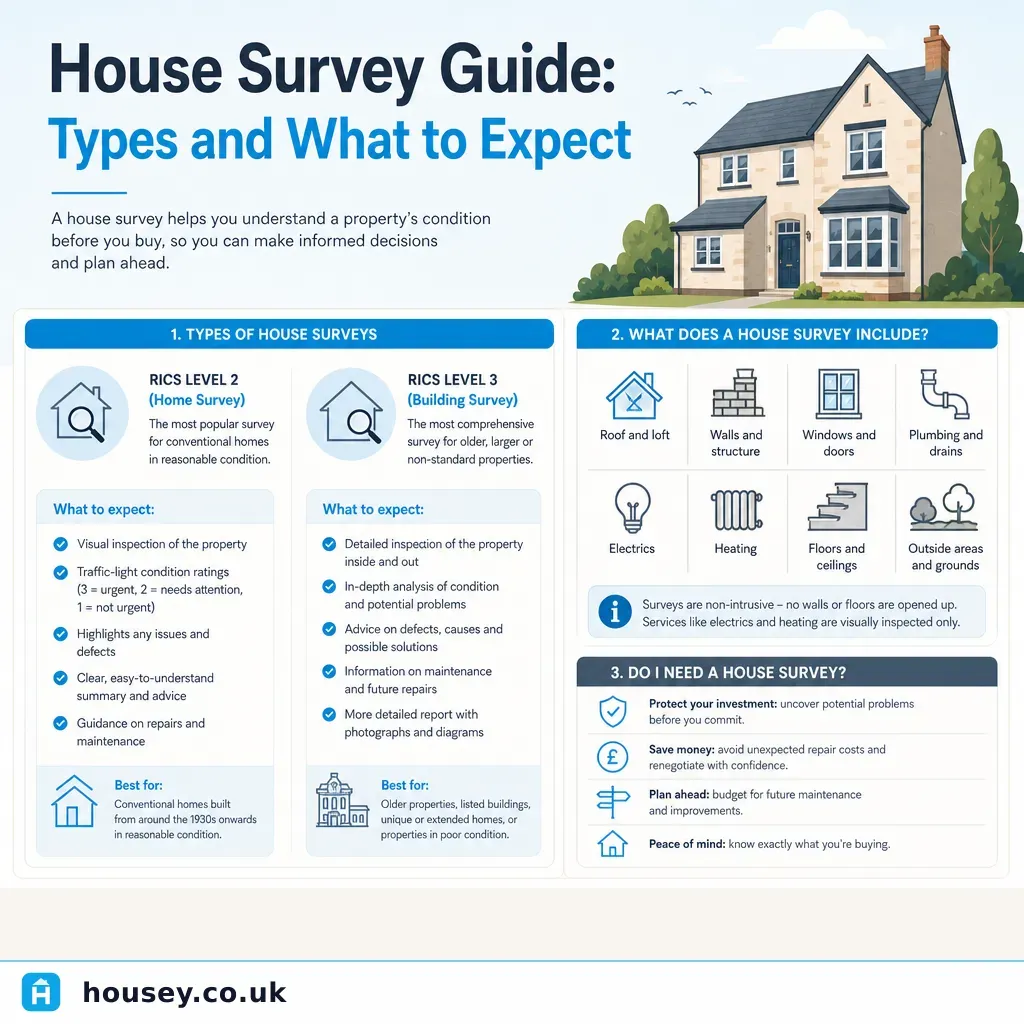
House Survey Guide: Types and What to Expect
UK house surveys come in three RICS-standardised levels: Level 1 (Condition Report) for new or near-new homes, Level 2 (Home Survey) for conventional post-war properties, and Level 3 (Building Survey) for older, altered, or defective properties.
 Surveys & Inspections
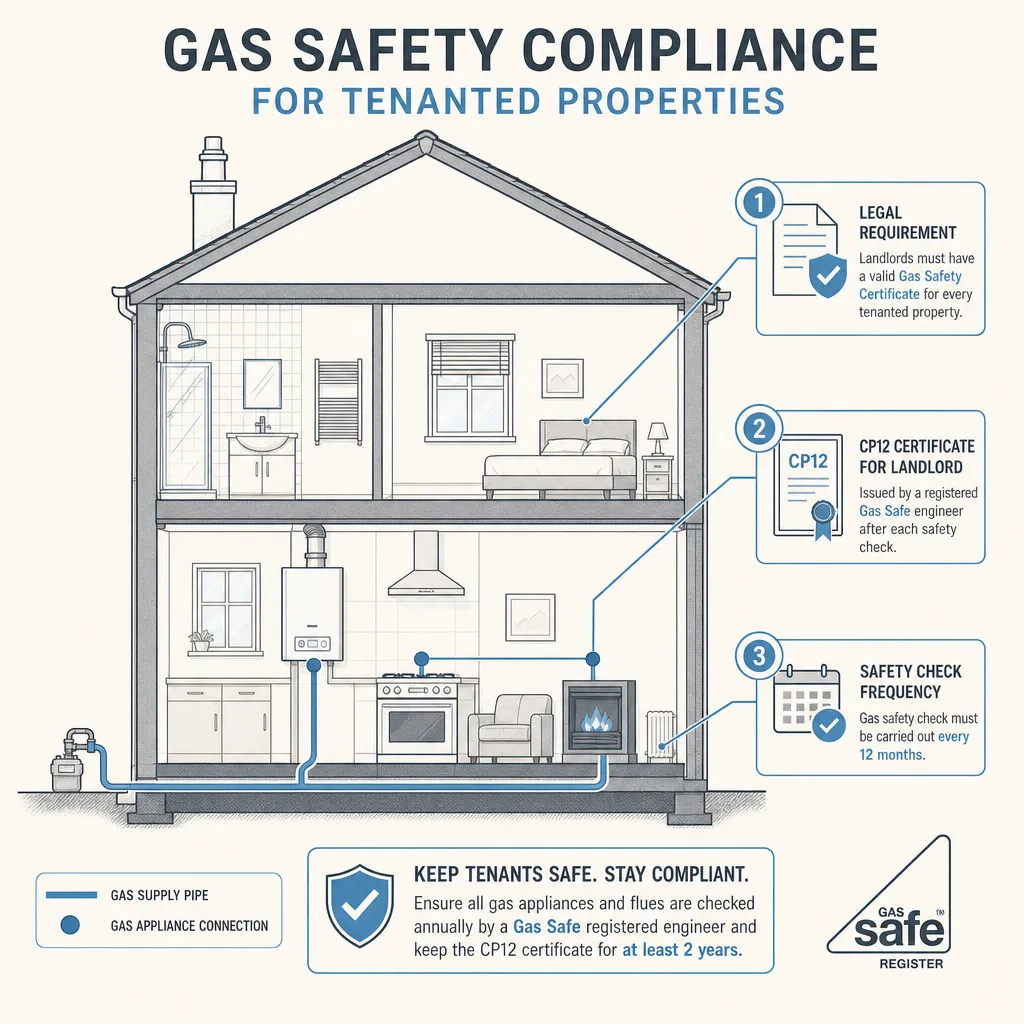
Gas Safety Compliance for Tenanted Properties
UK landlords are legally required to arrange an annual gas safety check by a Gas Safe registered engineer for every tenanted property with a gas appliance.
 Surveys & Inspections
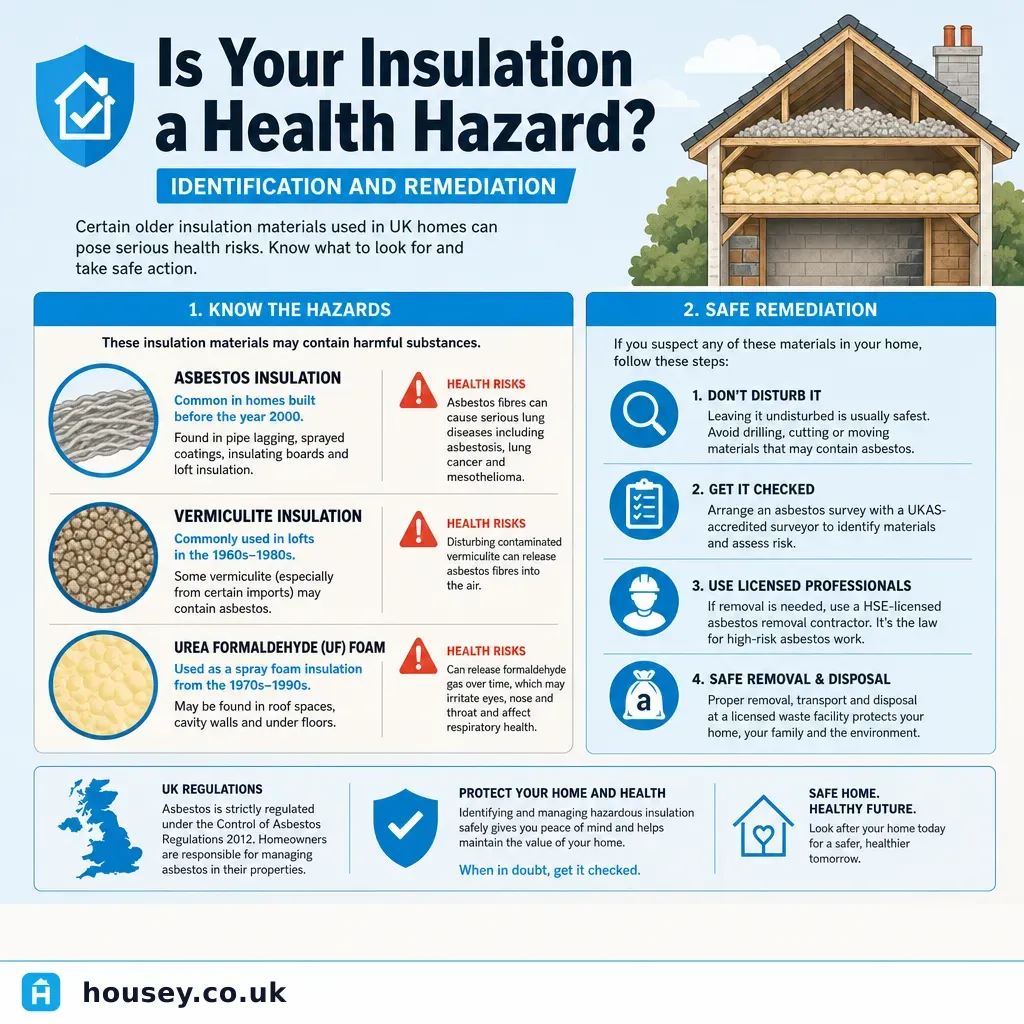
Is Your Insulation a Health Hazard? Identification and Remediation
Some insulation materials in pre-2000 UK homes may pose genuine health risks.
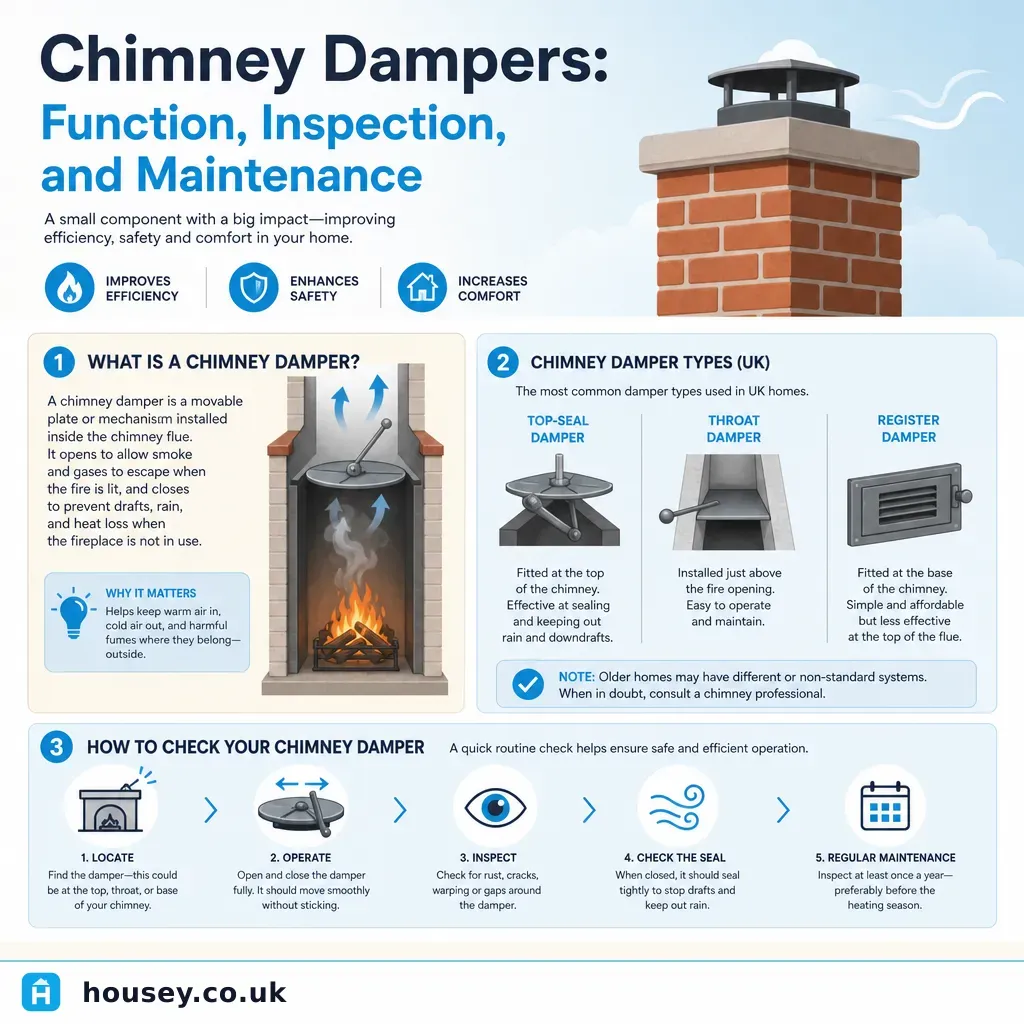 Surveys & Inspections
Chimney Dampers: Function, Inspection, and Maintenance
A chimney damper is a movable plate or valve in the flue that controls airflow when the fire is lit and seals the chimney when it is not.
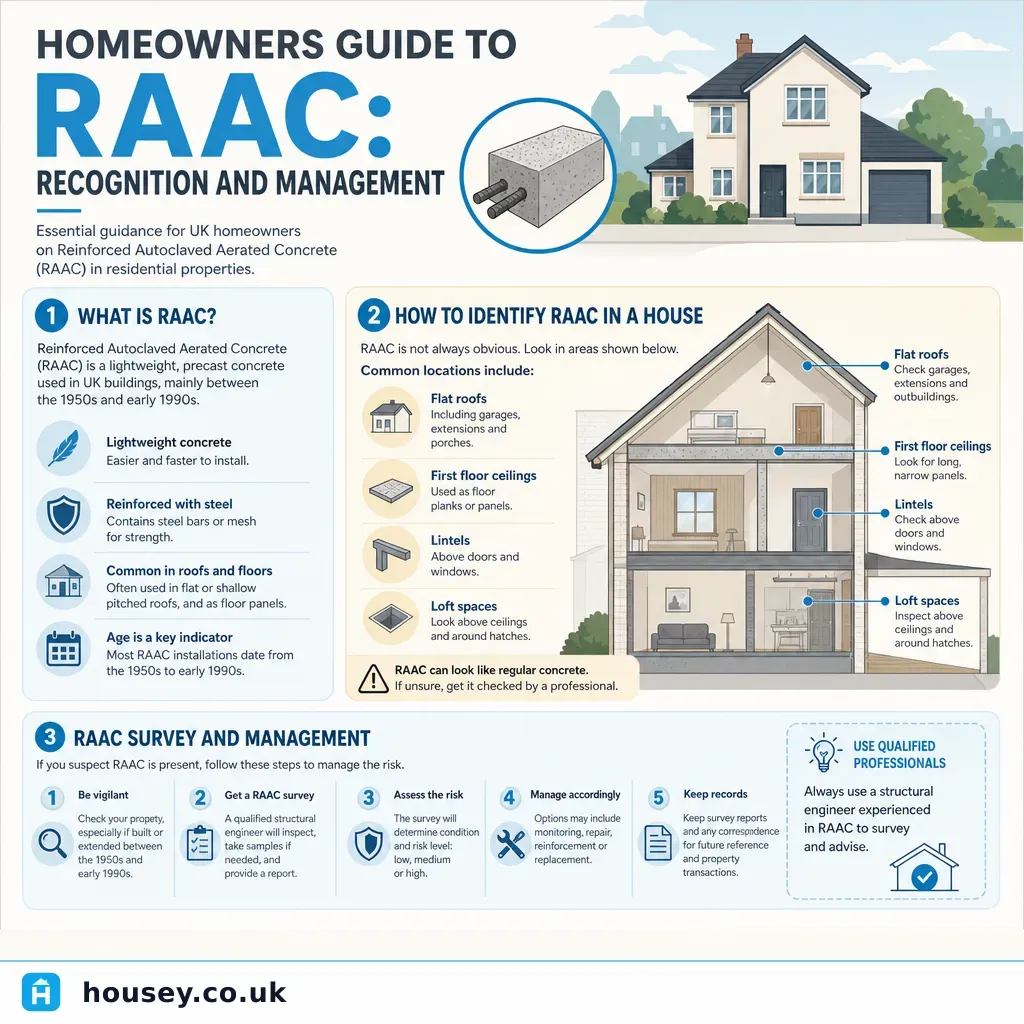 Surveys & Inspections
Homeowners Guide to RAAC: Recognition and Management
RAAC (reinforced autoclaved aerated concrete) is a lightweight building material used in some UK homes from the 1950s to the mid-1990s.