Smoke Damage Remediation: Restoration and Recovery
By Housey · Last reviewed 10th of May 2026
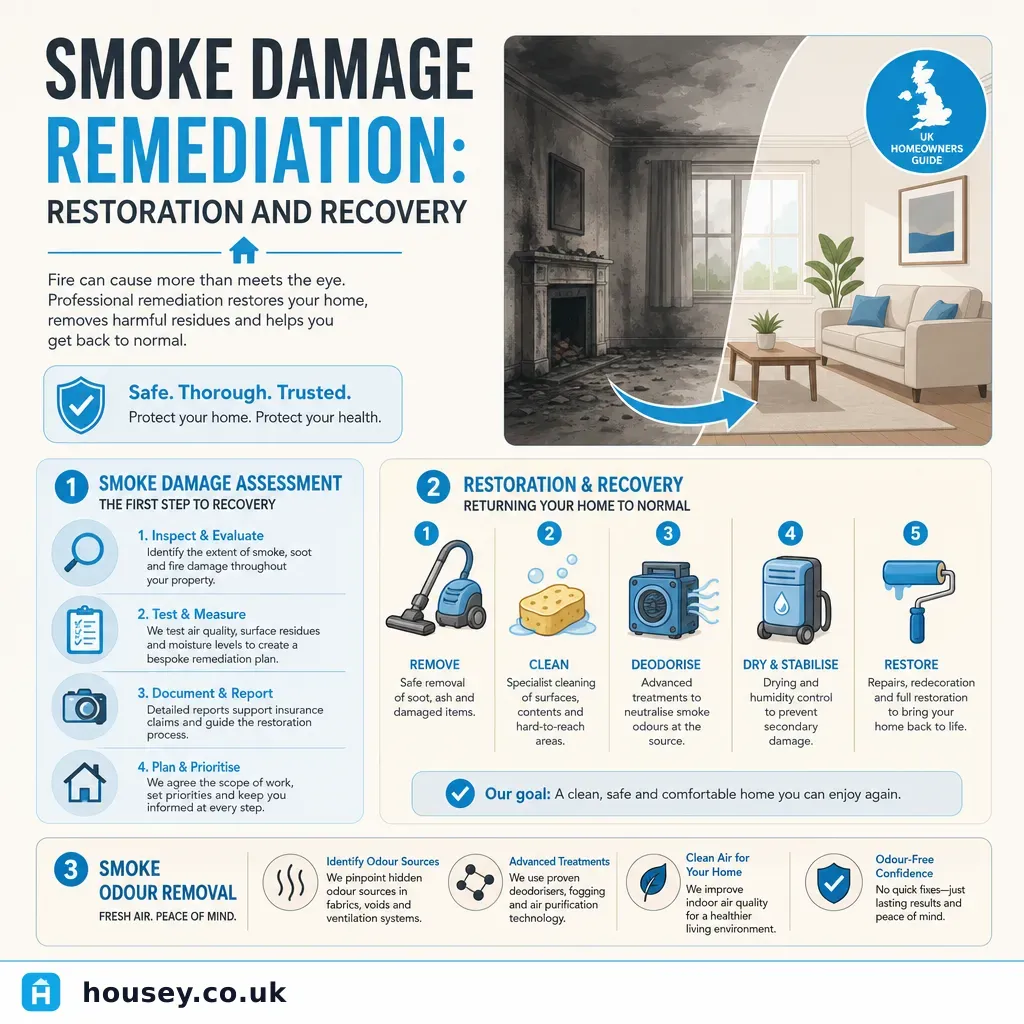
Smoke Damage Remediation: Restoration and Recovery
Smoke from a house fire or a contained room fire does not stop damaging a property once the flames are out. Acidic soot and volatile compounds continue to corrode surfaces, contaminate soft furnishings, and affect indoor air quality for days or weeks if remediation is delayed. Most UK homeowners encounter this situation unexpectedly — often in the middle of managing an insurance claim — with little prior knowledge of what professional remediation involves, how long it takes, or how choices made in the first hours affect the eventual outcome.
Key points
- Smoke deposits acidic soot that continues to etch metal, glass, and painted surfaces within 72 hours if untreated; prompt action limits secondary damage significantly.
- Re-entry to a fire-damaged property should only occur once the fire service has declared the structure safe — do not assume soundness because the fire appeared contained.
- Professional remediation contractors in the UK typically follow IICRC S520 fire-restoration protocols; always ask which standards a contractor works to before instructing them.
- Under most UK home buildings and contents insurance policies, fire and smoke damage is a standard covered peril; notify your insurer before instructing contractors where possible.
- A fire risk assessment may be required before a building is reoccupied, particularly for HMOs, commercial premises, or where the fire affected shared areas in a block of flats.
What smoke damage actually involves
Smoke is a mixture of gases, aerosols, and particulates produced by combustion. When it contacts cooler surfaces — walls, ceilings, upholstery, cavities — it deposits a residue that is chemically active. The composition depends on what burned: synthetic materials such as plastics and foam produce particularly corrosive and toxic residues. Protein fires (cooking), wet fires (treated timber and synthetic fabrics), and dry fires each leave different residue types requiring different cleaning chemistry.
Key damage mechanisms include:
- Soot deposition: fine carbon and chemical particles settle on all surfaces, including inside ductwork and wall cavities.
- Odour penetration: smoke compounds absorb into porous materials — plaster, timber, insulation, fabrics — and off-gas for months if not properly treated.
- Acid etching: soot is acidic and progressively corrodes metal fixtures, glass, and paintwork even after the fire is extinguished.
- Discolouration: yellowing and staining of walls, ceilings, and fittings that worsens if cleaning is delayed.
The remediation process: a practical overview
Professional smoke damage remediation in the UK typically follows a structured sequence. Understanding the stages helps homeowners ask better questions and assess whether a contractor is working to an appropriate standard.
1. Safety and structural assessment Before any cleaning begins, a competent professional checks structural integrity, electrical safety, and gas supply. If the fire was significant, a structural engineer or chartered surveyor may need to assess load-bearing elements before the building is entered.
2. Contents inventory and removal Salvageable and unsalvageable items are catalogued — essential documentation for insurance claims. Restorable items are removed for off-site cleaning and storage.
3. Dry cleaning and HEPA vacuuming Loose soot is removed dry before any wet cleaning to prevent smearing. HEPA-filtered vacuums prevent re-dispersal of fine particles into the air.
4. Chemical cleaning Specialist alkaline cleaning agents neutralise acidic soot. Different surfaces require different products; inexperienced cleaning can drive soot deeper into materials or cause additional damage.
5. Odour treatment Thermal fogging, ozone treatment, hydroxyl generation, or encapsulation sealers are used depending on severity and material types. Ozone treatment requires full property evacuation during and after application.
6. Structural drying Firefighting water introduces significant moisture; professional drying equipment — dehumidifiers and air movers — reduces the risk of secondary mould growth in structural materials.
7. Clearance testing A reputable contractor will offer or recommend air quality or surface clearance testing before declaring remediation complete, especially where the property will be reoccupied by vulnerable occupants.
Homeowner checklist: immediate steps after a smoke event
Use this list in the hours and days immediately following a smoke event.
Red flags: warning signs during remediation
Watch for these warning signs during or after the remediation process.
- A contractor begins cleaning immediately without a detailed written assessment or scope of works.
- Ozone treatment is carried out without evacuating the property — ozone is harmful to humans and pets at treatment concentrations.
- The contractor does not document which items were removed, stored, or disposed of.
- No clearance testing is offered after remediation on a significant fire.
- Persistent smoke odour two to four weeks after remediation is declared complete.
- Visible mould growth in previously affected areas within weeks — suggests inadequate structural drying.
- A verbal-only quote with no itemised breakdown — problematic when submitting an insurance claim.
Costs and timescales
Indicative UK costs, last reviewed 2026-05-10. Actual costs vary significantly based on property size, fire severity, materials affected, and contractor rates. Always obtain at least two or three itemised quotes.
Scope | Indicative cost range | Typical timescale |
|---|---|---|
Single room, contained smoke | £1,000–£4,000 | 3–7 days |
Multiple rooms, partial structural involvement | £5,000–£20,000 | 2–6 weeks |
Whole-property major fire | £20,000–£100,000+ | 3–12 months |
Specialist odour treatment (thermal fogging or ozone) | £500–£2,500 | 1–3 days |
These figures are indicative only. VAT is typically charged at 20% on remediation work. Check whether emergency accommodation costs are covered under your policy's alternative accommodation provision.
Smoke damage and your insurance claim
Most UK standard buildings and contents policies treat fire and smoke damage as a covered peril. Key steps:
- Notify your insurer or broker before major cleaning begins — failure to do so can affect your claim.
- A loss adjuster may be appointed by the insurer to assess damage on their behalf. You are entitled to appoint your own loss assessor to represent your interests independently.
- Keep a full inventory of damaged and lost items with estimated values.
- If the property is uninhabitable, most policies cover reasonable alternative accommodation costs up to policy limits.
- Clarify whether the appointed contractor is the insurer's preferred supplier or your own choice — this affects your control over the scope of works and materials used.
Important limitations
This article provides general information about smoke damage remediation processes in the UK. It is not a substitute for professional assessment of your specific property and situation. Smoke damage severity varies enormously depending on what burned, the duration of the fire, the property's construction, and the time elapsed before intervention. Rules around insurance claims, tenancy responsibilities, and reoccupation requirements differ by policy, tenure, and local authority. A competent remediation contractor, your insurer, and where relevant a chartered surveyor or structural engineer should assess your specific situation before major decisions are made.
When to get professional help
Seek professional help immediately if:
- The fire service has not yet confirmed re-entry is safe.
- There are cracks, deflections, or instability in walls, ceilings, or floors following the fire.
- Electrical, gas, or structural systems may have been affected — do not restore power or gas supply without a registered engineer inspecting first.
- Visible mould appears within days of the fire, indicating significant moisture from firefighting water.
- Occupants experience persistent respiratory symptoms or eye irritation after re-entry to the property.
- A fire affected shared areas in a block of flats or HMO — additional fire risk assessment obligations may apply to the responsible person under the Fire Safety Act 2021.
What to ask a qualified professional
Before instructing a smoke remediation contractor, ask:
- What standards or protocols do you follow (for example, IICRC S520 or TrustMark quality schemes)?
- Are you registered with TrustMark or another recognised quality scheme?
- Will you provide a written scope of works and schedule of rates before starting work?
- How will you document removed or disposed-of contents for my insurance claim?
- What odour treatment methods do you use, and what are the safety requirements during and after application?
- Will you carry out or arrange post-remediation air quality or surface clearance testing?
- What public liability insurance do you hold, and can you provide evidence of it?
- Do you work directly with loss adjusters, or does the scope of works require insurer approval first?
How Housey can help
If a fire has affected your property, a professional fire risk assessment can establish whether the building meets safety requirements before reoccupation — particularly important for landlords, HMO owners, and where shared areas were involved. Housey can help you request quotes from qualified fire risk assessors across the UK.
Frequently asked questions
Can I clean smoke damage myself?
Light surface soot on non-porous surfaces can sometimes be carefully removed, but professional-grade cleaning is strongly recommended for anything beyond superficial marks. Household cleaning products can smear soot, drive it deeper into surfaces, and increase costs. Porous materials such as plaster, timber, and soft furnishings almost always require professional treatment to eliminate odour and residue fully.
How long does smoke smell last after a fire?
Without professional treatment, smoke odour can persist for months or years as compounds continue to off-gas from porous materials. With proper remediation — including specialist odour treatment and encapsulation where needed — most odour is eliminated within the remediation period, though stubborn cases in heavily porous structures may require multiple treatment rounds.
Does smoke damage decrease property value?
Untreated or poorly remediated smoke damage can significantly affect a property's market value and saleability. Professional remediation with documented clearance testing provides evidence that damage has been properly addressed, which matters for future sales, mortgage valuations, and insurance renewals.
Who is responsible for smoke damage in a rented property?
Responsibility depends on the cause of the fire. If it originated from a landlord's appliance or a structural defect, the landlord is typically responsible. If caused by tenant negligence, the tenant may be liable. Both parties' insurance policies may be relevant. Legal advice should be sought where responsibility is disputed.
What is a loss assessor and do I need one?
A loss assessor manages your insurance claim on your behalf — unlike a loss adjuster, who is appointed by and works for the insurer. For large or complex smoke damage claims, a loss assessor may help ensure you receive a fair settlement. They typically charge a percentage of the final settlement amount.
Sources and further reading
- Fire safety in purpose-built blocks of flats — GOV.UK
- Make your home safe from fire — GOV.UK / National Fire Chiefs Council
- IICRC standards for fire and smoke restoration — Institute of Inspection, Cleaning and Restoration Certification
- TrustMark: find a registered contractor — TrustMark
- Making a home insurance claim — Citizens Advice
Useful next reads
 Surveys & Inspections
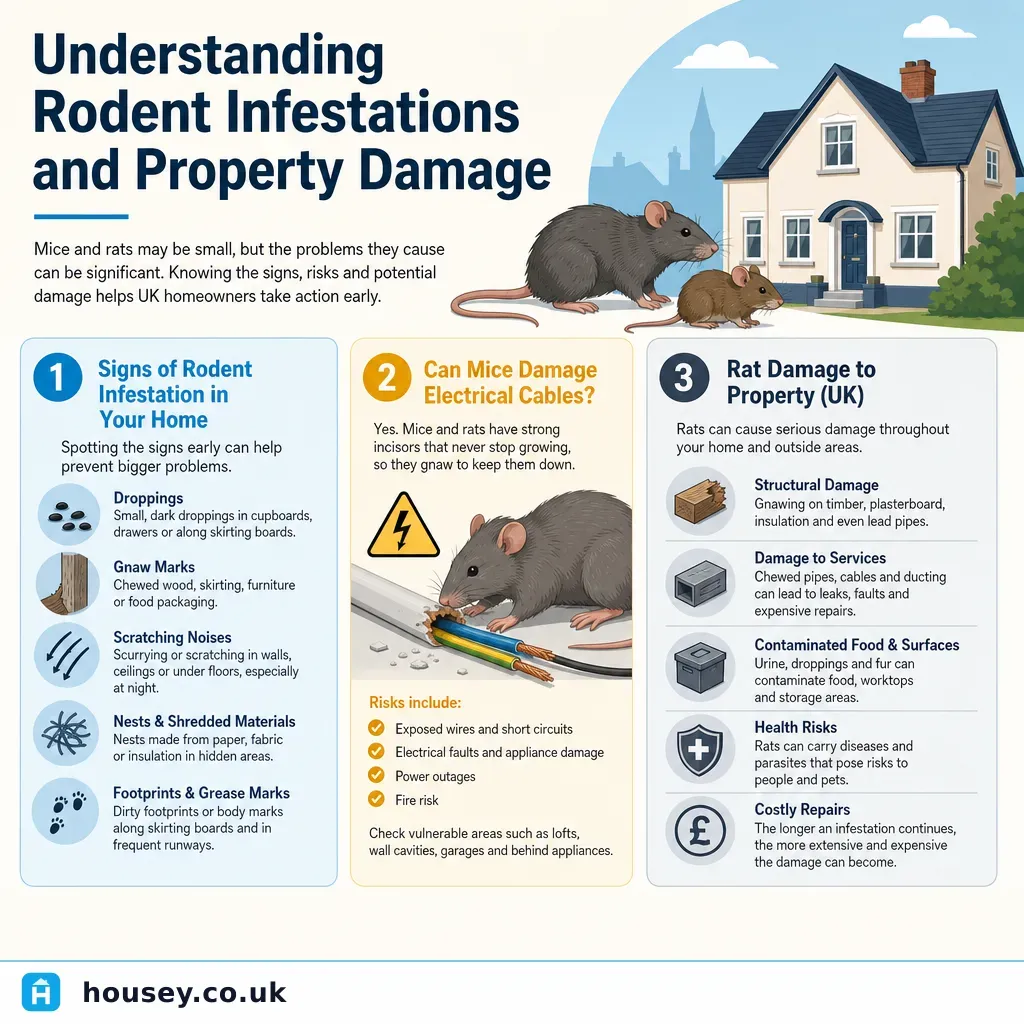
Understanding Rodent Infestations and Property Damage
Rats and mice can cause significant property damage in UK homes, including gnawed electrical cables that create fire risk, damaged pipework causing hidden leaks, and burrowing near foundations in older properties.
 Surveys & Inspections
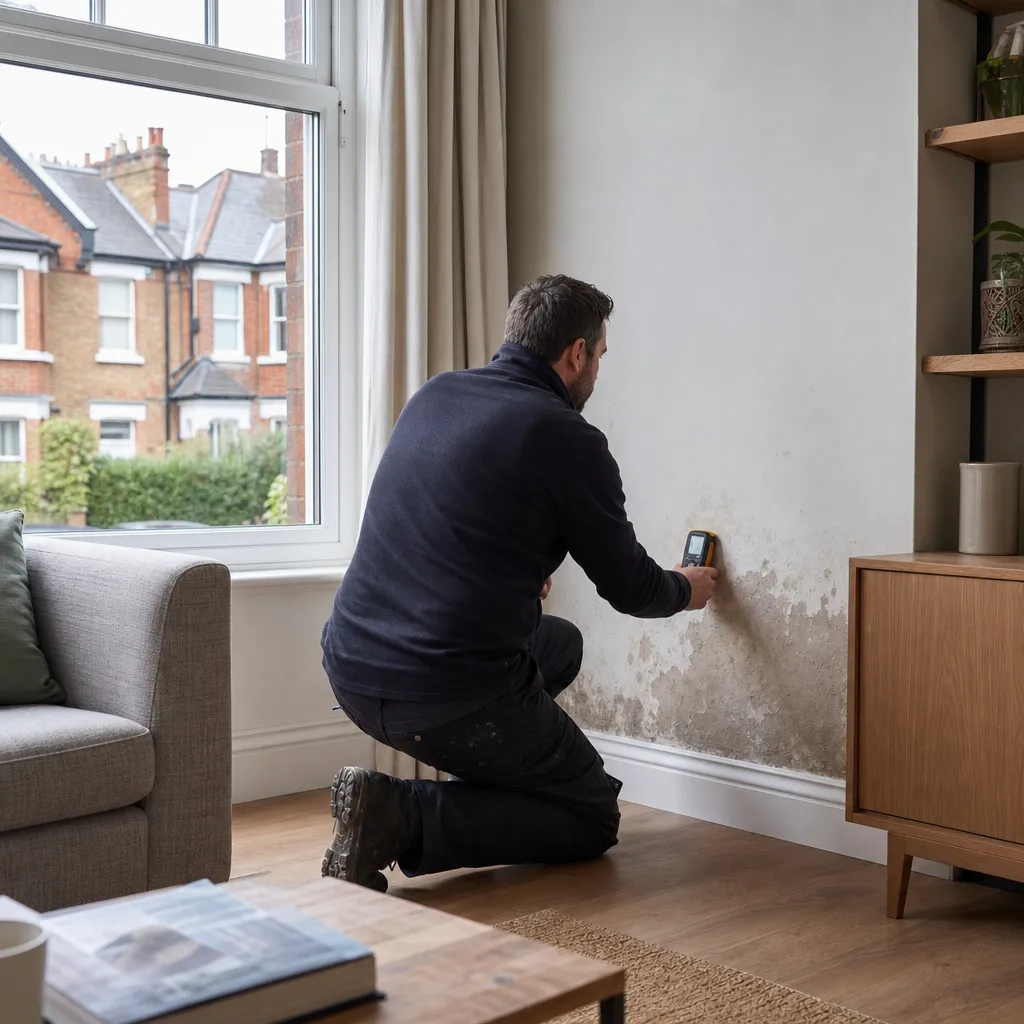
Managing Property and Contents After Damp Treatment
After damp treatment in a UK home, allow walls to dry fully before re-plastering or decorating — this typically takes six months to two years depending on construction and damp severity.
 Surveys & Inspections
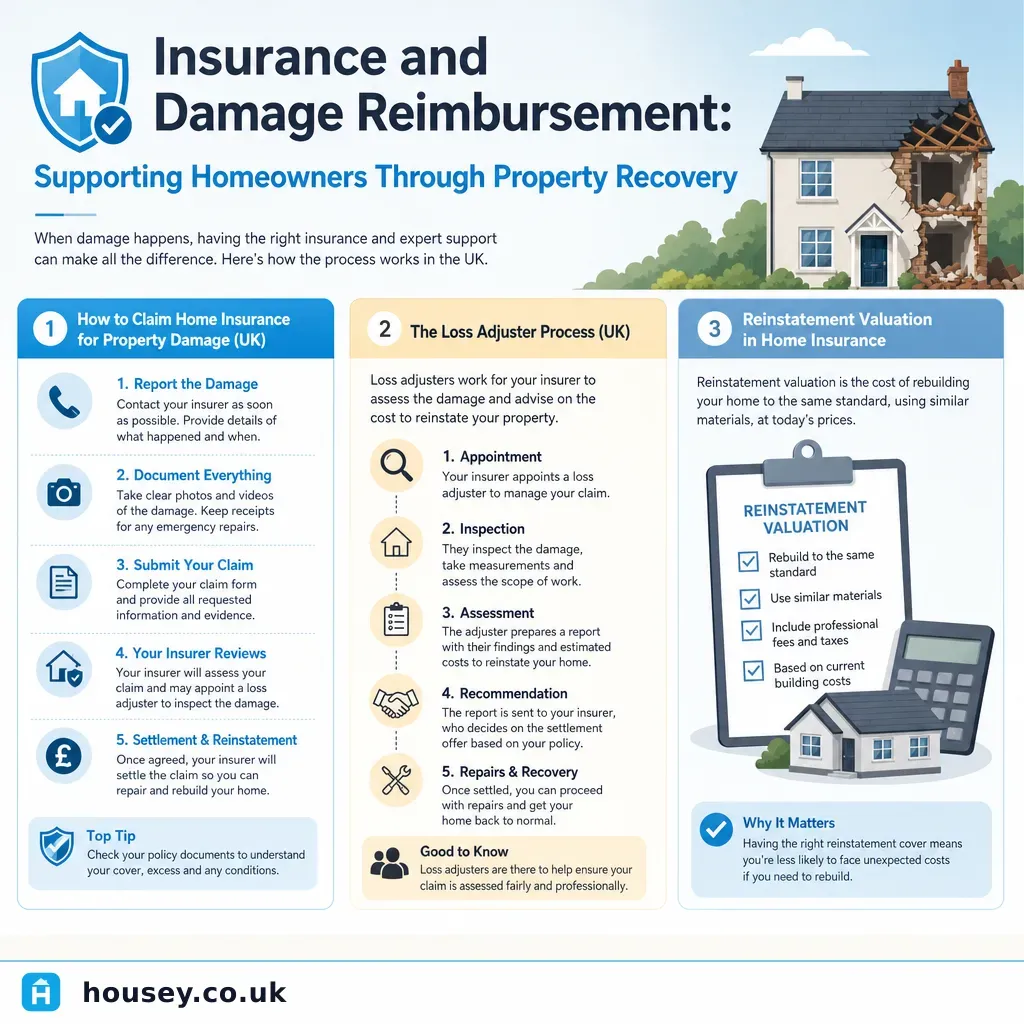
Insurance and Damage Reimbursement: Supporting Homeowners Through Property Recovery
After property damage, your insurer will typically appoint a loss adjuster to assess the claim.
 Surveys & Inspections
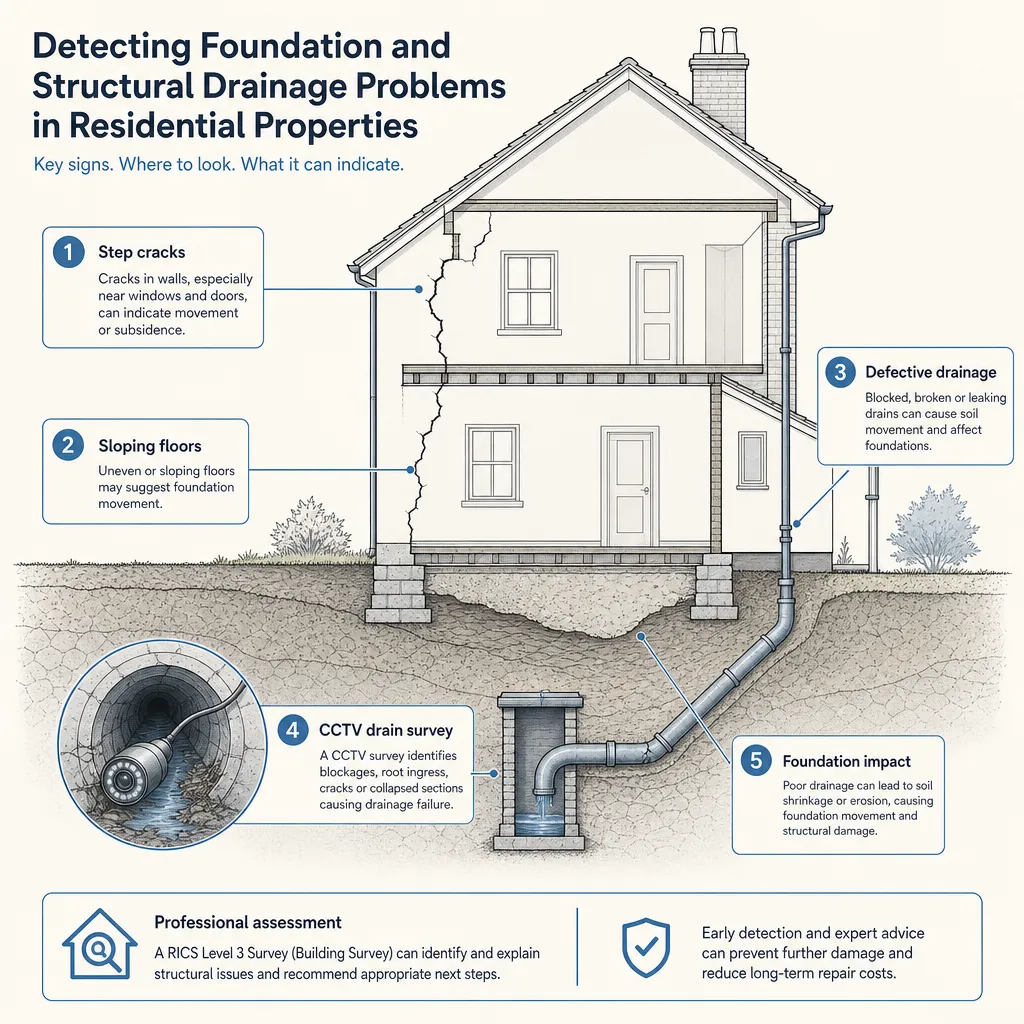
Detecting Foundation and Structural Drainage Problems in Residential Properties
Foundation and drainage problems in UK homes often appear as stepped cracks in brickwork, sticking doors, or slow-draining fixtures.
 Surveys & Inspections
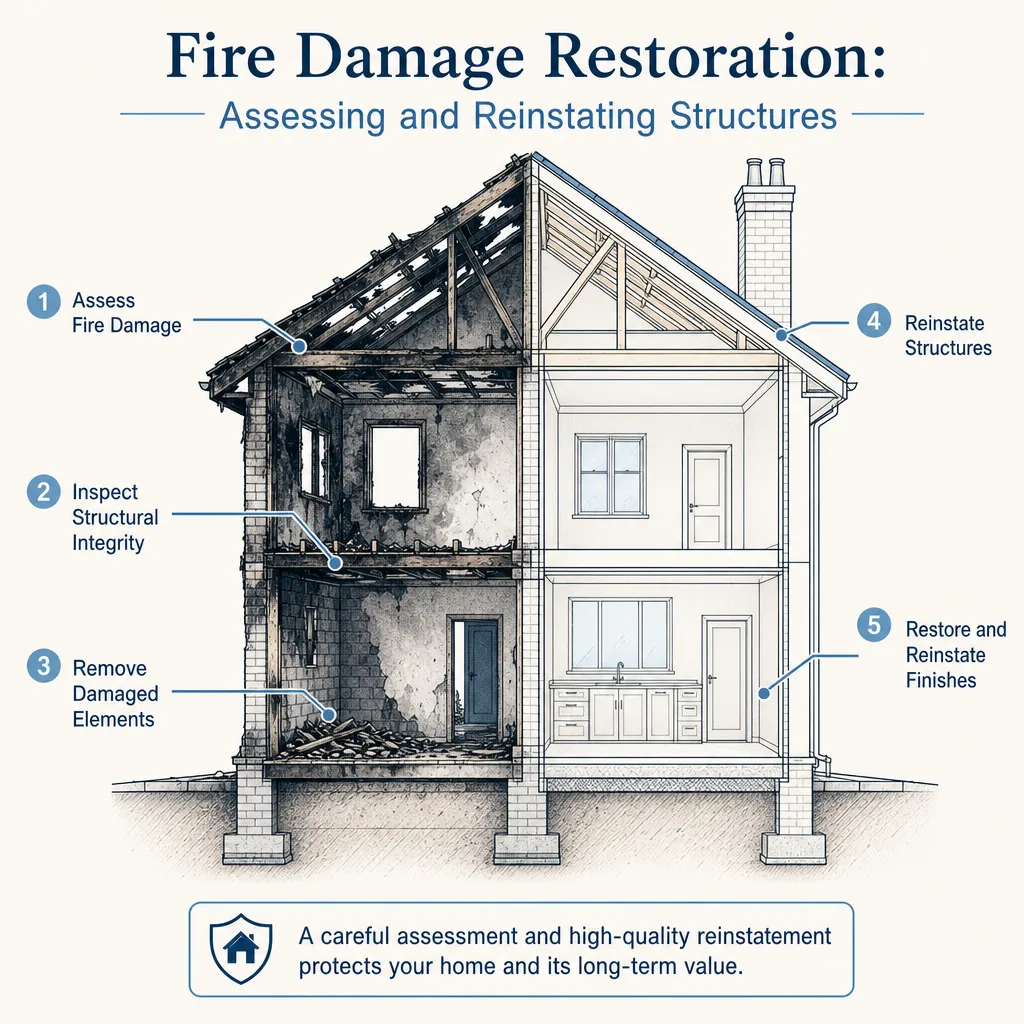
Fire Damage Restoration: Assessing and Reinstating Structures
Fire damage restoration starts with a structural engineer assessing which elements can be repaired and which must be replaced.