Assessing Structural Integrity of Properties Completed in Wet Weather
By Housey · Last reviewed 30th of May 2026
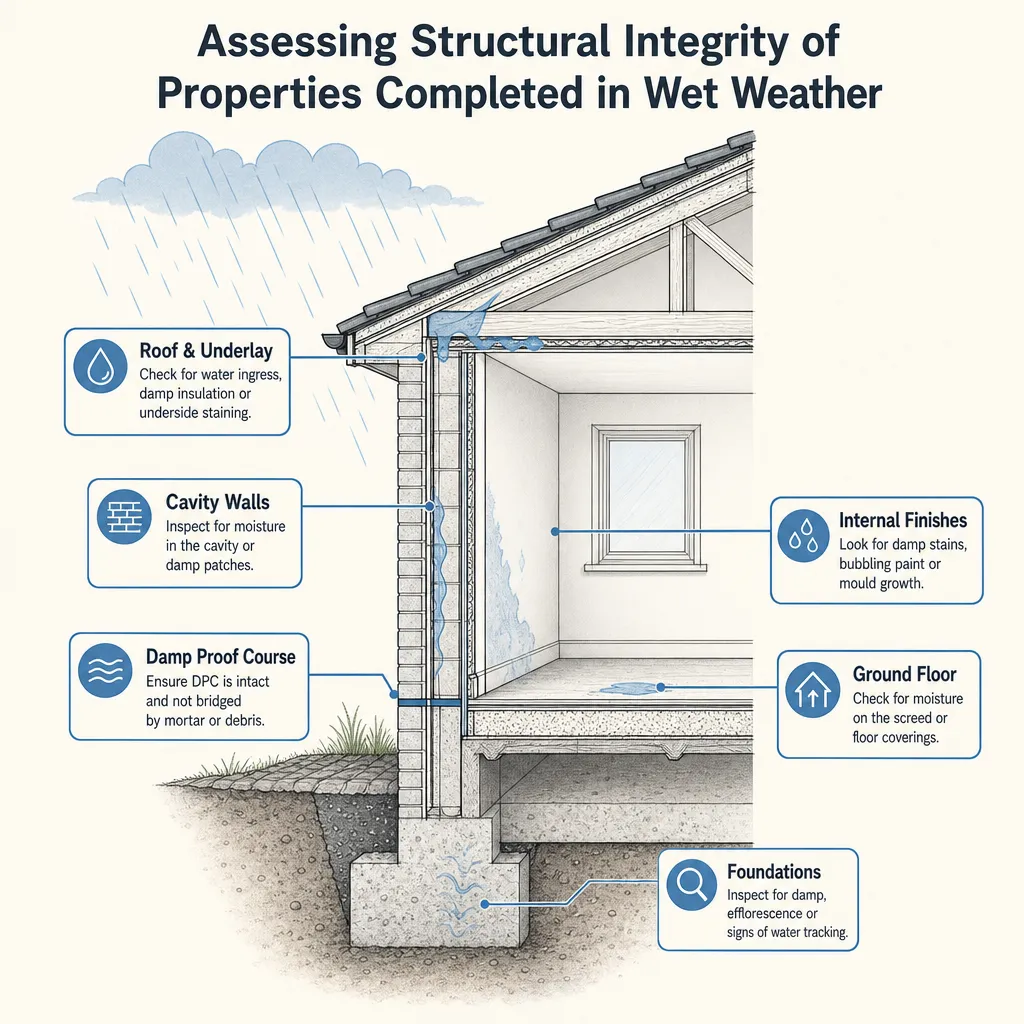
Assessing Structural Integrity of Properties Completed in Wet Weather
The timing of construction matters more than many buyers and homeowners realise. Whether you are purchasing a recently completed new build, commissioning an extension, or investigating problems in a property built or extended during an unusually wet period, understanding how rain and moisture affect structural elements is a practical first step. Issues arising from wet-weather construction may not be immediately visible at handover — making professional inspection particularly important before exchange of contracts, or when deciding whether to commission remediation.
Key points
- NHBC Technical Standards (Chapter 2.1) set out acceptable on-site conditions for concrete and mortar work, including precipitation and temperature thresholds that must be met before and during placement.
- Mortar laid in heavy rain can suffer cement washout, reducing compressive strength and adhesion — defects that may only become apparent as cracking or cavity-wall movement years later.
- Timber frame and engineered timber components can absorb significant moisture during construction; industry guidance requires moisture content to fall within specified limits before internal finishes are applied, to prevent subsequent movement and mould growth.
- Concrete poured in cold, wet conditions without appropriate admixtures or curing protection may not achieve its design characteristic compressive strength — a critical concern in foundations and ground beams.
- A RICS Level 3 Building Survey is the most comprehensive general inspection available to buyers and is the appropriate starting point where construction quality is uncertain.
How wet weather affects construction
UK construction proceeds in all conditions, but Building Regulations and industry standards recognise that certain operations should be suspended or protected during adverse weather. The risks are specific to each structural element.
Masonry and mortar: Cement-based mortars should not be laid in driving rain or below approximately 2°C. Rainwater can wash cement paste from freshly laid joints, creating weak, porous bonds. On cavity-wall construction, rain on scaffolding causes mortar droppings to accumulate at the base of the cavity, bridging it and creating a direct pathway for damp ingress into the inner leaf.
Concrete works: Foundations, ground beams, and slabs poured during heavy rainfall can suffer surface laitance — a weak layer caused by excess water at the surface — and reduced overall strength. In cold wet conditions the hydration process slows; without adequate curing protection, strength gain is compromised and the concrete may not reach its design specification.
Timber frame construction: Modern UK timber frame packages arrive pre-treated, but extended exposure to rain before the building is weather-tight allows moisture content to rise above safe levels. High moisture content increases the risk of frame movement, distortion, and mould growth as the structure dries out during occupation. Movement in the frame can cause plaster cracking, sticking doors, and, in severe cases, distortion in the roof structure.
Cavity wall insulation: Partial-fill insulation boards left exposed during construction can become waterlogged. Saturated insulation built into the cavity without drying can reduce thermal performance and contribute to interstitial condensation in the completed wall — a problem that may not become apparent until the first winter.
A worked UK property scenario
An illustrative example based on typical RICS Level 3 Building Survey findings:
A buyer makes an offer on a 2023-completed semi-detached house in the East Midlands. The developer's programme shows the superstructure was erected during October and November 2022 — a period of above-average rainfall in the region. At the RICS Level 3 survey, the surveyor notes:
- Stepped diagonal cracking in mortar joints at the corners of two window openings, consistent with differential shrinkage in mortar laid in wet conditions.
- Three locations where external render has detached, exposing cavity wall ties with inadequate mortar at bed joints.
- Slightly bowed first-floor decking in the master bedroom, attributed to timber I-joists having absorbed moisture before the roof was completed and weathertight.
- A hairline crack in the ground-floor slab, recommended for monitoring over a 12-month period before any remediation decision.
The surveyor recommends a structural engineer's targeted inspection for the cracked mortar and cavity-tie locations. The buyer uses the findings to negotiate on the purchase price and secures a retention until remediation is independently verified as complete.
(Indicative UK cost for a structural engineer's targeted inspection report: £400–£700. Last reviewed 2026-05-30. Costs vary by region and scope of investigation.)
Red flags in a recently completed or extended property
The following signs in a newly built or recently extended property may indicate wet-weather construction problems and warrant further investigation before purchase or before committing to occupation:
- Stepped or diagonal cracking in external brickwork, particularly at corners and around window or door openings.
- Internal plaster cracking wider than a hairline (greater than 1 mm) appearing within the first 12 months.
- Staining or damp patches on internal walls — especially in cavity areas — during or immediately after wet weather.
- Squeaking, springy, or uneven upper-floor timber decking.
- Mould growth in new-build rooms shortly after the building became weather-tight, suggesting elevated timber moisture content.
- Mortar joint colour variation or surface crumbling, indicating insufficient strength gain during curing.
- Doors or windows sticking or failing to close fully in a recently completed structure where no settlement would be expected.
Homeowner checklist before instructing a survey
Before commissioning a structural survey for a property with suspected wet-weather construction issues, gather the following documents where possible:
Important limitations
This article provides general information about the types of defect associated with wet-weather construction. Whether specific cracks, movement, or damp patches in your property are attributable to construction conditions requires a professional inspection by a chartered surveyor or structural engineer with access to the building and its records. General guidance cannot substitute for an assessment of your specific property, its age, and its construction method.
When this becomes urgent
Seek professional advice without delay if:
- Cracks in external masonry are widening, stepped through brickwork diagonally, or accompanied by visible displacement of individual bricks or blocks.
- Doors or windows that previously operated normally have begun sticking in a pattern consistent with structural movement — for example, a diagonal pull at corners.
- Internal walls show horizontal cracking at ceiling level, which may indicate differential movement between the superstructure and roof structure.
- You hold a structural warranty (NHBC or equivalent) and the 10-year period is approaching expiry — defects must be notified while the warranty remains in force.
What to ask a qualified professional
Before commissioning a structural survey or structural engineer's report:
- Are you a RICS-registered chartered surveyor or a Member of the Institution of Structural Engineers (MIStructE)?
- Will you access the roof space, subfloor void, and external masonry as part of the inspection?
- Can you distinguish between normal new-build shrinkage cracking and defects attributable to construction conditions?
- Can you advise on whether any defects found fall within the scope of a structural warranty claim?
- Will your report include recommendations for monitoring periods, remediation, or further specialist investigation?
- What assumptions is the quote based on, and what could change the scope or final cost?
When to get professional help
A RICS Level 3 structural survey or a structural engineer's inspection is recommended for any recently built or extended property where construction quality is uncertain, visible defects are present, or construction occurred during a period of documented adverse weather. A RICS Home Survey (Level 2 or Level 3) will identify the nature and extent of defects and guide next steps, including any warranty notification deadlines that may be approaching.
How Housey can help
Housey connects buyers and homeowners with RICS-registered surveyors and structural engineers across the UK. Whether you need a RICS Level 3 structural survey to assess a recently completed property or a RICS Home Survey before exchange of contracts, you can compare quotes from vetted local professionals through the platform.
Frequently asked questions
Does an NHBC warranty cover defects caused by wet-weather construction?
NHBC Buildmark warranty covers defects in workmanship and materials that cause the property to be unfit for habitation or fail to meet NHBC Standards. If wet-weather construction led to a qualifying defect, it should be covered within the first 10 years. Claims must be properly notified to NHBC, and disputes about causation may require independent structural evidence.
How soon after completion might wet-weather construction defects appear?
Some defects, such as mortar crumbling or joint staining, may be visible within months. Structural cracking from settlement or differential movement can take one to three years to develop fully. Timber movement and associated plaster cracking often appears in the first heating season after construction, as the frame dries and the structure stabilises.
Should I withdraw from a purchase if the survey finds wet-weather construction issues?
Not necessarily. The severity, extent, and remediation cost of the defects are the key considerations. Minor shrinkage cracking is common in new builds and usually cosmetic. Significant cavity-tie failure or foundation defects are more serious. Your surveyor should advise on urgency and cost, which you can use to negotiate with the vendor or developer.
Can building control sign-off guarantee a structurally sound building?
Building control inspection confirms compliance with Building Regulations at the stages inspected, but inspectors do not attend continuously on site. Sign-off does not guarantee every aspect of construction met the regulations, particularly if adverse conditions occurred between inspections. A structural survey is a separate and more detailed assessment conducted after completion.
Sources and further reading
- NHBC Technical Standards — NHBC
- Building Regulations Approved Document A: Structure — HM Government
- RICS Home Survey Standard — RICS
- BRE Good Building Guides — BRE Group
- BS 8000: Workmanship on building sites — BSI Group
Useful next reads
 Surveys & Inspections
Identifying Asbestos Insulation: What You Need to Know for Your Property
Asbestos insulation was widely used in UK properties built before 2000, commonly found in pipe lagging, ceiling tiles, loose-fill loft insulation, and around boilers.
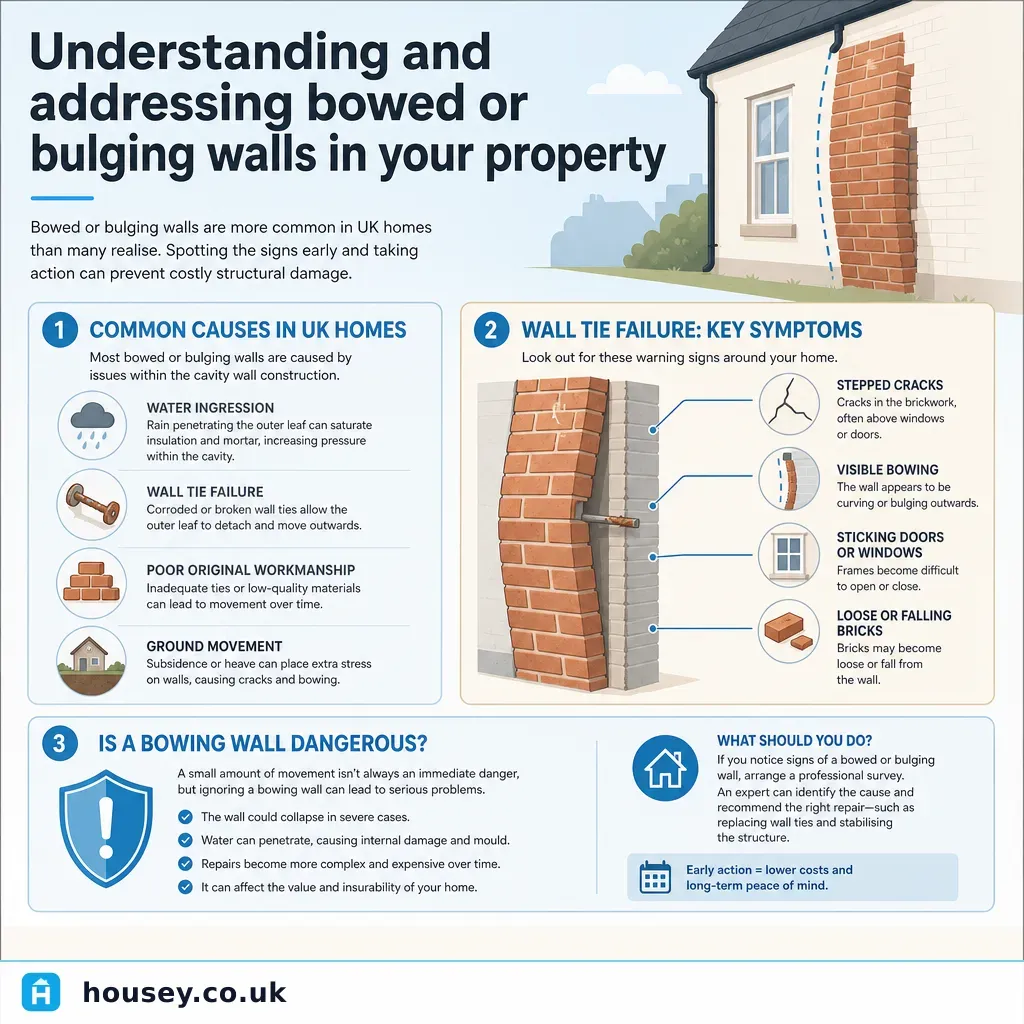 Surveys & Inspections
Understanding and addressing bowed or bulging walls in your property
A bowed or bulging wall may indicate wall tie failure, foundation movement, or overloading.
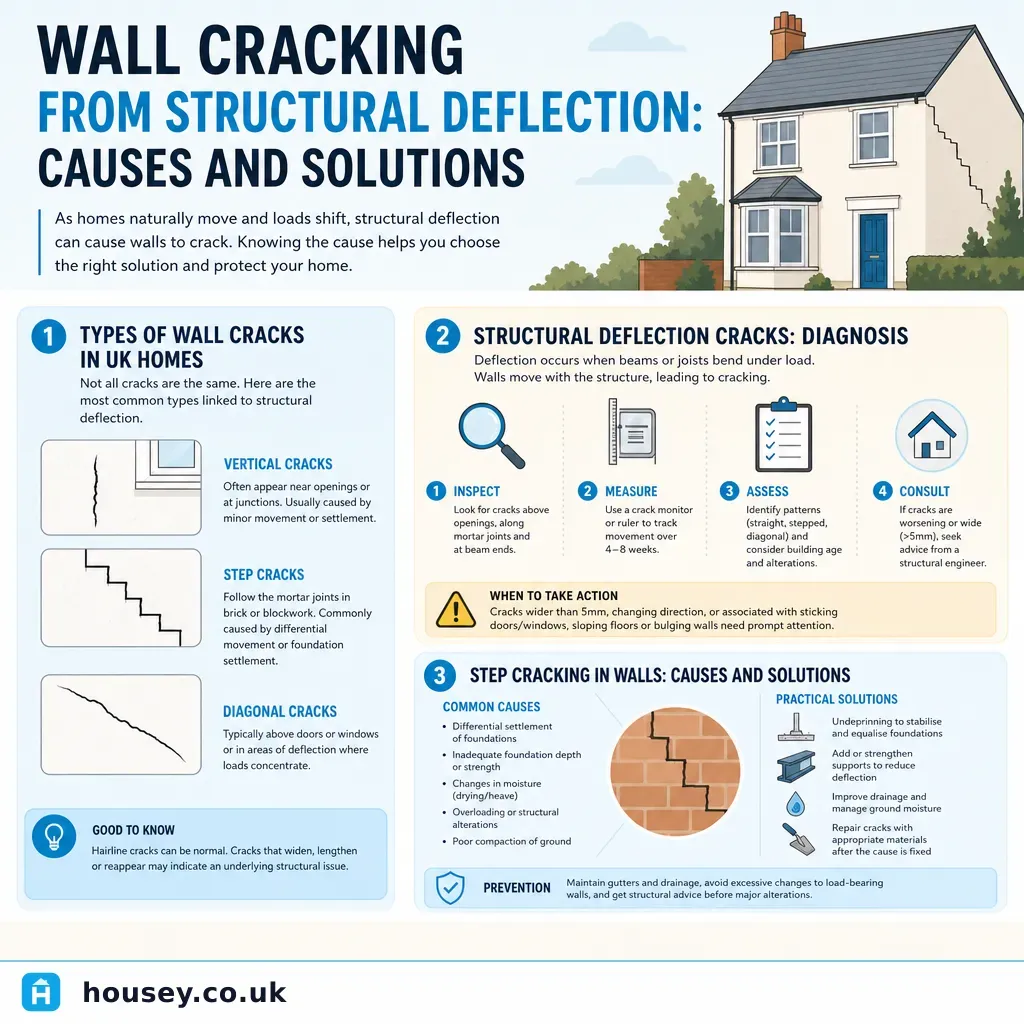 Surveys & Inspections
Wall Cracking from Structural Deflection: Causes and Solutions
Structural deflection occurs when a beam, floor, or lintel sags under load, transferring stress into surrounding masonry and causing characteristic cracks.
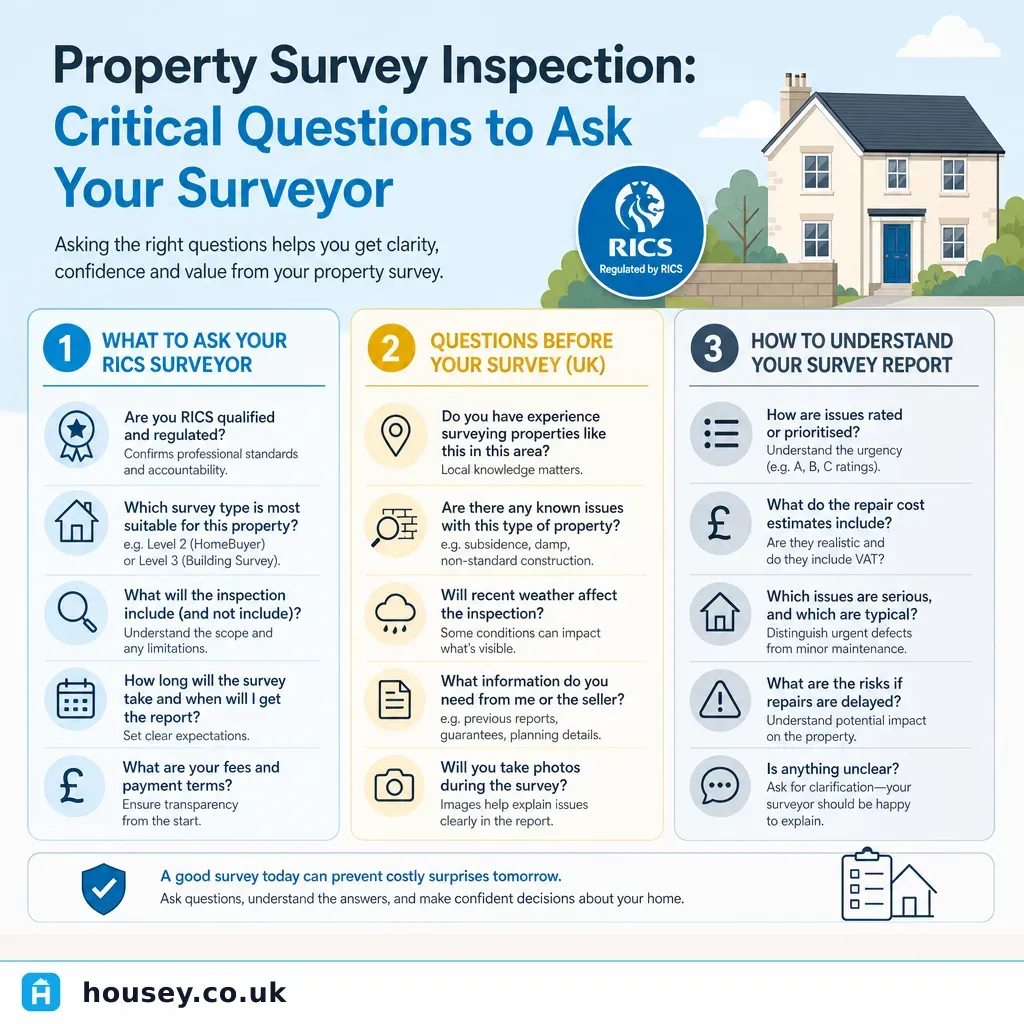 Surveys & Inspections
Property Survey Inspection: Critical Questions to Ask Your Surveyor
Before instructing a surveyor, ask which RICS level suits your property and what the report will and will not cover.
 Surveys & Inspections
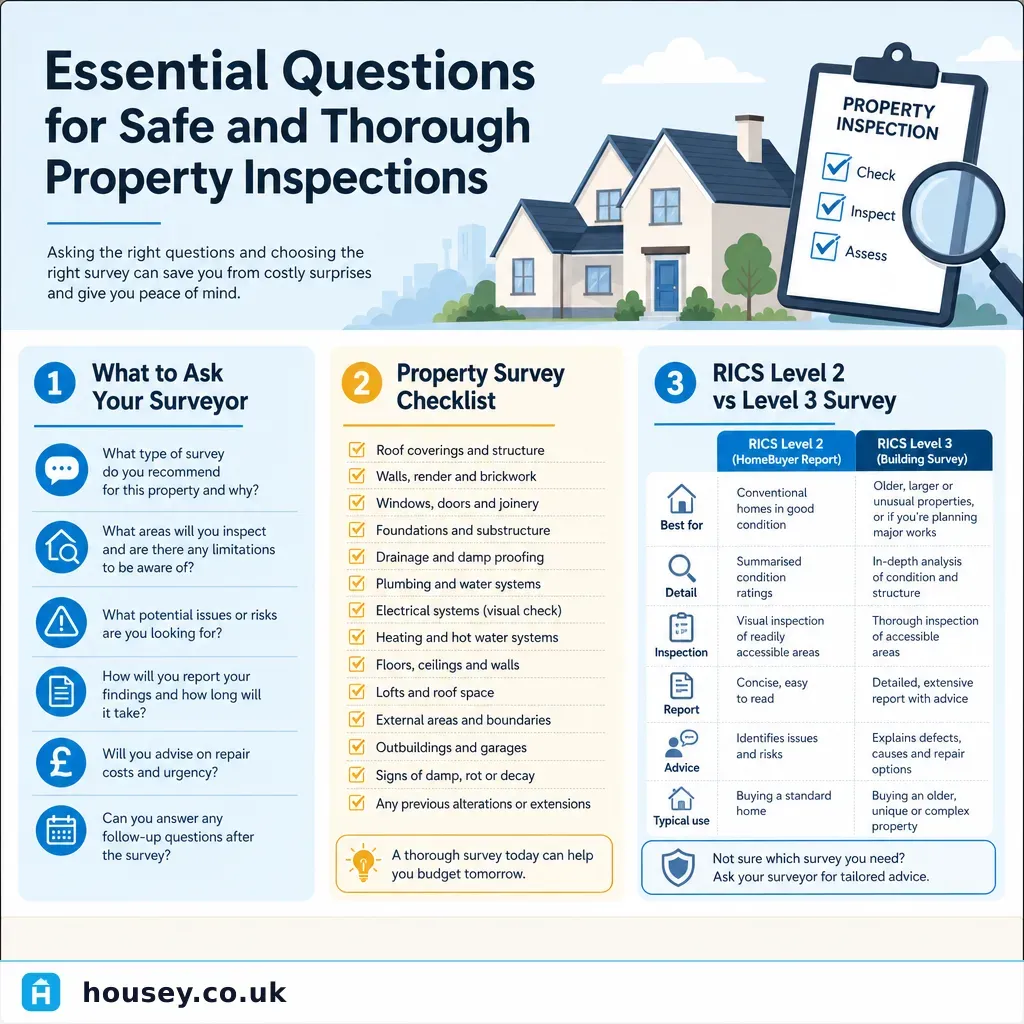
Essential Questions for Safe and Thorough Property Inspections
Before commissioning a property survey, confirm what type of inspection suits your property's age and condition, ask the surveyor what defects they will and will not assess, and understand what the report will recommend.