Understanding and addressing bowed or bulging walls in your property
By Housey · Last reviewed 11th of May 2026
Understanding and addressing bowed or bulging walls in your property
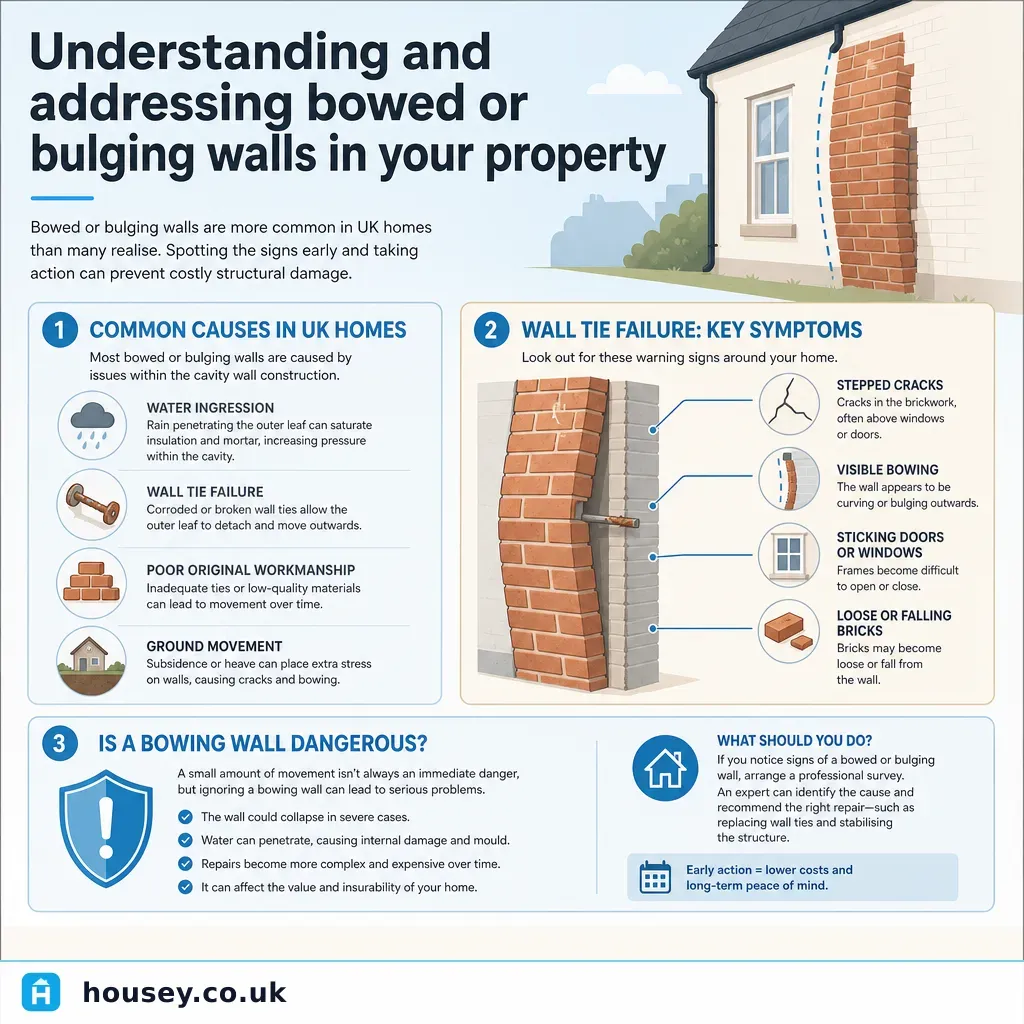
Bowed or bulging walls are among the more unsettling defects a homeowner can discover, appearing in properties of almost every era — from Victorian terrace to post-war semi. They often attract attention during a pre-purchase survey, after a period of severe weather, or when redecorating reveals a wall surface that is no longer flat. Understanding what is causing the movement, and how urgent it is, makes the difference between a costly overreaction and a dangerous delay.
Key points
- Wall tie failure is one of the most common causes of cavity wall bulging in UK homes built between 1945 and 1985, when galvanised steel ties were standard.
- Building Regulations Approved Document A (Structure) governs structural wall requirements; repairs to load-bearing walls may require building control notification and sign-off.
- A wall tie survey using a metal detector or borescope camera can confirm tie failure without invasive opening-up works.
- RICS classifies structural defects from Condition 1 (no action) to Condition 3 (urgent works required); a RICS Level 3 Building Survey or standalone structural inspection will identify which applies.
- Specialist wall tie replacement uses stainless steel resin-fixed ties at 450 mm × 900 mm centres; failed ties are isolated rather than removed.
What causes a wall to bow or bulge?
A wall does not move without a reason. The most common causes in UK residential property are:
Wall tie failure — cavity walls built between approximately 1945 and 1985 often used galvanised steel ties. Over time, corrosion causes ties to expand, fracturing the mortar bed and pushing the outer leaf outward. Early signs include horizontal cracking at roughly 450 mm intervals on the external face.
Foundation movement or subsidence — differential settlement can cause walls to rotate outward at the base. This is more common on clay-rich soils and near large trees. Cracking typically follows diagonal or stepped patterns through brickwork courses.
Overloading — an undersized lintel, a floor beam bearing on the outer leaf without proper support, or roof spread can all cause localised bowing.
Moisture and frost action — repeated freeze-thaw cycles damage mortar and brick faces. Where copings or flashings have failed, saturated brickwork can spall and bow outward, particularly on exposed gable ends.
Historic or original construction — older solid-wall buildings sometimes have walls that were never perfectly plumb. Slow outward movement over decades may be historic and stable, but this should be confirmed by a professional.
How to assess severity
A qualified professional should assess severity in person. Homeowners can, however, record useful observations before instructing anyone.
Observation | Likely significance |
|---|---|
Horizontal cracking at regular intervals (~450 mm) on outer leaf | Wall tie failure — specialist survey needed |
Bulge greater than 25 mm over a 3 m run, visible from ground | Significant — structural inspection required |
Diagonal or stepped cracking with bulging | Possible foundation movement — structural engineer recommended |
Bulge confined to upper section of gable end | May indicate roof spread — roof structure should also be checked |
Uneven wall surface internally but no cracking | May be render movement or damp-related, not necessarily structural |
Wall visibly leaning out of plumb | Urgent — do not delay professional assessment |
A deviation of more than 25 mm over a 3 m length is widely used by surveyors as a threshold for concern, though the appropriate response depends on the cause, rate of movement, and whether the wall is load-bearing.
Which professional do you need?
Situation | Professional to instruct | Why |
|---|---|---|
Cavity wall built before 1985, horizontal cracking at regular intervals | Specialist wall tie surveyor | Borescope inspection confirms tie condition without invasive works |
Cracking alongside bulging, signs of settlement | Chartered structural engineer (MIStructE or CEng) | Foundation and load-path assessment needed, not just the wall |
Pre-purchase — defect flagged in a survey | Review the report; instruct structural engineer if Level 3 recommends it | Survey report should specify the appropriate next step |
Historic movement in a listed building | RICS surveyor with conservation accreditation | Traditional lime construction needs specialist approach |
Urgent lean or imminent collapse risk | Building control and structural engineer immediately | Safety concern overrides all other considerations |
Which option should you choose?
- Choose a specialist wall tie surveyor if the outer leaf of a pre-1985 cavity wall shows horizontal cracking at regular intervals — a borescope inspection is a lower-cost first step before committing to repair.
- Choose a chartered structural engineer if cracking is diagonal, stepped, or accompanied by visible lean, sticking doors or windows, or signs of settlement.
- Ask a RICS Level 3 surveyor if you are purchasing the property and need a comprehensive written assessment before exchange of contracts.
- Contact building control immediately if the wall appears to be in imminent danger of failure.
- Check Historic England guidance before commissioning any repair on a listed building or property in a conservation area.
Red flags: when not to wait
Do not delay professional assessment if any of the following apply:
- The wall is visibly out of plumb when viewed from ground level.
- Cracking has appeared or widened noticeably within weeks or months.
- Doors or windows in the adjacent wall are sticking or have gaps opening around the frames.
- The bulge is near a chimney breast, roof junction, or structural lintel.
- You can see or feel a gap between the outer leaf and the internal structure.
- The property is on a slope, in a former mining area, or near large trees on clay-rich soil.
- The wall is retaining earth or water on one side.
Important limitations
This article provides general information about common causes and assessment approaches for bowed and bulging walls. It does not constitute structural or engineering advice. The cause, severity, and appropriate response vary significantly by property age, construction type, foundation conditions, and local geology. A qualified professional must inspect the wall in person before any remediation decisions are made.
What to ask a qualified professional
Before instructing a structural engineer or wall tie specialist, ask:
- What does the inspection involve, and will any opening-up works be required?
- Will you provide a written report with photographs and specific recommendations?
- Are you a Chartered Structural Engineer (MIStructE or CEng) or a RICS-accredited surveyor?
- If wall tie replacement is recommended, what tie type, spacing, and installation method will be used?
- Will the repair require building control notification under Approved Document A?
- What monitoring period, if any, do you recommend before deciding on repair?
- What are the risks of leaving the wall untreated in the short term?
When to get professional help
Instruct a structural engineer or chartered surveyor whenever a wall shows active movement, significant cracking, or visible lean. Do not rely solely on a general contractor's opinion for structural defects — obtain an independent written report from a qualified professional before any repair work begins. If you are buying a property with a flagged wall defect, ensure the professional report is received and reviewed before exchange of contracts.
How Housey can help
Housey connects you with qualified professionals for structural surveys, including RICS-accredited surveyors and structural engineers who can assess bowing and bulging walls, provide written reports, and recommend appropriate remediation. Submit a brief description of your concern to receive quotes from vetted local specialists.
Frequently asked questions
Can a bowed wall be repaired without rebuilding?
In many cases, yes. Wall tie failure is typically addressed by installing new stainless steel resin-fixed ties through the outer leaf — a specialist process that avoids demolition. More severe structural movement or widespread deterioration may require partial or full rebuilding of the affected section. A structural engineer's written report will confirm which approach is appropriate.
Does a bowed wall affect property value?
Yes, a known structural defect will affect most buyers' offers and may cause some lenders to decline until remediation is completed. Once professionally repaired with a written report and building control sign-off where required, most walls can be sold without an ongoing reduction in value.
How do I know if a bulging wall is getting worse?
Fix crack monitors across any visible cracks and photograph them at monthly intervals. A structural engineer can install precision gauges and review them after 3–6 months. Any increase in crack width, new cracking, or change in the bulge profile indicates active movement and warrants urgent professional attention.
Who should I instruct first — a surveyor or a structural engineer?
If a RICS Level 3 Building Survey has already flagged the defect, that report should specify the next steps. If no survey exists and the wall shows active cracking or significant movement, a chartered structural engineer is usually the right first call. For pre-1985 cavity walls with regular horizontal cracking, a specialist wall tie surveyor can carry out a lower-cost borescope inspection as a first step.
Sources and further reading
- Building Regulations Approved Document A: Structure — GOV.UK / MHCLG
- RICS standards and guidance on building surveys — RICS
- Historic England: advice on maintaining traditional buildings — Historic England
- HSE: structural safety during building work — Health and Safety Executive
- BRE Good Repair Guides: wall tie failure — BRE Group
Useful next reads
 Surveys & Inspections
Measured Building Survey Costs and Pricing Guide
A measured building survey in the UK typically costs between £500 and £5,000 for residential properties, depending on floor area, number of levels, drawing scope, and survey method.
 Surveys & Inspections
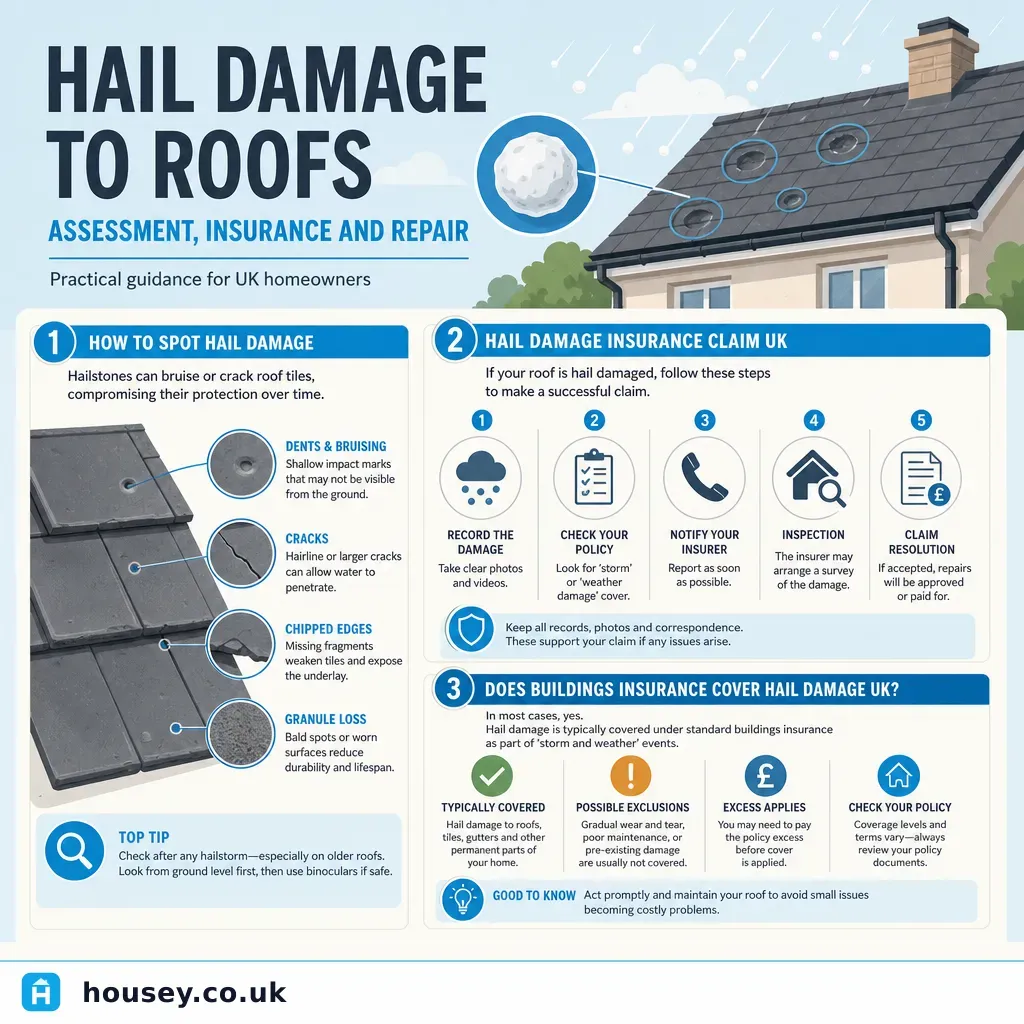
Hail Damage to Roofs: Assessment, Insurance and Repair
Hail damage to a roof commonly shows as cracked or chipped tiles, granule loss on flat roofs, dented flashings, and water ingress.
 Surveys & Inspections
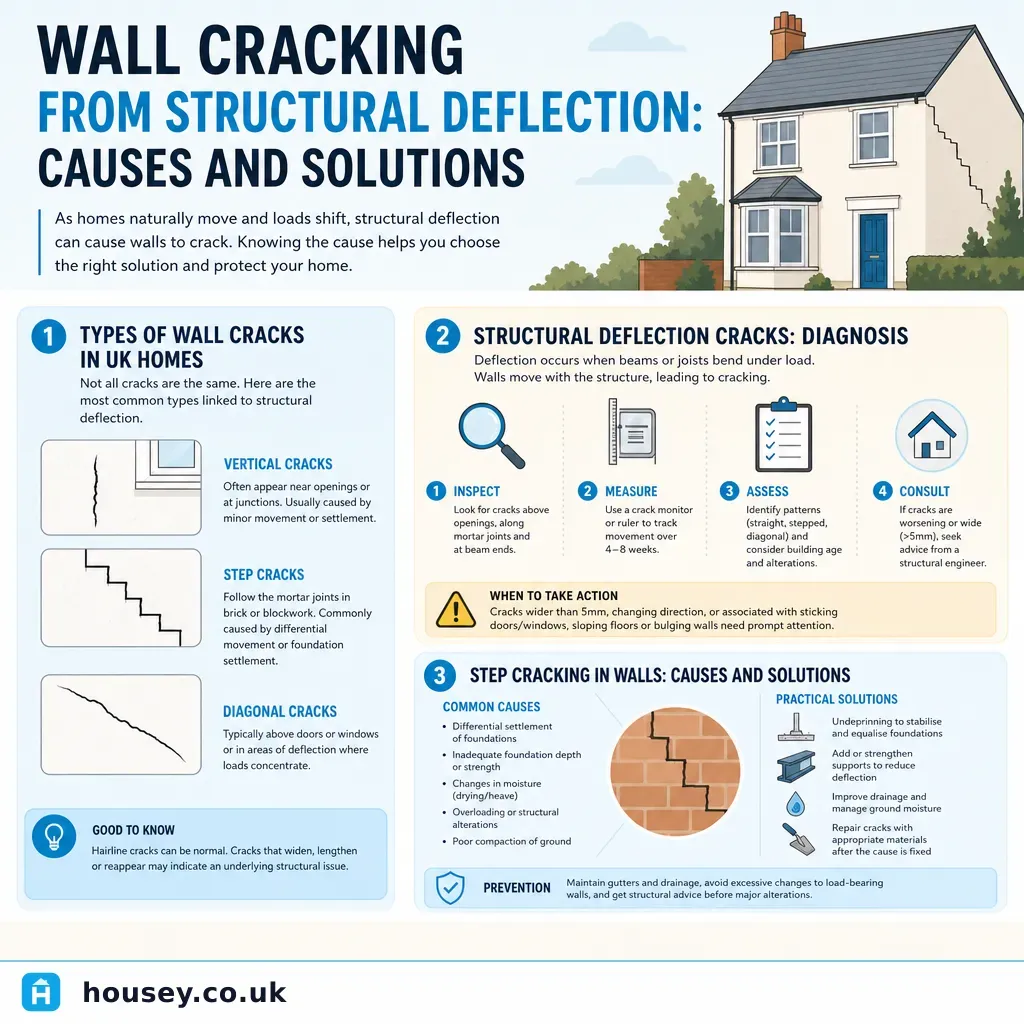
Wall Cracking from Structural Deflection: Causes and Solutions
Structural deflection occurs when a beam, floor, or lintel sags under load, transferring stress into surrounding masonry and causing characteristic cracks.
 Surveys & Inspections
Getting a Valuation Survey Before Selling Your Property
Before selling, a free estate agent appraisal gives a market price guide, but only a RICS Red Book valuation carries formal professional standards and legal weight.
 Surveys & Inspections
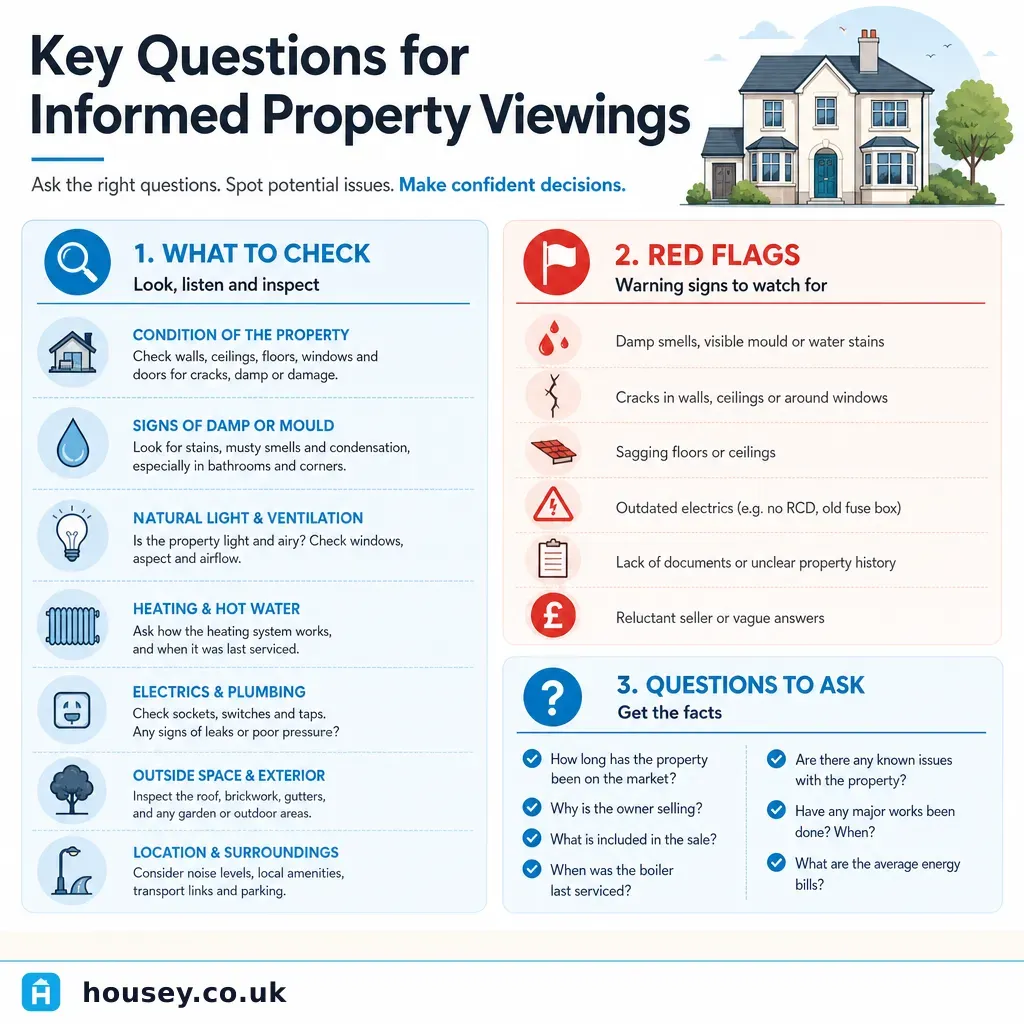
Key Questions for Informed Property Viewings
At a property viewing, ask specifically about structural movement, damp or water ingress, the age and service history of the boiler and electrics, whether any extensions obtained building regulations sign-off, and the seller's chain position.