Insulating Behind External Facade Tiling: Thermal Upgrade Methods
By Housey · Last reviewed 3rd of May 2026
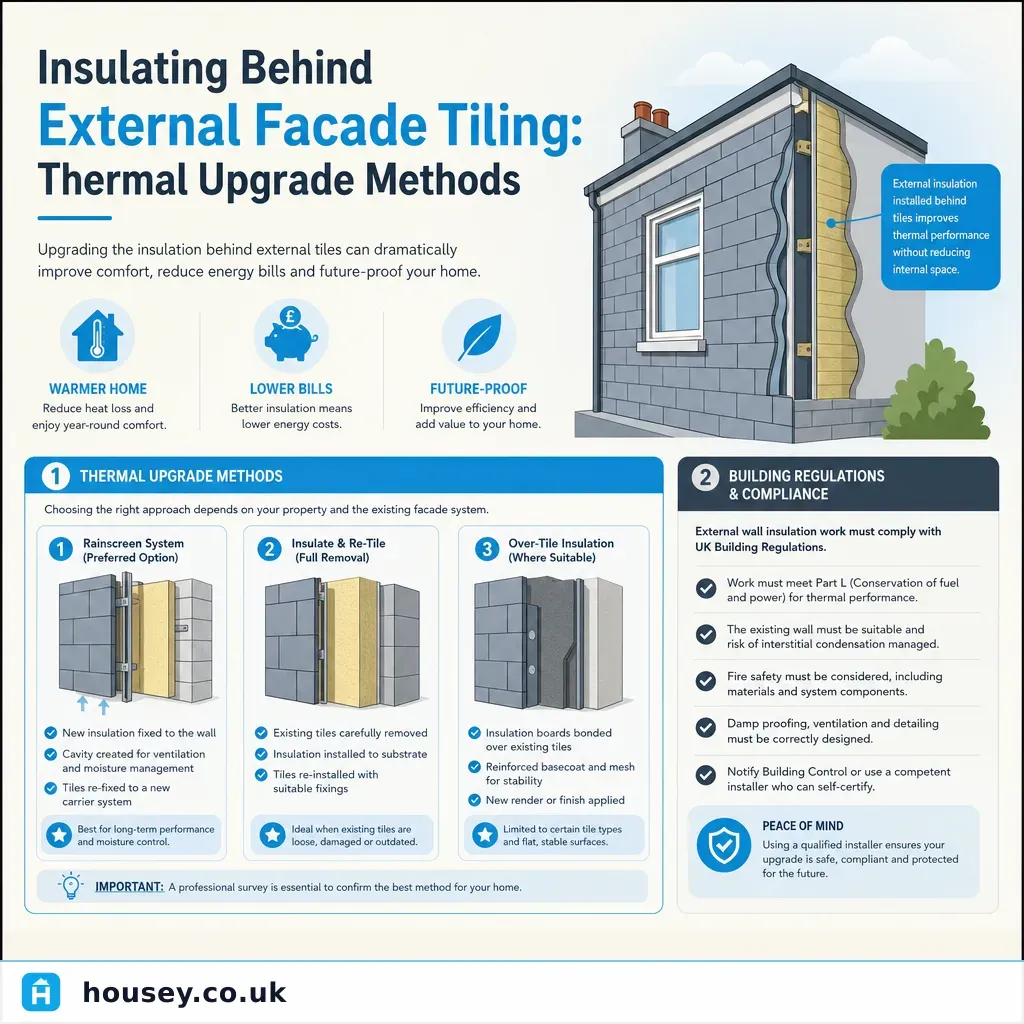
Insulating Behind External Facade Tiling: Thermal Upgrade Methods
When a UK property has an external wall clad in tiles — ceramic, porcelain, stone slip, or reconstituted stone — adding thermal insulation presents a specific technical challenge. The question typically arises during energy-efficiency upgrades or when pursuing grants under schemes such as ECO4 or the Great British Insulation Scheme (GBIS). Unlike a plain brick or rendered wall, a tiled facade cannot simply be overclad without resolving how fixings, movement joints, moisture, and Building Regulations interact.
Key points
- External wall insulation (EWI) behind a tiled facade must comply with Building Regulations Part L (conservation of fuel and power) and Approved Document C (resistance to moisture).
- PAS 2035:2023 is the mandatory quality standard for domestic retrofit in England, Wales, and Scotland; ECO4 and GBIS-funded work must follow it and be overseen by a qualified Retrofit Coordinator.
- Mechanically fixed tile systems are preferred when reinstating a facade over insulation — adhesive-only tile systems are vulnerable to failure from differential thermal movement between tile, adhesive, insulation, and masonry.
- A vapour control layer or appropriately specified breathable membrane is required to manage interstitial condensation when insulating a solid masonry wall.
- Uninsulated solid masonry walls (typically pre-1930s UK construction) have a U-value of approximately 2.1 W/m²K; EWI can reduce this to 0.18–0.30 W/m²K, meeting Part L targets.
What makes tiled facades different from plain rendered walls
A standard EWI system for a rendered or brick wall follows an established sequence: insulation boards fixed to masonry, basecoat render, reinforcing mesh, topcoat render. A tiled facade complicates this because:
- The tile finish cannot be applied over standard EWI render systems without a specifically engineered mechanically fixed cladding system.
- Adhesively bonded external tiles over insulation boards are prone to failure from differential thermal movement.
- The existing tiles usually need to be removed — and potentially reinstated or replaced — to create a sound substrate for insulation.
- Wind-loading calculations are required for mechanically fixed facade systems, particularly above 18 metres or in exposed locations.
The main approaches
Option 1: Remove tiles, add EWI, reinstate facade
The most robust approach for solid-wall properties. Tile cladding is removed, insulation boards are fixed to the masonry, and a new mechanically fixed tile or cladding system is installed over a rail or bracket system that bridges the insulation layer.
Suitable for: Solid-wall properties undergoing full facade refurbishment where thermal performance is a priority and the facade is not heritage-sensitive.
Not suitable for: Conservation areas, listed buildings, or where existing tiles are irreplaceable at reasonable cost.
Option 2: Internal wall insulation (IWI)
Where the external facade must be preserved, insulation is applied to the internal face of the external wall. Systems include rigid PIR or phenolic boards, or insulated plasterboard, with or without a service cavity.
Suitable for: Conservation areas, listed buildings, flats where external alterations require freeholder consent.
Not suitable for: Rooms where space loss is unacceptable, junctions with significant cold bridging, or where condensation risk is high without careful vapour control design.
Option 3: Cavity fill via injection (where a cavity exists)
For timber-framed or steel-framed buildings with a ventilated cavity behind the tile face, insulation can be injected without disturbing the external finish — provided a clear, unobstructed cavity of at least 50 mm exists.
Suitable for: Timber or steel frame with a confirmed clear cavity.
Not suitable for: Solid masonry walls, or where the cavity is bridged, obstructed, or too narrow.
Comparison of insulation methods for tiled external facades
Method | Best for | Not ideal for | Typical U-value achievable | Key risk |
|---|---|---|---|---|
EWI with facade reinstatement | Solid-wall full refurb | Conservation areas, listed buildings | 0.18–0.30 W/m²K | Moisture ingress if junctions poorly detailed |
Internal wall insulation (IWI) | Heritage properties, flats | Space-sensitive rooms, complex junctions | 0.20–0.35 W/m²K | Interstitial condensation if vapour control omitted |
Cavity fill (injected/blown) | Timber or steel frame with cavity | Solid masonry walls | 0.30–0.45 W/m²K | Moisture ingress if wall type misdiagnosed |
Which approach is right for your property?
- Choose EWI with facade reinstatement if your property is a solid-wall building, the tiles are in poor condition or due for replacement, and the facade is not in a conservation area or listed.
- Choose internal wall insulation if the external facade must be preserved, you are in a conservation area, the building is listed, or you are in a flat where external changes require freeholder consent.
- Choose cavity injection if a specialist investigation confirms a clear, continuous, accessible cavity behind the tiled facade.
- Consult a retrofit assessor if you are unsure of your wall construction type, the property has had previous moisture problems, or you are applying for ECO4 or GBIS funding.
- Check with your local planning authority before any external alteration if the property is in a conservation area or subject to an Article 4 Direction.
Building Regulations and planning
EWI that materially alters external appearance in a conservation area or on a listed building will usually require planning permission. In most other cases, EWI may benefit from permitted development rights — but always confirm with your local planning authority first.
Building Regulations notification is required for most EWI projects. The installation must achieve the target U-value set out in Part L. For ECO4 or GBIS-funded work, PAS 2035:2023 compliance is mandatory, requiring a Retrofit Assessment, a named Retrofit Coordinator, and installation by a TrustMark-registered contractor.
Moisture and condensation risk
Adding insulation to a solid masonry wall fundamentally changes where dew point occurs within the construction. Without correct vapour control and junction detailing:
- Interstitial condensation can form within the wall, causing mould growth, timber decay, and insulation degradation.
- Cold bridging at window reveals, floor junctions, and eaves can create localised condensation points.
- Inadequate ventilation after insulation can raise whole-house moisture levels and accelerate surface mould.
A condensation risk analysis — using BS EN ISO 13788 or dynamic hygrothermal modelling — should be carried out for all solid-wall insulation projects as part of the PAS 2035 process. An insulation assessment can confirm your wall type and identify moisture risks before work begins.
Important limitations
This article provides a general overview of insulation options for externally tiled UK buildings. Thermal performance figures, planning requirements, and moisture risk depend heavily on your specific property's construction, location, and condition. A qualified retrofit assessor or building physicist should assess your property before any work begins. This article does not constitute structural, planning, or building regulations advice.
What to ask a qualified professional
- What is the confirmed wall construction type — solid masonry, cavity, or timber frame — and how was this established?
- Has a condensation risk analysis been carried out, and is one included in the project scope?
- Is this installation PAS 2035 compliant, and will I receive a named Retrofit Coordinator?
- Which Building Regulations route is proposed — local authority building control, approved inspector, or Competent Person scheme?
- Does the tile reinstatement system hold a current British Board of Agrément (BBA) certificate or equivalent certification?
- Is the installation covered by TrustMark registration, and what product and workmanship warranty is offered?
- Does planning permission need to be obtained before work starts?
When to get professional help
Any EWI project on a tiled facade requires professional design and installation — this is not a DIY task. Engage a qualified retrofit assessor or insulation installer before starting if: you are unsure of your wall construction type; the property is in a conservation area, is listed, or has had previous moisture problems; you are applying for ECO4 or GBIS funding; or a previous insulation attempt has caused damp or condensation.
How Housey can help
Housey connects UK homeowners with qualified professionals for retrofit and insulation projects. Request quotes from insulation assessors, retrofit assessors, and insulation installers with experience of tiled facade systems and PAS 2035 requirements. An energy-efficiency consultant can advise on the most cost-effective upgrade pathway before you commit to a specific approach.
Frequently asked questions
Do I need planning permission to add external wall insulation behind tiles?
In most cases EWI on a typical UK house is permitted development, but this does not apply in conservation areas, to listed buildings, or where an Article 4 Direction removes permitted development rights. Always confirm with your local planning authority before starting. Wales, Scotland, and Northern Ireland each have separate planning regimes.
Will external wall insulation affect my existing tile warranty?
If existing tiles are removed and reinstated over a new insulation and cladding system, the original manufacturer's warranty may not transfer. Warranty on the reinstated system comes from the installer and cladding manufacturer. Ensure any mechanically fixed system holds a current BBA certificate or equivalent third-party certification.
How much does insulating an externally tiled wall cost?
Indicative UK costs, last reviewed 2026-05-03: EWI with facade reinstatement typically costs £80–£150 per m² for insulation and framing, plus tile costs. Internal wall insulation typically costs £40–£90 per m² installed. Costs vary significantly by region, wall area, and specification. Obtain at least three quotes from TrustMark-registered insulation installers.
Can I insulate an externally tiled wall myself?
No. External wall insulation behind a tiled facade requires structural calculations for mechanical fixings, Building Regulations notification, and correct vapour control detailing. DIY installation is very likely to cause moisture damage, void warranties, and fail Building Regulations compliance. Always use a qualified, TrustMark-registered installer.
Sources and further reading
- Building Regulations: Conservation of fuel and power (Part L) — GOV.UK
- PAS 2035:2023 Retrofitting dwellings for improved energy efficiency — BSI Group
- ECO4 scheme: Energy Company Obligation — Ofgem
- External wall insulation — Energy Saving Trust
- Find a TrustMark-registered business — TrustMark
Useful next reads
 Energy & Retrofit
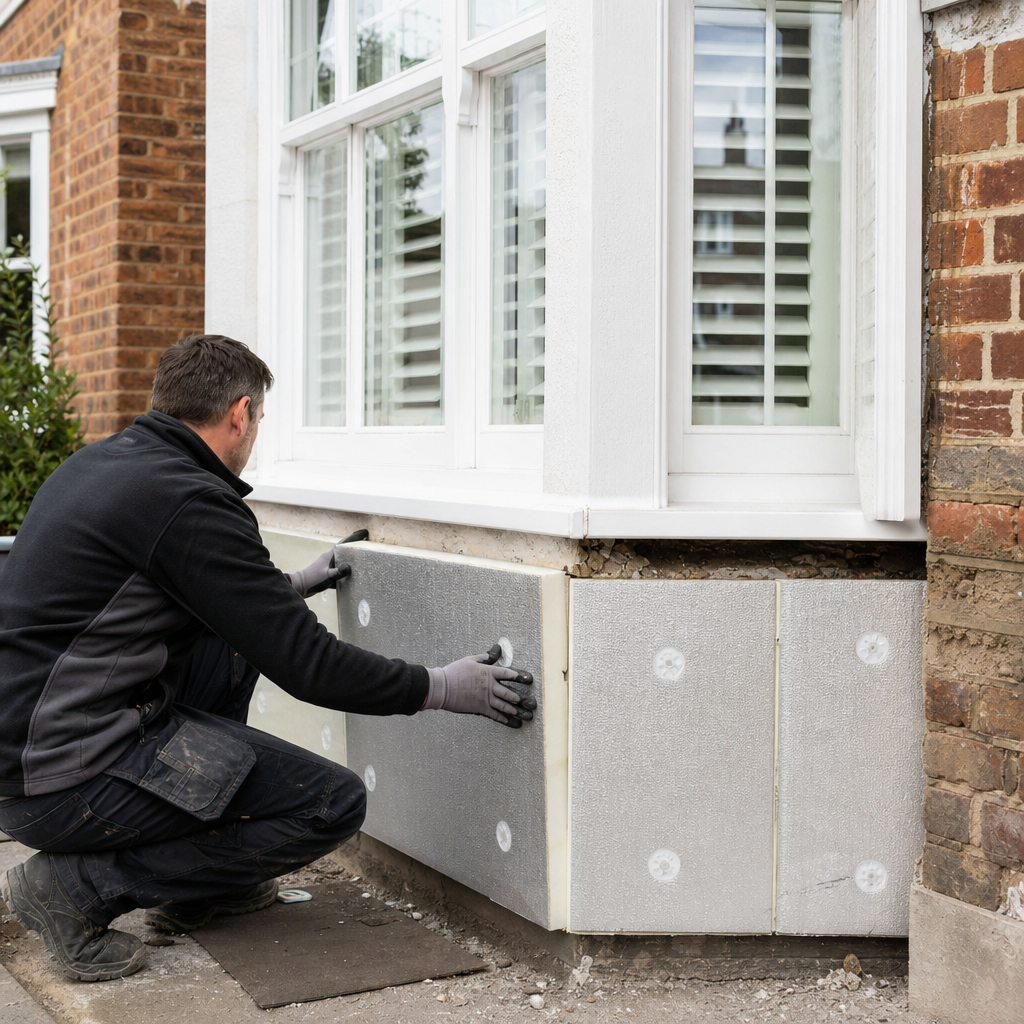
Insulating Solid Masonry Walls Under Bay Windows: Technical Guidance
Insulating solid masonry walls under bay windows requires specialist detailing at angled wall faces, window reveals, and the bay floor and ceiling junctions.
 Energy & Retrofit
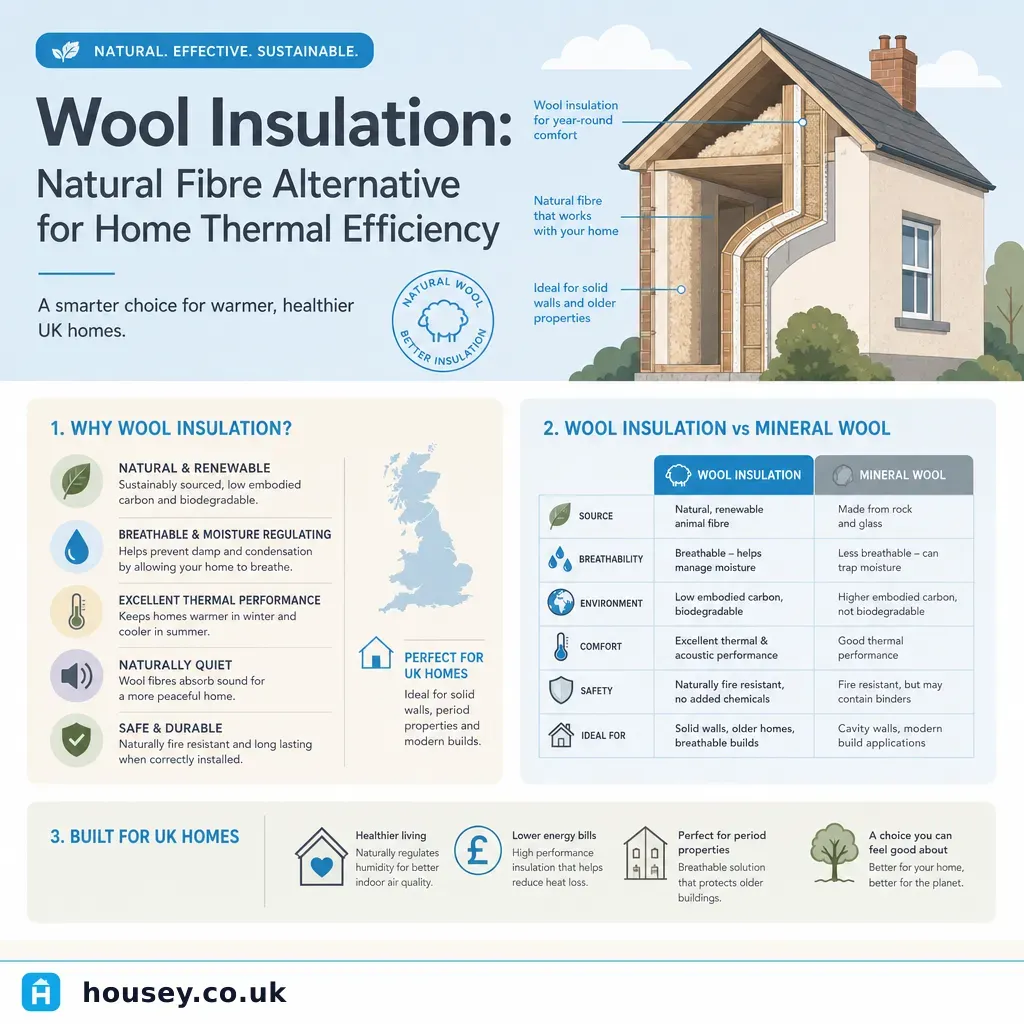
Wool Insulation: Natural Fibre Alternative for Home Thermal Efficiency
Sheep wool insulation achieves a thermal conductivity of 0.
 Energy & Retrofit
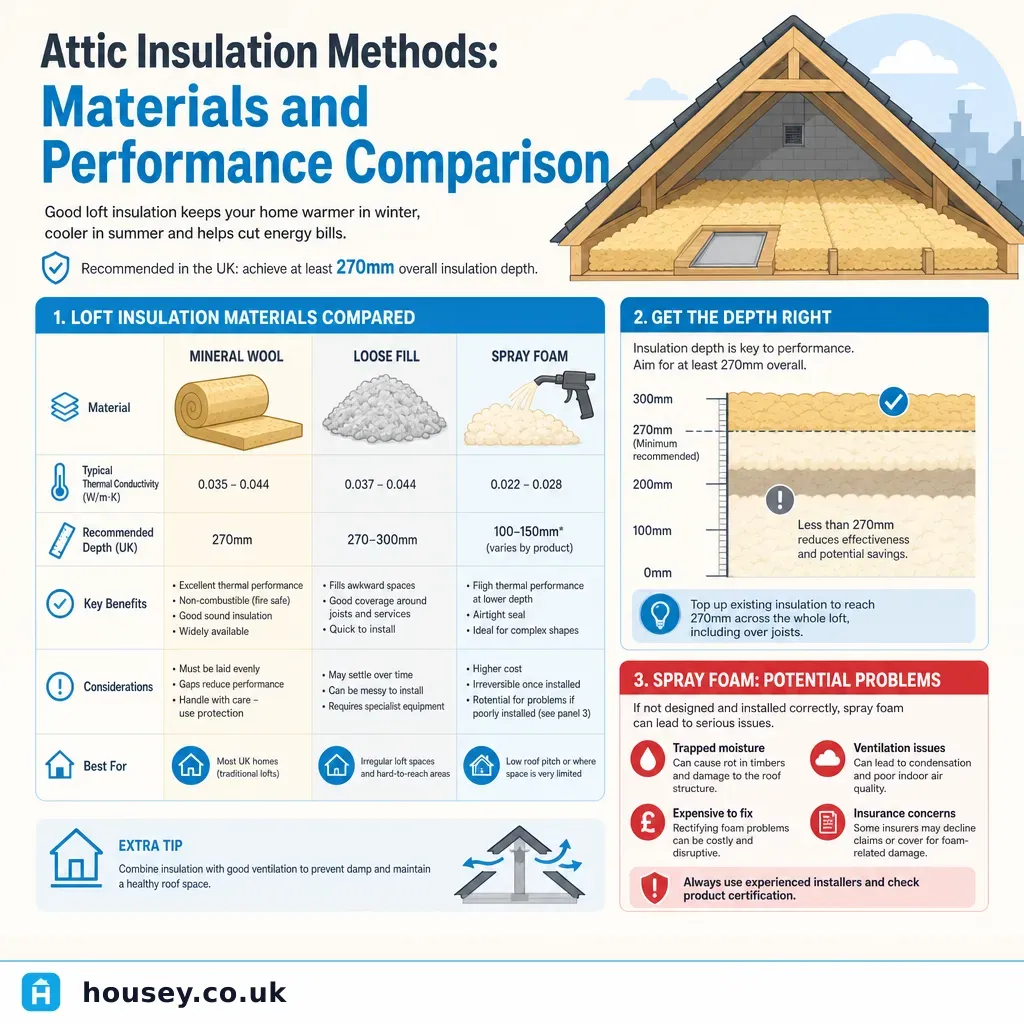
Attic Insulation Methods: Materials and Performance Comparison
UK loft insulation options include mineral wool rolls (most common and grant-funded), blown loose-fill for irregular lofts, and rigid PIR board for warm roof conversions.
 Energy & Retrofit
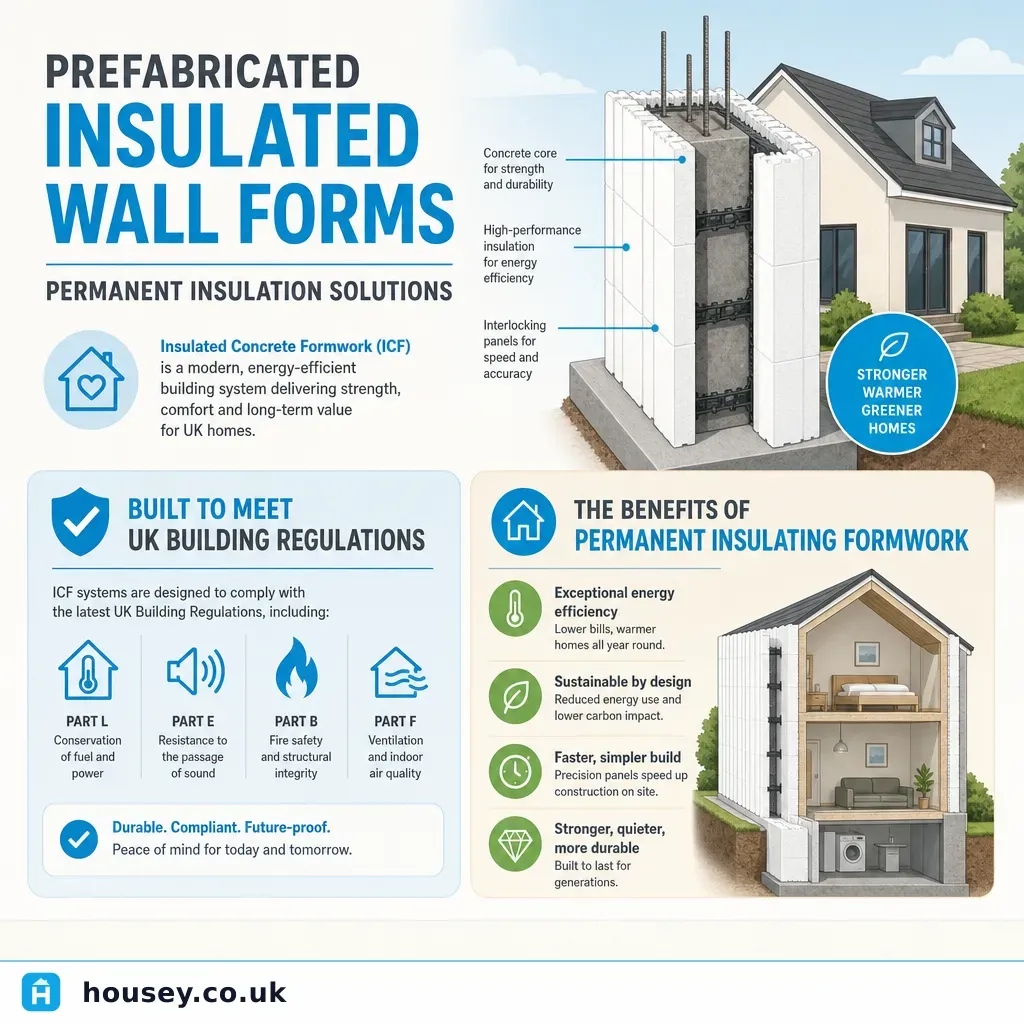
Prefabricated Insulated Wall Forms: Permanent Insulation Solutions
Prefabricated insulated wall forms — including ICF and SIPs systems — deliver high thermal performance by combining permanent insulation with structural concrete or timber in a single wall assembly.
 Energy & Retrofit
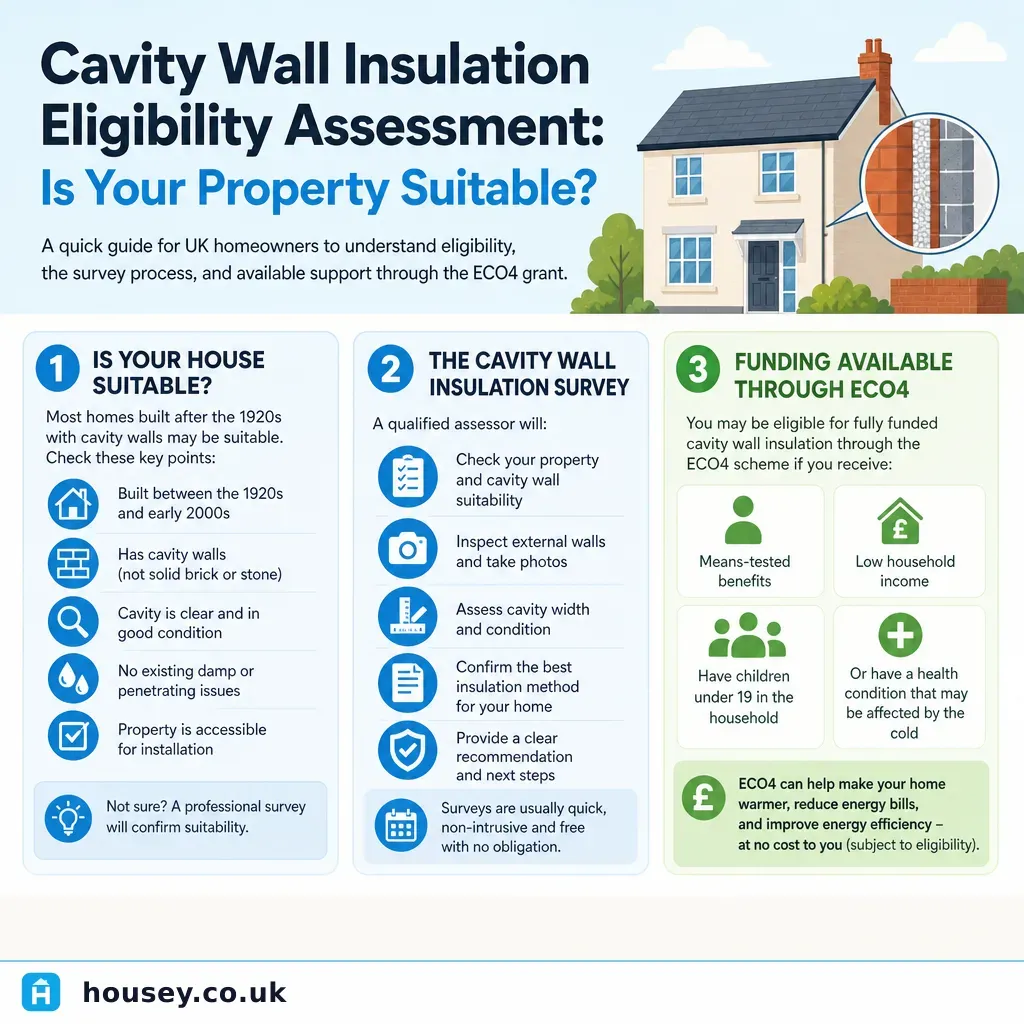
Cavity Wall Insulation Eligibility Assessment: Is Your Property Suitable?
Cavity wall insulation suits most UK homes built from around 1920 onwards with unfilled cavities at least 50mm wide in sheltered or moderately exposed locations.