Award-Winning Driveway Restoration: Design and Installation Excellence
By Housey · Last reviewed 11th of May 2026
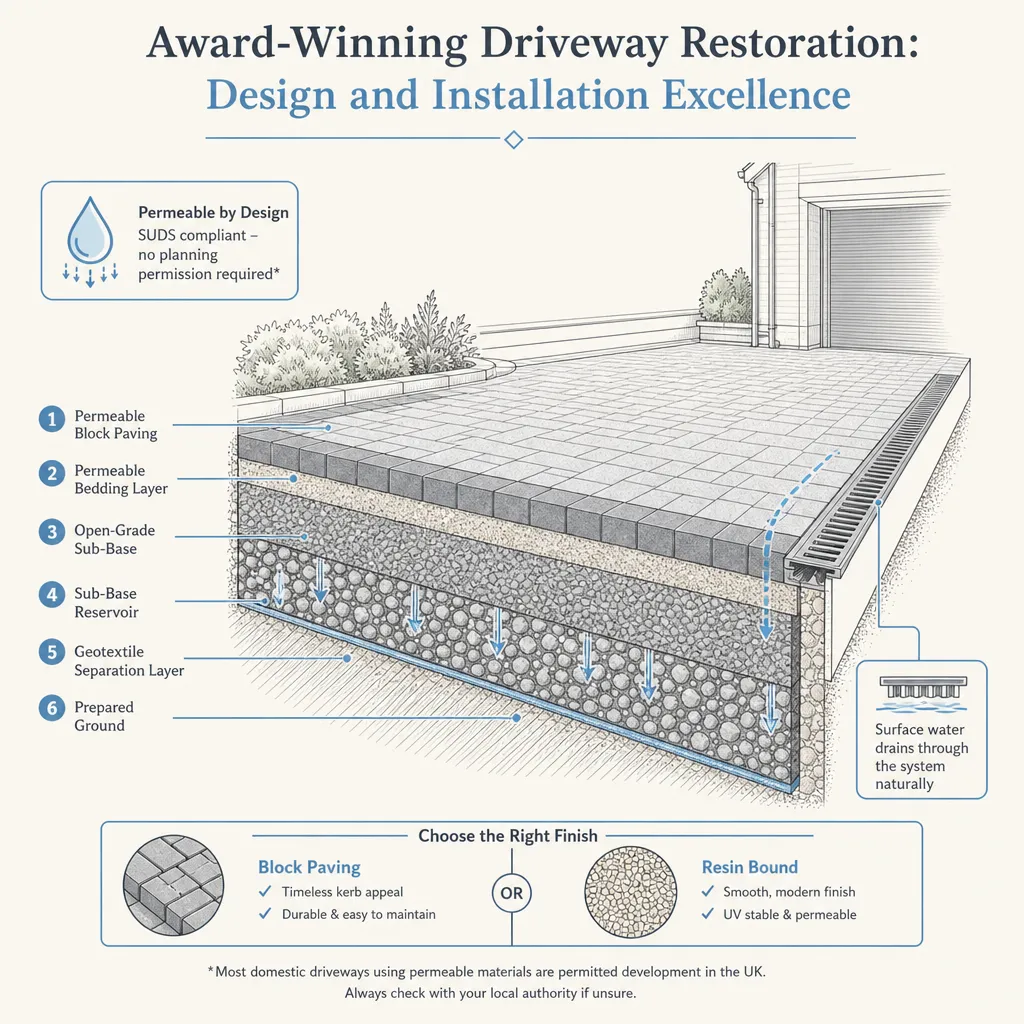
Award-Winning Driveway Restoration: Design and Installation Excellence
A driveway does more than provide somewhere to park — it sets the tone for your home's street presence and can affect kerb appeal and property value in ways that buyers and letting agents notice immediately. For many UK homeowners, the front of the house is the first thing assessed during a valuation or visible in listing photography, and a tired, cracked, or poorly drained driveway is often the first element marked down.
Key points
- Driveways over 5 m² using an impermeable surface that does not drain to a lawn or border require planning permission under the Town and Country Planning (General Permitted Development) Order 2015, Schedule 2, Part 3.
- Permeable surfaces — including block paving with open joints, resin-bound aggregate, and permeable tarmac — are generally exempt from this planning requirement in England.
- A dropped kerb (vehicle crossover) requires a separate licence application to your local highway authority, even if the driveway itself needs no planning consent.
- Block paving, resin-bound aggregate, tarmac, and natural stone are the most common UK residential driveway surfaces, each with distinct maintenance, appearance, and cost profiles.
- SUDS (Sustainable Urban Drainage Systems) requirements increasingly influence material choices in many local planning areas, particularly for new or replacement hard standing.
Do you need planning permission?
This is the question most homeowners overlook before starting — and getting it wrong can result in an enforcement notice requiring removal at your own expense.
Under the General Permitted Development Order 2015 (England), you can install or replace a driveway without planning permission if:
- The surface is permeable (water drains through it); OR
- The surface drains to a permeable area (lawn, border, soakaway) on your property.
If you want an impermeable surface — standard dense tarmac, traditional solid concrete, or block paving without permeable jointing — and you cannot direct run-off to a permeable area, planning permission is required.
Different rules apply in Scotland, Wales, and Northern Ireland — always check with your local planning authority (LPA) before starting. In conservation areas or on listed buildings, permitted development rights may be restricted or removed entirely.
Driveway material comparison
Material | Typical installed cost (per m²) | Permeability | Expected lifespan | Best for | Maintenance |
|---|---|---|---|---|---|
Resin-bound aggregate | £60–£120 | High (SuDS-compliant) | 15–25 years | Smart finish; modern homes | Low |
Block paving (permeable joints) | £50–£100 | High (if correctly jointed) | 20–30 years | Traditional or period homes | Medium |
Tarmac / asphalt | £25–£60 | Low (standard) / High (permeable grade) | 15–20 years | Cost-effective; large areas | Low |
Natural stone (granite, sandstone) | £80–£150+ | Low–medium | 30+ years | Prestige; period properties | Higher |
Loose gravel | £10–£30 | High | 10–15 years | Budget; rural settings | High |
Concrete | £35–£70 | Low (standard) | 25–30 years | Utilitarian; large areas | Low |
Indicative UK costs, last reviewed 2026-05-11. Prices exclude VAT unless stated. Quotes vary significantly by region, access, existing surface removal, sub-base condition, and specification.
What makes a quality driveway installation?
Industry bodies including the British Association of Landscape Industries (BALI) recognise outstanding driveway and hard-landscaping projects through annual awards. The design principles behind recognised installations share common characteristics:
- Cohesive design language: driveway material, colour palette, and edging complement the house façade, boundary walls, and gate design rather than clashing with them.
- Drainage integration: water management is resolved by design — SuDS-compliant surfaces, discreet channel drains, and correctly graded falls prevent pooling and runoff onto the highway.
- Boundary detailing: low walls, planting beds, and gate pillars are considered as part of the overall composition, not afterthoughts.
- Sub-base quality: a properly prepared and compacted sub-base (typically MOT Type 1 hardcore to 100–150 mm depth for vehicles) is invisible once laid but essential for long-term performance.
- Edge restraints: block paving and resin-bound surfaces both require robust edge restraints (concrete haunching or proprietary kerb systems) to prevent spread and edge deterioration over time.
Homeowner checklist: driveway restoration project
What to ask before accepting a quote
- What depth and specification of sub-base will be used, and why is this appropriate for the ground conditions?
- Is the proposed surface SuDS-compliant, and will it satisfy planning or highway authority requirements?
- How will drainage be managed — falls to a permeable area, channel drains, or soakaway?
- What edge restraint system is specified, and is it appropriate for the chosen surface?
- Who will carry out the work — in-house team or subcontractors?
- What professional body memberships or accreditations do you hold (BALI, INTERLAY, NDS)?
- What does the guarantee cover, and is it backed by an insurance-backed warranty?
- Is VAT included in the quote?
- What is the expected start date and completion programme?
- What could change the price or timeline — for example, sub-base failure, drainage complications, or discovery of buried services?
When to get professional help
Most residential driveway restorations benefit from a professional installer, particularly where:
- The existing sub-base is failing — visible rutting, sinking, or persistent pooling after rainfall.
- Block paving or resin-bound surfaces are planned — laying tolerances and surface preparation are critical to appearance and durability.
- The project involves new or altered vehicle access from the highway (dropped kerb application, highway contractor involvement).
- Ground conditions are unusual — filled ground, significant tree root networks, or clay-heavy soil prone to seasonal heave.
- The property is in a conservation area where material and design choices may require LPA approval.
Red flags when reviewing installer quotes:
- No mention of sub-base depth or specification — a reliable installer will always specify this upfront.
- Large cash deposits requested (more than 30%) before work starts.
- No written guarantee or insurance-backed warranty offered.
- No evidence of BALI, INTERLAY, or equivalent trade body membership.
- A price significantly below all other quotes with no clear technical explanation.
How Housey can help
Housey can connect you with vetted driveway installers in your area, alongside landscapers and garden designers who can integrate your driveway restoration into a broader front-of-house improvement — from boundary walls and planting to lighting and entrance gate design.
Frequently asked questions
Does a new driveway add value to my home?
A well-designed, well-maintained driveway can improve kerb appeal and is often noted positively by estate agents, particularly where off-street parking is in demand. Quantifying an exact value uplift is difficult — it depends on property type, location, and installation quality. A failing or poorly installed driveway may be noted negatively by surveyors and buyers during the purchase process.
How long does a driveway restoration take?
Most residential driveway restorations take between one and five days depending on area, existing surface removal, sub-base condition, and material choice. Resin-bound surfaces require curing time — typically 24 hours before pedestrian traffic and 48–72 hours for vehicles. Block paving can usually be driven on within 24 hours of completion.
Can I lay block paving myself?
Some experienced DIYers undertake small block paving projects successfully. However, correct sub-base preparation, compaction, drainage falls, and edge restraint installation are critical to long-term performance and — for impermeable surfaces — planning compliance. Most failed block-paved driveways result from inadequate sub-base or edge restraint work, not the surface blocks themselves.
What is the difference between resin-bound and resin-bonded gravel?
Resin-bound gravel mixes aggregate throughout a clear resin binder, creating a smooth, permeable surface. Resin-bonded gravel scatters loose aggregate over a resin coating — initially attractive but prone to stone loss and not reliably permeable. Resin-bound is the specification used for SuDS-compliant, quality driveway installations.
Sources and further reading
- Permeable surfacing of front gardens — GOV.UK
- Town and Country Planning (General Permitted Development) Order 2015, Schedule 2 — legislation.gov.uk
- British Association of Landscape Industries (BALI) — BALI
- Driveways: do I need planning permission? — Planning Portal
- CIRIA SuDS Manual — CIRIA
Useful next reads
 Improvement & Build
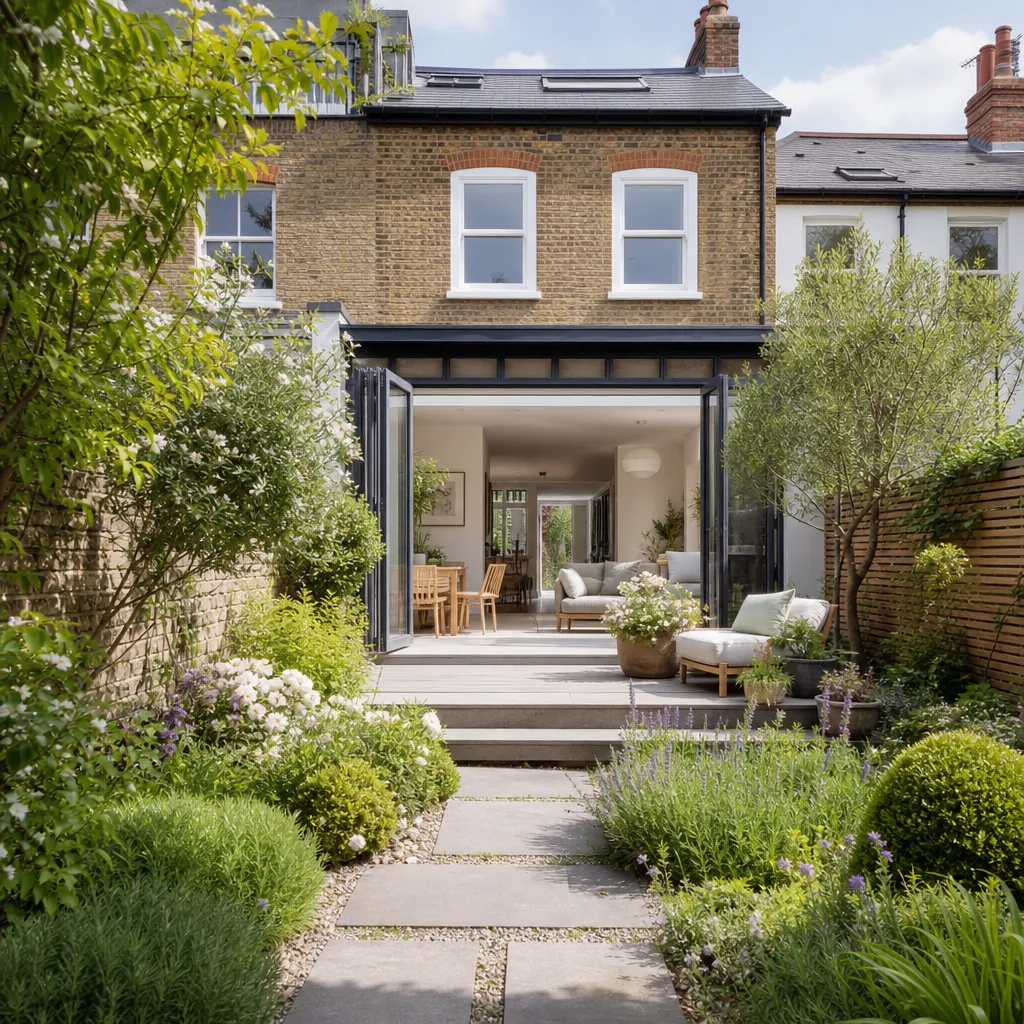
Spring Garden Transformations: Design Ideas to Enhance Your UK Property
Spring is the best time to transform a UK garden, with mild temperatures and longer days ideal for planting and landscaping.
 Improvement & Build
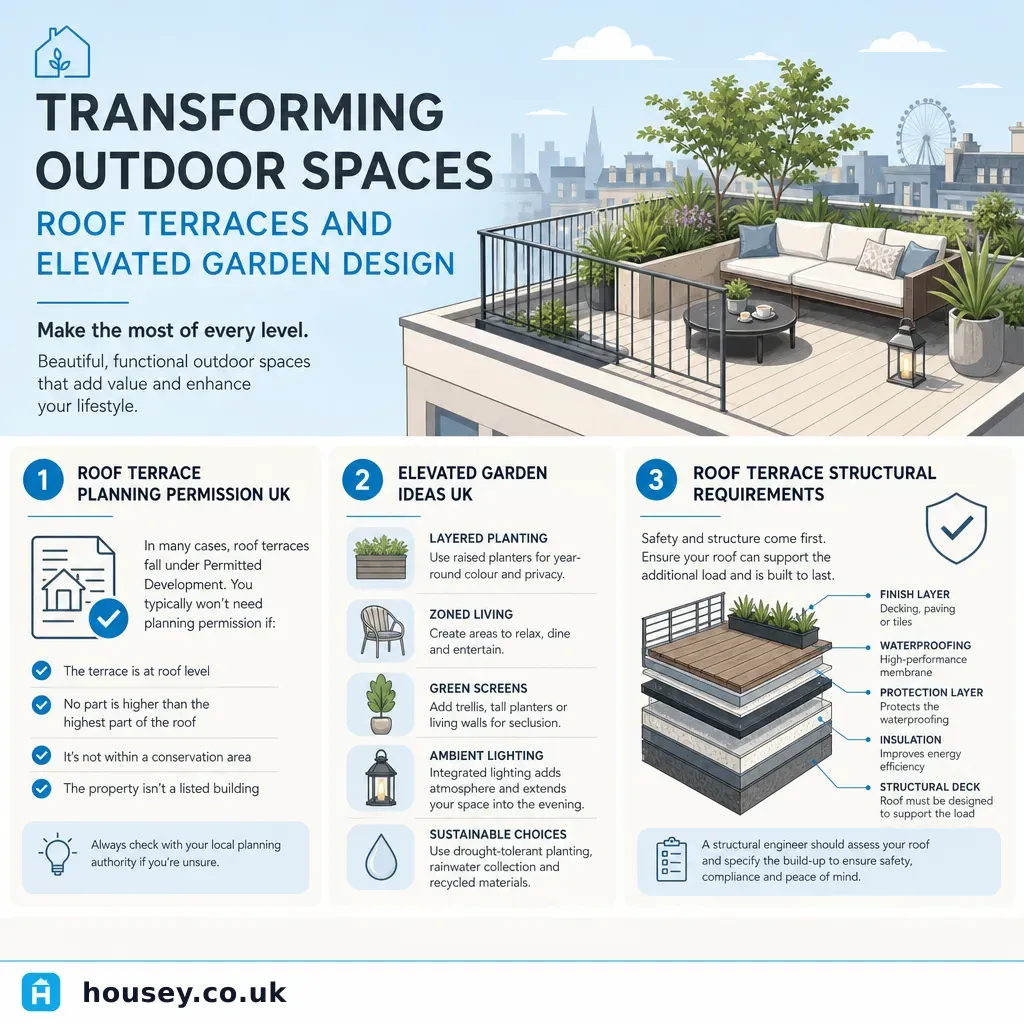
Transforming Outdoor Spaces: Roof Terraces and Elevated Garden Design
Roof terraces in the UK almost always need planning permission and a structural engineer's load capacity assessment before design work begins.
 Improvement & Build
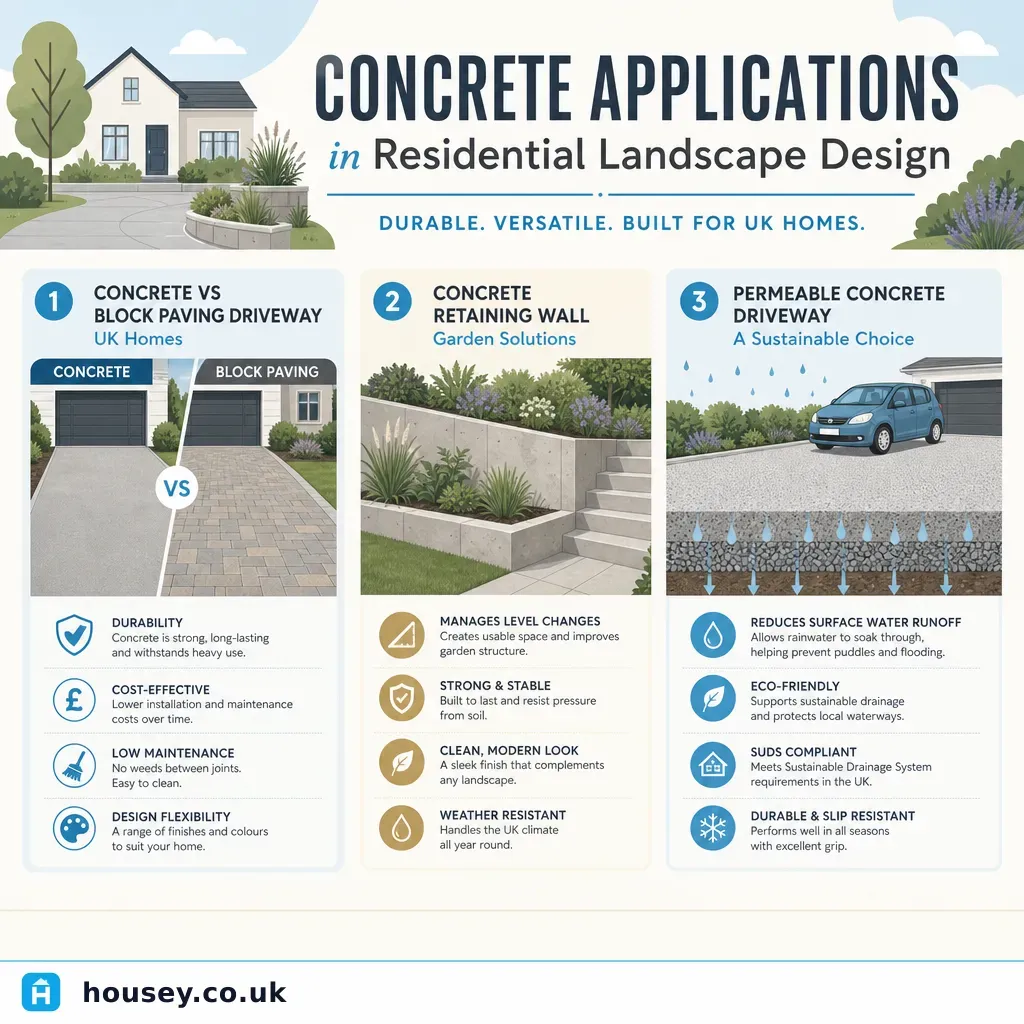
Concrete Applications in Residential Landscape Design
Concrete serves multiple roles in residential landscape design: as a surface material for driveways, patios, and paths; as a structural element in retaining walls and foundations; and as prefabricated components including slabs, edging, and copings.
 Improvement & Build
Benefits of Hiring Established Landscaping Services in Coastal Areas
Established landscaping contractors in coastal areas understand salt spray exposure, prevailing wind patterns, and local planning restrictions that inland firms often overlook.
 Improvement & Build
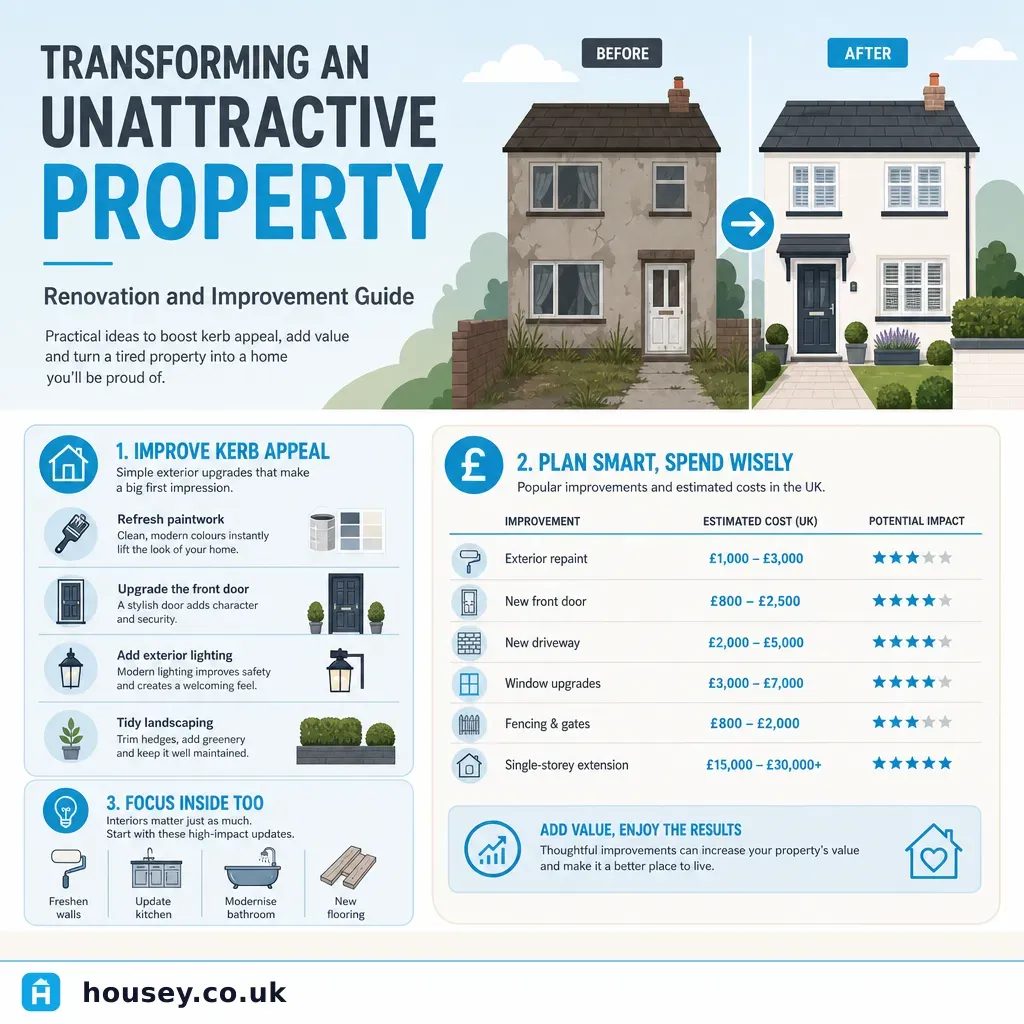
Transforming an Unattractive Property: Renovation and Improvement Guide
Transforming an unattractive UK property usually starts with surface-level improvements — render, windows, doors, and front landscaping — before tackling structural changes like extensions.