Transforming Outdoor Spaces: Roof Terraces and Elevated Garden Design
By Housey · Last reviewed 7th of May 2026
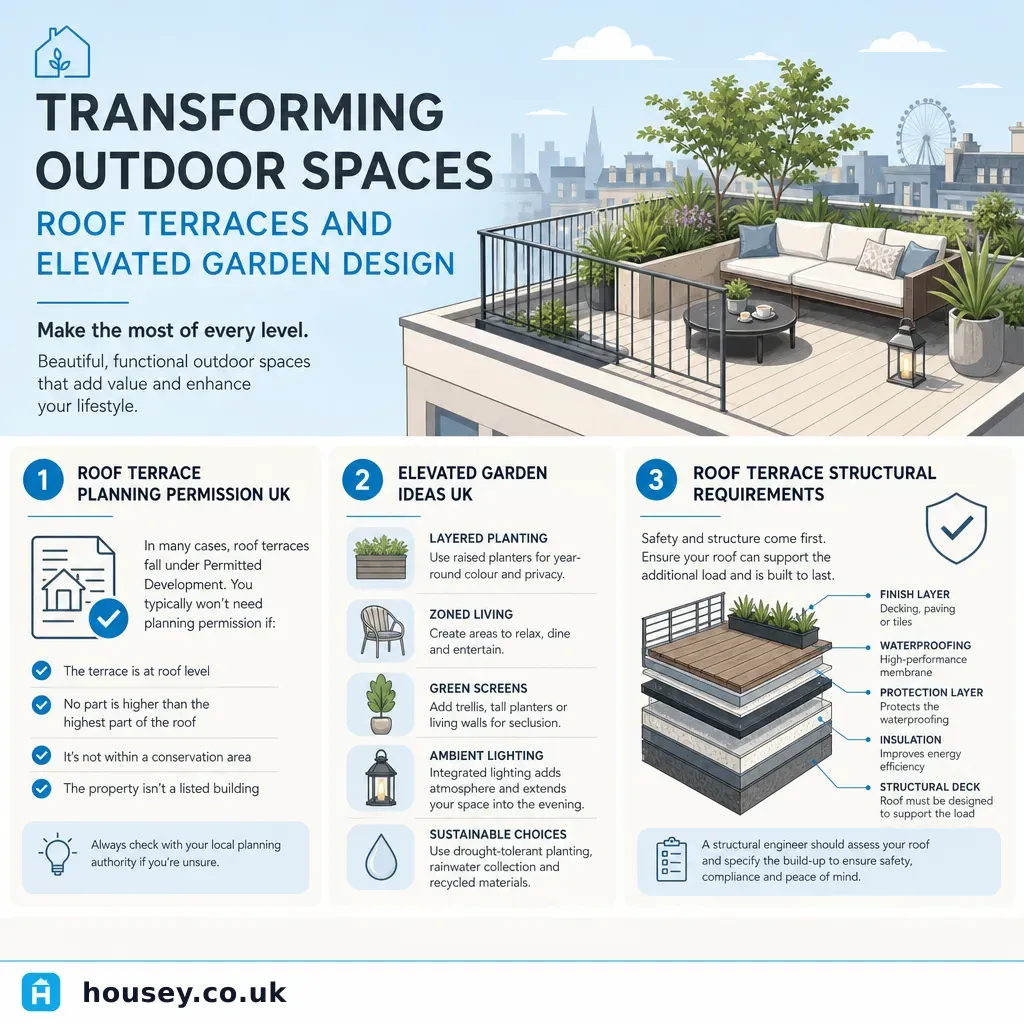
Transforming Outdoor Spaces: Roof Terraces and Elevated Garden Design
Roof terraces and elevated gardens are among the most sought-after additions in urban UK properties, particularly where ground-level outdoor space is limited. Whether you are redesigning an existing flat roof above a rear extension or creating a planted terrace on a converted warehouse, the planning, structural, and design considerations differ significantly from a conventional garden project. Getting these right before work starts can prevent costly regulatory problems and structural surprises.
Key points
- Most new roof terraces require planning permission; the Town and Country Planning (General Permitted Development) (England) Order 2015 does not include a general right to convert a flat roof into an accessible terrace, and restrictions are tighter still in conservation areas, Article 4 Direction areas, and on listed buildings.
- Structural loading is the critical first constraint: a typical accessible domestic flat roof may support 1.0–1.5 kN/m² (approximately 100–150 kg/m²), while a planted terrace can require 3.0 kN/m² or more depending on substrate depth and features.
- Lightweight growing media such as expanded clay aggregate (LECA) typically weigh 500–800 kg/m³ dry, compared with 1,200–1,600 kg/m³ for standard topsoil — media selection directly affects whether your roof structure can support a planted scheme at all.
- Flat roofs intended for regular access must meet the waterproofing and drainage standards in BS 6229:2003; the membrane must be protected under any decking, paving, or growing medium and must not be penetrated by fixings.
- Building Regulations Approved Document K sets minimum guarding heights for accessible rooftop areas: edge barriers must generally be at least 1,100 mm high and designed to resist the required horizontal imposed loads.
Do roof terraces need planning permission?
In most cases, yes. Converting a flat roof into an accessible terrace changes its use and typically affects overlooking and privacy — neither of which is covered by standard householder permitted development rights.
Use this decision tree before consulting your local planning authority (LPA):
- Listed building? Listed building consent is required for any alteration including new access, balustrades, or planted areas. Consult your LPA and Historic England guidance before any work begins.
- Conservation area, Article 4 Direction, or National Park? Permitted development rights are restricted or removed; apply for full planning permission.
- Creating a new terrace on an existing flat roof? Planning permission is almost certainly required as it constitutes a material change of use affecting amenity.
- Adding structures such as pergolas, screens, or raised planters above 300 mm? These may require planning permission depending on height, location, and footprint.
- Replacing surface finishes only on an existing, lawfully established terrace? Permitted development may apply, but confirm with your LPA first.
- Leasehold property? Freeholder or managing agent consent is likely required under your lease, independent of planning rules.
Wales, Scotland, and Northern Ireland each operate separate planning regimes with different permitted development thresholds. Always verify with your local authority before starting work.
Structural and waterproofing requirements
Before detailed design work begins, the structural capacity of the existing roof must be assessed by a chartered structural engineer. This is not optional: a roof loaded beyond its design capacity is a safety risk.
Key structural considerations:
- Dead load: the permanent weight of decking, paving, growing media, planters, and furniture — all must remain within the engineer's approved capacity at every point.
- Live load: the dynamic weight of occupants, wind, snow, and standing water. BS EN 1991-1-1 sets imposed load requirements for accessible roofs.
- Point loads: large planters and water features concentrate loading at discrete points. Spreading loads with reinforced frames and positioning heavy elements over load-bearing walls or columns is standard engineering practice.
- Waterproofing integrity: the membrane must be continuous, detailed at upstands and outlet penetrations, and protected from mechanical damage. Single-ply membranes (TPO, PVC-P), hot-melt systems, and GRP are all used depending on existing construction.
- Drainage falls: BS 6229:2003 recommends minimum falls of 1:40 to outlets. Adding planted areas or permeable decking can slow drainage; outlet sizing and falls should be confirmed as part of the design.
Work affecting a roof's structural elements, waterproofing, or drainage normally requires a Building Regulations application to your local authority building control department or an approved inspector.
Designing for height: wind, weight, and drainage
Elevated gardens face challenges that ground-level gardens do not. Wind speed increases with height and is amplified at building corners.
Managing wind: Solid barriers create turbulence rather than shelter. Permeable screens — slatted hardwood, wire mesh, or planted trellis — are generally more effective. Any structural windbreak above permitted development height limits may itself need planning permission.
Managing weight: Use lightweight adjustable pedestal decking rather than laid-on paving; specify green-roof growing media rather than topsoil; position heavy elements over load-bearing walls or columns as confirmed by your structural engineer.
Managing drainage: Include a drainage layer (typically a dimple-sheet membrane) between the waterproofing and any growing medium. For decked areas, pedestals create an air gap that allows water to flow freely to outlets.
Plant choices for elevated and exposed spaces
Planting selection must account for wind, drought, shallow growing media, and intense sun or deep shade depending on aspect.
Plant type | Exposed, windy positions | Sheltered or part-sheltered terraces | Notes |
|---|---|---|---|
Ornamental grasses | Stipa tenuissima, Festuca glauca | Miscanthus sinensis, Pennisetum | Lightweight root systems; movement in wind is a design feature |
Evergreen shrubs | Pittosporum tobira, Escallonia | Camellia, Fatsia japonica | Pittosporum tolerates exposed coastal and urban conditions |
Sedums and succulents | Sedum spectabile, Sempervivum | Agave in very sheltered spots | Very low weight; suited to substrates of 80–150 mm depth |
Climbing plants | Hedera helix (ivy), Parthenocissus | Wisteria, climbing roses | Ivy tolerates full exposure; heavy climbers need robust fixed supports |
Small trees | Olive (Olea europaea) in sheltered areas | Japanese maple, multi-stem birch | Require containers of minimum 450 mm depth and structural sign-off |
Herbs and edibles | Thyme, rosemary, chives | Tomatoes, courgettes, chard | Shallow-rooting herbs suit thin substrates; fruiting crops need 300 mm+ and irrigation |
Irrigation should be designed into the project from the outset. Drip systems connected to an outside tap or a small rainwater harvesting tank are standard practice on larger terraces.
Pre-design checklist for roof terrace projects
Work through this checklist before appointing a designer or contractor:
When to get professional help
A garden designer or landscaper is the right professional for surface finishes, planting schemes, and soft landscaping on an established, structurally confirmed terrace. The following red flags indicate that specialist input is needed before any design work begins.
Red flags requiring professional assessment:
- Any doubt about structural capacity — always commission a structural engineer's report before specifying heavy features or allowing regular access.
- Existing roof leaks or waterproofing failure — do not design over a defective roof; remediate the membrane first.
- Cracks in parapet walls or the roof structure — a chartered surveyor or structural engineer should inspect before any loading is added.
- Listed building or conservation area designation — engage a planning consultant or architect with heritage experience.
- Leasehold property where lease terms are unclear — a solicitor should advise on obligations and freeholder consent before costs are committed.
- Glazed balustrades, pergolas, or fixed structures — may require building regulations sign-off; engage an architect or architectural technologist.
- Construction work at height — CDM Regulations 2015 may apply; a principal contractor should manage health and safety on site.
How Housey can help
When your structural and planning position is confirmed, Housey can help you find and compare quotes from experienced garden designers, landscapers, and extension builders who have worked on elevated outdoor spaces and roof-level projects. Request quotes from multiple providers and compare their experience, approach, and pricing before committing to a contractor.
Frequently asked questions
Do I need planning permission for a roof terrace in the UK?
In most cases, yes. Creating a new roof terrace, or installing permanent access, balustrades, or structures on a flat roof, is unlikely to be covered by permitted development rights. It typically changes the use of the roof and affects overlooking and privacy. Rules are stricter in conservation areas, on listed buildings, and in some London boroughs. Always confirm with your local planning authority before starting work.
How much weight can a flat roof hold for a terrace?
This varies by building and construction type. A typical accessible domestic flat roof may support 1.0–1.5 kN/m² (roughly 100–150 kg per square metre), but a planted terrace with growing media may require 3.0 kN/m² or more. A chartered structural engineer must assess your specific roof before you commit to any design or specification.
What is the cheapest way to create a roof terrace?
The most cost-effective approach is lightweight adjustable pedestal decking on an existing structurally sound and waterproofed roof, with container planting using lightweight growing media rather than stone paving or built-in planters. Indicative UK costs for a simple fit-out start from approximately £5,000–£15,000 for a small area, varying considerably by specification and access constraints. Indicative UK costs, last reviewed 2026-05-07. Always obtain at least three quotes from experienced contractors.
Can I use normal topsoil in roof planters?
No. Normal topsoil is too heavy for most roof terraces and tends to waterlog in containers. Use proprietary lightweight growing media — typically a blend of expanded clay aggregate, composted bark, and controlled-release fertiliser — at a fraction of topsoil weight. Depths of 80–150 mm suit sedums and herbs; shrubs generally need 300–450 mm minimum.
Do I need building regulations approval for a roof terrace?
Usually, yes. Work affecting the structural elements of a roof, waterproofing, fire escape routes, or access — including guarding and balustrade design — falls under Building Regulations. Contact your local authority building control department or an approved inspector before work begins to confirm the full scope of approval required.
Sources and further reading
- Planning Portal: roof terraces and balconies — Planning Portal
- Permitted development rights for householders: technical guidance — HM Government
- Approved Document K: protection from falling, collision and impact — HM Government
- Advice on listed buildings and alterations — Historic England
- Party Wall etc. Act 1996: explanatory booklet — HM Government
Useful next reads
 Improvement & Build
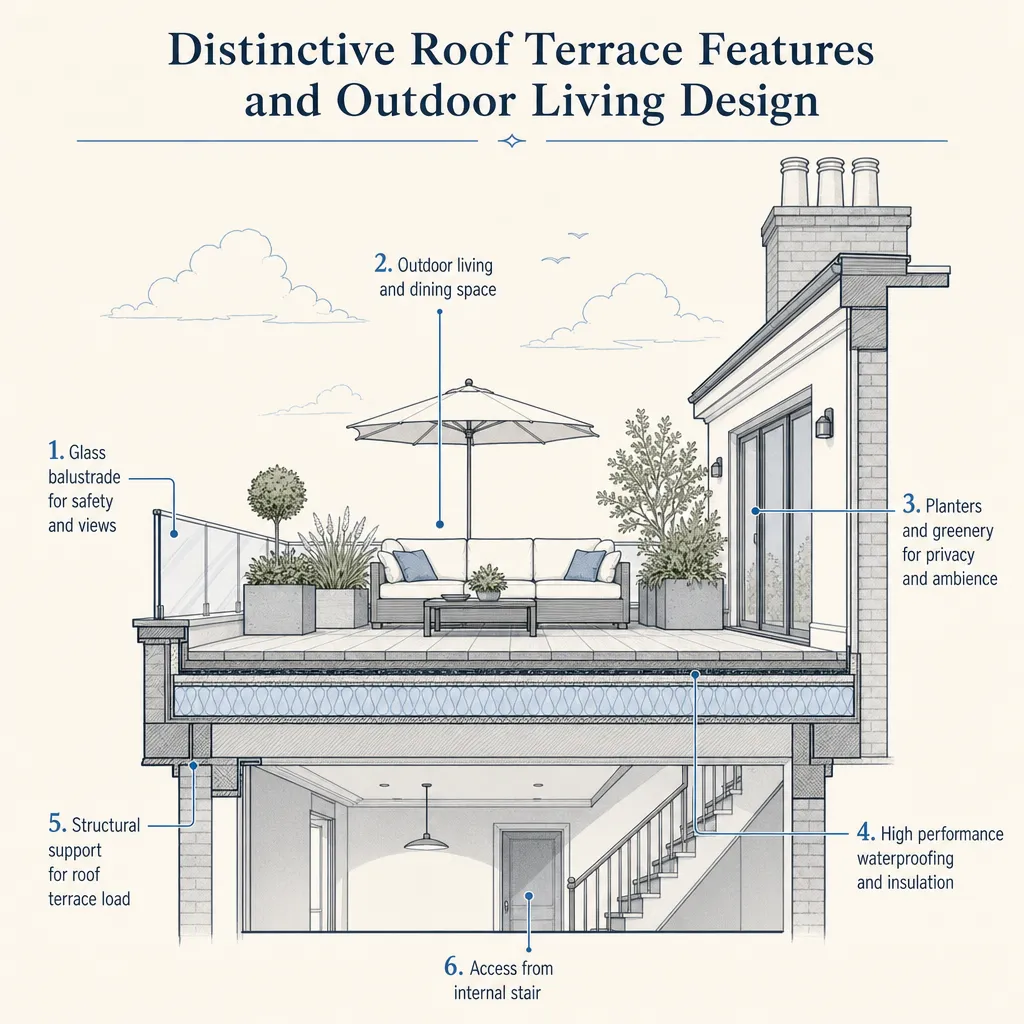
Distinctive Roof Terrace Features and Outdoor Living Design
A roof terrace can transform unused flat-roof space into a functional outdoor room, adding significant appeal to urban properties.
 Improvement & Build
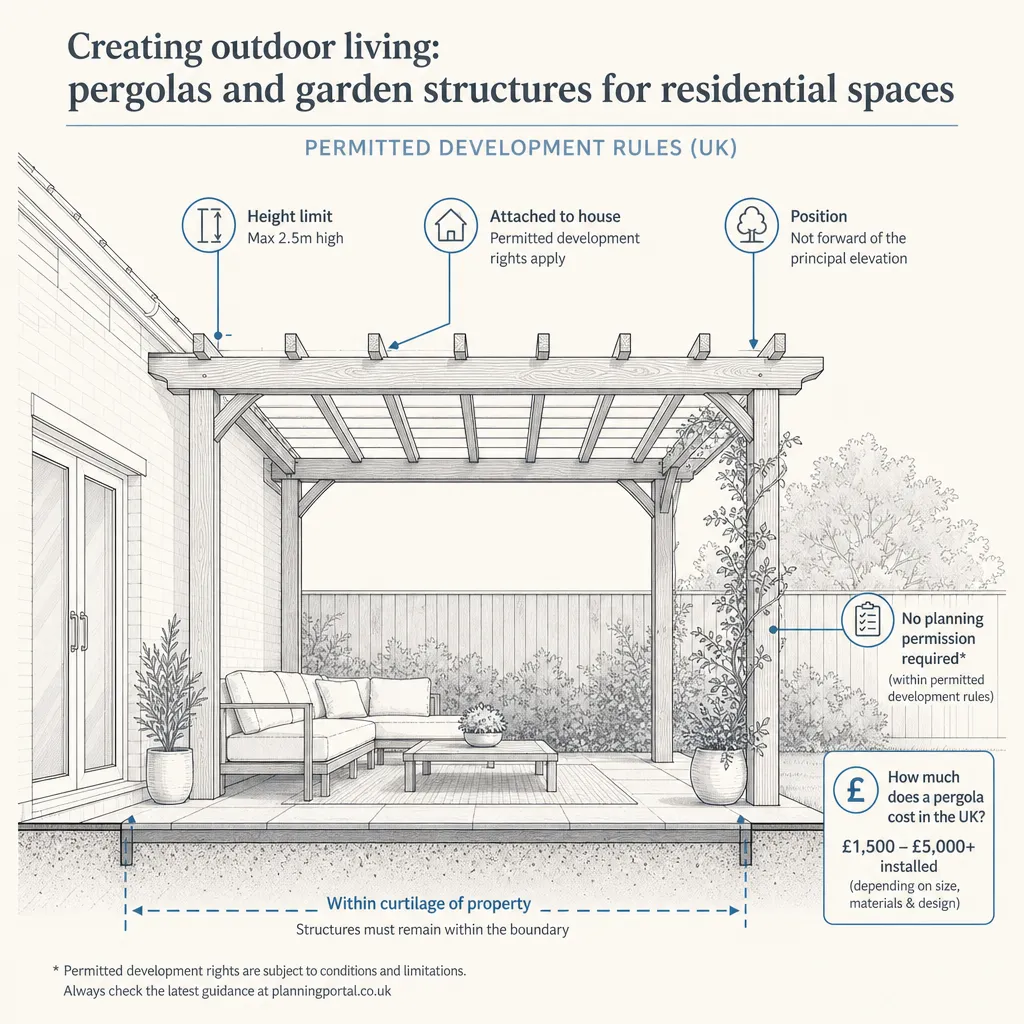
Creating outdoor living: pergolas and garden structures for residential spaces
Most freestanding pergolas in UK rear gardens are permitted development and don't need planning permission, provided they stay within height limits and outbuilding coverage stays below 50% of the original garden.
 Improvement & Build
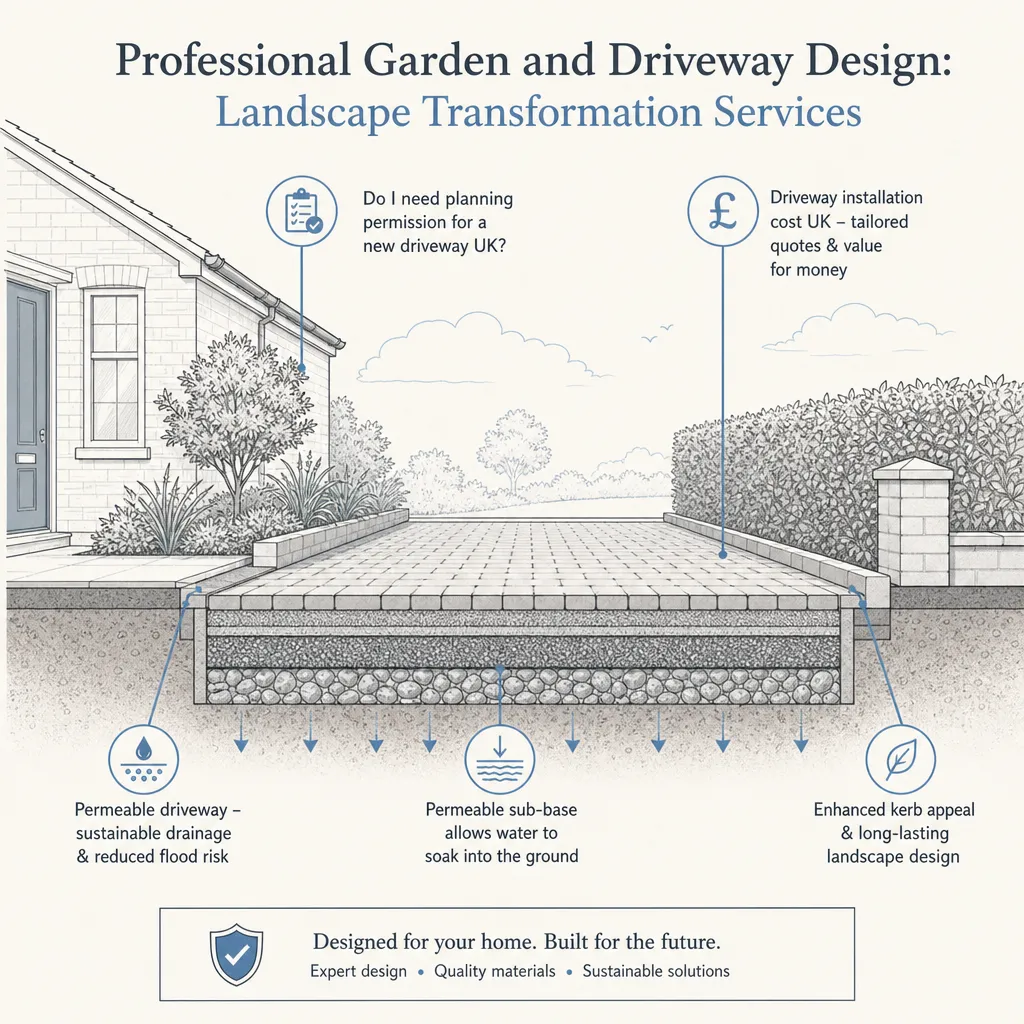
Professional Garden and Driveway Design: Landscape Transformation Services
Garden and driveway design combines hard landscaping — paving, block paving, gravel, resin — with planting and layout to improve kerb appeal and functionality.
 Improvement & Build
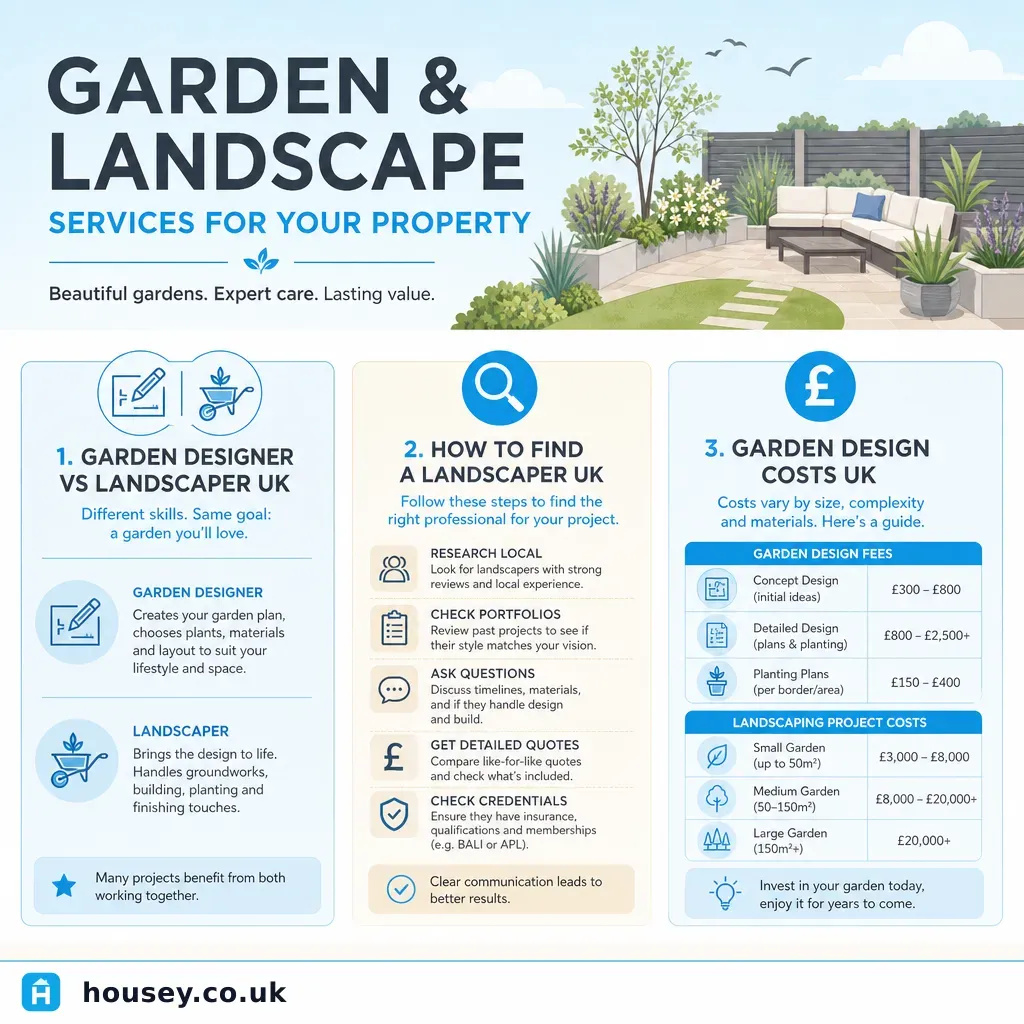
Garden and Landscape Services for Your Property
Garden designers and landscapers both improve outdoor spaces but offer different services.
 Improvement & Build
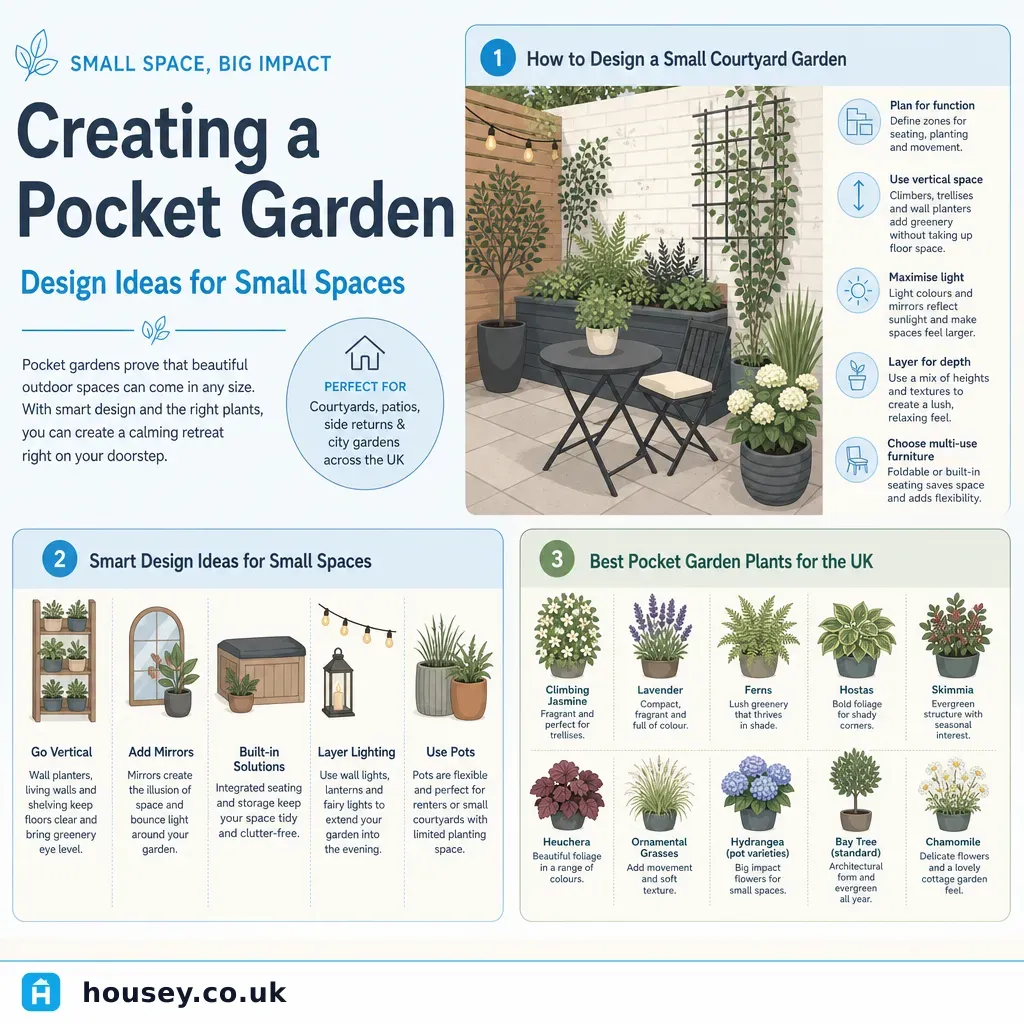
Creating a Pocket Garden: Design Ideas for Small Spaces
A pocket garden — typically under 15 sq m — benefits most from a single clear purpose, vertical planting structures, light-coloured materials, and a diagonal layout to make the space feel larger.