Awning Installation for Homes and Patios
By Housey · Last reviewed 5th of May 2026
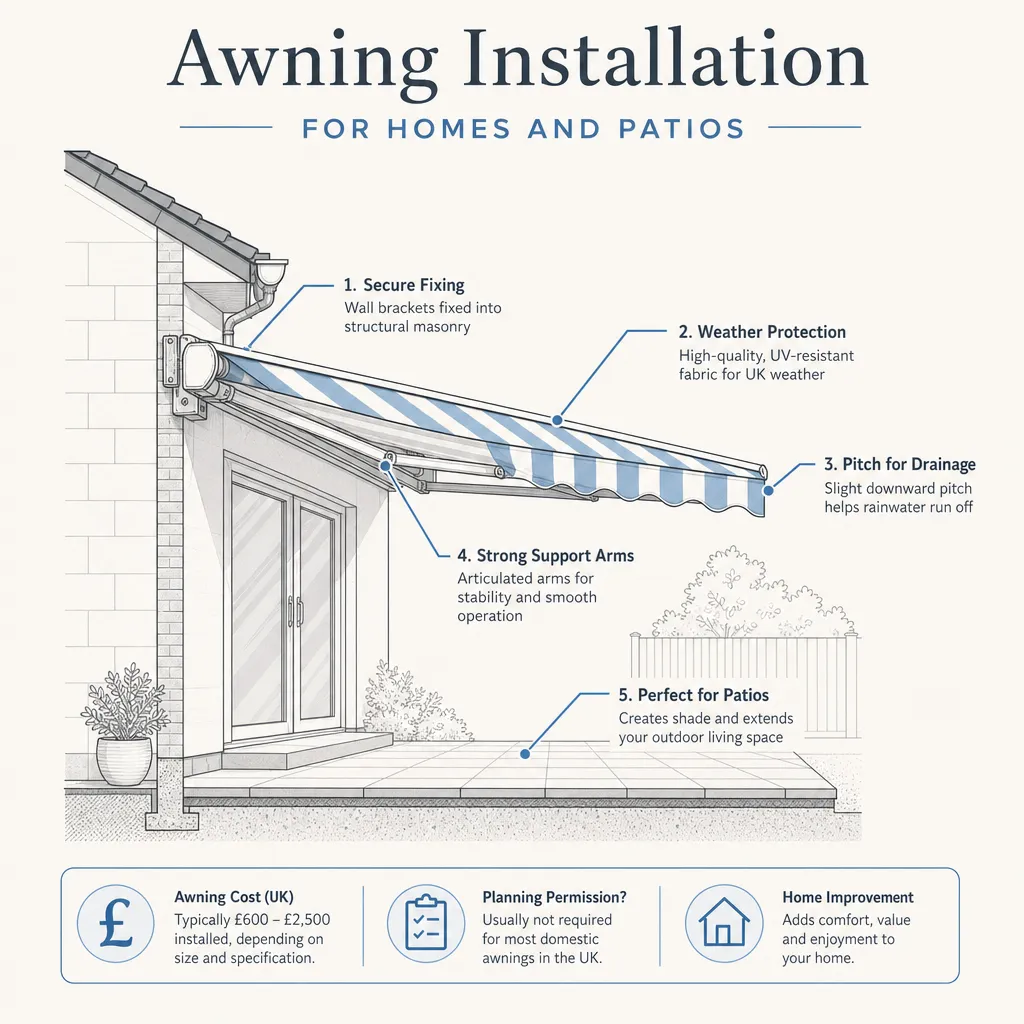
Awning Installation for Homes and Patios
Awnings have become an increasingly popular addition to UK homes as homeowners look to extend the usable life of outdoor spaces through unpredictable British summers. Whether you are shading a south-facing patio, protecting a garden dining area, or adding a retractable shelter over French doors, the range of awning types and fixing methods means choosing the right product and installer matters more than it first appears.
Key points
- Manual awnings typically cost £500–£1,500 installed; motorised models with Somfy or similar automation range from £1,500–£5,000+ depending on width, projection, and automation features.
- Most domestic awning installations fall under permitted development rights, but listed buildings and conservation areas require planning consent from the local planning authority (LPA).
- Wall-mounted awnings must be fixed into masonry or structural timber — fixing into render, hollow blockwork, or a cavity alone is unsafe and will not hold the load under wind or water pressure.
- Look for a Ultraviolet Protection Factor (UPF) rating of 50+ on awning fabrics, which blocks over 98% of UV radiation; confirm water-resistance ratings separately, as most fabrics shed light rain rather than being fully waterproof.
- Wind-resistance ratings (commonly Beaufort 4–6) determine when an awning must be retracted; leaving a lower-rated model extended in high winds can cause structural damage or personal injury.
Types of awning: which is right for your home?
The most common awning types for UK homes are cassette awnings, semi-cassette awnings, and open-roll awnings. Cassette models house the fabric fully within a protective casing when retracted, offering the best weather protection for both the mechanism and the fabric. Open-roll models are more affordable but leave the fabric and mechanism exposed when closed. Freestanding pergola-style awnings or louvred roofs are a separate category and typically involve more significant groundworks and higher cost.
Awning type | Best for | Not ideal for | Typical cost (installed) | Main consideration |
|---|---|---|---|---|
Cassette (manual) | Most patios, clean aesthetic | Very wide spans | £700–£1,800 | Fabric fully protected when closed |
Cassette (motorised) | Ease of use, smart home integration | Tight budgets | £1,800–£4,000+ | Requires 240V power point nearby |
Semi-cassette | Mid-range option, partial coverage | Exposed or windy locations | £600–£1,500 | Partial fabric protection only |
Open-roll | Smaller budgets, sheltered areas | Full weather exposure | £400–£1,000 | Fabric exposed when retracted |
Freestanding or pergola | Large areas with no suitable wall | Small patios, rental properties | £3,000–£10,000+ | May need groundworks and planning review |
Indicative UK costs, last reviewed 2026-05-05. Costs vary by region, product specification, and site conditions.
Do you need planning permission for an awning?
For most detached, semi-detached, or terraced houses in England, fitting a wall-mounted retractable awning falls within permitted development rights and does not require a planning application. However, check with your local planning authority before proceeding if:
- Your home is a listed building (any grade) — any external alteration typically requires Listed Building Consent.
- You live in a conservation area, National Park, or Area of Outstanding Natural Beauty (AONB) — permitted development rights can be restricted or removed.
- Your home is a flat or maisonette — permitted development rights do not apply in the same way as for houses.
- Your property has had permitted development rights removed by a planning condition or article 4 direction.
Planning rules in Wales, Scotland, and Northern Ireland differ from those in England. Check with the relevant devolved authority if your property is outside England.
Wall fixing: the most important part of the job
An awning can span several metres and, when loaded with standing water or catching a gust of wind, places significant downward and outward force on its fixings. Poor wall fixing is the most common cause of awning failures and call-backs.
A competent installer will:
- Identify the wall construction (solid brick, cavity brick, rendered blockwork, timber frame with cladding) before selecting the appropriate fixings.
- Use appropriate resin anchors or expanding bolts for masonry — never rely on fixing into render or plaster alone.
- For timber-framed homes with cladding, locate and fix into structural studs or fit a suitable backing plate across multiple studs.
- Check the wall is structurally sound — crumbling mortar, spalling brickwork, or significant damp should be addressed before installation proceeds.
- Ensure the fixing rail is level and there is adequate clearance below soffits, gutters, and any window heads.
If you are unsure about your wall type, ask the installer to assess it before accepting a quote. The fixing specification, including anchor type and number, should be stated in the written quotation.
Fabric choice and UV protection
Awning fabrics in the UK most commonly use solution-dyed acrylic (such as Sunbrella or Dickson), polyester with PVC coating, or shade mesh. Solution-dyed acrylic is widely regarded as the most durable option for permanent outdoor use in the UK: it is fade-resistant, breathable, and typically carries a manufacturer warranty of 5–10 years.
When reviewing fabric specifications, look for:
- UPF rating: UPF 50+ blocks over 98% of UV radiation, which is relevant wherever the awning shades a sitting area.
- Water resistance: most awning fabrics are water-resistant rather than fully waterproof; they shed light rain but should not be left fully extended in heavy or prolonged downpours.
- Cleaning method: most acrylic fabrics can be cleaned with mild soap and cold water using a soft brush; avoid pressure washing, which can damage coatings and seams.
Checklist: before you book an awning installation
Use this list when preparing for a quotation visit or comparing written quotes from installers:
When to get professional help
Most homeowners should use a professional installer for wall-mounted awnings. DIY installation is possible for very small, lightweight awnings on solid brick walls, but the consequences of an incorrect fixing — an awning detaching from a wall — can cause injury and damage to the property or neighbouring land.
Seek professional advice if:
- Your wall is rendered, timber-framed, or shows signs of damp or structural movement.
- The awning span exceeds 3 metres.
- You need electrical work for a motorised model.
- You are unsure whether your property requires planning consent.
- The awning is to be positioned above or close to a public footpath or neighbouring boundary.
How Housey can help
Housey connects UK homeowners with vetted local improvement and build professionals. If you are planning an awning installation and want to compare quotes from qualified local installers, Housey can help you find the right professional for your property type and outdoor space.
Frequently asked questions
Do I need planning permission for an awning on my house?
Most wall-mounted retractable awnings on standard houses in England fall within permitted development rights and do not require a planning application. Exceptions include listed buildings, conservation areas, flats, and properties with article 4 directions. Rules differ in Wales, Scotland, and Northern Ireland. Always check with your local planning authority if you are unsure.
How long does awning installation take?
Most single awning installations take between two and four hours for a professional installer. Motorised installations requiring a new electrical spur may take longer. Bespoke or very wide awnings may require a larger team or an additional visit to complete the work.
Can I install an awning myself?
Lightweight awnings on solid brick walls can be fitted by a competent DIYer, but most homeowners are advised to use a professional installer. Incorrect fixing is the primary cause of awning failures, and the risks — particularly above doors or on public-facing walls — justify the additional cost of professional installation.
How do I clean and maintain an awning fabric?
Most solution-dyed acrylic fabrics should be cleaned with mild soap and cold water using a soft brush. Allow to dry fully before retracting. Avoid pressure washing, harsh detergents, or hot water, which can damage coatings and seams. Check for mildew at the start of each season and treat with a fabric-safe mildew remover.
What wind speed can an awning withstand?
Most domestic cassette awnings are rated to Beaufort 4 (moderate breeze, approximately 20–28 km/h). Some premium motorised models include wind sensors that trigger automatic retraction. Check the wind-resistance rating before purchase and retract the awning manually when strong winds are forecast to avoid structural damage or personal injury.
Sources and further reading
- Permitted development rights for householders: technical guidance — GOV.UK
- Planning Portal: when do you need planning permission? — Planning Portal
- Listed buildings and conservation areas — Historic England
Useful next reads
 Improvement & Build
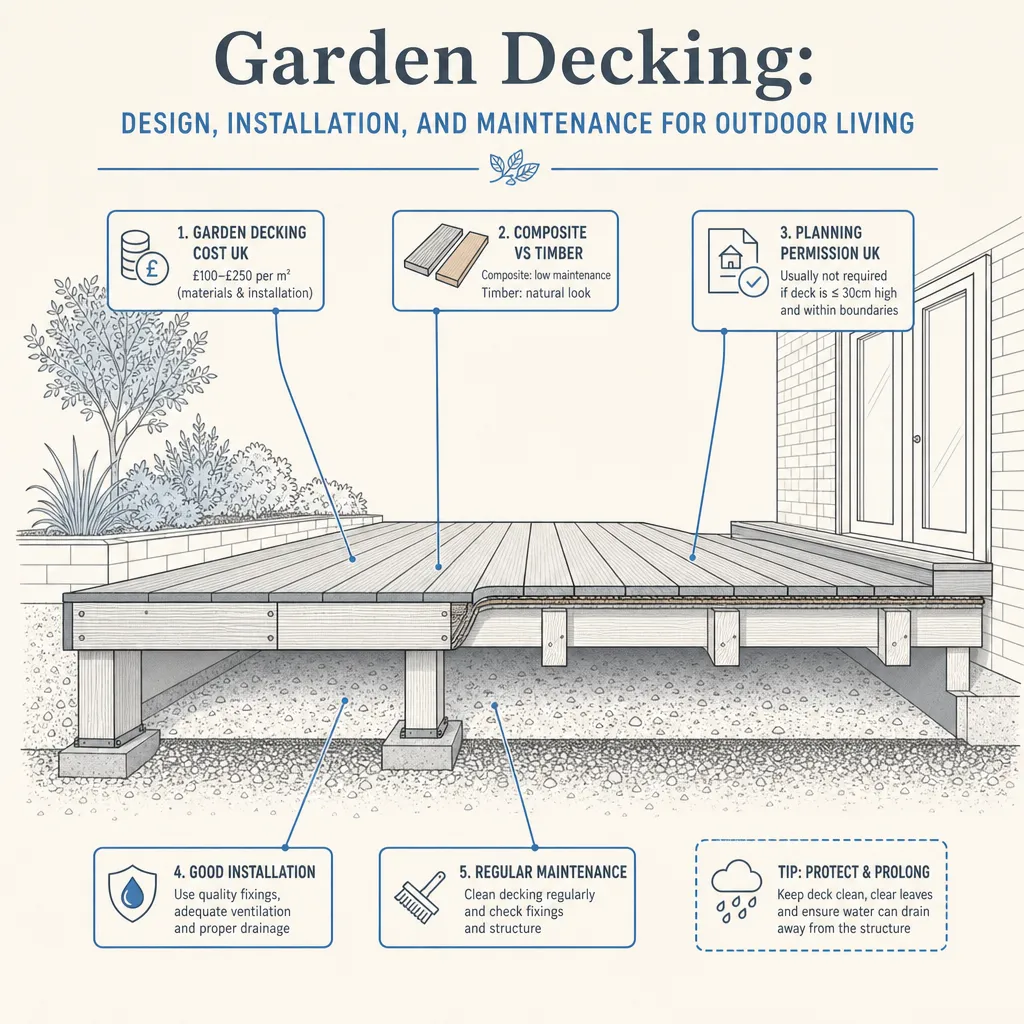
Garden Decking: Design, Installation, and Maintenance for Outdoor Living
Garden decking creates a level, usable outdoor surface from timber or composite boards, typically costing £1,000–£5,000+ depending on size, material, and access.
 Improvement & Build
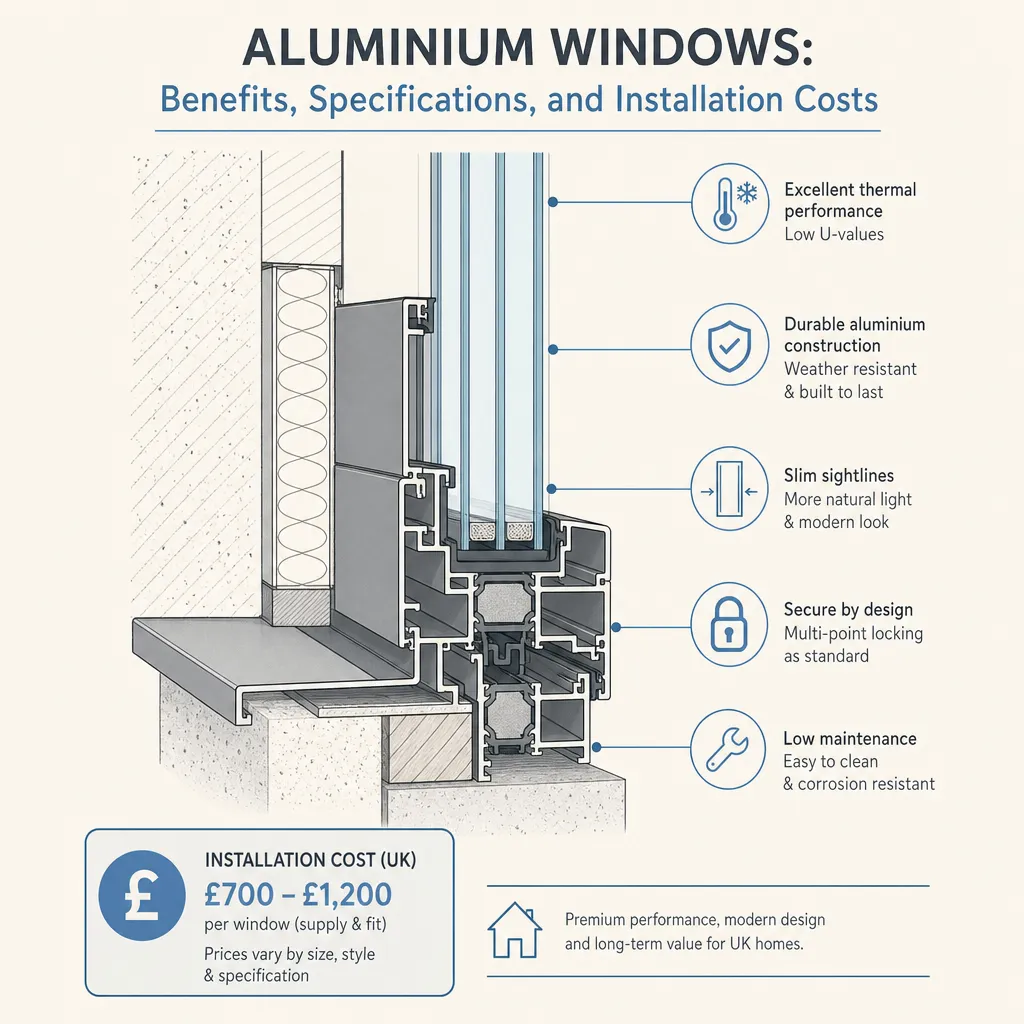
Aluminium Windows: Benefits, Specifications, and Installation Costs
Aluminium windows typically cost £600–£1,800 per window installed in the UK, depending on size and specification.
 Improvement & Build
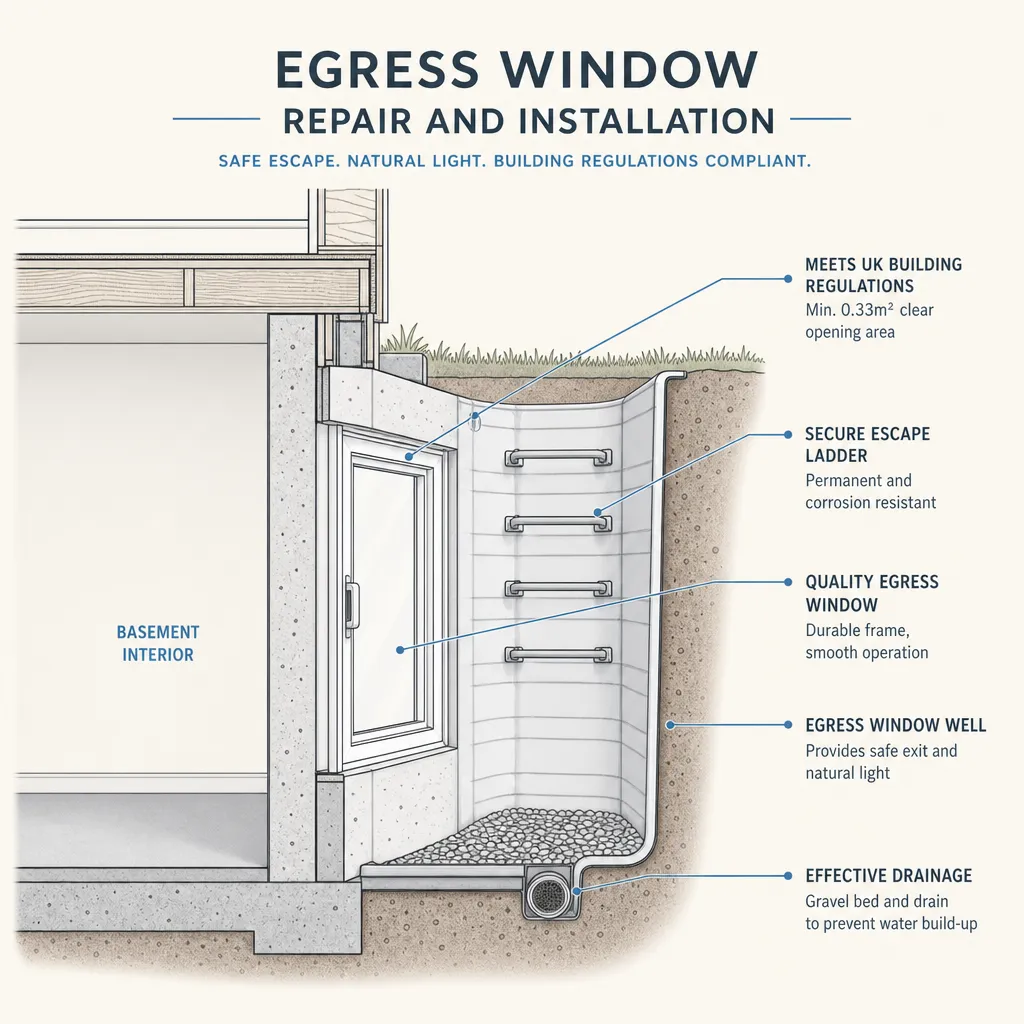
Egress Window Repair and Installation
An egress window is a window large enough to serve as an emergency escape route from a habitable room.
 Improvement & Build
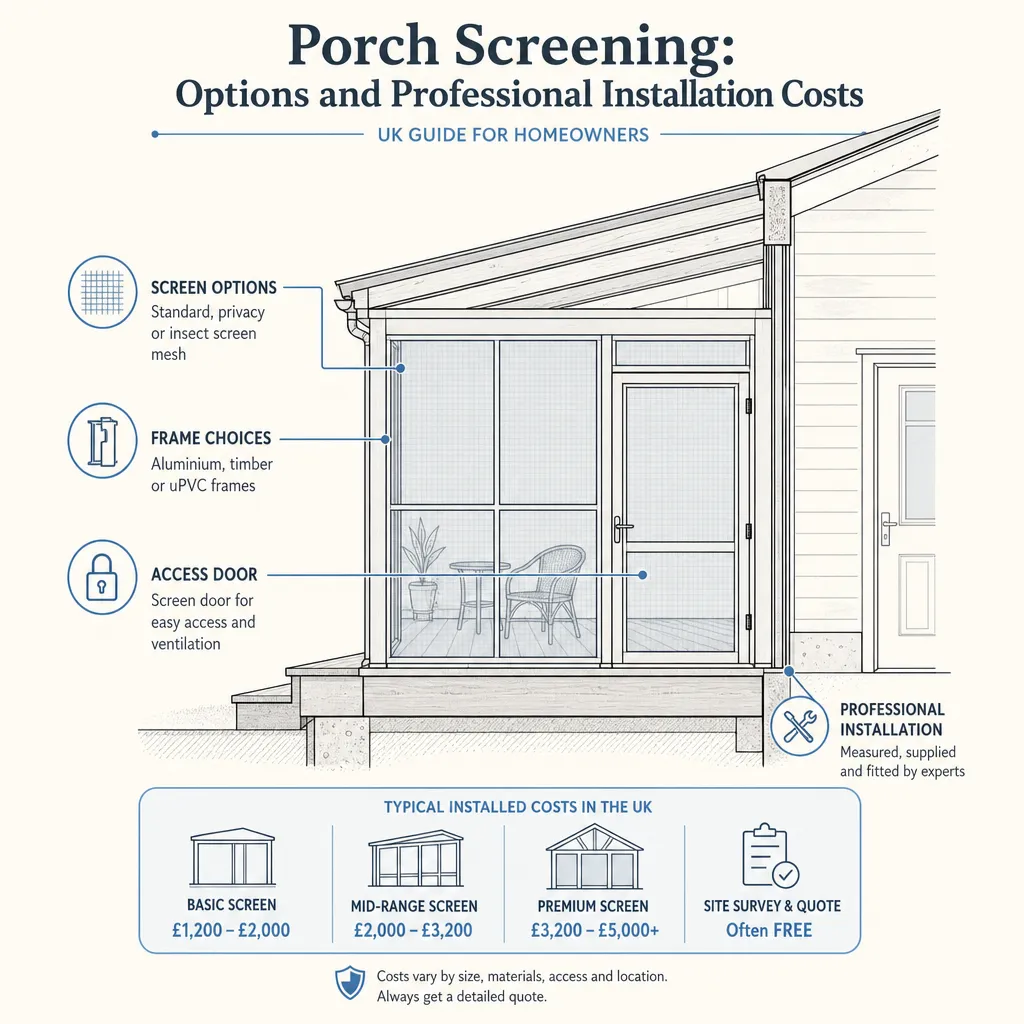
Porch Screening: Options and Professional Installation Costs
Porch screening ranges from simple insect mesh on a timber frame to bespoke aluminium-framed glazed enclosures.
 Improvement & Build
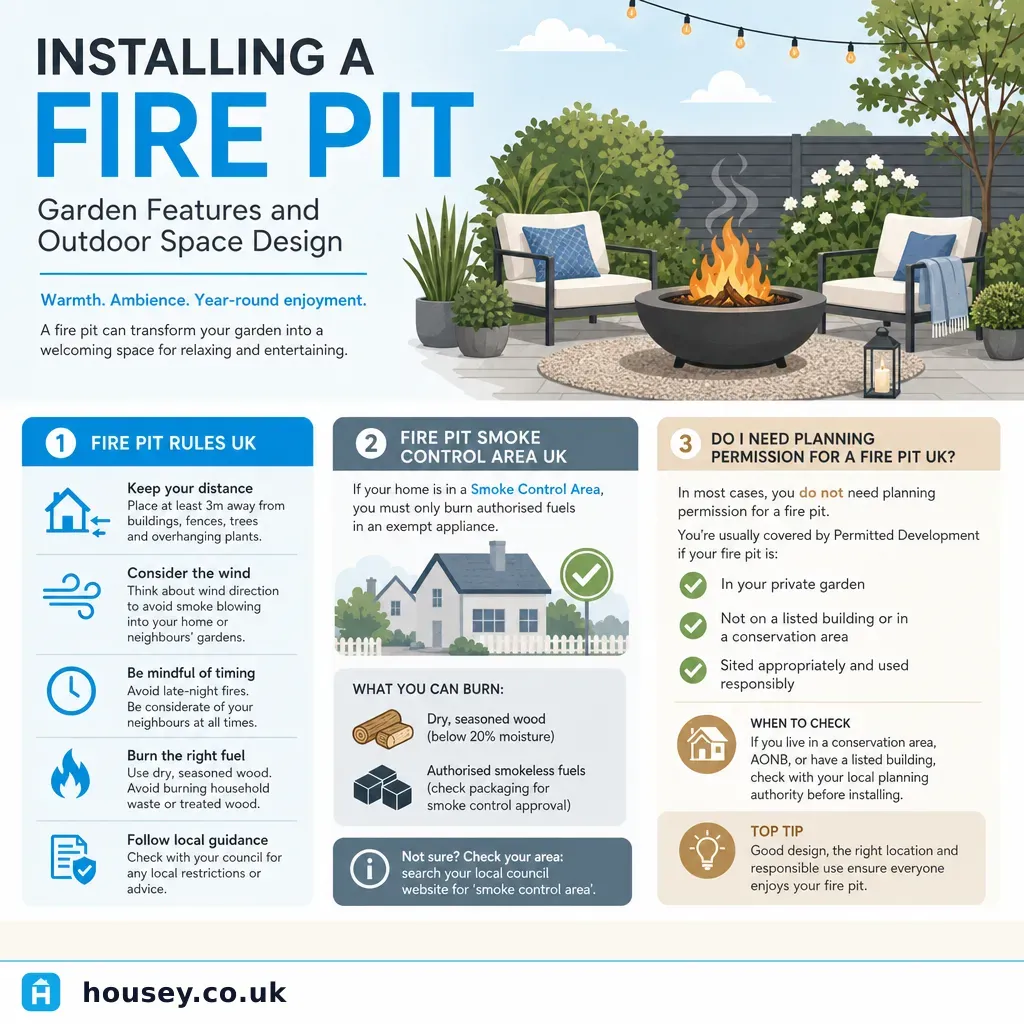
Installing a Fire Pit: Garden Features and Outdoor Space Design
Installing a garden fire pit in the UK is generally permitted, but Smoke Control Area rules prohibit open wood-burning in most towns and cities.