Porch Screening: Options and Professional Installation Costs
By Housey · Last reviewed 18th of May 2026
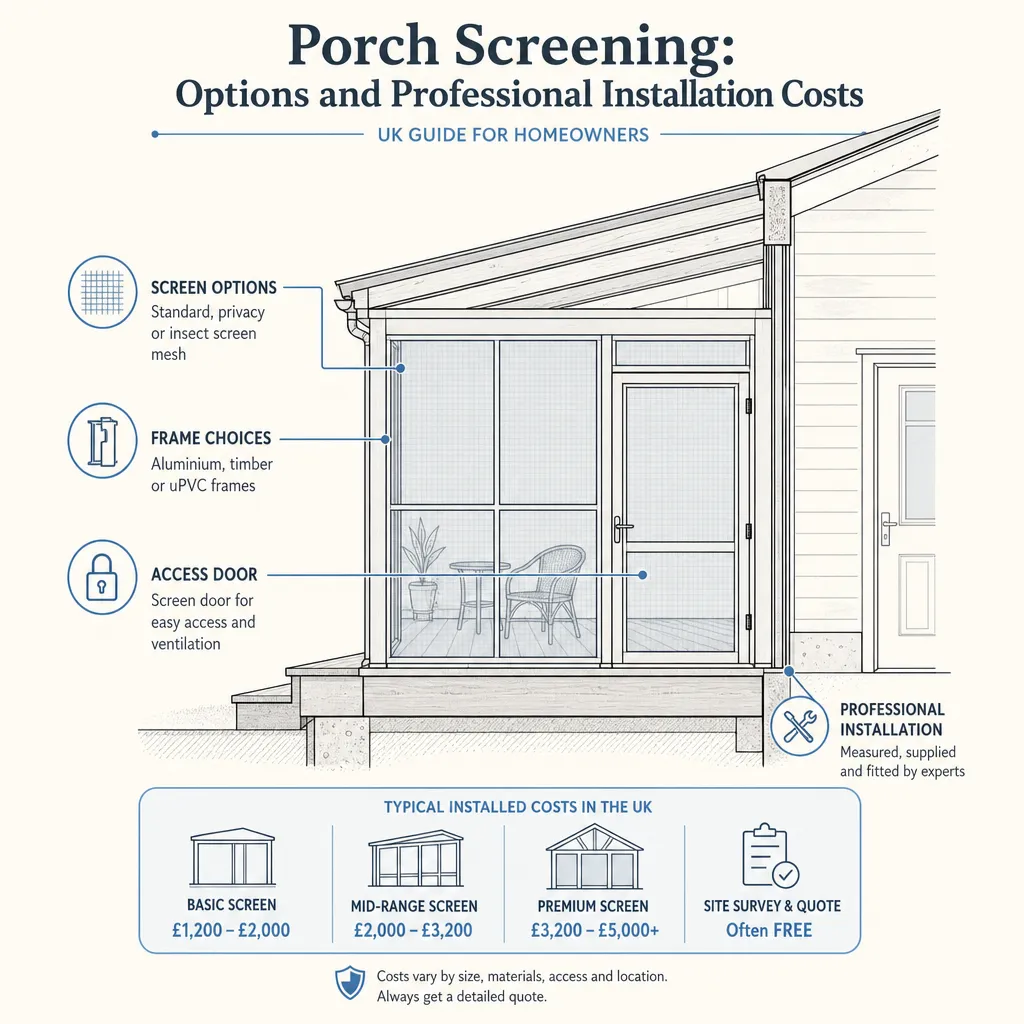
Porch Screening: Options and Professional Installation Costs
A screened porch or veranda extends the usable outdoor space of a UK home — keeping insects out in summer, softening wind and rain, and creating a sheltered transition zone between house and garden. Interest in covered and screened outdoor structures has grown alongside the broader shift towards garden rooms and outdoor living, and a wide range of systems now suit projects from a modest front entrance porch to a full-width rear veranda.
Key points
- A porch outside any external door of a dwellinghouse with a ground area not exceeding 3 m², no part more than 3 m above ground, and no part within 2 m of any boundary with a highway may qualify as permitted development under Class D of Schedule 2, Part 1 of the GPDO 2015 in England — this does not apply to flats, maisonettes, or listed buildings.
- If a screened structure creates an enclosed, internally heated space, Building Regulations are likely to apply — check with your local building control authority before starting work.
- The main system types are insect mesh on tension or timber frames, polycarbonate or glass panel systems, and bespoke aluminium-framed enclosures.
- Timber-framed screening suits period properties and traditional aesthetics but requires regular treatment to maintain; aluminium systems are lower maintenance and typically longer-lasting.
- Indicative installed costs range from approximately £500 for a basic tension-mesh kit to £15,000 or more for a bespoke glazed veranda enclosure (Indicative UK costs, last reviewed 2026-05-18 — quotes vary significantly by size, system type, and region).
What does porch screening involve?
Porch screening describes any system that fully or partially encloses a covered outdoor area — a front entrance porch, a rear veranda, a side-return canopy, or a garden-room structure — using mesh, polycarbonate, glass, or solid timber panels. The goal is typically one or more of: insect exclusion, wind and rain protection, privacy, noise reduction, or light filtering.
In UK homes, screened structures are most commonly fitted to:
- Front porches — small canopied entrances at the front elevation of a house
- Rear verandas or pergolas — timber or aluminium structures adjacent to a rear or side elevation
- Side-return covered areas — sheltered utility areas or cycle storage zones
- Garden rooms with open bays — larger structures that benefit from seasonal or permanent screening
Screening options compared
System | Best for | Not ideal for | Typical lifespan | Maintenance level |
|---|---|---|---|---|
Tension insect mesh | Seasonal insect exclusion, low budget | Year-round weather protection | 5–10 years | Low |
Timber-framed panels | Period properties, traditional finish | Low-maintenance priorities | 15–20 years (with treatment) | Medium to high |
Polycarbonate panel system | Affordable glazed appearance | High-end visual result | 15–20 years | Low |
Aluminium-framed mesh or glass | Durable, bespoke, low maintenance | Smaller budgets | 25+ years | Low |
Full glazed veranda enclosure | All-season use, enhanced usability | Planning and Building Regs complexity | 25+ years | Low |
Planning permission and permitted development
Whether your screened structure requires planning permission depends on its size, position, and whether the property is in a designated area.
Permitted development for porches (England): Under Class D of Schedule 2, Part 1 of the Town and Country Planning (General Permitted Development) (England) Order 2015, a porch outside any external door of a dwellinghouse is permitted development provided:
- The ground area (measured externally) does not exceed 3 m²
- No part of the porch is more than 3 m above ground level
- No part is within 2 m of any boundary of the curtilage with a highway
This applies to dwellinghouses only — not flats or maisonettes. Properties subject to Article 4 Directions may also have permitted development rights removed for specific works.
Larger or enclosed structures: Once a structure exceeds the Class D limits, or becomes a fully enclosed addition to the dwelling, different provisions of the GPDO may apply and a planning application is more likely to be required. A fully glazed rear veranda forming a habitable space may be treated as a single-storey rear extension under Class A, which carries its own size and height limits.
Listed buildings and conservation areas: Listed building consent is required for any works to a listed building that would affect its character. Properties in conservation areas may face additional scrutiny even for smaller structures. Always confirm requirements with your local planning authority before ordering materials or starting work.
What does professional installation cost?
Costs vary considerably by system, size, materials, and how the structure attaches to the existing building. The following are indicative figures only:
System type | Indicative installed cost | Notes |
|---|---|---|
Tension mesh screen kit | £500–£1,500 | Often suited to DIY; professional fitting adds labour cost |
Timber-framed mesh porch | £1,500–£4,000 | Includes frame and mesh panels; not glazed |
Polycarbonate panel lean-to | £3,000–£7,000 | Attached lean-to or veranda style |
Aluminium mesh or louvred enclosure | £5,000–£12,000 | Bespoke, powder-coated frame |
Full glazed veranda or garden room | £10,000–£25,000+ | Building Regulations likely to apply |
Indicative UK costs, last reviewed 2026-05-18. Always obtain at least three written, itemised quotes.
What to ask before accepting a quote
- Does the quote include all structural fixings, groundworks, and any electrical work such as lighting or power outlets?
- What planning checks have you carried out — does this structure need a permitted development confirmation or a full planning application?
- What screening material is used, and what is its UV resistance rating and expected lifespan?
- Is the frame aluminium, steel, or timber — and what treatment or finish is included?
- How is water drainage managed at the base of the panels and around the structure perimeter?
- Is VAT included in the quoted price?
- What workmanship warranty is provided, and is it set out in writing?
Red flags to watch for
- An installer who confirms planning compliance without checking your specific address, the property's planning history, or any Article 4 Directions that may apply locally.
- Quotes that omit groundworks or base preparation — these can add significantly to the final cost.
- No specification of how the structure attaches to the existing house wall; fixings into masonry require proper assessment of the wall construction and load path.
- Polycarbonate or timber systems supplied without UV resistance ratings or treatment guarantees.
- Unusually low quotes that exclude waste removal, making-good of surrounding render or decoration, or the cost of any required planning application.
- No site visit before quoting — a responsible contractor should inspect the location before pricing structural or attached works.
When to get professional help
A simple tension-mesh system on an existing covered porch is within reach of a confident DIYer. Involve a professional if:
- Any structural element must be attached to the main house wall — a builder should confirm the fixing method is adequate for the masonry type and wall condition.
- The structure exceeds permitted development limits and a planning application is needed.
- The property is listed or in a conservation area — specialist advice from a conservation architect or planning consultant is worthwhile before committing to any design.
- You want full glazing, heating, or electrical connections — Building Regulations are likely to apply and a coordinated trades team is needed.
How Housey can help
Housey connects you with experienced extension builders who handle structural porch enclosures and verandas, and garden designers who can advise on integrating screening into a wider outdoor living scheme. Post your project to compare quotes from vetted local professionals.
Frequently asked questions
Does a screened porch need planning permission in the UK?
It depends on size, position, and whether the property is in a designated area. In England, a porch with a ground area no greater than 3 m², no part more than 3 m above ground, and no part within 2 m of a highway boundary may qualify as permitted development. Larger or fully enclosed structures, listed buildings, and properties in conservation areas typically require a planning application.
Can I screen a porch myself?
Tension-mesh and some polycarbonate panel systems are designed for DIY installation. However, any structural element — particularly fixing to the main house wall — is safer in the hands of a qualified builder. Always confirm planning requirements before purchasing materials, as an unpermitted structure may need to be removed at your own cost.
How long does porch screening last?
Lifespan depends on the system. Basic insect-mesh screens may last 5–10 years. Timber-framed systems typically last 15–20 years with maintenance; aluminium-framed and glazed enclosures generally last 25 years or more with minimal upkeep.
Does porch screening add value to a property?
A well-installed screened veranda or porch can enhance kerb appeal and add usable space. There is no guaranteed uplift in value — outcomes depend on the quality of installation, whether any required consent was obtained, and local buyer preferences.
Sources and further reading
- Planning Portal: porches — Planning Portal
- Town and Country Planning (General Permitted Development) (England) Order 2015 — legislation.gov.uk
- GOV.UK: planning permission England and Wales — GOV.UK
- Historic England: listed building consent — Historic England
Useful next reads
 Improvement & Build
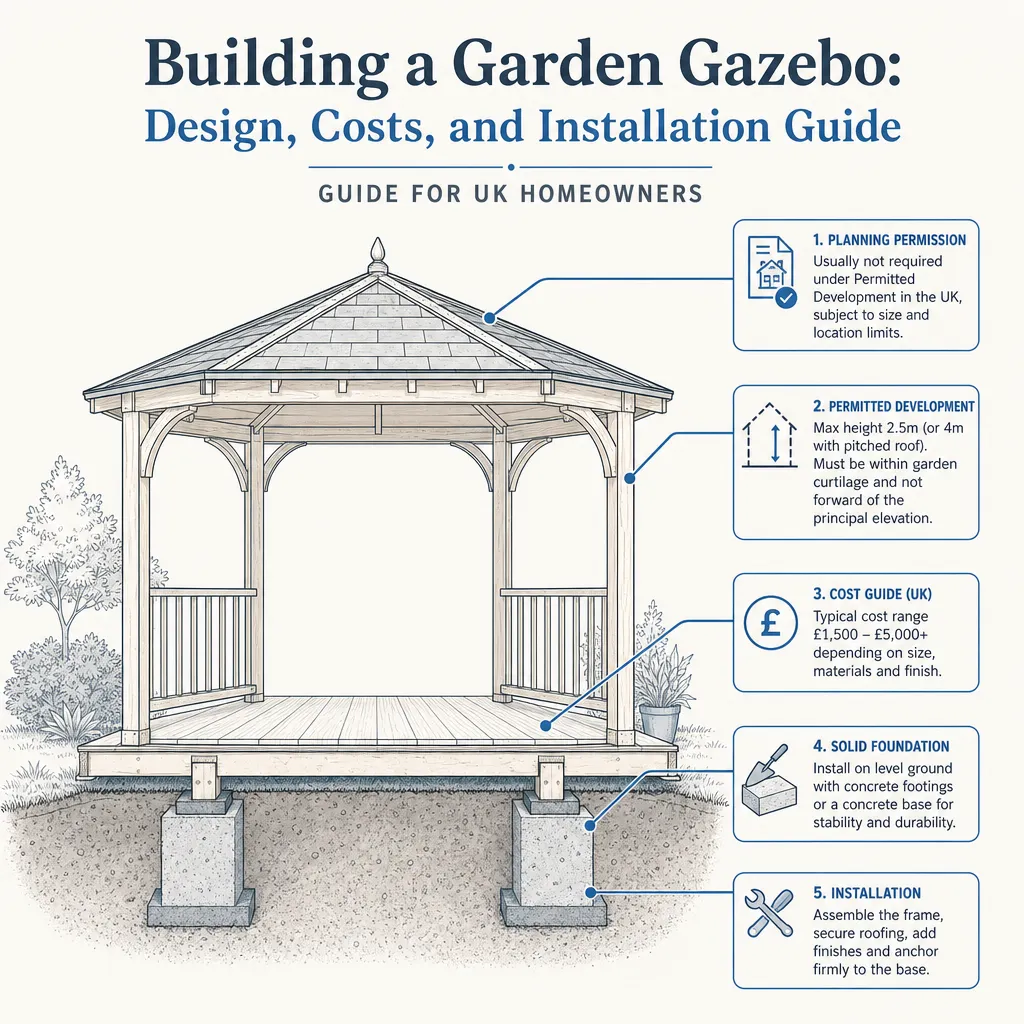
Building a Garden Gazebo: Design, Costs, and Installation Guide
A garden gazebo usually falls under permitted development in England, provided it is single storey, stays within height limits, and covers less than 50% of the garden.
 Improvement & Build
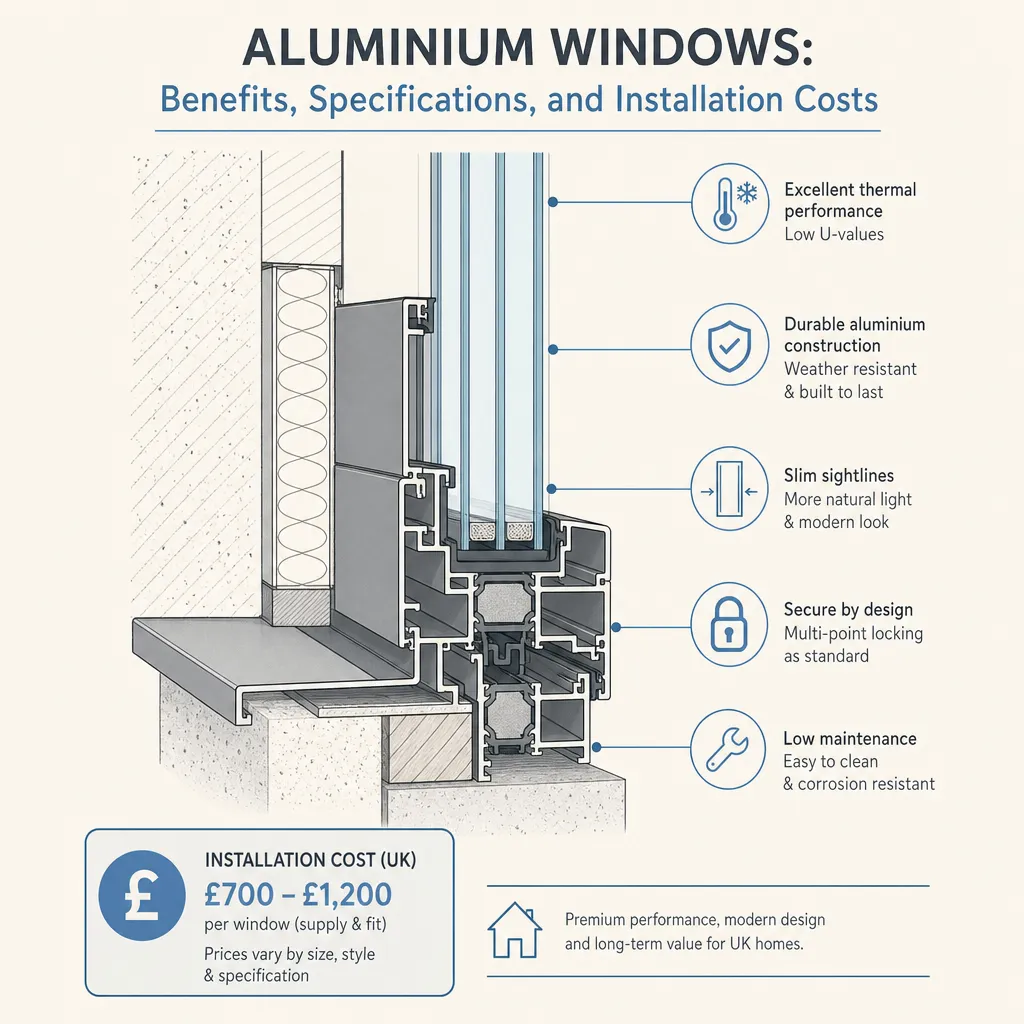
Aluminium Windows: Benefits, Specifications, and Installation Costs
Aluminium windows typically cost £600–£1,800 per window installed in the UK, depending on size and specification.
 Improvement & Build
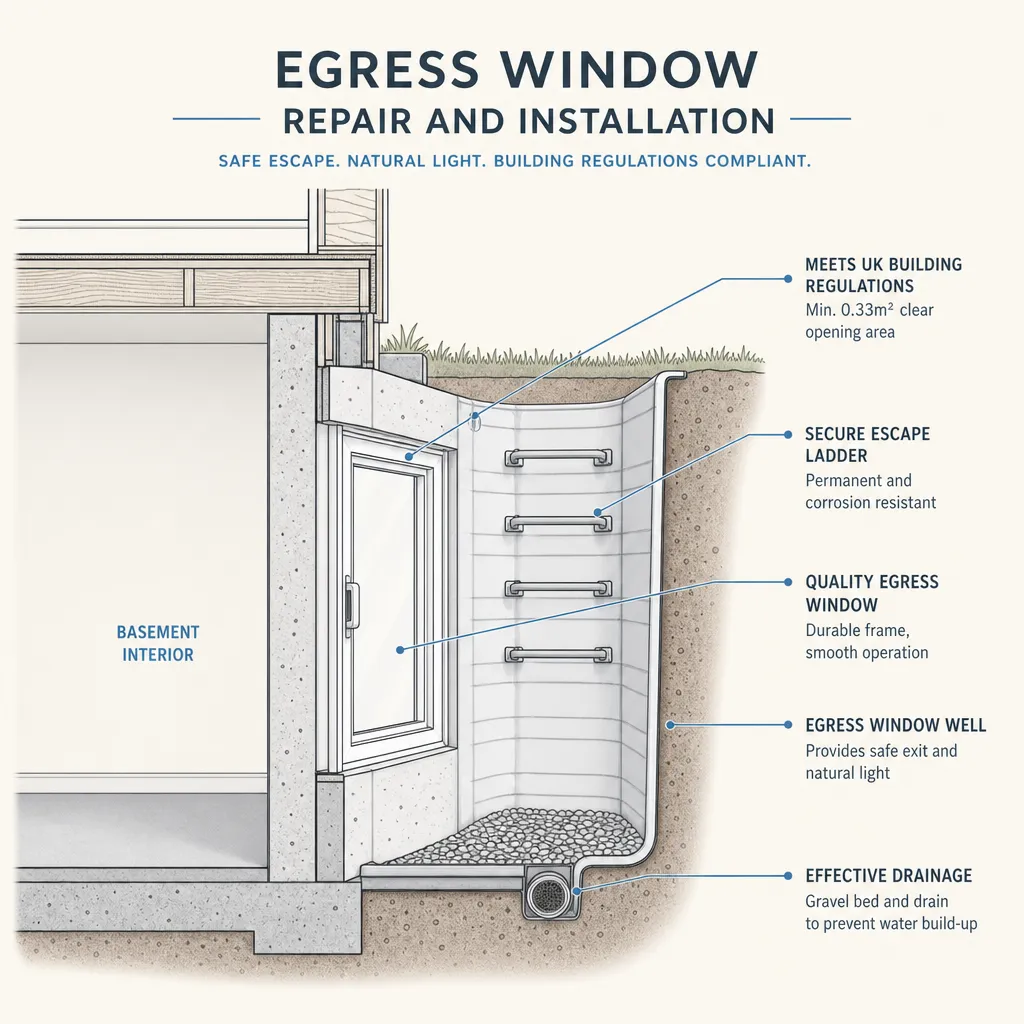
Egress Window Repair and Installation
An egress window is a window large enough to serve as an emergency escape route from a habitable room.
 Improvement & Build
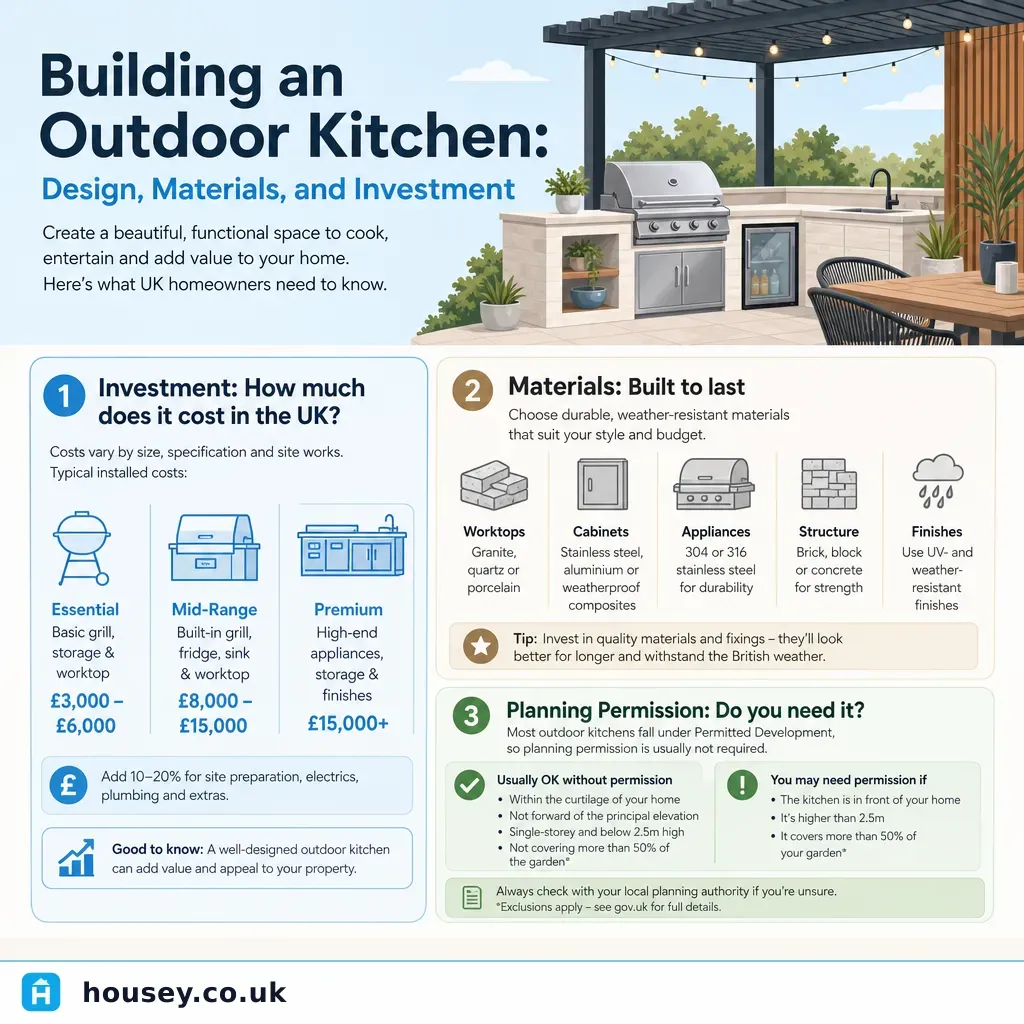
Building an Outdoor Kitchen: Design, Materials, and Investment
Building an outdoor kitchen in the UK costs roughly £3,000–£25,000 depending on size and materials.
 Improvement & Build
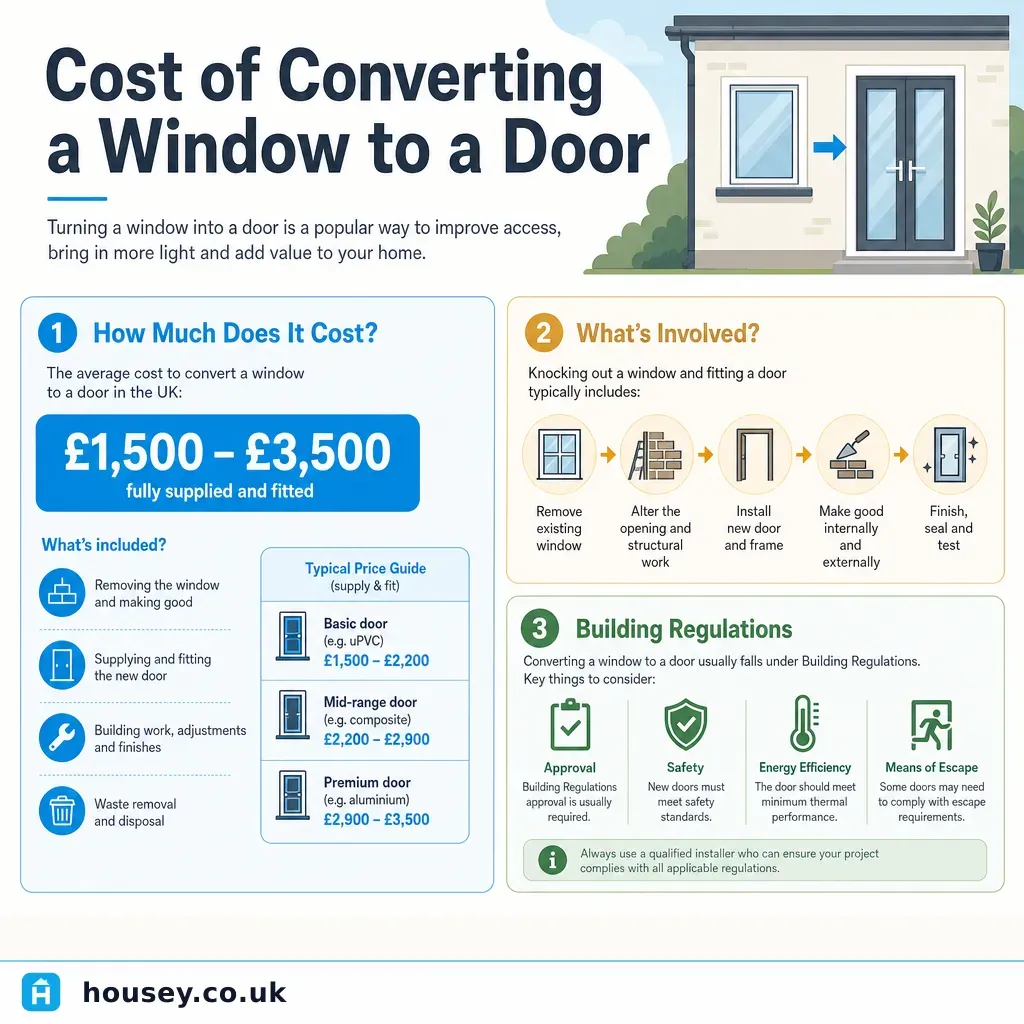
Cost of converting a window to a door
Converting a window to a door in the UK typically costs £1,500–£5,000 or more, depending on wall construction (cavity, solid, or timber frame), the type of door fitted, and whether a new or enlarged lintel is required.