Garden Decking: Design, Installation, and Maintenance for Outdoor Living
By Housey · Last reviewed 19th of May 2026
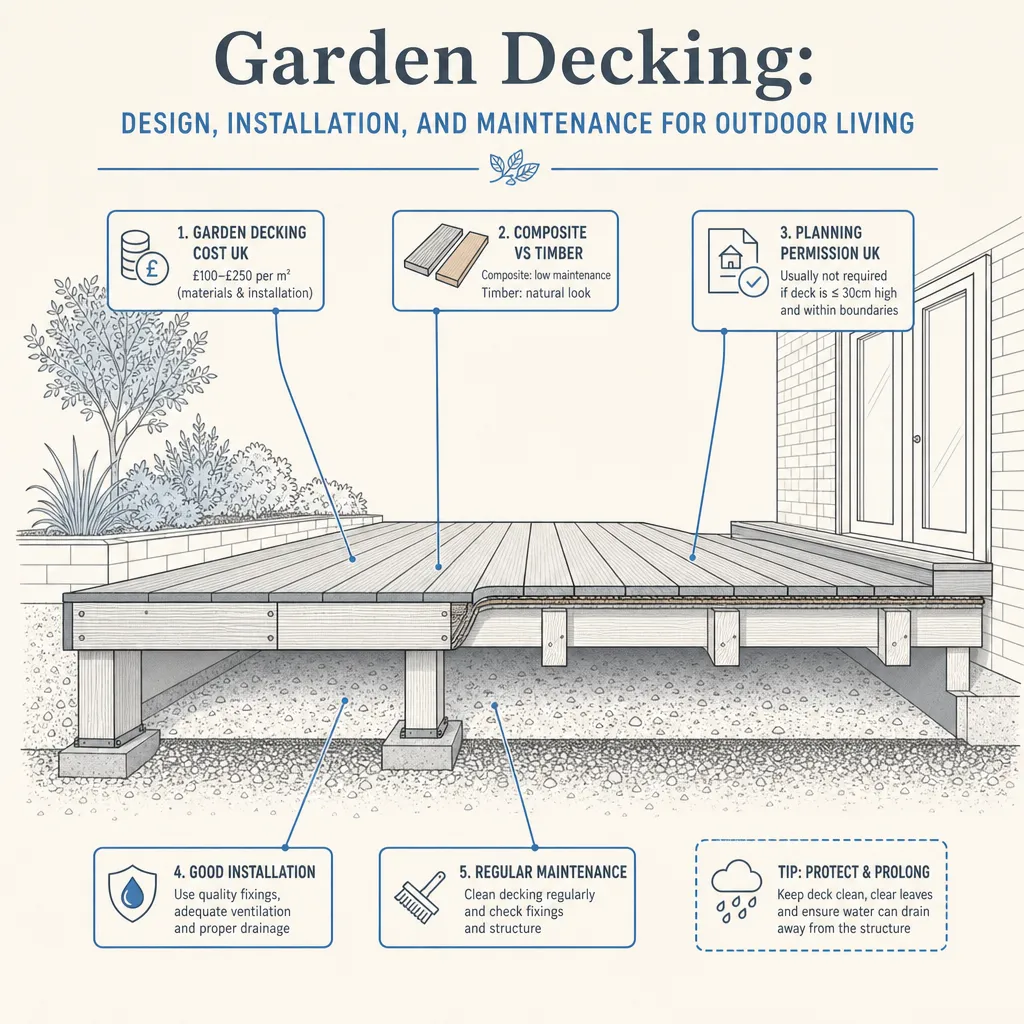
Garden Decking: Design, Installation, and Maintenance for Outdoor Living
Garden decking has become one of the most popular home improvement projects in the UK, offering a practical way to extend usable living space into the garden without a full extension. Whether you are planning a first installation, replacing an ageing structure, or converting a sloped site into a level entertaining area, the choice of material, design, and installer will shape both the finished result and how much ongoing upkeep you face. Getting those decisions right early — particularly around material type, subframe construction, and compliance with planning rules — saves considerable time and expense later.
Key points
- Timber decking typically costs £100–£200 per m² installed; composite decking costs £150–£300 per m² installed. Indicative UK costs, last reviewed 2026-05-19.
- Decking over 30cm above ground level, adjacent to a highway, or attached to a listed building may require planning permission under the Town and Country Planning (General Permitted Development) (England) Order 2015.
- Under Building Regulations, decking forming part of a raised structure over 600mm above ground may need building control sign-off; balustrades are required at that height, with a minimum handrail of 1,100mm under Approved Document K.
- Pressure-treated softwood (typically pine or larch) is the most common budget option; composite boards (recycled wood fibre bonded with plastic polymer) offer lower maintenance but higher upfront cost.
- Decking in conservation areas, National Parks, Areas of Outstanding Natural Beauty, or on listed buildings requires full planning permission regardless of size or height.
What materials are available for garden decking?
The three main decking material categories in the UK are pressure-treated softwood, hardwood, and composite boards.
Pressure-treated softwood — typically pine or larch — is the most widely available and least expensive option. The timber is kiln-dried and pressure-impregnated with preservative to resist rot and insect damage. With regular annual treatment, a softwood deck can last 10–15 years.
Hardwood — such as oak, iroko, or FSC-certified balau — is denser and more durable, with a design life of 20–30 years when properly maintained. Oiling every one to three years slows weathering and greying. Sourcing from FSC or PEFC certified suppliers is the responsible choice.
Composite decking uses a core of recycled wood fibre bonded with plastic polymer, faced with a textured surface that resists splintering, fading, and algae growth. Maintenance requirements are minimal — periodic washing with warm water and a soft brush is usually sufficient. Most manufacturers quote a 25-year design life.
Timber vs composite decking: at a glance
Feature | Pressure-treated softwood | Hardwood | Composite |
|---|---|---|---|
Typical installed cost per m² | £100–£150 | £150–£250 | £150–£300 |
Maintenance requirement | Annual treatment | Oiling every 1–3 years | Occasional washing |
Typical design life | 10–15 years | 20–30 years | 25+ years |
Slip risk when wet | Moderate — treat with anti-slip | Moderate | Low (textured surface) |
Sustainability | FSC/PEFC certified options | FSC/PEFC certified options | Often uses recycled content |
Best for | Budget builds; traditional look | Premium natural appearance | Low-maintenance priority |
Indicative UK costs, last reviewed 2026-05-19. Quotes vary by region, access, and specification.
Does garden decking need planning permission?
For most residential properties in England, garden decking does not require planning permission, provided it falls within the permitted development rights set out in the Town and Country Planning (General Permitted Development) (England) Order 2015. The key conditions are:
- The decking — including any structure above it — must not exceed 30cm in height above ground level.
- It must not cover more than 50% of the garden area.
- It must not be located in front of the principal elevation of the house.
- The property must not be in a conservation area, National Park, Area of Outstanding Natural Beauty, or World Heritage Site.
- The building must not be a listed building.
If any condition cannot be met, you will need to apply for householder planning permission from your local planning authority. Rules also differ in Scotland, Wales, and Northern Ireland; always check with your local council before starting work.
Building Regulations may also apply if the decking forms part of a raised structure over 600mm above ground level, or where structural elements such as long-span joists or substantial foundations are involved. Contact your local building control department to confirm whether a formal application is needed.
How decking is typically installed
A professional installer will follow a process broadly like this:
- Site survey and design — measure the area, check ground levels, identify drainage routes, and agree layout and material specification.
- Subframe preparation — install concrete footings or adjustable pedestals; lay a weed-suppressing ground membrane.
- Joist framework — fix pressure-treated or composite joists at centres appropriate to the board span, typically 400–600mm.
- Board installation — lay decking boards with the correct expansion gaps: 5–8mm for timber to allow for seasonal movement.
- Fascia and balustrade — fix edge boards and, where required, install balustrades. These are required where the deck exceeds 600mm above ground; minimum handrail height is 1,100mm under Approved Document K.
- Finishing — sand (timber) or clean (composite); apply initial treatment or sealant as specified.
Maintaining your garden decking
Maintenance requirements vary by material, but these steps apply to most timber decks:
- Clean annually with a stiff brush and a purpose-made deck cleaner to remove algae, moss, and dirt.
- Apply preservative or oil every 1–3 years, depending on timber species and manufacturer recommendation.
- Check fixings annually for rust or loosening; replace corroded screws promptly to prevent board movement.
- Inspect the subframe every 2–3 years for signs of rot, particularly at joist ends and where posts meet concrete.
- Apply anti-slip strips or coating in shaded or persistently damp areas where algae growth is persistent.
Composite decking requires less maintenance but benefits from washing down periodically to prevent mould build-up in the board grooves.
Homeowner decking checklist
Before signing a contract, work through this checklist:
When to get professional help
For straightforward ground-level decking on a level garden, a competent landscaping contractor can carry out all works. Seek professional input if:
- The deck will be raised more than 600mm above ground, requiring structural consideration and compliant balustrades.
- The ground is significantly sloped, requiring cut-and-fill, retaining walls, or complex foundations.
- The site is close to a boundary, within a conservation area, or the property is listed.
- Drainage beneath the deck is a concern — poorly managed ground can accelerate subframe rot and potentially cause damp issues closer to the house.
- You are unsure whether planning permission or building regulations apply to your specific proposal.
A qualified landscape designer can assist with site planning, material specification, and drawings where a planning application is required.
How Housey can help
Housey connects homeowners with vetted local landscapers and garden designers who can quote for deck design and installation. Submit your project details once, compare quotes side by side, and choose the right professional for your garden.
Frequently asked questions
Does garden decking add value to my home?
Well-designed and well-built decking can add usable living space and improve a property's appeal, but value uplift depends on build quality, maintenance, and the local market. Poor-quality or poorly maintained decking can deter buyers. A professional installation to a clear specification, using quality materials, is most likely to hold its value over time.
How long does it take to install garden decking?
A typical residential deck of 20–40m² usually takes 2–5 days to install once materials are on site. Larger projects with complex groundworks, raised structures, or bespoke designs take longer. Always confirm the programme and site-access requirements in writing before work begins.
Is composite decking worth the extra cost?
Composite decking costs more upfront than pressure-treated softwood but typically requires less ongoing maintenance. Over a 10–15 year period, total costs may be comparable once treatment products and labour are factored in. The choice depends on budget, aesthetic preference, and how much annual upkeep you are willing to carry out.
What is the correct gap between decking boards?
For timber decking, a gap of 5–8mm between boards is standard to allow for seasonal expansion and contraction and to let water drain through. Composite decking manufacturers specify their own expansion requirements, usually around 5–6mm; always follow manufacturer guidance to avoid warping or board buckling over time.
Sources and further reading
Useful next reads
 Improvement & Build
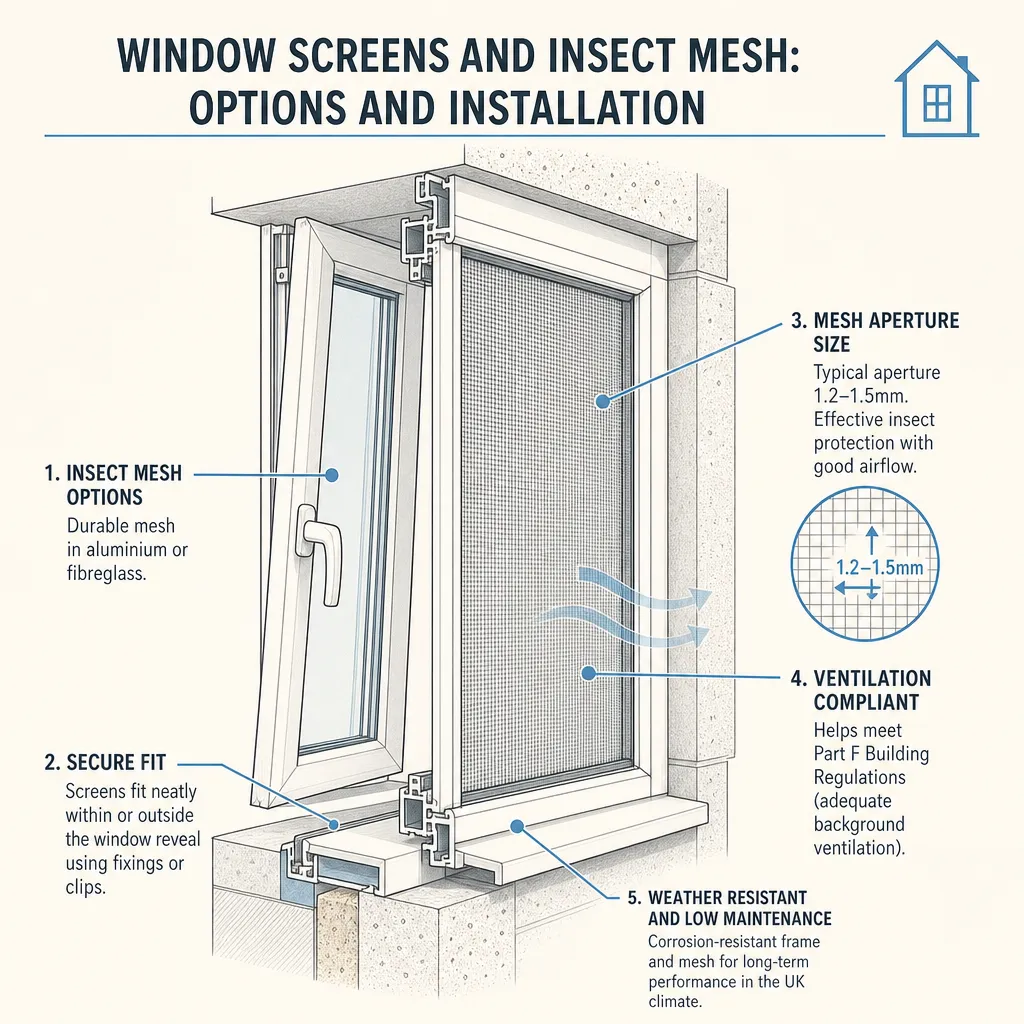
Window Screens and Insect Mesh: Options and Installation
UK window screens fall into four main types: fixed frame, roller retractable, pleated folding, and magnetic snap-fit.
 Improvement & Build
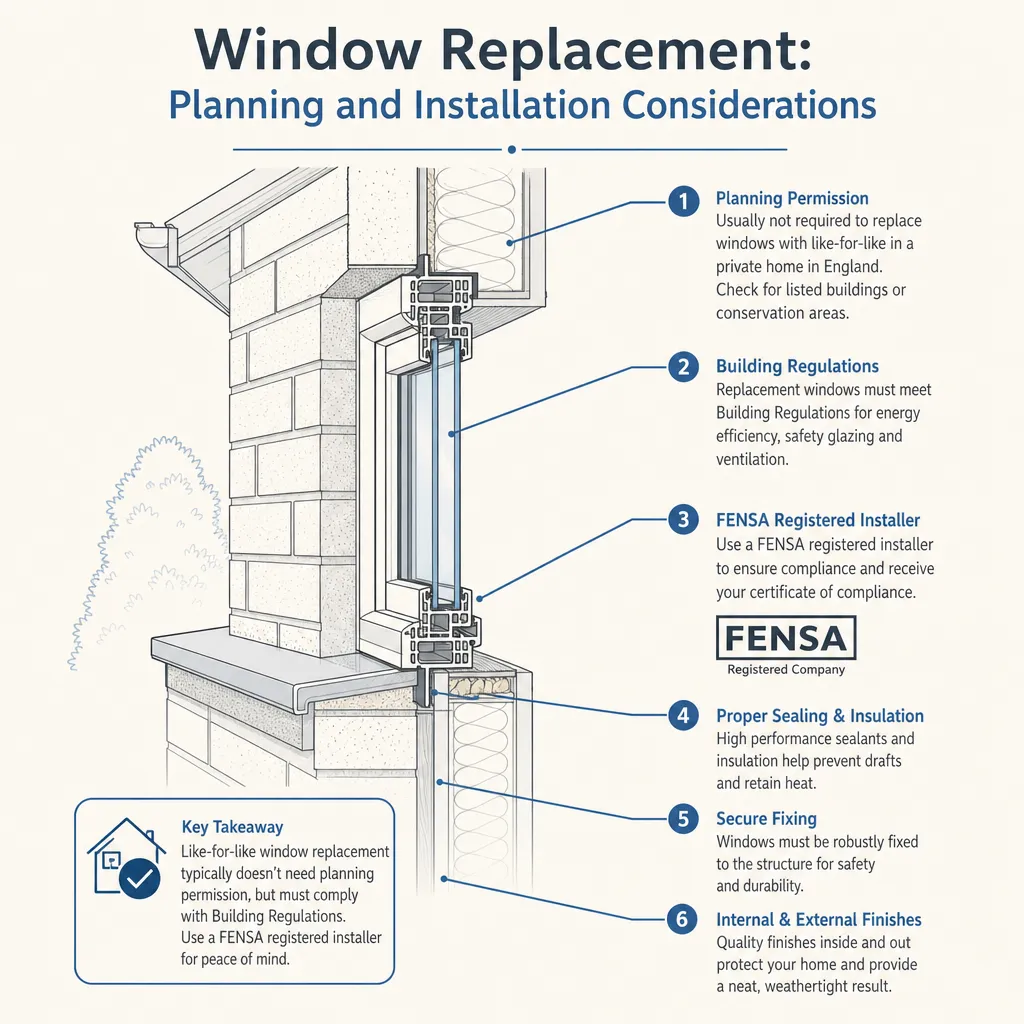
Window Replacement: Planning and Installation Considerations
Most window replacements in England fall under permitted development and do not need planning permission, though listed buildings, flats, and conservation areas are exceptions.
 Improvement & Build
Window Tinting and Solar Control Films for Residential Properties
Solar control window films reject 40–80% of total solar energy and block 99% of UV radiation, reducing overheating and fading without replacing glazing.
 Improvement & Build
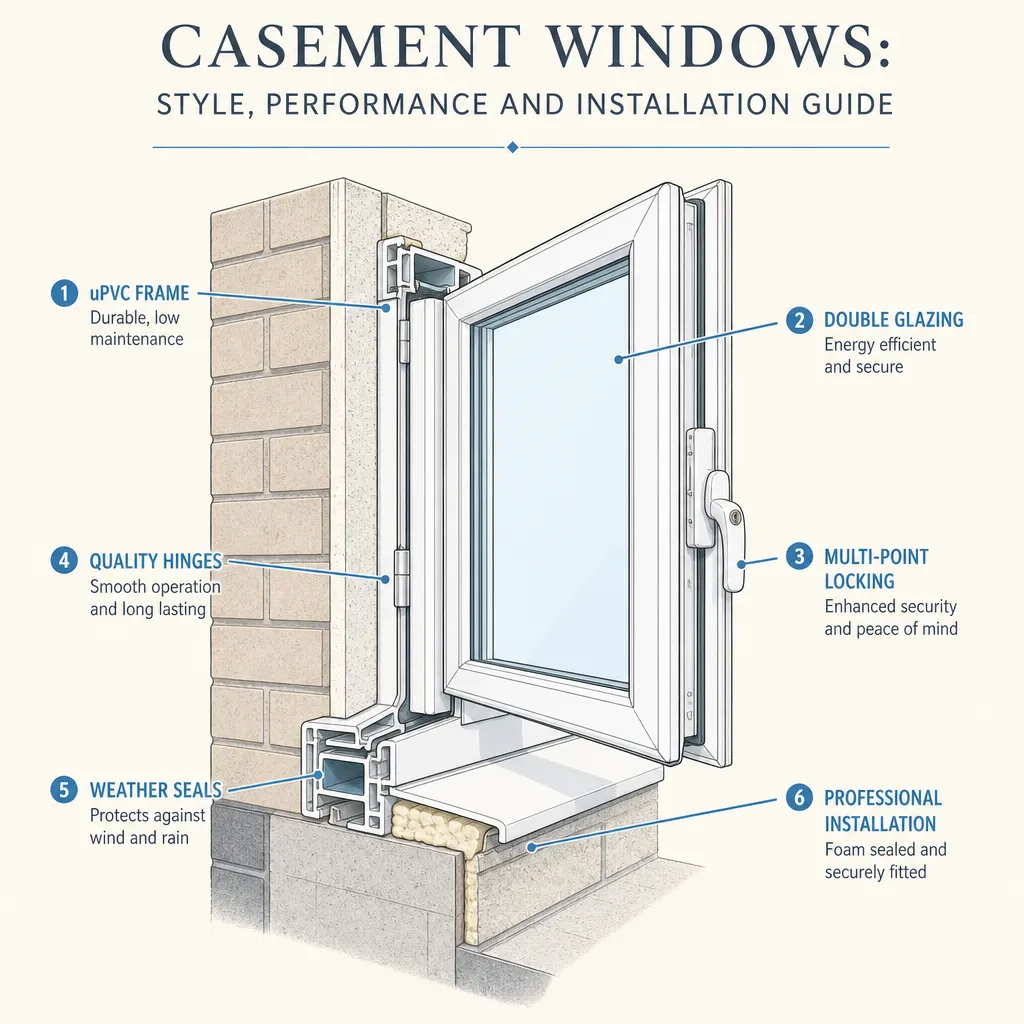
Casement Windows: Style, Performance and Installation Guide
Casement windows are hinged on one side and open outward, making them the most widely fitted window type in UK homes.
 Improvement & Build
Concrete Driveways: Design, Installation, and Long-Term Maintenance
A concrete driveway requires a compacted sub-base of at least 150mm and a concrete slab of at least 100mm for domestic use.