Baby-Proofing Your Home: Safety Measures and Modifications
By Housey · Last reviewed 6th of May 2026
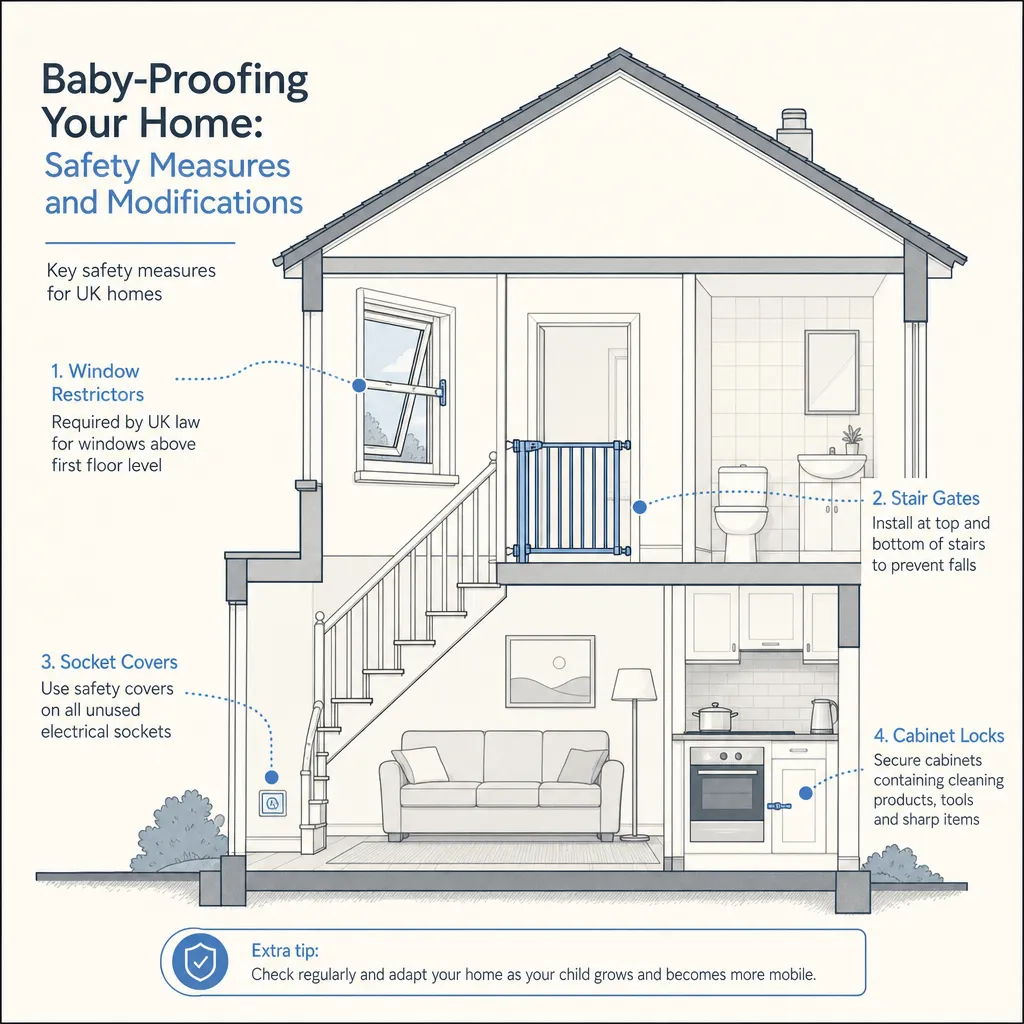
Baby-Proofing Your Home: Safety Measures and Modifications
The arrival of a baby transforms how you see your home. Window sills, accessible cupboards, open staircases, and low furniture edges that seemed unremarkable before carry real risk once a child becomes mobile. According to the Royal Society for the Prevention of Accidents (RoSPA), accidental injury in the home is a leading cause of serious harm in children under five in the UK — and many incidents involve hazards that are straightforward to address with the right modifications.
Key points
- Stair gates should meet BS EN 1930:2011; screw-fit gates are required at the top of stairs — pressure-fit gates suit only doorways and the bottom of stairs.
- Window restrictors are a legal requirement for landlords in HMOs in England under the Housing Act 2004; for owner-occupiers they are strongly advisable on any upper-floor window a child under five can reach, and must be release-type to allow full opening in a fire emergency.
- Modern UK sockets (BS 1363) have built-in shutters — Electrical Safety First advises against generic plug-in socket covers, which can disengage internal shutters; replacing older non-shuttered sockets with shuttered faceplates is more reliable.
- Blind and curtain cords must include safety devices under UK regulations for products sold since 2014; older blinds in existing homes should be retro-fitted or replaced.
- Anchoring large furniture — wardrobes, bookcases, chest of drawers — to walls with anti-tip straps is especially important; in older properties the wall type determines which fixings are appropriate.
What to prioritise first
Baby-proofing splits into two tiers: critical safety modifications addressing immediate injury risk, and convenience modifications that reduce minor incidents. Tackle the critical tier before your baby becomes mobile, typically around six to nine months.
Critical: screw-fit stair gates at the top and bottom of every accessible staircase, window restrictors on upper-floor windows, cupboard locks on rooms containing chemicals or medicines, oven and hob guards, securing blind and curtain cords, and furniture anti-tip straps.
Convenience: soft-close drawer dampers, toilet seat locks, door pinch guards, non-slip bath mats, and plug-in night lights.
Room-by-room comparison
Room | Priority modifications | DIY difficulty | Professional help useful? |
|---|---|---|---|
Stairs and hallway | Screw-fit stair gate at top of stairs; handrail check | Low–Medium | Yes, for unusual newel post materials or solid masonry |
Kitchen | Cupboard locks, oven guard, hob knob covers, fridge lock | Low | Rarely — unless rewiring a socket |
Living room | Corner protectors, fireguard, furniture anti-tip straps, blind cord tidies | Low | No |
Bathroom | Non-slip mat, toilet lock, medicine cabinet lock, thermostatic bath valve | Low–Medium | Yes, for thermostatic valve (involves plumbing) |
Bedroom | Furniture anti-tip straps, window restrictor, cot safety check | Low | Rarely |
Garden | Gate latch above child's reach, pond guard or fencing, decking edge check | Low–Medium | Yes, for structural fencing or pond covers |
Stair gates: what to look for
BS EN 1930:2011 is the applicable British Standard. Screw-fit gates anchor into the wall or newel post and hold under load — they must be used at the top of any staircase. Pressure-fit gates rely on tension and are suitable only for doorways or the bottom of stairs.
Check the gate's rated width against your opening and use manufacturer-approved extension bars if needed — never exceed the rated span. Look for an auto-close mechanism and a latch requiring deliberate adult action to open. Minimum height under the standard is 60 cm; taller options up to 90 cm suit older and more active toddlers.
Window restrictors: UK guidance
A window restrictor limits how far a window can open — typically to no more than 100 mm. Restrictors must be release-type, meaning they can be opened fully in a fire emergency; fixed limiters are not acceptable.
For landlords, window restrictors at height are required in HMOs under the Housing Act 2004. For owner-occupiers there is no statutory duty, but the Child Accident Prevention Trust strongly recommends them for any upper-floor window a child under five can access. Most FENSA-registered window installers and experienced handypersons can fit restrictors to uPVC, timber, or aluminium frames.
Electrical safety modifications
In homes with older non-shuttered sockets, replace faceplates with modern BS 1363 shuttered versions rather than using plug-in covers. If you plan to replace several sockets or if your consumer unit is dated (particularly in pre-1970s properties), consider whether an Electrical Installation Condition Report (EICR) is overdue. Any work beyond straightforward faceplate replacement should be carried out by a qualified electrician registered with NICEIC or NAPIT.
Homeowner baby-proofing checklist
Work through this checklist before your baby becomes mobile:
Before baby crawls:
Once crawling:
Once toddling:
Red flags: when to call a professional
Most baby-proofing is DIY-friendly, but some situations warrant professional input:
- Old masonry or solid walls — drilling for stair gate brackets or furniture straps without knowing the wall construction risks hitting hidden pipes or conduit; a handyperson with the right tools can locate safe anchor points.
- Gas appliances — any modification near gas connections, including certain hob guards, requires a Gas Safe registered engineer.
- Unusual or period window frames — sash windows, heritage timber frames, or unusual profiles may need a specialist to fit a restrictor that functions correctly without compromising weather sealing.
- Electrical work beyond socket replacement — if you are adding circuits, installing safety switches, or encountering old wiring, instruct a qualified electrician registered with NICEIC or NAPIT.
- Structural garden fencing — ground conditions and existing boundary structures affect how pond fencing or toddler-proof garden gates should be anchored.
When to get professional help
A professional is worth instructing if you are uncertain about your wall construction, are renting and need consent before fixing through walls, or have architectural features that complicate standard fixings — lime plaster walls, heritage cornicing, or timber-frame construction. Building control input is rarely needed for baby-proofing modifications, though structural garden fencing above 1 metre adjacent to a boundary may benefit from a contractor's assessment.
How Housey can help
If any baby-proofing plans involve building works — a utility room modification, a structural garden gate, or changes that could touch building regulations — Housey can connect you with building control consultants who can advise before work starts.
Frequently asked questions
Do stair gates need to meet a British Standard?
Stair gates sold in the UK should comply with BS EN 1930:2011, which sets minimum requirements for gate height, gap widths, latch mechanism, and load resistance. Look for the BS EN 1930 mark on packaging. Pressure-fit gates meeting the standard suit doorways and the bottom of stairs, but screw-fit gates are specifically recommended for the top of any staircase.
Are window restrictors a legal requirement in owner-occupied homes?
For owner-occupiers in England, there is no general statutory requirement to fit window restrictors. They are, however, a legal requirement for landlords in HMOs under the Housing Act 2004, and strongly recommended by the Child Accident Prevention Trust for any home with children under five. Always use release-type restrictors, which allow full opening in a fire emergency.
Are plastic socket covers safe to use for baby-proofing?
Electrical Safety First does not recommend generic plug-in socket covers for modern UK sockets, which already have built-in BS 1363 shutters. Certain covers can disengage the socket's internal shutter, reducing rather than improving safety. If your home has older non-shuttered sockets, replacing the faceplate with a shuttered version is the more reliable and permanent solution.
Can I fix a stair gate to a plasterboard wall?
Stair gates should be fixed to structural elements — newel posts, door frames, or solid masonry — wherever possible. Plasterboard alone will not provide adequate anchorage under load. If you have stud walls, fix brackets through the plasterboard into the studs using appropriate fixings. A stud finder helps locate safe anchor points; a handyperson can assist if you are unsure of the wall construction.
How do I make a garden pond safe for a toddler?
RoSPA recommends either draining and filling garden ponds or fitting a robust rigid grid rated to support adult weight. Lightweight netting is not sufficient. A rigid fence at least 1 metre high with a self-closing, child-resistant latch is an alternative. Pond covers or structural fencing should be properly anchored, especially in softer ground or near boundaries.
Sources and further reading
- Child safety in the home — Royal Society for the Prevention of Accidents
- Socket covers safety guidance — Electrical Safety First
- Window safety for children — Child Accident Prevention Trust
- Product safety regulations — GOV.UK
- BS EN 1930:2011 child safety barriers — BSI Group
Useful next reads
 Improvement & Build
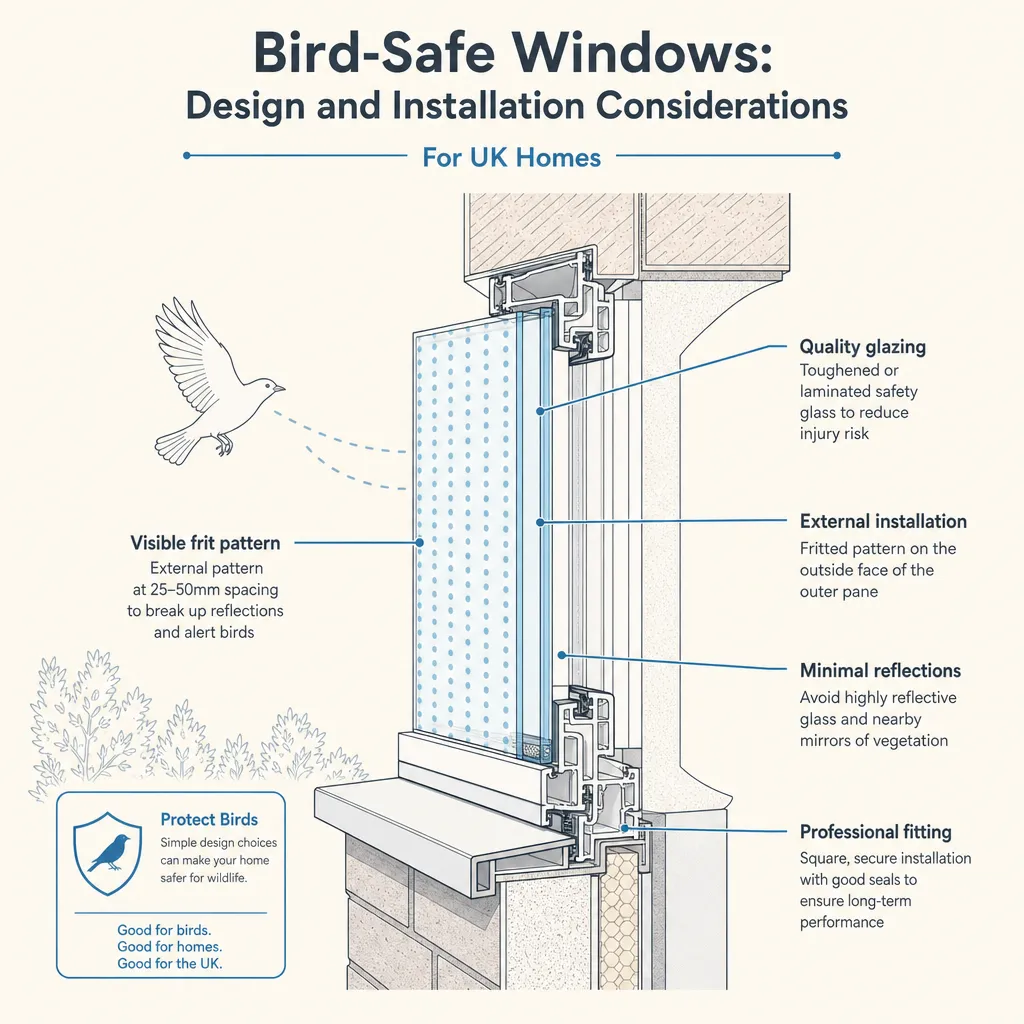
Bird-Safe Windows: Design and Installation Considerations
Bird-safe windows use patterns, coatings, or films on the exterior glazing surface to make glass visible to birds in flight.
 Improvement & Build
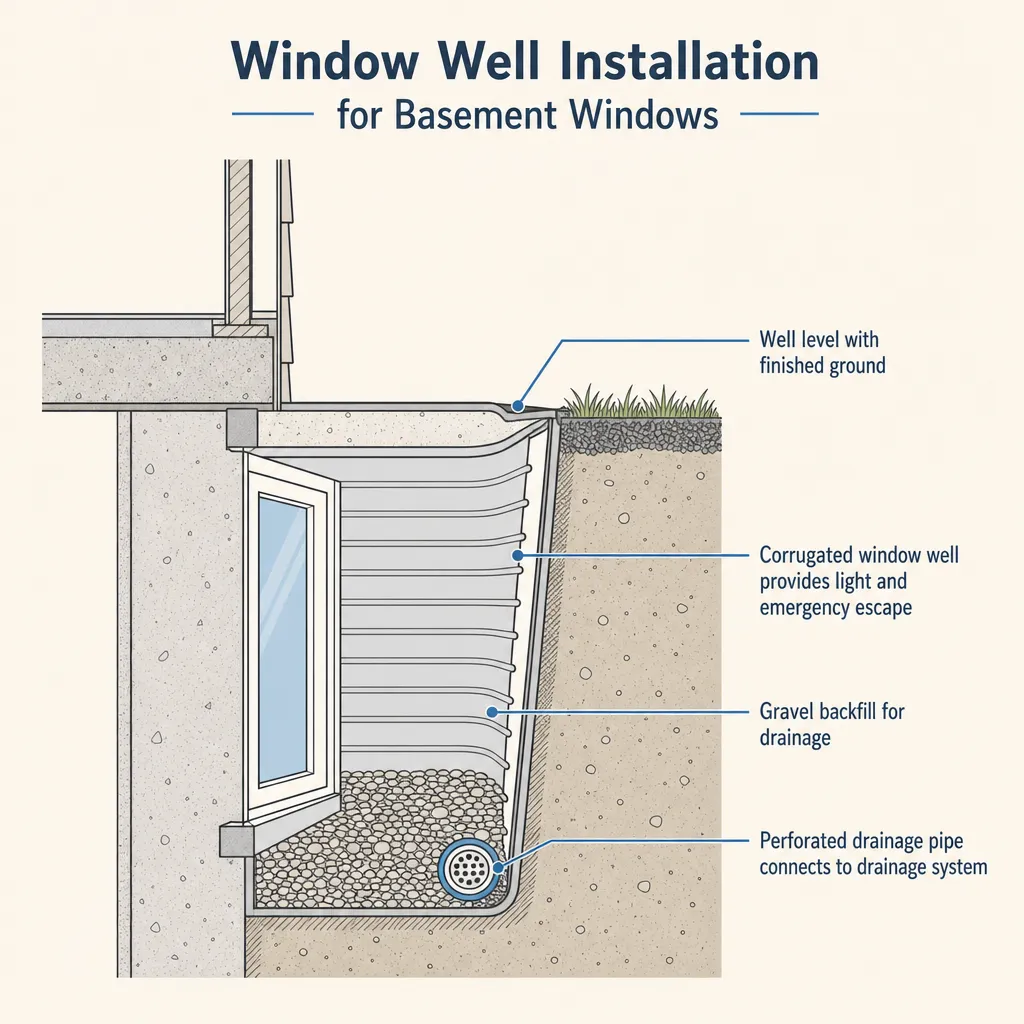
Window Well Installation for Basement Windows
Window wells (areaways) are excavated structures outside basement walls that allow natural light and ventilation into below-ground rooms.
 Improvement & Build
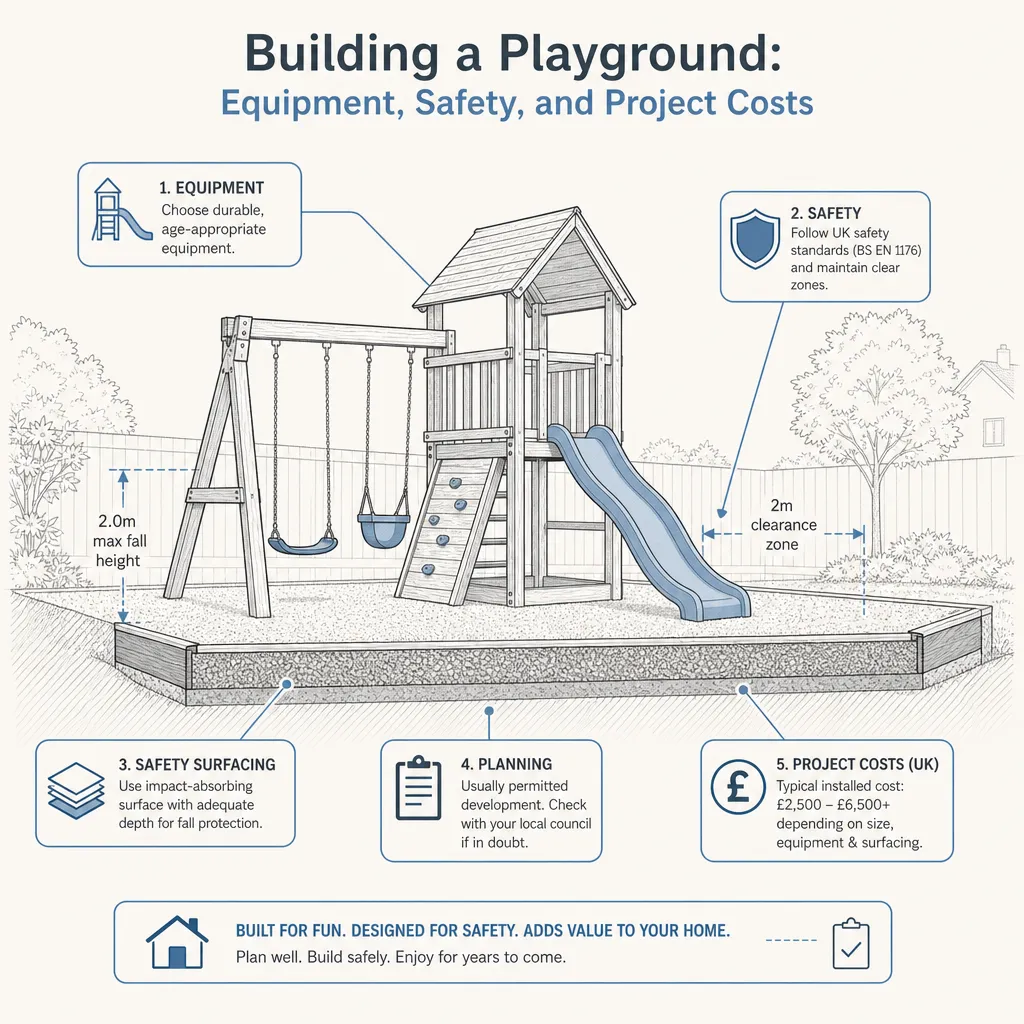
Building a Playground: Equipment, Safety, and Project Costs
A garden playground in England usually falls within permitted development rights and needs no planning permission.
 Improvement & Build
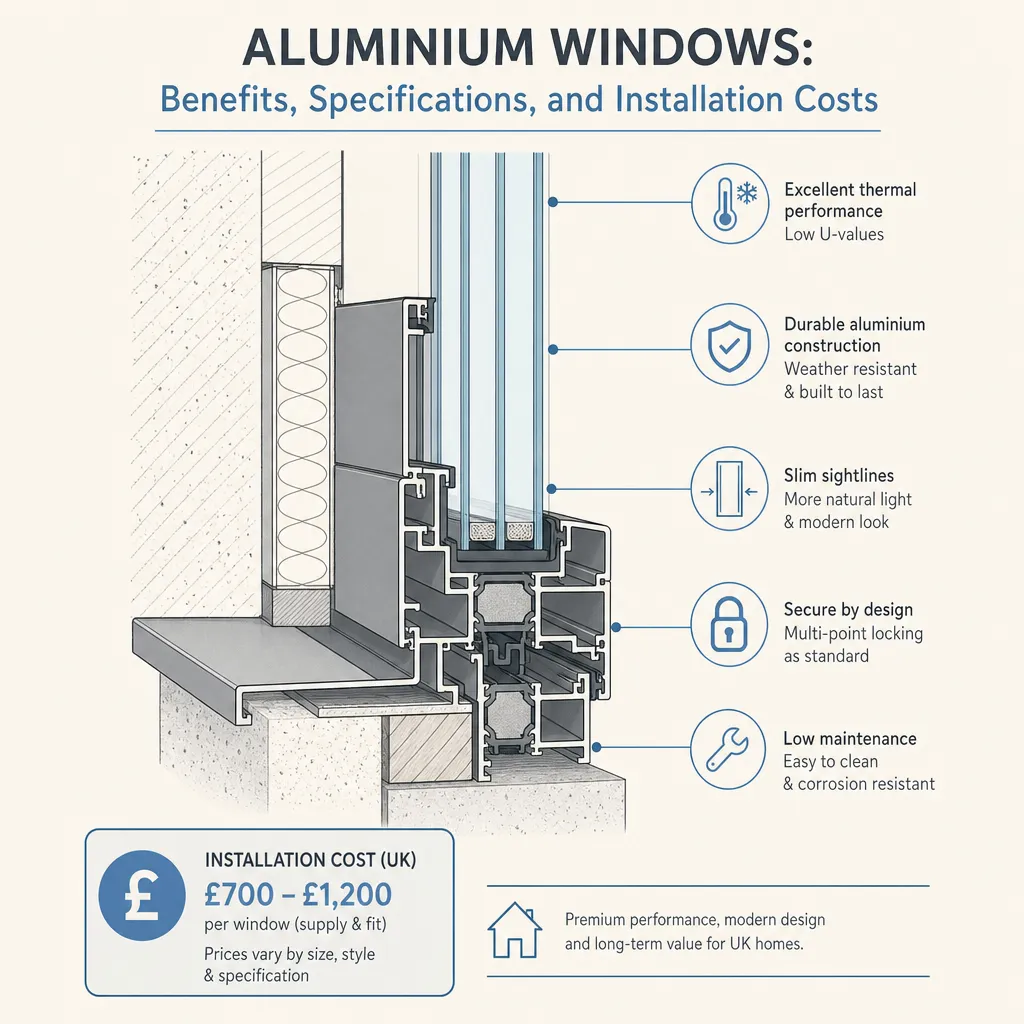
Aluminium Windows: Benefits, Specifications, and Installation Costs
Aluminium windows typically cost £600–£1,800 per window installed in the UK, depending on size and specification.
 Improvement & Build
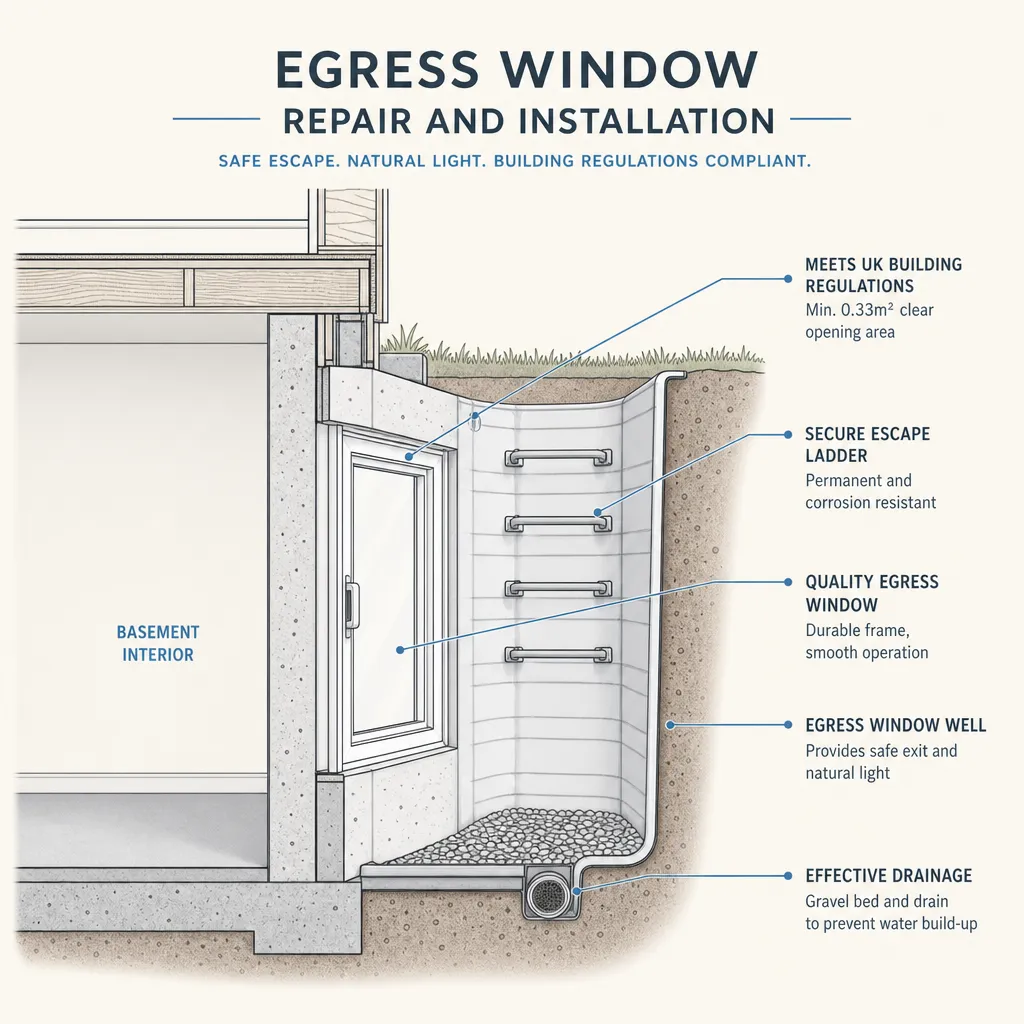
Egress Window Repair and Installation
An egress window is a window large enough to serve as an emergency escape route from a habitable room.