Window Well Installation for Basement Windows
By Housey · Last reviewed 11th of May 2026
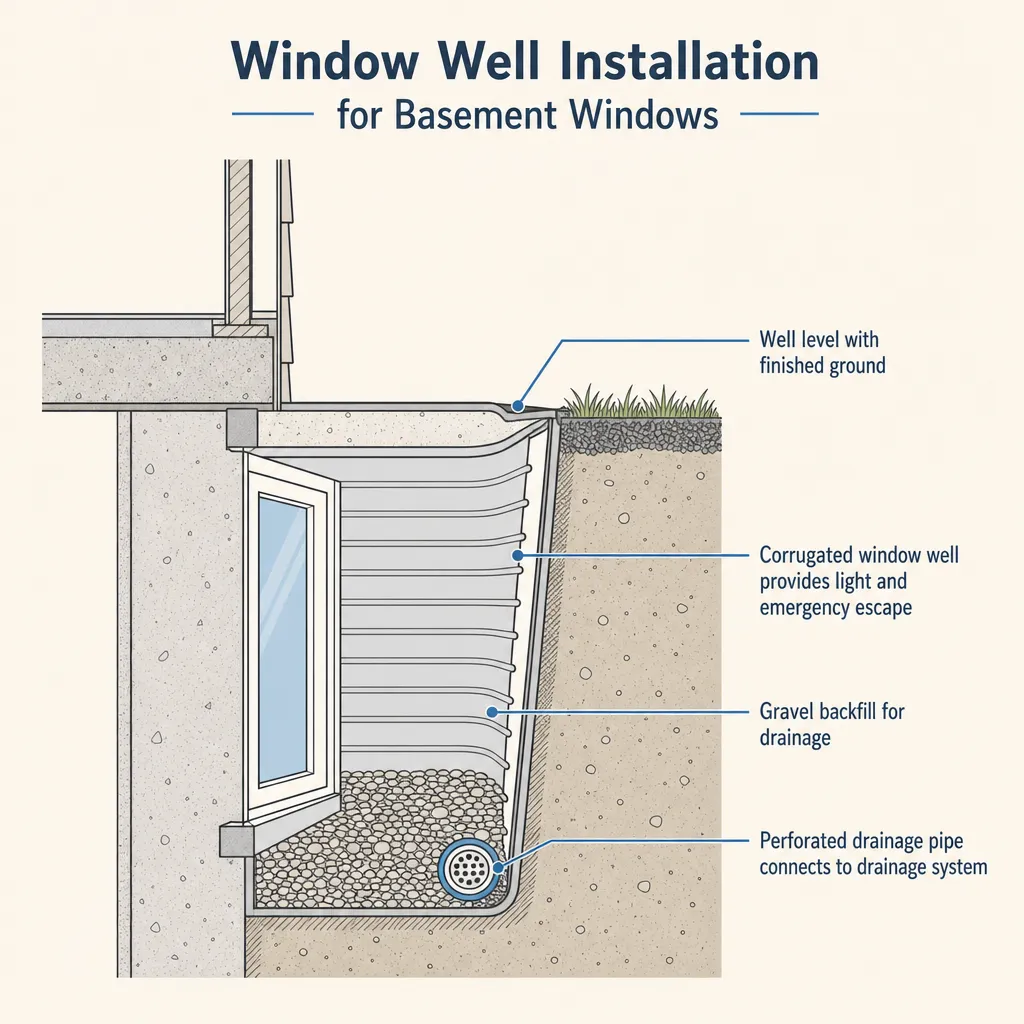
Window Well Installation for Basement Windows
Window wells — known in UK construction practice as areaways or light wells — are a practical solution for basement and lower-ground-floor rooms that sit fully or partially below external ground level. As basement conversions have become more common in UK cities and towns, installing or enlarging a window well is increasingly a key part of making below-ground space habitable, well-lit, and safely ventilated. Getting the drainage, structure, and planning position right from the outset prevents significant cost and disruption later.
Key points
- Window wells (areaways) are typically masonry, steel, or precast concrete structures excavated at the external face of a basement wall, creating a protected light and ventilation zone around a below-ground window.
- Building Regulations Approved Document F requires openable windows in habitable rooms to provide a free area of at least 1/20th of the floor area, with trickle ventilators also typically required for background ventilation.
- Excavation within 3 metres of a neighbouring owner's building — or within 6 metres where the work will cut a 45-degree plane drawn from the bottom of the neighbour's foundations — may engage the Party Wall etc. Act 1996 and require prior written notice to adjoining owners.
- A drainage outlet connected to a soakaway, surface water drain, or sump pump must be provided at the base of every window well to prevent water accumulating against the window frame and accelerating ingress.
- Where a basement room is to be used as a habitable space such as a bedroom or living room, building regulations approval is required for the change of use, structural alterations, and compliance with ventilation, natural light, and means of escape requirements.
Do you need planning permission or building regulations approval?
Decision tree — permissions for window well installation
- Existing window, minor excavation to the rear of the house → Planning permission is unlikely to be needed; building regulations may apply if structural work is involved — check with your local building control body.
- Creating a new window opening in a basement wall → Building regulations approval is required (structural opening, fire safety, ventilation); planning permission may also be needed depending on property type and location.
- Converting basement to habitable use (bedroom, living room, study) → Building regulations approval is required for change of use, ventilation, natural light, and means of escape compliance.
- Conservation area or Article 4 direction → Planning permission may be required even for works that would normally be permitted development; confirm with your local planning authority before starting.
- Listed building → Listed building consent is required for any structural alteration or new external opening; contact your local authority conservation officer first.
- Excavation near a party wall or shared boundary → Serve a Party Wall etc. Act 1996 notice on adjoining owners before work begins; take professional advice on whether the Act is triggered for your specific excavation depth and proximity.
- Near a public highway or footway → A licence from the local highways authority may be required for works adjacent to the public footway; check with the council before starting.
Always confirm the planning and building regulations position with your local planning authority and building control body before instructing a contractor.
Types of window well and which to choose
Type | Material | Best for | Not ideal for | Cost indication |
|---|---|---|---|---|
Semi-circular steel | Galvanised steel | Standard retrofit; off-the-shelf sizing | Large windows or unusual wall shapes | Lower cost; widely available |
Rectangular masonry | Brick or blockwork | Larger openings; matching property fabric | Restricted access or fast programme | Mid-range; requires competent bricklaying |
Precast concrete | Concrete | Structural reliability; wide spans | Aesthetic-sensitive settings | Mid to higher cost |
Composite GRP | Glass-reinforced plastic | Speed; corrosion resistance | Heavy-duty or very large applications | Varies; lightweight option |
Custom fabricated steel | Mild or stainless steel | Heritage properties; bespoke dimensions | Budget-constrained projects | Higher cost |
Indicative UK costs, last reviewed 2026-05-11. The most appropriate type depends on window size, excavation depth, the host wall construction, and the visual outcome required. A window and door installer experienced in below-ground work can advise on the best option for your property.
The installation process
Pre-installation checklist
Before instructing a contractor, confirm the following:
Installation stages
- Excavation — The ground outside the basement wall is excavated to the required depth and width. Temporary shoring may be needed for deeper excavations or unstable ground conditions.
- Waterproofing — The external face of the basement wall is inspected; any cracks or failed render are repaired and the wall surface waterproofed before the well is constructed around it.
- Well construction — The chosen well structure is installed and secured to the wall with a waterproof joint at the wall face.
- Drainage installation — A sump, channel, or outlet at the base is connected to the agreed drainage system.
- Window installation — The existing window is reinstated or a new window is fitted to the opening; this element should be carried out by a specialist window and door installer.
- Surface reinstatement — Surrounding soil or hard standing is reinstated and compacted around the well structure.
- Building control inspection — For notifiable work, the building control officer inspects at agreed stages and issues a completion certificate.
Drainage — the critical detail
A window well without adequate drainage will fill with rainwater after every downpour and create exactly the damp and ingress problem it was meant to prevent. Key requirements:
- The base of the well must include a sump, drainage channel, or outlet positioned at the lowest point.
- The outlet must connect to a soakaway, an adopted surface water drain, or an automatic sump pump that can handle the expected flow.
- The grate or cover at ground level must have sufficient free area to pass expected rainfall intensities for your area.
- The joint between the well structure and the basement wall must be sealed and waterproofed on the inside face of the wall, not the outside face alone.
- Debris guards on the grate significantly reduce blockage risk and should be included as standard in any installation.
When to get professional help
Window well installation is not a straightforward DIY project. Always instruct a qualified contractor if:
- The excavation depth exceeds 600 mm or approaches the building's foundation level.
- The basement wall is load-bearing or forms part of a shared party wall structure.
- You are creating a new window opening rather than reinstating an existing one.
- The property is listed or within a conservation area.
- Building regulations approval is required for a change of use to a habitable room.
- There are existing signs of damp, structural cracking, or movement in the basement wall.
- Underground services are present within the planned excavation zone.
How Housey can help
For basement window and window well work, Housey can connect you with vetted window and door installers experienced in below-ground installations, who can advise on window specifications, well type, waterproofing strategy, and building regulations compliance from initial survey through to completion.
Frequently asked questions
Do I need planning permission to install a window well to the rear of my house?
In most cases, minor excavation to install a window well to the rear of a house falls within permitted development and does not require planning permission. However, restrictions apply in conservation areas, for listed buildings, and where Article 4 directions have removed permitted development rights. Always confirm the position with your local planning authority before starting work.
How deep does a window well need to be?
The well must be deep enough to bring the window sill clear of surrounding ground level, plus sufficient depth for drainage material at the base — typically 150–300 mm below sill level. Width and height should allow adequate natural light to reach the window and safe clearance for cleaning and regular maintenance access.
Can a basement window well serve as a fire escape route?
Yes, provided the window opening meets Approved Document B requirements: minimum unobstructed openable area of 0.33 m², minimum clear opening height of 450 mm, minimum clear opening width of 450 mm, and a maximum sill height of 1,100 mm above floor level. The well must be large enough for egress and the grate or cover openable from below without a key.
Will installing a window well affect my buildings insurance?
Yes, potentially. Structural alterations including new window openings and excavation work should be notified to your insurer before work begins. Failure to disclose material changes can affect the validity of a claim. Some insurers adjust premiums; most will note the alteration on the policy. Check your policy terms or contact your insurer before instructing a contractor.
Sources and further reading
- Approved Document B — Fire Safety — GOV.UK
- Approved Document F — Ventilation — GOV.UK
- Party Wall etc. Act 1996 — explanatory booklet — GOV.UK
- Planning Portal — basement conversions — Planning Portal
- CIRIA — waterproofing of below-ground structures — CIRIA
Useful next reads
 Improvement & Build
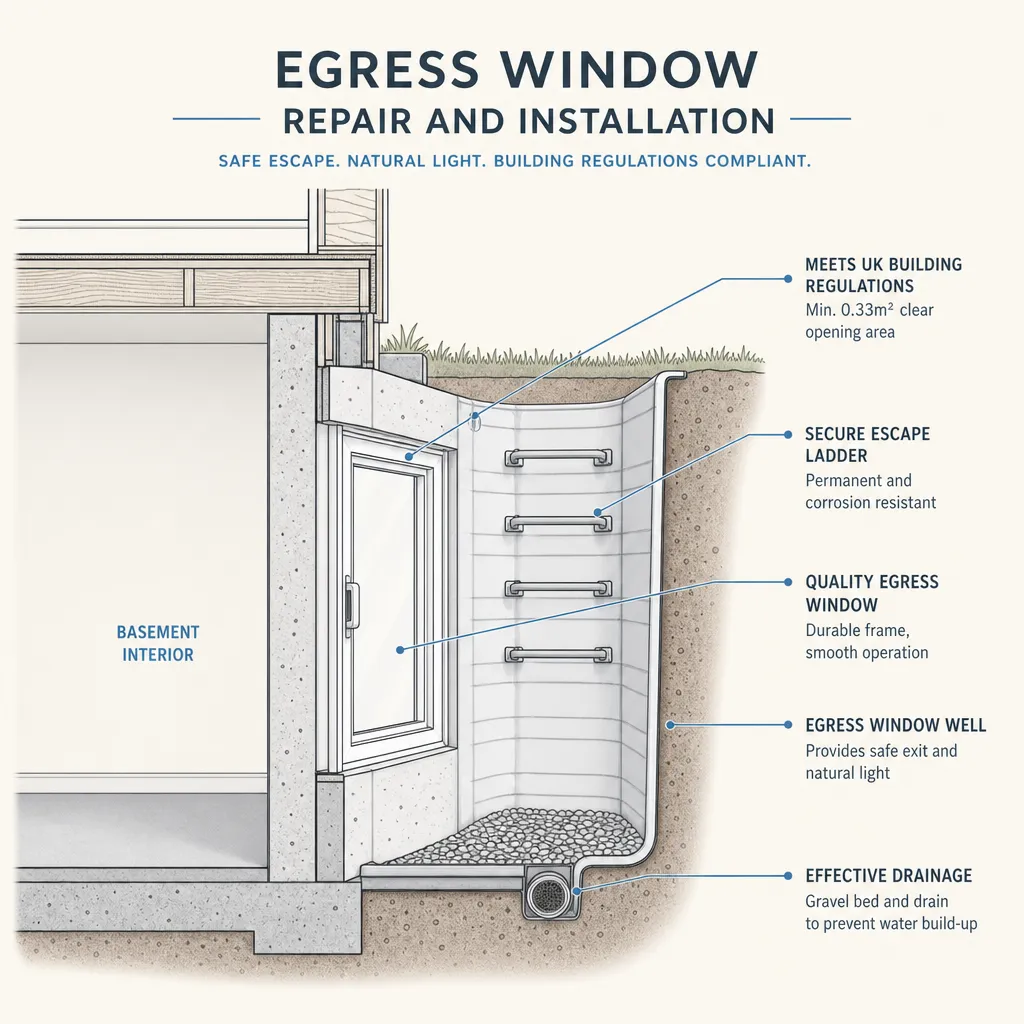
Egress Window Repair and Installation
An egress window is a window large enough to serve as an emergency escape route from a habitable room.
 Improvement & Build
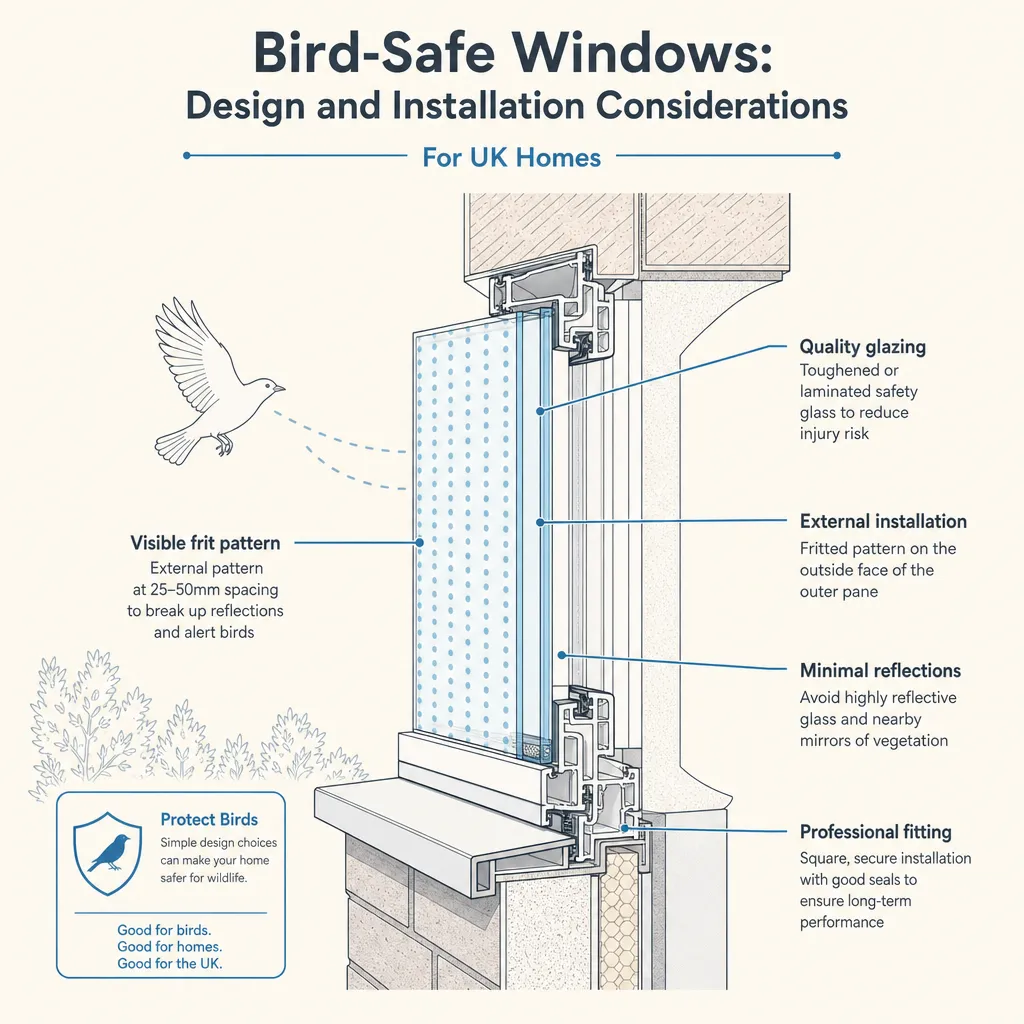
Bird-Safe Windows: Design and Installation Considerations
Bird-safe windows use patterns, coatings, or films on the exterior glazing surface to make glass visible to birds in flight.
 Improvement & Build
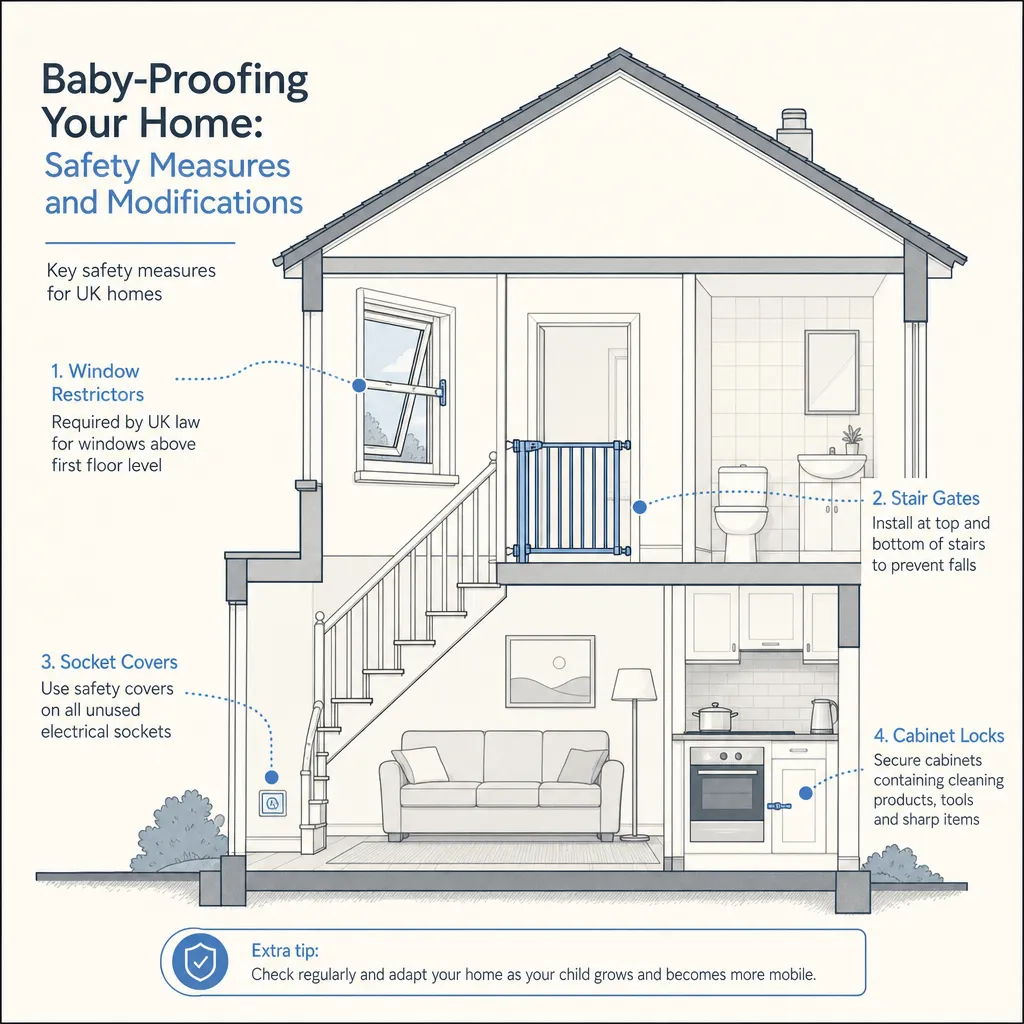
Baby-Proofing Your Home: Safety Measures and Modifications
Baby-proofing a UK home typically involves fitting stair gates conforming to BS EN 1930, window restrictors on upper floors, shuttered socket covers, cupboard locks, and securing heavy furniture to walls.
 Improvement & Build
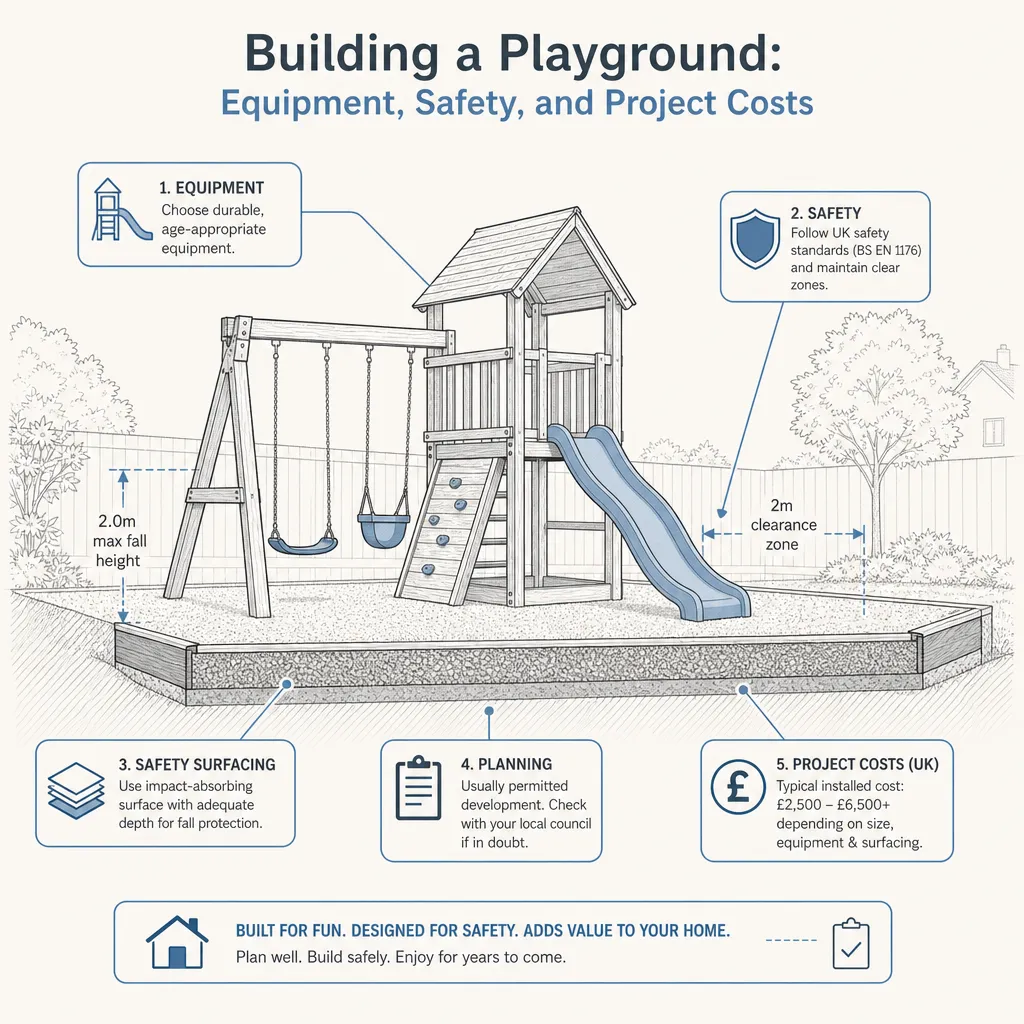
Building a Playground: Equipment, Safety, and Project Costs
A garden playground in England usually falls within permitted development rights and needs no planning permission.
 Improvement & Build
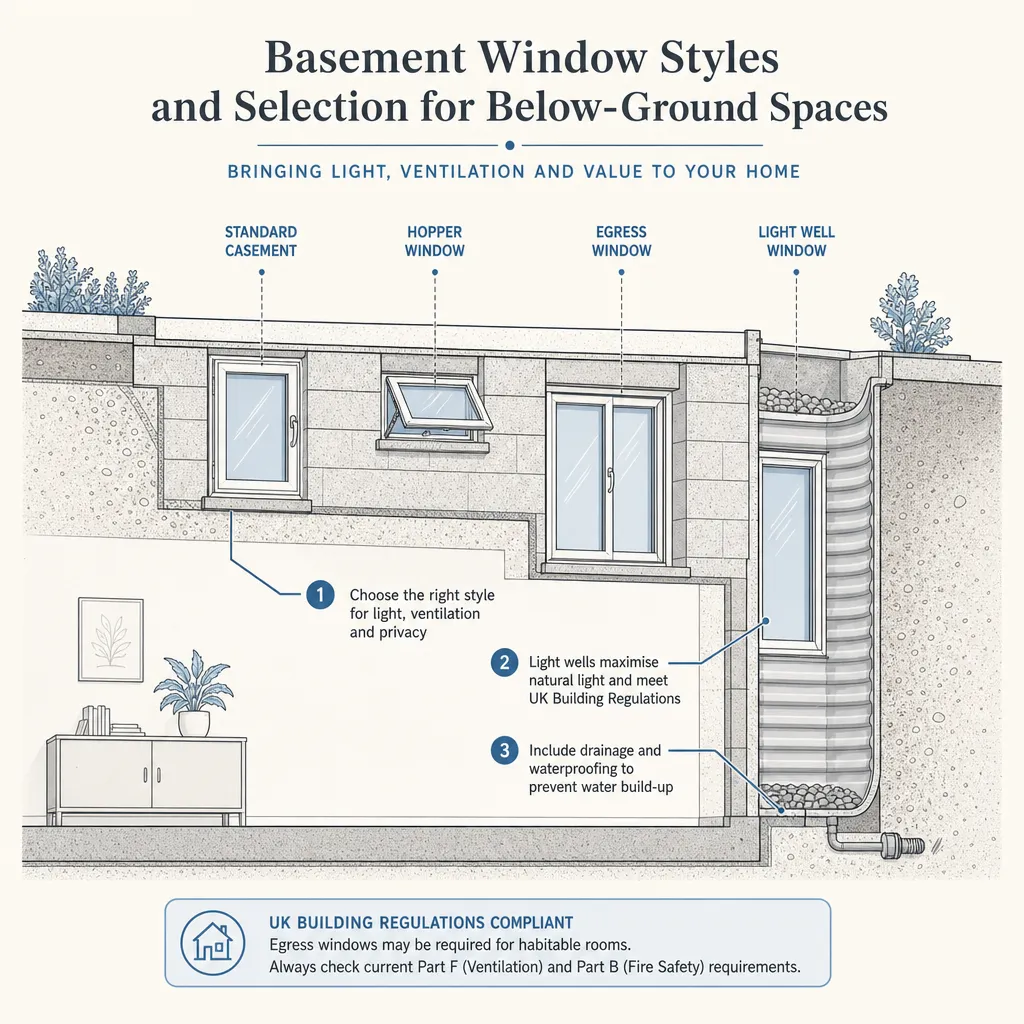
Basement Window Styles and Selection for Below-Ground Spaces
Basement windows in UK homes need to withstand water pressure, provide ventilation under Building Regulations Part F, and meet fall-protection requirements under Part K.