Balcony Construction: Planning, Costs, and Installation
By Housey · Last reviewed 5th of May 2026
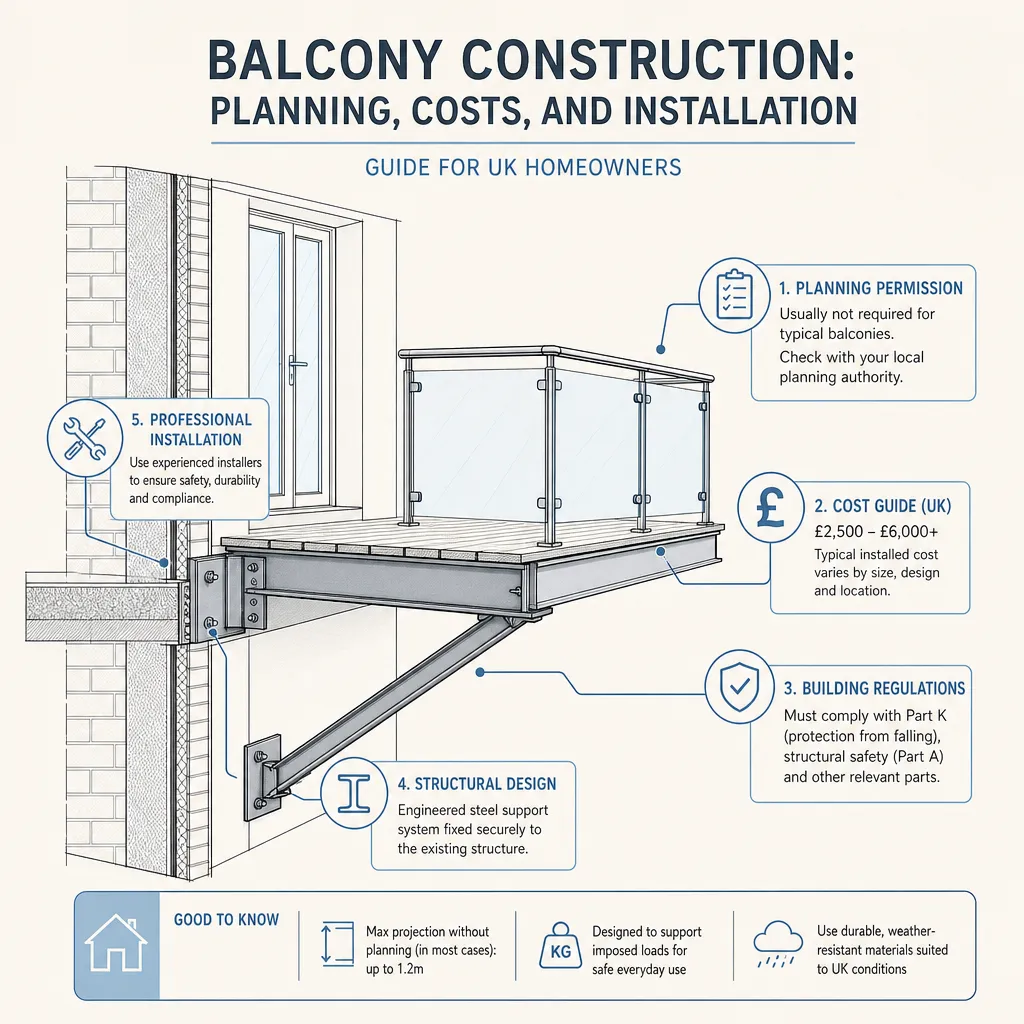
Balcony Construction: Planning, Costs, and Installation
Adding a balcony to a UK home is a structural project that sits at the intersection of planning policy, building regulations, structural engineering, and weatherproofing. The question typically arises when homeowners want to make use of an upper-floor elevation — particularly in urban properties where ground-level garden space is limited — or when a loft conversion or rear extension creates a new upper level that could benefit from outdoor access. Getting the project right from the outset means understanding the permissions required, the structural demands, and the professionals who must be involved before any design is finalised.
Key points
- Adding a new walkable balcony to most properties in England requires planning permission and is not covered by standard permitted development rights under the Town and Country Planning (General Permitted Development) (England) Order 2015.
- Balcony construction must comply with Approved Document A (structural safety) and Approved Document K (protection from falling, collision, and impact) of the Building Regulations; building control approval is required.
- Residential balcony balustrades must be at least 1,100 mm in height above the finished floor level under Approved Document K, and must prevent a 100 mm sphere passing through any opening.
- A structural engineer is essential to assess whether the existing building can carry the additional loads and to produce the calculations required by building control.
- Indicative UK costs for a new retrofit balcony range from approximately £8,000–£20,000 installed, depending on type, size, access, and specification. (Indicative UK costs, last reviewed 2026-05-05; obtain quotes for your specific project.)
Do you need planning permission for a balcony?
In most cases, yes. The Town and Country Planning (General Permitted Development) (England) Order 2015 does not grant permitted development rights for additions to a dwelling that create a new balcony, veranda, or raised platform. A walkable balcony typically requires a householder planning application because it:
- Materially changes the external appearance of the building
- Introduces overlooking of neighbouring properties or private gardens, which is a common ground for planning objection
- May create noise or activity impacts affecting neighbouring amenity
The standard householder planning application fee in England is £258 (2026). Most applications are determined within 8 weeks.
Decision guide: planning routes for different balcony types
- Full new balcony (walkable platform): Apply for householder planning permission — permitted development does not apply in most cases.
- Juliette balcony (railing only, no walkable floor): May fall under permitted development in some circumstances; confirm in writing with your local planning authority (LPA) before proceeding.
- Listed building: Listed building consent is required in addition to any planning permission for any alteration affecting the character of the building.
- Conservation area or Article 4 Direction: Enhanced restrictions apply; the LPA may have withdrawn permitted development rights and can impose additional design requirements.
- New loft extension with integrated balcony: Almost certainly requires full planning permission even if the loft conversion itself would have qualified as permitted development under a separate route.
Always seek written confirmation from your local planning authority on permitted development status before starting any work.
Building regulations requirements
Planning permission and building regulations are separate processes. Approval from your LPA does not confirm that the structural design meets building control requirements, and both may be required for the same project.
Approved Document | What it governs |
|---|---|
Part A (Structure) | Structural safety of the balcony and its connections to the host building |
Part K (Protection from falling, collision, and impact) | Minimum balustrade height (1,100 mm), guarding design, and prevention of climbability |
Part C (Resistance to dampness) | Waterproofing of the balcony deck, junctions with the building envelope, and drainage |
Part L (Conservation of fuel and power) | Thermal performance where a new opening or junction is created in the building envelope |
Part M (Access and use) | Accessible threshold details at the door opening onto the balcony |
A building control body — either your local authority building control department or a registered building control approver — will review structural calculations, drawings, and the completed installation before issuing a completion certificate.
Types of balcony and which suits different homes
Balcony type | Description | Best suited to | Key structural note |
|---|---|---|---|
Cantilever balcony | Projects from the wall with no supporting columns below | New-build and extension-integrated designs | Requires significant structural continuity with the building frame; difficult and often impractical to retrofit |
Steel-framed with columns | Frame supported on posts from ground or lower structure | Existing buildings; rear additions | More feasible for retrofit; column bases require adequate foundations |
Juliette balcony | Guard rail across a door opening; no walkable platform | Any property where an outdoor platform is impractical | Minimal structural impact; fixing loads into the wall must still be assessed |
Timber-decked balcony | Composite or hardwood decking on a steel frame | Gardens, rear additions, loft conversions | Deck durability in UK weather is critical; composite or hardwood preferred over softwood |
Glass-deck balcony | Structural glass walking surface | Architecturally designed contemporary properties | Specialist product; toughening specification and loading calculations are non-standard |
Choosing the right professionals
A balcony project typically requires coordinated input from multiple disciplines. Instruct in roughly the following sequence:
Professional | Role | When to instruct |
|---|---|---|
Structural engineer | Load calculations, structural drawings, building control specification | At the start, before any design is finalised |
Architect or architectural technologist | Planning application drawings, design coordination | Early stage when planning permission is required |
Planning consultant | Complex scenarios: listed buildings, conservation areas, prior refusals | When initial advice suggests planning may be contentious |
Builder or extension specialist | Construction, installation, groundworks for column bases | Once planning and structural design are complete |
Metalwork fabricator | Steelwork frame and balustrade fabrication | Instructed by the builder once drawings are approved |
For the structural design stage, a qualified structural engineer will produce the load calculations and connection details that building control requires. For the construction and installation phase, an experienced extension builder can manage the full build package, including coordination of metalwork fabrication and weatherproofing.
Costs
Balcony costs vary significantly by type, size, location, and the scope of professional services involved.
Indicative UK costs, last reviewed 2026-05-05:
Item | Indicative range |
|---|---|
Structural engineer (design and calculations) | £800–£2,500 |
Architect or architectural technologist (planning drawings) | £800–£2,000 |
Householder planning application fee (England, 2026) | £258 |
Steel frame fabrication and installation (small balcony, approx. 4–6 m²) | £3,000–£8,000 |
Decking and waterproofing | £1,000–£3,000 |
Glazed or stainless steel balustrade | £1,500–£4,000+ |
Building control fees | £500–£1,500 |
Indicative total (straightforward retrofit balcony) | £8,000–£20,000+ |
Costs increase for properties requiring significant structural reinforcement, conservation area or listed building projects needing heritage-appropriate materials, complex scaffolding or access requirements, and bespoke architectural metalwork or specialist glass deck systems. Always obtain a minimum of three quotes and ask each contractor to separate labour, materials, professional fees, building control fees, and VAT.
Important limitations
This article provides general information about balcony planning and construction in England. Planning policy, building regulations, permitted development rights, and structural requirements all vary by property type, location, the specific condition of your building, and local planning authority policy. Nothing in this article constitutes planning, structural, or legal advice. Always consult a qualified professional before making any decisions or starting any work.
What to ask a qualified professional
Structural engineer
- Can the existing structure support the proposed balcony loads without modification to the host building?
- What type of connection between the balcony frame and the building fabric do you recommend, and why?
- Are movement joints or thermal breaks required at the structural junction?
- Will you provide the calculations and drawings required by the building control body?
Architect or planning consultant
- Is planning permission required for my specific property and the proposed design?
- Are there local authority policies that specifically affect balcony design in my area?
- What materials or design approach is most likely to gain planning approval?
- Will you manage the planning application submission and communication with the LPA on my behalf?
Builder or extension specialist
- What experience do you have constructing balconies on this type and age of property?
- Who fabricates the steelwork, and can I see examples of comparable completed projects?
- How do you handle the weatherproofing junction between the balcony deck and the existing building fabric?
- What guarantee do you provide on the waterproofing installation?
When to get professional help
You should seek professional advice before any physical work begins. In particular:
- Do not remove any fabric from a wall to form a new door opening without a structural engineer's specification and building control approval.
- Do not install balustrades at a height lower than 1,100 mm — this is a Building Regulations requirement under Approved Document K, not a guideline.
- Do not assume permitted development applies to your balcony without written confirmation from your local planning authority.
- Do not proceed with any balcony on a listed building without listed building consent.
- If you suspect the existing floor structure is not adequate to carry an additional balcony load, commission a structural assessment before proceeding.
How Housey can help
Housey connects UK homeowners with qualified professionals for structural and construction projects. For a balcony, you will typically need a qualified structural engineer to handle load calculations and building control drawings, and an experienced extension builder to manage the construction and installation. Compare quotes from vetted professionals through Housey to start your balcony project on a sound structural and regulatory footing.
Frequently asked questions
Do Juliette balconies need planning permission?
A Juliette balcony — a guard rail fitted across a door opening with no walkable floor — may sometimes be treated as permitted development, but this depends on the property type, location, and your local planning authority's interpretation. Always seek written confirmation from your LPA before installing one. Do not assume permitted development applies, particularly in conservation areas or for listed buildings.
How long does a balcony installation take once planning is approved?
Once planning permission is granted and structural drawings are approved by building control, most straightforward balcony installations take 2–4 weeks for steelwork fabrication and 3–5 working days for on-site installation. Complex projects, bespoke architectural metalwork, or those requiring extensive scaffolding will take longer. Your contractor can provide a realistic programme once the design is finalised and approved.
Can I add a balcony during a loft conversion?
Yes — balconies are often incorporated into loft conversions as part of the overall design. However, a loft conversion balcony almost certainly requires planning permission even if the loft itself could have qualified as permitted development. The structural design must simultaneously account for the loft structure and the balcony loads, so engage a structural engineer at the earliest stage of the project.
What are the balustrade height requirements for a UK residential balcony?
Approved Document K of the Building Regulations requires balustrades on residential balconies to be at least 1,100 mm in height above the finished floor level. Balustrades must also be designed so that a 100 mm sphere cannot pass through any opening, which in practice rules out horizontal rails that could be used as footholds by children. These are legal requirements, not guidance.
Is a balcony a good investment for a UK property?
A balcony can add value in urban properties where outdoor space is at a premium — particularly flats and town houses where private gardens are small or absent. However, the planning and construction costs mean the financial return is not guaranteed and varies considerably by location and property type. A local RICS-registered valuer or estate agent can give a realistic view of the likely impact on your specific property's value.
Sources and further reading
- GOV.UK: Planning permission for householders — when householder planning permission is required
- GOV.UK: Building regulations approval — when building control approval is needed for building work
- Approved Document K: Protection from falling, collision and impact — balustrade height and guarding requirements
- Approved Document A: Structure — structural safety requirements for building work
- Planning Portal: Balconies, raised platforms and decking — guidance on permitted development for balconies
Useful next reads
 Improvement & Build
Laundry Room Renovation and Fitting Costs
A basic UK laundry room fit-out typically costs £2,000–£6,000 where plumbing and electrics are already in place, rising to £8,000–£15,000 or more when structural work, new drainage connections, or new electrical circuits are needed.
 Improvement & Build
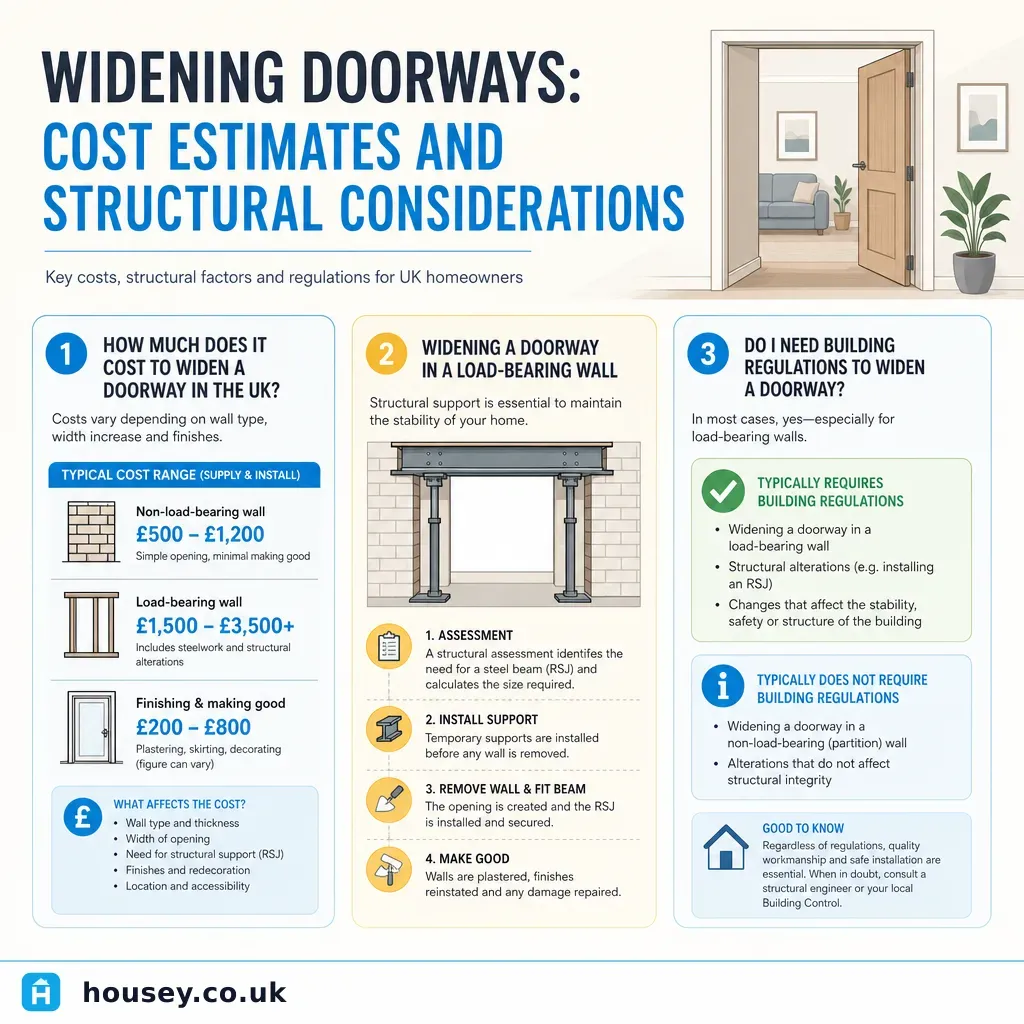
Widening Doorways: Cost Estimates and Structural Considerations
A doorway in a non-load-bearing partition can usually be widened for £500–£1,500.
 Improvement & Build
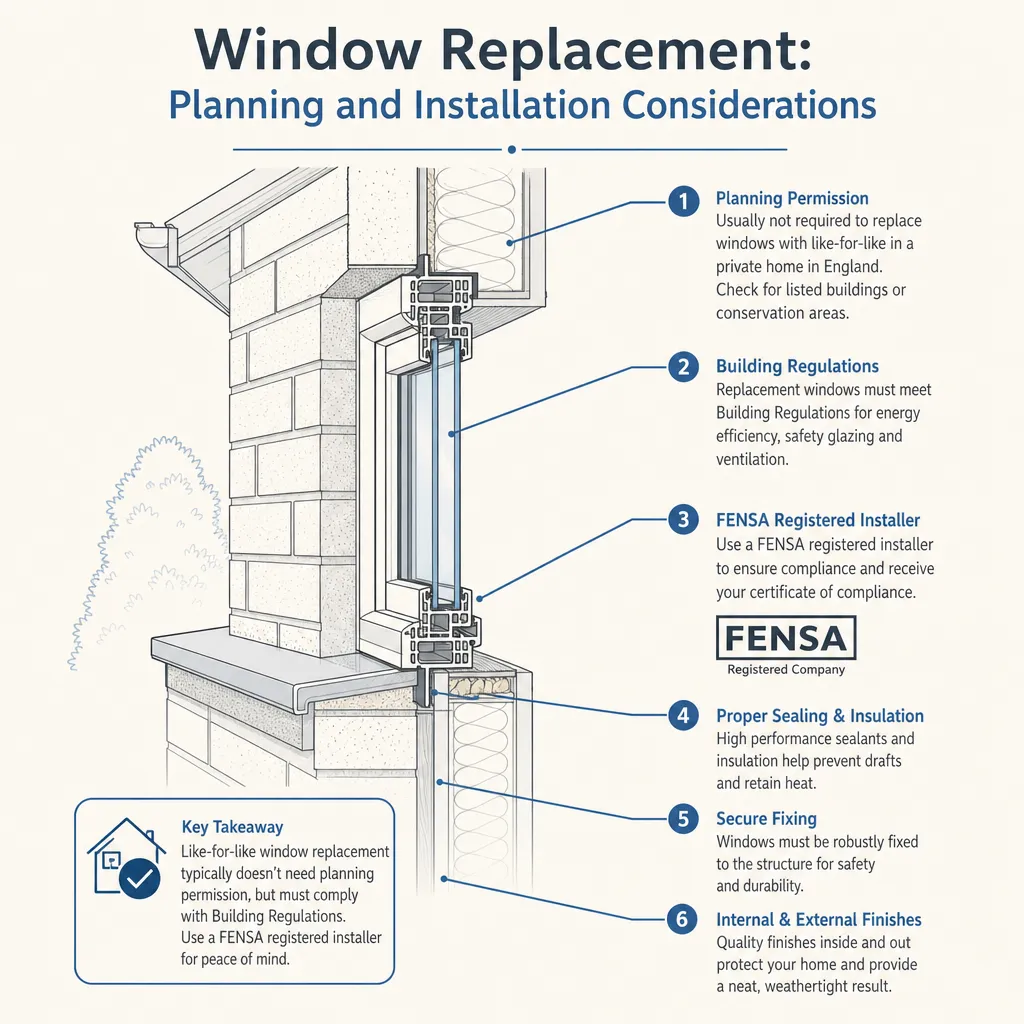
Window Replacement: Planning and Installation Considerations
Most window replacements in England fall under permitted development and do not need planning permission, though listed buildings, flats, and conservation areas are exceptions.
 Improvement & Build
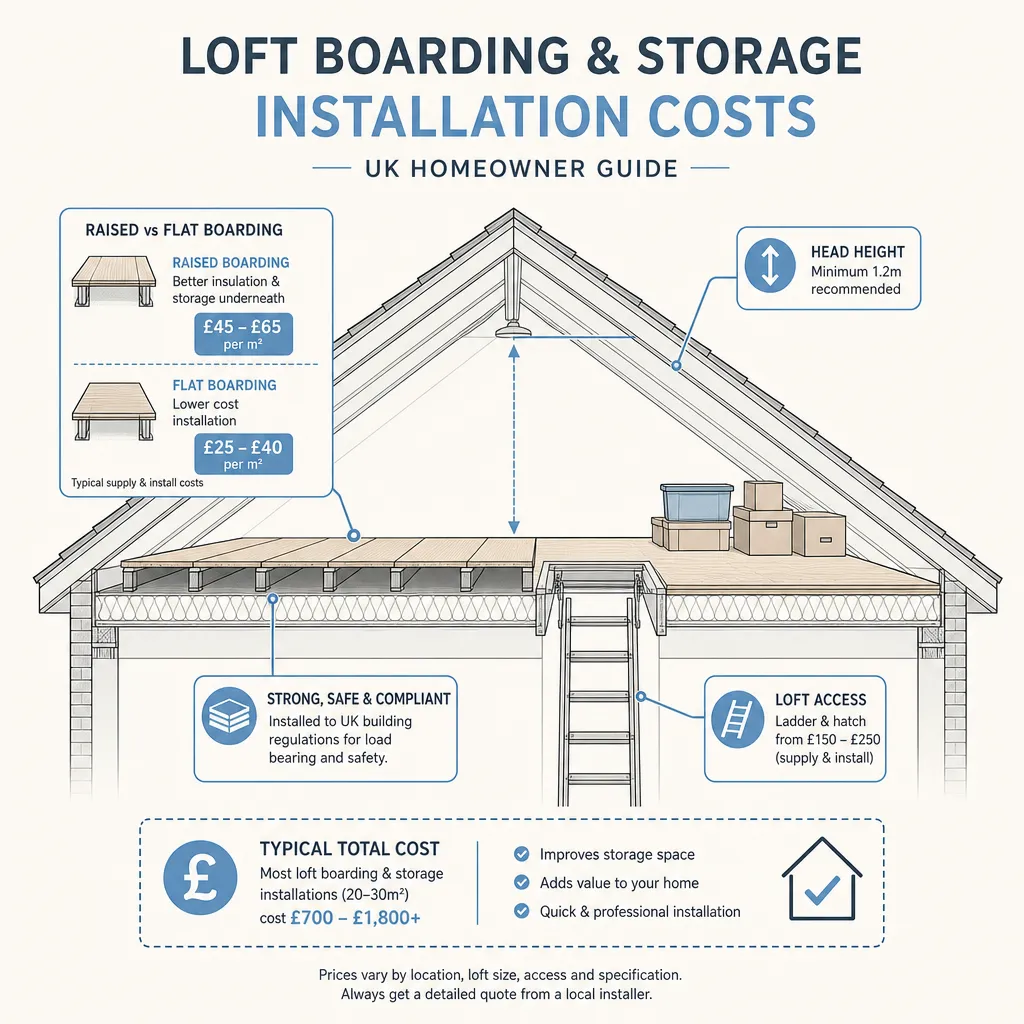
Loft Boarding and Storage Installation Costs
Basic loft boarding for an average semi-detached home costs £500–£1,500; a raised system that preserves insulation runs £800–£2,500.
 Improvement & Build
Garage Conversions: Transforming Your Garage into Living Space
Most integral garage conversions in England fall within permitted development and do not require a planning application, but Building Regulations approval is required in virtually all cases.