Window Replacement: Planning and Installation Considerations
By Housey · Last reviewed 1st of June 2026
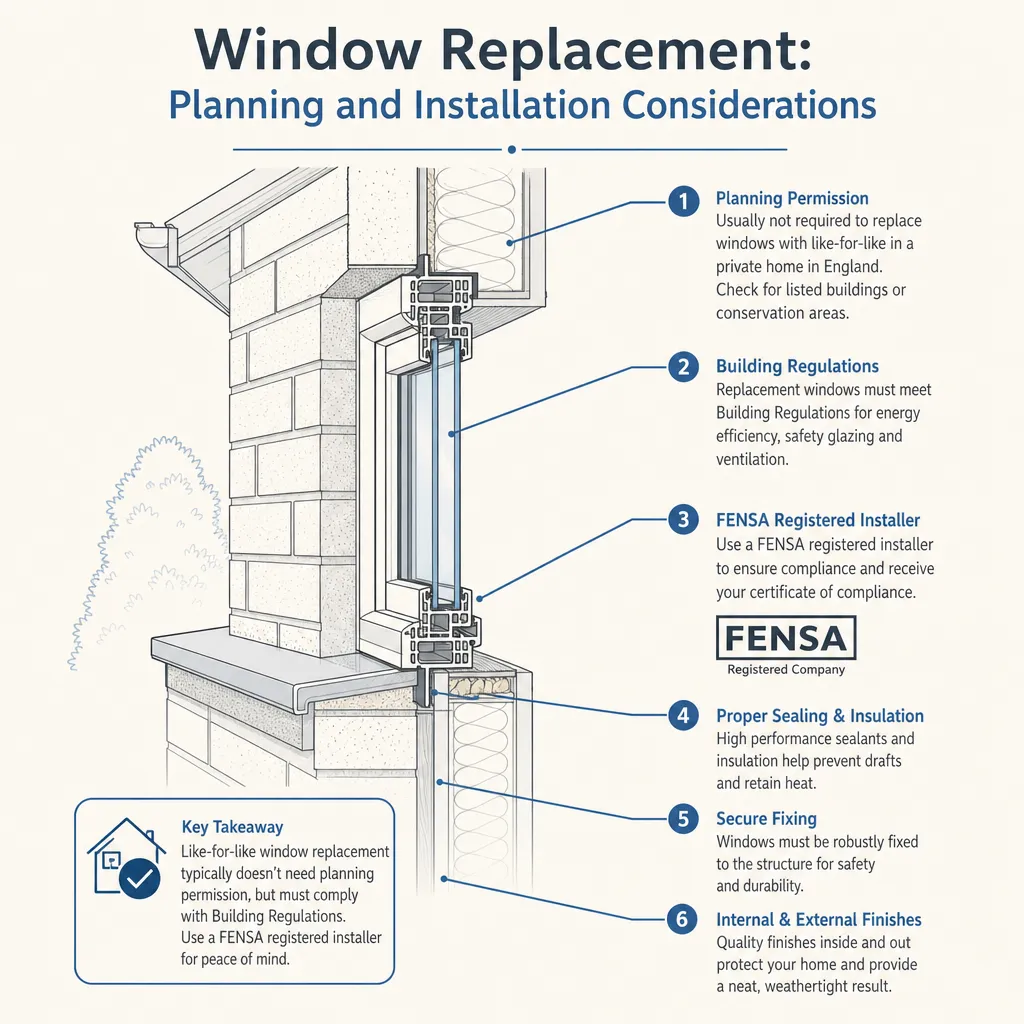
Window Replacement: Planning and Installation Considerations
Replacing windows is one of the most common home improvement projects in the UK, whether the driver is improving energy efficiency, resolving persistent draughts and condensation, updating the appearance of a period property, or dealing with frames that are simply past their useful life. What many homeowners do not anticipate is the web of planning consents and building regulation requirements that can apply even to a straightforward like-for-like replacement — requirements that, if overlooked, can create problems during conveyancing or future building control inspections.
Key points
- Most window replacements in England fall under permitted development and do not require a planning application, but listed buildings, flats, and properties in conservation areas are common exceptions.
- All replacement windows must comply with Building Regulations Part L (energy efficiency) — the 2021 update requires a minimum whole-window U-value of 1.4 W/m²K for replacement windows in England.
- FENSA and CERTASS are government-authorised competent person schemes; registered installers can self-certify compliance with Building Regulations and issue a compliance certificate on completion.
- Safety glazing under Approved Document K is required in critical locations, including within 300mm of a door edge, below 800mm from the floor in a door, and at low level in windows near a corner or door.
- If you use a non-registered installer, you or the installer must apply for building control approval separately before work starts, either through your local authority building control or an approved inspector.
Do you need planning permission to replace windows?
For most homeowners in England, replacing like-for-like windows is permitted development — no planning application is required. However, exceptions apply and proceeding without the correct consent can result in enforcement notices and problems on resale.
Decision tree: do I need planning permission for replacement windows?
- Standard house (semi, terrace, detached), not listed, not in a conservation area → Permitted development applies. No planning application needed. Building Regulations still apply.
- Property in a conservation area → Replacing windows visible from a highway may need planning permission even on a like-for-like basis. Check with your local planning authority before ordering.
- Listed building → Listed building consent is required for any alteration to windows. Double-glazed uPVC frames are generally unacceptable — timber single glazing or secondary glazing is often required. Consult your local planning authority and a conservation specialist before proceeding.
- Purpose-built flat → Permitted development rights for flats are very limited. Planning permission is usually required for external alterations including window replacement. Check with your local authority.
- Article 4 direction in place → Some councils have removed permitted development rights in specific areas via Article 4 directions. Check the local planning portal or contact your local planning authority directly.
Wales, Scotland, and Northern Ireland have their own planning regimes — permitted development rules differ from England's, so check with the relevant national planning authority.
Building regulations and energy efficiency
Regardless of whether planning permission is needed, all replacement windows in England must comply with Building Regulations. The key requirements come from three approved documents:
Approved Document L (Conservation of fuel and power): Replacement windows must achieve a minimum whole-window U-value of 1.4 W/m²K, or a minimum Window Energy Rating of Band C under the British Fenestration Rating Council (BFRC) scheme. This applies to like-for-like replacements as well as changes to size or style.
Approved Document K (Protection from falling, collision and impact): Safety glazing — toughened or laminated glass — is required in critical locations. These include within 300mm of a door edge, below 800mm from the floor in a door, and below 1,500mm from the floor in windows within 300mm of a corner or door.
Approved Document F (Ventilation): Replacement windows must maintain adequate ventilation. In most cases this means fitting trickle vents — small controllable slots in the frame — unless equivalent ventilation is provided another way.
FENSA, CERTASS, and self-certification
Using a FENSA or CERTASS registered installer is the most straightforward route to compliance for most homeowners. Registered firms can self-certify that the installation meets Building Regulations, notify the local authority on your behalf, and issue a compliance certificate on completion.
This certificate matters: it serves as evidence of regulatory compliance, should be kept with your property documents, and will be requested during conveyancing when you sell. If you cannot produce it, your solicitor may raise a requisition and you may need retrospective regularisation or indemnity insurance.
If you use a non-registered installer — which is permitted but involves additional administration — you or the installer must apply for building control approval before work begins. Either your local authority building control or a private approved inspector can handle this.
Comparing window frame materials
The choice of frame material affects appearance, maintenance requirements, thermal performance, lifespan, and cost.
Frame material | Best for | Not ideal for | Typical lifespan | Maintenance |
|---|---|---|---|---|
uPVC | Most post-war and modern properties; cost-conscious projects | Listed buildings; some conservation areas; period-style aesthetics | 20–35 years | Low — occasional clean |
Timber | Period and listed properties; conservation areas; high-end aesthetics | High-maintenance aversion; humid environments without proper treatment | 30–60+ years with upkeep | High — regular painting or staining |
Aluminium | Contemporary homes; slim sight lines; new-build | Listed or conservation without approval; budget-sensitive projects | 30–45 years | Low–moderate |
Composite (timber-aluminium) | Period properties needing modern thermal performance | Higher upfront cost | 30–50 years | Low externally, moderate internally |
Always check with your local planning authority or a conservation specialist before specifying a frame material if your property is listed or in a conservation area.
What to ask before accepting a quote
Prices for window replacement vary significantly based on frame material, glazing specification, number of windows, and installer. Always obtain at least three quotes before committing.
- Are you registered with FENSA or CERTASS? (Ask for the registration number.)
- What U-value will the replacement windows achieve, and does this meet Part L requirements?
- Will trickle vents be included to meet Approved Document F ventilation requirements?
- Is safety glazing specified for all critical locations as required by Approved Document K?
- Will you notify building control and issue a compliance certificate on completion?
- Is VAT included in the quote?
- What is the manufacturer's guarantee on the frames and sealed glass units?
- How will you handle surprises with existing frames — such as rot, hidden damage, or non-standard sizes?
- What is the lead time from order to installation, and what could affect that timeline?
The installation process: what to expect
A typical window replacement for a three-bedroom house takes one to two days for installation once windows have been manufactured. Lead time from order to installation is commonly four to eight weeks for standard sizes; bespoke or timber frames may take longer.
The general process is:
- Survey and measure: The installer measures existing openings precisely. Differences between nominal and actual sizes are common in older properties.
- Preparation: Clear the area around windows internally and protect furniture and floor coverings.
- Removal of old windows: Old frames are taken out and disposed of; surrounding masonry, timber, or lintels are checked for damage.
- Fitting: New frames are inserted, fixed, and sealed with low-expansion foam and weatherproof sealant.
- Glazing: Double or triple-glazed units are fitted; glazing bars or decorative features are added as specified.
- Finishing: Internal and external trims, sills, and beads are fitted; glass is cleaned.
- Compliance certificate: The FENSA or CERTASS installer notifies building control and issues your certificate, usually within a few weeks of completion.
Indicative UK costs, last reviewed 2026-06-01: A standard uPVC double-glazed casement window replacement typically costs £400–£900 per window supply-and-fit, depending on size and specification. Timber and aluminium frames command a significant premium. Quotes vary widely — always obtain at least three.
When to get professional help
Consult your local planning authority before ordering windows if your property is listed, in a conservation area, or is a purpose-built flat. If you are uncertain about acceptable materials for a period property, speak with a conservation specialist or architect before proceeding. If you are buying a property and the windows have been replaced without a FENSA or CERTASS certificate, your solicitor can make enquiries during conveyancing about whether retrospective regularisation or indemnity insurance is appropriate.
How Housey can help
Housey connects you with vetted window and door installers who are FENSA or CERTASS registered and experienced with the planning and building regulation requirements relevant to your property — whether a standard semi-detached, a Victorian terrace, or a home in a conservation area.
Frequently asked questions
Do I need building regulations approval to replace windows?
Yes — Building Regulations apply to all replacement windows in England, covering energy efficiency (Part L), ventilation (Part F), and safety glazing (Approved Document K). The most straightforward route to compliance is to use a FENSA or CERTASS registered installer who can self-certify the work and issue a compliance certificate on completion.
What happens if windows were replaced without a FENSA certificate?
If you are selling, your solicitor will likely raise this during conveyancing. You may be able to obtain a retrospective regularisation certificate from building control, or provide indemnity insurance as an alternative. For future replacements, using a FENSA or CERTASS registered installer avoids this issue entirely.
Can I replace windows in a listed building?
Yes, but listed building consent is required for any alteration to the external appearance of a listed building, including windows. Double-glazed uPVC frames are almost always unacceptable. Timber frames, traditional single glazing, or secondary glazing are usually the acceptable alternatives. Consult your local planning authority and a conservation specialist before commissioning any work.
What is a window U-value?
A U-value measures how quickly heat passes through a material — the lower the value, the better the insulation. Building Regulations Part L requires replacement windows in England to achieve a U-value of 1.4 W/m²K or better. Modern double-glazed windows typically achieve 1.2–1.6 W/m²K; triple-glazed units can achieve 0.6–0.8 W/m²K.
How long does it take to replace all windows in a house?
Installation for a typical three-bedroom semi-detached property usually takes one to two days once windows have been manufactured. Lead time from order to installation is commonly four to eight weeks for standard sizes, longer for bespoke or timber frames.
Sources and further reading
Useful next reads
 Improvement & Build
Custom Glass Solutions: Windows, Doors, and Glazing Services
Replacement windows and doors in England and Wales must comply with Building Regulations Approved Document L (2022), requiring a whole-window U-value of 1.
 Improvement & Build
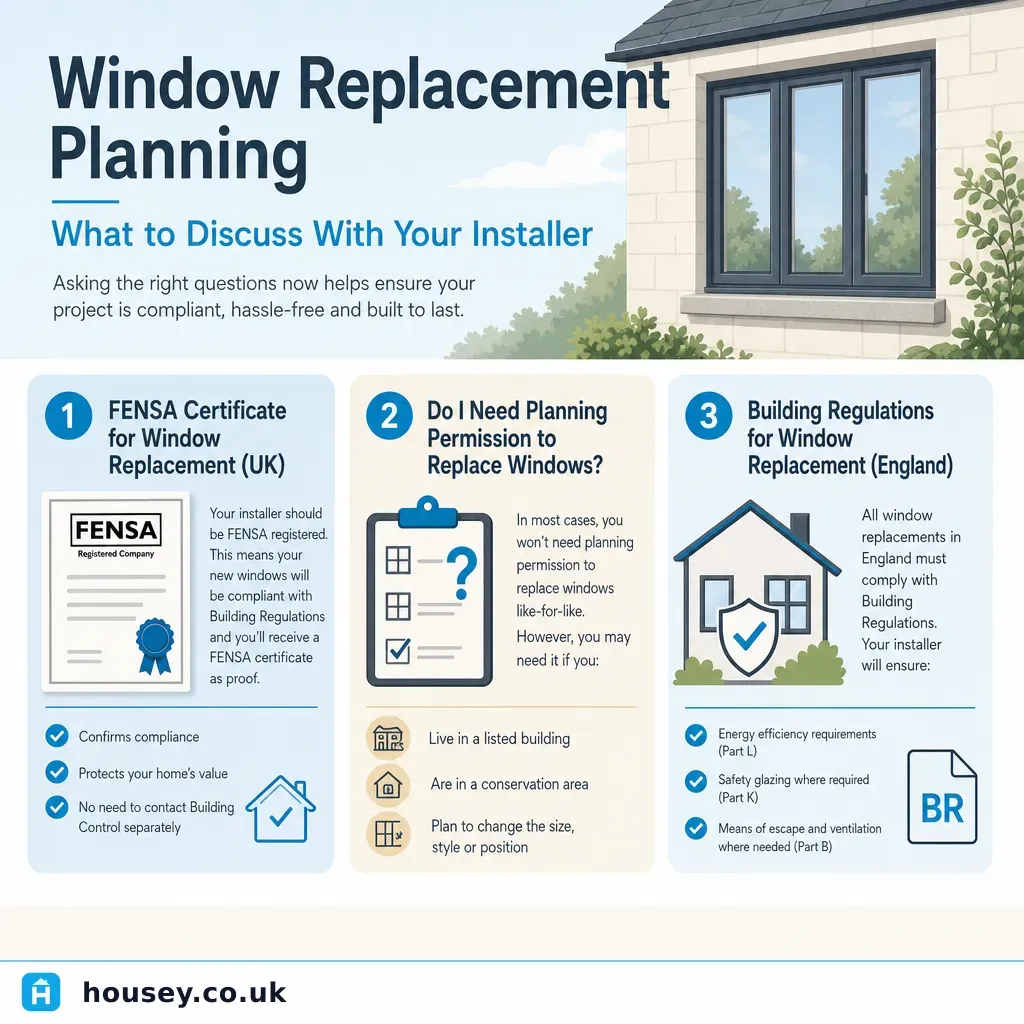
Window Replacement Planning: What to Discuss With Your Installer
Most window replacements in England fall under permitted development rights and do not require planning permission, but they must comply with Building Regulations Part L and Part K.
 Improvement & Build
Window Tinting and Solar Control Films for Residential Properties
Solar control window films reject 40–80% of total solar energy and block 99% of UV radiation, reducing overheating and fading without replacing glazing.
 Improvement & Build
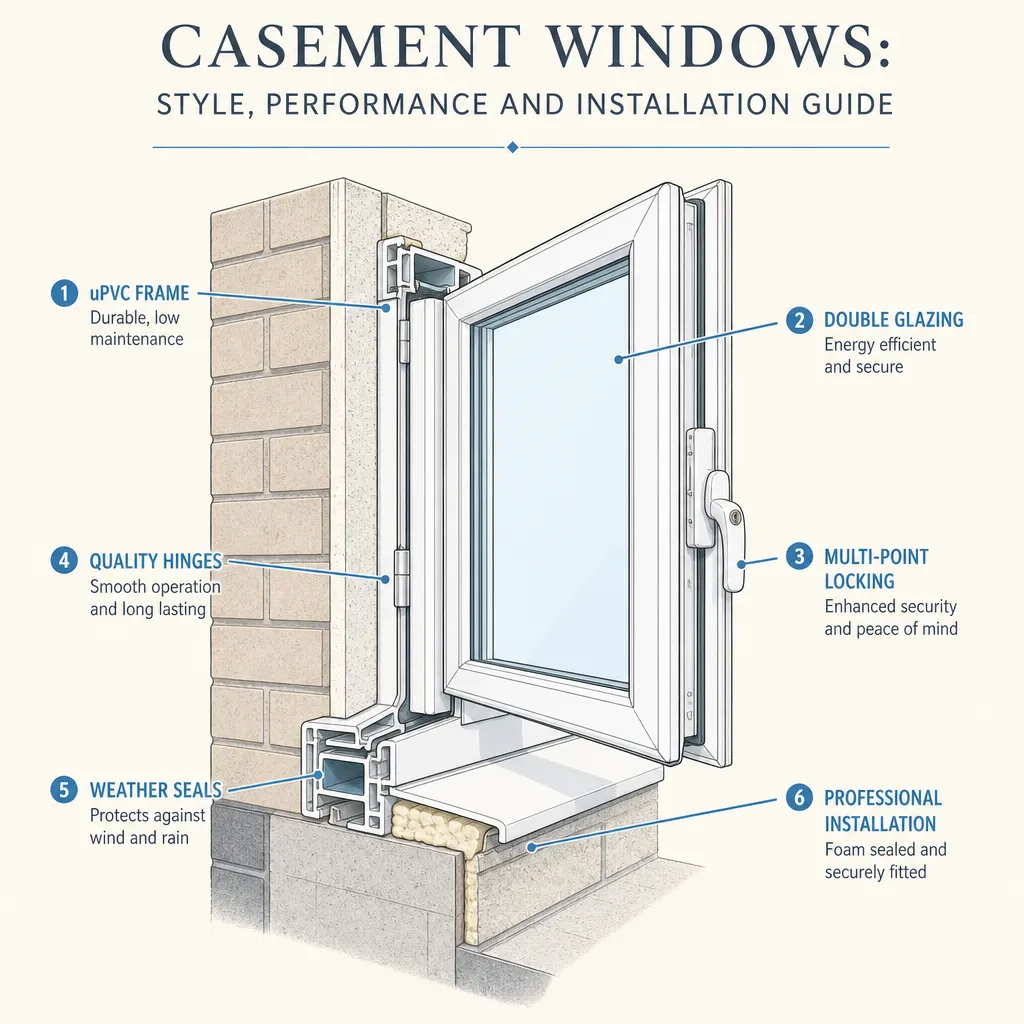
Casement Windows: Style, Performance and Installation Guide
Casement windows are hinged on one side and open outward, making them the most widely fitted window type in UK homes.
 Improvement & Build
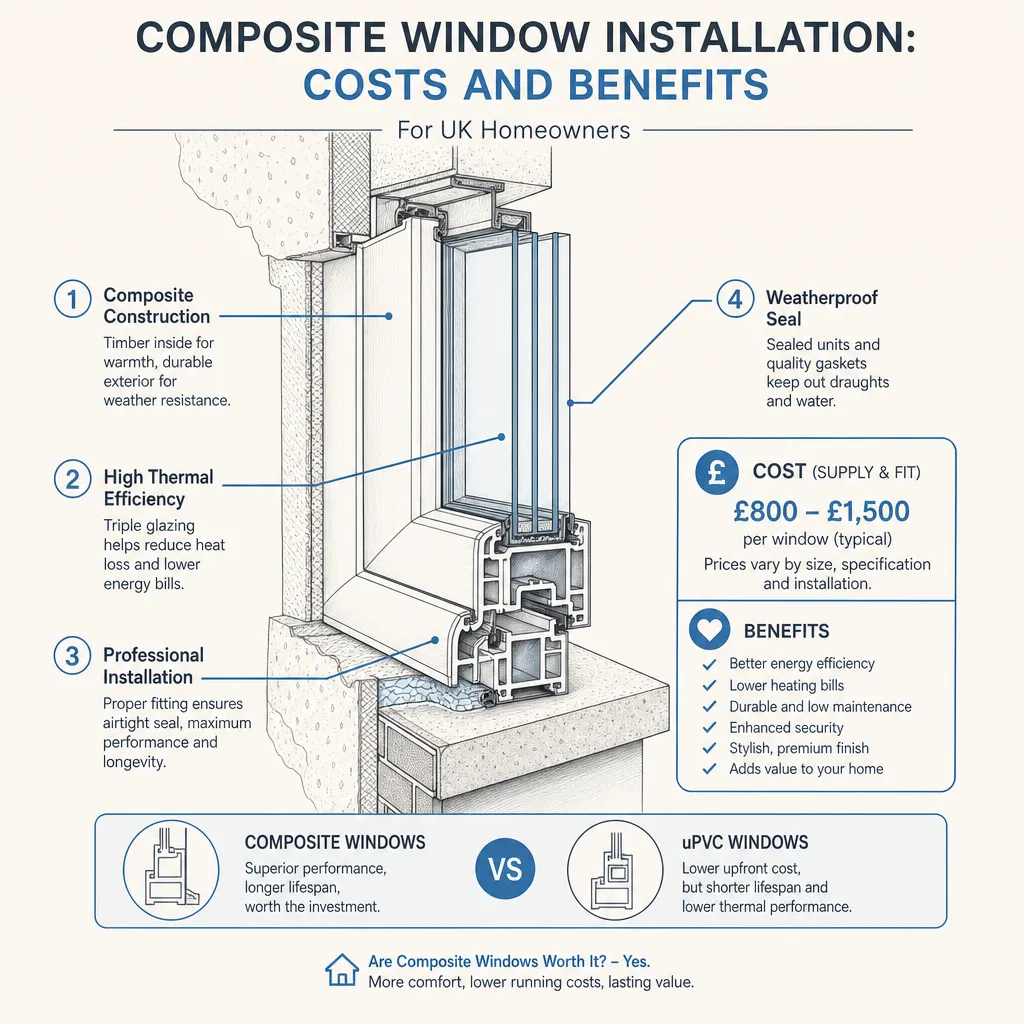
Composite Window Installation: Costs and Benefits
Composite windows combine two or more frame materials — typically a timber or aluminium core with a uPVC or aluminium outer casing — for better thermal performance and durability than standard uPVC.