Laundry Room Renovation and Fitting Costs
By Housey · Last reviewed 7th of May 2026

Laundry Room Renovation and Fitting Costs
Converting a spare room, lean-to, or underused ground-floor space into a dedicated laundry or utility room is one of the more practical improvements a UK homeowner can make. The total cost varies considerably depending on what plumbing, electrical, and structural work the room requires. Understanding what drives the price — and what tradespeople typically quote separately — makes it far easier to compare contractors and avoid mid-project surprises.
Key points
- A basic utility room fit-out (units, worktop, sink, appliance connections, basic tiling) typically costs £2,000–£6,000 in the UK (indicative UK costs, last reviewed 2026-05-07).
- New plumbing supply and waste runs from scratch can add £800–£2,500 depending on distance from existing services and drainage route complexity.
- A new appliance circuit and consumer unit amendment by a Part P-registered electrician typically adds £300–£800 to the project cost.
- Building Regulations Part G covers water fittings and Part P covers electrical installations — both require certified tradespeople in England and Wales.
- Approved Document F (ventilation) requires adequate extraction in rooms with washing machines and tumble dryers; a ducted extract fan to outside is the standard solution.
What a laundry room renovation typically includes
Project type | Typical UK cost | What is usually included |
|---|---|---|
Basic fit-out (existing plumbing and electrics present) | £2,000–£4,000 | Units, worktop, sink, splashback tiling, appliance placement, decoration |
Mid-range fit-out (new plumbing runs and upgraded electrics) | £4,000–£8,000 | All of above, plus new plumbing, dedicated electrical circuit, extract fan, flooring |
Full conversion or new extension fit-out | £8,000–£15,000+ | Structural works, new drainage connection, full electrical amendment, complete fit-out |
Indicative UK costs, last reviewed 2026-05-07. Costs vary by region, contractor, and specification.
Cost drivers: what makes laundry room projects more expensive
Distance from existing services. Running new hot and cold water supply pipes and adding a waste outlet to the nearest soil stack is the single largest cost variable. If the proposed room is at the rear of the house or on an upper floor, pipe runs can be lengthy and involve chasing into walls or lifting floorboards.
Drainage position. In older UK terraces and semis, the soil stack is typically at the rear; a front or side laundry room may need a longer waste run or a macerator pump unit, adding to both cost and ongoing maintenance.
Electrical load. Washing machines, tumble dryers, and combination units each draw significant current. A dedicated circuit separate from the ring main is advisable; consumer unit amendments must be notified under Part P of the Building Regulations, or carried out by an NICEIC or NAPIT registered electrician who self-certifies.
Ventilation requirements. Tumble dryers generate substantial moisture and heat. Condenser dryers reduce but do not eliminate the need for extraction; heat pump tumble dryers are the most moisture-efficient option. Approved Document F requires adequate ventilation in rooms with significant moisture sources — a ducted extract fan to outside is standard. Inadequate ventilation leads to condensation, mould, and potential damage to the wider building fabric.
Floor structure. Ground-floor utility rooms in older UK properties with suspended timber floors may need reinforcement before heavy appliances are installed. A concrete floor slab considerably simplifies this.
Worked UK property scenario: lean-to utility room in a 1930s semi
A homeowner in South Yorkshire converts a 4m² ground-floor lean-to with a concrete floor, a single cold water tap, and one double socket.
- Plumbing (new hot feed from boiler loop, cold extension, washing machine waste to kitchen drain): approximately £900
- Electrical (dedicated 20A circuit, two additional double sockets, extract fan spur, Part P notification via NICEIC electrician): approximately £550
- Joinery (two base units, laminate worktop, undermount utility sink, wall shelving): approximately £1,400
- Tiling and finishes (ceramic splashback, floor tile refresh, painting, skirting): approximately £750
- Ventilation (ducted extract fan through lean-to wall): approximately £200
- Total project cost: approximately £3,800
Indicative UK costs, last reviewed 2026-05-07. Always obtain at least three quotes for your specific project.
Homeowner checklist: before you get quotes
What to ask before accepting a quote
- Does your quote include all plumbing, electrical, and joinery work, or are these subcontracted and separately priced?
- Is the plumber WaterSafe-approved or registered with an equivalent competent-person scheme?
- Is the electrician NICEIC or NAPIT registered?
- Will you handle Part P notification, or do I notify building control separately?
- What happens if access into walls or floors reveals unexpected problems such as poor pipework, damp, or structural issues?
- Does the quote include ducted ventilation to outside, or only a passive vent?
- Is VAT included?
- What payment schedule and completion documentation will you provide?
When to get professional help
A laundry room renovation involves at least two regulated trades. Do not use an unregistered person for:
- Consumer unit amendments or new electrical circuit installation (Part P, England and Wales).
- Connections to the drainage system, particularly to a soil stack or shared drain.
- Any work involving gas appliances or gas supply pipework.
If the conversion involves modifying a wall and you are unsure whether it is load-bearing, have it assessed by a structural engineer before any work begins.
How Housey can help
If your laundry room is part of a wider home improvement — such as a rear extension or conversion project — Housey can connect you with qualified local tradespeople for the full scope of work. Request quotes from extension builders near you for projects combining structural work with fit-out.
Frequently asked questions
Does a laundry room or utility room need building regulations approval?
Most fit-outs within existing rooms do not require a full building regulations application, but notification requirements apply. Electrical circuit and consumer unit work must be notified to local authority building control or self-certified by a Part P scheme member (NICEIC, NAPIT). Water fittings must comply with the Water Supply (Water Fittings) Regulations 1999. Structural changes or extensions require formal building regulations consent.
Can I put a laundry room upstairs?
Yes, and first-floor utility rooms are increasingly common in UK new builds. Key considerations are drainage (a waste pipe needs an adequate drop to a soil stack), floor structure (it must bear the dynamic load of a spinning appliance), and noise transmission to rooms below. Anti-vibration feet and an isolation mat under appliances help significantly.
How long does a laundry room renovation take?
A fit-out in an existing room with plumbing and electrics already in place typically takes 3–5 working days. Projects requiring new plumbing runs, a new circuit, and full decoration are more commonly 1–2 weeks, depending on trade sequencing — plumbing and electrical work must generally be completed before tiling, plastering, and joinery begin.
Do I need planning permission for a laundry room?
Converting an internal room to utility or laundry use does not normally require planning permission in England. If you are building an extension to create the space, permitted development rights may apply subject to size and location constraints. Check with your local planning authority first, particularly if your property is listed, in a conservation area, or has had prior extensions.
What is the best flooring for a laundry room?
Ceramic or porcelain floor tiles are the most practical choice — water-resistant, easy to clean, and durable under heavy appliance use. Luxury vinyl tile (LVT) is a popular mid-price alternative that is warmer underfoot and tolerant of minor subfloor imperfections. Avoid laminate flooring, which swells and delaminates when exposed to water at edges or from appliance leaks.
Sources and further reading
- Building Regulations Approved Document P — Electrical Safety — GOV.UK
- Building Regulations Approved Document F — Ventilation — GOV.UK
- Water Supply (Water Fittings) Regulations 1999 — legislation.gov.uk
- Building Regulations Approved Document G — Sanitation and Water Efficiency — GOV.UK
- NICEIC — Find a registered electrician — National Inspection Council for Electrical Installation Contracting
Useful next reads
 Improvement & Build
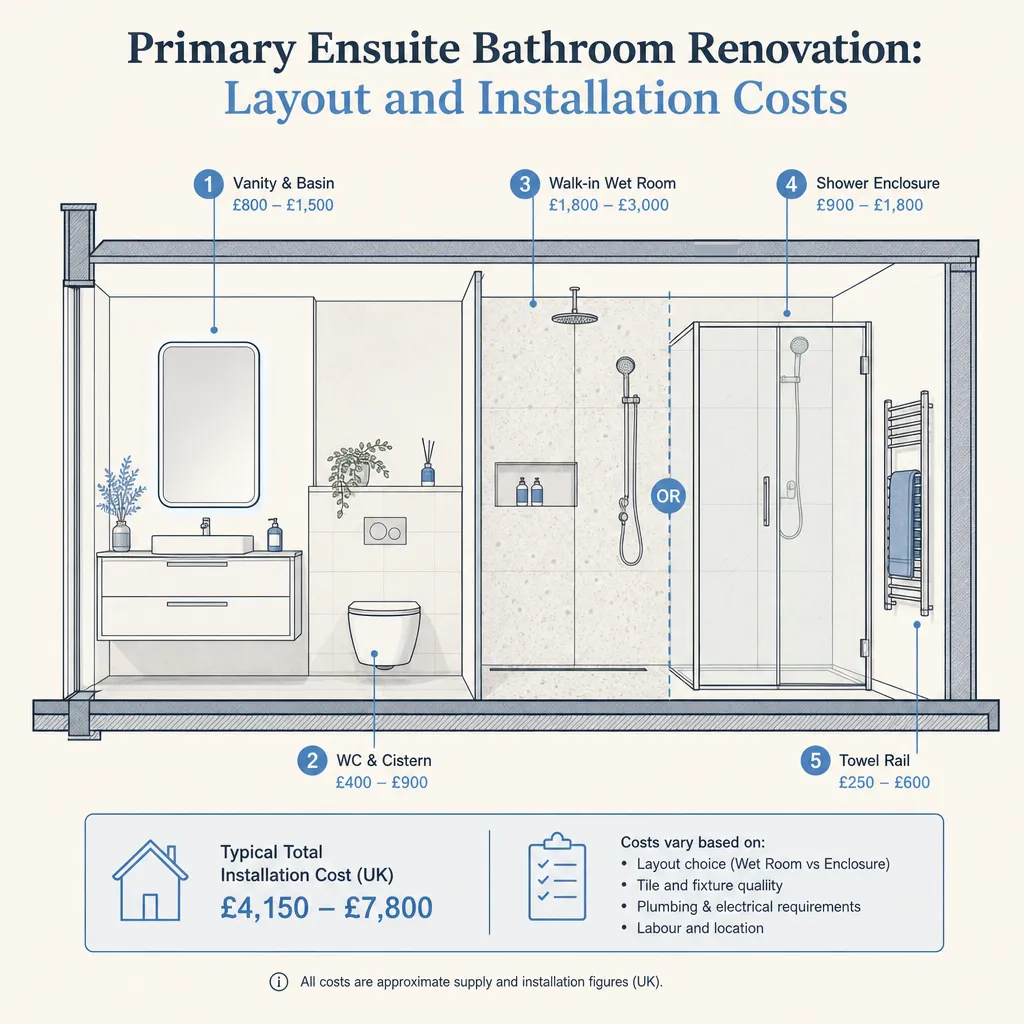
Primary Ensuite Bathroom Renovation: Layout and Installation Costs
A primary ensuite renovation in the UK typically costs between £3,000 and £12,000, depending on size, layout, and specification.
 Improvement & Build
Small kitchen renovation: budgeting for costs and planning your project
A small kitchen renovation in the UK typically costs £5,000–£15,000 for a full refresh including new units, worktops, tiling, and appliances, though costs vary widely by specification, region, and whether structural changes or rewiring are involved.
 Improvement & Build
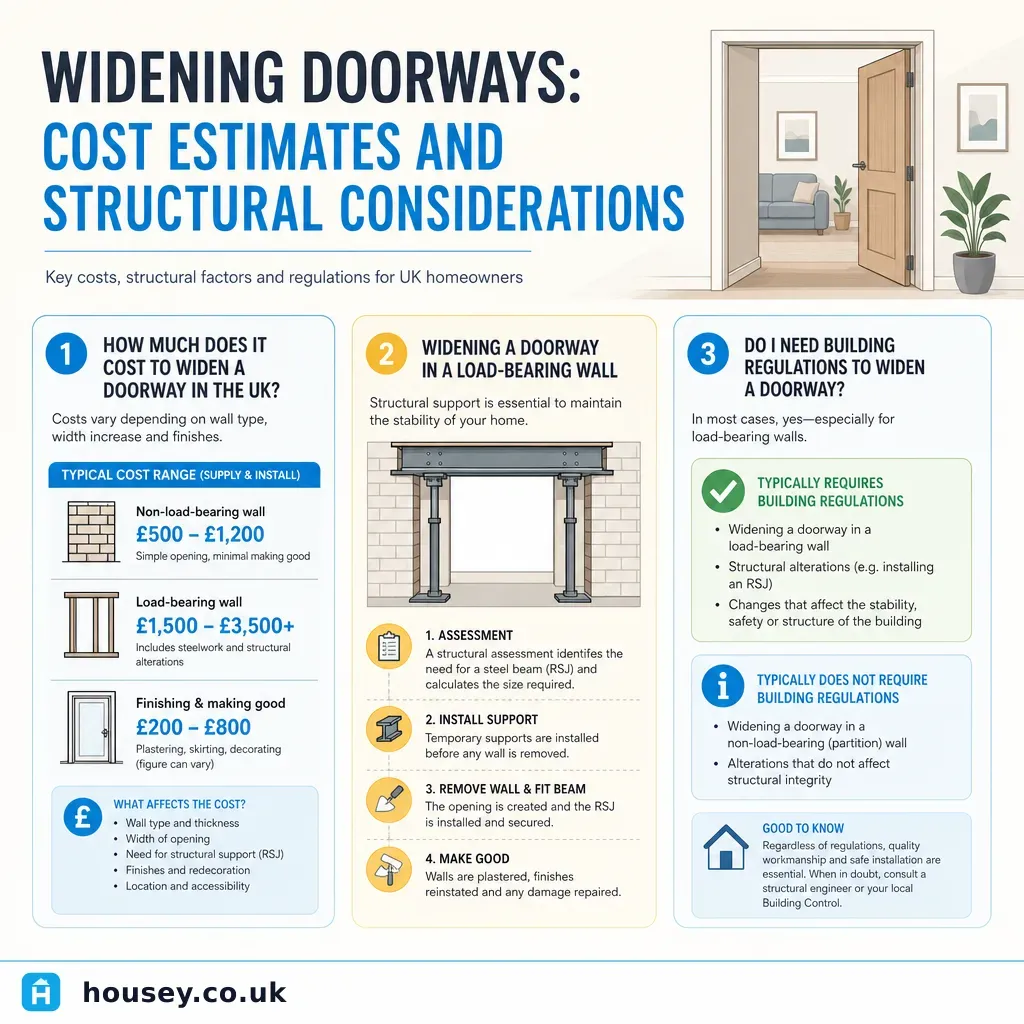
Widening Doorways: Cost Estimates and Structural Considerations
A doorway in a non-load-bearing partition can usually be widened for £500–£1,500.
 Improvement & Build
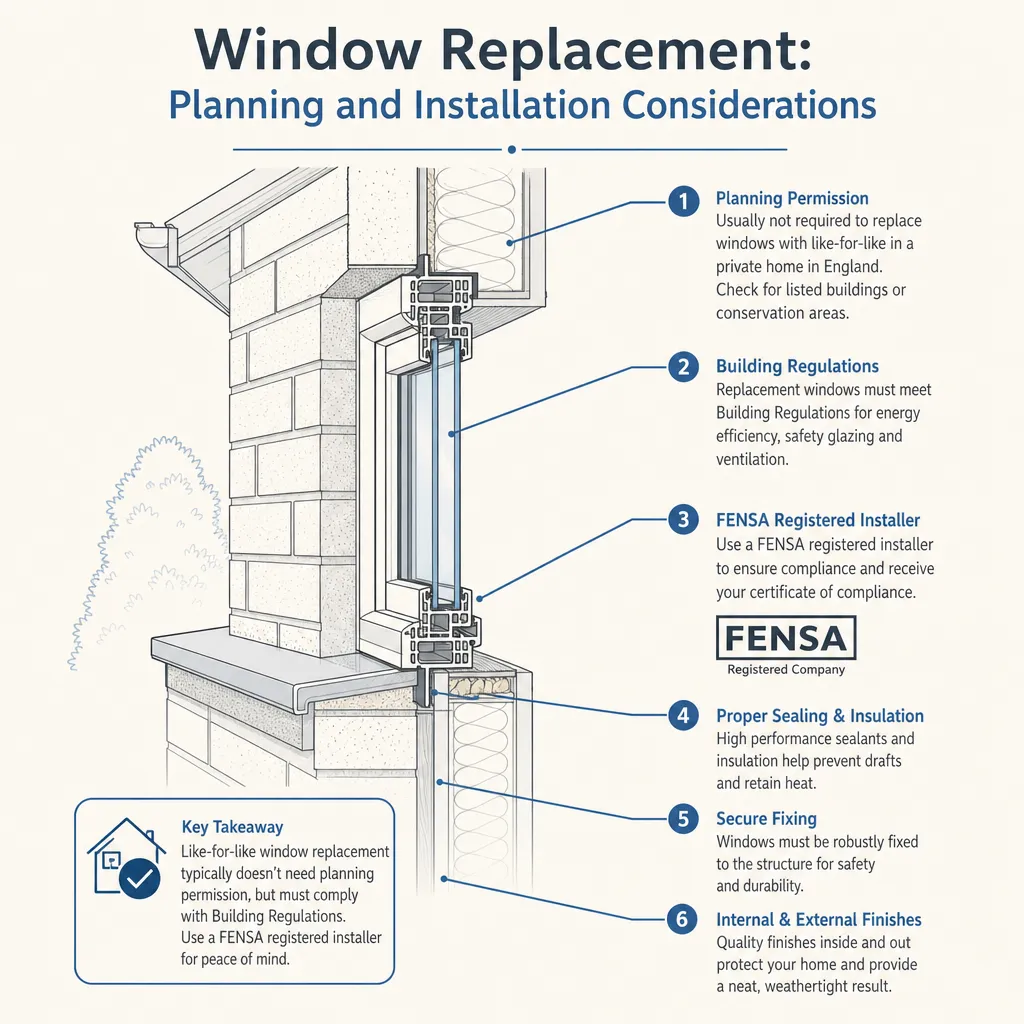
Window Replacement: Planning and Installation Considerations
Most window replacements in England fall under permitted development and do not need planning permission, though listed buildings, flats, and conservation areas are exceptions.
 Improvement & Build
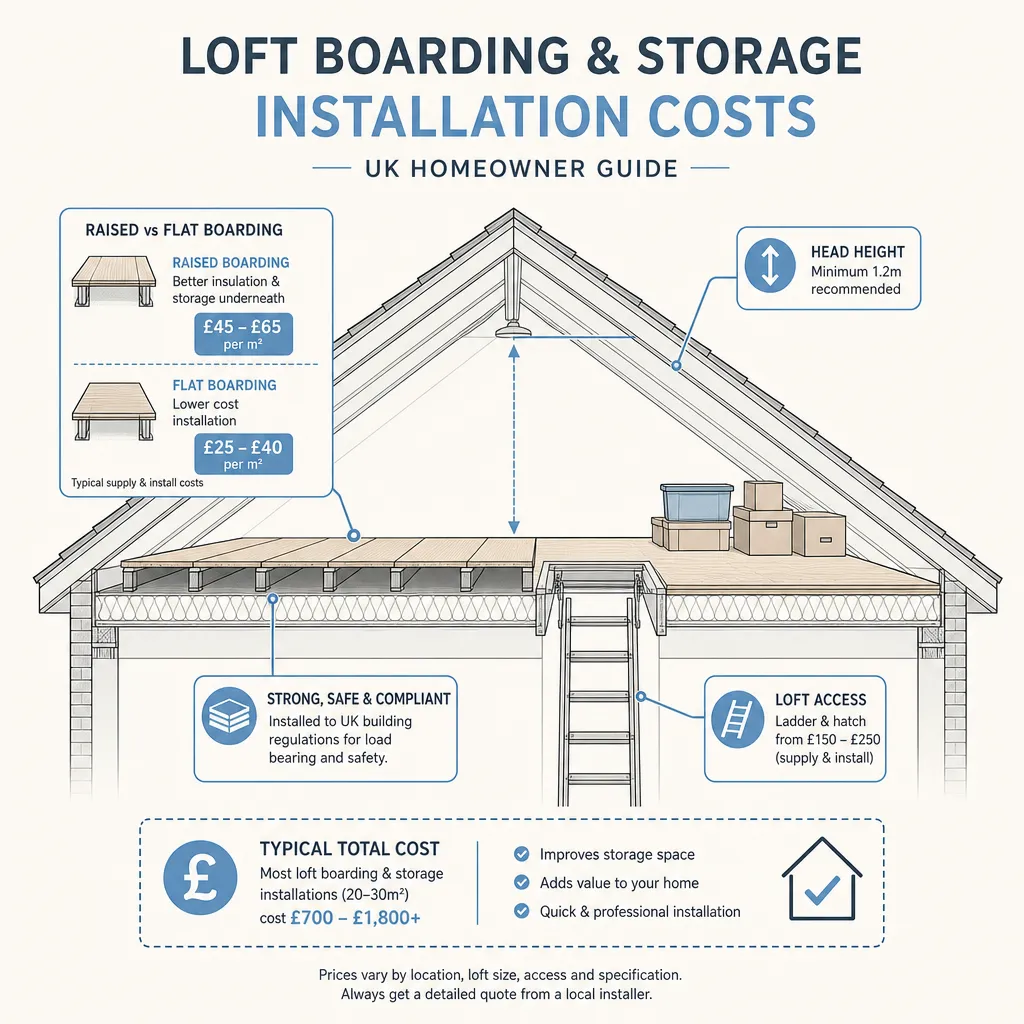
Loft Boarding and Storage Installation Costs
Basic loft boarding for an average semi-detached home costs £500–£1,500; a raised system that preserves insulation runs £800–£2,500.