Garage Conversions: Transforming Your Garage into Living Space
By Housey · Last reviewed 19th of May 2026
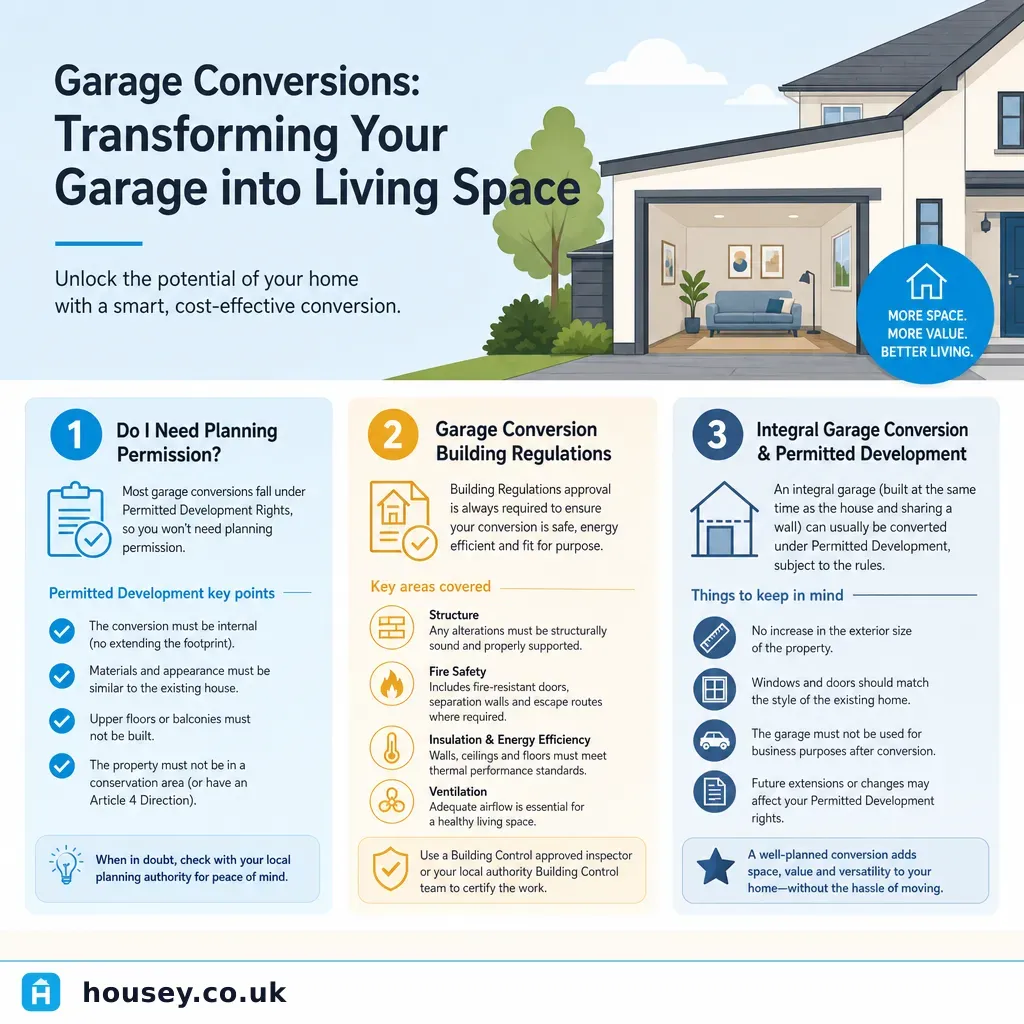
Garage Conversions: Transforming Your Garage into Living Space
Garages often sit underused while homeowners need more space — and converting one can be a cost-effective way to add a usable room without extending the footprint of your home. Whether it is an integral garage beneath the main roof or a detached structure at the end of the drive, the project raises questions about planning permission, building regulations, structural changes, and how the finished space will be insulated, ventilated, and connected to the rest of the house. Getting the regulatory groundwork right from the start avoids delays, enforcement risk, and costly remedial work later.
Key points
- Most integral garage conversions in England fall within permitted development rights and do not require a full planning application — but this does not apply to listed buildings, flats, Article 4 Direction areas, or detached garages converted to a self-contained dwelling.
- Building Regulations approval is required for virtually all garage conversions in England and Wales, covering thermal performance (Part L), fire safety (Part B), ventilation (Part F), damp (Part C), and electrics (Part P).
- A minimum ceiling height of 2.1 m is generally expected for a habitable room; if your garage falls short, a structural assessment may be needed before works begin.
- Removing or altering a load-bearing wall to open the conversion into the main living area requires a structural engineer's calculation, which must form part of the building regulations submission.
- When you sell, buyers' solicitors will typically ask for the Building Regulations completion certificate — converting without approval can create legal complications and affect mortgage offers on the property.
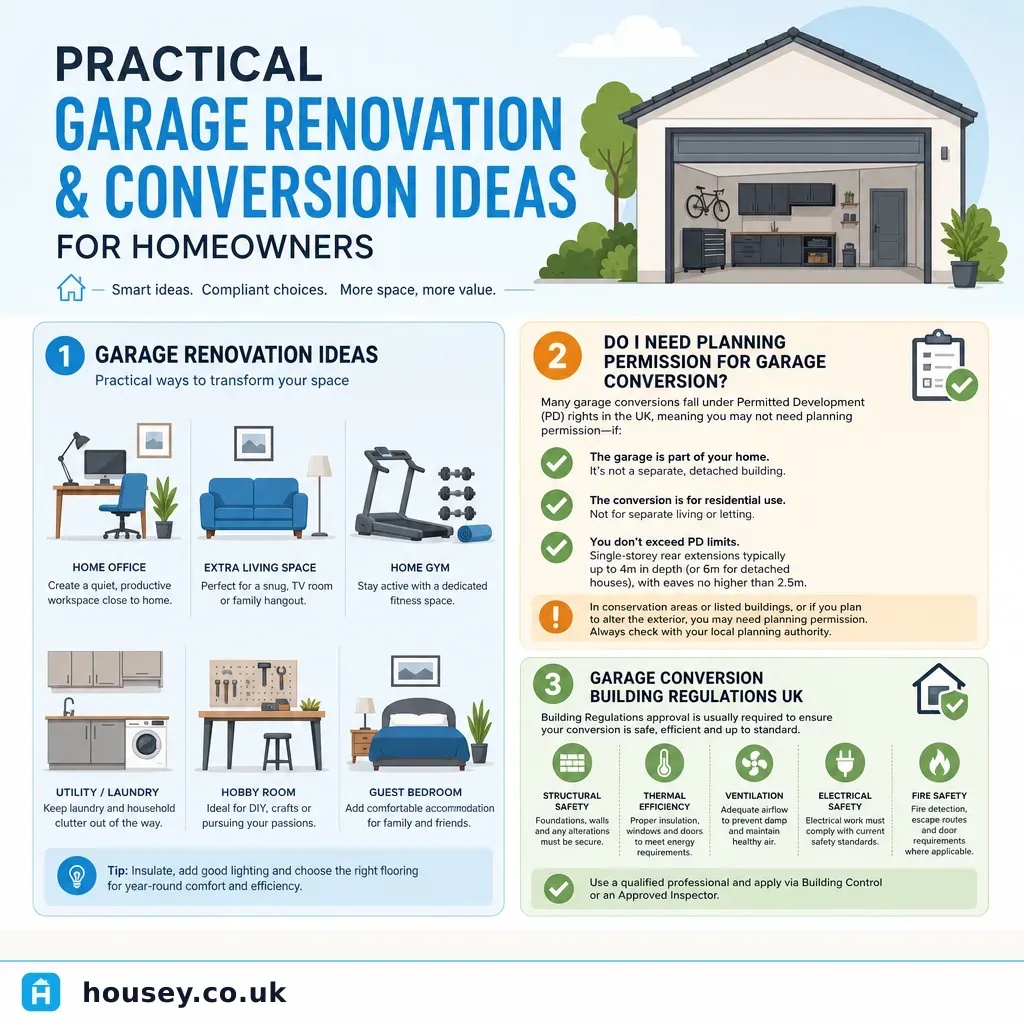
Do I need planning permission for a garage conversion?
In England, converting an integral garage (attached to or built into the main house) to a habitable room is usually permitted development, meaning no formal planning application is required — provided the property is a house (not a flat or maisonette), has not used up permitted development rights through prior extensions, and is not in a restricted area.
Situations where planning permission is more likely needed:
- Converting a detached garage into a self-contained dwelling or annexe rather than ancillary living space
- The property is a listed building — listed building consent may also be required for any internal alterations
- The property sits within a conservation area and the work involves alterations to the front or side elevation visible from the highway
- An Article 4 Direction has removed permitted development rights locally — check with your local planning authority before assuming it applies
- A new-build property where planning conditions restrict garage conversion
If you are unsure whether permitted development applies, you can apply for a Certificate of Lawful Development (CLD) from your local planning authority. This formal document confirms that the works are lawful and protects you when you sell. Planning rules in Wales, Scotland, and Northern Ireland differ — always check with the relevant planning authority.
Do I need Building Regulations approval?
Yes, in almost all cases. Unlike planning permission, Building Regulations approval is required regardless of planning status. The regulations ensure the finished room is structurally sound, thermally efficient, safe from fire, adequately ventilated, and free from damp.
Key approved documents that typically apply to a garage conversion:
Approved Document | What it covers in a garage conversion |
|---|---|
Part A (Structure) | Structural integrity of walls, floor, and roof; load-bearing changes |
Part B (Fire safety) | Escape routes, fire-resistant materials, and smoke detection |
Part C (Damp) | Damp-proof membrane to floor and walls, moisture resistance |
Part F (Ventilation) | Adequate fresh air supply to the new room |
Part L (Energy efficiency) | Insulation to walls, floor, and roof; U-values for new windows or doors |
Part P (Electrics) | Electrical installation to a habitable room |
You must notify your local authority building control (LABC) or an approved inspector before works start. An inspector will visit at key stages and issue a completion certificate when satisfied.
Which type of garage suits your situation?
Garage type | Planning likelihood | Building regs required | Key technical considerations |
|---|---|---|---|
Integral (attached, beneath main roof) | Usually permitted development | Yes | Damp-proof floor, insulation, ventilation, structural check if internal wall removed |
Semi-detached garage (linked by a shared wall) | Usually permitted development | Yes | Check Party Wall etc. Act 1996 if wall is shared with a neighbour |
Detached garage (ancillary use, not a separate dwelling) | Usually permitted development | Yes | May need separate drainage if adding a WC; structural survey if older build |
Detached garage (new self-contained dwelling) | Planning permission usually required | Yes | More complex — separate utility connections, possible Community Infrastructure Levy liability |
Which planning route applies to your property?
- Choose the permitted development route if your home is a house (not a flat), the garage is integral or attached, you are not in a listed building or conservation area, and no Article 4 Direction applies locally.
- Apply for a Certificate of Lawful Development if you want formal written confirmation — particularly advisable before selling or remortgaging.
- Apply for planning permission if the garage is detached and you intend a self-contained living unit, or if any of the exceptions above apply.
- Ask a planning consultant or architect if the property is listed, in a conservation area, or if the conversion involves significant external changes.
- Always notify building control regardless of planning status — approval is required for habitable conversions and is entirely separate from planning permission.
What does a garage conversion typically involve?
Scope varies significantly by property, but a typical integral garage conversion to a habitable room includes:
- Structural assessment — checking whether walls are load-bearing and whether the existing floor slab is suitable
- Damp-proof membrane — laid over or beneath a new screed floor to prevent ground moisture rising
- Floor insulation — rigid insulation board beneath screed to meet Part L U-value requirements
- Wall insulation — internal or external insulation depending on construction and available space
- Roof insulation — if beneath an integral roof, insulating between and/or beneath rafters
- New or upgraded windows and external door — to meet Part L thermal thresholds; the garage door opening is typically infilled with a new wall, window, or door
- Ventilation — background ventilators and, depending on room use, extract ventilation
- Electrical installation — first and second fix by a Part P-competent electrician
- Heating — extending the existing central heating system or specifying an alternative heat source
- Plastering and finishing — completing the room to a habitable standard
Important limitations
This article provides general information for UK homeowners considering a garage conversion. Planning and building regulations rules vary significantly depending on property type, location, tenure, prior works, and local planning conditions. Do not assume that permitted development applies to your property without checking. The information here reflects the position in England; Wales, Scotland, and Northern Ireland each have their own planning and building regulations regimes. A qualified professional — such as an architect, planning consultant, or structural engineer — should assess your specific situation before any works begin.
What to ask a qualified professional
Before instructing anyone or starting any work, ask:
- Does permitted development apply to my specific property, and is a Certificate of Lawful Development advisable before I proceed?
- Does the garage floor slab need replacement or reinforcement, and what does a structural survey reveal about the existing construction?
- What U-values must the insulation achieve to comply with Part L, and what insulation strategy suits the existing building fabric?
- What are the Part B fire-safety requirements given the garage's position relative to habitable escape routes?
- Will any wall be affected by the Party Wall etc. Act 1996, and does a notice need to be served on my neighbour before work starts?
- Will local authority building control or an approved inspector be used, and what does the inspection schedule look like?
- What completion certificates, warranties, or guarantees will be provided at the end of the project?
When to get professional help
Seek professional advice before starting any work if:
- You are unsure whether planning permission or a Certificate of Lawful Development is required
- The garage is in or attached to a listed building, in a conservation area, or a new-build with planning conditions attached
- Any wall to be removed or altered might be load-bearing
- The garage floor shows signs of moisture ingress, cracking, or significant unevenness
- You intend to add a bathroom or WC, which may require new drainage connections
- The property is leasehold and freeholder consent may be needed before structural works begin
How Housey can help
Housey connects you with vetted garage conversion specialists who can assess your property, advise on planning and building regulations requirements, and manage the project from structural assessment through to a completed, certified living space.
Frequently asked questions
Does a garage conversion add value to my home?
A certified garage conversion that adds a habitable room can increase a property's value, particularly where off-street parking remains available. The impact varies by location and property type. An estate agent familiar with the local market can give a more specific view before you commit to significant expenditure on the project.
Can I convert a garage in a leasehold property?
Leasehold properties typically require freeholder or management company consent for structural alterations, even when planning permission is not needed. Check your lease before starting and seek advice from a solicitor specialising in leasehold matters. Starting work without required consent can cause legal complications and affect your ability to sell.
How long does a garage conversion take?
A straightforward integral garage conversion typically takes four to eight weeks from start to completion, depending on scope, the contractor's programme, and building control inspection scheduling. Projects involving structural wall removal, drainage, or significant damp remediation can take longer. Agree a clear programme with your contractor before work begins.
What if my garage was built after the original house?
If a garage was added under a separate planning permission, conditions attached to that permission may restrict future use. Check the planning history on your local planning authority's public portal and confirm there are no restrictive conditions before starting conversion work. A planning consultant can help you interpret any conditions you find.
Do I need Party Wall Act notices for a garage conversion?
If your garage shares a structural wall with a neighbouring property, the Party Wall etc. Act 1996 may apply to works affecting that wall. A party wall surveyor can advise whether a notice is required and serve it correctly. Starting notifiable works without a valid notice can create legal liability if a neighbour suffers damage.
Sources and further reading
Useful next reads
 Improvement & Build
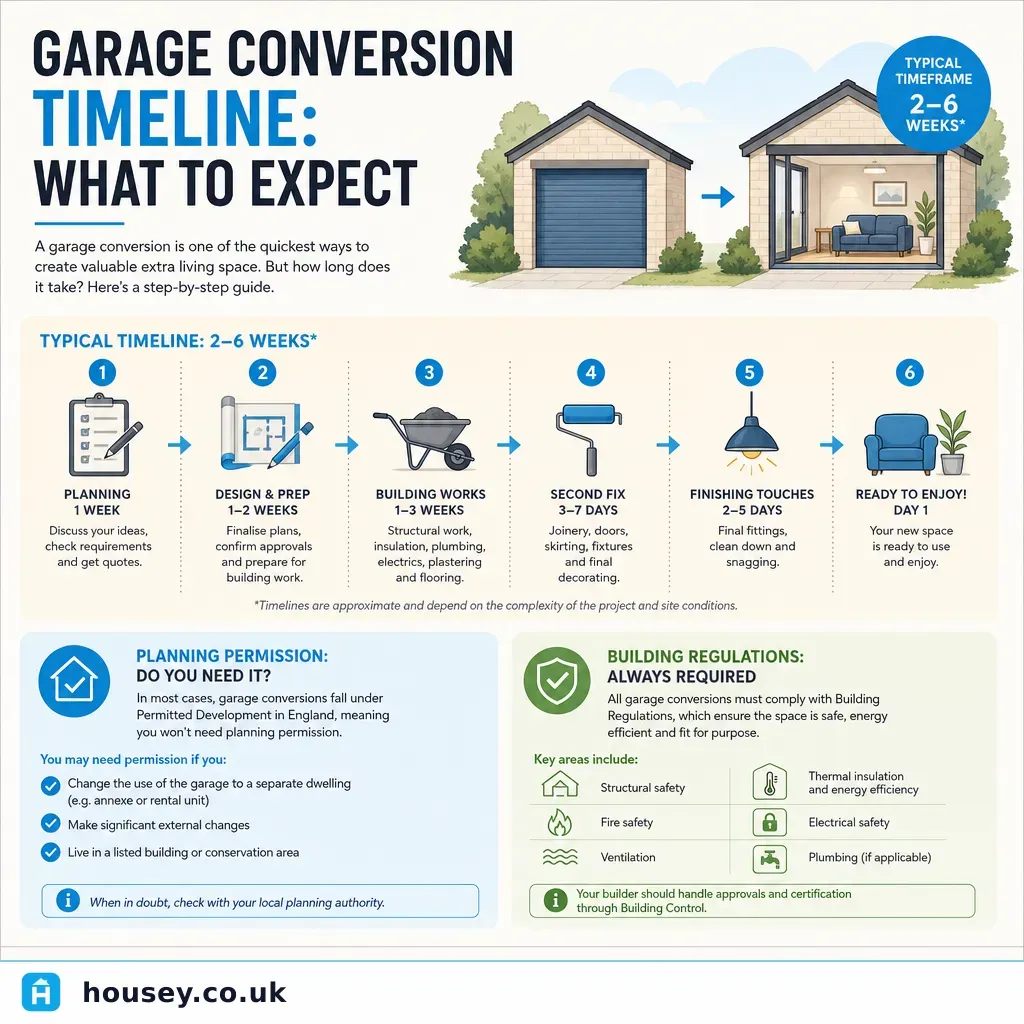
Garage Conversion Timeline: What to Expect
A straightforward attached garage conversion in England usually takes 4–8 weeks of construction, plus pre-start time for building control approval (5 working days for Full Plans).
 Improvement & Build
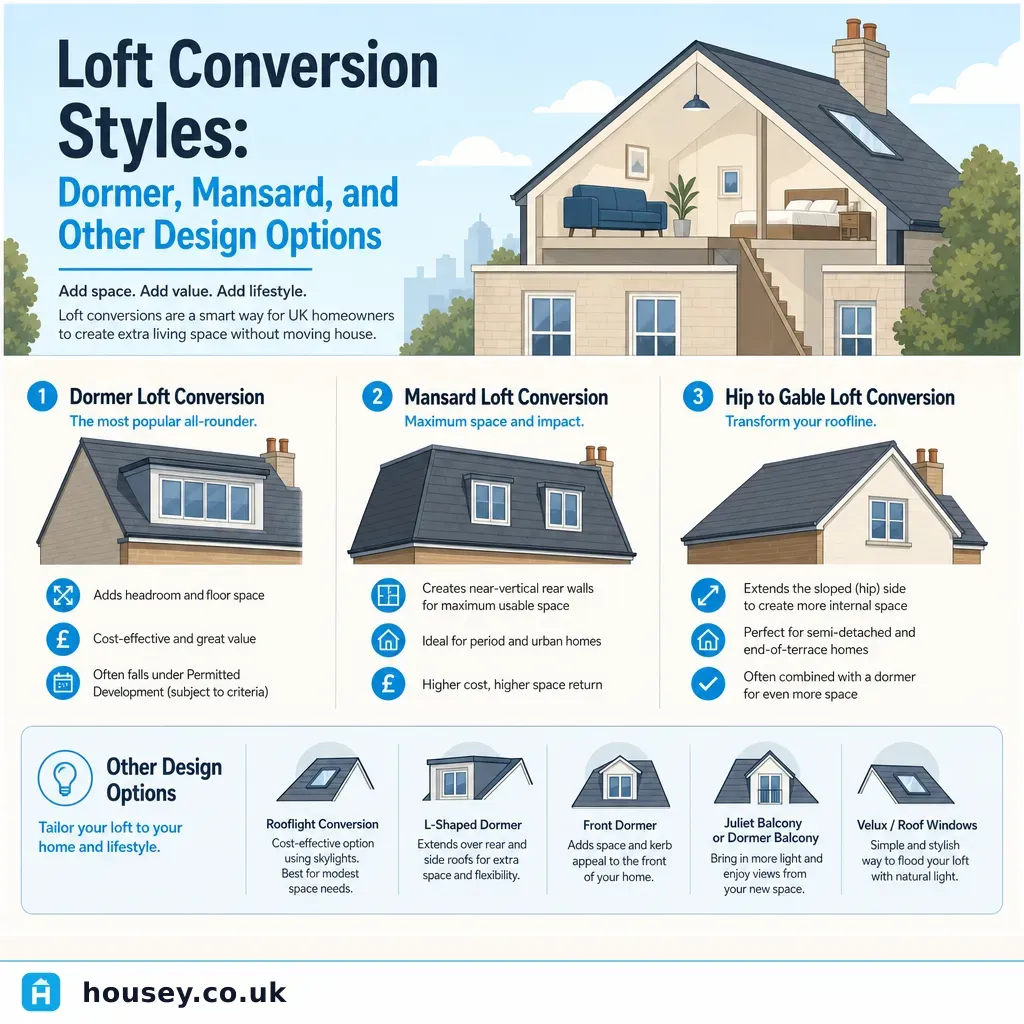
Loft Conversion Styles: Dormer, Mansard, and Other Design Options
The main loft conversion types in the UK are rooflight, dormer, hip-to-gable, and mansard.
 Improvement & Build
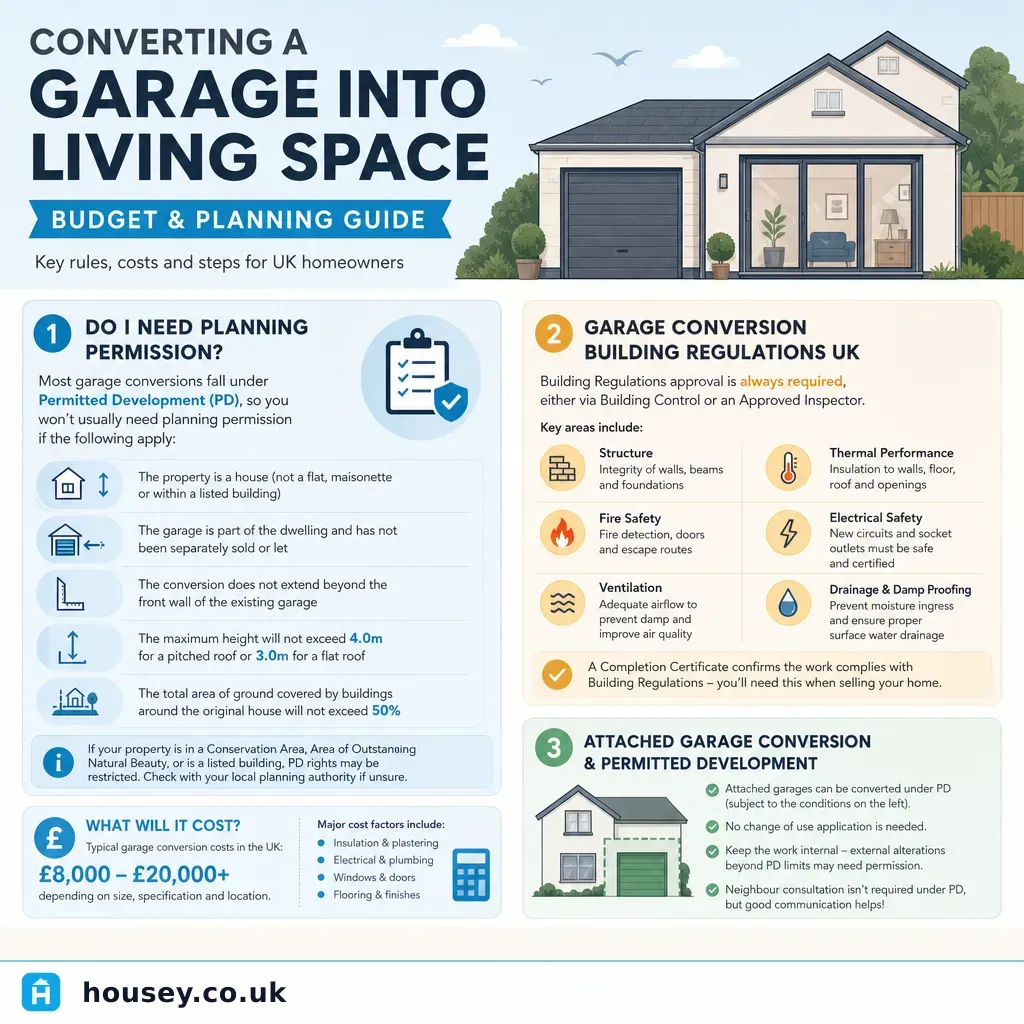
Converting a Garage into Living Space: Budget and Planning Guide
A single-garage conversion typically costs £8,000–£20,000 in the UK.
 Improvement & Build
Guide to Replacing Timber Sash Windows with Authentic Restoration
Restoring a timber sash window typically costs £150–£400 per window; full replacement costs £800–£2,500.
 Improvement & Build
Practical Garage Renovation and Conversion Ideas for Homeowners
A full garage conversion to habitable use almost always requires Building Regulations approval in the UK, even if planning permission is not needed.