Balcony Repair and Structural Maintenance
By Housey · Last reviewed 5th of May 2026
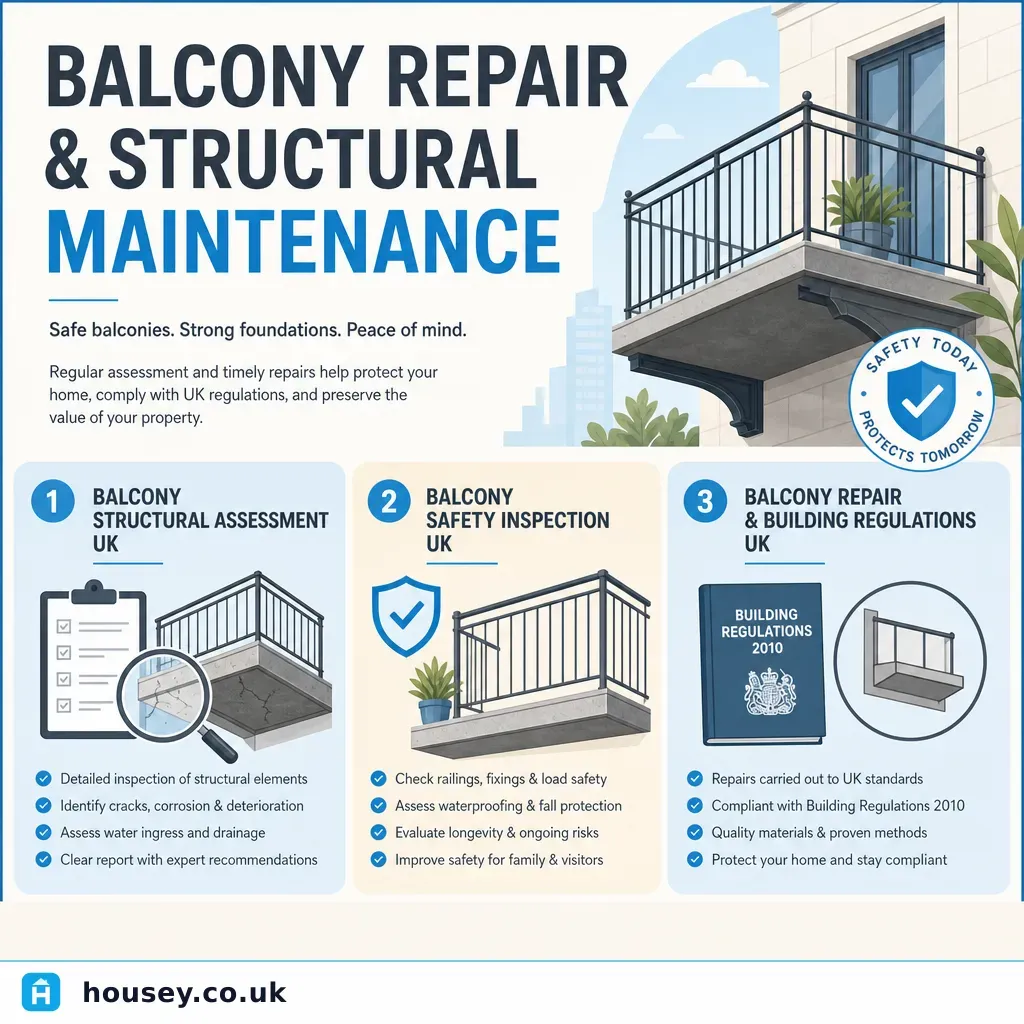
Balcony Repair and Structural Maintenance
Balcony failures in the UK have caused serious injuries and fatalities, yet many homeowners and leaseholders underestimate how quickly defects can develop — particularly on older properties exposed to freeze-thaw cycles, water ingress, and embedded metal corrosion. The question of who is responsible for repairs, and when works move from routine maintenance into a structural safety concern, regularly surfaces during surveys, remortgages, and building safety reviews.
Key points
- Building Regulations Approved Document A sets structural performance requirements for balconies in England and Wales; equivalent provisions apply in Scotland and Northern Ireland.
- The Landlord and Tenant Act 1985 places a statutory duty on landlords to keep the structure and exterior of residential properties in repair, which typically includes balconies in leasehold blocks.
- RICS guidance recommends visual inspection of balconies at least every five years, with additional checks after severe weather events.
- Corrosion in embedded steel fixings and restraint brackets can reduce structural capacity significantly before becoming visible — a particular risk on balconies built during the 1970s and 1980s.
- Under the Building Safety Act 2022, higher-risk residential buildings (18m or seven storeys or more) are subject to mandatory safety assessment regimes covering external structural elements such as balconies.
Types of balcony construction and common defects
UK residential balconies typically fall into one of four construction types, each with distinct failure modes.
Construction type | Common in | Typical defects | Key risk if ignored |
|---|---|---|---|
Reinforced concrete cantilever | 1960s–1980s flats | Carbonation, rebar corrosion, spalling | Sudden loss of structural capacity |
Steel frame with timber decking | Victorian conversions, new-builds | Rust at fixings, deck rot, waterproofing failure | Concealed fixing failure |
Juliette balcony (railings only) | Modern new-builds, conversions | Loose fixings, inadequate anchor embedment | Railing collapse under loading |
Modular or glass balcony system | Contemporary flats | Gasket failure, drainage blockage, silicone degradation | Water ingress to structure below |
The risk posed by any defect depends on severity, location, and how much load the element carries — no single type is inherently more dangerous than another.
When does maintenance become a structural concern?
Routine repainting, resealing, and replacing non-structural decking boards does not require building control involvement. Work crosses into structural territory when it affects load-bearing elements: the balcony slab, its connection to the main building structure, or the balcony beam and column arrangement.
- Cosmetic maintenance (surface coatings, non-structural decking, drainage clearance): usually owner-managed with competent contractors.
- Structural repair (concrete slab repair, steel fixing replacement, strengthening works): requires a structural engineer's design and, in most cases, building regulations approval under Approved Document A.
- Replacement or significant alteration: almost always requires building regulations and may need planning permission if the external appearance or size changes materially.
Contact your local authority building control (LABC) or an Approved Inspector before proceeding if you are unsure whether the work is structural.
Red flags: signs a balcony needs urgent professional assessment
Stop using a balcony and seek a structural engineer's assessment promptly if you notice any of the following:
- Visible cracks in a concrete slab, particularly stepped, diagonal, or through-thickness cracks
- Spalling concrete — chunks or flakes falling away — exposing corroded reinforcement bars
- Rust staining running down the building facade from balcony edges
- Unexpected deflection or bounce underfoot that was not previously present
- Loose, corroded, or missing fixings on railings or handrails
- Water pooling on the deck surface, leading to saturation of the structure below
- Separation at the joint between the balcony and the main building wall
The HSE and local authorities have enforcement powers under the Housing Act 2004 to require landlords to carry out emergency works where a balcony presents an imminent risk to occupants.
Building regulations and planning permission
Structural balcony repairs typically require building regulations approval in England and Wales. Relevant Approved Documents include Approved Document A (Structure), Approved Document K (Protection from falling — minimum 1,100mm guarding height for residential balconies at height), and Approved Document M (Access) if access arrangements are altered. Full Plans submission is the preferred route for structural works, as it produces a completion certificate important for future sales and remortgages.
Like-for-like repairs generally do not require planning permission under Permitted Development. Permission is typically needed if a balcony is being newly added, the external appearance changes materially, or the property is listed or in a conservation area. Check with your local planning authority (LPA) before proceeding in any of those circumstances.
Leasehold responsibilities
The lease determines who must repair a balcony. Where the balcony forms part of the building structure and exterior, the freeholder or management company typically handles repairs through service charges. Where the balcony is demised to the flat, the leaseholder is often responsible. The Leasehold Advisory Service (LEASE) provides free guidance to residential leaseholders; a property solicitor can advise where the lease wording is ambiguous.
Important limitations
This article provides general information only. Structural assessment, diagnosis, and repair design for balconies must be carried out by a suitably qualified professional — typically a chartered structural engineer (MIStructE or CEng). Building regulations requirements, planning rules, and leasehold obligations vary by property, local authority, and lease terms. Nothing here constitutes structural, legal, or regulatory advice. Always commission a site inspection before making decisions about repair scope or safety.
What to ask a qualified professional
Before instructing a structural engineer or contractor for balcony repair:
- Are you a chartered member of the Institution of Structural Engineers (IStructE) or the Institution of Civil Engineers (ICE)?
- Will you provide a written structural report identifying defects, causes, and repair options?
- Will your repair design meet Approved Document A and Approved Document K requirements?
- Will you advise on building regulations submissions or work alongside a building control body?
- What materials do you specify, and what is the expected service life?
- Do you carry professional indemnity insurance, and at what level?
- What access will the works require — scaffold or specialist equipment?
When to get professional help
Any suspected structural defect warrants a structural engineer's inspection before the balcony is used again. Do not commission cosmetic repairs over suspected structural issues; this can conceal defects and complicate future diagnosis. Contact your LABC or an Approved Inspector if you are unsure whether proposed works require building regulations approval.
How Housey can help
If you need a chartered structural engineer to inspect a balcony or design a structural repair, Housey can help you request quotes from qualified UK professionals. Use our structural engineering service to describe your project and receive quotes from engineers in your area.
Frequently asked questions
Do I need building regulations approval for balcony repairs?
Cosmetic repairs such as repainting or replacing non-structural decking boards generally do not require approval. Structural repairs — including concrete slab works, fixing replacement, or any work affecting load-bearing elements — typically require building regulations approval under Approved Document A. Submit a Full Plans application to your LABC or an Approved Inspector before starting structural works.
Who is responsible for repairing a balcony in a leasehold flat?
It depends on the lease. In many blocks, the balcony forms part of the building structure and the freeholder or management company handles repairs through service charges. In some leases, the balcony is demised to the flat, making the leaseholder responsible. Review your lease and seek advice from LEASE or a property solicitor if the position is unclear.
How often should a balcony be inspected?
RICS guidance recommends a visual inspection at least every five years, with additional checks after severe weather. Older concrete balconies from the 1960s–1980s may warrant more frequent inspection given the risk of carbonation and rebar corrosion, which can develop well before becoming visible on the surface.
Can I carry out balcony repairs myself?
Non-structural cosmetic work can sometimes be done by a competent person. Any work affecting structural elements — concrete, embedded fixings, steel connections — should be designed by a structural engineer and carried out by a qualified contractor. DIY structural repairs can introduce new safety risks and may invalidate building regulations compliance.
How much does a structural balcony inspection cost in the UK?
Indicative UK costs, last reviewed 2026-05-05. A structural engineer's site inspection and written report typically costs between £300 and £900, depending on complexity, location, and access requirements. Repair design fees vary considerably based on scope. Always obtain at least two written quotes from chartered structural engineers.
Sources and further reading
- Building Regulations Approved Document A (Structure) — GOV.UK
- Building Regulations Approved Document K (Protection from falling) — GOV.UK
- Landlord and Tenant Act 1985, Section 11 — legislation.gov.uk
- Building Safety Act 2022 — legislation.gov.uk
- Leasehold Advisory Service (LEASE) — LEASE
- Institution of Structural Engineers — IStructE
Useful next reads
 Planning & Pre-Build
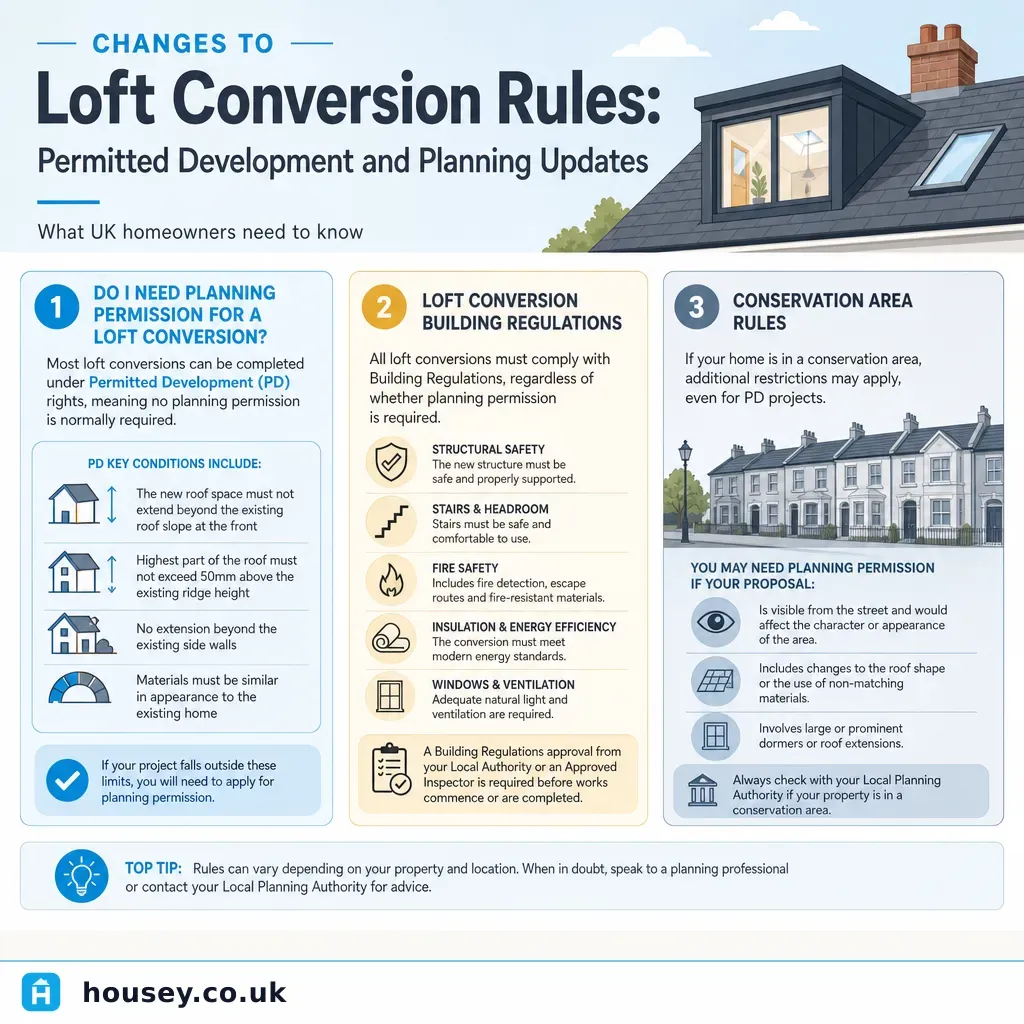
Changes to Loft Conversion Rules: Permitted Development and Planning Updates
In England, most loft conversions on standard houses qualify as Permitted Development under Class B of the GPDO 2015, allowing up to 40 cubic metres (terraced) or 50 cubic metres (detached or semi-detached) without a planning application — if conditions are met.
 Planning & Pre-Build
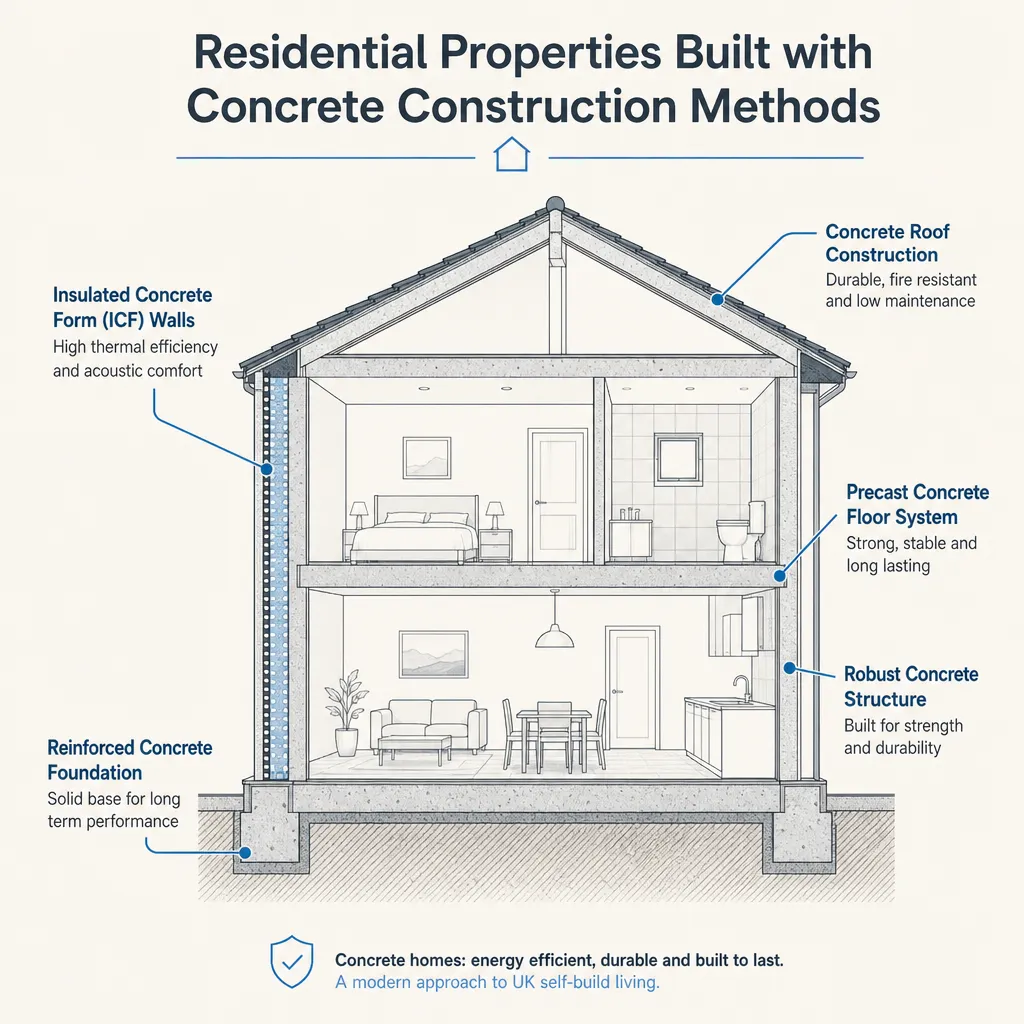
Residential Properties Built with Concrete Construction Methods
UK homes are built using several concrete methods: in-situ cast concrete, precast panel systems, insulating concrete formwork (ICF), and older non-traditional types such as Wimpey No-Fines and Laing Easiform.
 Planning & Pre-Build
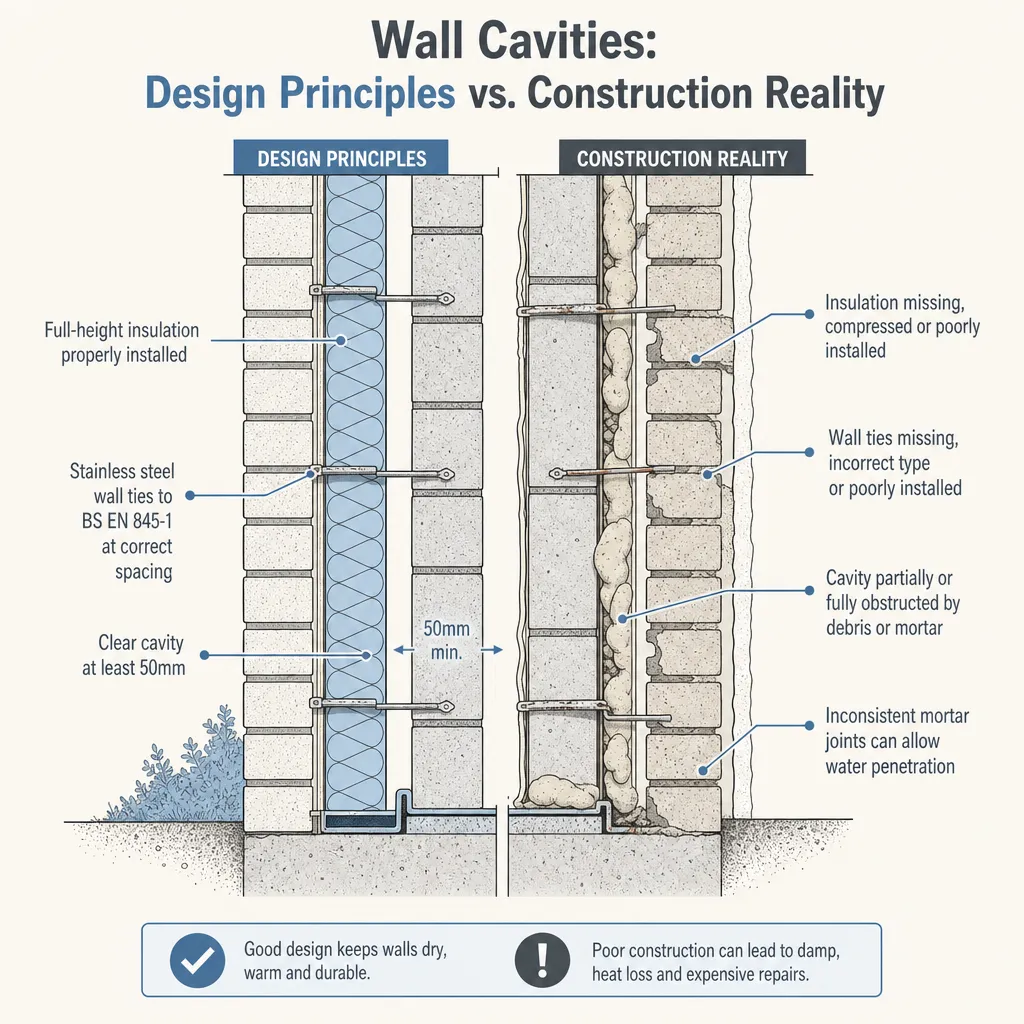
Wall Cavities: Design Principles vs. Construction Reality
A UK cavity wall is designed to resist weather, control heat loss, and structurally link two masonry leaves.
 Planning & Pre-Build
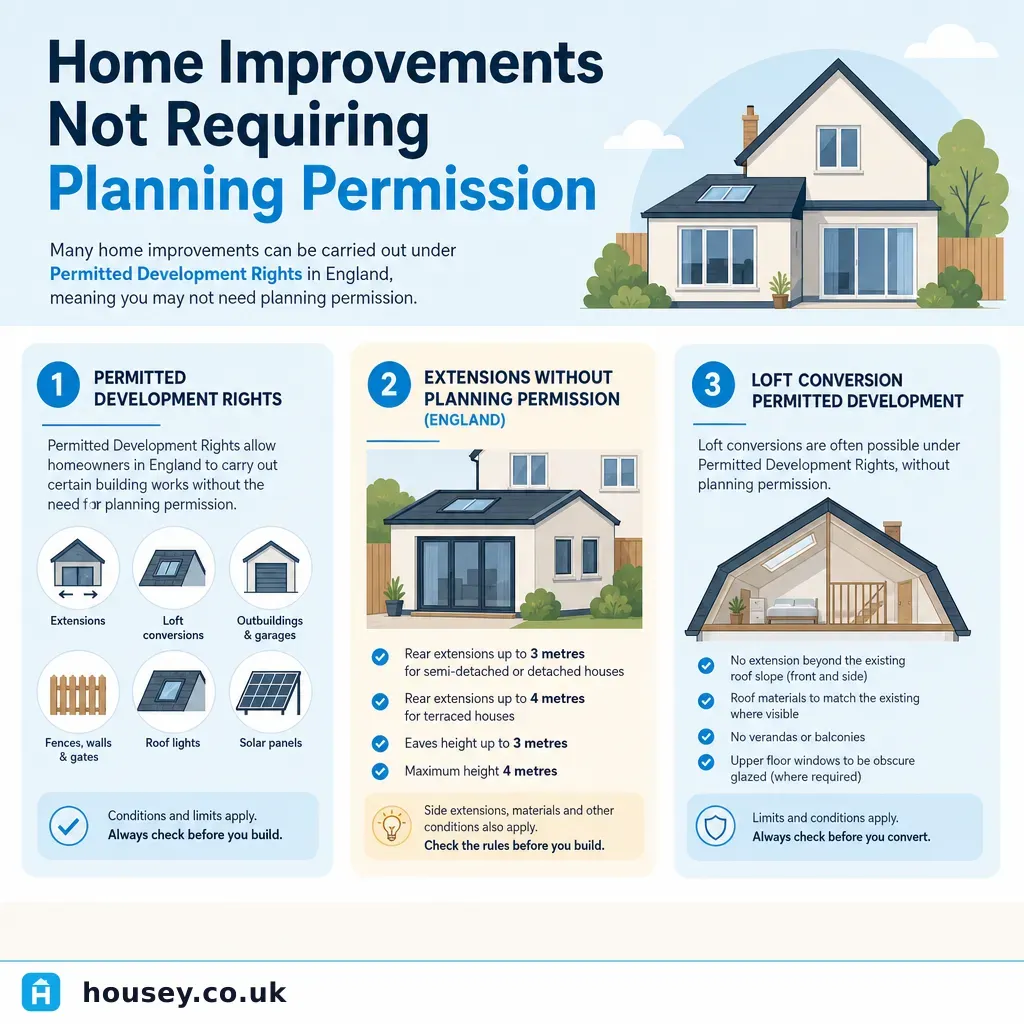
Home Improvements Not Requiring Planning Permission
Many common home improvements in England fall under Permitted Development Rights and do not require a planning application.
 Planning & Pre-Build
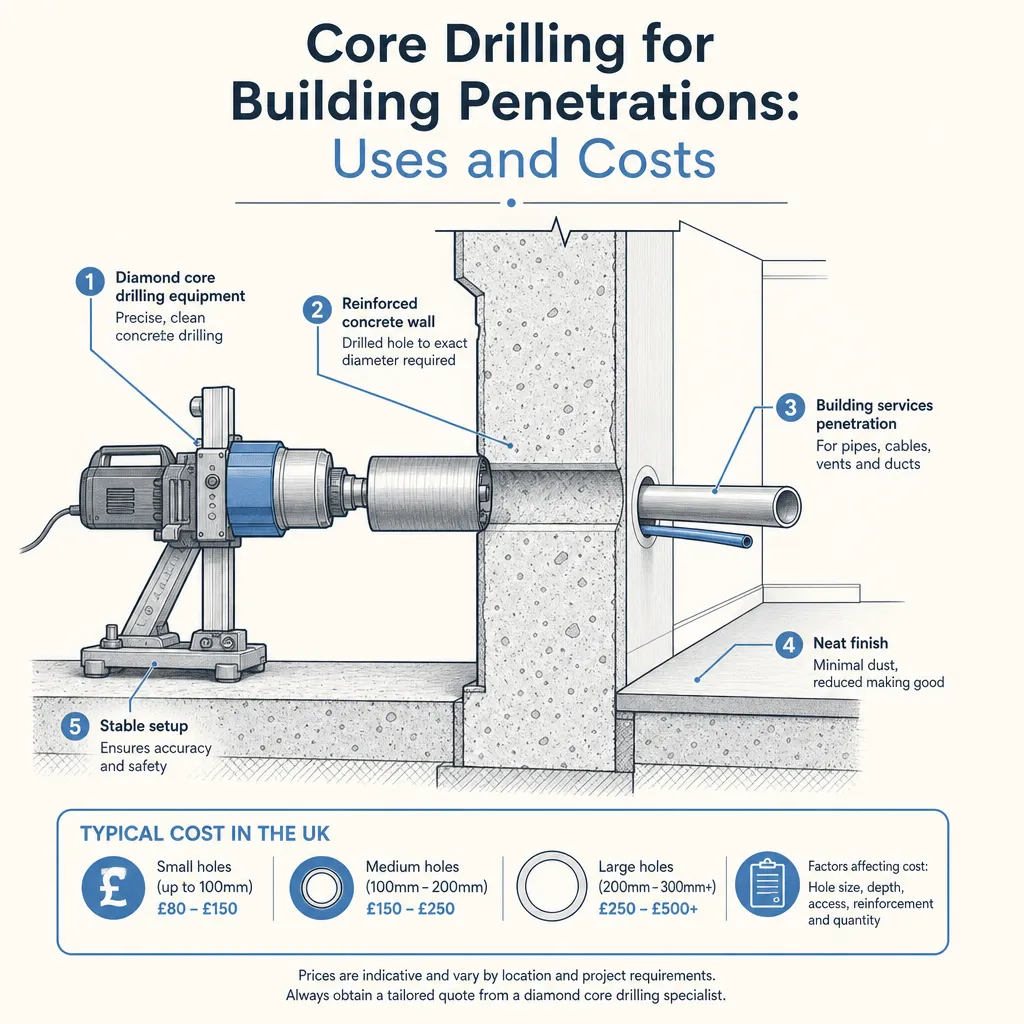
Core Drilling for Building Penetrations: Uses and Costs
Core drilling uses diamond-tipped equipment to cut clean holes through concrete, masonry, or block for pipes, ducts, cables, and building services.