Barn Conversion Costs: Budget Estimation and Financial Planning
By Housey · Last reviewed 4th of May 2026
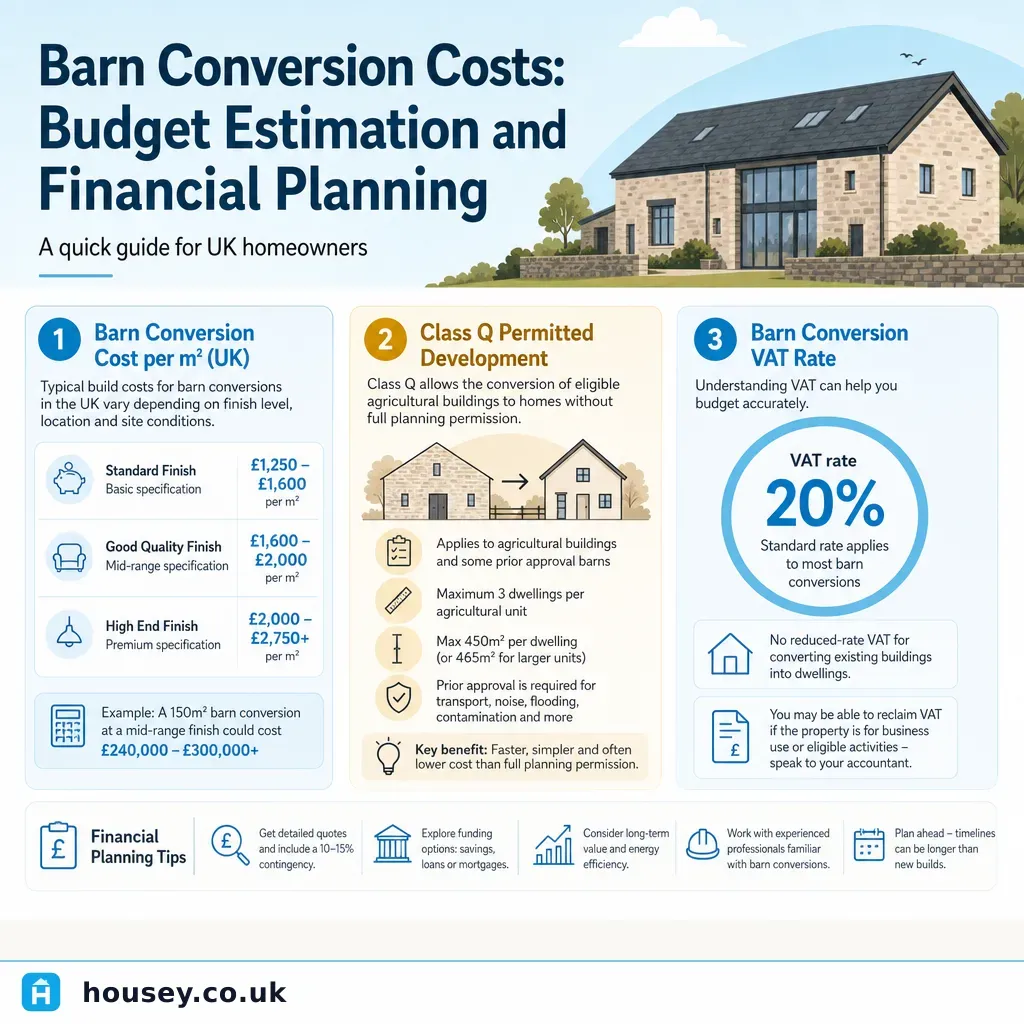
Barn Conversion Costs: Budget Estimation and Financial Planning
Barn conversions offer some of the most distinctive residential spaces in the UK countryside, but they also carry some of the most unpredictable project costs. Unlike a new build, where materials and methods are largely standardised, a barn starts life designed for livestock, vehicles, or storage — not habitation. Structural condition, services connectivity, planning status, and insulation requirements vary enormously from building to building, which means accurate budgeting is only possible after professional surveys and design work have been completed.
Key points
- Barn-to-residential conversions in England may qualify for Class Q permitted development rights under Schedule 2, Part 3 of the Town and Country Planning (General Permitted Development) (England) Order 2015 (as amended in 2024), allowing change of use without a full planning application — but prior approval from the local planning authority is still required.
- Typical indicative costs range from £1,500 to £3,000 or more per m² of gross internal area, depending on structural condition, specification, and location (indicative UK costs, last reviewed 2026-05-04).
- Barn conversions of non-residential agricultural buildings to residential use qualify for the 5% reduced rate of VAT under Group 6 of Schedule 7A to the Value Added Tax Act 1994, as detailed in HMRC VAT Notice 708 — rather than the standard 20% rate.
- Building Regulations apply in full: Part A (structure), Part B (fire), Part L 2021 (energy performance), Part F (ventilation), Part H (drainage), and Part P (electrical safety) all require compliance and building control sign-off.
- Structural repairs, services connections — including a sewage treatment plant where mains sewer is not accessible — and insulation works are typically the largest cost variables and cannot be accurately estimated without a site-specific structural survey.
What drives barn conversion costs?
No two barn conversions cost the same. The following variables interact in ways that make accurate budgeting without professional assessment effectively impossible.
Structural condition
Some barns have sound stone or brick walls needing little intervention beyond new lintels and weatherproofing. Others — particularly timber-frame or steel-portal frame agricultural buildings — may require an almost entirely new structural system. Steel replacement, new concrete slab formation, and temporary propping are all significant budget items that only a structural appraisal can quantify reliably.
Services connections
Agricultural buildings typically have no mains gas, limited electrical supply, no connection to a sewerage network, and sometimes no mains water at the conversion point. Installing alternatives — an air-source heat pump, sewage treatment plant (STP), borehole water supply, and upgraded electrical supply — can add £30,000–£80,000 or more depending on distances and site conditions.
Thermal performance and insulation
Building Regulations Approved Document L 2021 requires converted dwellings to meet demanding U-value targets. Barn walls, roofs, and floors that were never insulated require significant upgrading. Insulation choices — rigid foam, mineral wool, internal or external application — interact with moisture risk. Poorly detailed insulation in a solid-wall or timber-frame barn can cause condensation and structural damage; PAS 2035 retrofit principles are worth applying to the design even where not strictly mandated.
Specification and location
A barn converted to a basic specification costs significantly less per m² than one finished with bespoke glazing, underfloor heating, oak flooring, and a custom kitchen. Remote rural locations also increase costs through longer trade travel times, higher plant and material delivery charges, and restricted access for large concrete trucks or scaffold lorries.
Indicative cost breakdown
The table below shows approximate ranges for a mid-specification barn conversion of around 200 m² gross internal area. These are indicative only and are not a substitute for professional cost advice.
Cost category | Indicative range | Typical % of build cost |
|---|---|---|
Structural works (walls, roof, floors, new openings) | £60,000–£150,000 | 20–35% |
Services (drainage, electrical, heating, water, STP) | £30,000–£80,000 | 10–20% |
Insulation and airtightness | £15,000–£40,000 | 5–10% |
Windows, doors, and glazing | £25,000–£70,000 | 8–15% |
Internal fit-out (kitchens, bathrooms, finishes) | £30,000–£80,000 | 10–18% |
External works (access, landscaping, drainage) | £10,000–£30,000 | 3–8% |
Total build cost (mid-specification) | £200,000–£500,000+ | 100% |
Professional fees (architect, structural engineer, PM) | £20,000–£60,000+ | Add on top |
Planning and building control fees | £2,000–£8,000 | Add on top |
Contingency (recommended minimum 15%) | £30,000–£80,000+ | Add on top |
Indicative UK costs, last reviewed 2026-05-04. Prices vary significantly by region, specification, and structural condition. Obtain itemised quotes from at least three contractors.
Worked UK property scenario
A homeowner in North Yorkshire acquires a stone-built field barn with Class Q prior approval for a single dwelling of approximately 180 m². The barn has sound stone walls but a failing timber roof, no services, and sits 200 m from the nearest road.
Budget item | Estimated cost |
|---|---|
Structural works (new roof structure, insulated slab floor) | £95,000 |
Services (STP, borehole water, air-source heat pump, electrical upgrade) | £65,000 |
Insulation and airtightness (internal wall, floor, roof) | £28,000 |
Windows and glazing (bespoke barn-style openings) | £42,000 |
Internal fit-out (mid-range specification) | £55,000 |
External access track and surface drainage | £18,000 |
Sub-total build cost | £303,000 |
Architect and structural engineer fees | £32,000 |
Planning (prior approval, discharge of conditions) | £4,500 |
Building control | £3,500 |
Contingency (15%) | £45,450 |
Total estimated project cost | ~£388,000 |
Worked example for illustration only; figures are not quotes. Indicative UK costs, last reviewed 2026-05-04.
Class Q permitted development: what you need to know
Class Q of Schedule 2, Part 3 of the Town and Country Planning (General Permitted Development) (England) Order 2015 (as amended in 2024) allows the change of use of agricultural buildings to residential use without a full planning application, subject to conditions:
- The building must have been in lawful agricultural use as part of an established unit on or before 20 March 2013, or for 10 years before the application date.
- The cumulative floor space of Class Q conversions on a single agricultural unit cannot exceed 1,000 m² across a maximum of 10 dwellings (limits raised by the 2024 amendments).
- Prior approval is still required from the local planning authority, covering transport, highways, noise, contamination, flood risk, design, and access.
- Works amounting to a "substantial reconstruction" of the building may fall outside Class Q — this is a frequently litigated point that requires planning advice specific to the building and site.
In Wales, Scotland, and Northern Ireland, equivalent permitted development rights differ. A planning consultant can advise on the correct route for your location.
Red flags that will increase costs
Watch for these warning signs during early inspections — each can significantly inflate the budget or delay the programme:
- Asbestos in roof sheets, gutters, or floor tiles — surveys are required before any disturbance, and licensed removal adds cost and programme time
- Contaminated ground — land near fuel stores, chemical storage, or historic livestock yards may require remediation before building works begin
- Restricted access — if HGVs, concrete trucks, or scaffold lorries cannot reach the barn, costs rise sharply; access track upgrades can be substantial
- Listed building designation or curtilage listing — some barns sit within the curtilage of a listed farmhouse, requiring listed building consent and restricting materials and methods
- Protected species — a bat roost, barn owl nest, or other protected species triggers ecological survey and mitigation requirements that can delay the programme and add cost
- High water table or flood zone — affects drainage design, foundation specification, and insurance eligibility
- Remote distance from mains services — every extra 100 m of service trench adds significant groundwork cost
Important limitations
This article provides general budget guidance for illustrative purposes only. Barn conversion costs depend on factors specific to each building that can only be assessed through site inspection, structural survey, and professional design. No figure in this article should be treated as a quote, estimate, or guarantee. Planning policy, Class Q conditions, Building Regulations, and VAT rules can change; check current GOV.UK guidance and seek qualified professional advice before committing to any purchase or expenditure.
What to ask a qualified professional
Architect or architectural technologist:
- Do you have specific experience with Class Q prior approval and barn conversion design?
- How will you approach thermal performance and airtightness without creating moisture risk in this construction type?
- What does your fee include — prior approval drawings, Building Regulations drawings, contract administration, and site inspections?
Structural engineer:
- Will you carry out an initial structural appraisal before we commit to a project budget?
- What are the primary structural unknowns, and how will you investigate them?
- Does anything you have seen suggest the proposed works could constitute a "substantial reconstruction" and fall outside Class Q?
Contractor:
- What barn conversions of similar construction type have you completed recently, and can you provide references?
- How do you handle unforeseen structural problems discovered during construction?
- Is your quote fully itemised, and what assumptions does it rest on?
- Is VAT included at the 5% reduced rate, and have you confirmed this applies to all elements of the work?
Planning consultant:
- Does this barn qualify for Class Q, and have you identified any conditions that could prevent or restrict it?
- What prior approval documents will the local planning authority require, and what are typical determination timescales?
When to get professional help
A barn conversion requires a qualified team from the outset. Instruct an architect and structural engineer before purchasing a barn with conversion intent — not after. Do not rely on Class Q rights without a planning consultant confirming eligibility for the specific building and site.
Seek specialist advice before proceeding if any of the following apply:
- Asbestos is suspected in any part of the structure
- There is evidence of bat roosts, barn owl nesting, or other protected species
- The barn or the farmstead it belongs to is listed or in a conservation area
- The ground is contaminated, waterlogged, or in a designated flood risk zone
- The structural frame is visibly failing, severely corroded, or partially collapsed
How Housey can help
Housey can connect you with experienced professionals at each stage of a barn conversion. Start with architectural services to develop a design and planning strategy, and bring in structural engineering to assess the building before committing to a budget. If Class Q eligibility is uncertain, planning consultancy can evaluate the route to consent. For complex projects, a project manager can coordinate the professional team and contractor programme, while building control consultants can guide the Building Regulations compliance process from initial submission to final sign-off.
Frequently asked questions
How long does a barn conversion typically take?
From purchase to practical completion, a barn conversion typically takes 18–36 months, covering surveys, prior approval or planning, detailed design, Building Regulations approval, procurement, construction, and snagging. Projects involving ecological surveys, listed building consents, or major structural remediation take longer. Straightforward Class Q conversions of structurally sound barns can sometimes complete in 12–18 months.
Is a barn conversion cheaper than building a new house?
Rarely. Barn conversions are often more expensive per m² than new-build construction because of unpredictable structural conditions, the cost of connecting remote services, and bespoke detailing requirements. The attraction is usually location, character, and the uniqueness of the finished home rather than cost efficiency. Always obtain a structural appraisal before comparing costs with a new build.
Do I need an Energy Performance Certificate for a converted barn?
Yes. An Energy Performance Certificate (EPC) is required on completion of a conversion to residential use and must be provided before the property can be sold or rented. Building Regulations Part L 2021 sets demanding energy performance targets for converted dwellings; the exact requirements depend on the construction type and insulation approach taken.
What VAT rate applies to barn conversion work?
Contractor labour and materials for converting a non-residential agricultural building to a dwelling generally qualify for the 5% reduced VAT rate under Group 6, Schedule 7A of the Value Added Tax Act 1994, as explained in HMRC VAT Notice 708. Obtain written confirmation from your contractor and seek specialist VAT advice if there is any doubt — the rules are detailed and exceptions apply.
Do I still need planning permission if I have Class Q permitted development rights?
You do not need a full planning application under Class Q, but you must obtain prior approval from the local planning authority before starting any conversion works. Prior approval covers transport, design, noise, contamination, flood risk, and access — it is not a formality and can be refused. Always secure written prior approval before committing expenditure or starting on site.
Sources and further reading
- Planning Practice Guidance: When is permission required? (Class Q) — GOV.UK
- Town and Country Planning (General Permitted Development) (England) Order 2015 — legislation.gov.uk
- VAT Notice 708: Buildings and construction — HMRC
- Approved Document L: Conservation of fuel and power — GOV.UK / MHCLG
- Adapting Traditional Farm Buildings — Historic England
Useful next reads
 Planning & Pre-Build
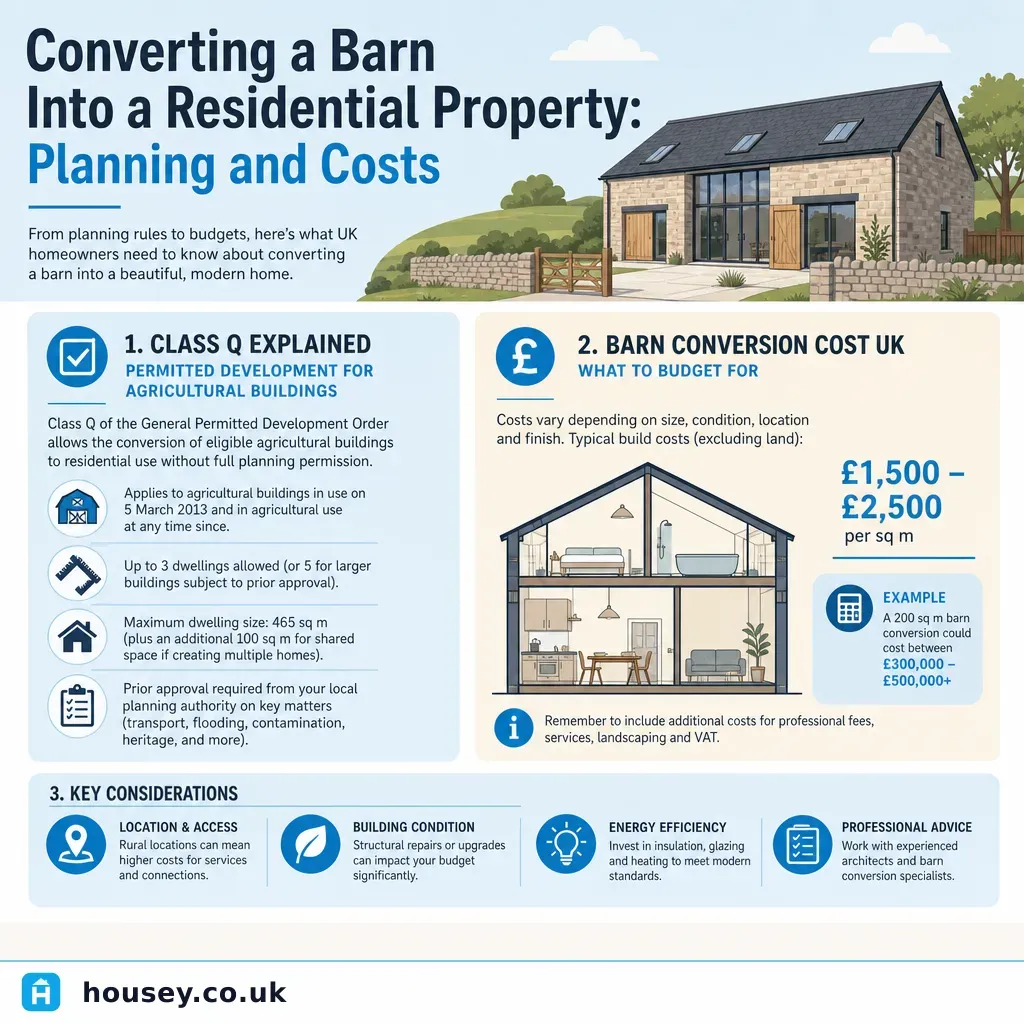
Converting a Barn Into a Residential Property: Planning and Costs
Barn conversions in England may qualify for Class Q permitted development, which allows a change of use to residential without full planning permission — though prior approval from the local planning authority is always required.
 Planning & Pre-Build
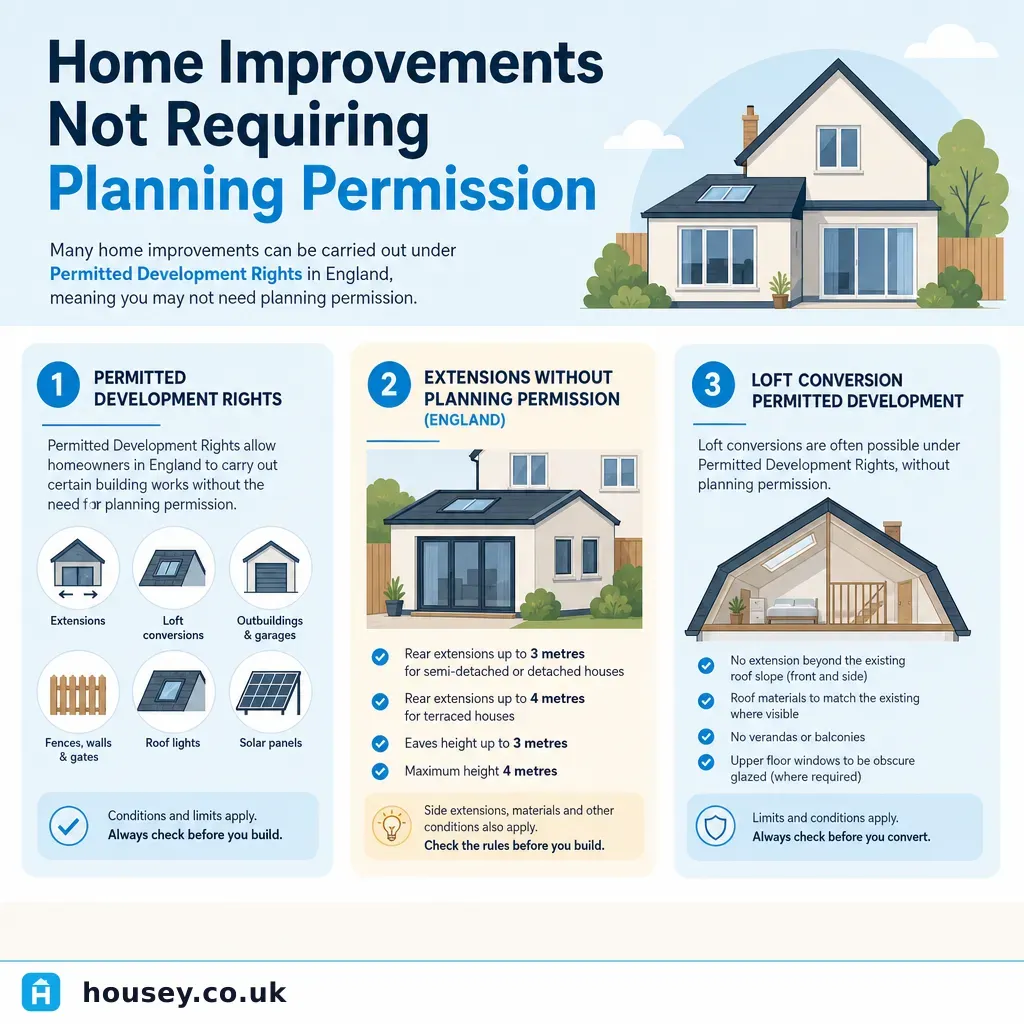
Home Improvements Not Requiring Planning Permission
Many common home improvements in England fall under Permitted Development Rights and do not require a planning application.
 Planning & Pre-Build
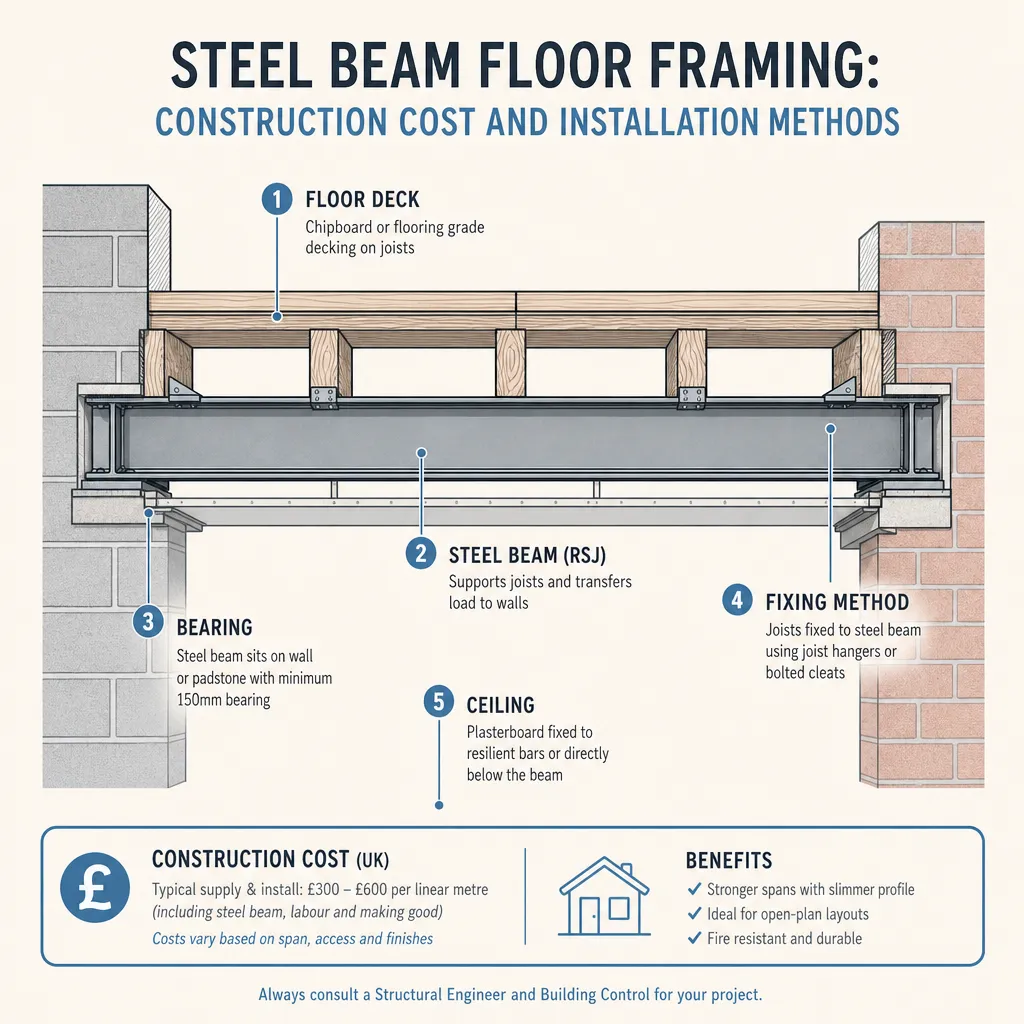
Steel Beam Floor Framing: Construction Cost and Installation Methods
Steel beam floor framing is used in UK homes when spans are too wide for timber joists, or when a load-bearing wall is removed.
 Planning & Pre-Build
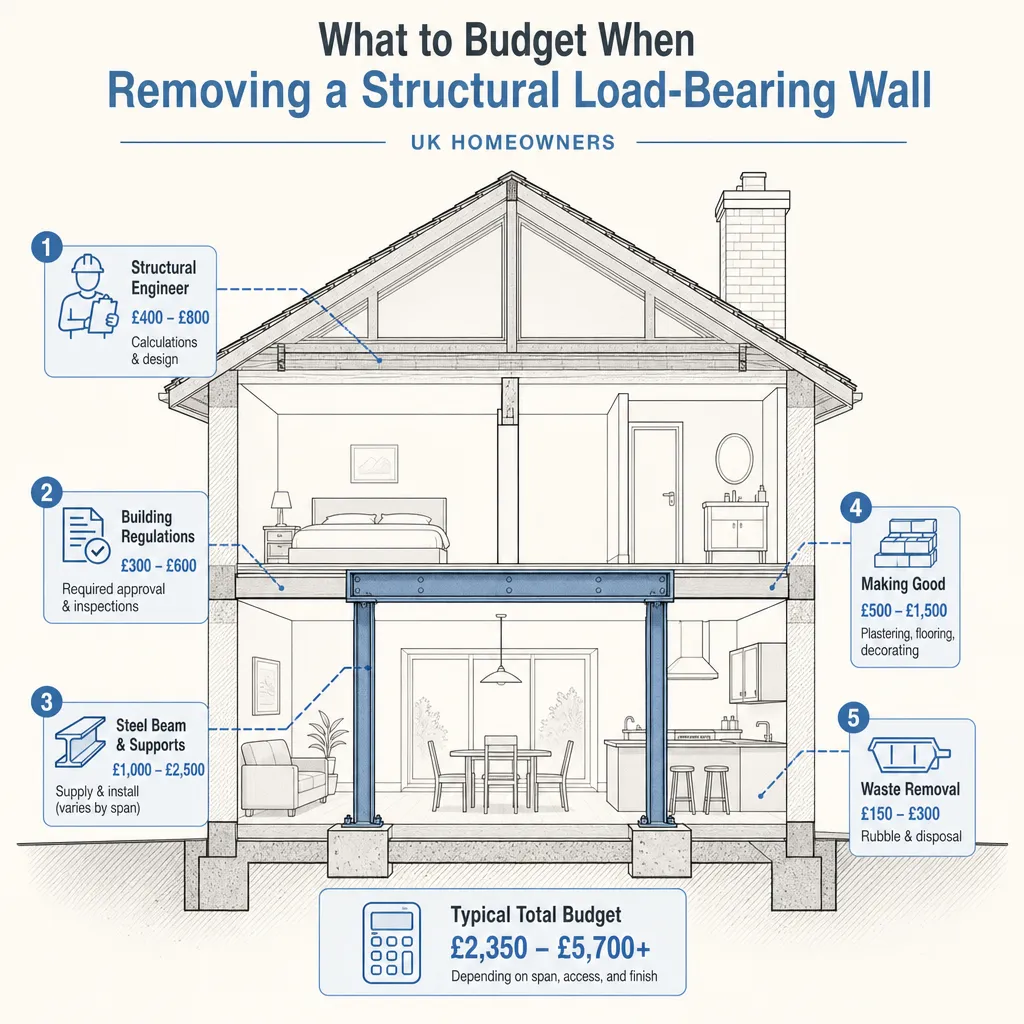
What to Budget When Removing a Structural Load-Bearing Wall
Removing a load-bearing wall in a typical UK home costs £2,500–£8,000 or more in total, covering a structural engineer's calculations, Building Regulations approval, the steel beam, builder's labour, and replastering.
 Planning & Pre-Build
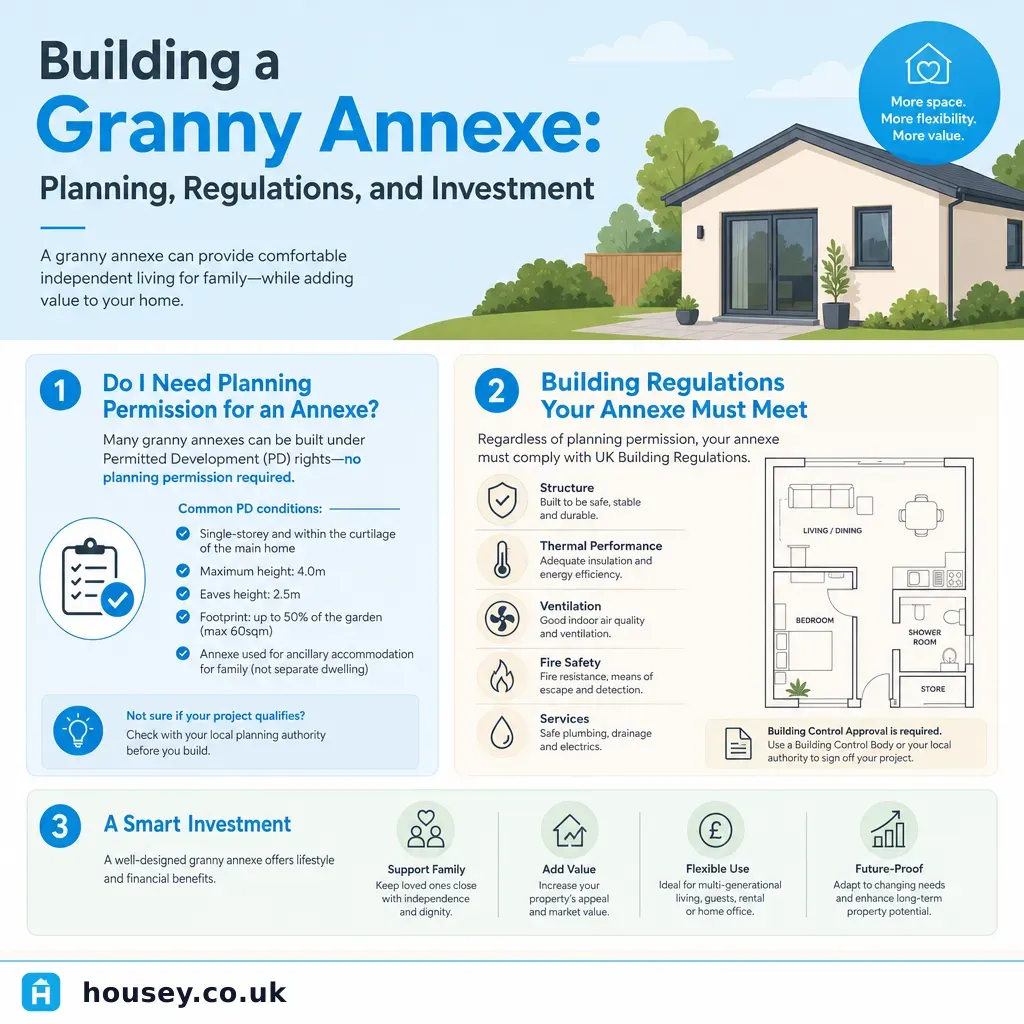
Building a Granny Annexe: Planning, Regulations, and Investment
A granny annexe in the UK may or may not need planning permission depending on whether it is classed as incidental to the main house or as a separate dwelling.