Basement Cracks: Causes, Assessment and Structural Repair Options
By Housey · Last reviewed 1st of June 2026
Basement Cracks: Causes, Assessment and Structural Repair Options
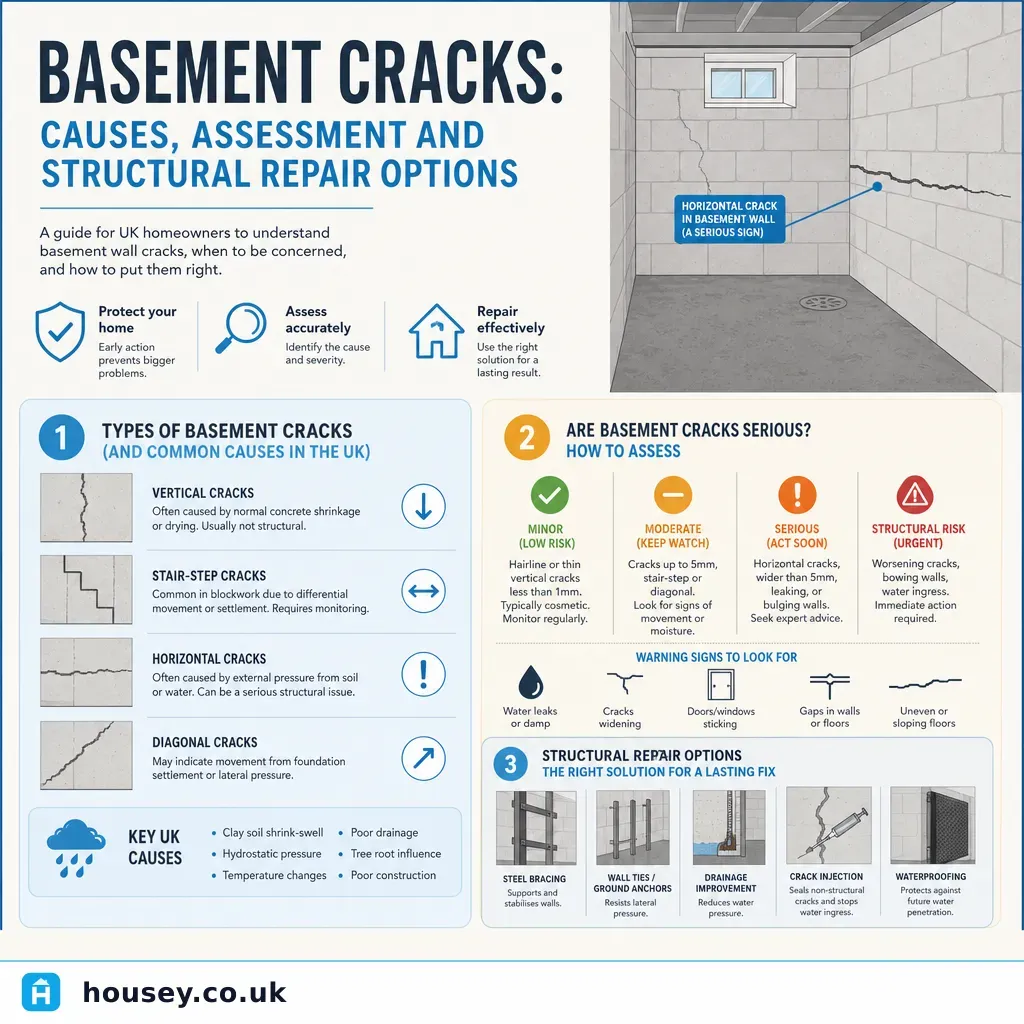
Cracks in a basement or cellar wall sit at an uncomfortable intersection: they can represent routine shrinkage in a Victorian brick cellar or a 1980s poured-concrete undercroft — or they can signal active structural movement that, if unaddressed, compounds in severity and remediation cost. The difficulty is that the same crack width can carry very different implications depending on orientation, pattern, context, and rate of change. Correctly identifying which category applies to your property requires more than a visual comparison with online photographs.
Key points
- BRE Digest 251, Damage in low-rise buildings, provides the standard UK six-category crack classification, from Category 0 (hairline, under 0.1mm) through Category 5 (very severe, over 25mm — may require partial rebuild).
- Horizontal cracks in a block or poured-concrete basement wall are typically the most serious configuration, indicating active lateral soil pressure; they warrant urgent structural assessment.
- Any crack over 3mm wide, actively growing, or accompanied by water ingress or structural deflection should be assessed by a chartered structural engineer (MIStructE or CEng).
- The Party Wall etc. Act 1996 may be relevant if cracks have appeared following excavation, piling, or basement conversion works by an adjoining owner.
- Cosmetic repair applied over an active structural crack — filling, rendering, or painting — is not a structural repair and may prevent accurate monitoring.
What causes cracks in basement walls?
Identifying the cause is more important than the crack width alone. The correct repair depends entirely on the root cause.
Crack type | Typical cause | Urgency | Who to instruct first |
|---|---|---|---|
Hairline vertical or map cracking | Concrete or render shrinkage | Low — monitor | Surveyor if any growth |
Fine vertical crack, stable | Historic minor differential settlement | Low — monitor | Surveyor if growth detected |
Diagonal crack (45°) from corner | Differential settlement | Moderate to high, depending on width | Chartered structural engineer |
Horizontal crack in block or concrete wall | Active lateral earth or groundwater pressure | High — potentially urgent | Chartered structural engineer immediately |
Stair-step crack in blockwork | Settlement or heave | Moderate to high | Chartered structural engineer |
Wide vertical crack (over 3mm), growing | Active movement — multiple possible causes | High | Chartered structural engineer |
Any crack with water ingress | Structural crack or failed waterproofing | High | Structural engineer and waterproofing specialist |
How to assess crack severity: the BRE classification
BRE Digest 251 is the standard framework used by RICS surveyors and structural engineers across the UK:
- Category 0 — Hairline, under 0.1mm. No action required; monitor.
- Category 1 — Fine cracks up to 1mm. Minor; not structurally significant in isolation.
- Category 2 — Cracks up to 5mm. Moderate; warrant investigation in structural elements.
- Category 3 — Cracks 5–15mm. Fairly severe; professional investigation and repair required.
- Category 4 — Cracks 15–25mm. Severe; structural assessment and specialist repair needed.
- Category 5 — Over 25mm. Very severe; partial or total rebuilding may be required.
For basement walls, structural context matters more than width alone. A 4mm horizontal crack in a basement block wall carrying lateral soil load is far more serious than a 6mm diagonal crack in an above-ground rendered party wall caused by thermal movement.
Which professional do I need?
Situation | Professional to instruct | What they deliver |
|---|---|---|
First assessment — cause and urgency unknown | RICS-accredited surveyor (Level 3 or specific defect survey) | Written diagnosis, urgency assessment, recommended next steps |
Confirmed or suspected structural movement | Chartered structural engineer (MIStructE or CEng) | Structural analysis, repair specification, drawings if required |
Crack combined with damp or water ingress | PCA-qualified waterproofing specialist alongside structural engineer | Water pathway assessment and appropriate repair approach |
Cracks following neighbouring excavation or basement works | Solicitor for potential claim; structural engineer for condition report | Evidence report for insurance or legal proceedings |
Suspected damp and potential timber decay | Damp and timber specialist | Assessment of moisture ingress and any related timber deterioration |
Which action should I take first? A decision tree
- Crack is hairline (under 1mm), stable, no water → Mark crack ends with pencil and date; monitor at 8–12 week intervals. If no growth after 6 months, low-level action needed.
- Crack is 1–3mm, apparently stable, no water → Commission a specific defect survey for a written professional diagnosis; act on the recommendations.
- Crack is over 3mm, growing, or horizontal → Instruct a chartered structural engineer. Do not delay.
- Crack has water ingress alongside cracking → Instruct a structural survey and a PCA-qualified waterproofing specialist; these issues interact and need combined assessment.
- Cracks appeared after adjacent excavation or building works → Photograph and document immediately; instruct a structural engineer for a condition report and seek legal advice.
- Buying a property with uninspected basement cracks → Upgrade the survey level: a RICS Level 2 is unlikely to be adequate. Commission a RICS Level 3 or specific defect survey before exchange.
How to monitor a crack before instructing a professional
Where a crack appears stable and low-category, structured monitoring is more informative than occasional visual checks:
- Mark the ends of the crack with a pencil line and note the date alongside.
- Photograph with a coin or ruler for scale; store all images with dates.
- Apply a plaster tell-tale bridge across the crack (available from DIY suppliers) — a broken tell-tale confirms active movement.
- Reassess at 8–12 weeks. If the crack has grown by 1mm or more, instruct a structural engineer regardless of total width.
- Proprietary crack monitors (Avongard or similar) provide more precise measurement and are often specified by surveyors on suspect cracks.
Repair options
The correct repair depends on cause and classification. Do not instruct a contractor to fill or inject cracks before a structural diagnosis has been completed — cosmetic repairs can mask ongoing movement.
- Epoxy or polyurethane resin injection — seals stable, non-structural cracks against water ingress; not a structural repair.
- Cementitious waterproofing (tanking) — surface-applied slurry or render for damp ingress through hairline cracks; requires the substrate to be structurally sound.
- Cavity drainage membrane (Type C waterproofing per BS 8102:2022) — accepts managed water ingress and routes it to a sump; commonly used in older properties where external tanking is not feasible.
- Crack stitching — stainless steel helical bars grouted into masonry to tie cracked sections; used for certain stable settlement cracks.
- Wall restraint systems — plate anchors or carbon-fibre straps to arrest bowing in a laterally stressed basement wall.
- Underpinning — deepens foundations to bear on stable strata; used where active ongoing settlement is the confirmed cause.
Important limitations
This article provides general information only. Crack assessment in basement structures depends on property type, construction era, foundation design, ground conditions, groundwater level, adjacent structures, and the specific history of movement. Nothing here substitutes for a professional inspection of your specific property. Standards, repair techniques, and applicable regulations vary. Always instruct a qualified professional before carrying out any structural repair.
When this becomes urgent
Stop relying on general guidance and instruct a chartered structural engineer today if:
- A crack has appeared suddenly or grown visibly over days or weeks.
- You can see a horizontal crack running along a basement block or concrete wall — this pattern often precedes wall failure and warrants immediate professional assessment.
- The wall is deflecting inward or bowing visibly.
- Doors or windows on the floor above have stopped opening or closing correctly — this suggests structural movement is propagating upward through the building.
- Significant water ingress is associated with new or growing cracks.
- Cracks appeared after nearby excavation, basement conversion, or piling by an adjacent owner.
What to ask a qualified professional
Before instructing a structural engineer or surveyor for a basement crack assessment:
- What is your professional qualification — are you chartered (MIStructE, CEng, or MRICS with structural competence)?
- Have you assessed basement crack issues in properties of this type and construction era?
- Will your report diagnose the cause — not just describe the visible symptoms?
- Will you confirm whether the crack is active or historic, and explain how you have established this?
- If structural repair is recommended, will you provide a specification I can use to obtain competitive contractor quotes?
- What follow-up monitoring do you recommend after repair is completed?
Red flags
Instruct a professional without delay if you observe any of the following:
- Any horizontal crack in a poured-concrete or masonry basement wall.
- Cracks that have grown visibly over a period of weeks.
- Multiple new cracks appearing in the same area simultaneously.
- Efflorescence (white mineral deposits) combined with cracking — indicates chronic water movement through the wall under pressure.
- Any crack associated with visible deflection, bowing, or offset in the wall plane.
- A previously filled or repaired crack has re-opened.
When to get professional help
Basement cracks sit at the intersection of structural integrity, waterproofing, and property value. The risk of misdiagnosis — treating a structural problem cosmetically, or over-engineering minor shrinkage — is significant in both directions. A structural survey or specific defect survey from a chartered professional provides a written diagnosis and a defensible basis for any repair decision, whether you are in residence, planning to sell, or buying the property.
If damp is also present, a damp and timber survey alongside structural assessment ensures the full picture is captured — moisture ingress through cracked basement walls can lead to timber decay in ground-floor joists if left unaddressed.
How Housey can help
Housey connects homeowners and buyers with chartered surveyors and structural engineers who specialise in basement and foundation defects. Request a structural survey or specific defect survey through Housey to receive written reports and clear repair recommendations from vetted local professionals.
Frequently asked questions
Are hairline cracks in basement walls serious?
Not usually, in isolation. Hairline cracks under 1mm in rendered or concrete basement walls are often caused by shrinkage during curing and carry no structural implication. They should be monitored using dated pencil marks or tell-tales over 3–6 months. If the crack grows, changes direction, or is accompanied by water ingress, instruct a surveyor for a formal assessment.
How much does a structural survey or specific defect survey for basement cracks cost?
A specific defect survey focused on a basement issue typically costs £300–£700 from a RICS-accredited surveyor. A full RICS Level 3 building survey for a property with basement concerns may be £600–£1,200. A standalone structural engineer's assessment typically costs £400–£900. Indicative UK costs, last reviewed 2026-06-01. Fees vary by location, property size, and scope.
Can basement cracks be repaired without rebuilding?
In most cases, yes — provided the cause is correctly identified and addressed first. Stable non-structural cracks can be injected or sealed. Settlement cracks where movement has ceased may be stitched and waterproofed. Where structural movement is ongoing, or where a wall has failed laterally under soil pressure, more substantial repairs such as wall restraint systems or underpinning may be required. Cosmetic repair of an active structural crack is not a solution.
Should I buy a house with basement cracks?
Not without a professional assessment. Uninvestigated basement cracks are an unknown liability — not necessarily a reason to withdraw, but a reason to investigate fully before exchange. Commission a RICS Level 3 or specific defect survey, ensure the report addresses the cause and repair cost, and factor remediation into your offer if structural work is needed. A vendor who refuses to allow inspection of a cracked basement is a significant concern.
Sources and further reading
- BRE Digest 251: Damage in low-rise buildings — Building Research Establishment
- RICS: Home survey standard — RICS
- Approved Document A: Structure — HM Government
- BS 8102:2022: Protection of below-ground structures against water — BSI Group
- Party Wall etc. Act 1996 — legislation.gov.uk
Useful next reads
 Surveys & Inspections
Understanding Rodent Infestations and Property Damage
Rats and mice can cause significant property damage in UK homes, including gnawed electrical cables that create fire risk, damaged pipework causing hidden leaks, and burrowing near foundations in older properties.
 Surveys & Inspections
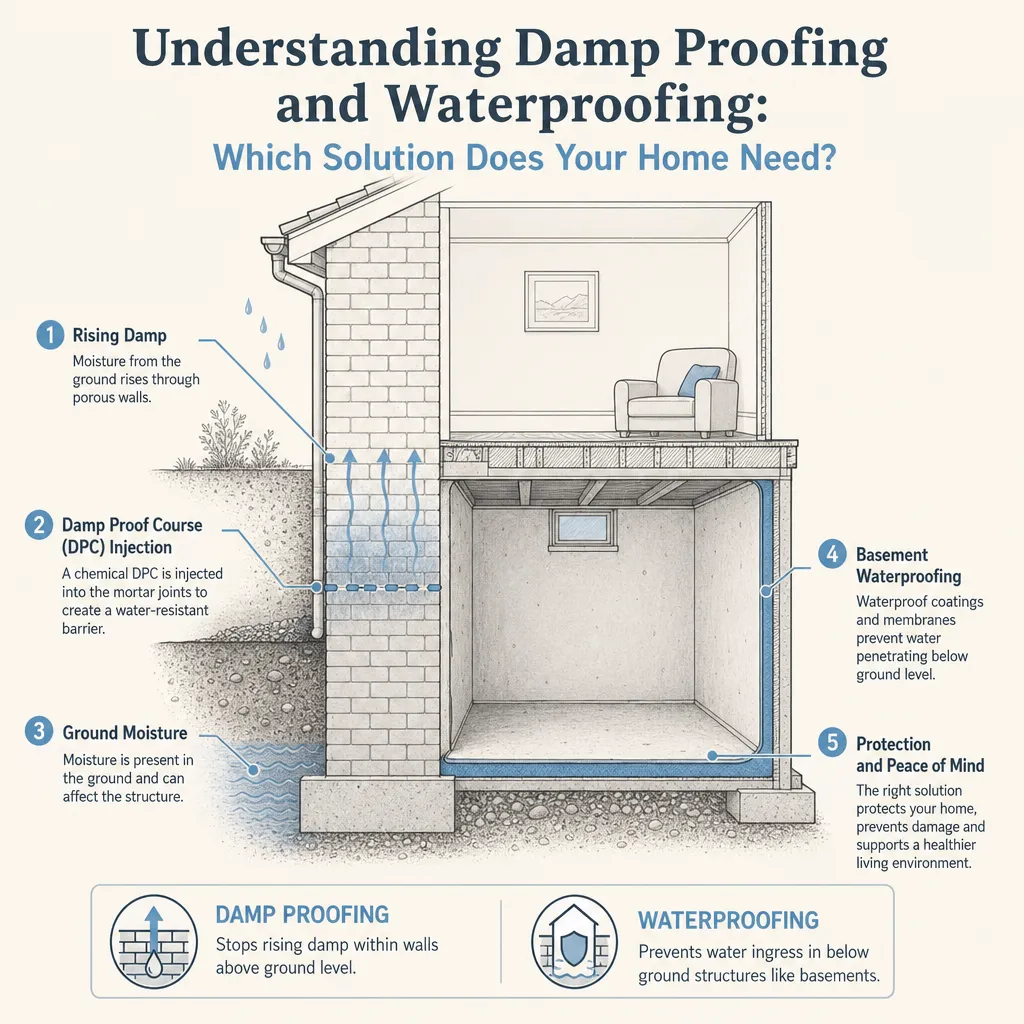
Understanding Damp Proofing and Waterproofing: Which Solution Does Your Home Need?
Damp proofing controls moisture movement through above-ground walls, while waterproofing excludes groundwater from below-ground structures.
 Surveys & Inspections
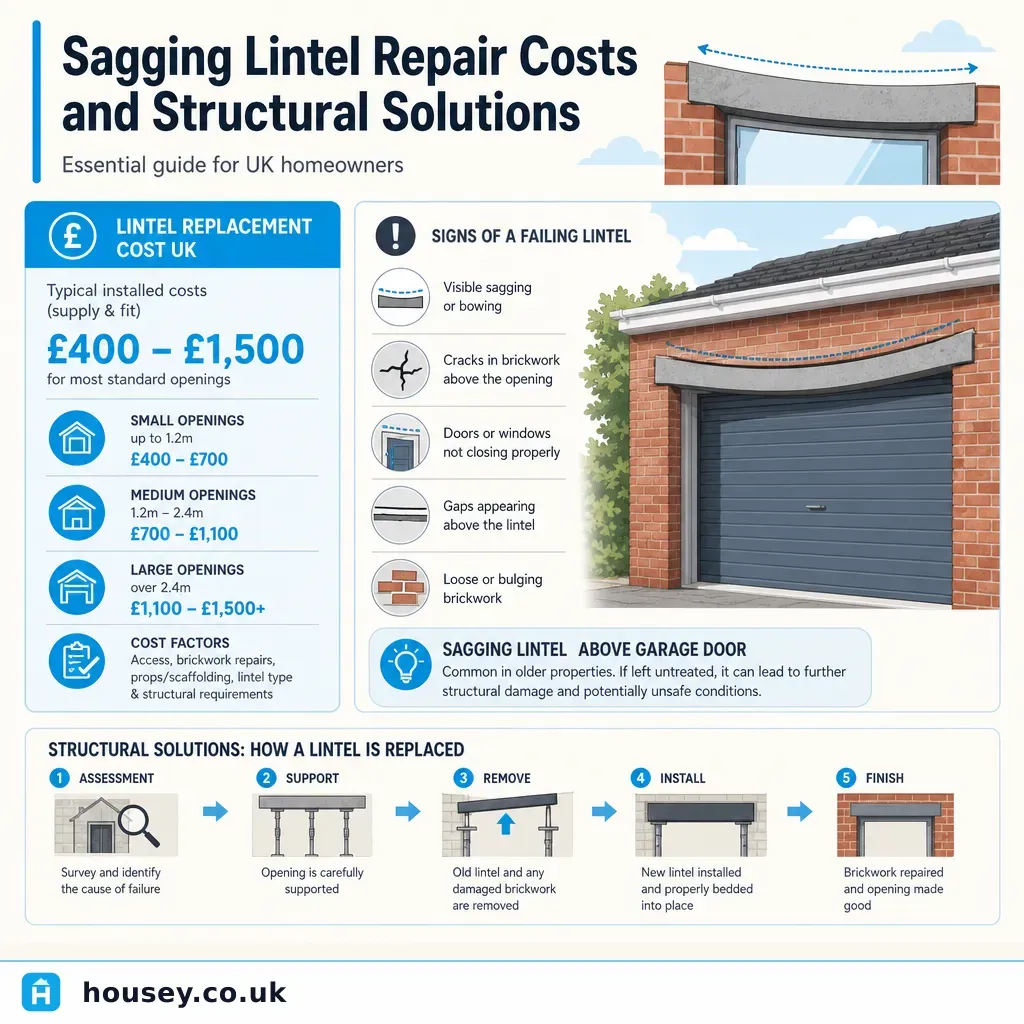
Sagging Lintel Repair Costs and Structural Solutions
A sagging lintel is a structural defect requiring prompt professional assessment.
 Surveys & Inspections
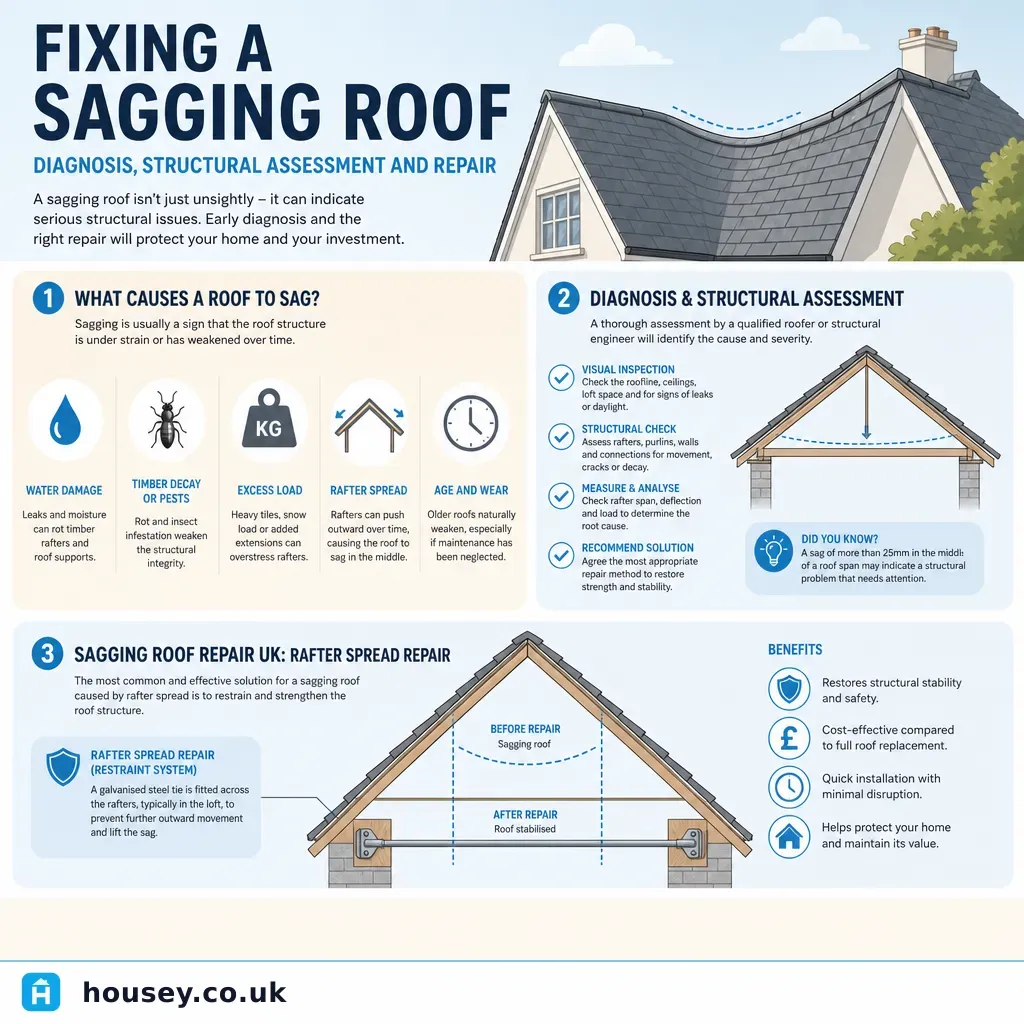
Fixing a Sagging Roof: Diagnosis, Structural Assessment and Repair
A sagging roof usually points to failed or overloaded roof timbers, rafter spread, or a compromised ridge board.
 Surveys & Inspections
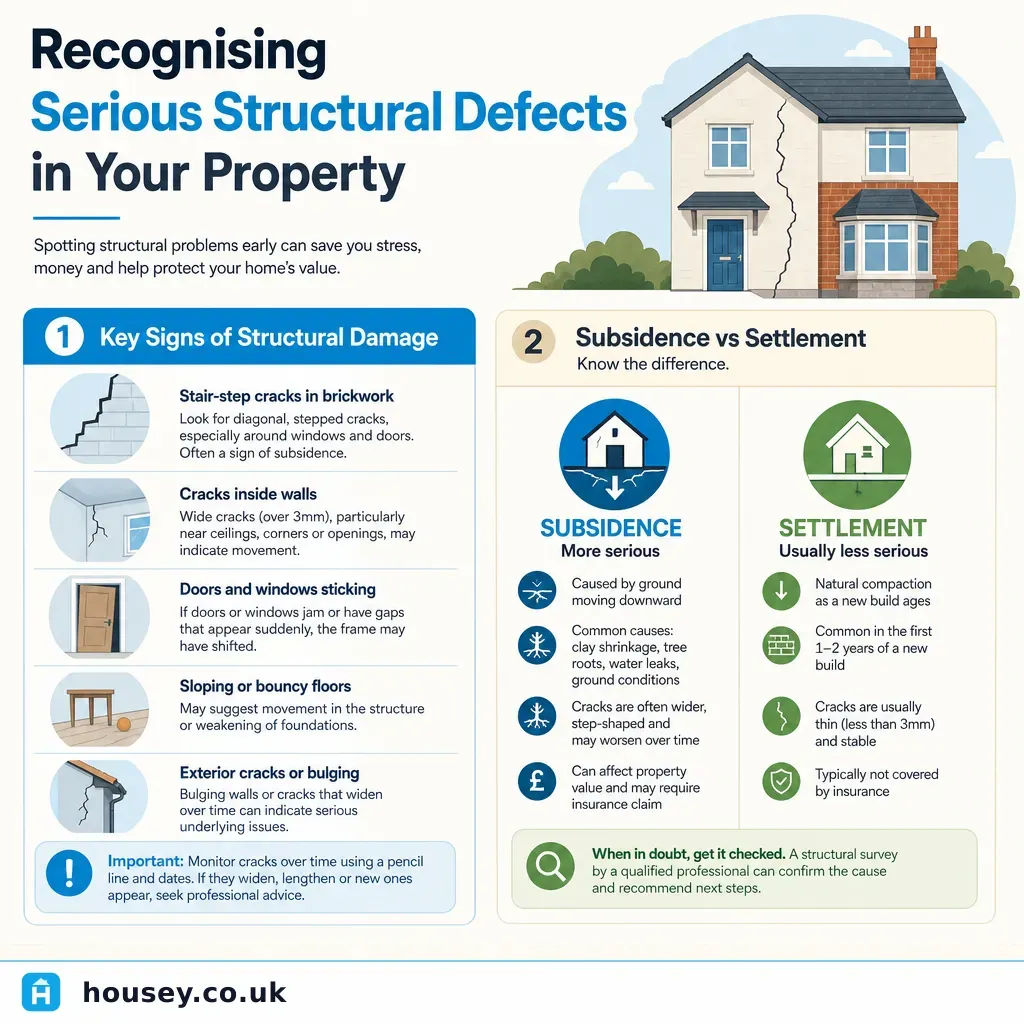
Recognising Serious Structural Defects in Your Property
Serious structural defects in UK homes include wide or diagonal cracks through brickwork, bowing or leaning walls, a sagging roof ridge, and floors or door frames notably out of level.