Fixing a Sagging Roof: Diagnosis, Structural Assessment and Repair
By Housey · Last reviewed 1st of June 2026
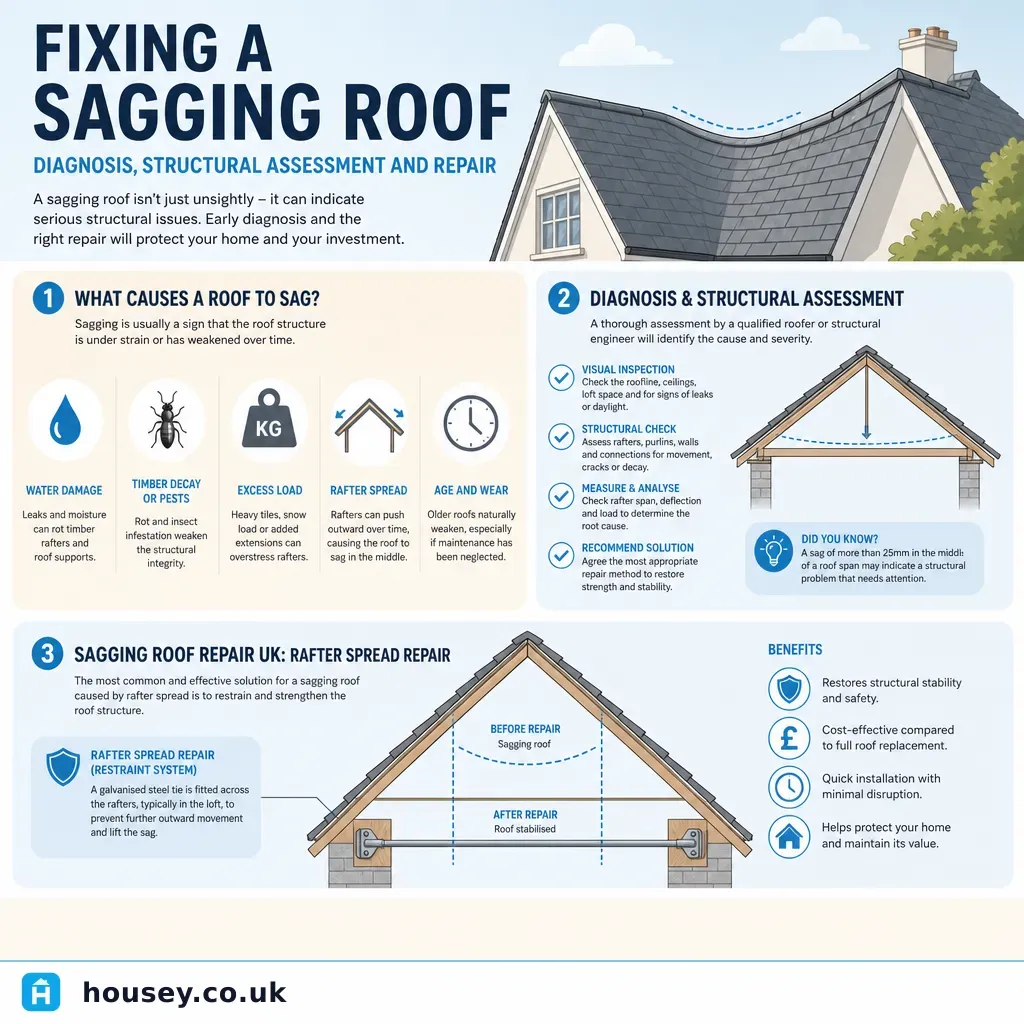
Fixing a Sagging Roof: Diagnosis, Structural Assessment and Repair
A noticeable dip or curve in a roofline is one of the more alarming things a homeowner can spot — whether noticed from the street, discovered during a loft inspection, or flagged in a survey before a property sale. Roof sagging in UK properties is most common in older homes: Victorian and Edwardian terraces where original timber roof structures have been carrying loads for well over a century, or mid-century properties where inadequate ventilation has led to timber decay. The stakes are significant — an unaddressed sagging roof can progress to partial structural failure — and prompt professional diagnosis is the essential first step before any repair work is instructed.
Key points
- Roof sagging most commonly results from rafter spread, timber decay, ridge board failure, or overloading — for example, heavy concrete tiles laid over a structure originally designed for lighter natural slate.
- Under Building Regulations Approved Document A (Structure), any repair or replacement work that affects the structural performance of a roof must comply with current standards and is likely to require building control notification.
- A Chartered Structural Engineer (MIStructE or CEng) or a RICS Level 3 Building Survey is the appropriate starting point for diagnosing structural roof movement.
- Rafter spread — where rafters push outward under load, bowing the wallplates and potentially displacing the external walls — is a distinct structural problem requiring an engineered repair, not simply roofing work.
- Historic England guidance notes that traditional roofing timbers in pre-1919 properties often show apparent sag from historical deflection under long-term load rather than active movement — distinguishing active from historical sag is critical before specifying repairs.
What causes a roof to sag?
Roof sagging has several distinct causes, and the correct repair depends on identifying which is present. The table below summarises the most common causes in UK residential properties.
Cause | Typical property type | Visual signs | Structural risk |
|---|---|---|---|
Rafter spread | Pre-1919 terraces, Victorian/Edwardian semis | Outward bowing at eaves, cracked wall-head masonry | High — can displace masonry |
Ridge board failure | Detached and semi-detached, all eras | Ridge line dipping centrally | Moderate–high |
Timber decay (rot or beetle attack) | Properties with poor loft ventilation | Soft or crumbling timbers, sagging between rafters | High in affected areas |
Overloading (heavy concrete tiles added) | Post-war properties re-roofed in concrete | Uniform sag across the full slope | Moderate |
Purlin or ceiling joist failure | Larger roofs with complex structure | Distinct dip at purlin line | High |
Historical deflection (non-active) | Pre-1919 solid-wall homes | Gradual, uniform curve with no recent cracking | Often low if long-stable |
How to assess whether a sagging roof is a structural emergency
Not all roof sag indicates an imminent emergency — but it always warrants professional assessment. Use the decision tree below to guide your initial response.
- Call a structural engineer or chartered surveyor the same day if tiles or slates are slipping; if the ridge line has dropped noticeably over a short period; if there are fresh cracks in external masonry at wall-head level; or if a loft inspection reveals displaced or fractured timbers.
- Arrange a professional assessment within one to two weeks if the sag is gradual, long-standing, and not visibly worsening; if there are no associated wall cracks or tile movement; and if the property is pre-1919 where the deflection may be entirely historical.
- Request a RICS Level 3 Building Survey before exchange if you are buying a property with a visibly sagging roof, or if a Level 2 survey has flagged roof movement as requiring further investigation.
- Do not instruct cosmetic roofing work until a structural opinion has been obtained — re-tiling over a structurally compromised roof wastes money and may mask progressive movement that becomes more costly to remedy later.
- Ask a structural engineer about temporary propping if the situation is urgent but permanent works cannot begin immediately.
Which professional do you need?
Choosing the right professional at the outset avoids costly misdiagnosis and wasted repairs.
Situation | Recommended professional | Why |
|---|---|---|
Active structural movement, rafter spread, or displaced masonry | Chartered Structural Engineer (MIStructE) | Can specify engineered repairs and produce calculations for building control |
General roof condition or pre-purchase inspection | RICS Level 3 Building Survey | Assesses whole property condition including the roof structure |
Targeted defect identification before instructing repairs | Structural defect report from a chartered surveyor | Focused report on the specific element of concern |
Design of repair works and contractor oversight | Structural engineer or specialist roofing engineer | Ensures repair meets Building Regulations Approved Document A |
For most homeowners dealing with an identified sag, a structural survey or a structural engineering assessment is the right first step. A roof survey is appropriate where the primary concern is the condition of the covering rather than the structural frame itself.
Common repair approaches for a sagging roof
Repair specifications vary considerably depending on the cause, extent, and age of the structure. The following approaches are typical — a structural engineer should specify the appropriate method for your specific property.
Rafter spread repair
Rafter spread is typically addressed by installing new collar ties or structural binders to prevent further outward movement, checking and potentially replacing damaged wallplates, and in severe cases inserting steel ties at ceiling joist level. This is structural work likely to require building control notification under Part A of the Building Regulations.
Ridge board replacement
A failed or decayed ridge board can often be replaced with a like-for-like timber section, or upgraded to a structural ridge where the span warrants it. The roof covering must be partially stripped for access — this is generally an opportunity to replace damaged underfelt and any broken tiles at the same time.
Timber decay treatment and replacement
Where decay is localised, affected rafters or purlins can often be sistered (a new timber bolted alongside the damaged one) or spliced. Widespread decay may require more extensive replacement. The underlying cause — typically poor ventilation or unresolved moisture ingress — must also be addressed or decay will recur.
Overloading remediation
Where heavy concrete tiles have been laid over a structure originally designed for lighter natural slate, a full re-roof using lightweight materials may restore the structural balance. The structural implications must be assessed by an engineer before tile type is specified.
Temporary propping
In urgent situations, a structural engineer may recommend temporary propping of rafters or purlins using adjustable steel props while permanent works are specified and programmed. Do not attempt to prop structural roof elements without professional guidance — incorrectly placed props can transfer load unpredictably.
Always obtain itemised quotes and confirm whether VAT, scaffolding, building control fees, and structural engineer sign-off are included. Indicative UK costs, last reviewed 2026-06-01. Costs vary significantly by property type, roof complexity, and extent of works required.
Important limitations
This article provides general information only. Structural roof defects vary significantly by property age, construction method, repair history, and loading conditions. Nothing here constitutes structural, legal, or insurance advice. A qualified structural engineer or chartered surveyor must inspect your specific property before any repair is specified or undertaken. Properties subject to planning restrictions — listed buildings, conservation areas — may face additional requirements from the local planning authority or Historic England.
When this becomes urgent
Treat a sagging roof as urgent and seek same-day professional advice if:
- Tiles, slates, or ridge cappings are loose or have fallen onto adjacent surfaces
- Fractured or displaced roof timbers are visible in the loft space
- External walls at gable or eaves level show fresh stepped or diagonal cracking
- Doors or windows near the affected roof level have begun sticking or distorting recently
- The sag is visibly worsening over days or weeks rather than being a long-standing historic feature
- Any ceiling below the affected area is bulging, cracking, or showing signs of imminent failure
What to ask a qualified professional
Before instructing a structural engineer or surveyor to assess a sagging roof, ask:
- Is the movement active (progressing) or historical (stable and long-standing)?
- What is the primary cause, and what evidence supports that diagnosis?
- What repair options exist, and what are their relative costs and disruption levels?
- Will the repair require building control approval, and can you manage that submission?
- Will temporary propping or emergency stabilisation be needed before permanent works begin?
- How will the repair affect the external appearance — will tiles need replacing, and can materials be matched?
- Does the repair specification account for Building Regulations Approved Document A requirements?
- If the property is listed or in a conservation area, what additional consents are required?
When to get professional help
Any visible sagging of a roof should be assessed by a qualified professional before any remedial or cosmetic work is carried out. A RICS Level 3 Building Survey or a targeted structural report from a chartered engineer is the appropriate starting point. Do not instruct roofing contractors to re-tile or overlay a sagging roof without a prior structural opinion — doing so may mask a worsening defect and make future repairs significantly more complex and costly.
If you are buying a property where a sagging roof has been noted in survey, ensure that the advice has been fully followed and that your conveyancer is aware before exchange of contracts.
How Housey can help
Housey matches homeowners with qualified professionals for roof surveys, structural surveys, and structural engineering assessments — all matched to your property type and postcode. Whether you need a pre-purchase report, a targeted defect diagnosis, or a full repair specification, you can request and compare quotes from vetted specialists on one platform.
Frequently asked questions
Is a sagging roof dangerous?
It depends on the cause and whether movement is active. A stable, long-standing sag in a pre-1919 property may carry little immediate risk; active rafter spread or a failed purlin can present a serious structural hazard. All roof sag should be assessed by a structural engineer or RICS Level 3 surveyor — do not assume a gradual sag is safe without a professional opinion.
Can I fix a sagging roof without planning permission?
Repair and like-for-like replacement of roof elements generally falls within permitted development and does not require planning permission. However, building control notification under Building Regulations Approved Document A is likely required for structural repair work. Listed buildings and conservation area properties may face additional restrictions — always check with your local planning authority before starting work.
How much does it cost to fix a sagging roof?
Costs vary enormously by cause, extent, and roof type. Sistering a small number of rafters may cost a few hundred pounds; a full re-roof with structural repairs and scaffolding on a Victorian terrace could run to several thousand. Always obtain at least three itemised quotes. Indicative UK costs, last reviewed 2026-06-01. Confirm whether building control fees and structural engineer oversight are included.
Should I tell my insurer about a sagging roof?
You may be required to notify your insurer of structural defects under your policy's material facts obligation. Failure to disclose a known structural defect could affect your ability to claim in future. Check your policy terms and speak to your insurer or broker if you are unsure whether disclosure is required.
Sources and further reading
- Building Regulations Approved Document A (Structure) — GOV.UK
- RICS Home Survey Standard — RICS
- Working at Height Regulations 2005 — legislation.gov.uk
- Historic England — Maintaining Traditional Roofing — Historic England
- Institution of Structural Engineers — guidance for practitioners — IStructE
Useful next reads
 Surveys & Inspections
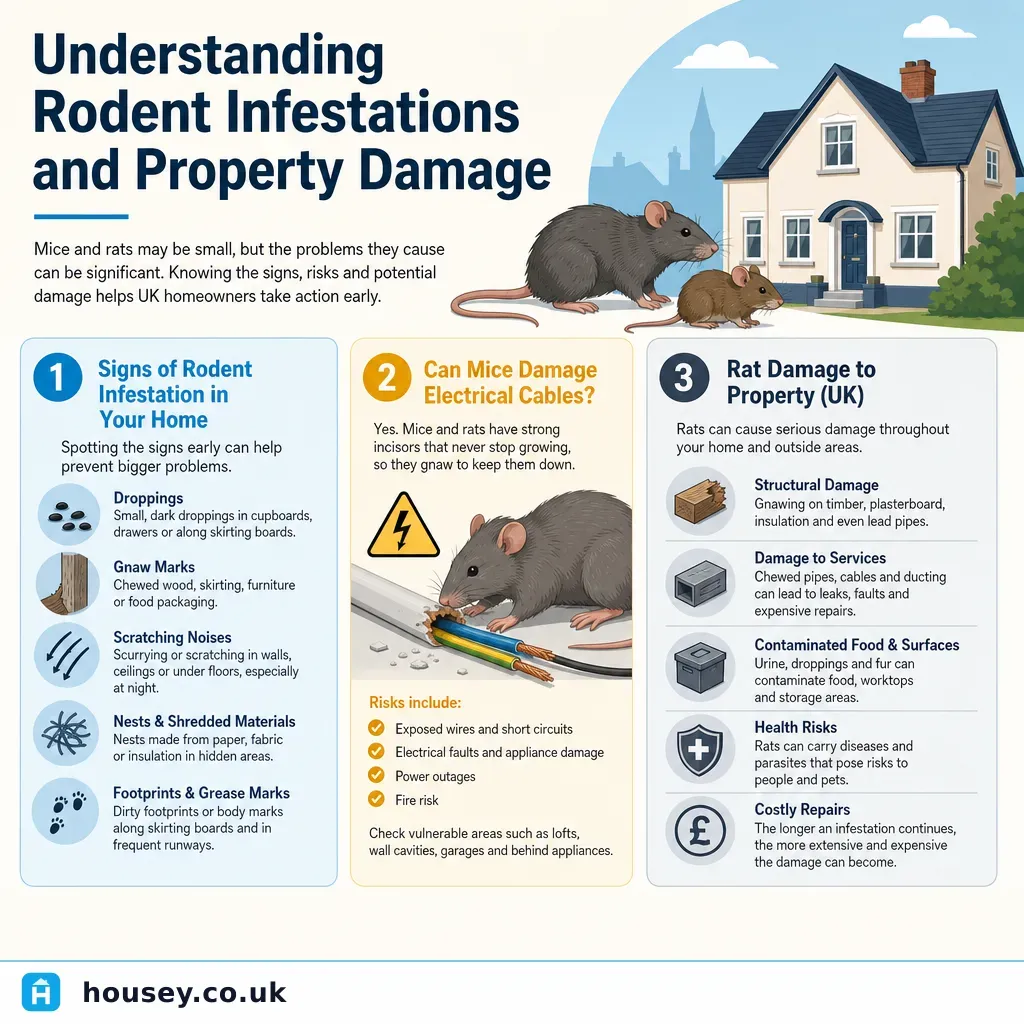
Understanding Rodent Infestations and Property Damage
Rats and mice can cause significant property damage in UK homes, including gnawed electrical cables that create fire risk, damaged pipework causing hidden leaks, and burrowing near foundations in older properties.
 Surveys & Inspections
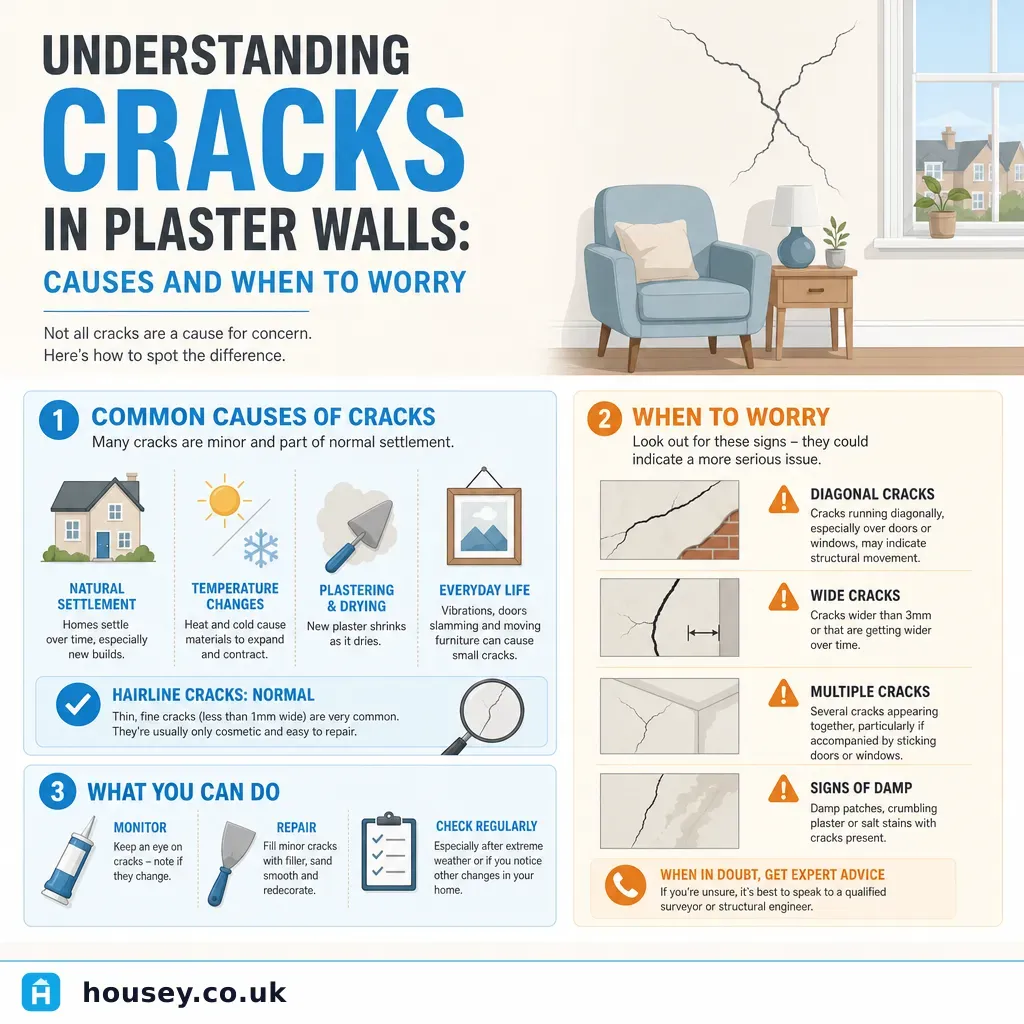
Understanding Cracks in Plaster Walls: Causes and When to Worry
Most hairline plaster cracks are cosmetic, caused by seasonal shrinkage or minor settlement.
 Surveys & Inspections
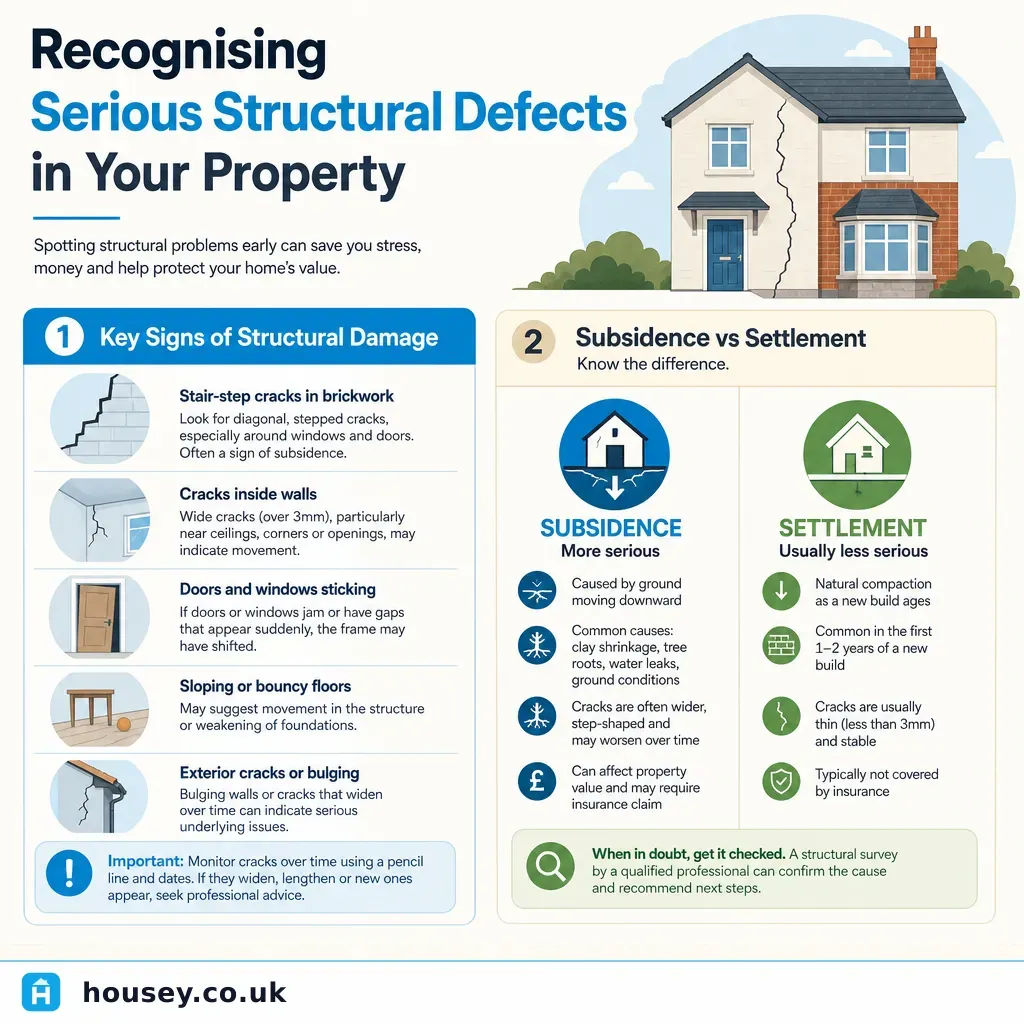
Recognising Serious Structural Defects in Your Property
Serious structural defects in UK homes include wide or diagonal cracks through brickwork, bowing or leaning walls, a sagging roof ridge, and floors or door frames notably out of level.
 Surveys & Inspections
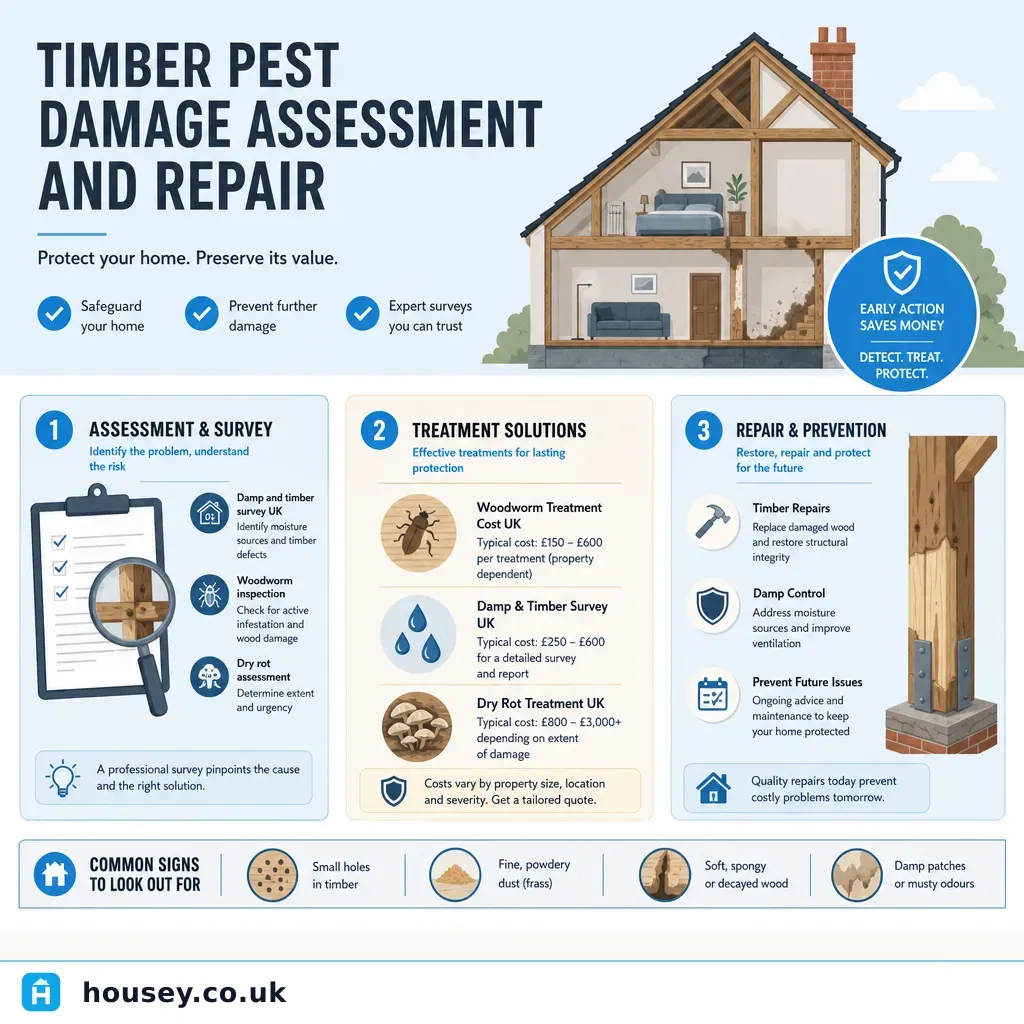
Timber Pest Damage Assessment and Repair
Timber pest damage in UK homes is most commonly caused by Common Furniture Beetle (woodworm), Death Watch Beetle, or fungal decay such as dry rot.
 Surveys & Inspections
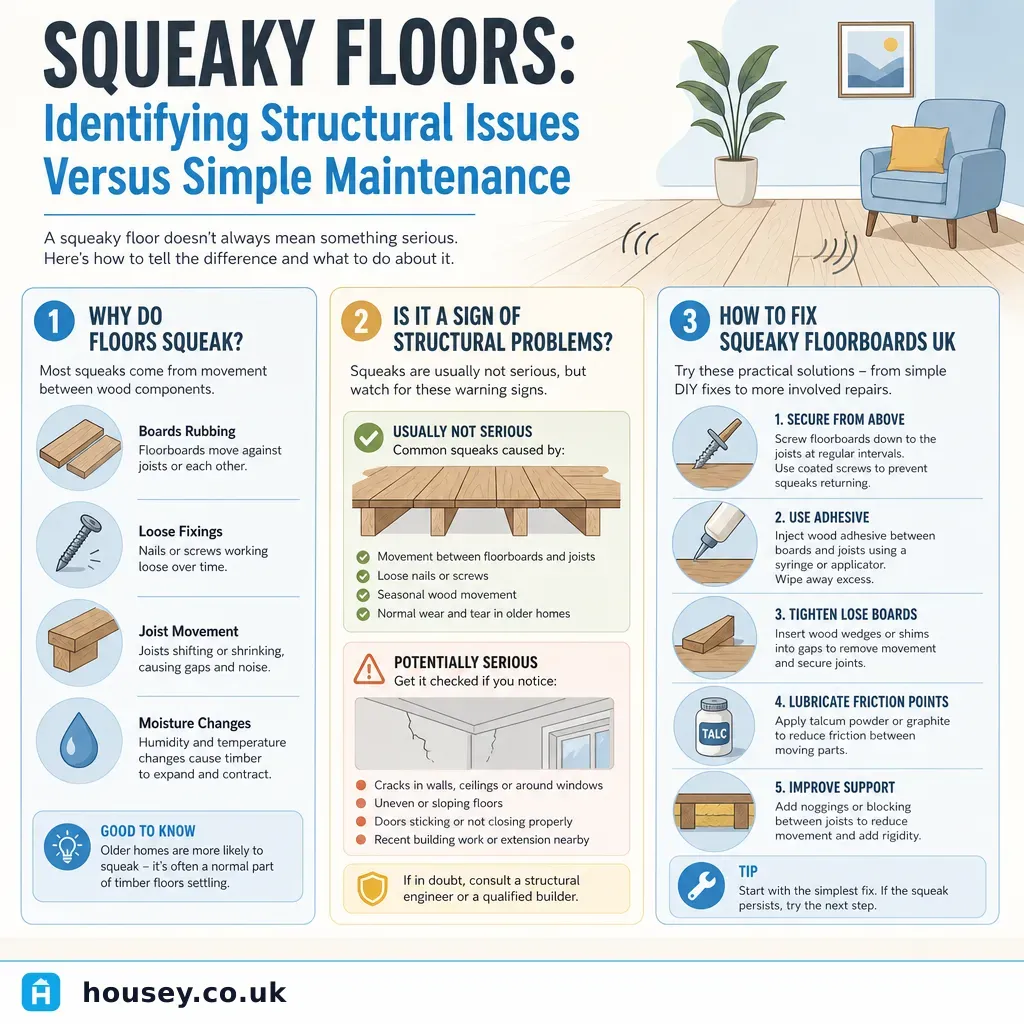
Squeaky Floors: Identifying Structural Issues Versus Simple Maintenance
Most squeaky floors in UK homes are caused by floorboards rubbing against each other or against fixings as they expand and contract — a maintenance issue rather than a structural one.