Recognising Serious Structural Defects in Your Property
By Housey · Last reviewed 31st of May 2026
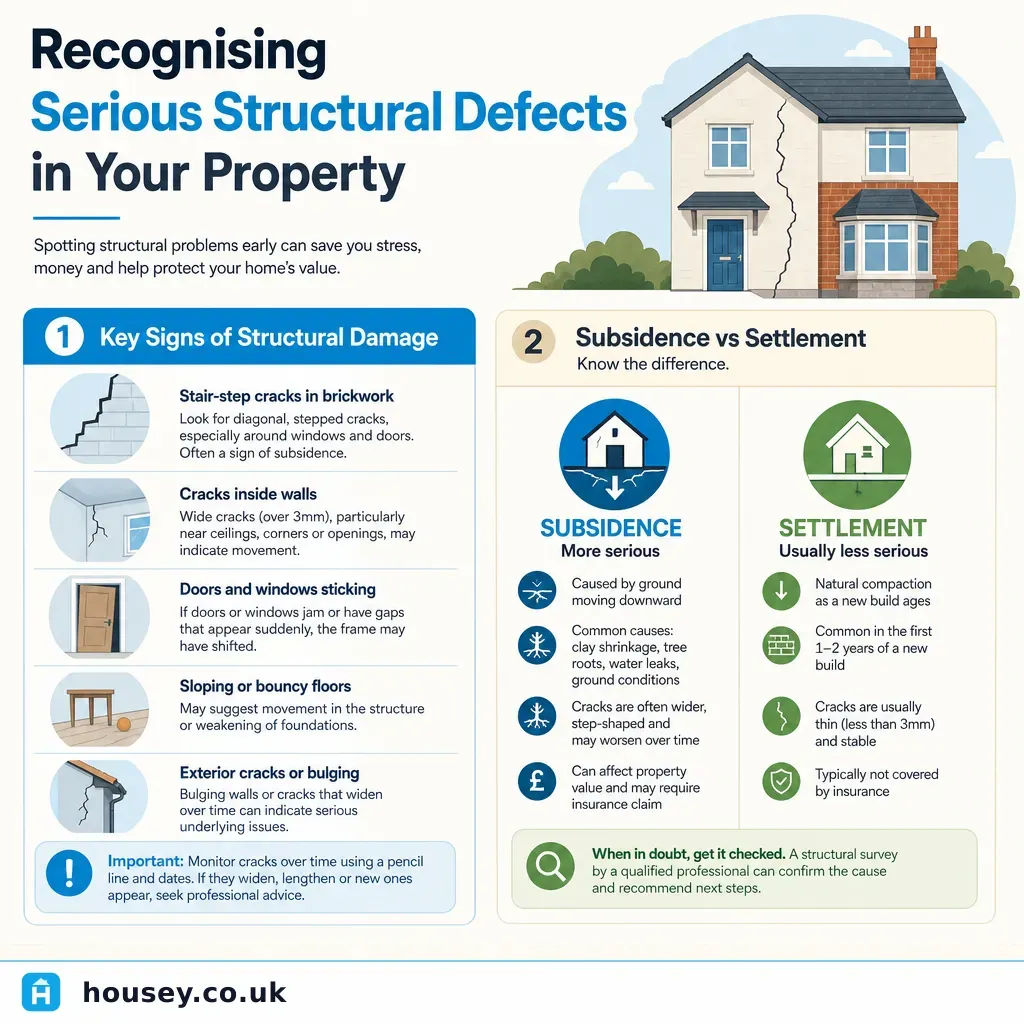
Recognising Serious Structural Defects in Your Property
Structural defects range from minor cosmetic cracking that needs no action to serious movement that threatens a building's stability and habitability. Distinguishing between the two matters enormously — whether you are buying, selling, living in, or letting a property. The challenge is that defects can be masked by decoration, progress slowly over years, or be wrongly attributed to a superficial cause such as humidity or settling plaster.
Key points
- The Building Research Establishment (BRE) Digest 251 provides the standard UK classification for crack severity in low-rise buildings, ranging from Category 0 (hairline, cosmetic, no action required) to Category 5 (very severe, requiring partial or complete rebuilding).
- Subsidence — downward movement caused by ground instability, clay soil shrinkage in dry summers, tree root activity, or leaking drains — differs from settlement, which is normal compaction of ground under a building load and is usually self-limiting.
- A RICS Level 3 Home Survey (Building Survey) can identify and describe structural concerns, but diagnosis of cause and remediation design often requires a separate assessment from a chartered structural engineer (MIStructE or CEng).
- Home insurance policies typically cover subsidence and heave as defined perils, but pre-existing structural defects at the time of purchase may be excluded; you have a legal duty to disclose known defects to your insurer.
- Diagonal stepped cracking through brickwork mortar joints running from a corner, window, or door opening is a classic indicator of differential settlement or subsidence and warrants professional investigation, not monitoring alone.
Identifying potentially serious structural defects
Not all visible defects are structural. Understanding the main categories helps you decide when to seek professional assessment.
Cracks in walls and masonry
The BRE Digest 251 crack classification system is the standard reference used by surveyors and structural engineers across the UK:
BRE Category | Width and description | Typical significance | Recommended action |
|---|---|---|---|
0 | Hairline, <0.1 mm | Cosmetic only | Monitor; redecorate when convenient |
1 | Fine, <1 mm | Very slight; cosmetic | Monitor; minor redecoration |
2 | Slight, 1–5 mm | Some remedial pointing required | Fill, monitor, check drainage |
3 | Moderate, 5–15 mm; doors or windows may stick | Defective; requires investigation | Structural investigation recommended |
4 | Severe, 15–25 mm; may be wide as well as long | Beams may lose bearing | Structural engineer required urgently |
5 | Very severe, >25 mm | Risk to structural integrity | Structural engineer required immediately |
Diagonal cracks running through brickwork units (not just along mortar joints) are generally more significant than cracks of the same width that follow mortar courses, even at the same measured width.
Roof and floor defects
- A ridge line that has dropped or bowed may indicate rafter failure, purlin spread, or inadequate ridge support — a concern that is common in Victorian and Edwardian terrace housing where roof structure can be minimal by modern standards.
- Sagging flat roof sections may indicate joist failure, rot, or prolonged water loading.
- Floors that slope beyond the gentle unevenness typical for a property's age, feel springy when walked on, or sound hollow beneath carpets may indicate joist rot, woodworm infestation, or foundation movement.
Doors, windows, and external indicators
Sticking or dropped doors and windows — particularly on upper floors — can be an early sign of structural movement. In isolation this is often caused by humidity or poor hanging; in combination with cracking or sloping floors, it warrants investigation.
External signs worth noting include:
- Stepped cracking in a diagonal line from a corner, window, or door opening is a classic sign of differential settlement or subsidence.
- Bulging or leaning brickwork on a gable, chimney breast, or party wall may indicate wall tie failure or inadequate bonding.
- Leaning chimneys are common in Victorian and Edwardian terraced housing and may indicate failed flashings, mortar deterioration, or shallow foundations.
Red flags: when to stop and call a professional immediately
The following signs indicate a property requires urgent professional assessment, not further monitoring:
- Any crack at BRE Category 3 or above (wider than 5 mm, particularly diagonal through brickwork units).
- A crack that has visibly widened over days, weeks, or months.
- A wall, gable, or chimney that is leaning or bowing outward.
- A roof ridge that has dropped, bowed, or has an obviously distorted line.
- Floors that feel noticeably springy, hollow in patches, or show significant level differences between rooms on the same storey.
- Evidence of a previous structural repair — steel crack-stitching bars, Helifix rods, or tie plates on external walls — that has not been independently verified as adequate.
- Any indication of past underpinning, such as a step in the external brickwork at low level or a concrete rib visible above the external ground surface.
What not to assume
Do not assume a crack is new just because you notice it for the first time. Cracks that have been filled, painted over, or partially hidden by furniture may have been present and stable for years. Ask the vendor or their solicitor whether crack monitoring records or gauge readings are available.
Do not assume settlement and subsidence are interchangeable. Settlement is normal — most buildings compact slightly in the years after construction or following a major extension. Subsidence is caused by ongoing ground movement, typically clay shrinkage in dry summers, tree root activity, or leaking drains washing away fine soil particles beneath foundations. It does not stop without addressing the underlying cause.
Do not assume a RICS survey is definitive for structural engineering questions. A Level 3 survey identifies and describes concerns; a chartered structural engineer assesses cause, extent, and remediation options. Both professionals are often needed when movement is active or significant.
Do not assume cosmetic repair resolves a structural problem. Filling and repainting is appropriate for Category 0–2 cracks. Applying filler to a Category 3 or above crack without addressing underlying movement will not halt the problem and may conceal continued deterioration from a future buyer's surveyor.
Do not assume buildings insurance will cover everything. Policies vary significantly in their exclusions. Many exclude pre-existing conditions, gradual deterioration, or damage attributable to poor maintenance. Read your policy schedule carefully and disclose known defects to your insurer.
Settlement, subsidence, and heave: key differences
Condition | Primary cause | Direction of movement | Self-limiting? | Most common in |
|---|---|---|---|---|
Settlement | Building load compressing ground over time | Downward, usually fairly uniform | Yes — stops once equilibrium reached | New-builds and recently extended properties |
Subsidence | Clay shrinkage, tree roots, leaking drains | Downward, often differential | No — continues until cause is removed | Clay soils, near mature trees, older drainage systems |
Heave | Clay swelling, often after tree removal | Upward | Usually, once equilibrium reached | After tree removal on shrinkable clay soils |
Important limitations
This article provides general educational information about structural defects in UK residential buildings as at 2026-05-31. It is not a structural engineering assessment and does not constitute professional advice. Structural defects are highly context-specific — the same crack width in two different properties may indicate entirely different causes and levels of severity. Always instruct a qualified professional to inspect and diagnose structural concerns in your specific property. Insurance obligations, mortgage lender requirements, and disclosure duties vary and should be discussed with your legal and financial advisers.
What to ask a qualified professional
When commissioning a structural survey or engineer's report, ask:
- Is this movement active (still progressing) or historic (stable and no longer moving)?
- What is the most likely cause of the cracking or movement I have described?
- Do I need a RICS Level 3 survey, a specific defect report, or a structural engineer's assessment — or a combination of these?
- Will you install crack monitors, and if so, over what period will you review the results?
- What remediation options are available, and what are their relative costs and levels of disruption?
- Is this defect likely to affect my ability to obtain a mortgage or standard buildings insurance on this property?
- Do I need to notify my insurer or mortgage lender of these concerns now?
- Are there any Party Wall etc. Act 1996 implications if the defect involves or is adjacent to a shared wall?
When to get professional help
Seek a professional assessment — from a RICS-accredited surveyor or a chartered structural engineer — if:
- You notice a crack you cannot explain or that appears to be widening over time.
- A surveyor's report has flagged potential structural movement for specialist investigation.
- You are buying a property and the survey has noted concerns about foundations, walls, or the roof structure.
- You are planning an extension, loft conversion, or structural alteration and want to understand the existing structure's capacity.
- A neighbour's works — underpinning, deep excavation, or a basement conversion — may be causing differential movement in your property.
How Housey can help
Housey connects homeowners and buyers with qualified professionals for structural surveys, specific defect surveys, and RICS Level 3 surveys — the most comprehensive standard inspection before deciding whether to instruct a structural engineer. For a broader property assessment, RICS Home Surveys at all levels are available through the platform, with credentials and quotes comparable in one place.
Frequently asked questions
What is the difference between settlement and subsidence?
Settlement is normal, gradual compaction of the ground beneath a building's foundations as the load transfers into the soil. It is usually self-limiting and affects most new-builds in the first few years. Subsidence is ongoing ground movement — typically caused by clay soil shrinkage in dry weather, tree root activity, or leaking drains washing away fine particles — and does not stop without identifying and removing the underlying cause.
Are all cracks in walls structural?
No. The majority of cracks in UK homes are cosmetic — caused by thermal expansion, shrinkage of new plaster, or minor seasonal movement. Hairline cracks (BRE Category 0–1, less than 1 mm wide) are almost always cosmetic. Cracks become more concerning when wider than 5 mm, running diagonally through brickwork units rather than along mortar joints, accompanied by sticking doors, or appearing to widen over time.
When should I call a structural engineer rather than a RICS surveyor?
A RICS Level 3 surveyor can identify structural concerns and flag them for specialist investigation. A chartered structural engineer (MIStructE or CEng) diagnoses causes, designs remediation schemes, and can certify that repairs are structurally adequate. If your surveyor recommends specialist investigation, or if you observe active movement, widening cracks at Category 3 or above, leaning walls, or a distorted roof ridge, instruct a structural engineer directly.
Will my buildings insurance cover structural defects?
Most standard policies cover subsidence, heave, and landslip as defined perils — but only if these conditions were not pre-existing when you took out the policy. Gradual deterioration, poor workmanship, and lack of maintenance are typically excluded. Always disclose known structural defects to your insurer; failure to do so may void a subsequent claim. Read your policy schedule carefully before assuming cover applies.
Sources and further reading
- BRE Digest 251: Assessment of damage in low-rise buildings — Building Research Establishment (BRE)
- RICS Home Survey Standard — RICS
- Institution of Structural Engineers — IStructE
- Citizens Advice: Problems with your home — Citizens Advice
Useful next reads
 Surveys & Inspections
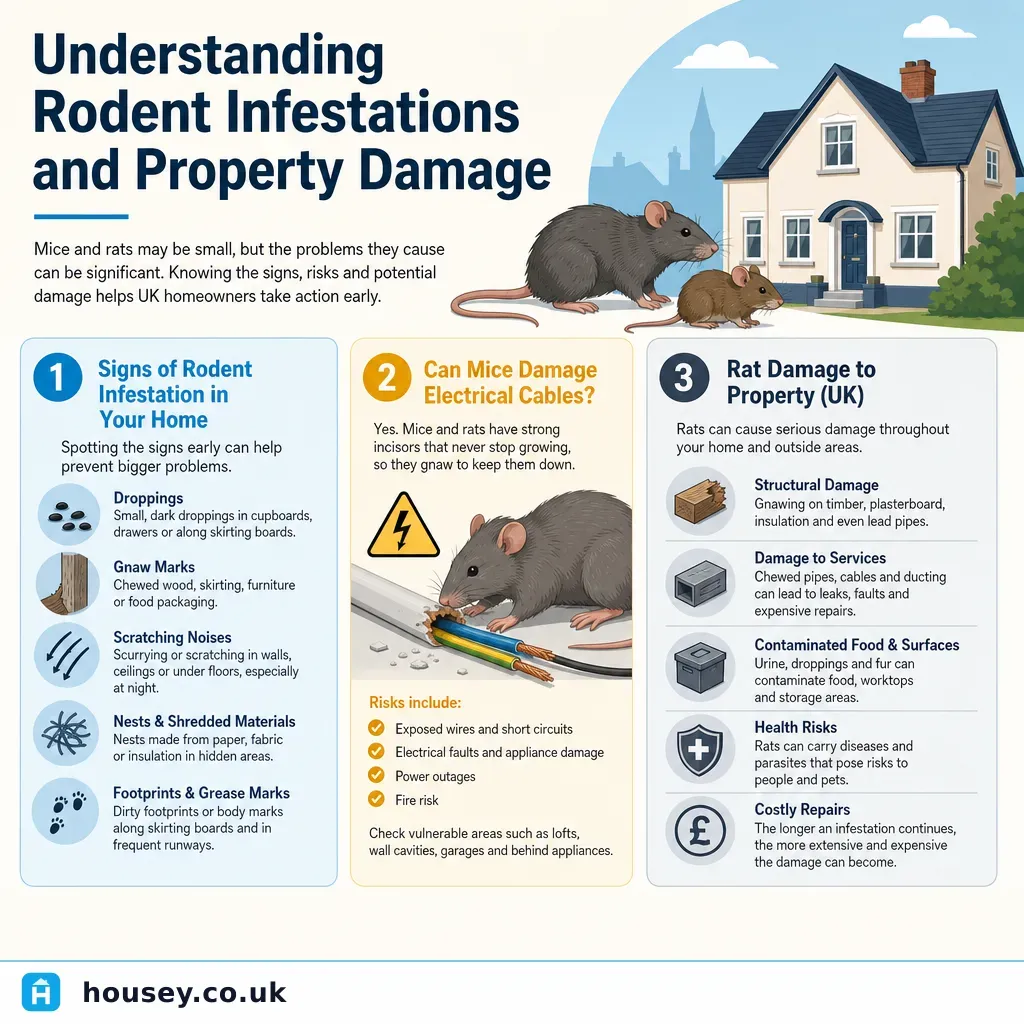
Understanding Rodent Infestations and Property Damage
Rats and mice can cause significant property damage in UK homes, including gnawed electrical cables that create fire risk, damaged pipework causing hidden leaks, and burrowing near foundations in older properties.
 Surveys & Inspections
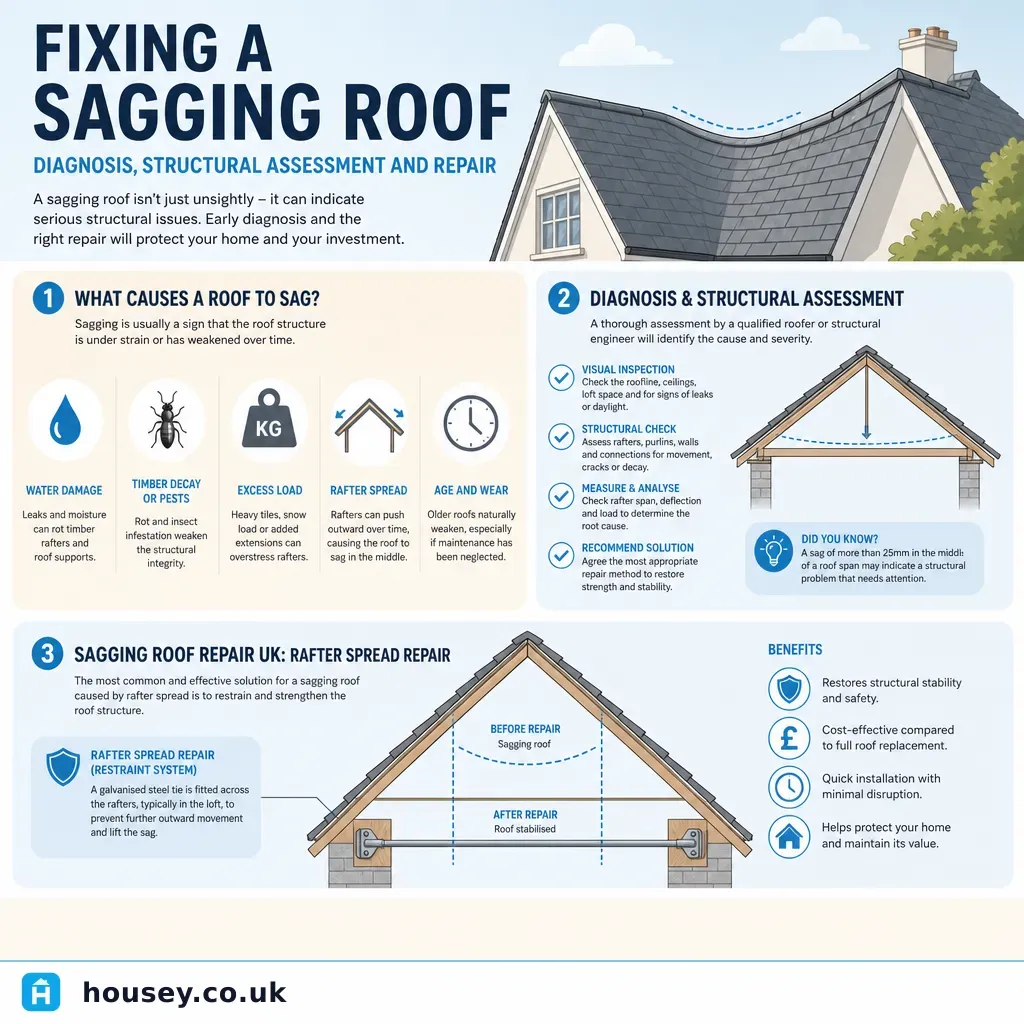
Fixing a Sagging Roof: Diagnosis, Structural Assessment and Repair
A sagging roof usually points to failed or overloaded roof timbers, rafter spread, or a compromised ridge board.
 Surveys & Inspections
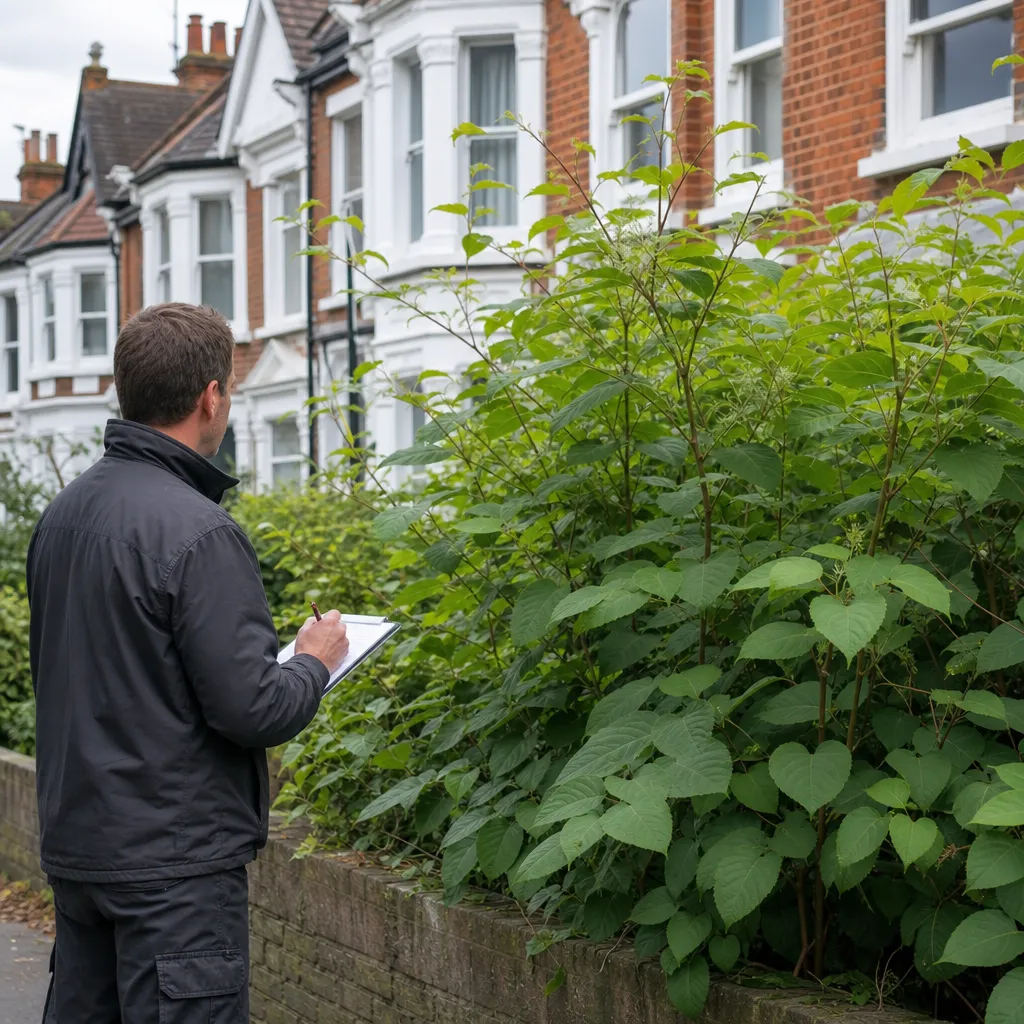
Japanese Knotweed and Property Purchase: Impact on Mortgages and Valuations
Japanese knotweed can prevent mortgage approval and reduce a property's value, especially if it is within 7 metres of a habitable structure.
 Surveys & Inspections
Structural Building Survey Costs
A RICS Level 3 Building Survey typically costs £500–£1,500 in the UK, depending on property size, age, and location.
 Surveys & Inspections
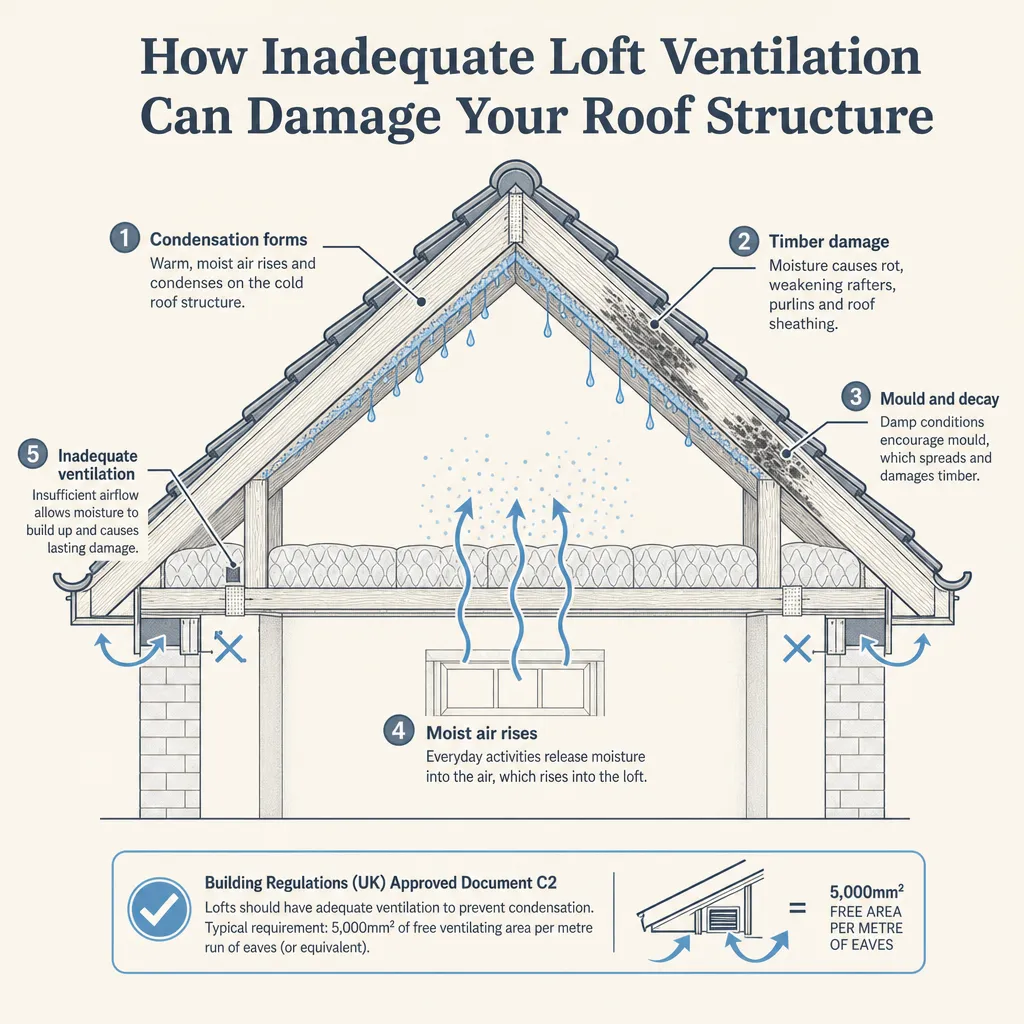
How Inadequate Loft Ventilation Can Damage Your Roof Structure
Inadequate loft ventilation allows warm, moist air to condense on cold roof timbers.