Understanding Rodent Infestations and Property Damage
By Housey · Last reviewed 30th of May 2026
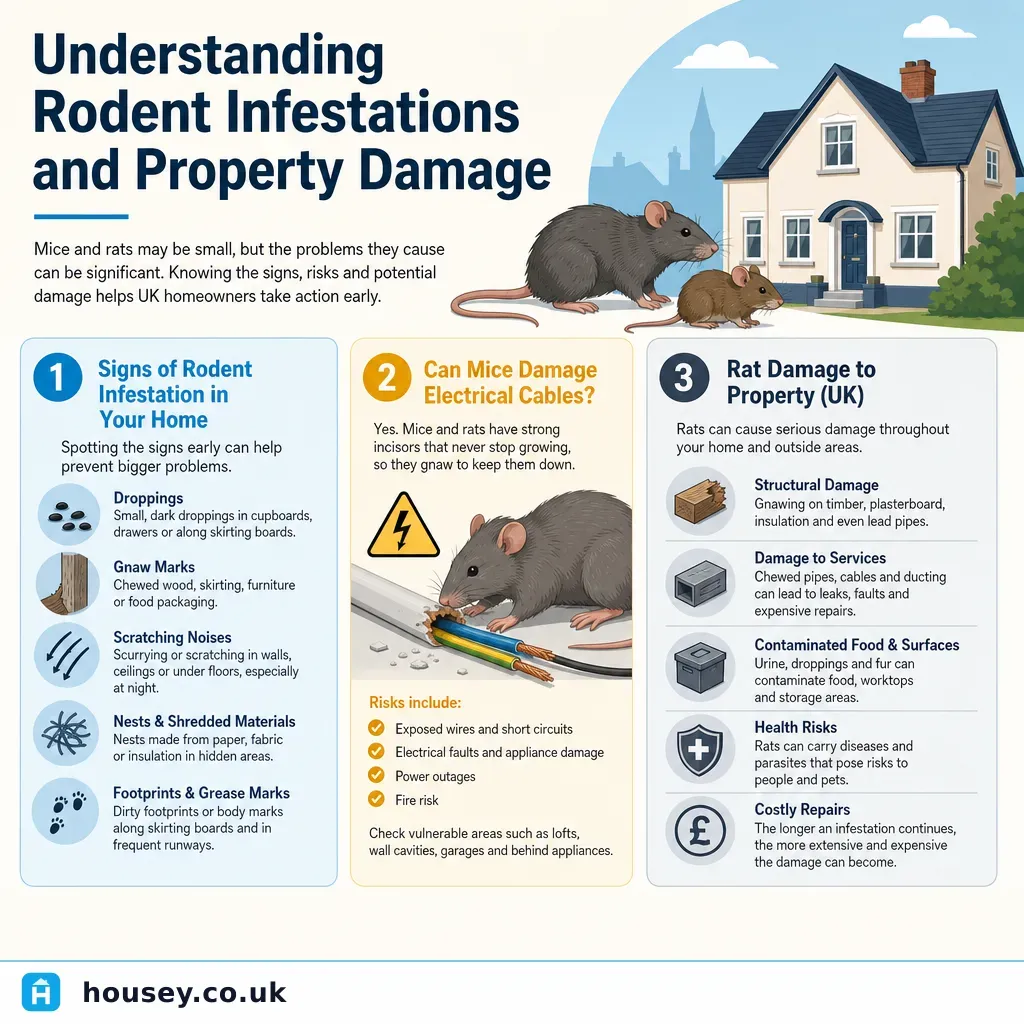
Understanding Rodent Infestations and Property Damage
Rodent problems — most commonly rats (Rattus norvegicus) and house mice (Mus musculus) — are a year-round concern for UK homeowners, though reports typically spike in autumn as colder weather drives animals indoors. Whether you have noticed droppings in a kitchen cupboard, gnawed cables behind appliances, or scratching sounds in a loft at night, the physical damage rodents cause to a property goes well beyond the initial nuisance. Understanding what to look for, and when to act, is important before a contained problem becomes structurally or electrically significant.
Key points
- Rats and mice gnaw cables to wear down continually growing incisors — gnawed wiring is a recognised cause of house fires in UK properties.
- Local councils in England have a statutory duty under the Prevention of Damage by Pests Act 1949 to keep their land free of rodents, and may serve notice on private landowners where infestations originate from their property.
- Any gap of 6 mm or more in a building's fabric is sufficient for a house mouse to enter — common entry points include gaps around pipes, defective air bricks, and damaged soffits.
- Rodent burrows adjacent to building foundations can disturb soil bearing capacity, particularly in older properties with shallower footings or on sandy substrates.
- The Health and Safety Executive (HSE) confirms that rats can carry Weil's disease (leptospirosis), transmitted via urine-contaminated water or surfaces — droppings near plumbing or water tanks require professional disinfection, not just pest removal.
Signs of rodent activity to look for
Before calling a professional, inspect methodically for the following indicators.
Inside the property:
- Dark, cylindrical droppings — rat droppings are 12–18 mm; mouse droppings are 3–6 mm
- Grease or smear marks along skirting boards, beams, or pipes where rodents follow established runs
- Gnaw marks on food packaging, timber joinery, plastic pipes, or cable insulation
- Nesting material — shredded paper, loft insulation, or soft furnishings — in roof voids, under floorboards, or behind kitchen units
- Scratching, scurrying, or squeaking sounds, most audible at night
Outside and in outbuildings:
- Burrow entrances at the base of external walls, under sheds, or along fence lines
- Run paths through long grass or across soft ground
- Damaged or missing air bricks, and eroded mortar around pipe penetrations through external walls
Hidden or secondary signs:
- Disturbed or compressed loft insulation suggesting sustained nesting activity
- Gnawed timber joists or rafters — less common but possible in long-standing infestations
- Unexplained RCD trips or electrical faults alongside other pest evidence
What damage can rodents cause to a UK property?
Electrical damage
Rodents gnaw cables as a continuous behaviour driven by incisor growth — it is not incidental. Even partial gnawing of insulation, without a complete break, creates a fire risk. If you notice unexplained electrical faults or repeated RCD trips alongside pest signs, arrange a registered electrician's inspection at the same time as pest control. Do not treat cable faults as unrelated without ruling out rodent activity.
Plumbing and water damage
Softer plastic push-fit pipework and older lead pipe — still present in some pre-1970 properties — are both vulnerable to gnawing. A gnawed water pipe can create a slow leak into a floor void that goes undetected for months, leading to damp, fungal decay, and rot in joist ends. This secondary damage often costs far more to repair than prompt pest treatment would have.
Structural and fabric damage
Burrowing beneath or alongside building foundations — particularly at junctions between original structures and later extensions — can displace soil and, on sandy or weak substrates, contribute to differential settlement. Externally, rodent damage to soffits, fascia boards, and roof junctions can allow water ingress and accelerate timber decay.
Contamination
Droppings and urine near food storage areas, water tanks, or plumbing fittings represent a hygiene risk requiring professional cleaning and disinfection — not just pest removal. Where contamination affects a cold water storage tank, the tank should be assessed by a plumber and disinfected before use.
Red flags: when the damage is more serious than it looks
Contact a surveyor or specialist promptly if you notice any of the following alongside rodent evidence:
- Unexplained damp patches on ceilings or walls near pipe runs — may indicate a gnawed pipe and slow, hidden leak
- Repeated RCD tripping or circuit failure without an obvious electrical cause
- Soft or springy floorboards in areas of known sub-floor rodent activity — may indicate decayed or partially gnawed joists
- Cracks near extension junctions or garden-facing walls where active burrowing has been confirmed
- Persistent musty or ammonia smell from a sealed loft or underfloor void — often the first indicator of long-term occupation
- Significantly disturbed loft insulation over a wide area, suggesting extended nesting and possible compression of the thermal layer
What not to assume
- Don't assume reinfestation won't occur once trapping stops. Rodents entered through structural gaps that remain after the animals are removed. Without proofing those entry points, reinfestation often follows within weeks.
- Don't assume cable damage is minor. Even partial gnawing of insulation without a complete break creates a fire risk. A registered electrician should inspect any cables with visible gnaw marks before the circuit is used again.
- Don't assume council pest control will cover internal remediation. Councils have a statutory duty regarding infestations on their own land and may serve notice on private owners, but they do not fund repairs to damage inside private dwellings.
- Don't assume a newer property is immune. Construction waste, exposed cavities during build phases, and proximity to disturbed ground all attract rodents to recently built homes.
When to get professional help
Arrange pest control promptly on finding any active sign of infestation. Once treatment is underway or complete, commission a professional building inspection if:
- The infestation was prolonged — weeks or months before detection
- There is any evidence of cable gnawing or unexplained electrical faults
- You notice damp patches, springy floorboards, or visible structural changes near areas of confirmed rodent activity
- The property is broadly pre-1960, has lead pipework, or has shallow foundations close to a garden boundary
A damp and timber survey will identify whether rodent activity has caused moisture ingress or timber damage in floor voids, sub-floor joists, or roof spaces. Where structural damage to joists or foundations is suspected, a specific defect survey by a chartered surveyor will assess the extent and advise on appropriate remediation.
How Housey can help
If a rodent infestation has left you uncertain about your property's timbers, pipework, or structure, Housey connects you with qualified surveyors offering damp and timber surveys and specific defect surveys across the UK. Request and compare quotes from local professionals through Housey before instructing anyone.
Frequently asked questions
Can mice cause structural damage to a UK home?
Mice rarely damage load-bearing elements directly, but cause significant secondary damage. Gnawed electrical cables create fire risk; damaged pipework leads to moisture ingress and timber decay in floor voids; nesting in loft insulation degrades thermal performance. Long-term infestations in older properties warrant a professional inspection of the sub-floor void and roof space.
Does a rodent infestation affect a property survey or mortgage?
A surveyor noting active or past rodent infestation may flag it as a defect requiring further investigation, particularly where associated damage is present. Mortgage lenders can require a remediation report for significant infestations. Disclosing a known infestation to buyers is advisable to avoid future disputes under the Misrepresentation Act 1967.
Who is responsible for rodent infestations in a rented property?
Under the Landlord and Tenant Act 1985, landlords must keep a property fit for habitation, including addressing infestations present at the start of a tenancy or caused by structural defects. If the infestation results from tenant behaviour, responsibility may shift. Tenants should report signs in writing and retain records of all correspondence.
How do I find where rodents are entering my property?
Common entry points include gaps around utility pipes through external walls, defective or missing air bricks, damaged roof junctions, and gaps behind kitchen units where cables and pipes penetrate the floor. A pest controller can identify access routes during inspection. Gaps should be sealed with wire wool embedded in mortar or metal mesh, as rodents can gnaw through lightweight foam sealants alone.
Sources and further reading
- Prevention of Damage by Pests Act 1949 — legislation.gov.uk
- Guidance on pest control — GOV.UK
- Leptospirosis (Weil's disease) — Health and Safety Executive
- Pests and your health — NHS
Useful next reads
 Surveys & Inspections
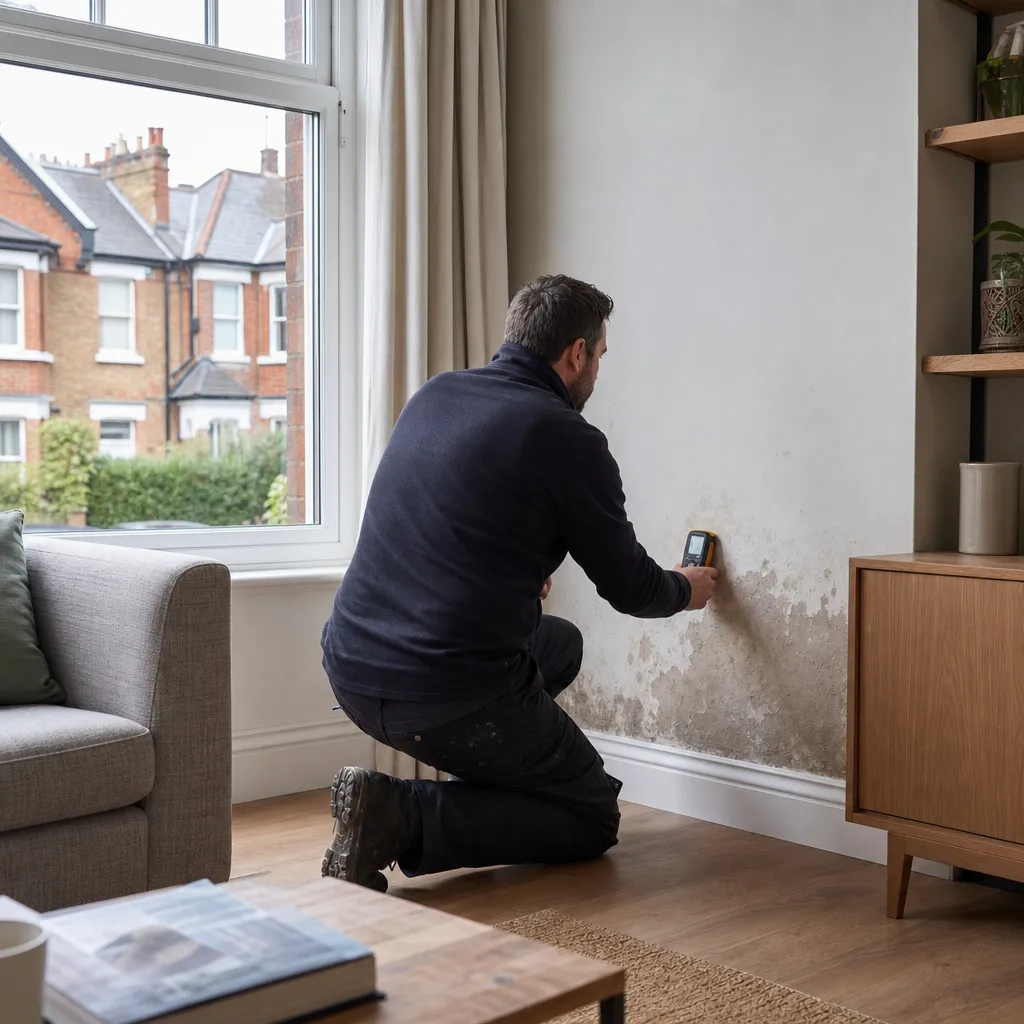
Managing Property and Contents After Damp Treatment
After damp treatment in a UK home, allow walls to dry fully before re-plastering or decorating — this typically takes six months to two years depending on construction and damp severity.
 Surveys & Inspections
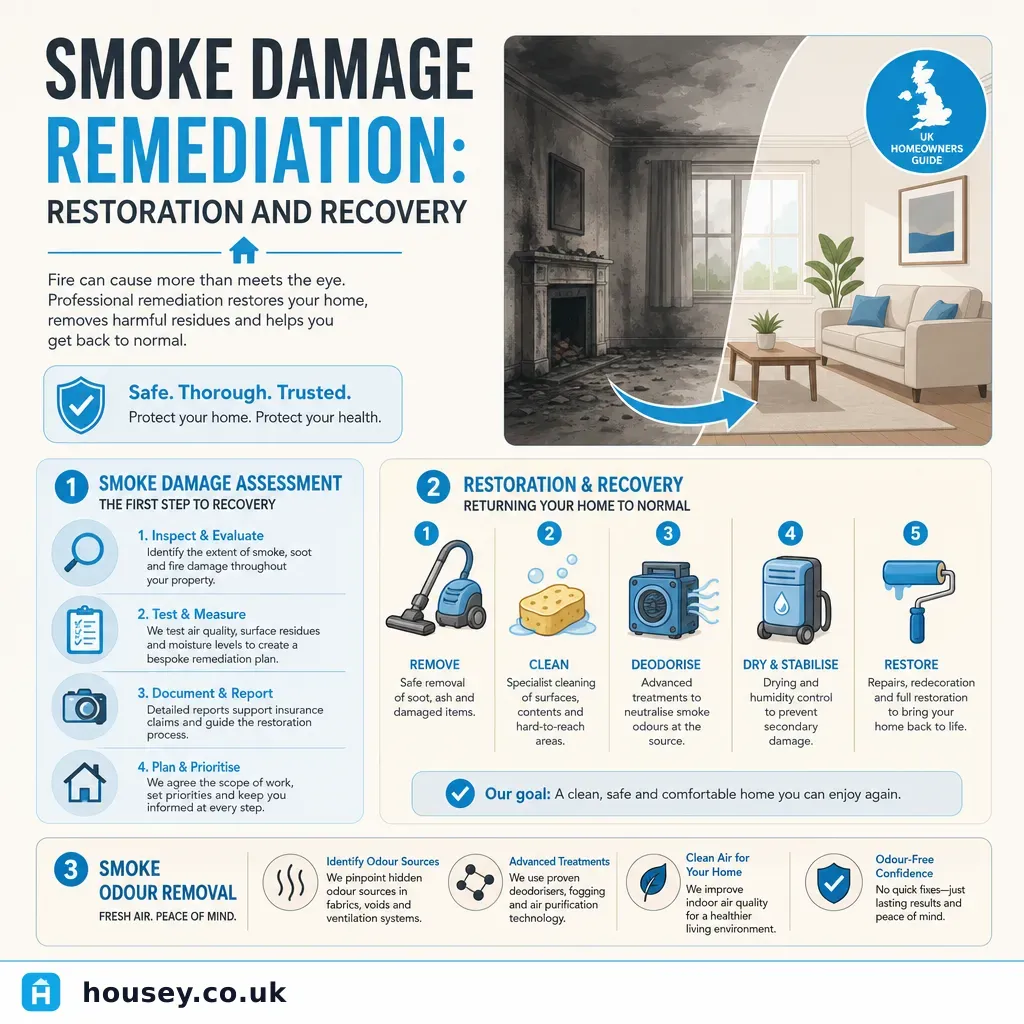
Smoke Damage Remediation: Restoration and Recovery
After a fire or smoke event, professional remediation involves safety assessment, dry cleaning to remove soot, chemical treatment, structural drying, and odour treatment.
 Surveys & Inspections
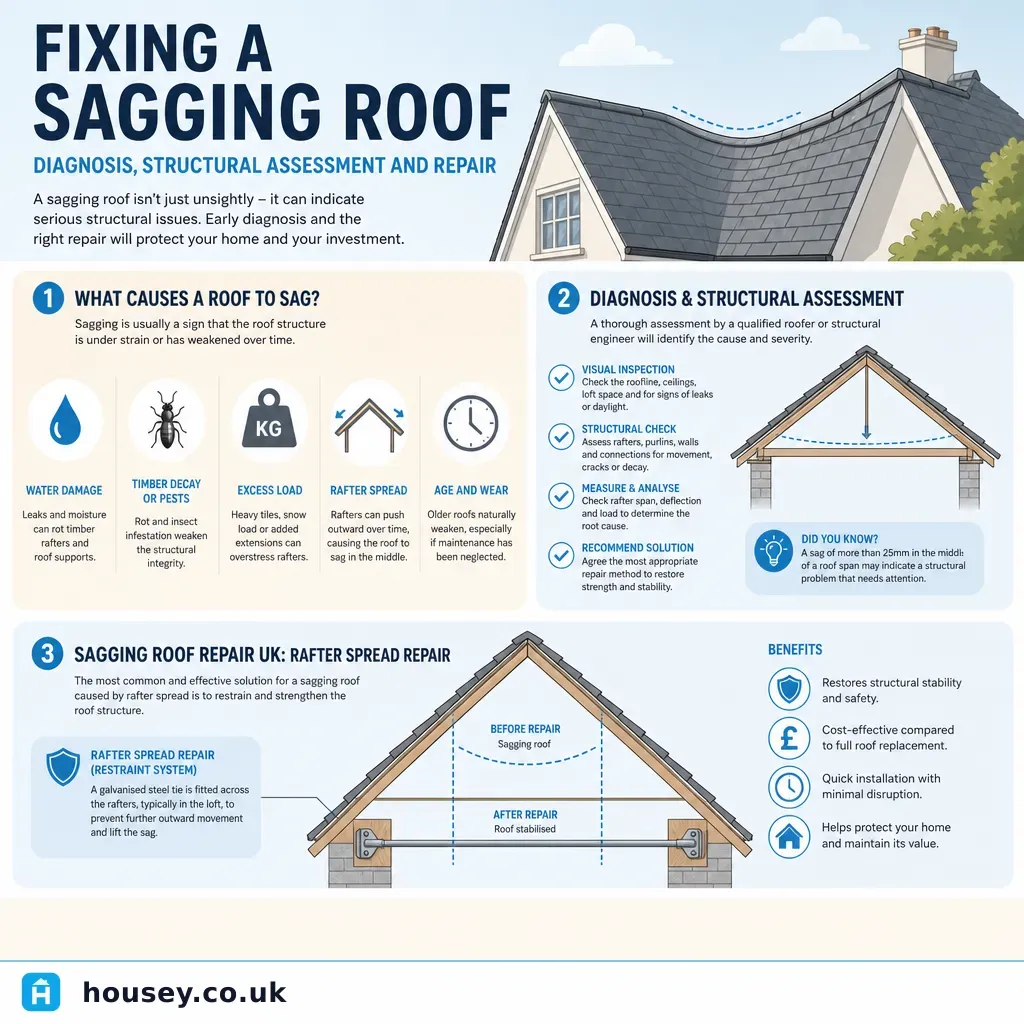
Fixing a Sagging Roof: Diagnosis, Structural Assessment and Repair
A sagging roof usually points to failed or overloaded roof timbers, rafter spread, or a compromised ridge board.
 Surveys & Inspections
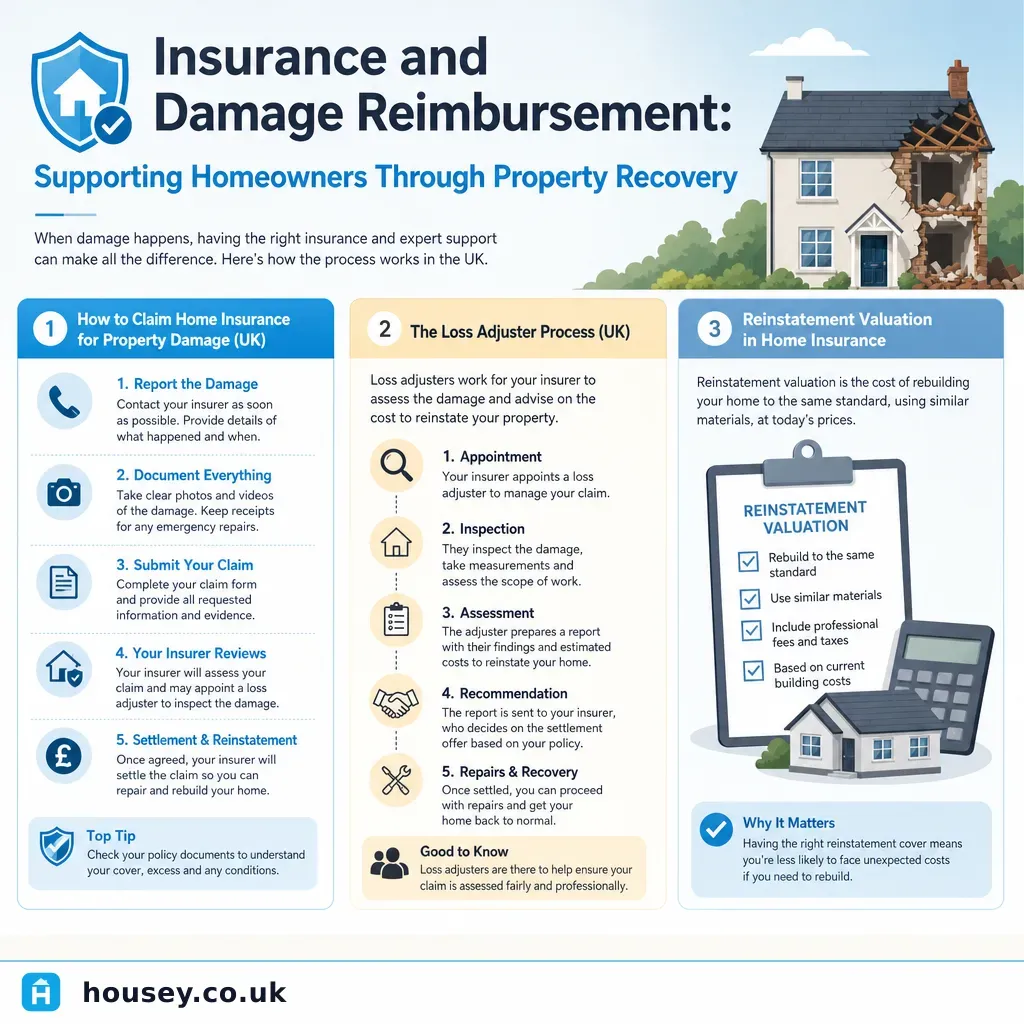
Insurance and Damage Reimbursement: Supporting Homeowners Through Property Recovery
After property damage, your insurer will typically appoint a loss adjuster to assess the claim.
 Surveys & Inspections
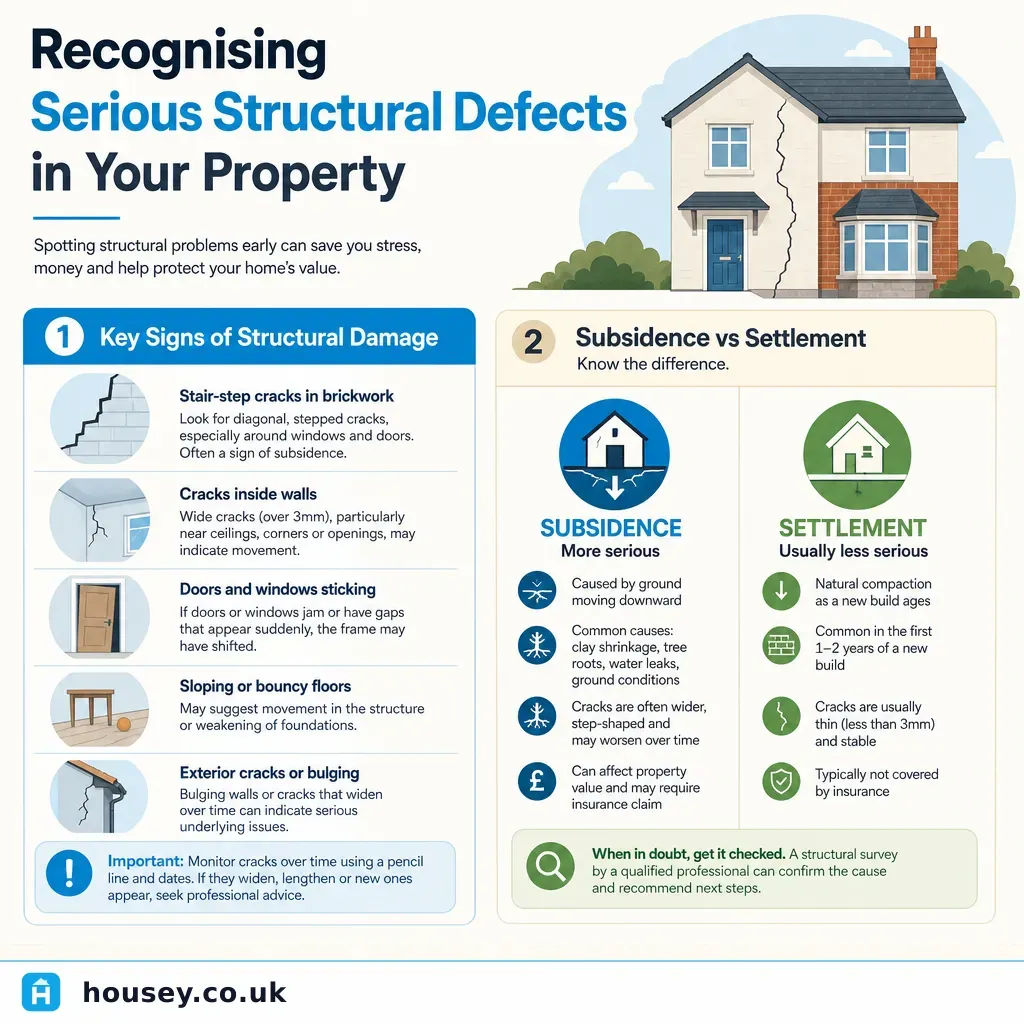
Recognising Serious Structural Defects in Your Property
Serious structural defects in UK homes include wide or diagonal cracks through brickwork, bowing or leaning walls, a sagging roof ridge, and floors or door frames notably out of level.