Sagging Lintel Repair Costs and Structural Solutions
By Housey · Last reviewed 11th of May 2026
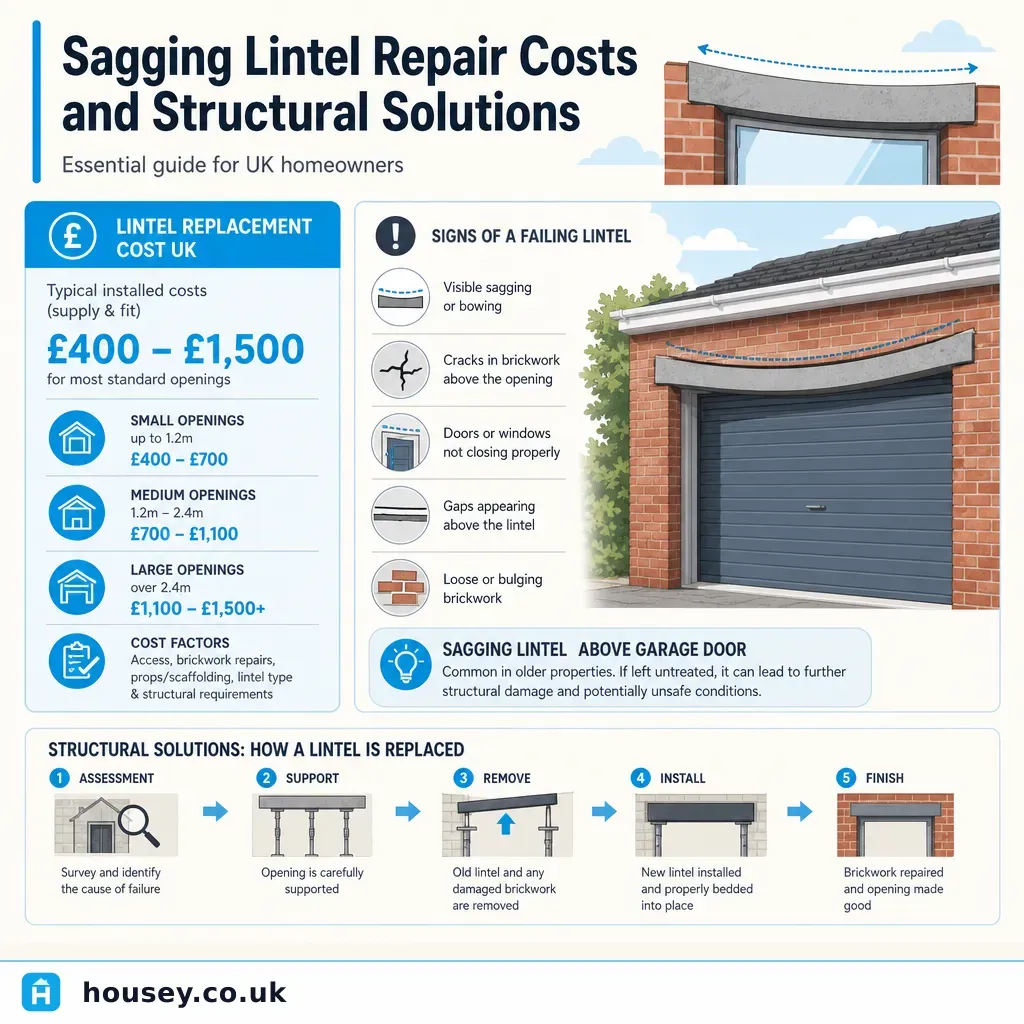
Sagging Lintel Repair Costs and Structural Solutions
A failing lintel is more than a cosmetic problem — it is a structural defect that can allow masonry above an opening to drop, causing cracking, water ingress, and in serious cases partial wall collapse. The issue most commonly surfaces during a building survey, when a homeowner notices stepped cracks above a window or door, or when a garage door opening begins to distort. Getting the right diagnosis early limits both the cost and the disruption of repair.
Key points
- A lintel carries the weight of masonry or structure above an opening; failure directly affects the structural integrity of the wall above windows, doors, and garage entrances.
- Stepped diagonal cracking running from the corners of an opening up through mortar joints is one of the most reliable early signs of lintel distress — distinct from ordinary shrinkage cracking elsewhere in a wall.
- Steel lintels corrode when moisture reaches them through failed pointing or defective cavity trays; rust-stained masonry directly above an opening is a warning sign that warrants professional assessment.
- Indicative UK costs for lintel replacement range from approximately £500–£1,500 for a standard window opening to £2,500–£5,000 or more for a wide garage door lintel requiring shoring and masonry reinstatement (indicative costs, last reviewed 2026-05-11; quotes vary widely by location, access, and extent of damage).
- Building Regulations Approved Document A requires that any structural repair maintains the load-bearing continuity of the wall; temporary shoring must be in place before the existing lintel is removed.
What causes lintels to fail?
Lintels span openings and carry load transferred from the structure above. Failure is rarely sudden — it develops over years as one or more underlying conditions worsen.
Corrosion of steel lintels. Most lintels installed in UK properties from the 1960s onwards are galvanised steel. When the cavity tray above the lintel fails, water tracks down and rests on the lintel's upper flange. Rust forms, expands, and spalls the surrounding mortar and brickwork. Once cracking appears, water ingress accelerates further.
Inadequate bearing length. A lintel must rest on a sufficient length of masonry at each end — typically 150 mm minimum for steel lintels under Approved Document A. A lintel that was undersized at installation may show signs of movement years later, particularly after additional loads are introduced — for example following a loft conversion or removal of internal walls.
Concrete spalling. Older precast concrete lintels — common in 1950s–1970s construction — can suffer carbonation and reinforcement corrosion, causing the concrete to split and the lintel to lose structural section.
Stone and timber lintels in older properties. Pre-Victorian and Victorian properties often feature natural stone or timber lintels. Stone can fracture along natural bedding planes; timber can rot if exposed to moisture, particularly at the bearing ends.
Settlement or thermal movement. Differential settlement can load lintels unevenly. Thermal expansion in long steel lintels — notably above wide garage openings — can push against surrounding masonry if no movement provision was made at installation.
Recognising the signs
Do not assume a crack above a window or door is minor until a professional has assessed it. The following are red flags that suggest lintel distress rather than ordinary shrinkage cracking:
- Stepped diagonal cracking running from the corners of an opening up through mortar joints
- Horizontal cracking along the mortar joint immediately above the lintel
- Visible bow or deflection in the brickwork course directly above an opening
- Rust staining or brown streaks running down the face of brickwork, originating at mortar joints above the opening
- A door or window that has recently begun to stick or bind, particularly in the upper corner nearest the opening
- Displaced or missing bricks in the course directly above the lintel
Hairline cracks in render above an opening are less immediately alarming but should be monitored and documented with dated photographs.
Lintel types: a comparison
Lintel type | Typical property era | Common failure mode | Repairability |
|---|---|---|---|
Galvanised steel (box or RSJ) | 1960s–present | Corrosion from moisture; rust jacking | Replace with new steel; moderate-to-complex job |
Precast concrete | 1950s–1970s | Carbonation, reinforcement corrosion, spalling | Often replaced rather than repaired |
Natural stone | Pre-1900 | Fracture along bedding planes, weathering | Repair or replace with matching stone; specialist required |
Timber | Pre-Victorian to Edwardian | Rot, particularly at bearing ends | Replacement usually required; timber or steel substitute |
Brick arch | Georgian to Victorian | Arch spreading, mortar loss | Repointing; structural tie if arch has spread |
Repair options and indicative costs
The appropriate repair depends on lintel type, opening width, the degree of distress, and whether surrounding masonry requires reinstatement. The figures below are indicative UK costs, last reviewed 2026-05-11, and should be used for budgeting purposes only — always obtain at least three written quotes from competent contractors.
Like-for-like steel lintel replacement (window, up to 1.2 m span): approximately £500–£1,500, including temporary shoring, removal of the failed lintel, installation of the replacement, and masonry making-good.
Wide-span replacement (garage door lintel, 2.4 m+): approximately £1,800–£4,500 or more, depending on the load above the opening, access constraints, shoring requirements, and the extent of brickwork reinstatement required.
Concrete lintel replacement: approximately £600–£2,000 for a standard window opening; more if surrounding blockwork or a concrete frame requires significant making-good.
Emergency shoring only (temporary support pending specification): approximately £300–£800 for a contractor to install props or needles while a structural engineer's design is prepared.
Masonry repair and repointing only (lintel confirmed structurally sound): approximately £200–£600 for localised repointing and targeted brick replacement where a professional has confirmed the lintel itself is not the source of distress.
Worked scenario: 1960s semi with sagging garage lintel
A homeowner in a 1960s semi-detached in the East Midlands notices rust staining and a pronounced bow in the brickwork above the integral garage door — a 2.5 m wide steel box lintel. A RICS Level 3 Building Survey identifies approximately 20 mm of deflection and splitting mortar joints along the full span. The surveyor recommends instructing a structural engineer to specify the replacement lintel section and bearing design before approaching contractors. The engineer's specification leads to a contractor quote of £2,800 for temporary shoring, removal of the failed lintel, installation of a new hot-rolled steel section on padstone bearings, and brickwork reinstatement — plus £450 for the engineer's design fee and completion inspection.
Important limitations
This article provides general information about lintel defects and repair approaches. The severity of any lintel failure, the appropriate structural solution, and the likely cost depend on factors that cannot be assessed without a physical inspection: wall construction, load paths above the opening, condition of surrounding masonry, and access. Nothing in this article constitutes structural or engineering advice. Always commission a professional assessment before any repair work begins.
When to get professional help
Instruct a chartered surveyor or structural engineer promptly if you observe any of the following:
- Visible deflection, bowing, or stepping in the brickwork above any opening
- Cracking that has widened or extended since you first noticed it
- A door or window that has stopped operating normally beneath a cracked or rust-stained lintel
- Rust staining above an opening combined with cracking or displaced brickwork
- A lintel flagged in a previous survey as requiring monitoring that has not been re-assessed
Do not attempt to remove, prop, or otherwise alter a failing lintel without a structural engineer's design and temporary shoring in place.
What to ask a qualified professional
Before instructing a contractor to begin any lintel repair, ask a structural engineer or chartered building surveyor:
- What is the cause of the lintel failure — is it structural movement, material deterioration, or moisture ingress?
- What load is carried above this opening, and how will it be safely transferred during the replacement?
- Should temporary shoring be specified before the existing lintel is touched?
- What lintel section do you specify for the replacement, and what bearing length is required at each end?
- Will you produce a written specification or dimensioned drawing for the contractor to work to?
- Will the completed repair require building control notification under the Building Regulations?
- Do I need to notify my building insurer before works begin?
How Housey can help
If a surveyor has flagged a lintel defect or you have noticed warning signs yourself, Housey can connect you with local professionals. Book a structural survey to get a full picture of the defect and its implications before appointing a contractor, or find a qualified structural engineer to assess, specify, and oversee the repair from start to finish.
Frequently asked questions
How urgent is a sagging lintel?
The urgency depends on the degree of deflection, the load above the opening, and how quickly the condition is progressing. Any visible bow in the masonry above an opening should be assessed by a structural engineer or chartered surveyor promptly — do not wait for the next routine survey. If cracking is widening or masonry is displaced, treat it as urgent.
Do I need building regulations approval to replace a lintel?
Yes, in most cases. Replacing a lintel is structural work and will usually require building control notification under the Building Regulations in England. This can be handled by a local authority building control officer or an approved inspector. Your structural engineer or contractor should advise on the correct notification route for your project.
Will my home insurance cover a failing lintel?
Most standard policies exclude gradual deterioration and maintenance-related defects. A lintel that has corroded progressively over time is unlikely to be covered. A sudden failure caused by a specific insured event may be claimable, but check your policy schedule carefully and notify your insurer before any repair works begin.
Can a sagging lintel be repaired rather than replaced?
In most cases, a structurally compromised lintel must be replaced rather than repaired. Where the lintel itself is confirmed structurally intact and only surrounding masonry is defective, targeted repointing and brick replacement may suffice — but this determination must be made by a structural engineer who has physically inspected the lintel and its bearings.
Sources and further reading
- Approved Document A: Structure — GOV.UK
- RICS Home Survey Standard — RICS
- Structural safety in construction — HSE
Useful next reads
 Surveys & Inspections
Identifying Asbestos Insulation: What You Need to Know for Your Property
Asbestos insulation was widely used in UK properties built before 2000, commonly found in pipe lagging, ceiling tiles, loose-fill loft insulation, and around boilers.
 Surveys & Inspections
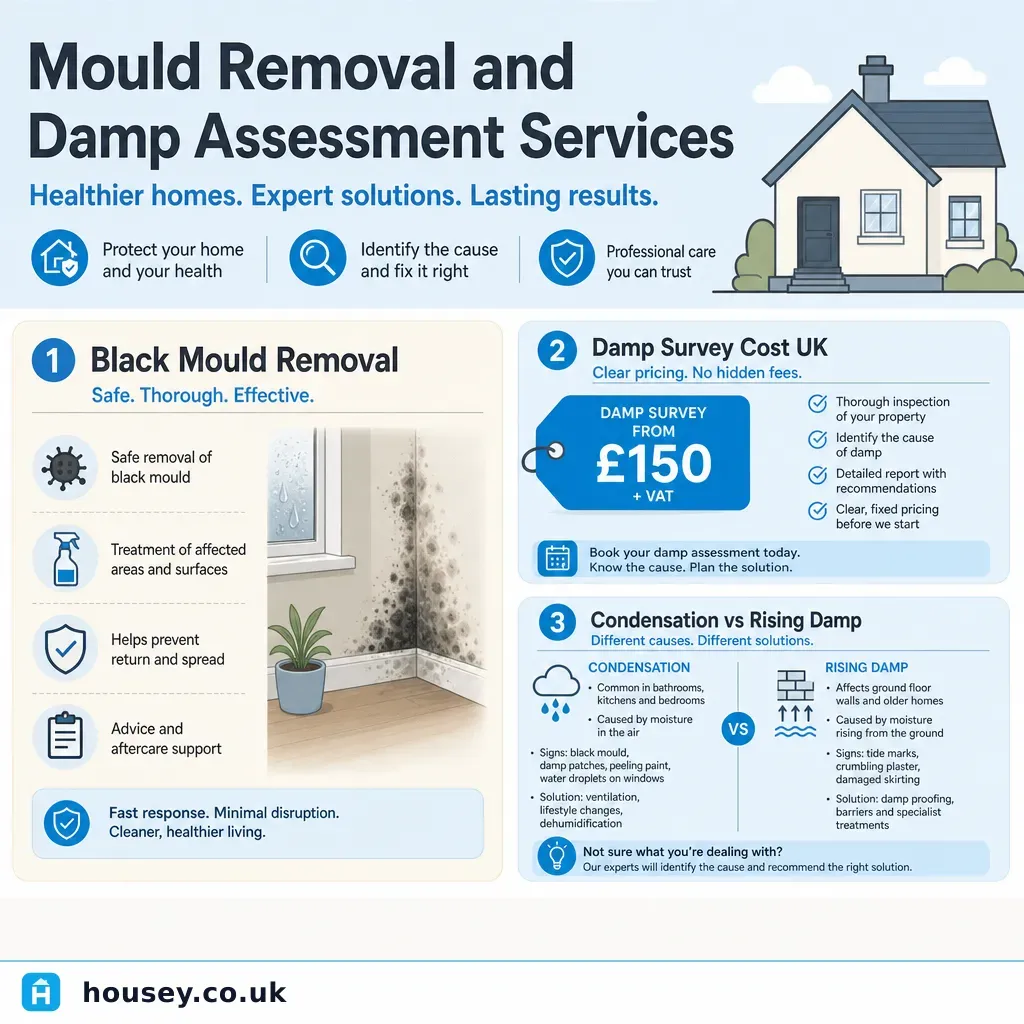
Mould Removal and Damp Assessment Services
Professional mould removal and damp assessment starts with identifying the moisture source—condensation, rising damp, or penetrating damp—before any treatment begins.
 Surveys & Inspections
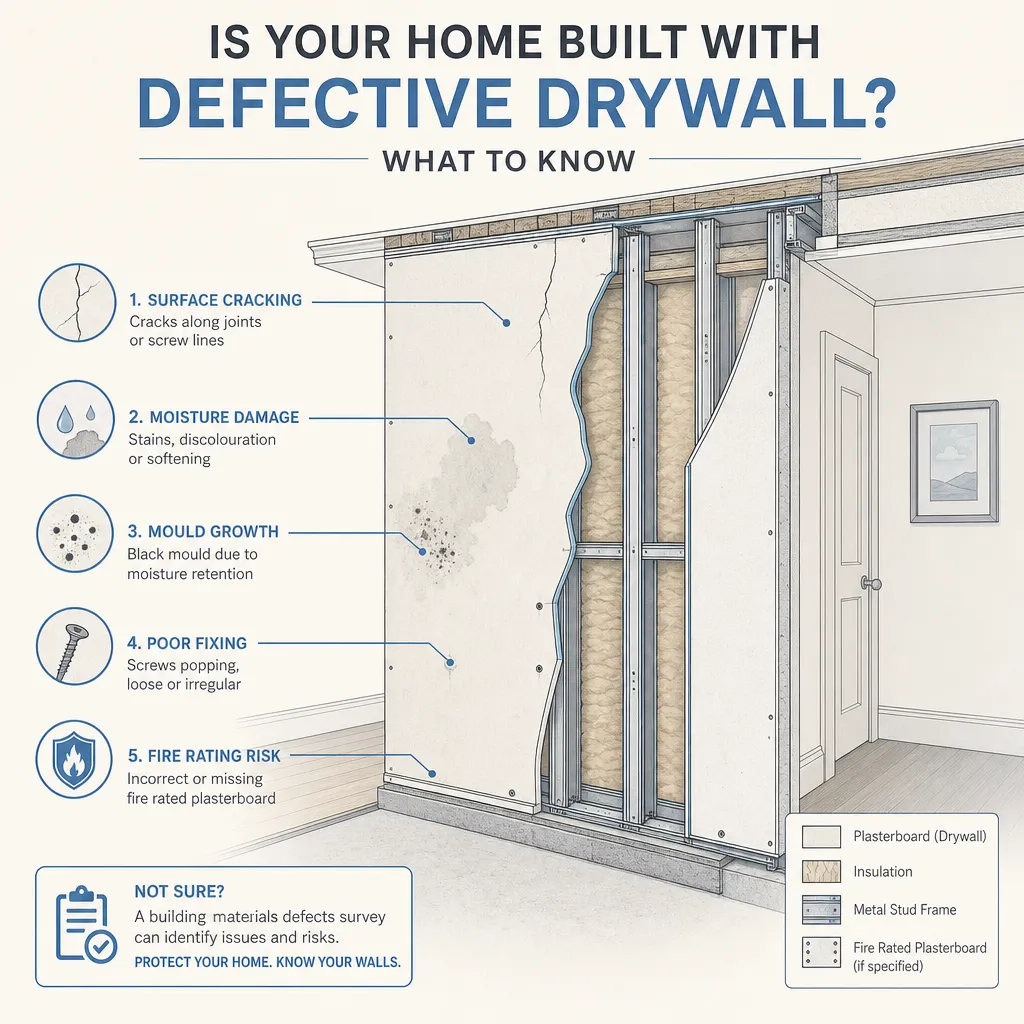
Is Your Home Built with Defective Drywall? What to Know
Contaminated Chinese drywall — as seen in US homes built 2001 to 2009 — is not a documented widespread problem in UK properties, where plasterboard is manufactured primarily to European standards.
 Surveys & Inspections
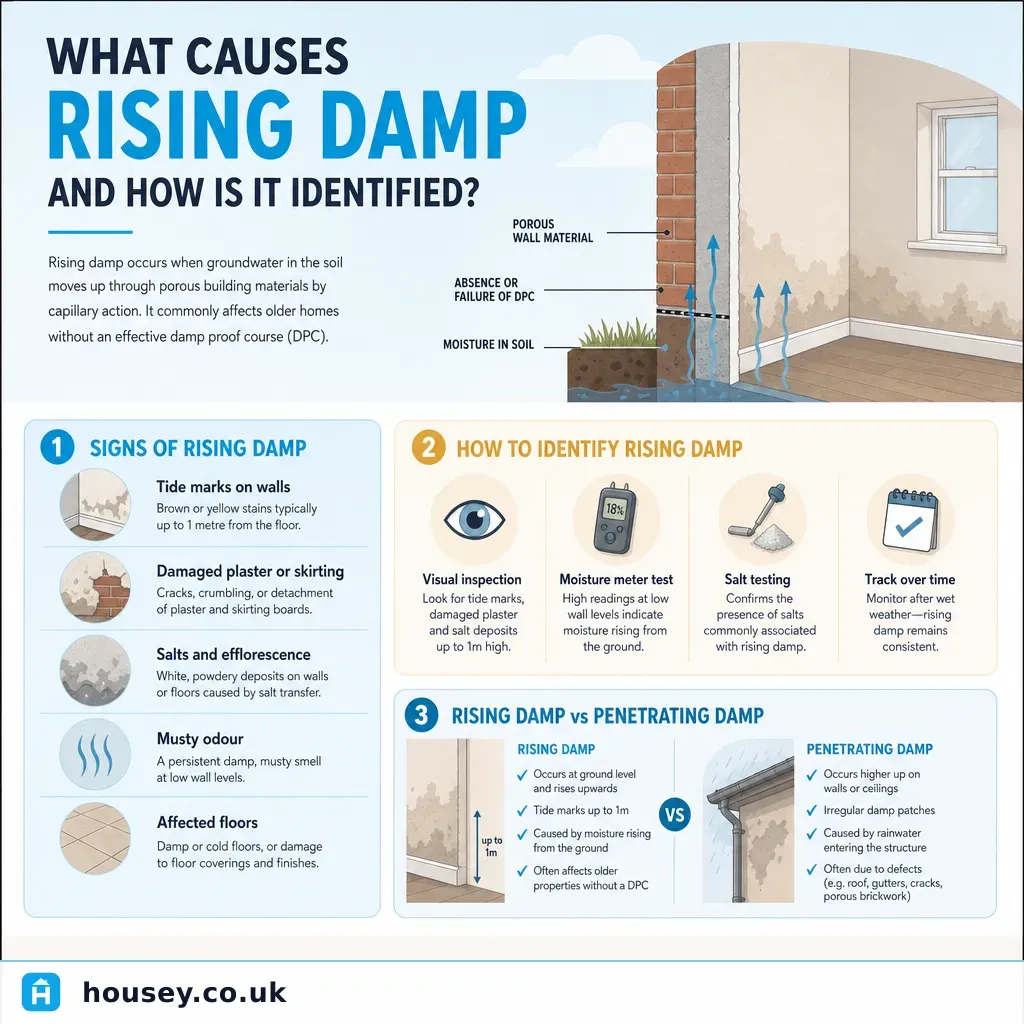
What Causes Rising Damp and How Is It Identified?
Rising damp occurs when groundwater travels upward through masonry via capillary action, usually because the damp-proof course (DPC) has failed, is absent, or has been bridged.
 Surveys & Inspections
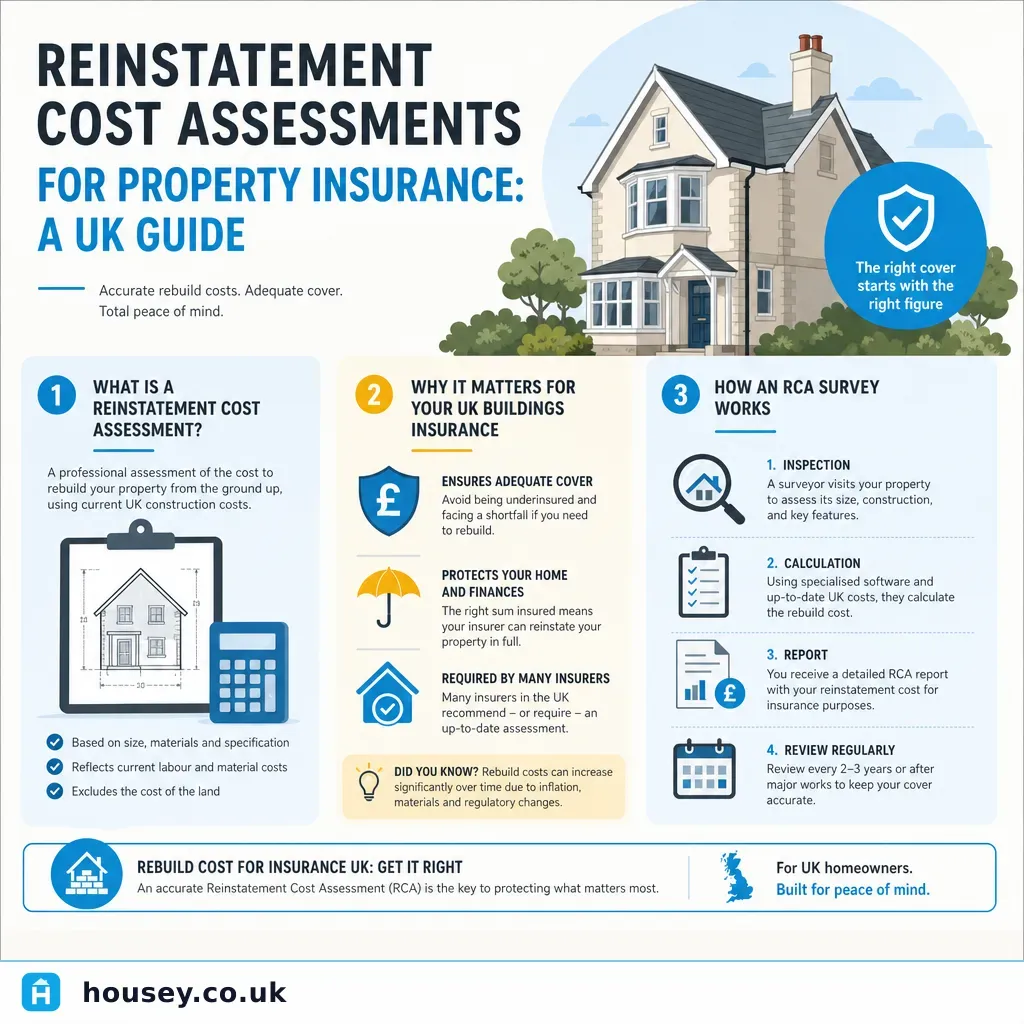
Reinstatement Cost Assessments for Property Insurance: A UK Guide
A reinstatement cost assessment (RCA) estimates what it would cost to completely rebuild your property if it were destroyed.