Basement Damp and Flooding: Causes, Diagnosis, and Solutions
By Housey · Last reviewed 31st of May 2026
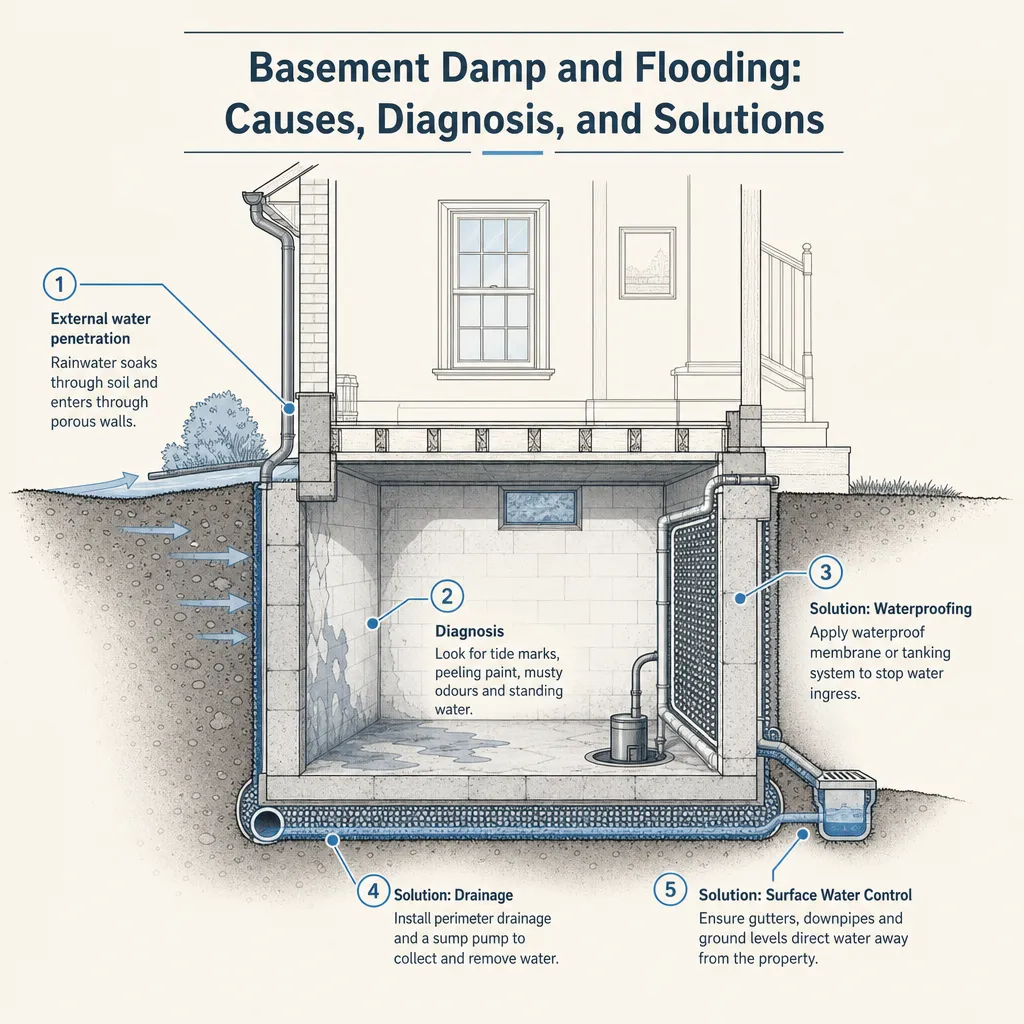
Basement Damp and Flooding: Causes, Diagnosis, and Solutions
Basement dampness and flooding are among the most common — and most frequently misdiagnosed — problems in UK homes with below-ground habitable space or storage. For older terraced properties in Victorian and Edwardian streets, 1930s semi-detached homes with original cellars, and properties converted to add a lower ground-floor level, moisture ingress can range from occasional seepage to active flooding that damages structure, services, and belongings. Getting the diagnosis right before committing to remediation matters enormously: the wrong waterproofing approach can make the problem worse and leave you with a costly failed installation.
Key points
- BS 8102:2022 (Code of practice for protection of below-ground structures against water from the ground) is the current British Standard governing basement waterproofing design; any remediation work should comply with it.
- There are three distinct types of basement water ingress — groundwater (hydrostatic pressure), surface water (drainage failure and rainwater), and condensation — each requiring a different remediation approach.
- The Property Care Association (PCA) specifies that below-ground waterproofing surveys and designs should be carried out by a specialist holding CSRT (Certificated Surveyor in Remedial Treatments) or CSTDB (Certificated Surveyor of Timber and Dampness in Buildings) qualifications.
- A CCTV drainage survey of below-ground drainage runs is frequently necessary to diagnose surface-water ingress accurately before any waterproofing design can be finalised.
- Building regulations approval under Approved Document C (site preparation and resistance to contaminants and moisture) is required when converting a cellar or basement to habitable use in England and Wales.
Types of basement water ingress
Understanding the source of water ingress is the critical first step. Visual inspection alone often cannot distinguish between the three main types, which is why specialist assessment is almost always required before any remediation is specified.
Groundwater under hydrostatic pressure
In areas with high water tables — common in river valleys, low-lying urban areas, and clay soils — groundwater pushes through basement walls and floor slabs under pressure. Typical signs include:
- Water appearing at or near the wall-floor junction, or directly through the floor slab
- Damp patches that worsen in winter and after prolonged wet weather
- Tide marks at varying heights on walls
- White crystalline efflorescence (salt deposits) on brick and blockwork
Surface water ingress
Surface water reaches basements through failed drainage, blocked gullies, inadequate external ground levels, failed external render, or porous brickwork. Typical signs include:
- Water ingress occurring specifically during or shortly after heavy rain
- Damp spots near window reveals, door frames, or where services enter the building
- Cracked or failed external render
- Evidence of overflowing or blocked gutters and downpipes
Condensation
In cellars and basements used for storage, warm moist air meeting cold masonry surfaces produces condensation. This is frequently confused with penetrating damp. Condensation typically shows as generalised surface moisture, mould growth, and musty odour — without distinct tide marks or directional water staining.
Comparing basement waterproofing approaches
Type | How it works | Best suited to | Key limitations |
|---|---|---|---|
Type A — barrier waterproofing | Tanking slurry, cementitious render, or sheet membranes applied to walls and floor to prevent water entry | Moderate groundwater pressure; renovation of moderately damp basements | Relies on complete adhesion; any breach allows water in; not reliable under high hydrostatic pressure alone |
Type B — structurally integral | Waterproof concrete construction designed to resist water ingress | New-build basements; major structural underpinning | Requires structural engineering input; not a retrofit solution for existing masonry |
Type C — drained cavity system | Cavity drainage membrane (CDM) channels water entering the structure to a perimeter drain and sump pump | All basement types; high water tables; most retrofit situations | Pump maintenance required; power-failure risk; sump void needed |
Combined A + C | Tanking plus CDM as belt-and-braces | High water-table conditions; occupied habitable basements | Higher cost; most robust approach for permanently occupied spaces |
Classification source: BS 8102:2022.
Diagnosing the problem: a homeowner checklist
Before commissioning any remediation, gather the following information for your specialist surveyor:
Important limitations
This article provides general information about common causes of basement dampness and flooding in UK residential properties. Moisture ingress in below-ground structures can have complex, interacting causes, and the correct diagnosis requires physical inspection by a qualified specialist. Nothing here constitutes a diagnosis of any specific property's condition, nor a specification for remediation works. Building Regulations compliance, structural safety, and long-term waterproofing performance all depend on site-specific conditions that only a qualified professional can assess.
When this becomes urgent
Stop relying on general guidance and seek immediate professional assessment if:
- Active flooding is occurring near electrical installations — isolate power at the consumer unit and contact a registered electrician and your insurer
- Water ingress is accompanied by cracking in the floor slab or walls that is widening, stepped, or diagonal
- A sewage smell accompanies water ingress, suggesting drain failure or sewer surcharge
- Neighbours or the local authority have flagged issues with shared drainage infrastructure
- The basement is used as a habitable bedroom and mould is visibly present
- You are purchasing the property and have not yet exchanged — a specialist pre-purchase survey is strongly advisable
What to ask a qualified professional
Before instructing a basement waterproofing specialist or damp surveyor:
- What qualifications do you hold — CSRT, CSTDB, or equivalent PCA-recognised credentials?
- Are you a member of the Property Care Association?
- Will you carry out an independent diagnosis before specifying a solution, or do you primarily install a single proprietary system?
- Will you recommend a CCTV drainage survey if surface water ingress is suspected?
- Which British Standard does your proposed design comply with — it should be BS 8102:2022?
- What warranty do you offer, and is it backed by an insurance-backed guarantee from a recognised provider?
- Is building regulations approval required for the proposed works, and will you manage that application?
- What ongoing maintenance does the solution require — particularly for sump-and-pump systems?
When to get professional help
Any basement water ingress beyond surface condensation warrants specialist assessment before any remediation is attempted. The PCA directory lists qualified surveyors in your area. A RICS-regulated surveyor with experience in below-ground moisture can provide an independent diagnosis where there is any dispute about causes or remediation scope.
Red flags indicating a more serious problem requiring immediate professional attention:
- Water appearing under visible pressure through the floor slab
- Structural cracking in basement walls or floor coinciding with active water ingress
- Water ingress suspected to involve sewage contamination
- Damp extending upward into the ground-floor structure above the basement
- Flooding affecting multiple properties on the same terrace or street — this may indicate a shared drainage or groundwater issue requiring coordinated investigation
How Housey can help
Housey can connect you with local specialists for a damp and timber survey to diagnose moisture sources accurately, a drainage survey to inspect the below-ground drainage that may be contributing to the problem, and drainage contractors to carry out any repairs once the cause has been established.
Frequently asked questions
Is basement damp always caused by groundwater?
No. Many UK basement damp problems stem from surface water drainage failure or condensation rather than rising groundwater. Because the correct treatment differs significantly between types, a proper diagnosis by a qualified specialist must come before any remediation is specified or installed.
Do I need planning permission to waterproof my basement?
Planning permission is not normally required for basement waterproofing in England. However, if you are converting a cellar or basement to a habitable room, building regulations approval — particularly under Approved Document C for moisture resistance — is required. Check with your local authority if you are unsure whether the proposed work constitutes a change of use.
How much does basement waterproofing cost in the UK?
Costs vary considerably by system type, basement size, and construction. Indicative UK costs, last reviewed 2026-05-31, range from approximately £2,000–£5,000 for a modest tanking application to £15,000–£40,000 or more for a full cavity drainage membrane system with sump and pump. Always obtain at least three written quotations from PCA-member specialists.
What is a cavity drainage membrane?
A cavity drainage membrane (CDM) is a dimpled plastic sheet fixed to basement walls and floor that creates a drainage void, channelling water entering the structure into a perimeter drain and sump from which it is pumped out. Classified as Type C waterproofing under BS 8102:2022, it is one of the most commonly used retrofit approaches in existing UK homes.
Can damp-proof paint solve basement water ingress?
Damp-proof paints and waterproof coatings can manage mild surface moisture and condensation, but are not suitable for active water ingress under hydrostatic or surface-water pressure. Applying a surface coating over an active water-entry problem often traps moisture within the wall structure, leading to greater damage over time. Always obtain an independent specialist assessment before applying any treatment.
Sources and further reading
- BS 8102:2022 — protection of below-ground structures against water — BSI Group
- Property Care Association — find a specialist and guidance notes — Property Care Association
- Long-term flood risk information for England — Environment Agency / GOV.UK
- Approved Document C — site preparation and resistance to contaminants and moisture — GOV.UK / Ministry of Housing, Communities and Local Government
- RICS guidance on damp and moisture surveys in buildings — RICS
Useful next reads
 Surveys & Inspections
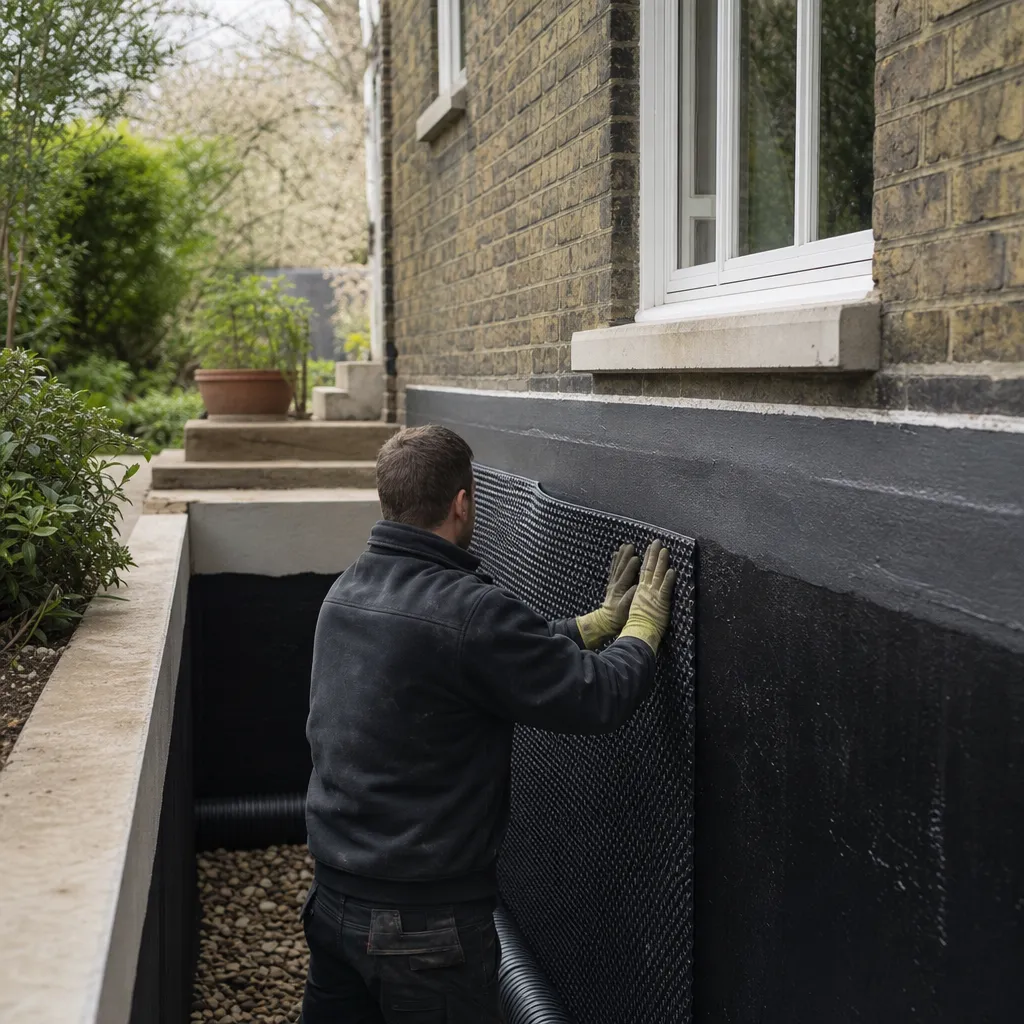
Basement Waterproofing Solutions for Damp Prevention
Basement waterproofing in the UK is governed by BS 8102:2022, which defines three system types: Type A (barrier coatings), Type B (structurally integral concrete), and Type C (cavity drain membrane with sump pump).
 Surveys & Inspections
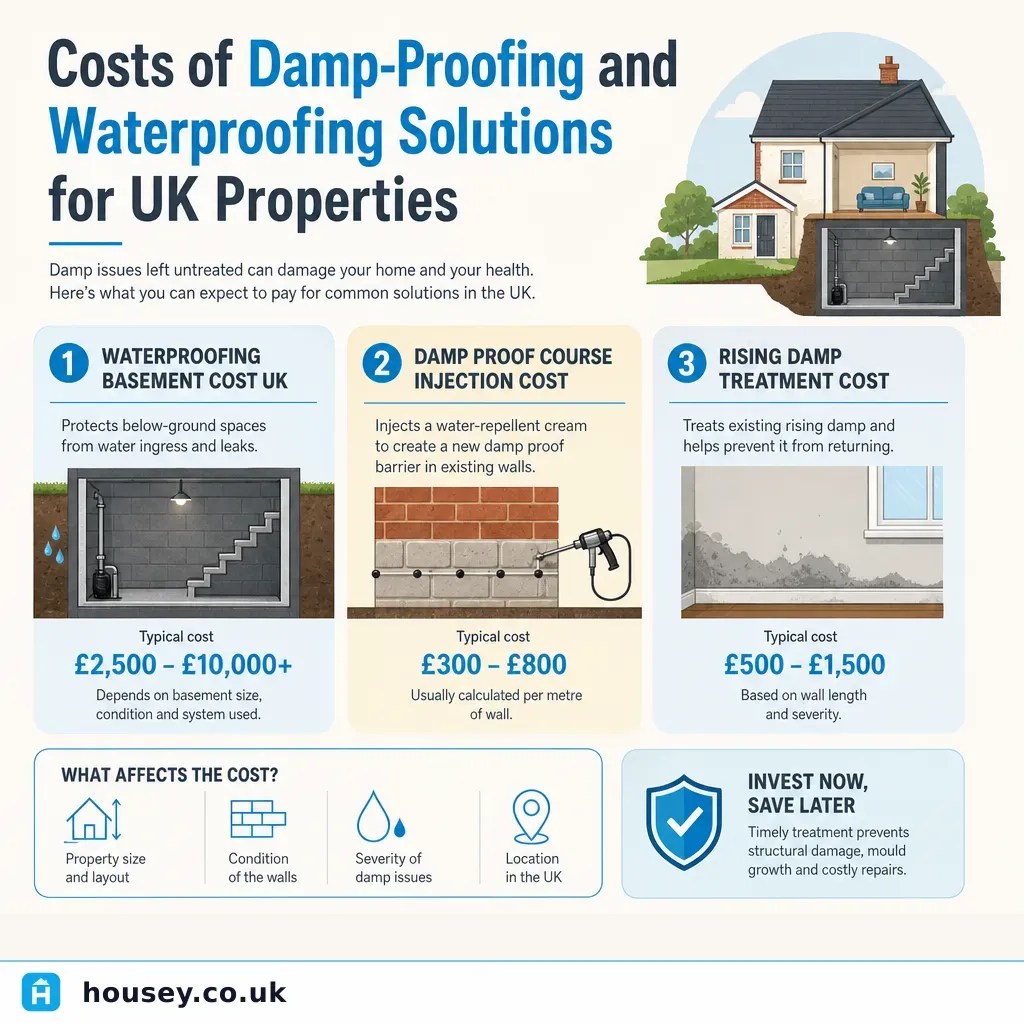
Costs of Damp-Proofing and Waterproofing Solutions for UK Properties
Damp-proofing costs vary by treatment: chemical DPC injection typically costs £300–£800 for a standard terraced house, while internal basement tanking runs £50–£150 per m² and cavity drain membrane systems £30–£80 per m².
 Surveys & Inspections
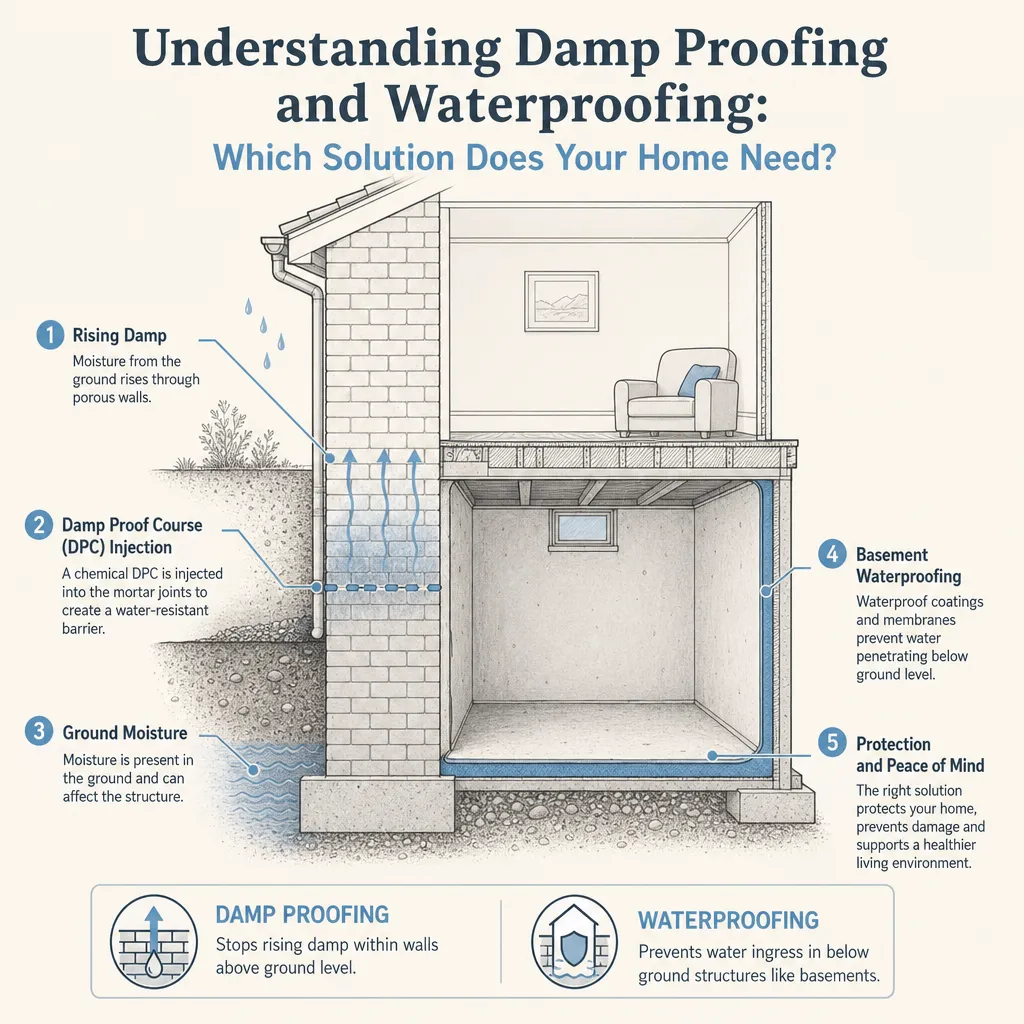
Understanding Damp Proofing and Waterproofing: Which Solution Does Your Home Need?
Damp proofing controls moisture movement through above-ground walls, while waterproofing excludes groundwater from below-ground structures.
 Surveys & Inspections
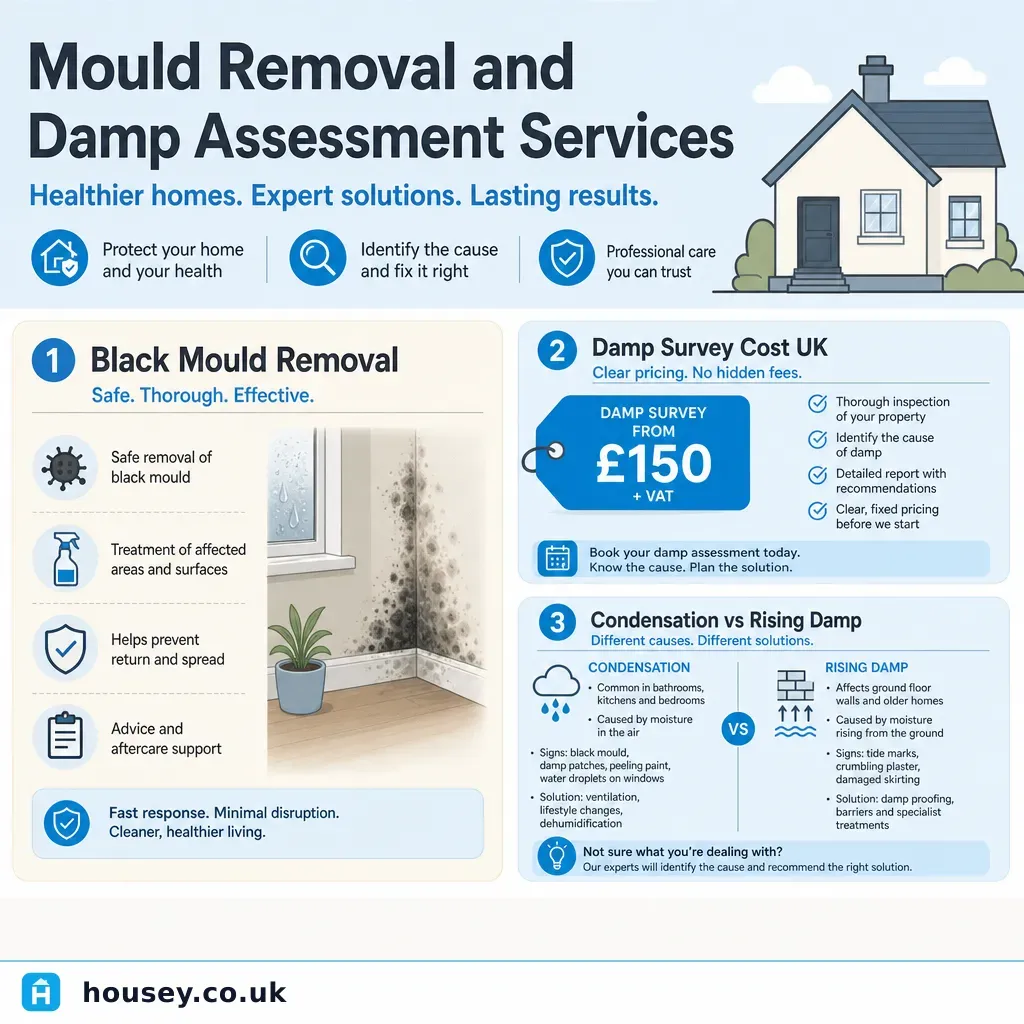
Mould Removal and Damp Assessment Services
Professional mould removal and damp assessment starts with identifying the moisture source—condensation, rising damp, or penetrating damp—before any treatment begins.
 Surveys & Inspections
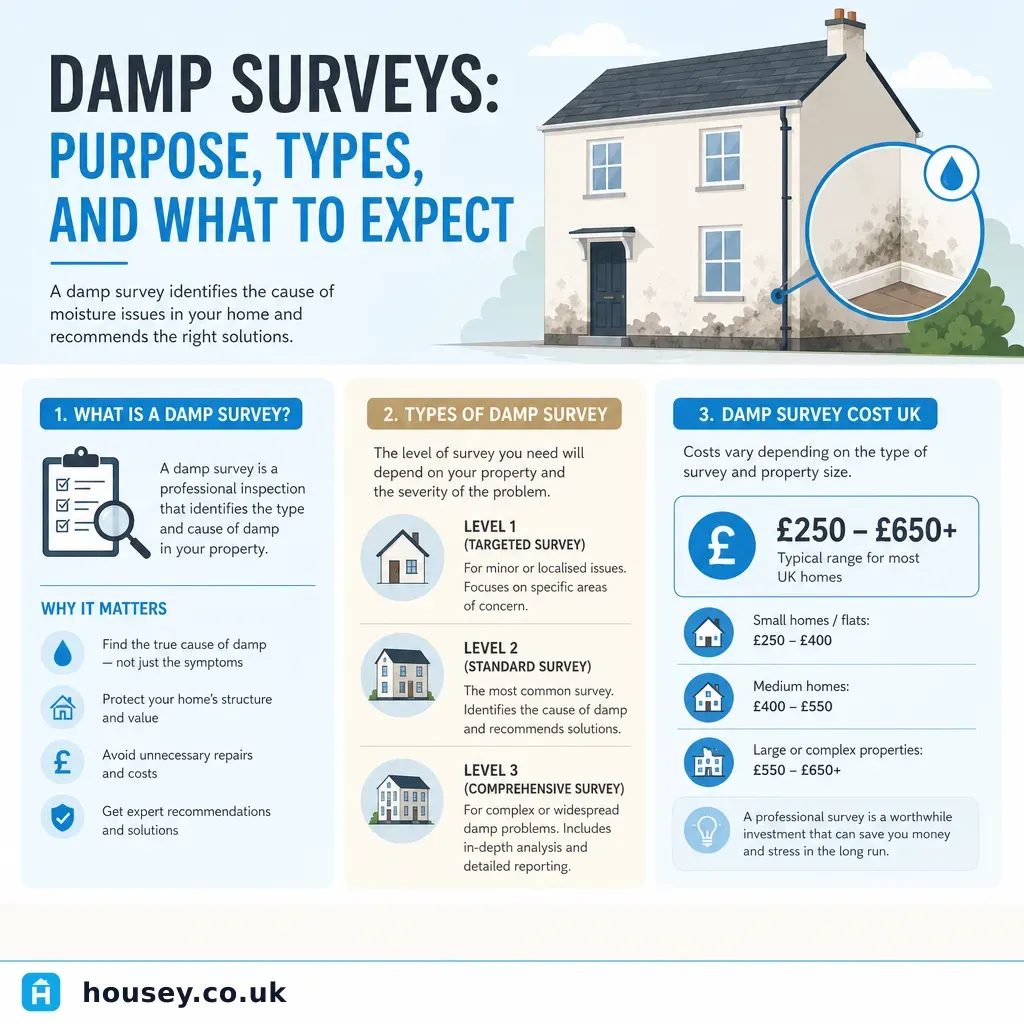
Damp Surveys: Purpose, Types, and What to Expect
A damp survey is a specialist inspection to identify the source, type, and extent of moisture in a property.