Costs of Damp-Proofing and Waterproofing Solutions for UK Properties
By Housey · Last reviewed 30th of May 2026
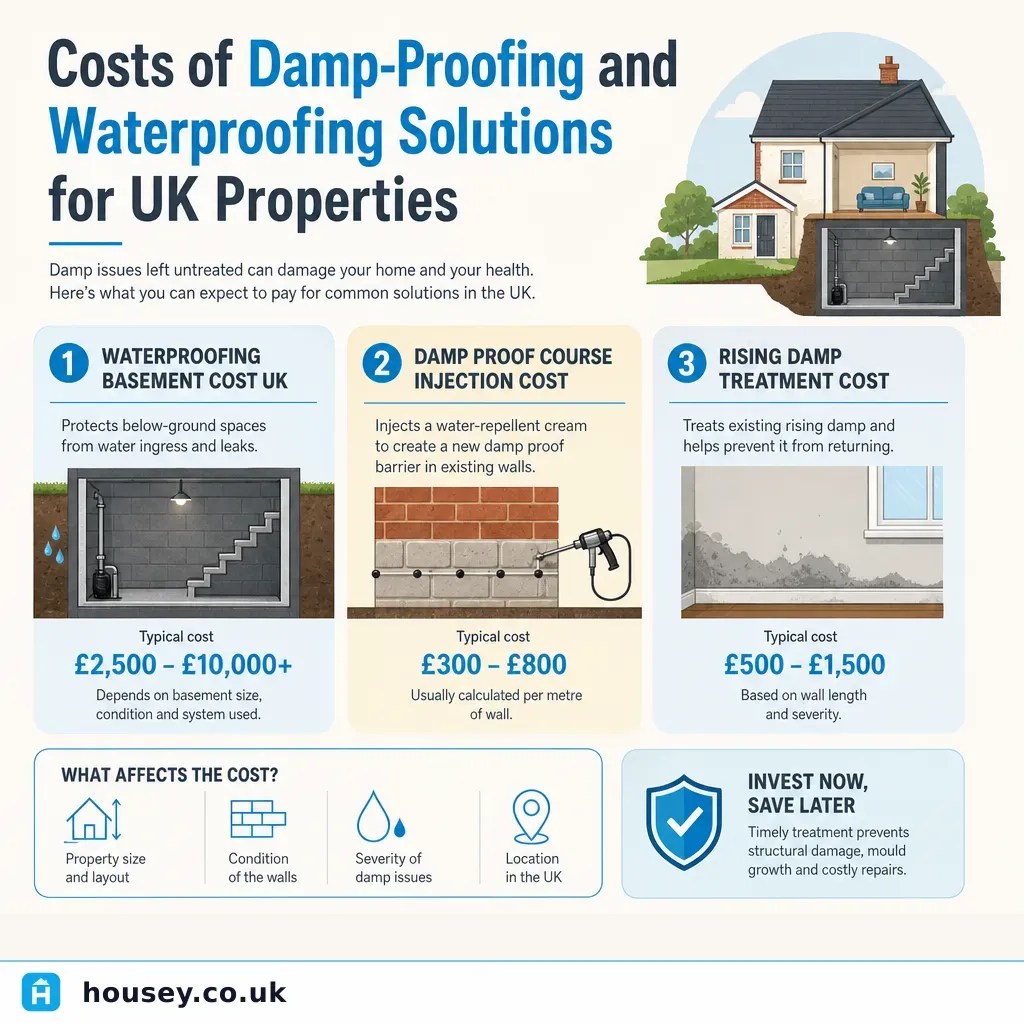
Costs of Damp-Proofing and Waterproofing Solutions for UK Properties
Damp and water ingress are among the most common defects in UK housing stock, affecting Victorian terraces with failed damp-proof courses, solid-wall Edwardian semis, and modern homes with inadequately waterproofed basements alike. Whether a survey has flagged moisture problems or you have noticed tide marks, peeling plaster, or a persistent musty smell, understanding what remediation is likely to cost — and why quotes can vary so widely — helps you evaluate contractor proposals and plan works with confidence.
Key points
- A specialist damp survey typically costs £150–£400 before any remediation begins; identifying the root cause is essential before committing to any treatment.
- Chemical damp-proof course (DPC) injection costs roughly £300–£800 for a standard two-bedroom terraced house (indicative UK costs, last reviewed 2026-05-30).
- Internal basement tanking (cementitious render) typically runs £50–£150 per m²; cavity drain membrane (CDM) systems usually cost £30–£80 per m² installed.
- Rising damp is frequently misdiagnosed — penetrating damp, condensation, and plumbing leaks can produce identical symptoms and require entirely different treatments.
- Building regulations approval is not normally required for like-for-like damp-proofing repairs, but basement conversions that create habitable space do require building control sign-off.
What damp treatment covers — and why identifying the cause matters
Damp remediation is not a single product or process; it is a range of interventions matched to the source of moisture. The three most common categories in UK properties are:
- Rising damp: moisture travelling upward through masonry from the ground, linked to a failed or absent damp-proof course.
- Penetrating damp: water entering through external walls, roofs, or defective pointing — common in solid-walled properties built before the 1920s.
- Condensation: warm, moist air condensing on cold surfaces — the most prevalent moisture problem in UK homes, and one frequently misread as rising or penetrating damp.
Getting the cause wrong means paying for a treatment that will not work. An independent specialist damp survey — separate from a mortgage valuation — should identify the source before any contractor is instructed. RICS-registered surveyors and Property Care Association (PCA) members are the appropriate professionals for this assessment.
Damp-proofing treatment costs: comparison by type
The table below shows indicative costs for common damp remediation methods. Costs vary considerably by region, property size, access, and extent of damage to plaster or timber.
Treatment type | Typical application | Indicative cost (UK, 2026-05-30) | Usually included |
|---|---|---|---|
Chemical DPC injection | Rising damp in solid or cavity walls | £300–£800 per property (small–mid terrace) | Drilling and injection; re-plastering often charged separately |
Cementitious tanking | Basement waterproofing | £50–£150 per m² | Surface preparation, render coat, sealing |
Cavity drain membrane (CDM) | Below-ground waterproofing (retrofit) | £30–£80 per m² | Membrane, fixing, drainage channel; sump pump extra |
Exterior waterproof render | Solid-wall penetrating damp | £60–£120 per m² | Preparation, breathable or waterproof render application |
Electro-osmotic DPC | Rising damp (alternative to injection) | £800–£2,500 per installation | System and cable installation |
Drainage improvement | Penetrating damp at base of walls | £500–£3,000+ | French drain, re-grading, channel drainage |
Indicative UK costs, last reviewed 2026-05-30. Costs vary by region and contractor. Obtain at least three written quotes.
Basement waterproofing: internal versus external approaches
For below-ground spaces, BS 8102:2022 (Code of practice for protection of below-ground structures against water from the ground) recognises three protection types depending on the intended use of the space.
External (Type A — barrier protection): Tanking applied to the outside of the structure. Usually only practical during new-build or major excavation, as exterior walls are typically inaccessible in existing buildings.
Internal (Type B or C): Either integral structural waterproofing built into the concrete, or a cavity drain membrane system (Type C) that manages water ingress rather than stopping it at source. Internal CDM systems are the most practical retrofit option for existing basements.
Sump pumps are almost always required with cavity drain membrane systems, adding approximately £500–£1,500 to the installation cost. BS 8102:2022 recommends dual-pump systems with battery backup for habitable below-ground spaces.
Red flags: when damp signals a more serious problem
Some moisture findings warrant further investigation before any damp-proofing work begins:
- Stepped or diagonal cracking through brickwork alongside damp — may indicate structural movement rather than moisture ingress alone.
- Damp concentrated around a chimney breast or roof junction — often a roofing defect rather than a wall problem.
- Multiple damp patches throughout the property — may suggest a drainage failure, a high water table, or inadequate ventilation rather than a simple DPC failure.
- White salt deposits (efflorescence) on internal walls — consistent with rising damp, but also produced by water ingress from leaking pipes.
- Damp readings in upper floors — almost never rising damp; more likely condensation, a roof defect, or a plumbing leak.
If cracking accompanies moisture, instruct a structural engineer or RICS Level 3 surveyor before any remediation, not after.
Homeowner checklist: before instructing a damp contractor
When to get professional help
For straightforward DPC injection on a standard house, a PCA-registered specialist contractor is usually sufficient. Seek independent professional advice — from a RICS surveyor, structural engineer, or architect — before proceeding when:
- There is visible cracking or suspected structural movement alongside the damp.
- The affected area covers a large proportion of the structure.
- The property is listed or in a conservation area, where certain treatments or renders may need consent.
- You are planning a basement conversion requiring compliance with BS 8102:2022 and Building Regulations.
- A previous treatment has failed and the contractor cannot explain why.
How Housey can help
If a survey has flagged damp or water ingress, Housey can connect you with accredited professionals who carry out damp and timber surveys and drainage surveys to identify the root cause — so your money goes on the right treatment, not simply the most available one.
Frequently asked questions
Does damp-proofing work require building regulations approval?
Like-for-like DPC injection and most surface waterproofing treatments do not normally require building regulations approval. However, if the works form part of a basement conversion changing the use or habitable status of a below-ground space, building control sign-off is required. Check with your local authority building control department if you are unsure.
How long does a damp-proof course guarantee last?
Most chemical DPC injection guarantees run for 20–30 years, but are only as reliable as the company providing them. Ask whether the guarantee is backed by an insurance-backed warranty (IBW) so it remains valid if the contractor ceases trading. PCA-member contractors typically offer IBW-backed guarantees as standard.
Can I treat damp myself?
Surface anti-condensation paints and basic ventilation improvements are reasonable DIY measures for condensation-related problems. Chemical DPC injection, structural waterproofing, and drainage works involve specialist materials, skills, and in some cases building regulations compliance — these are better left to qualified contractors.
Will damp-proofing affect my home insurance?
Some insurers ask whether a property has had damp remediation. Undisclosed, untreated damp can affect the validity of claims. It is good practice to document all work carried out and retain guarantees, completion reports, and the specialist survey that diagnosed the problem.
Sources and further reading
- BS 8102:2022 – Protection of below-ground structures against water from the ground — BSI (British Standards Institution)
- Property Care Association – member standards and code of practice — Property Care Association
- RICS Home Survey Standard — RICS
- When you need building regulations approval — GOV.UK
Useful next reads
 Surveys & Inspections
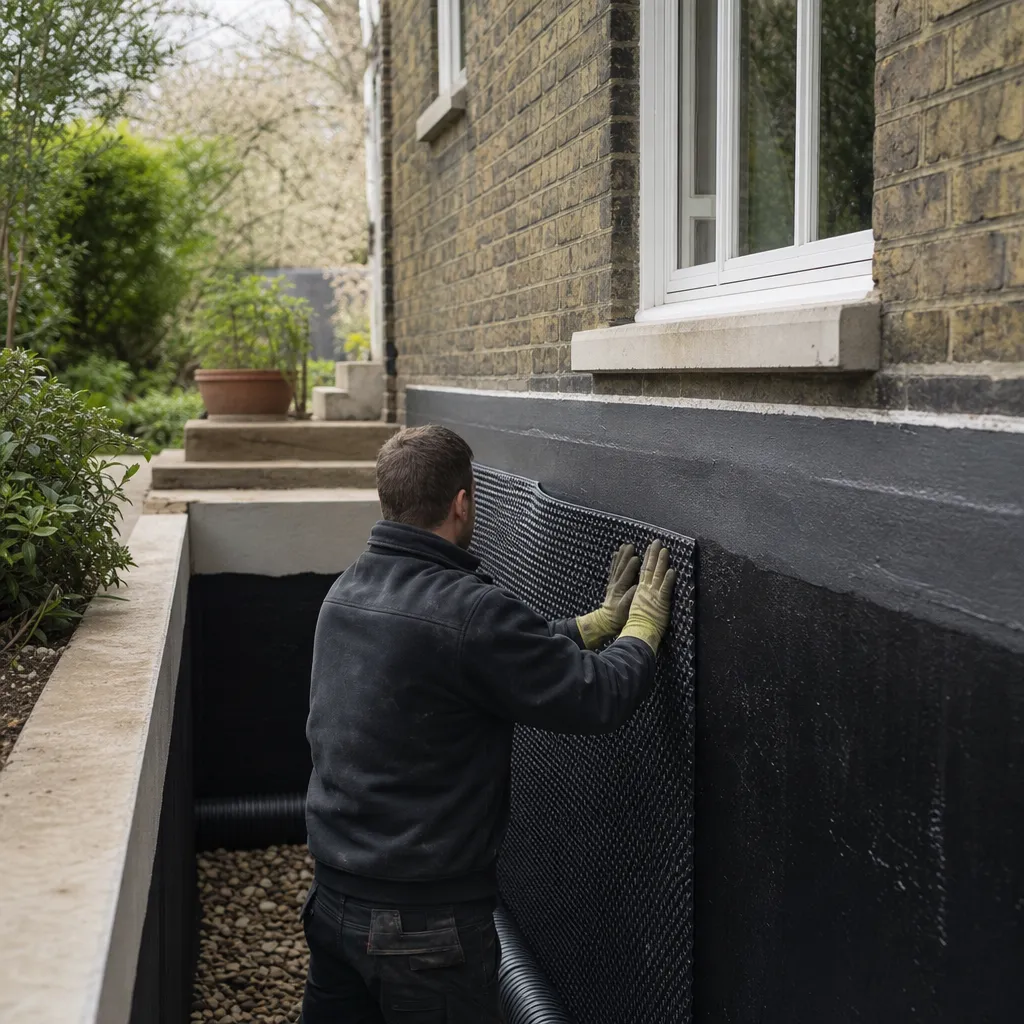
Basement Waterproofing Solutions for Damp Prevention
Basement waterproofing in the UK is governed by BS 8102:2022, which defines three system types: Type A (barrier coatings), Type B (structurally integral concrete), and Type C (cavity drain membrane with sump pump).
 Surveys & Inspections
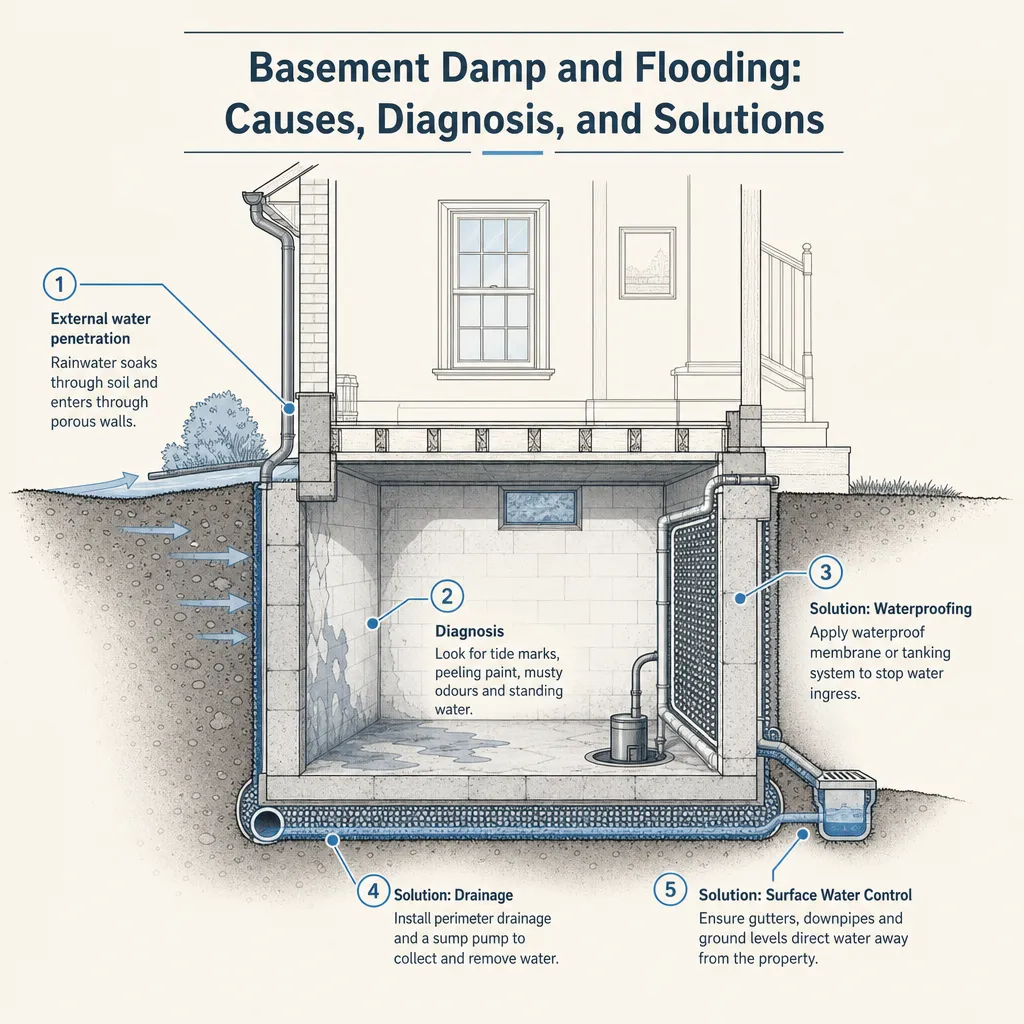
Basement Damp and Flooding: Causes, Diagnosis, and Solutions
Basement dampness and flooding in UK homes typically stems from one of three sources: groundwater under hydrostatic pressure, surface water from drainage failure, and condensation on cold masonry surfaces.
 Surveys & Inspections
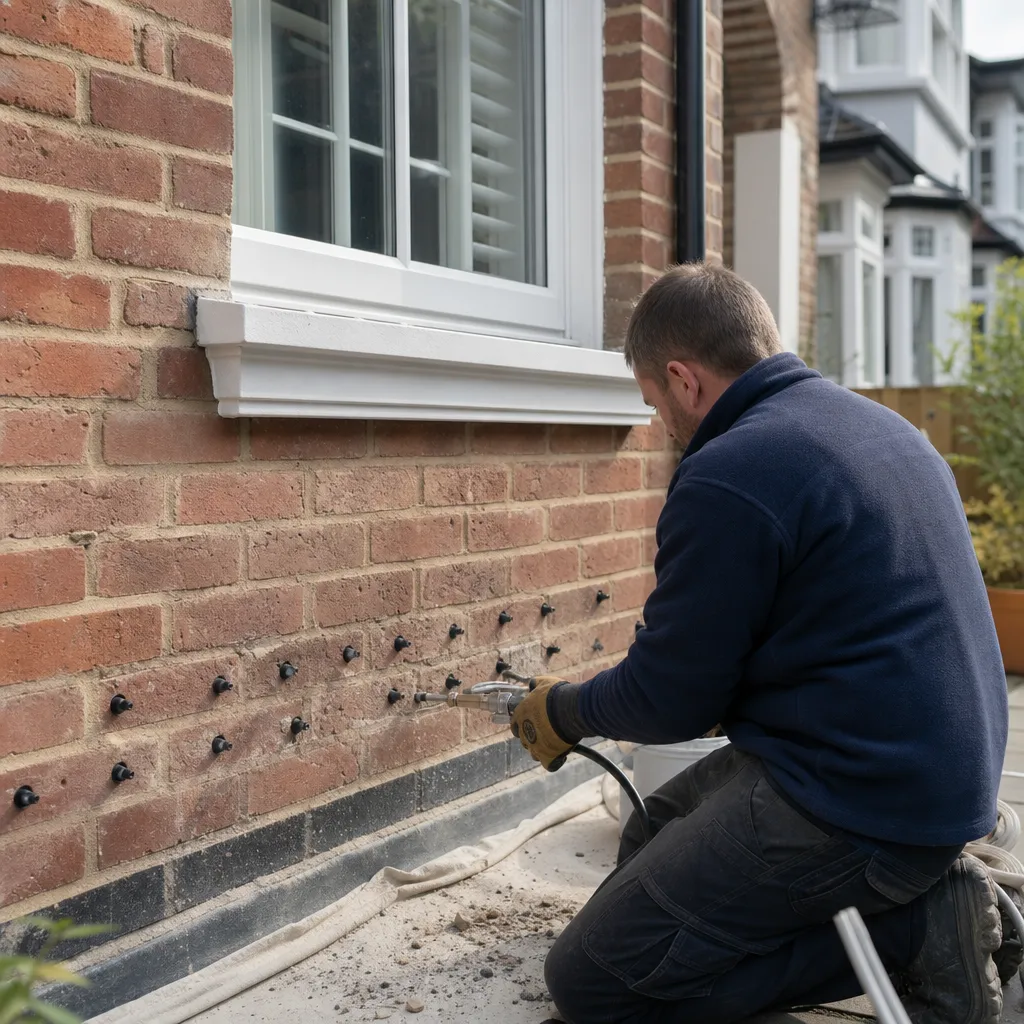
Cavity Wall Damp Proofing: Protecting the Inner Wall Face
Cavity wall damp proofing protects the inner wall face by ensuring cavity trays, physical DPCs, and weep holes are intact and unobstructed.
 Surveys & Inspections
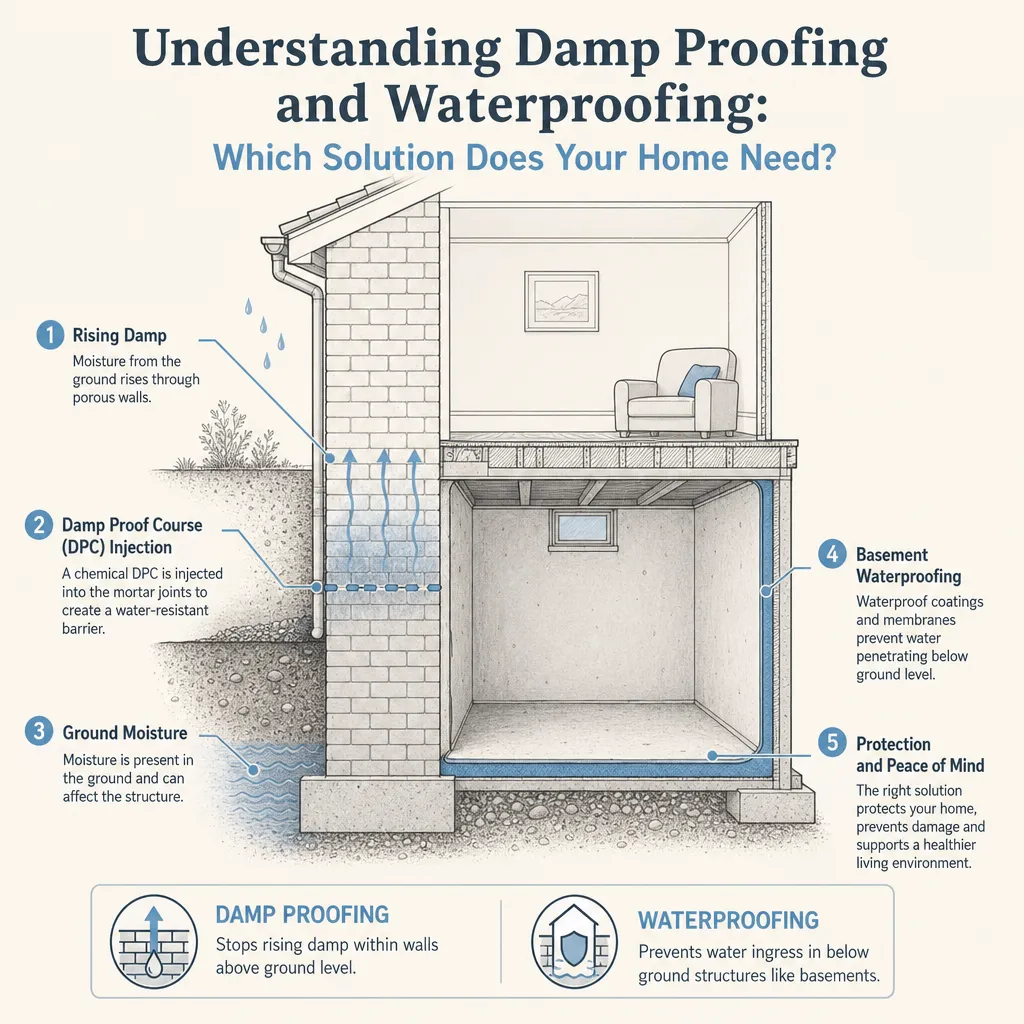
Understanding Damp Proofing and Waterproofing: Which Solution Does Your Home Need?
Damp proofing controls moisture movement through above-ground walls, while waterproofing excludes groundwater from below-ground structures.
 Surveys & Inspections
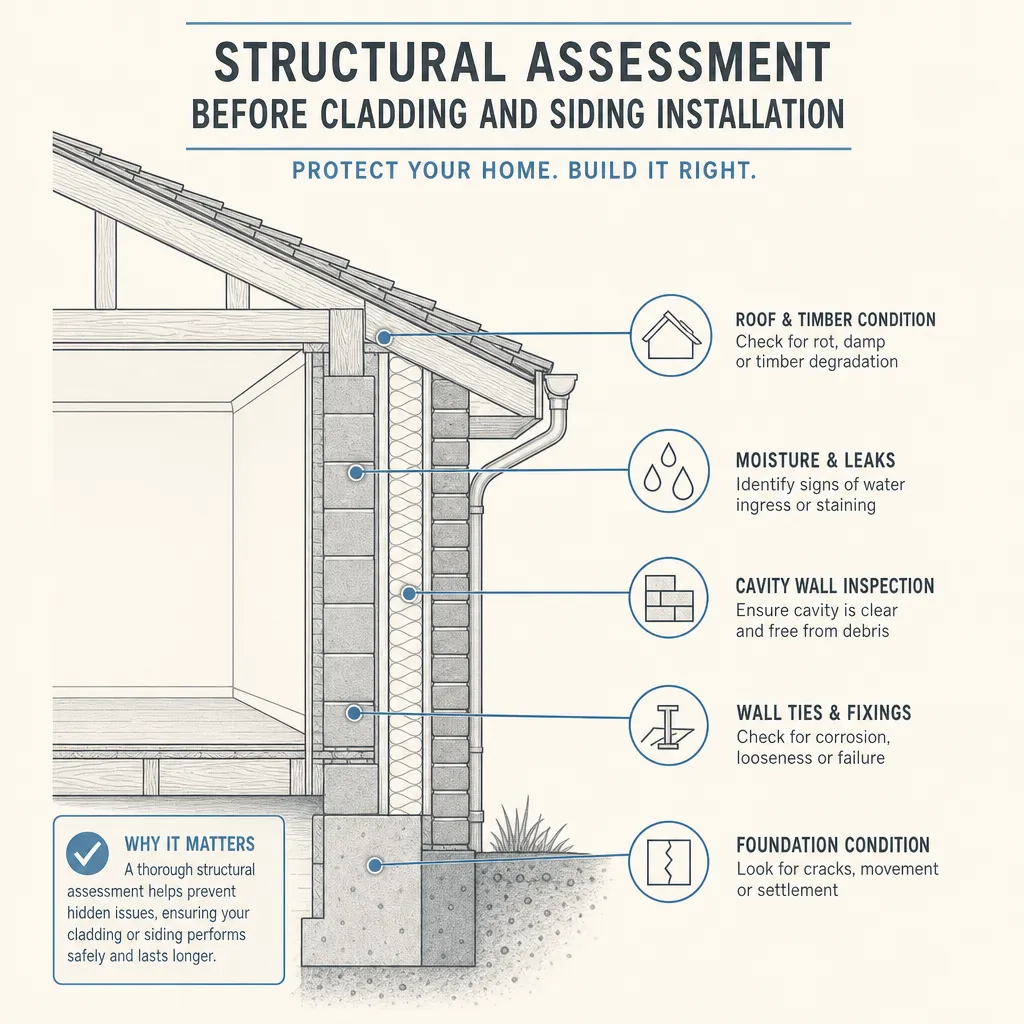
Structural Assessment Before Cladding and Siding Installation
Before installing external cladding or siding, a structural or specific defect assessment is needed to identify hidden timber decay, damp penetration, cavity wall defects, and any load-bearing implications.