Basement Waterproofing Solutions for Damp Prevention
By Housey · Last reviewed 30th of May 2026
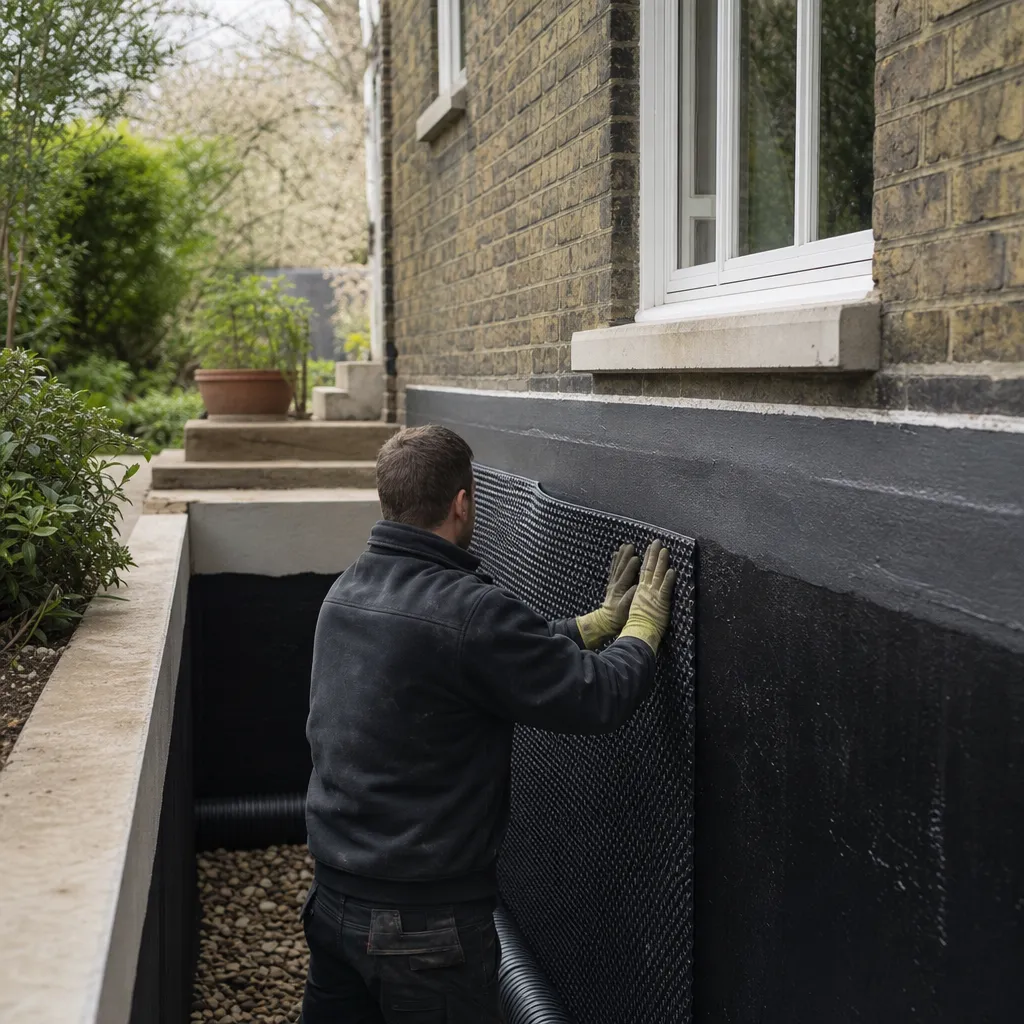
Basement Waterproofing Solutions for Damp Prevention
UK basement conversions and below-ground spaces are especially vulnerable to water ingress — whether from groundwater pressure, surface run-off, or failing drainage — and the decision about how to address it typically arises when moisture damage becomes visible, during a pre-purchase survey, or before converting a cellar into usable living space. With millions of UK homes featuring original Victorian or Edwardian cellars, and basement conversions popular in dense urban areas, getting waterproofing right is both a structural and financial priority. Choosing the wrong system, or proceeding without professional assessment, can result in persistent damp, damaged finishes, and costly remediation further down the line.
Key points
- BS 8102:2022 (Protection of below-ground structures against water from the ground) is the UK standard governing waterproofing design, specifying three system types: A, B, and C.
- A Grade 3 waterproofing specification is required by BS 8102:2022 for basement spaces used as habitable rooms such as bedrooms or living rooms.
- Planning permission is not generally required for internal waterproofing, but building control approval is typically needed for a change of use or new basement conversion.
- A cavity drain membrane (Type C) system requires a working sump pump with battery back-up; pump failure is the single most common cause of re-flooding in retrofitted basements.
- The Property Care Association (PCA) accredits specialist waterproofing contractors; using a PCA-registered firm gives access to insurance-backed guarantees.
Which waterproofing system does your basement need?
BS 8102:2022 classifies below-ground waterproofing into three system types. Understanding the differences is essential before accepting any contractor's proposal.
System type | How it works | Best suited to | Key limitations |
|---|---|---|---|
Type A — Barrier | Applied coatings or membranes (tanking slurry, bituminous paint, cementitious render) physically block water entry | New builds with accessible external walls; minor dampness without hydrostatic pressure | Can be undermined by cracks, movement, or a high water table; requires thorough surface preparation |
Type B — Structurally integral | Watertight concrete construction prevents ingress through the building fabric | New-build basements designed from the outset | Rarely suitable as a retrofit; requires structural engineering input |
Type C — Drained protection | Cavity drain membrane creates a void behind walls and floor; water is channelled to a sump and pumped away | Most retrofit and conversion projects in older UK properties | Manages rather than stops water; sump pump reliability is critical; ongoing maintenance required |
Most retrofitted basement conversions in older UK properties — Victorian terraces, 1930s semis — use Type C as the primary system, often combined with a Type A coating as a secondary layer. BS 8102:2022 recommends a combined approach for Grade 3 (habitable) spaces.
What does your intended use require?
BS 8102:2022 defines four usage grades that directly determine the required waterproofing specification:
- Grade 1 — Car parking and plant rooms. Some seepage is tolerated.
- Grade 2 — Workshops and storage areas. No water ingress; some moisture vapour acceptable.
- Grade 3 — Habitable rooms, offices, kitchens. A dry, controlled environment is required.
- Grade 4 — Archive storage, swimming pools. Controlled humidity essential.
Residential conversions almost always target Grade 3. This typically requires a Type C cavity drain system, a properly designed sump station with battery back-up, and adequate ventilation to manage residual vapour.
What causes basement damp in UK properties?
Identifying the moisture source is the foundation of any correct remediation. A competent waterproofing surveyor should diagnose the cause before specifying a system — a misdiagnosis is common and expensive.
- Groundwater and hydrostatic pressure — common in areas with high water tables, near rivers, or in clay-heavy soils; usually the most demanding to address.
- Surface water run-off — from poorly graded garden levels, blocked drains, or paving sloping toward the property.
- Penetrating damp through walls — via failed pointing, cracked render, or gaps around service penetrations.
- Condensation — warm, humid air meeting cold below-ground surfaces; frequently mistaken for structural damp and incorrectly treated.
Which professional do you need?
- Choose a PCA-registered waterproofing specialist if you have visible water ingress, damp patches, or a salt-stained basement and want to convert or use the space as a habitable room.
- Commission an independent damp and timber survey first if you are buying a property with a basement and a RICS survey has flagged moisture — an independent diagnosis before remediation quotes avoids paying for the wrong fix.
- Ask a structural engineer if there are visible cracks, bulging walls, or signs of movement alongside the damp; the structure must be assessed before any waterproofing system is designed.
- Check with your local planning authority (LPA) if the work involves a change of use, such as converting a cellar to a bedroom; building control approval is typically required.
Red flags when hiring a basement waterproofing contractor
Watch out for these warning signs before signing any contract:
- No reference to BS 8102:2022 or a usage grade in the written specification.
- A quote relying solely on a Type A coating for a property with an active water table.
- No written design or specification document — verbal quotes for structural remediation should be treated with caution.
- Pressure to sign before a survey has been completed.
- Guarantees with no insurance backing — check the contractor is PCA-registered or that guarantees are underwritten by an independent insurer.
- No mention of ventilation or humidity control in the specification for a Grade 3 space.
Important limitations
This article provides general information about UK basement waterproofing options. The appropriate system depends on site-specific factors including groundwater level, soil type, existing structural condition, and intended use — none of which can be assessed without an on-site survey. Building regulations requirements vary depending on the nature and extent of the work. Always engage a qualified, independent waterproofing surveyor before instructing any contractor.
What to ask a qualified professional
Before instructing a basement waterproofing contractor, ask:
- What BS 8102:2022 system type are you recommending, and why is it appropriate for my situation?
- What usage grade are you designing to, and is that appropriate for my intended use?
- Is the guarantee insurance-backed, and for how long?
- What are the maintenance requirements for the sump pump and membrane system?
- Will building control need to be notified or approve this work?
- Is the survey and specification produced independently of the remediation quote?
- Are you a Property Care Association (PCA) registered contractor?
When to get professional help
Basement damp should always be assessed by a qualified professional before any remediation work begins. Seek specialist help promptly if you notice:
- Standing water or pooling after rainfall
- Efflorescence (white salt deposits) on brick or blockwork, indicating active moisture movement
- A persistent musty smell despite adequate heating and ventilation
- Peeling paint, blistering render, or swollen skirting boards in below-ground rooms
- Cracks in the basement structure — particularly stepped or diagonal cracks in brickwork
If you are buying a property with a basement, commission an independent damp and timber survey before exchange rather than relying solely on the RICS survey.
How Housey can help
Housey connects you with accredited damp proofing specialists and independent specific defect surveyors who can assess your basement, diagnose the source of moisture, and recommend a system to BS 8102:2022. Compare quotes from verified local professionals before committing to any remediation work.
Frequently asked questions
Does basement waterproofing need building regulations approval?
Internal waterproofing carried out as routine maintenance may not require building control approval. However, converting a previously non-habitable cellar into a bedroom or living room normally requires building control sign-off under the Building Regulations Approved Documents. Always check with your local building control body before starting work.
How long does basement waterproofing last?
A properly installed Type C cavity drain system can last 20–30 years or more, provided the sump pump is maintained and the membrane is undamaged. Type A tanking applied where hydrostatic pressure is present has a shorter effective life and may need retreatment. Guarantees typically range from 10 to 30 years and vary by contractor and system type.
Can I waterproof a basement from the inside?
Yes — internal waterproofing using a Type C cavity drain membrane is the most common retrofit approach in older UK properties, particularly terraced and semi-detached homes where external access to the wall is impractical. The system manages water ingress rather than stopping it, directing it to a sump pump that discharges it safely away from the property.
Will a waterproofed basement add value to my property?
A properly waterproofed and converted basement can add significant value, especially in urban areas where space is at a premium. However, incomplete waterproofing or conversion work carried out without building control approval can complicate sale and mortgage valuations. Always obtain a completion certificate from building control once work is finished.
Sources and further reading
- BS 8102:2022: Protection of below-ground structures against water from the ground — BSI (British Standards Institution)
- Property Care Association: waterproofing and damp-proofing guidance — Property Care Association
- Building Regulations: Approved Documents — GOV.UK
- Planning permission: when you need it — GOV.UK
Useful next reads
 Surveys & Inspections
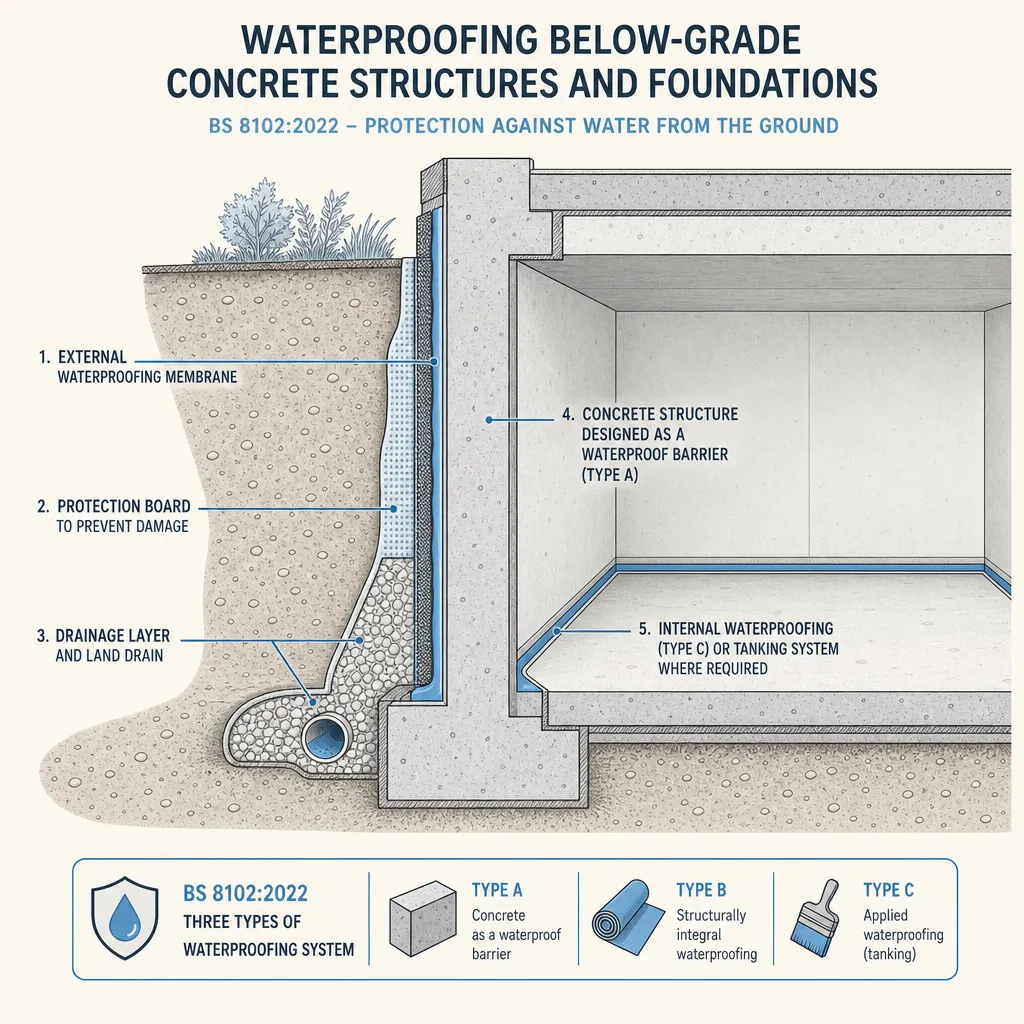
Waterproofing Below-Grade Concrete Structures and Foundations
Below-grade waterproofing in the UK should be designed to the grade of protection required under BS 8102:2022.
 Surveys & Inspections
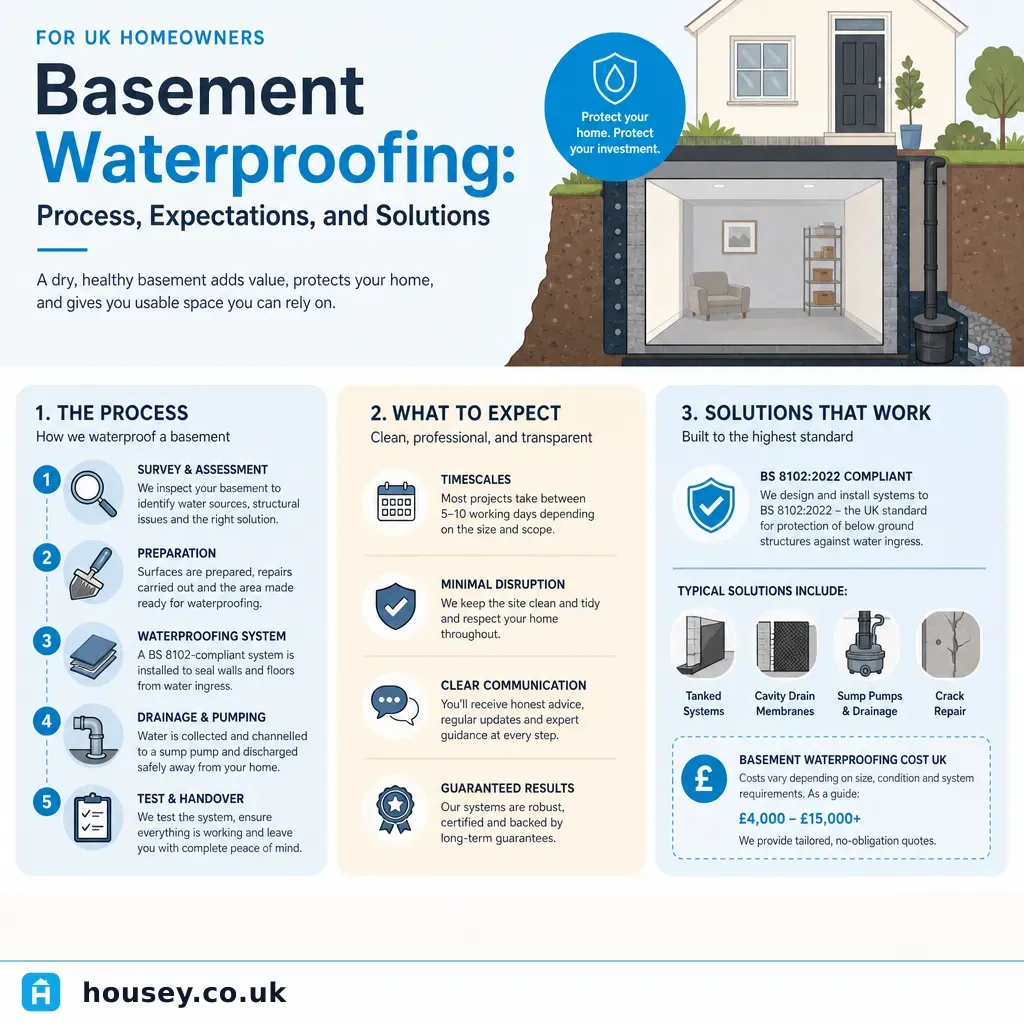
Basement Waterproofing: Process, Expectations, and Solutions
Basement waterproofing in the UK is governed by BS 8102:2022, which defines three protection grades and three system types: Type A barrier tanking, Type B structurally integral concrete, and Type C cavity drain membranes.
 Surveys & Inspections
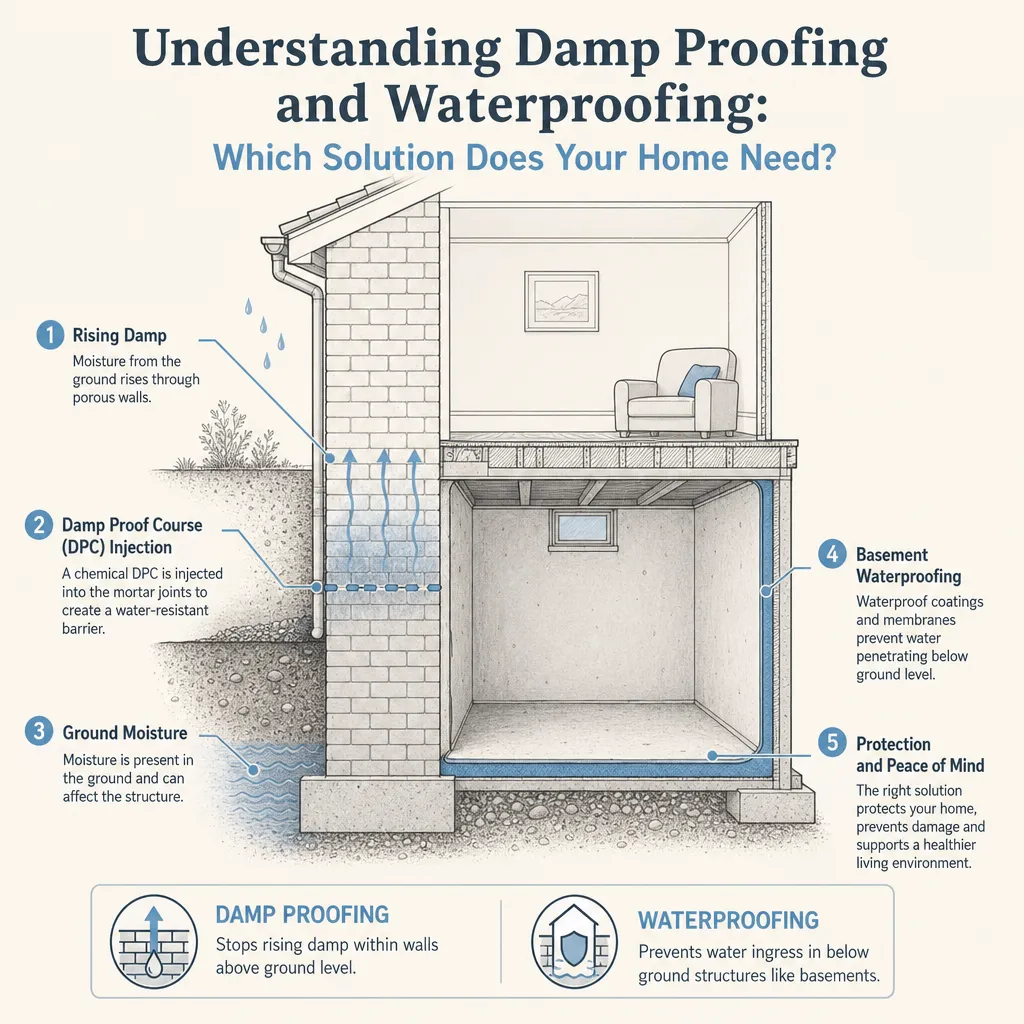
Understanding Damp Proofing and Waterproofing: Which Solution Does Your Home Need?
Damp proofing controls moisture movement through above-ground walls, while waterproofing excludes groundwater from below-ground structures.
 Surveys & Inspections
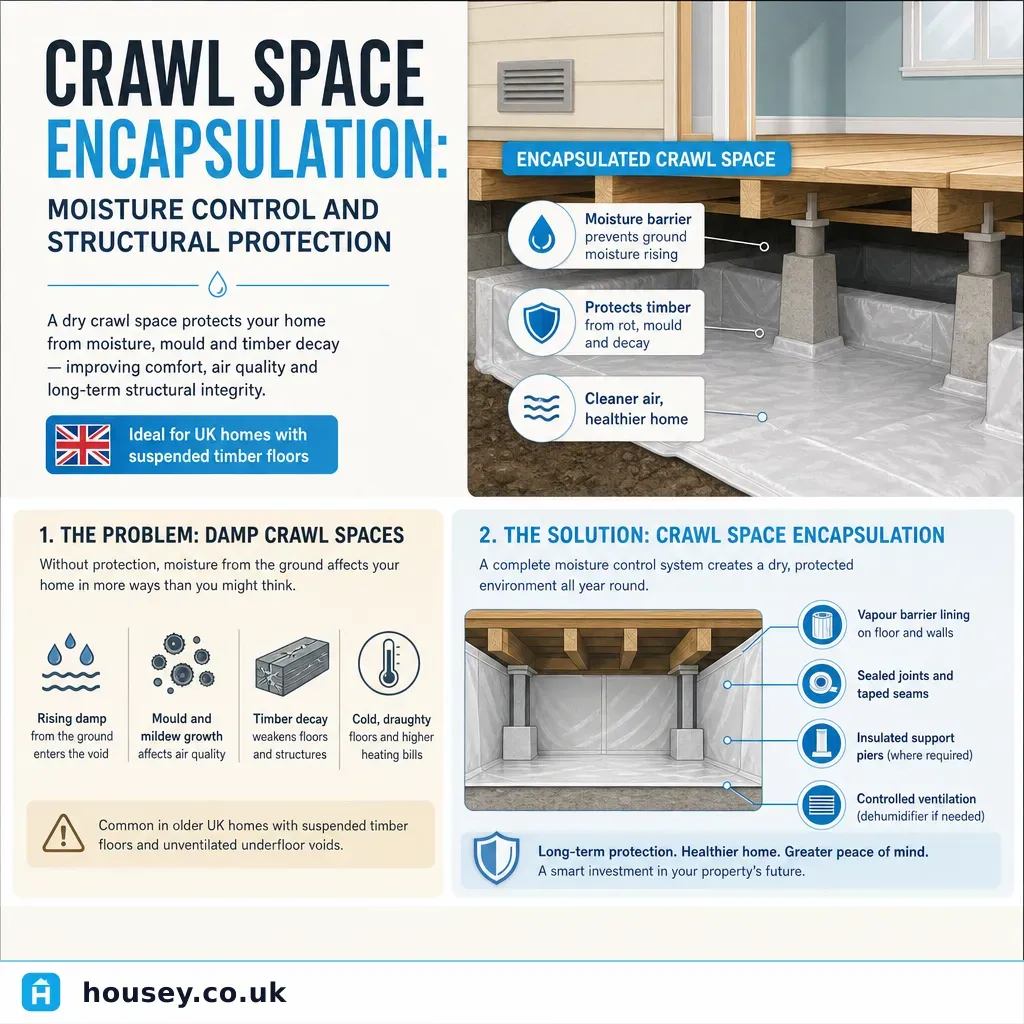
Crawl Space Encapsulation: Moisture Control and Structural Protection
Crawl space encapsulation seals the subfloor void beneath suspended timber floors with a vapour control layer and improved ventilation to prevent rising damp, condensation, timber rot and structural damage.
 Surveys & Inspections
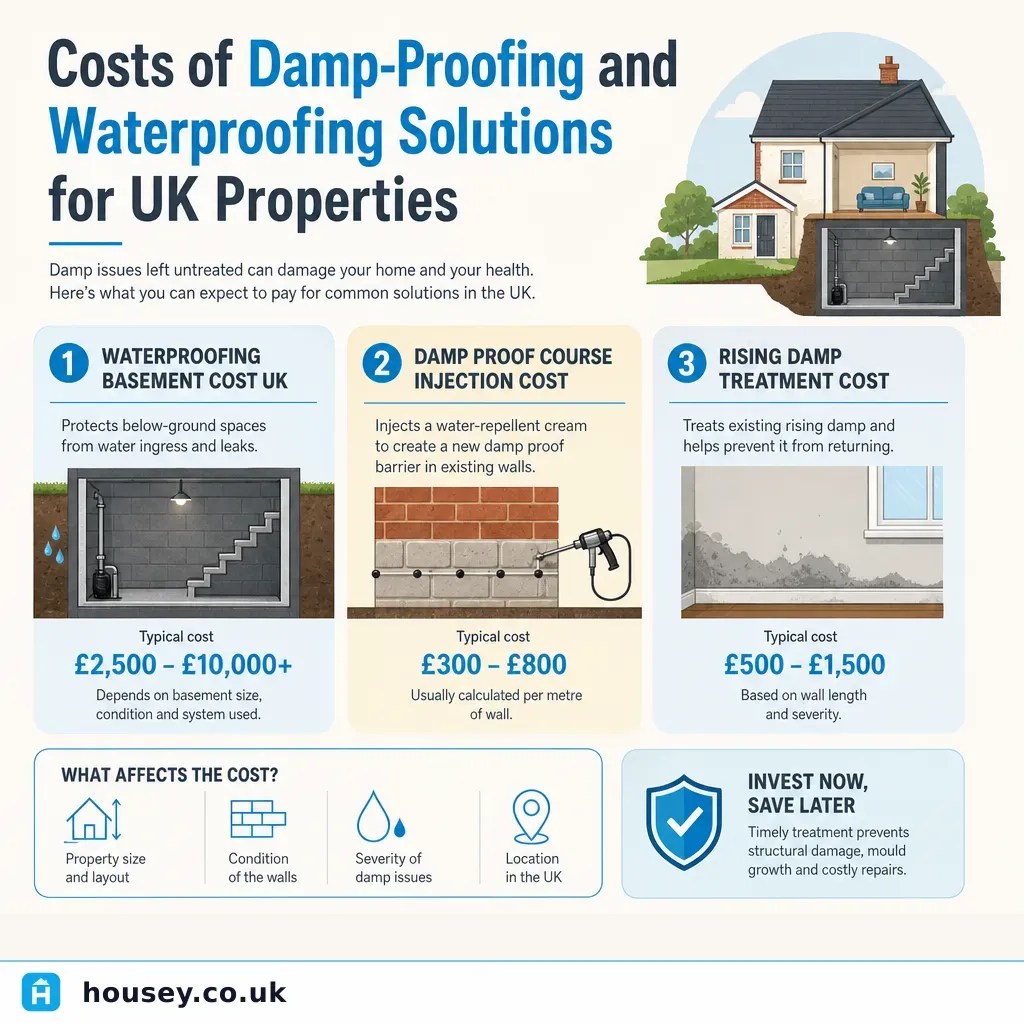
Costs of Damp-Proofing and Waterproofing Solutions for UK Properties
Damp-proofing costs vary by treatment: chemical DPC injection typically costs £300–£800 for a standard terraced house, while internal basement tanking runs £50–£150 per m² and cavity drain membrane systems £30–£80 per m².