Basement Wall Formwork: Ensuring Structural Integrity and Waterproofing
By Housey · Last reviewed 24th of May 2026
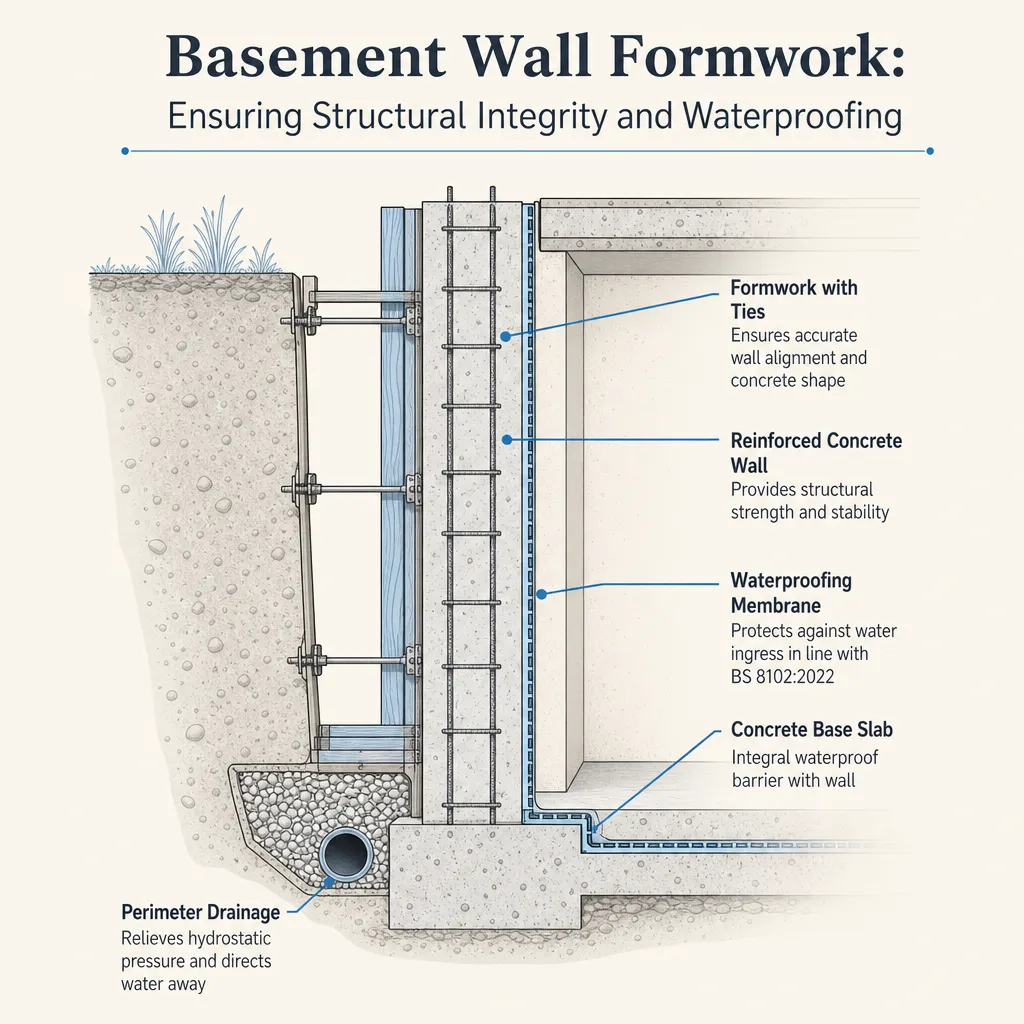
Basement Wall Formwork: Ensuring Structural Integrity and Waterproofing
Forming concrete basement walls correctly is one of the most consequential decisions in any below-ground construction project — get it wrong and you face expensive remedial waterproofing work, structural movement, or both. Questions about basement wall formwork typically arise during the pre-build or early construction phase, when homeowners, architects, and main contractors are comparing construction methods, specifying materials, and selecting subcontractors for groundworks and concrete. The decisions made at this stage directly affect long-term structural performance, the effectiveness of the waterproofing strategy, and compliance with Building Regulations Part A (Structure) and Part C (Site preparation and resistance to contaminants and moisture).
Key points
- BS 8102:2022 (Code of practice for protection of below ground structures against water ingress) classifies basement waterproofing into three system types — Type A (barrier), Type B (structurally integral), and Type C (drainage) — each with different implications for formwork specification and required concrete quality.
- Building Regulations Approved Document A requires basement retaining walls to be designed by a chartered structural engineer; there is no prescriptive deemed-to-satisfy route for below-ground reinforced concrete walls.
- BS EN 13670:2009 (Execution of concrete structures) sets requirements for forming, concrete placement, compaction, and striking of formwork; compliance is expected for building control purposes on all reinforced concrete basement work.
- Lateral pressure from wet concrete can reach 24 kN/m² per metre of pour height with self-compacting concrete mixes — always confirm your formwork system is rated for the actual pour rate and concrete type before work begins.
- CIRIA C766 (Waterproofing of Below Ground Structures) — the current authoritative UK guidance document — recommends the waterproofing strategy be designed before or alongside the structural design, not retrofitted after the concrete is cast.
What formwork does in basement wall construction
Formwork gives wet concrete its shape while it gains sufficient strength to stand unsupported. For basement walls specifically, it must:
- Resist the full lateral pressure of poured concrete without deflecting in ways that create wall thickness variations or alignment errors.
- Produce a surface finish compatible with the intended waterproofing system — smooth for applied membranes, with tie-hole positions documented for subsequent sealing.
- Allow full access for immersion vibrator compaction, or be used alongside a self-compacting concrete mix that does not require vibration.
- Strip cleanly without damaging the green concrete surface or reducing cover to reinforcement.
- Leave tie holes (where through-ties are used) in positions that can be sealed to the standard required by the waterproofing specification.
The choice of formwork system has direct consequences for waterproofing performance. A Type B structurally integral approach — relying on the quality of the concrete itself — places stringent demands on uniform placement, compaction, and joint detailing, and requires formwork with minimal loss of cement paste through form joints.
Formwork systems compared
System | Best for | Limitations | Waterproofing compatibility |
|---|---|---|---|
Traditional timber (structural ply and timber framing) | Bespoke shapes, restricted access, small volumes | Labour-intensive; requires skilled shuttering carpenter; needs engineering assessment of tie and waling design | Compatible with all waterproofing types; tie-hole sealing method must be specified |
Proprietary steel panel systems (e.g. Doka, PERI, Paschal) | Rectangular plans; larger pours; repetitive bay sizes | Higher hire and transport cost; crane access often required | Compatible with all types; tie treatment method must be agreed with the waterproofing designer |
Insulated Concrete Formwork (ICF) | Residential new-build where thermal performance is a priority | Permanent system — EPS stays in place; no subsequent access to concrete face; requires integrated waterproofing strategy from the outset | Requires Type A external membrane or Type C cavity drain at the external face |
Tunnel form or jumpform | Deep basements and multi-storey cores | Not typical for residential scale; specialist contractor required | Requires specific pour-break and construction joint detailing |
For most residential basement projects in England, either traditional ply-and-timber or proprietary steel panel systems are used. ICF is growing in use for its thermal benefits but requires the waterproofing strategy to be resolved before construction begins.
Structural design requirements
Basement walls are permanent retaining structures and must be designed by a chartered structural engineer to comply with Approved Document A and the relevant Eurocodes: EN 1997 (Geotechnical design), EN 1992-1-1 (Concrete structures), and EN 1991 (Actions on structures).
Key structural design inputs include:
- Soil type and groundwater level: determining lateral earth pressure, water pressure, and uplift acting on the wall throughout its life.
- Surcharge loads: from vehicles, plant, adjacent buildings, or future extensions — these can significantly increase lateral pressure and must be assessed site-specifically.
- Wall geometry: height, thickness, and whether the wall is propped by the ground floor slab (the typical residential condition) or temporarily unpropped during construction.
- Construction sequence: the stability of the excavation and wall before the ground floor slab is cast is a critical design state that must be explicitly addressed in the structural method statement.
Do not specify basement retaining walls on a prescriptive basis — every below-ground structure requires site-specific engineering by a competent structural engineer.
Waterproofing strategy and how it links to formwork
BS 8102:2022 defines three waterproofing system types, each with different implications for how the concrete walls are formed and what quality standards apply:
Type A (Barrier protection): a membrane applied externally before backfilling, or internally after construction. Requires concrete surfaces free from significant honeycombing or voids that would prevent the membrane from bonding or bridging correctly.
Type B (Structurally integral): relies on low water-cement ratio, high-quality, low-permeability concrete. Demands excellent formwork with minimal fines loss through form joints, consistent vibration compaction, and carefully detailed construction joints incorporating hydrophilic strips, water bars, or injection hoses.
Type C (Drainage protection): a cavity drain membrane (studded sheet) with a sump-and-pump system to collect and remove any water that penetrates the wall. More tolerant of minor concrete surface imperfections, but walls must still be structurally sound.
BS 8102:2022 and CIRIA C766 both recommend combining system types for higher-risk conditions, such as a high water table or Grade 3 habitable use. A CSSW-accredited (Certificated Surveyor in Structural Waterproofing) specialist should be involved in specifying and verifying the strategy.
Decision tree: choosing your formwork approach
- Choose proprietary steel panel formwork if you have a predominantly rectangular plan basement, more than one level of below-ground depth, and a contractor with demonstrable below-ground reinforced concrete experience.
- Choose traditional timber formwork if the basement has complex or irregular geometry, severely restricted crane access, or a small concrete volume that does not justify panel hire costs.
- Choose ICF if thermal performance at the basement wall is a design priority and your waterproofing designer has confirmed the strategy is compatible with permanent external EPS panels remaining in place.
- Instruct a chartered structural engineer in all cases — there is no prescriptive route under Approved Document A for below-ground retaining walls.
- Appoint a CSSW-accredited waterproofing specialist if the intended use requires Grade 2 or Grade 3 internal conditions to BS 8102 (habitable space or moisture-sensitive storage).
- Check with your local building control body regarding the Full Plans submission requirements before commencing any excavation or groundworks.
Pre-build checklist for basement wall formwork
Before formwork is erected and concrete is poured, confirm all of the following:
- Chartered structural engineer has provided an approved wall design, reinforcement schedule, and construction method statement covering pour sequence and formwork requirements.
- Formwork supplier has confirmed the system is rated for the actual lateral concrete pressure at the proposed pour rate and concrete type.
- Waterproofing strategy is confirmed and compatible with the formwork system — particularly with respect to tie-hole positions and the specified sealing method.
- Concrete mix has been specified to BS 8500-1 for the applicable exposure classes (minimum XC4 for carbonation; XD and XS classes where chloride exposure applies; XA class where aggressive ground conditions exist).
- Construction joint locations and detailing — water bars, injection hoses, kicker design — are agreed and shown on the reinforcement drawings.
- Full Plans building control application has been submitted with structural calculations and approval confirmed before work starts.
- Temporary works — excavation support, propping, and any construction adjacent to existing foundations — have been designed by a competent temporary works designer and approved before construction begins.
Important limitations
This article provides general guidance for homeowners and project teams on factors affecting basement wall formwork and waterproofing in the UK. Basement construction involves geotechnical, structural, and waterproofing disciplines that each require site-specific professional assessment. Nothing in this article should be used in place of a structural engineer's design, a temporary works designer's assessment, or the advice of a CSSW-accredited waterproofing specialist.
Conditions vary significantly between sites — soil type, groundwater level, adjacent structures, and local authority requirements all affect what is appropriate. Always instruct qualified professionals before any excavation or construction begins.
When this becomes urgent
Seek immediate professional advice if:
- Formwork is deflecting or moving during a concrete pour — this can indicate pressure overload and risk of a sudden failure.
- Honeycombing (visible voids in the concrete face after striking formwork) extends over more than a small, isolated area — this may represent a significant structural and waterproofing defect requiring formal assessment before any remedial work.
- An unplanned construction joint has formed due to a concrete supply interruption — these are a critical waterproofing vulnerability and require immediate structural engineer assessment before work continues.
- Water ingress is occurring during or immediately after construction, before the waterproofing system is complete.
- Adjacent properties or structures are showing signs of movement during excavation or concrete construction.
What to ask a qualified professional
Before appointing a structural engineer and groundworks contractor for a basement project:
- Is the structural engineer a chartered MIStructE or CEng MICE member with verifiable below-ground concrete and retaining wall experience?
- Will the structural design include a specific construction method statement covering formwork pressure, pour sequence, compaction method, and curing requirements?
- Does the groundworks contractor hold CSCS cards and have demonstrable experience of below-ground reinforced concrete construction?
- Who is the named temporary works designer, and are they competent and independent of the main contractor?
- Is a CSSW-accredited waterproofing specialist involved in specifying and verifying the waterproofing system?
- How will tie holes be sealed, and has the sealing method been reviewed and approved by the waterproofing designer?
- Will concrete delivery tickets be retained throughout the pour and provided to building control as evidence of specification compliance?
When to get professional help
Every residential basement wall construction project in the UK requires a chartered structural engineer and building control involvement from the outset. Approved Document A has no prescriptive deemed-to-satisfy route for below-ground retaining structures. For any project targeting Grade 2 or Grade 3 habitable use under BS 8102:2022, a CSSW-accredited specialist should also be appointed to design and verify the waterproofing strategy. Attempting to manage these responsibilities without qualified professionals carries significant risk to structural safety, long-term waterproofing performance, and building regulations compliance.
How Housey can help
Housey connects homeowners and project teams with vetted structural engineering professionals and experienced groundworkers with residential basement construction experience across the UK. Describe your project and receive quotes from up to four qualified local contractors to compare.
Frequently asked questions
Does a basement wall always need a structural engineer in the UK?
Yes. Approved Document A (Structure) to the Building Regulations 2010 has no prescriptive deemed-to-satisfy route for below-ground retaining walls. A chartered structural engineer must design the wall to the relevant Eurocodes and site conditions. Building control will require structural calculations as part of the Full Plans submission before any work starts.
What is the difference between Type A, B, and C waterproofing under BS 8102?
Type A is a barrier membrane applied externally or internally to the structure. Type B relies on the structural concrete itself being waterproof through mix design and careful joint detailing. Type C uses a cavity drain membrane with a sump and pump to manage water that penetrates the wall. BS 8102:2022 recommends combining system types for higher-risk or higher-grade applications.
Can ICF be used for residential basement walls in the UK?
Yes. Insulated Concrete Formwork is used in UK residential basement construction and provides thermal benefits. Because the EPS panels remain permanently in place, the external waterproofing strategy must be designed around them from the outset — there is no access to the concrete face after construction. An independent structural engineer's review and manufacturer guidance are both essential before specifying ICF for below-ground use.
What causes honeycombing in concrete basement walls?
Honeycombing — voids visible in the concrete face after striking formwork — typically results from insufficient compaction during placement, cement paste loss through leaky form joints, reinforcement congestion restricting concrete flow, or inadequate mix workability. Minor surface honeycombing may be repaired with proprietary cementitious mortar, but deeper voids require a structural engineer's assessment and a specified repair method — filling with general-purpose mortar is not adequate for a waterproofed basement wall.
Sources and further reading
- BS 8102:2022 — Code of practice for protection of below ground structures against water ingress — BSI Group
- Approved Document A: Structure — GOV.UK / MHCLG
- CIRIA C766 — Waterproofing of Below Ground Structures — CIRIA
- BS EN 13670:2009 — Execution of concrete structures — BSI Group
- The Building Regulations 2010 — legislation.gov.uk
Useful next reads
 Planning & Pre-Build
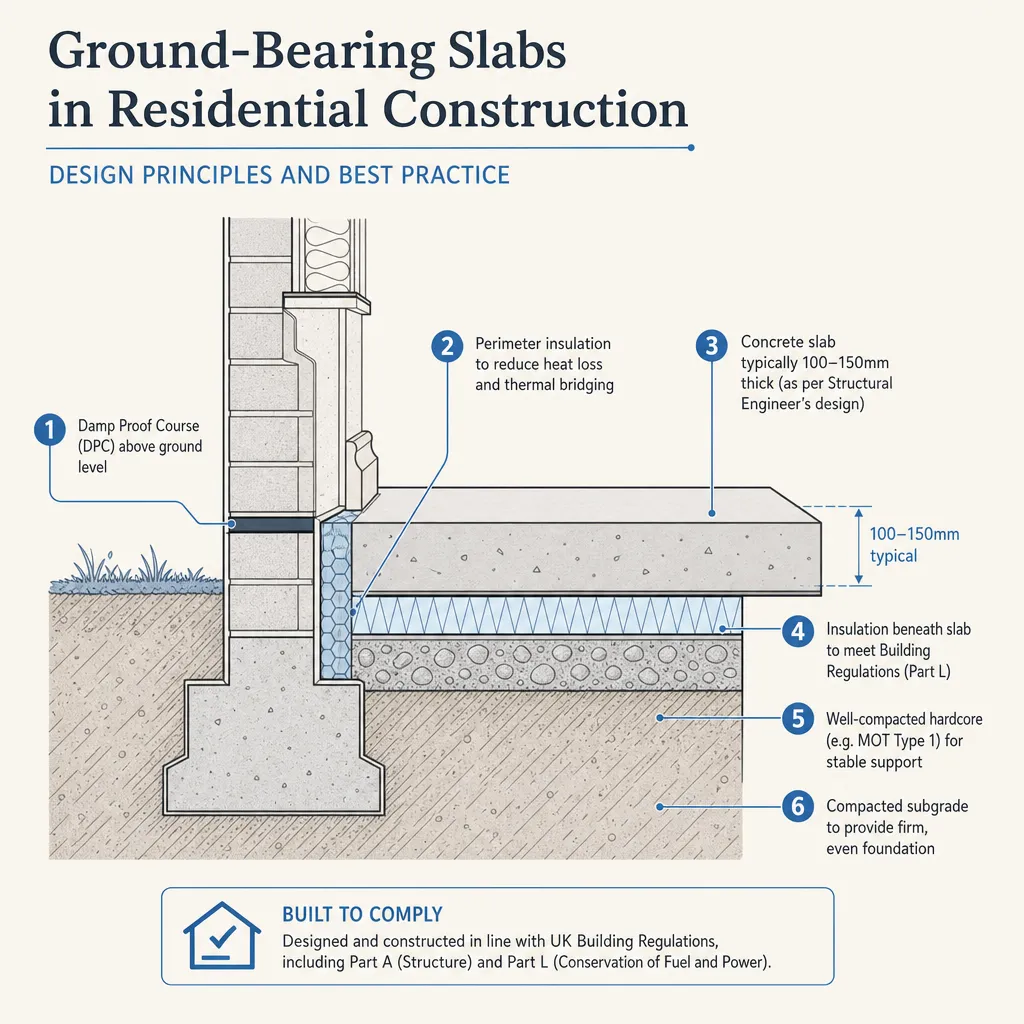
Ground-Bearing Slabs in Residential Construction: Design Principles and Best Practice
A ground-bearing slab sits directly on compacted ground and must comply with Building Regulations Approved Documents A, C, and L.
 Planning & Pre-Build
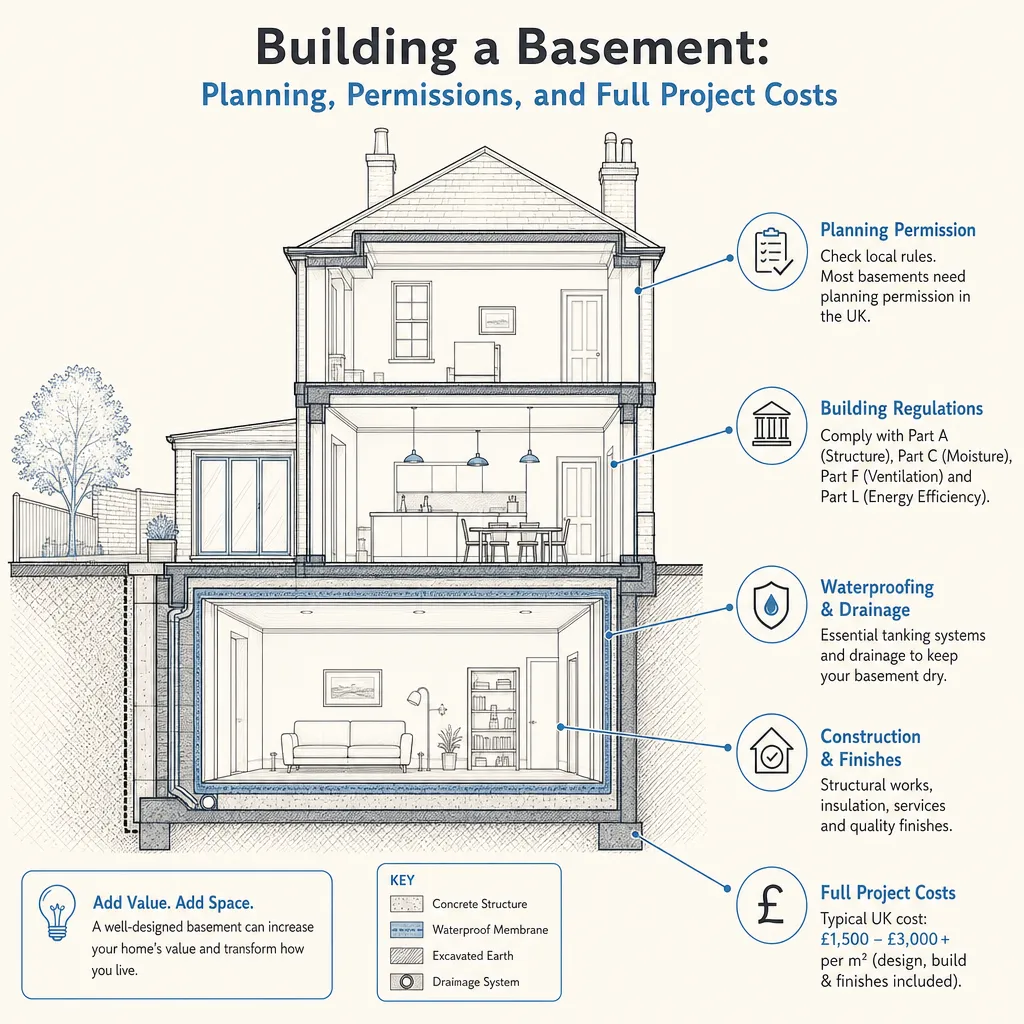
Building a Basement: Planning, Permissions, and Full Project Costs
Building a basement in the UK usually requires full planning permission where new excavation or external changes are involved.
 Planning & Pre-Build
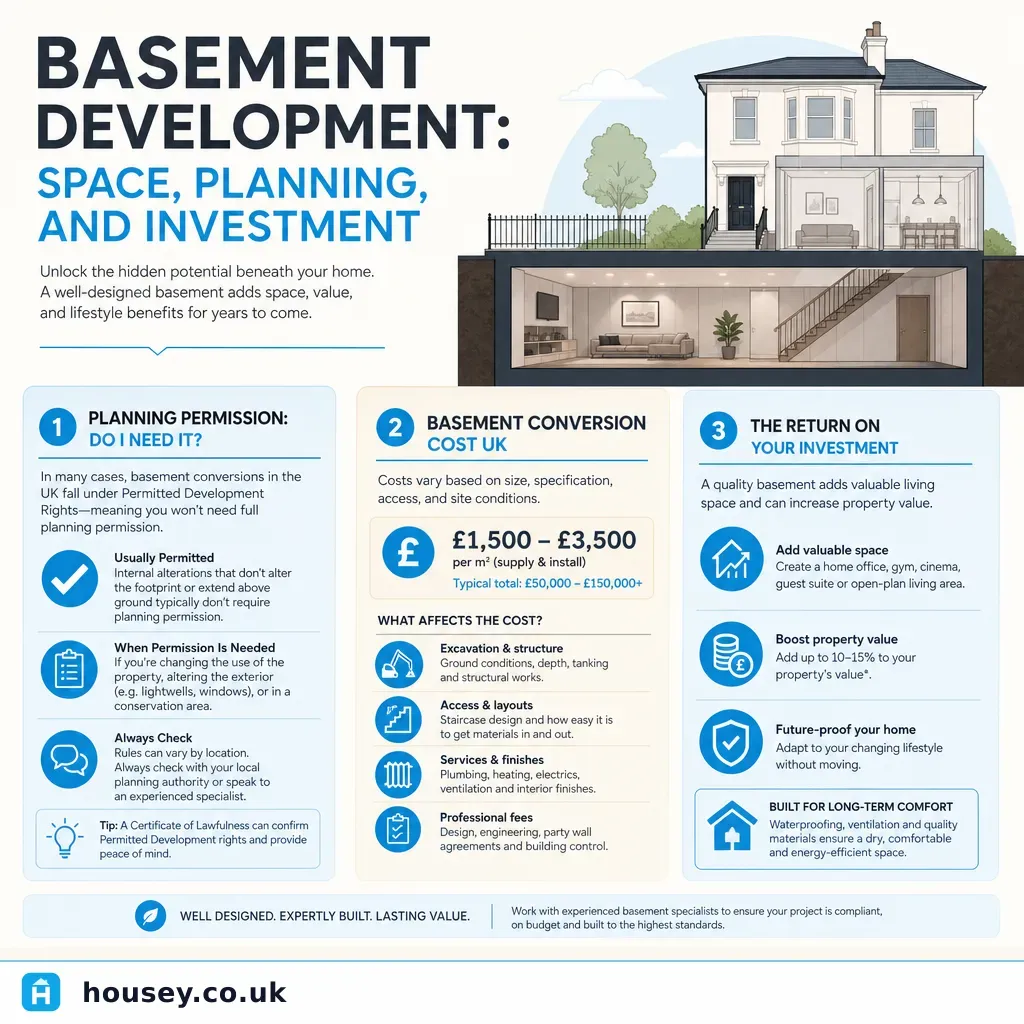
Basement Development: Space, Planning, and Investment
Basement development in the UK almost always requires Building Regulations approval and may need planning permission depending on whether the footprint or external appearance changes.
 Planning & Pre-Build
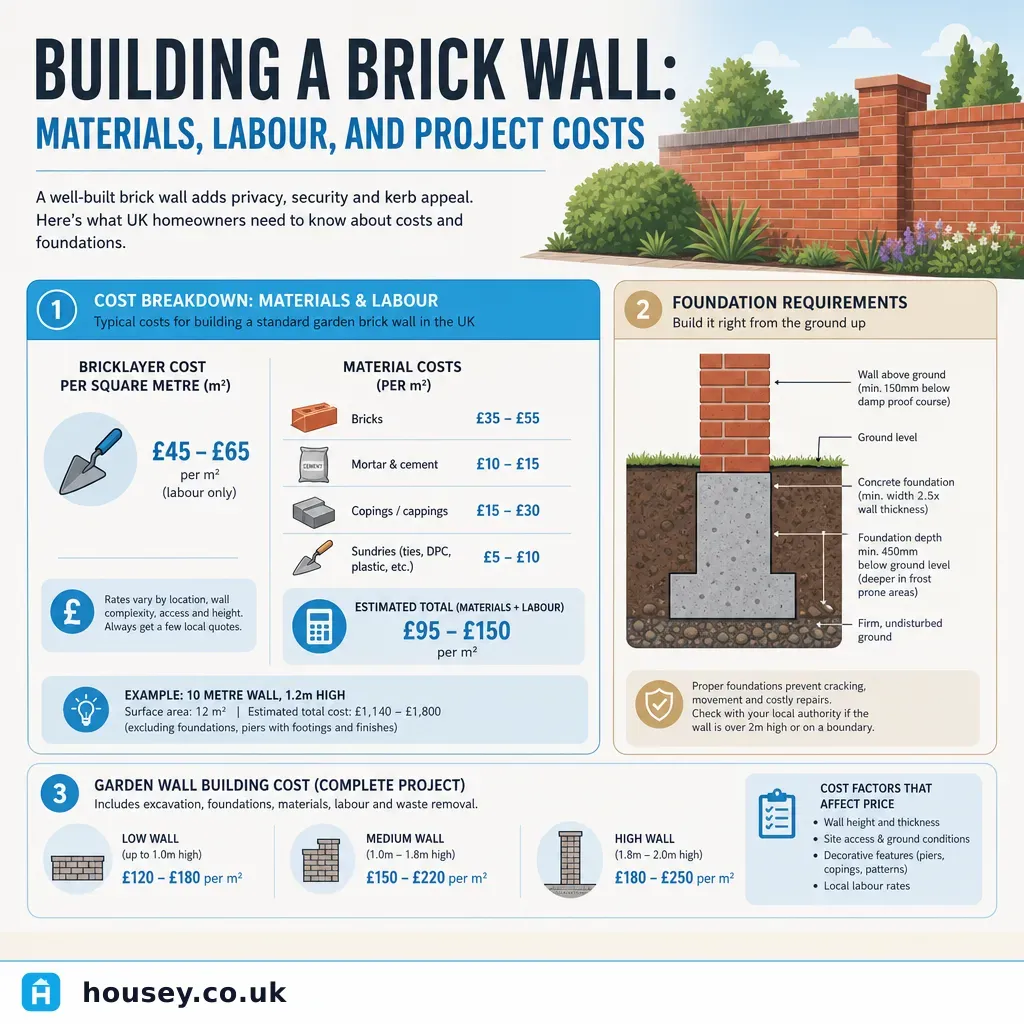
Building a Brick Wall: Materials, Labour, and Project Costs
Building a brick wall in the UK typically costs £50–£120 per square metre for labour, plus £30–£70 per square metre for materials.
 Planning & Pre-Build
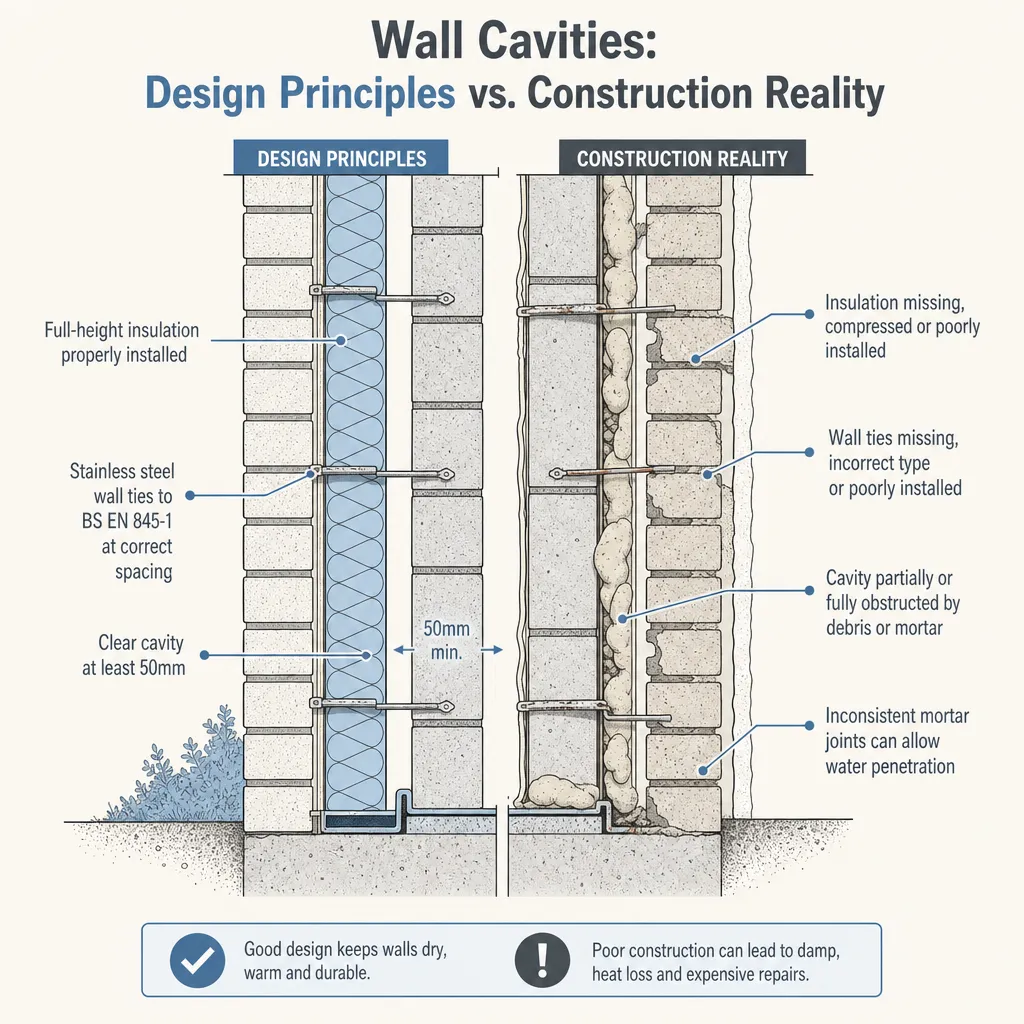
Wall Cavities: Design Principles vs. Construction Reality
A UK cavity wall is designed to resist weather, control heat loss, and structurally link two masonry leaves.