Ground-Bearing Slabs in Residential Construction: Design Principles and Best Practice
By Housey · Last reviewed 24th of May 2026
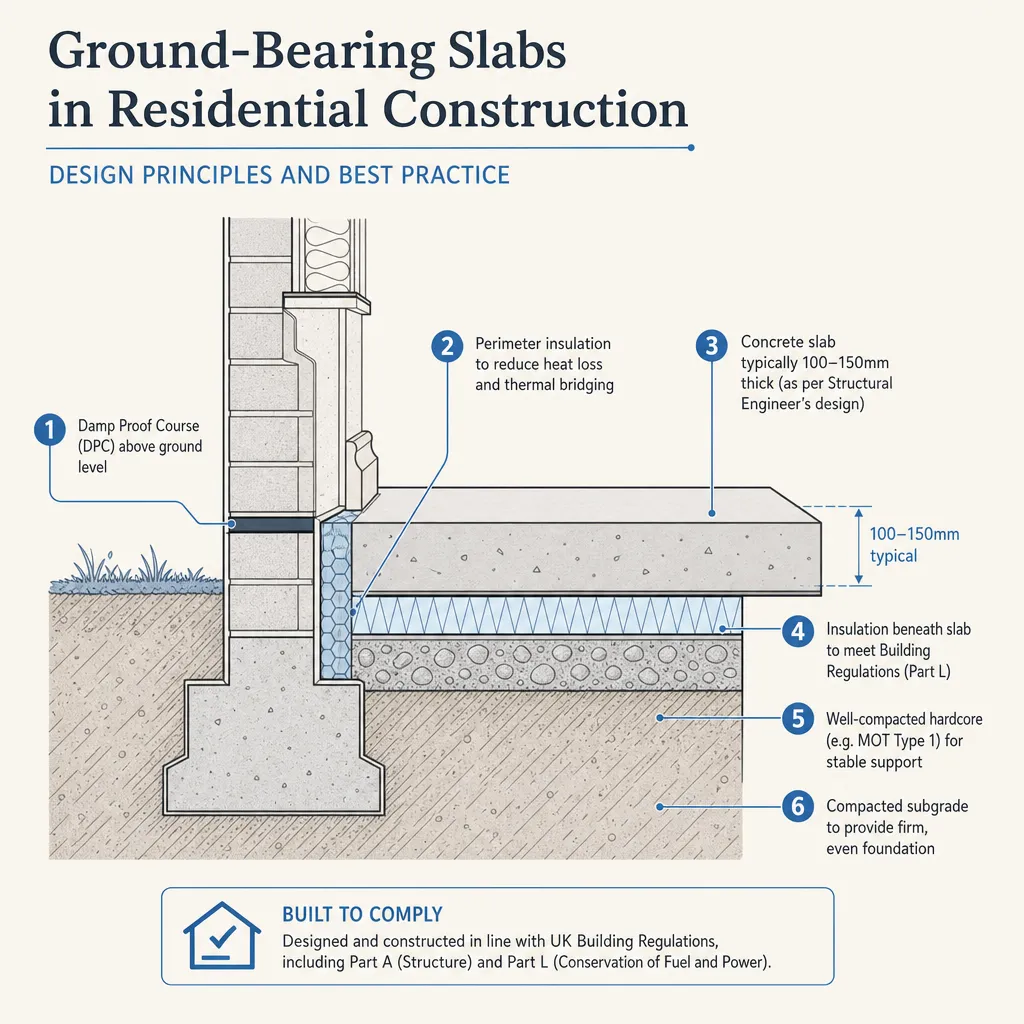
Ground-Bearing Slabs in Residential Construction: Design Principles and Best Practice
Ground-bearing slabs are the most common ground-floor construction method for new residential buildings in the UK, appearing in the vast majority of new-build houses and single-storey extensions. Because the slab sits directly on the prepared ground beneath it — without a suspended structure — its performance over the building's lifetime depends entirely on the quality of what lies below, how it is designed, and how carefully it is constructed. Errors or omissions in any of these areas can produce costly structural problems that are difficult and expensive to remedy after a building is occupied.
Key points
- Ground-bearing slabs must comply with Building Regulations Approved Document A (Structure) and Approved Document C (Site Preparation and Resistance to Contaminants and Moisture).
- The minimum concrete grade for a domestic ground-bearing slab is generally C25/30 (characteristic compressive strength); a structural engineer may specify higher grades on poor ground or for heavier loads.
- Approved Document C requires a damp-proof membrane (DPM) of at least 1,200 gauge (300 micron) polythene, with joints lapped a minimum of 300 mm and taped at every junction.
- The Building Research Establishment (BRE) Good Building Guide 8 (GBG 8) provides widely referenced practical guidance on domestic ground-floor slab construction.
- In areas of shrinkable clay soil — common across southern and eastern England — heave or settlement risk to ground-bearing slabs must be assessed by a structural engineer before the design is finalised.
What is a ground-bearing slab?
A ground-bearing slab (also called a ground-bearing concrete floor or slab-on-ground) transfers the weight of the building and its contents directly to the soil below, without the intermediate support of a suspended floor structure. The typical domestic construction consists of:
- Excavation to remove topsoil and all organic matter.
- Hardcore or granular sub-base — typically Type 1 crushed limestone or recycled aggregate — compacted in layers to a specified depth.
- Blinding layer — a thin (50 mm) layer of weak concrete or sand to provide a clean, smooth surface.
- Damp-proof membrane (DPM) — 1,200 gauge polythene, lapped 300 mm at joints and taped, turned up at edges to connect with the wall damp-proof course (DPC).
- Insulation — typically 75–100 mm of rigid extruded polystyrene (XPS) or polyisocyanurate (PIR) board, positioned above or below the slab depending on the design.
- Concrete slab — typically 100 mm thick for domestic use, reinforced with A142 or A193 steel fabric mesh cast monolithically.
- Underfloor heating pipework, if specified, cast into the slab at this stage.
Comparing ground-bearing and suspended ground floors
Feature | Ground-bearing slab | Suspended beam-and-block floor | Suspended timber ground floor |
|---|---|---|---|
Best for | Stable, well-compacted ground; level sites; no significant fill | Sites with fill, soft spots, or elevated ground movement risk | Traditional construction, listed buildings |
Not ideal for | Sites with deep fill, significant clay heave risk, or contamination | Shallow utility runs; complex plan shapes | Modern thermal performance targets without major upgrade |
Thermal performance | Achieves Part L targets with adequate insulation above or below slab | Good, but thermal bridging at beam junctions requires careful detailing | Poor without substantial insulation upgrade |
Speed of construction | Fast once ground is prepared | Medium | Slower |
Risk if ground moves | Cracking, differential settlement | Heave absorbed in void space beneath floor | Joist distortion |
Building control requirements | Approved Documents A, C, and L | Approved Documents A, C, and L | Approved Documents A, C, and L |
Design considerations for domestic ground-bearing slabs
Ground investigation and soil assessment
No ground-bearing slab should be designed without an understanding of what lies beneath it. For a straightforward extension on previously undeveloped land with visible good-quality soil, an experienced groundworker's assessment of trial pits may be sufficient. On more complex sites — brownfield land, made ground or fill, shrinkable clay, or known mining history — a formal ground investigation by a geotechnical specialist is advisable.
In areas of shrinkable clay, the NHBC Technical Standards provide guidance on heave risk when vegetation is removed and clay expands or contracts seasonally. Where this risk is assessed as significant, a structural engineer should advise on whether a suspended ground floor is the safer option.
Sub-base preparation and compaction
The sub-base is critical. A poorly compacted sub-base will consolidate under the slab's weight, causing cracking or differential settlement. Building control inspectors routinely check sub-base compaction at the pre-concrete inspection. A typical minimum depth for domestic use is 150 mm of compacted Type 1 granular material, increasing where the ground below is soft or where significant fill is present.
Damp-proof membrane and radon
Approved Document C requires a continuous DPM. In areas identified as having elevated radon levels — mapped by the UK Health Security Agency (UKHSA) — additional protective measures are required under Approved Document C, typically a continuous membrane with provision for sub-slab depressurisation if radon levels are found to exceed action levels after construction.
Thermal insulation and Part L compliance
The 2021 update to Building Regulations Part L requires ground floors in new dwellings to achieve a maximum U-value of 0.13 W/m²K. For extensions, the backstop U-value is 0.15 W/m²K. Achieving compliance with a ground-bearing slab typically requires 75–100 mm of high-performance insulation, with the exact thickness depending on the floor's perimeter-to-area ratio. An energy assessor or structural engineer can calculate the required specification for a specific project.
Reinforcement specification
Domestic ground-bearing slabs are typically reinforced with steel fabric mesh — A142 (2.22 kg/m²) or the heavier A193 grade (3.02 kg/m²) — positioned at mid-depth in the slab with adequate concrete cover. Where heavier loads are anticipated, such as in a garage or beneath load-bearing masonry walls, a structural engineer should specify the reinforcement. Unreinforced slabs are only appropriate in very limited circumstances on ideal ground and are not generally recommended for domestic construction.
Common construction errors to avoid
- Inadequate sub-base compaction — the most frequent cause of slab cracking in domestic construction.
- DPM laps not taped — creates a route for moisture and soil gas, including radon, to enter the building.
- Insulation not carried to the perimeter edge — creates a thermal bridge at the wall junction, increasing heat loss and the risk of interstitial condensation.
- Mesh positioned too low — mesh resting on the insulation or DPM rather than held at mid-depth provides little structural benefit.
- Concrete placed in cold weather without protective measures — concrete below 5°C will not cure correctly; cold-weather concreting procedures should be followed.
- Service penetrations not sleeved — unsleeved pipes cast through the slab prevent differential movement and make future replacement impossible without breaking out the concrete.
Important limitations
This article provides general background information about ground-bearing slab design principles in the UK. Structural design, ground conditions, material specifications, and regulatory requirements vary significantly between sites and across England, Wales, Scotland, and Northern Ireland. Nothing in this article constitutes structural engineering or legal advice. A qualified structural engineer and an approved building control body or approved inspector should be engaged for any project involving a ground-bearing slab. Building regulations in Scotland and Northern Ireland differ from those in England and Wales under their respective statutory frameworks.
What to ask a qualified professional
Before instructing a structural engineer, groundworker, or building control consultant on a project involving a ground-bearing slab, consider asking:
- Has a ground investigation been carried out, and is the soil suitable for a ground-bearing slab rather than a suspended floor?
- Is the site in a radon-affected area, and what protective measures are required under Approved Document C?
- What concrete grade and reinforcement specification do you recommend, and why?
- What sub-base depth and material specification is required for this specific site?
- How does the slab design achieve compliance with Part L — what U-value is achieved and how is it calculated?
- Are there trees in the vicinity that could affect shrinkable clay beneath the slab?
- What building control inspections are required at slab stage, and how much advance notice is needed before pouring?
- Is there any fill on the site, and if so, is it suitable for building over or does it need to be removed?
When to get professional help
You should involve a structural engineer — not only your contractor — if any of the following apply:
- The site has previously been developed, filled, or has a history of mining, quarrying, or contamination.
- There are mature trees close to the proposed slab on shrinkable clay.
- The proposed building has heavy masonry walls or concentrated point loads above the slab.
- Ground investigation reveals soft spots, variable soil types, or shallow groundwater.
- The slab forms part of a conversion of a building not originally designed for residential use.
- Your building control body requests a structural engineer's sign-off before approving the slab design.
How Housey can help
Housey connects homeowners and developers with experienced professionals across the full pre-build process. Whether you need a groundworker to prepare and lay your slab, a structural engineer to specify reinforcement and assess ground conditions, or a building control consultant to manage inspections and sign-off, Housey can help you find the right specialist for your project.
Frequently asked questions
How thick should a domestic ground-bearing slab be?
For most residential applications, 100 mm of reinforced concrete is standard. Garages and areas with heavier vehicle loads or structural walls above may require 150 mm or more. A structural engineer should confirm the specification for any loading situation that differs from straightforward domestic use on stable, well-investigated ground.
Do I need a structural engineer for a ground-bearing slab on a simple extension?
Not always. A competent builder and building control inspector can manage straightforward slab work on good ground. However, a structural engineer should be involved where ground conditions are uncertain, loading is non-standard, or your building control body requests a structural calculation. Getting engineering input upfront is almost always cheaper than remedying structural problems after construction.
Can a ground-bearing slab be used in a basement?
No — ground-bearing slabs are for at-grade, above-ground applications. Basement floors are designed as part of a waterproofed tanking or cavity drain system and require specialist structural design. Basement construction is significantly more complex and expensive than ground-level slab work, and the two should not be confused.
What is the difference between a ground-bearing slab and a raft foundation?
A raft foundation is a reinforced concrete plate extending beneath the full building footprint, with thickened edges or downstand beams under load-bearing walls. It distributes loads more widely and suits softer or variable ground. A standard ground-bearing slab typically relies on strip foundations under the walls, with the slab acting as a non-structural floor element between them.
What building control inspections are required for a ground-bearing slab?
Building control typically inspects before concrete is poured, checking formation level, sub-base compaction, DPM continuity, insulation, and mesh positioning. Give adequate advance notice to your building control body or approved inspector before pouring. Failing to obtain inspection before concreting may require costly investigative work to demonstrate compliance.
Sources and further reading
- Approved Document A: Structure — GOV.UK
- Approved Document C: Site Preparation and Resistance to Contaminants and Moisture — GOV.UK
- Approved Document L: Conservation of Fuel and Power — GOV.UK
- NHBC Technical Standards — National House Building Council
- Radon maps in Great Britain — UK Health Security Agency (UKHSA)
- BRE Good Building Guide 8: Ground floors — Building Research Establishment
Useful next reads
 Planning & Pre-Build
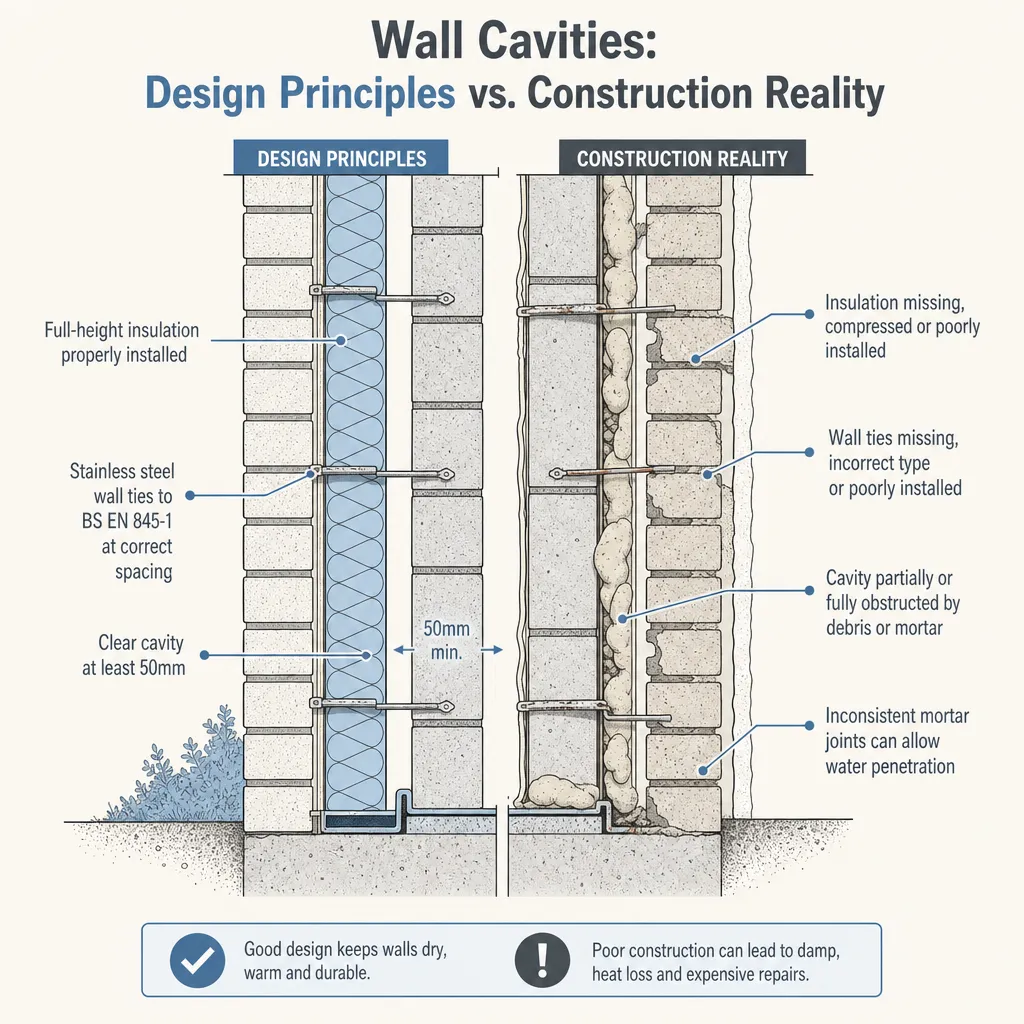
Wall Cavities: Design Principles vs. Construction Reality
A UK cavity wall is designed to resist weather, control heat loss, and structurally link two masonry leaves.
 Planning & Pre-Build
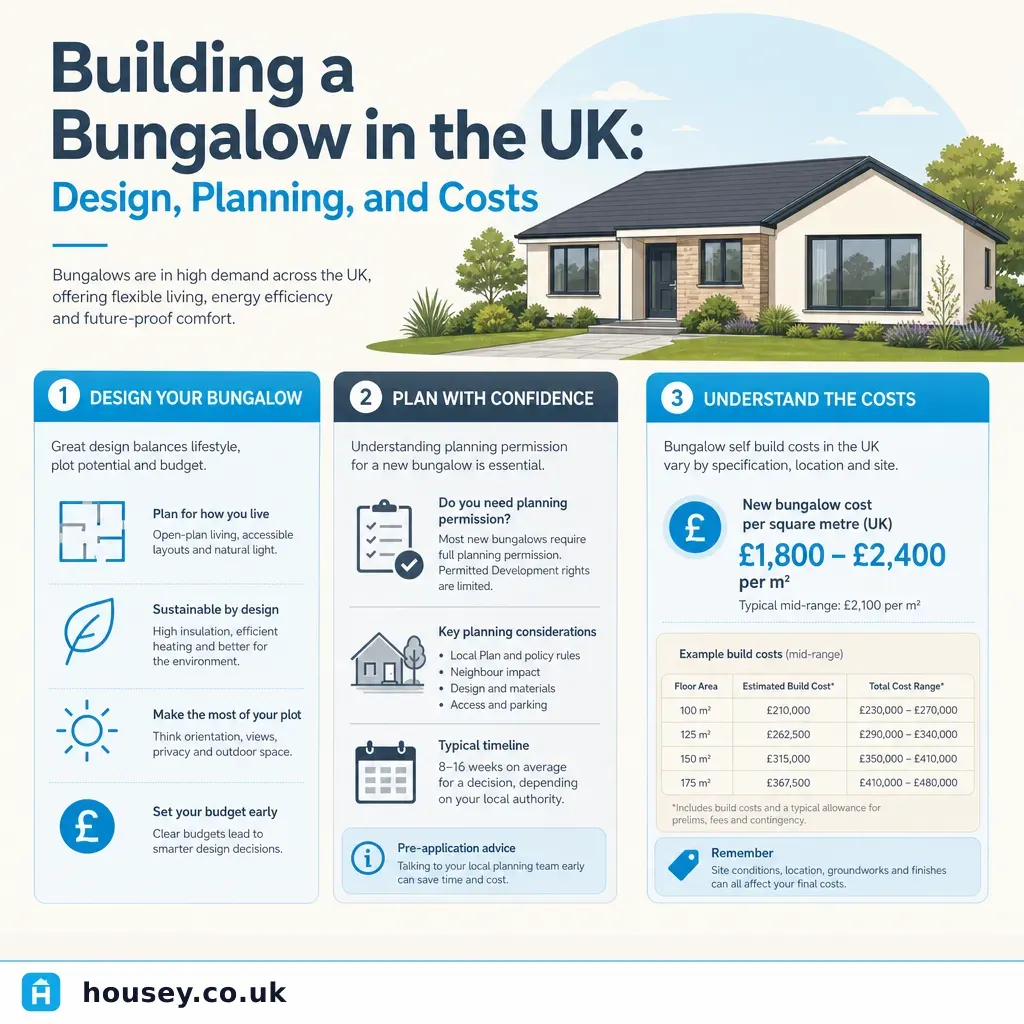
Building a Bungalow in the UK: Design, Planning, and Costs
Building a bungalow in the UK typically costs £1,500–£3,000 per square metre, putting a 100m² bungalow at roughly £150,000–£300,000 in build costs before land, professional fees, and VAT.
 Planning & Pre-Build
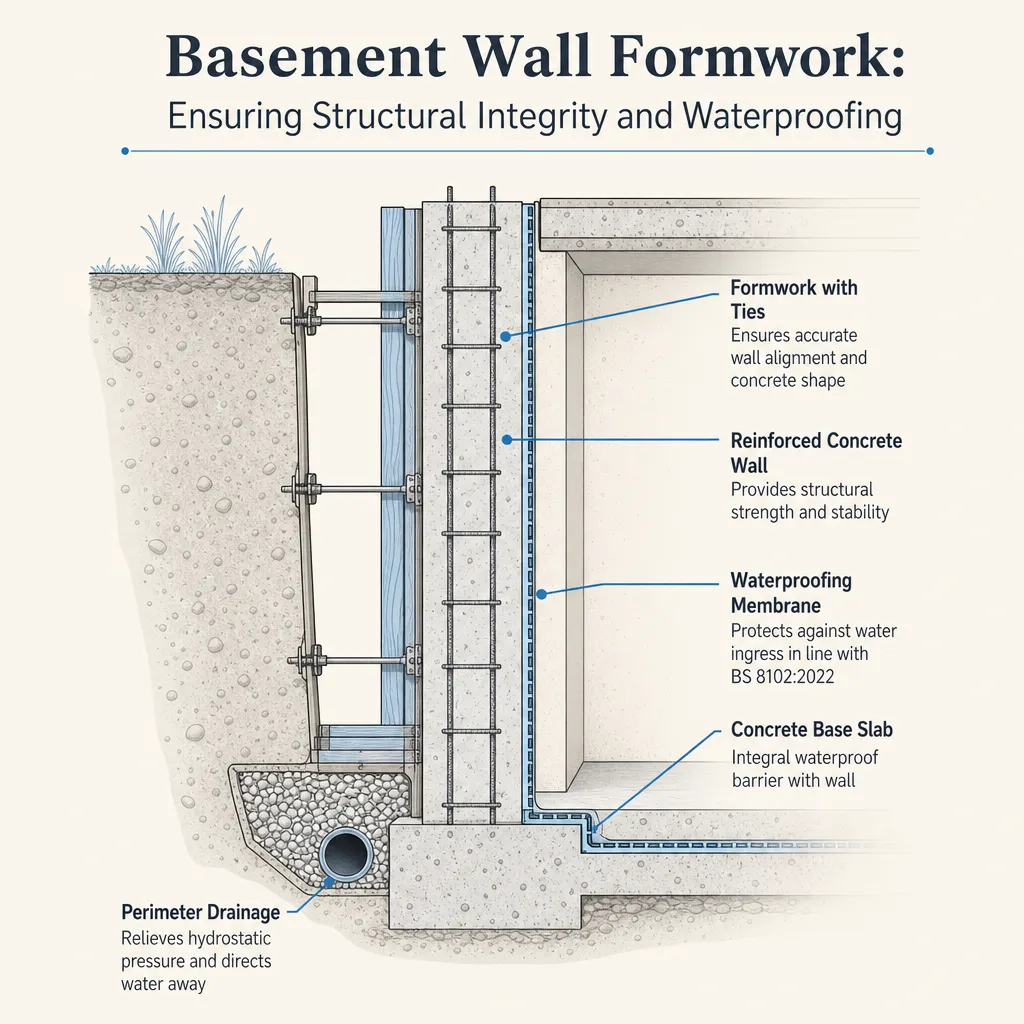
Basement Wall Formwork: Ensuring Structural Integrity and Waterproofing
Basement wall formwork in the UK requires a chartered structural engineer's design under Approved Document A and a waterproofing strategy to BS 8102:2022.
 Planning & Pre-Build
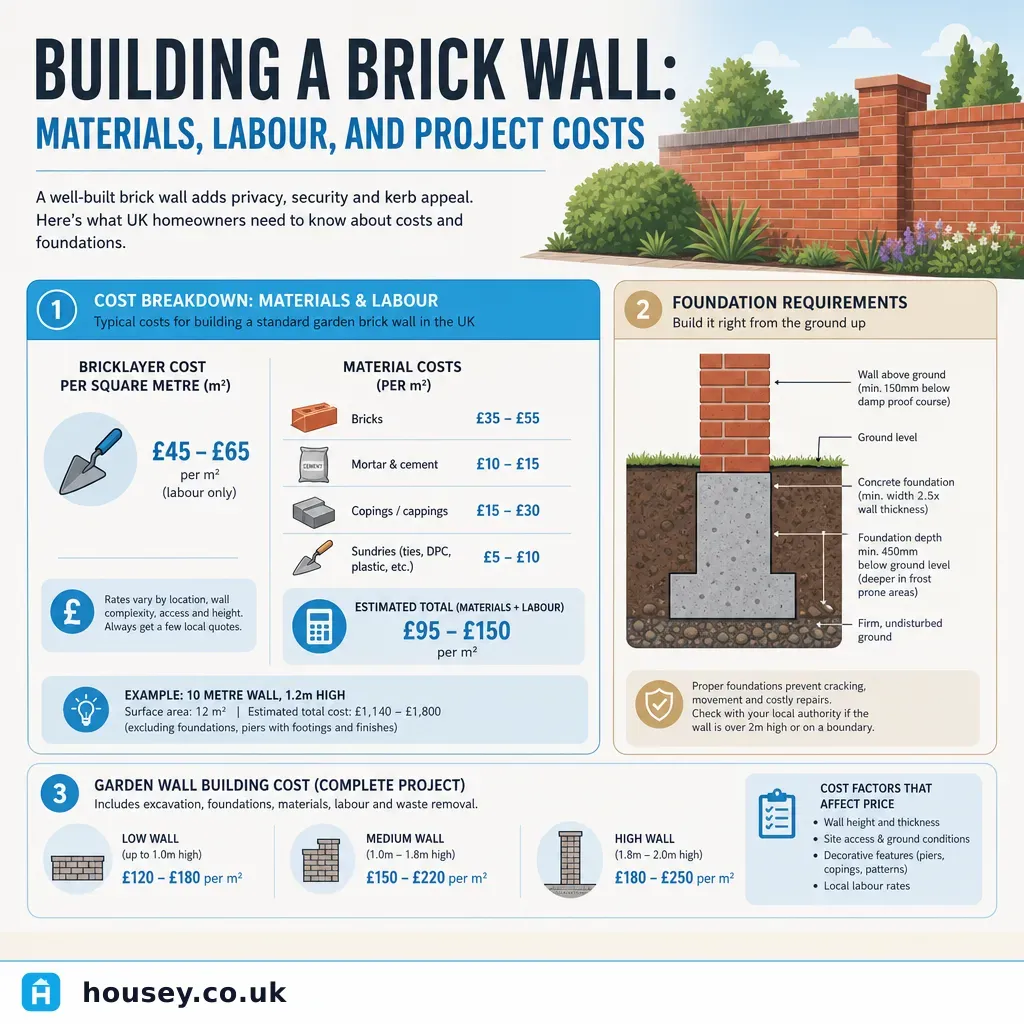
Building a Brick Wall: Materials, Labour, and Project Costs
Building a brick wall in the UK typically costs £50–£120 per square metre for labour, plus £30–£70 per square metre for materials.
 Planning & Pre-Build
Craftsman Style Homes: Architectural Features and Design Elements
Craftsman style homes are defined by natural materials, low-pitched gabled roofs with wide eaves, covered porches, exposed timber details, and grouped casement windows.