Building a Brick Wall: Materials, Labour, and Project Costs
By Housey · Last reviewed 5th of May 2026
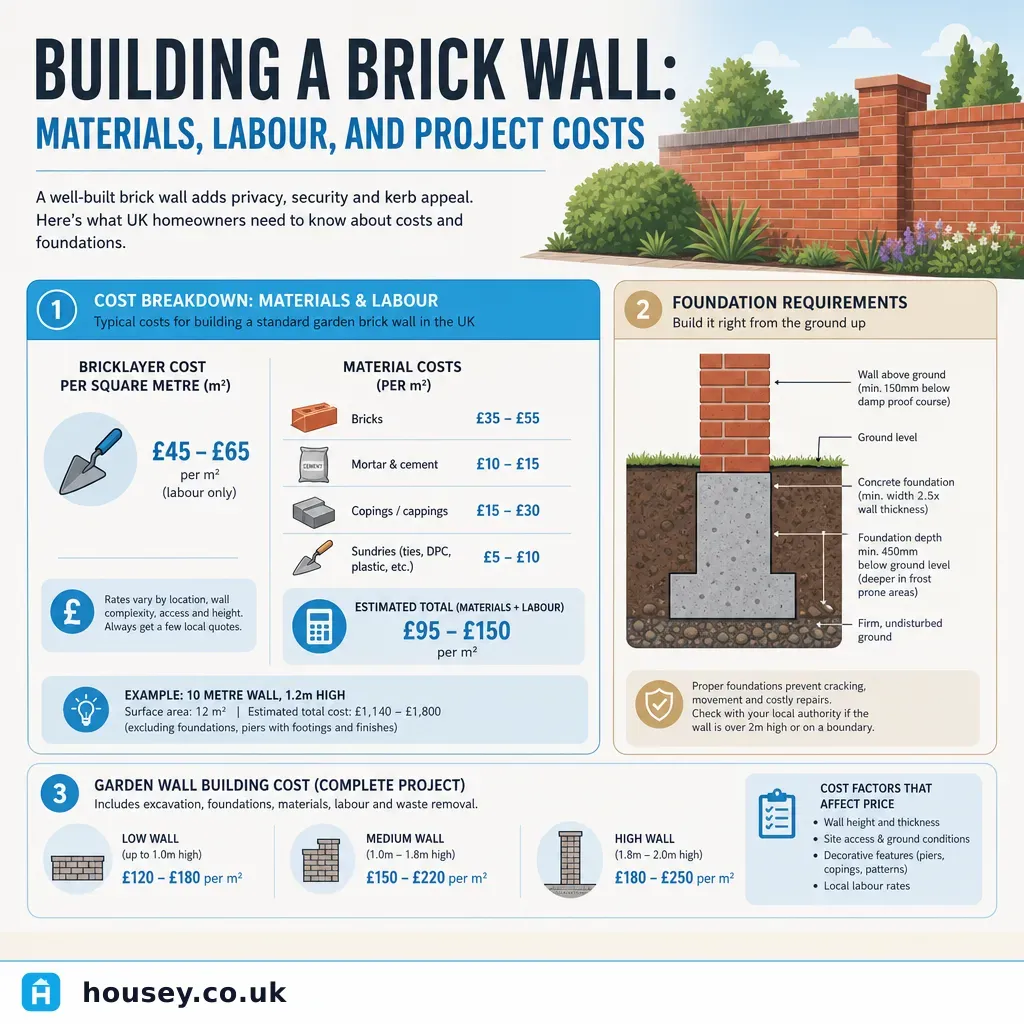
Building a Brick Wall: Materials, Labour, and Project Costs
Brick walls are among the most common masonry projects undertaken by UK homeowners — from replacing a collapsed boundary wall to enclosing a new extension or adding structure to a sloped garden. Costs and regulatory requirements vary more widely than many people expect, depending on the wall's purpose, height, and position on the plot.
Key points
- Bricklayers typically charge £150–£250 per day or £50–£120 per square metre (labour only) — Indicative UK costs, last reviewed 2026-05-05.
- Garden walls taller than 1 metre adjacent to a highway, or taller than 2 metres elsewhere, generally require planning permission under the Town and Country Planning Act 1990.
- Foundations are typically 300–450mm deep for a single-skin garden wall and deeper for load-bearing or retaining structures.
- The Party Wall etc. Act 1996 may apply to walls on or near a boundary; a Party Wall Agreement could be required before work begins.
- Common brick costs range from £300–£700 per 1,000 (facing bricks) to £400–£1,000+ per 1,000 for reclaimed stock, significantly affecting the overall project total.
How much does it cost to build a brick wall in the UK?
The table below shows indicative totals for common project types.
Wall type | Typical size | Indicative total cost | Notes |
|---|---|---|---|
Low garden boundary wall (single skin) | 10m × 0.9m | £1,500–£3,000 | Includes facing bricks, strip foundation, DPC |
Taller garden wall (double skin) | 10m × 1.8m | £4,000–£8,000 | Structural design advice usually needed |
Retaining wall | 5m × 1.2m | £3,000–£6,000 | Drainage and structural design typically required |
Internal partition wall | 4m × 2.4m | £1,200–£2,500 | Building regulations may apply if structural |
Driveway pier columns (pair) | 2 piers | £600–£1,500 | Heights above 1m next to a highway require planning |
Indicative UK costs, last reviewed 2026-05-05. Prices vary by region, specification, and site conditions. Always obtain at least three written quotes.
Key cost drivers: Labour is usually the largest proportion. Bricklayer day rates range from around £150–£200 in Northern England to £200–£350 in London and the South East. Brick type, foundation depth, DPC material, access equipment, and pointing finish all affect the final total. On challenging sites, groundworker input for excavation and concrete is an additional cost before bricklaying can begin.
What materials does a brick wall need?
- Bricks — facing, engineering, or reclaimed depending on aesthetics and exposure
- Mortar — cement, sand, and plasticiser or lime; mix ratio varies by application
- Damp-proof course (DPC) — plastic membrane or engineering brick at or just above ground level
- Hardcore and concrete for the strip foundation
- Wall ties for double-skin construction
- Coping stones or brick-on-edge capping to protect against water ingress and frost damage
Always clarify whether your bricklayer's quote includes materials or covers labour only.
Planning permission and building regulations
Under the Town and Country Planning (General Permitted Development) (England) Order 2015, no planning permission is required for walls up to 1 metre high adjacent to a highway, or up to 2 metres high elsewhere. Wales, Scotland, and Northern Ireland have separate rules. Conservation areas, listed buildings, and Article 4 Directions may remove these permitted development rights — check with your local planning authority before starting.
Building regulations approval is required for walls that form part of a building's structure, retaining walls over approximately 600mm high, or walls forming a fire boundary between dwellings. A standalone garden boundary wall usually does not require approval. A building control consultant can confirm whether approval applies to your project.
If your wall is on or near a boundary, the Party Wall etc. Act 1996 may require you to serve a Party Wall Notice on affected neighbours before work begins.
What to ask before accepting a quote from a bricklayer
- Are you experienced with this wall type — boundary, retaining, or load-bearing?
- What qualifications or trade memberships do you hold?
- Is VAT included, and what is the payment schedule?
- What foundation specification are you allowing for?
- Will you supply materials? Can I see a written brick and mortar specification?
- What does the quote include for pointing and coping?
- Can you provide references from previous similar projects?
- Do you carry public liability insurance?
Homeowner checklist before starting a brick wall project
Important limitations
This article provides general information only. Planning permission rules, building regulations obligations, and Party Wall Act requirements all depend on site-specific factors, property history, and local authority policy. Rules differ between England, Wales, Scotland, and Northern Ireland. A qualified professional should assess your specific project before you instruct a contractor or begin work.
What to ask a qualified professional
Structural engineer (retaining or load-bearing walls):
- What foundation specification is needed for these ground conditions and wall height?
- Are engineering calculations or drawings required for building control?
Building control consultant:
- Does this project require building regulations approval?
- What inspections will be needed during the build, and who manages them?
Party wall surveyor (walls on or near a boundary):
- Does the Party Wall etc. Act 1996 apply to this project?
- Have the correct notices been drafted and served on all affected neighbours?
When to get professional help
Involve a qualified professional if the wall retains soil above 600mm, forms part of a building's structure, is on a site with poor ground conditions or fill, sits on or near a shared boundary where neighbours have raised concerns, or if you are unsure whether planning permission or building regulations apply.
A structural engineer can specify foundations and wall design for retaining or load-bearing situations. A groundworker should be engaged before bricklaying begins on sites where significant excavation or concrete work is needed.
How Housey can help
If your brick wall project involves structural, retaining, or regulatory elements, Housey can connect you with qualified professionals in your area. Request quotes from structural engineers, building control consultants, and groundworkers through Housey to compare credentials and costs before committing.
Frequently asked questions
Do I need planning permission to build a garden wall?
Not always. In England, walls up to 1 metre high adjacent to a highway and up to 2 metres elsewhere are usually permitted development. Rules differ in Wales, Scotland, and Northern Ireland. Conservation areas, listed buildings, and Article 4 Directions may remove these rights. Always check with your local planning authority before starting work.
How deep should brick wall foundations be?
For a typical single-skin garden wall up to 1 metre high, foundations are usually 300–450mm deep on firm ground. Deeper foundations of 600mm or more are needed on clay soils, for retaining walls, or where ground conditions are uncertain. A structural engineer should specify foundations for any load-bearing or retaining wall.
Does the Party Wall etc. Act 1996 apply to a garden wall?
It may. The Act applies to work on or near a boundary that could affect a neighbour's property. If your wall sits on or straddles the boundary, or if excavation is within 3–6 metres of a neighbouring structure, you may need to serve a Party Wall Notice. A party wall surveyor can advise on whether the Act applies to your project.
How long does it take to build a brick wall?
A simple 10-metre garden wall typically takes an experienced bricklayer 2–4 days, depending on height, foundation preparation, and weather. Foundation concrete should cure for at least 3 days before bricklaying begins. Projects requiring planning permission or building regulations approval add several weeks to the overall programme.
Should I use a single-skin or double-skin wall?
A single-skin wall (102mm wide) suits low garden boundaries up to around 1 metre. Double-skin walls (215–275mm) are stronger and better suited to taller walls, retaining structures, or exposed locations. For walls over 1.8 metres or any structural application, seek professional advice on specification before instructing a contractor.
Sources and further reading
- Planning Portal: Fences, gates and garden walls — Planning Portal (GOV.UK)
- Town and Country Planning (General Permitted Development) (England) Order 2015 — legislation.gov.uk
- Party Wall etc. Act 1996 — legislation.gov.uk
- Party wall etc. Act 1996: guidance — GOV.UK
- HSE: Construction health and safety — Health and Safety Executive
Useful next reads
 Planning & Pre-Build
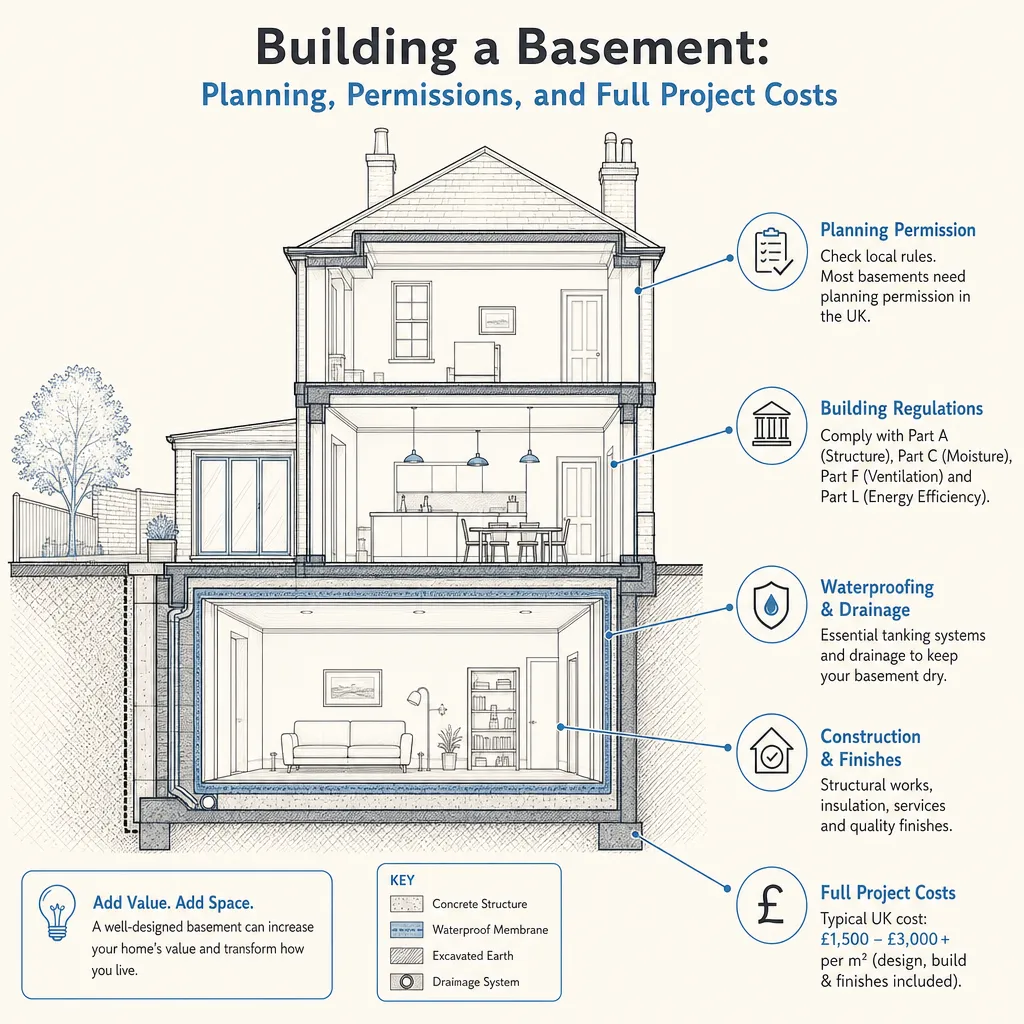
Building a Basement: Planning, Permissions, and Full Project Costs
Building a basement in the UK usually requires full planning permission where new excavation or external changes are involved.
 Planning & Pre-Build
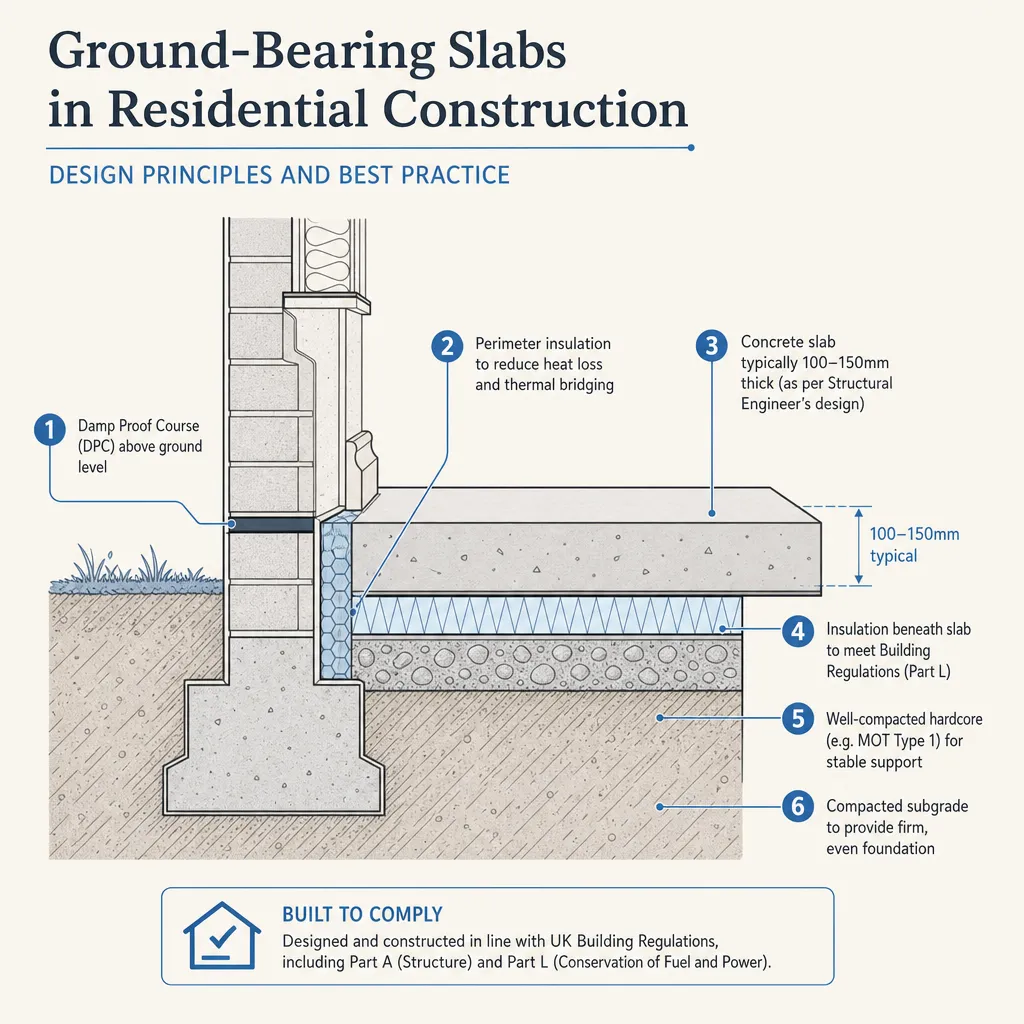
Ground-Bearing Slabs in Residential Construction: Design Principles and Best Practice
A ground-bearing slab sits directly on compacted ground and must comply with Building Regulations Approved Documents A, C, and L.
 Planning & Pre-Build
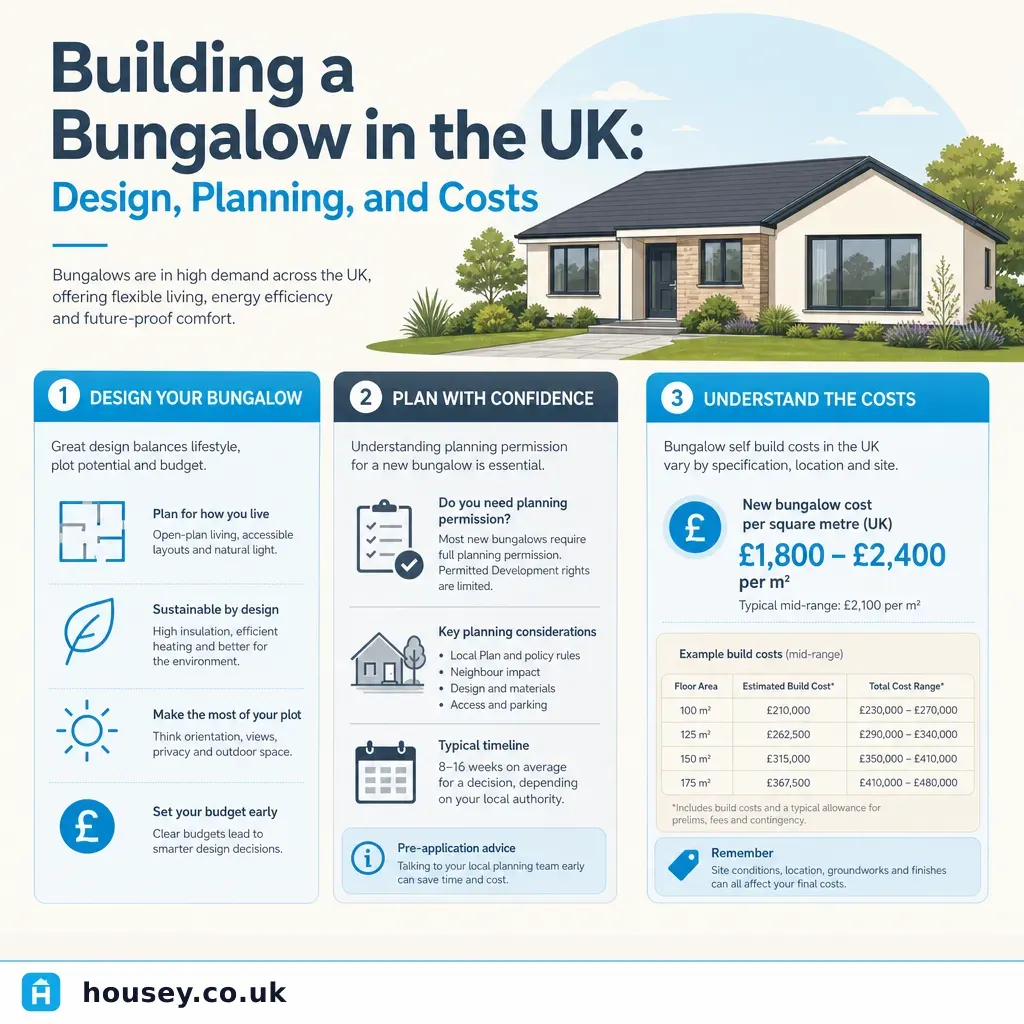
Building a Bungalow in the UK: Design, Planning, and Costs
Building a bungalow in the UK typically costs £1,500–£3,000 per square metre, putting a 100m² bungalow at roughly £150,000–£300,000 in build costs before land, professional fees, and VAT.
 Planning & Pre-Build
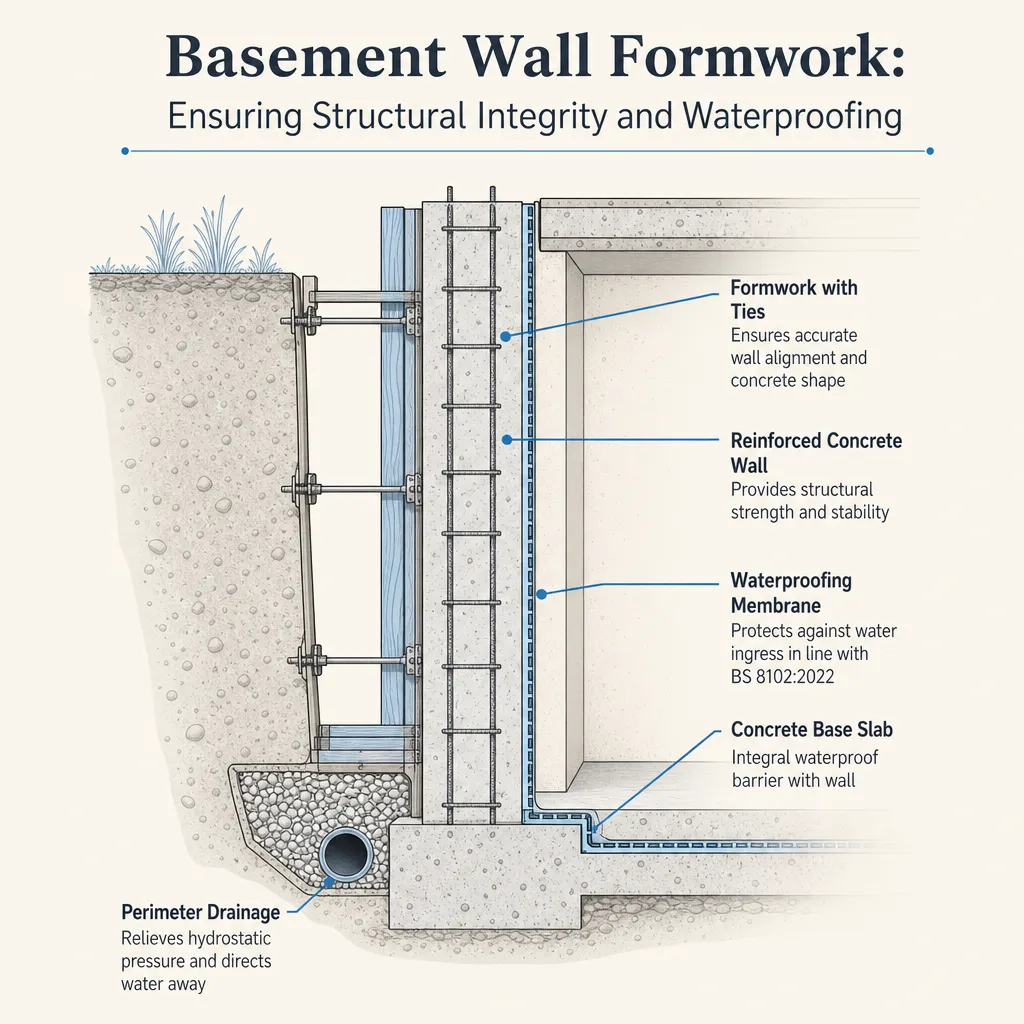
Basement Wall Formwork: Ensuring Structural Integrity and Waterproofing
Basement wall formwork in the UK requires a chartered structural engineer's design under Approved Document A and a waterproofing strategy to BS 8102:2022.
 Planning & Pre-Build
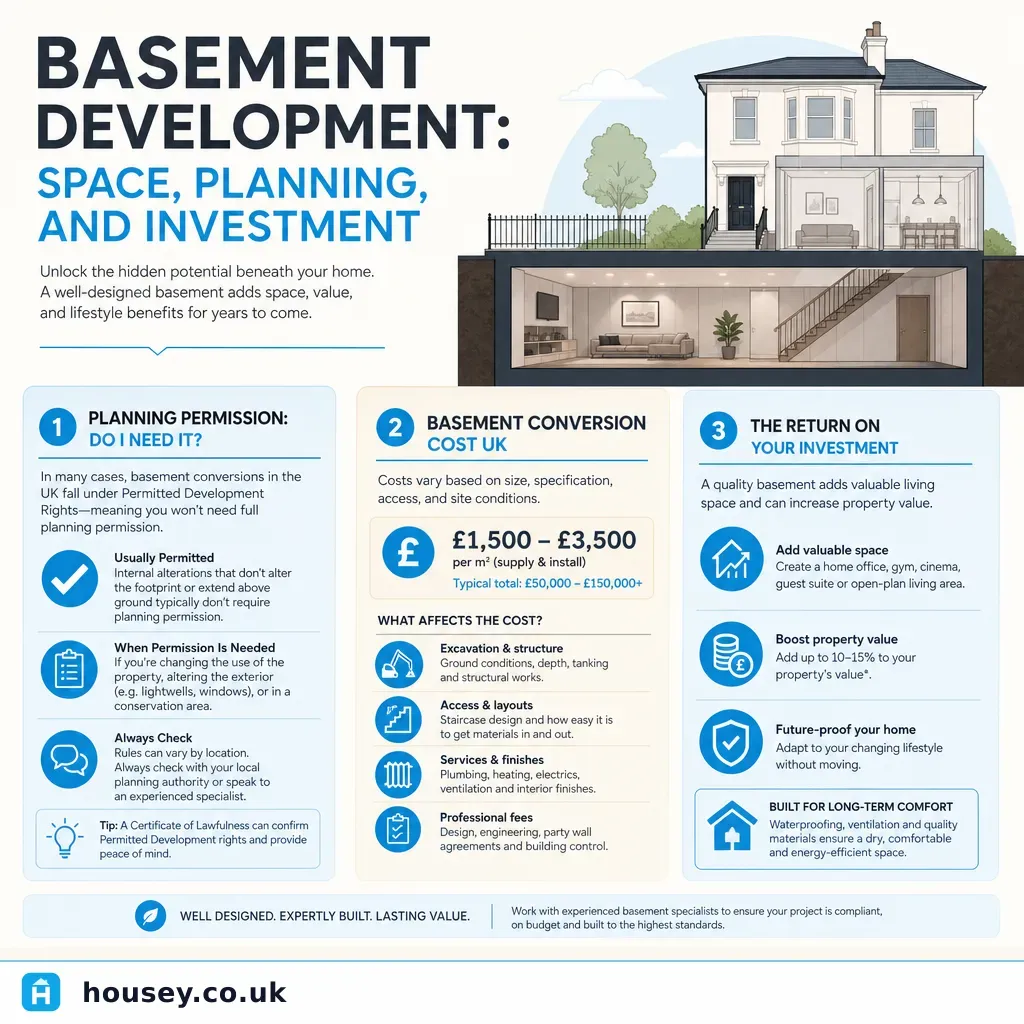
Basement Development: Space, Planning, and Investment
Basement development in the UK almost always requires Building Regulations approval and may need planning permission depending on whether the footprint or external appearance changes.