Basement Waterproofing: Process, Expectations, and Solutions
By Housey · Last reviewed 31st of May 2026
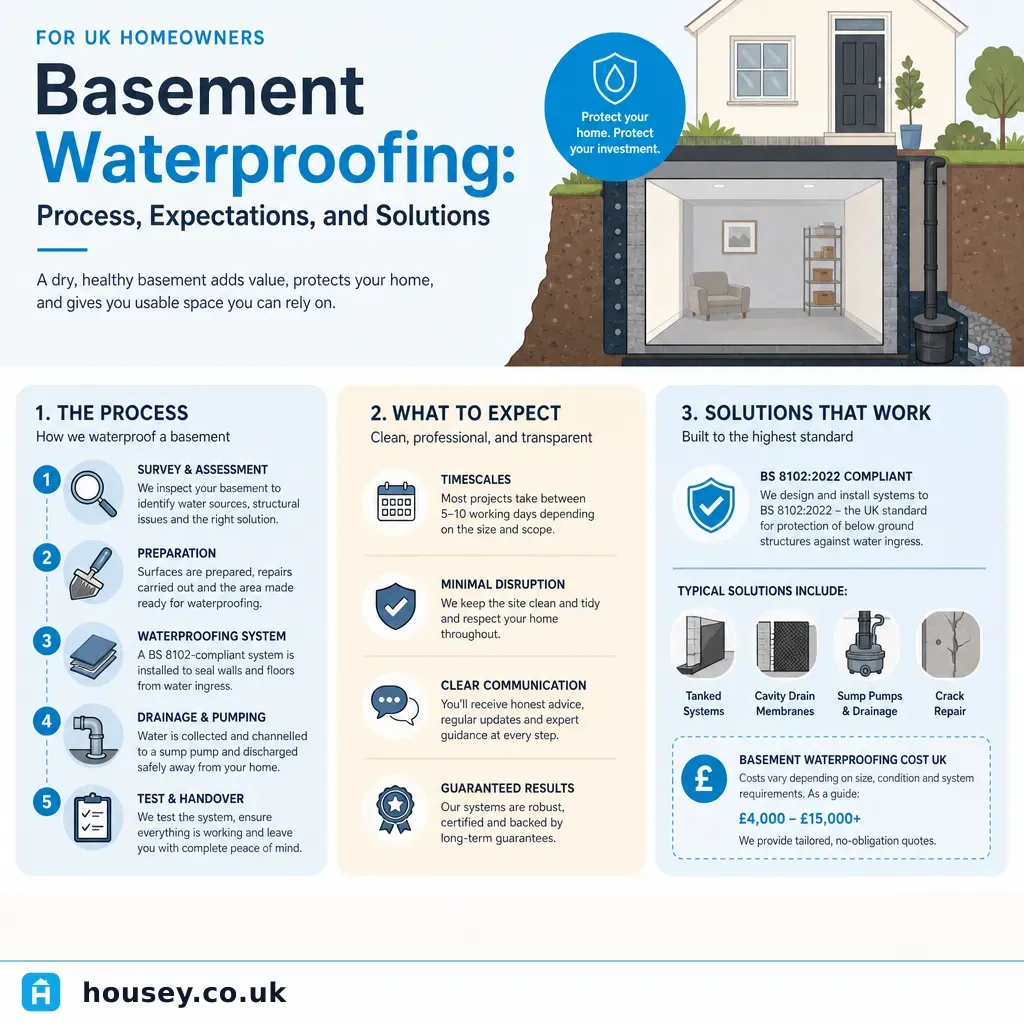
Basement Waterproofing: Process, Expectations, and Solutions
Basement waterproofing is one of the more complex decisions a UK homeowner faces — whether you are converting an existing cellar into usable living space, dealing with persistent damp in a below-ground room, or buying a property with a basement and trying to understand what protection is already in place. The UK's variable water table, the prevalence of Victorian and Edwardian stock with no original waterproofing, and the growing appetite for basement conversions all make this a topic with significant financial, structural, and health implications.
Key points
- BS 8102:2022 (Code of practice for protection of below-ground structures against water ingress) is the primary UK standard governing basement waterproofing specification and defines three grades of protection (Grade 1, 2, and 3).
- Three system types are recognised: Type A (barrier protection — tanking), Type B (structurally integral concrete), and Type C (drained cavity drainage membrane systems).
- The Property Care Association (PCA) accredits specialist waterproofing contractors and awards the Certificated Surveyor in Structural Waterproofing (CSSW) qualification; PCA membership is often required by mortgage lenders and warranty providers.
- Ventilation design is inseparable from basement waterproofing: inadequate ventilation in a waterproofed below-ground space causes condensation, mould growth, and progressive structural moisture damage.
- Building Regulations approval is likely required for basement waterproofing works that form part of a habitable conversion, covering at minimum Approved Document C (moisture resistance), and Parts F (ventilation), L (energy efficiency), and B (fire safety) where new habitable space is created.
What does BS 8102:2022 require for UK basements?
BS 8102:2022 is the standard specifying how below-ground structures should be protected against water ingress. It defines three grades of internal environment:
- Grade 1 — Tolerable water seepage and moisture; suitable for car parking and plant rooms.
- Grade 2 — No water penetration but some humidity acceptable; suitable for workshops and storage.
- Grade 3 — Dry, humidity-controlled environment; required for habitable rooms, offices, and living accommodation.
Most residential basement conversions aim for Grade 3. The grade required drives the choice of waterproofing type and specification. This is why engaging a PCA-accredited CSSW surveyor at the outset — before any contractor quotes are sought — is the industry-standard approach.
The three types of basement waterproofing
Type A — Barrier protection (tanking)
Type A involves applying a continuous waterproof barrier to the external or internal faces of the structure. Externally applied tanking — using bitumen, cementitious coatings, or crystalline products applied to the outside before backfilling — is considered more reliable but is only feasible during construction or major excavation. Internal tanking (applied to the inside of walls and floors) is the most common retrofit approach, but it relies on perfect adhesion and is vulnerable to hydrostatic pressure from water pushing inward against the membrane.
Type B — Structurally integral concrete
Type B relies on the concrete structure itself being watertight, using dense, low-permeability concrete with waterproofing additives designed in from the outset. This is most appropriate for new construction and is rarely applicable to retrofitting existing masonry basements in Victorian or Edwardian housing stock.
Type C — Drained cavity membrane
Type C does not prevent water entry; instead, it manages and drains water that penetrates the structure. A studded membrane fixed to walls and floor creates an air gap and drainage channel directing water to a sump pump for discharge. This approach is widely used in UK retrofit basement waterproofing because it tolerates structural movement and is robust to minor point ingress. Many specifications combine types — for example, Type C as the primary system with Type A as a redundancy layer for Grade 3 habitable use.
Waterproofing systems compared
System type | What it does | Best for | Indicative cost (30–60 m² basement) | Key limitation |
|---|---|---|---|---|
Type A — internal tanking | Applies waterproof barrier to internal surfaces | Minor seepage; Grade 1–2 storage use | £2,500–£8,000 | Vulnerable to hydrostatic pressure; can fail if bonding is compromised |
Type B — structural concrete | Water-resistant concrete construction | New-build basements only | Included in build cost | Not applicable to retrofit masonry structures |
Type C — cavity drain membrane | Manages ingress via drainage channel and sump pump | Retrofit conversions; Grade 3 habitable use | £6,000–£20,000+ | Sump pump requires ongoing maintenance and a power supply |
Combined Type A + Type C | Barrier plus drainage redundancy | High water table; Grade 3 use requiring maximum protection | £10,000–£25,000+ | Higher cost and more complex installation |
Indicative UK costs, last reviewed 2026-05-31. Costs vary substantially by basement size, water table depth, access conditions, and structural repairs required.
Which basement waterproofing approach applies to your property?
- Choose Type B (structurally integral concrete) if you are building a new basement from scratch — waterproofing can be designed in during construction.
- Choose Type C (cavity drain membrane) as the primary system for most retrofit conversions in existing Victorian or Edwardian masonry buildings converting to Grade 3 habitable use.
- Consider Type A (internal tanking) for minor damp seepage in an existing below-ground storage space (Grade 1–2 use only), or as a redundancy layer alongside Type C.
- Specify combined Type A + Type C for Grade 3 habitable use where the water table is high or ingress is more than superficial.
- Instruct a PCA-accredited CSSW surveyor if you are unsure of the water source, if active water ingress is occurring, or before obtaining any contractor quotes — a survey report must precede specification.
Important limitations
This article provides general guidance only. Basement waterproofing is a technical, regulated activity where the correct specification depends on your specific property, ground conditions, water table, structural type, wall construction, and intended use. Nothing here can substitute for a site-specific assessment by a PCA-accredited qualified professional. Building Regulations requirements, specification obligations, and warranty conditions vary by property, local authority, and contractor. Rules in Scotland, Wales, and Northern Ireland may differ from those in England.
When this becomes urgent
Seek professional help without delay if:
- You notice rapid or increasing water ingress — running water on walls, pooling on the floor, or a rising visible damp line.
- You can smell mould or see active mould growth in a basement, cellar, or adjacent ground-floor area.
- You observe cracks in the basement walls or floor that appear to be widening, or doors and windows near the basement are sticking or distorting — possible signs of structural movement.
- A sump pump already installed is running continuously, cycling abnormally, or has failed.
- You are about to exchange on a property containing a below-ground area with no independent survey of the waterproofing system.
What to ask a qualified professional
When instructing a PCA-accredited waterproofing specialist or CSSW surveyor, ask:
- What grade of protection under BS 8102:2022 are you specifying, and why is that the right grade for our intended use?
- Which waterproofing type or combination are you proposing, and what are the risks and limitations of each in our specific ground conditions?
- What ventilation strategy is included in the specification, and does it comply with Building Regulations Approved Document F?
- Is Building Regulations approval required for these works, and will you manage the submission or provide guidance on the process?
- Is the installation covered by an insurance-backed guarantee, and for how long does it run?
- What ongoing maintenance does the system require — sump pump testing intervals, drainage outlet inspections, pump replacement timescale?
- Will you provide a written survey report before specifying any system, and will the report be independent of any sales interest in a particular product?
When to get professional help
For any basement waterproofing beyond minor surface treatment, always use a PCA-accredited contractor with a CSSW-qualified surveyor conducting the initial assessment. This is not merely a quality assurance measure — mortgage lenders and warranty providers routinely require PCA accreditation as a condition of accepting the works on the property.
An independent damp and timber survey from a specialist should precede any waterproofing specification to establish the source and extent of moisture ingress before you invite contractor quotes.
How Housey can help
Housey connects you with vetted damp proofing specialists who can assess your basement and specify the right waterproofing system for your property. If you are uncertain whether you need a full waterproofing installation or a more targeted repair, an independent damp and timber survey is the right first step — it will clarify the moisture source and put you in a stronger position when comparing contractor quotes.
Frequently asked questions
Do I need planning permission for basement waterproofing?
Waterproofing works to an existing basement or cellar do not normally require planning permission in their own right. However, converting a cellar into habitable accommodation is likely to constitute a material change of use or extension, and planning permission may be required depending on your property type, local authority, and whether permitted development rights apply. Always check with your local planning authority before beginning conversion works.
How long does basement waterproofing last?
A correctly specified and installed Type C cavity drain system with a maintained sump pump can last 20–30 years or more. The sump pump itself is an electro-mechanical component that typically requires replacement every 7–10 years. Insurance-backed guarantees from PCA-accredited members typically run for 10–30 years depending on the system and installer. Type A tanking lifespans vary more significantly with substrate condition and hydrostatic pressure.
Can I waterproof a basement myself?
For very minor surface damp, some homeowners apply brush-on waterproofing products as a supplementary measure. However, specifying and installing a BS 8102-compliant system for habitable use requires professional assessment, design, and installation. Incorrectly installed systems can cause condensation, mould growth, and — in severe cases — structural moisture damage. For any conversion or significant moisture problem, always use a PCA-accredited specialist.
Will basement waterproofing affect my home insurance?
Professionally waterproofed basements with an insurance-backed guarantee are generally viewed positively by insurers. An untreated damp basement may affect claims if water damage occurs. Always inform your insurer of any significant works to below-ground areas — failure to disclose material alterations can affect the validity of your policy. Ask your insurer for written confirmation that the completed works are noted on your policy.
Sources and further reading
- BS 8102:2022 Code of practice for protection of below-ground structures against water ingress — BSI Group
- Property Care Association: find an accredited contractor — Property Care Association
- Approved Document C: site preparation and resistance to moisture — GOV.UK
- Planning permission: when you need it — GOV.UK
- NHBC Standards Chapter 5.4: waterproofing of basements — NHBC
Useful next reads
 Surveys & Inspections
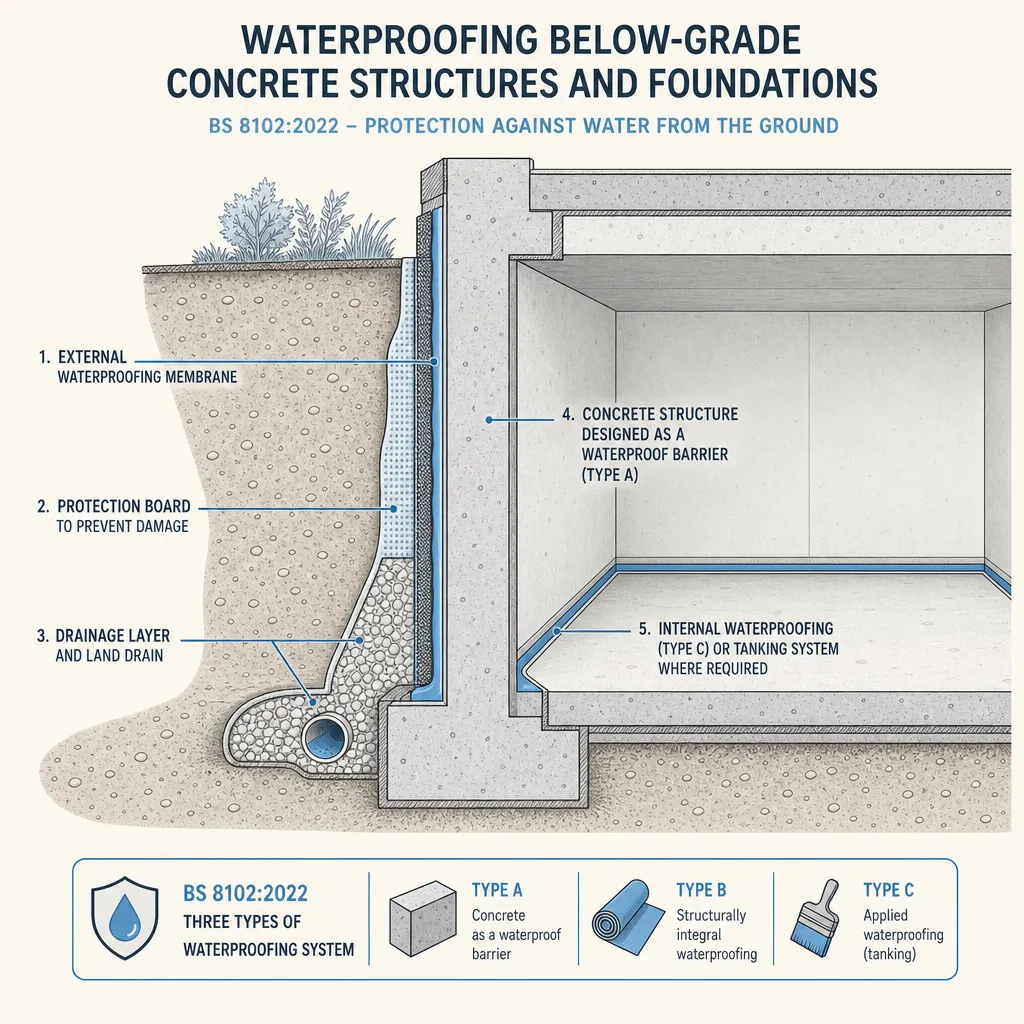
Waterproofing Below-Grade Concrete Structures and Foundations
Below-grade waterproofing in the UK should be designed to the grade of protection required under BS 8102:2022.
 Surveys & Inspections
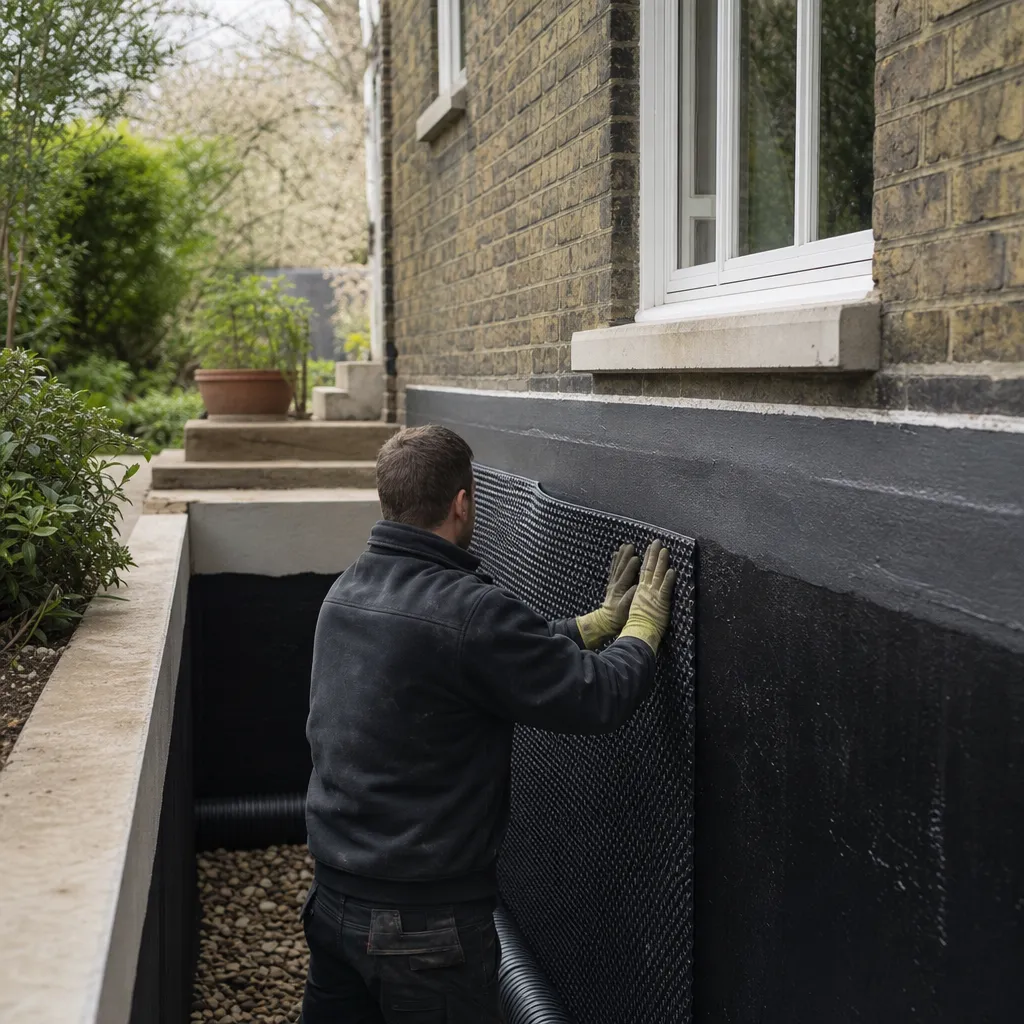
Basement Waterproofing Solutions for Damp Prevention
Basement waterproofing in the UK is governed by BS 8102:2022, which defines three system types: Type A (barrier coatings), Type B (structurally integral concrete), and Type C (cavity drain membrane with sump pump).
 Surveys & Inspections
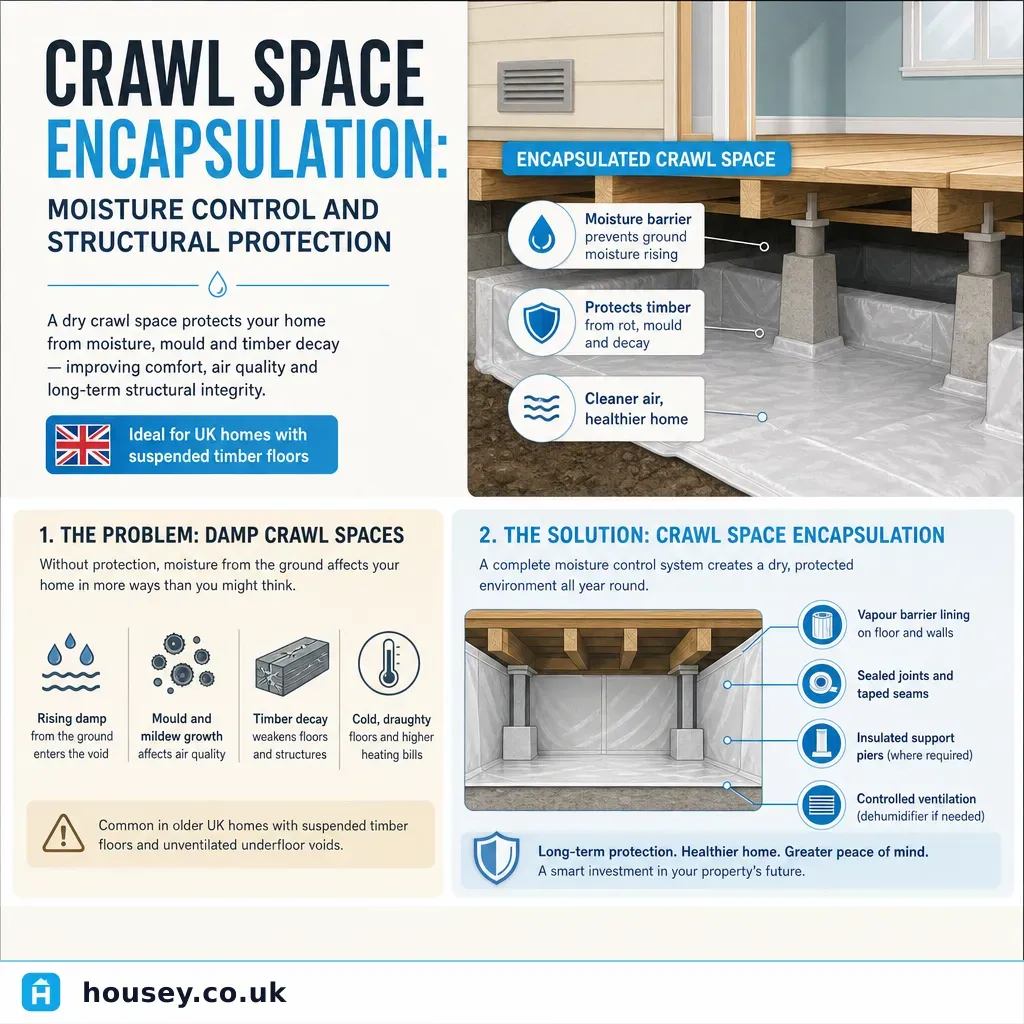
Crawl Space Encapsulation: Moisture Control and Structural Protection
Crawl space encapsulation seals the subfloor void beneath suspended timber floors with a vapour control layer and improved ventilation to prevent rising damp, condensation, timber rot and structural damage.
 Surveys & Inspections
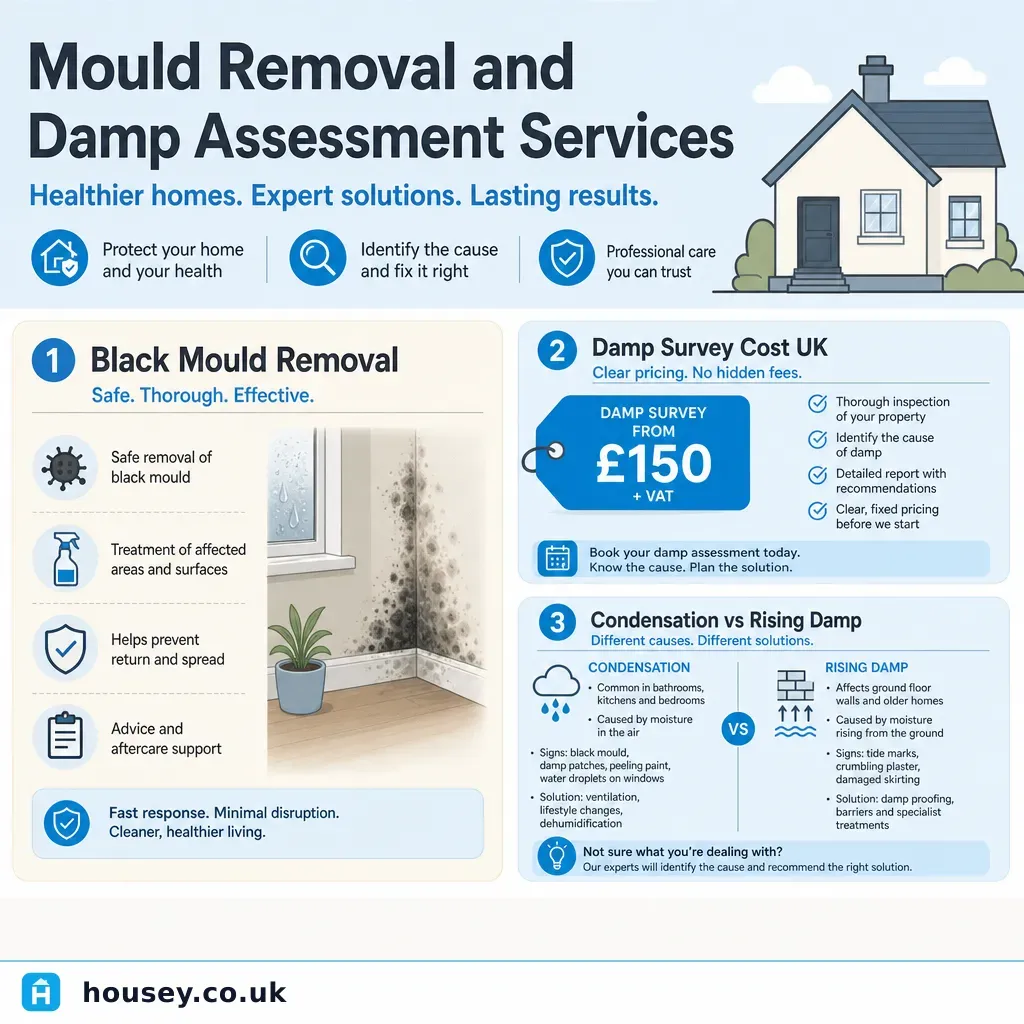
Mould Removal and Damp Assessment Services
Professional mould removal and damp assessment starts with identifying the moisture source—condensation, rising damp, or penetrating damp—before any treatment begins.
 Surveys & Inspections
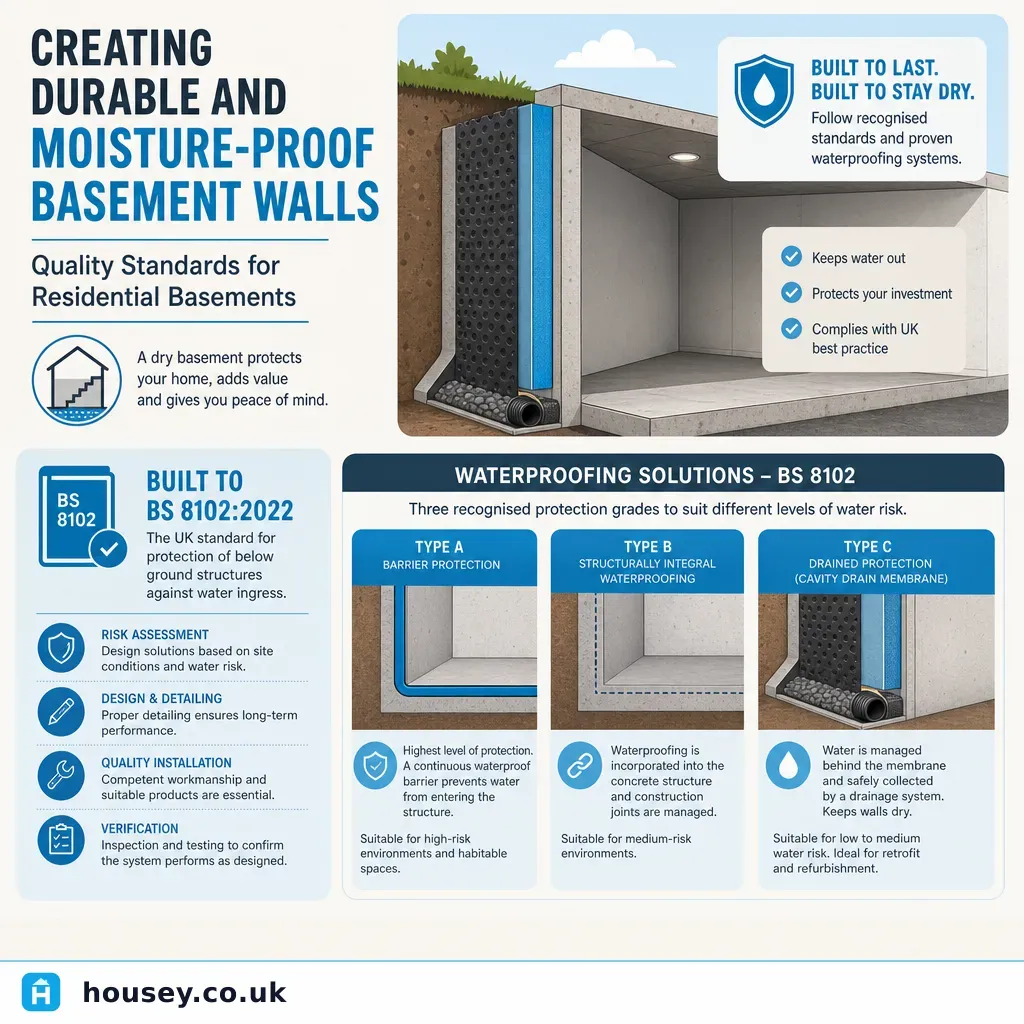
Creating Durable and Moisture-Proof Basement Walls: Quality Standards for Residential Basements
Basement waterproofing in UK homes must meet BS 8102:2022 requirements.