Creating Durable and Moisture-Proof Basement Walls: Quality Standards for Residential Basements
By Housey · Last reviewed 24th of May 2026
Creating Durable and Moisture-Proof Basement Walls: Quality Standards for Residential Basements
Basement conversion and new-build basement construction have grown in popularity across UK cities where extending outward or upward is constrained by planning rules or plot size. When a basement is intended as habitable or semi-habitable space, the waterproofing and moisture-control specification becomes critical — a failure causes structural deterioration, mould growth, and renders the space unusable. Remediation of a failed waterproofing installation is significantly more expensive than getting the specification right from the outset, and in some cases requires excavating and reconstructing the affected wall.
Key points
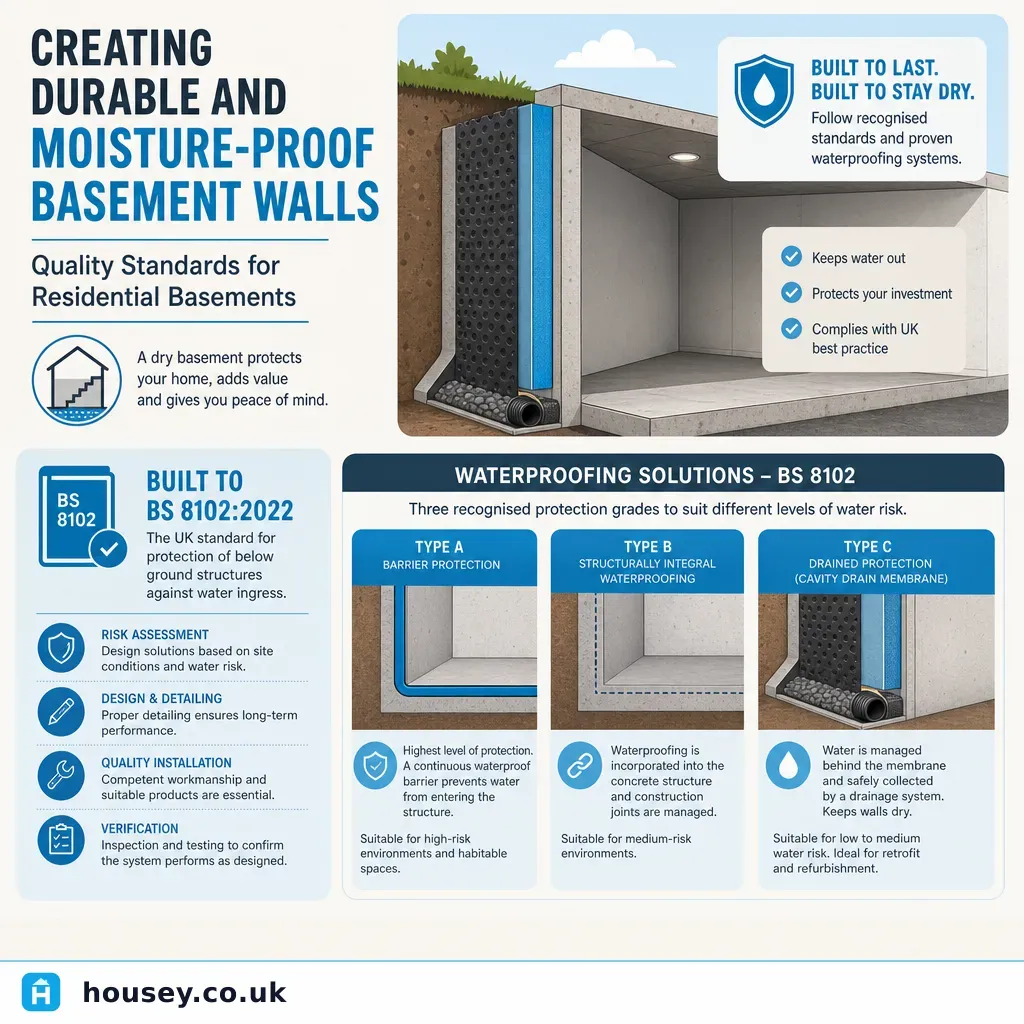
- BS 8102:2022 (Protection of below-ground structures against water from the ground) is the governing British Standard for residential basement waterproofing and defines three system types: Type A (barrier), Type B (structurally integral), and Type C (drained cavity).
- The four grades of intended use under BS 8102 — Grade 1 (basic utility) through Grade 4 (highest performance) — determine the minimum acceptable waterproofing specification; a habitable bedroom or living room requires Grade 3.
- The Property Care Association (PCA) recommends that waterproofing design is carried out or reviewed by a CSSW (Certificated Surveyor in Structural Waterproofing) to ensure BS 8102 compliance and maintain warranty validity.
- Building Regulations Approved Document C (Site preparation and resistance to contaminants and moisture) sets the statutory requirement for moisture protection in buildings, which all basement construction must satisfy.
- Combining two waterproofing types — for example, Type A internal tanking plus Type C cavity drain — provides redundancy; a single system failure does not result in immediate ingress, and this dual approach is often specified for Grade 3 habitable conversions.
Why basement moisture control matters in UK homes
UK ground conditions vary considerably — from chalk and sandstone to London clay and glacial sands — and seasonal water table fluctuations are common. Basements face three main moisture sources: hydrostatic pressure from groundwater pressing against the structure; capillary action drawing moisture through the concrete mass; and condensation from the temperature differential between the cool below-ground space and the warmer habitable floors above.
A waterproofing failure in a converted basement bedroom, office, or living room causes mould growth, poor air quality, damage to finishes and contents, and potential structural deterioration. It may also create problems with Building Control sign-off and complicate future property sales or remortgaging.
The three waterproofing system types under BS 8102:2022
BS 8102:2022 classifies below-ground waterproofing into three types. Each has different performance characteristics, cost profiles, maintenance requirements, and appropriate applications. The table below also identifies the typical professional for each system type.
Type | Description | Best for | Not ideal for | Typical professional |
|---|---|---|---|---|
Type A — Barrier | External or internal tanking membranes, cementitious render, crystalline coatings applied to the structure | New build with good access; minor seepage in existing basements | High hydrostatic pressure without drainage; structures subject to ongoing movement | Damp-proofing or specialist waterproofing contractor |
Type B — Structurally integral | Waterproof concrete designed into the structure; integral admixtures or structural membranes | New-build basement box construction | Retrofit to existing masonry structures | Structural engineer plus concrete contractor |
Type C — Drained cavity | Studded HDPE cavity drain membrane channels water to a sump pump for removal | Retrofit to existing structures; high water table; limited excavation access | Properties without reliable power for sump pump; owners unable to maintain pump | Specialist waterproofing contractor (PCA-registered) |
Most residential basement conversions in existing UK properties use a Type C cavity drain system, often combined with Type A internal tanking for additional protection. New-build basements typically incorporate Type B waterproof concrete as the primary system.
Which grade of use applies to your basement?
BS 8102:2022 defines four grades of acceptable internal environment for below-ground spaces. The intended grade drives the waterproofing specification required:
- Grade 1 — Basic utility (car parking, plant rooms). Some seepage and damp patches acceptable.
- Grade 2 — Utility or semi-habitable (workshops, storage with humidity control). No seepage, but moisture-laden air tolerable.
- Grade 3 — Habitable space (bedrooms, living rooms, offices). Dry environment with no seepage; condensation managed to normal habitable standards.
- Grade 4 — Highest performance (archives, data centres). As Grade 3 plus tight humidity control.
A habitable room in a converted basement requires Grade 3 performance. This determines which system types are acceptable, what level of design and inspection is appropriate, and what warranty terms apply.
Pre-construction checklist for basement waterproofing
Before work begins on a residential basement waterproofing project, confirm the following are in place:
Important limitations
This article provides general information about UK standards and approaches to basement waterproofing. Ground conditions, water table level, existing structure type, basement geometry, and intended use vary considerably between properties and locations. Decisions about waterproofing system type, specification, and construction method should always involve a qualified professional — ideally a CSSW or a structural engineer with relevant basement experience.
Always check the current edition of BS 8102 and Approved Document C before committing to a specification. Waterproofing warranties are typically conditional on design compliance and installation by approved contractors; independent changes made after installation may void cover.
What to ask a qualified professional
Before instructing a waterproofing designer or specialist contractor, ask:
- What grade of use are you designing to, and how does that affect the system specification?
- Are you, or is the designer you are appointing, a CSSW registered with the PCA?
- Will the waterproofing design be provided in writing, referenced to BS 8102:2022?
- What ground investigation data is the design based on, and what seasonal water table variation has been allowed for?
- Which waterproofing system type or types are you specifying, and why?
- If a cavity drain membrane and sump pump are included, what happens if the pump fails — is there a backup pump or high-water alarm?
- What is included in the warranty, how long does it run, and what conditions could void it?
- Will a Building Control-inspectable stage be included in the construction programme?
- What ongoing maintenance does the system require after installation?
When to get professional help
Always involve a qualified professional for basement waterproofing — this is not a general builder or DIY project. Specifically engage a CSSW or specialist waterproofing contractor when converting an existing basement to Grade 3 habitable use, when active water ingress is present in any existing basement, when you notice efflorescence (white salt deposits), persistent damp patches, or mould growth on basement walls, or when a pre-purchase inspection has identified below-ground moisture issues.
A damp and timber survey carried out by a qualified surveyor can identify the extent and source of moisture before you commit to a waterproofing specification — particularly useful in existing properties where the history of the basement is unclear.
How Housey can help
Housey can connect you with vetted damp-proofing specialists who carry out BS 8102-referenced waterproofing on residential basements, as well as experienced groundworkers for new-build basement construction. If you are unsure about the extent of moisture ingress or the right starting point, a damp and timber survey is a practical first step before committing to a full waterproofing specification and budget.
Frequently asked questions
Does a basement waterproofing system need Building Regulations approval?
Yes. Converting a basement to habitable use requires a Building Regulations application, and the waterproofing specification will be reviewed as part of that process. An inspector may carry out site inspections at key stages. Completing work without Building Control notification can complicate future property sales and mortgage applications.
What is the difference between tanking and a cavity drain system?
Tanking (Type A) applies a physical barrier — cementitious render, bituminous coating, or sheet membrane — directly to the structure to resist water entry. A cavity drain system (Type C) intercepts water that penetrates behind a studded HDPE membrane and channels it to a sump pump. Tanking relies on structural bond integrity; cavity drain is more tolerant of active seepage and minor wall movement.
How long does basement waterproofing last?
Well-specified systems typically carry manufacturer warranties of 10–30 years. Type C cavity drain systems are maintenance-dependent and require sump pump servicing every 1–2 years. Type B structurally integral waterproof concrete, if correctly specified and placed, can last the life of the building. Longevity in all cases depends on installation quality and ongoing maintenance.
Can I waterproof a basement from the inside only?
Internal waterproofing via Type A tanking or Type C cavity drain membrane is effective and common in retrofit projects where external excavation is impractical. It does not prevent water entering the structure — it manages water once inside. External Type A waterproofing protects the structure itself but is rarely feasible as a retrofit without significant excavation cost.
Sources and further reading
- BS 8102:2022 Protection of below-ground structures against water from the ground — BSI (British Standards Institution)
- Approved Document C: Site preparation and resistance to contaminants and moisture — GOV.UK / MHCLG
- PCA basement waterproofing and CSSW guidance — Property Care Association
- NHBC Standards Chapter 5.4: below-ground structures — NHBC
- Building regulations approval guidance — GOV.UK
Useful next reads
 Surveys & Inspections
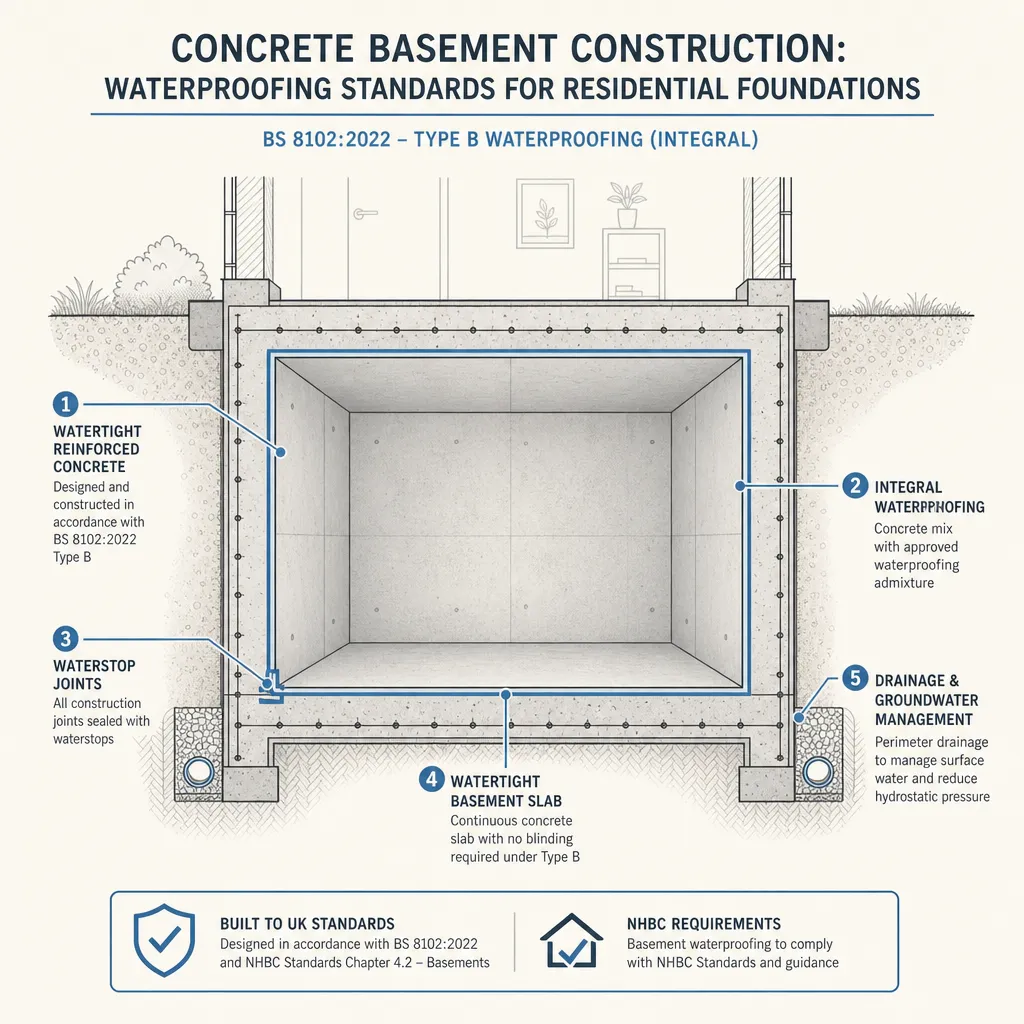
Concrete Basement Construction: Waterproofing Standards for Residential Foundations
Concrete basement waterproofing in the UK must comply with BS 8102:2022 and Building Regulations Part C.
 Surveys & Inspections
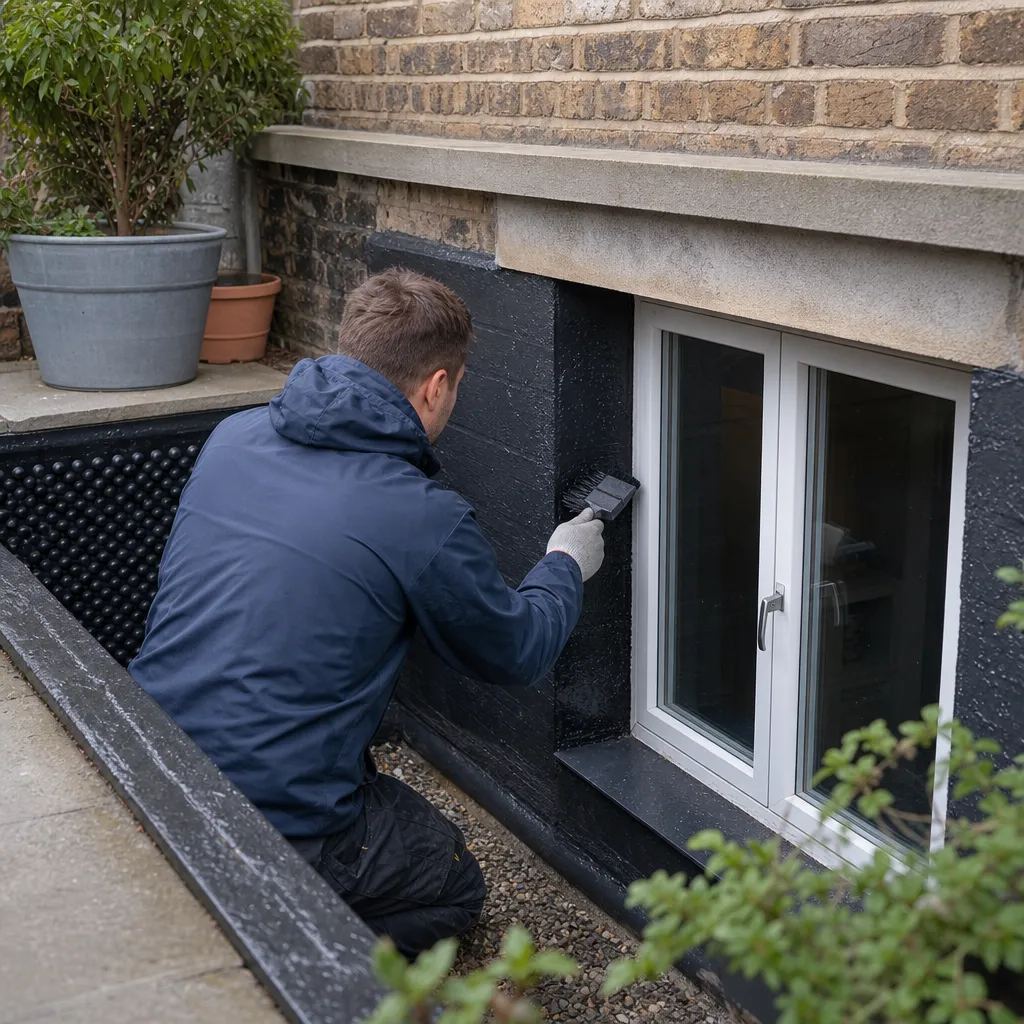
Securing Dry Basements: How to Prevent Moisture Intrusion
Preventing basement moisture starts with identifying the source: penetrating damp, rising damp, and condensation each need different fixes.
 Surveys & Inspections
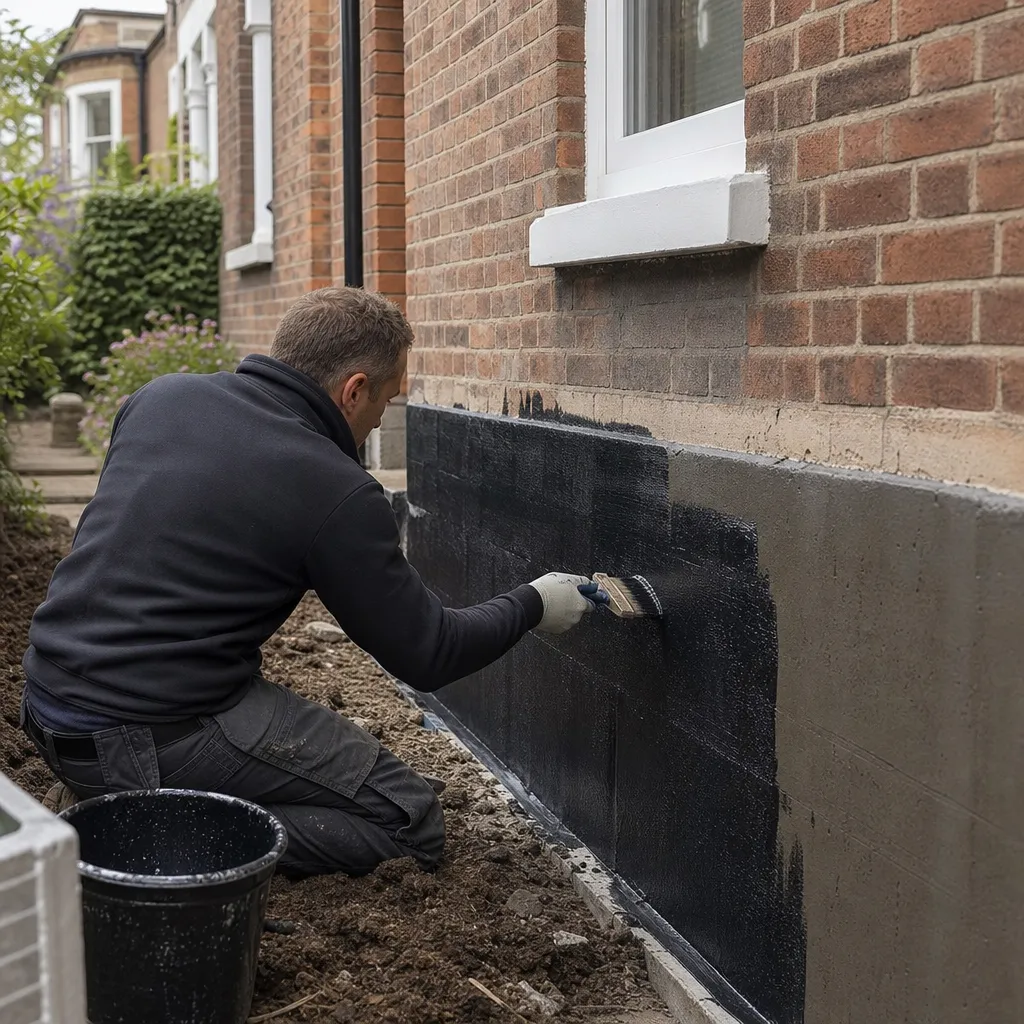
Creating Watertight Walls: Waterproofing Methods and Materials
Waterproofing walls correctly requires diagnosing the moisture source first — rising damp, penetrating damp, and condensation are treated very differently.
 Surveys & Inspections
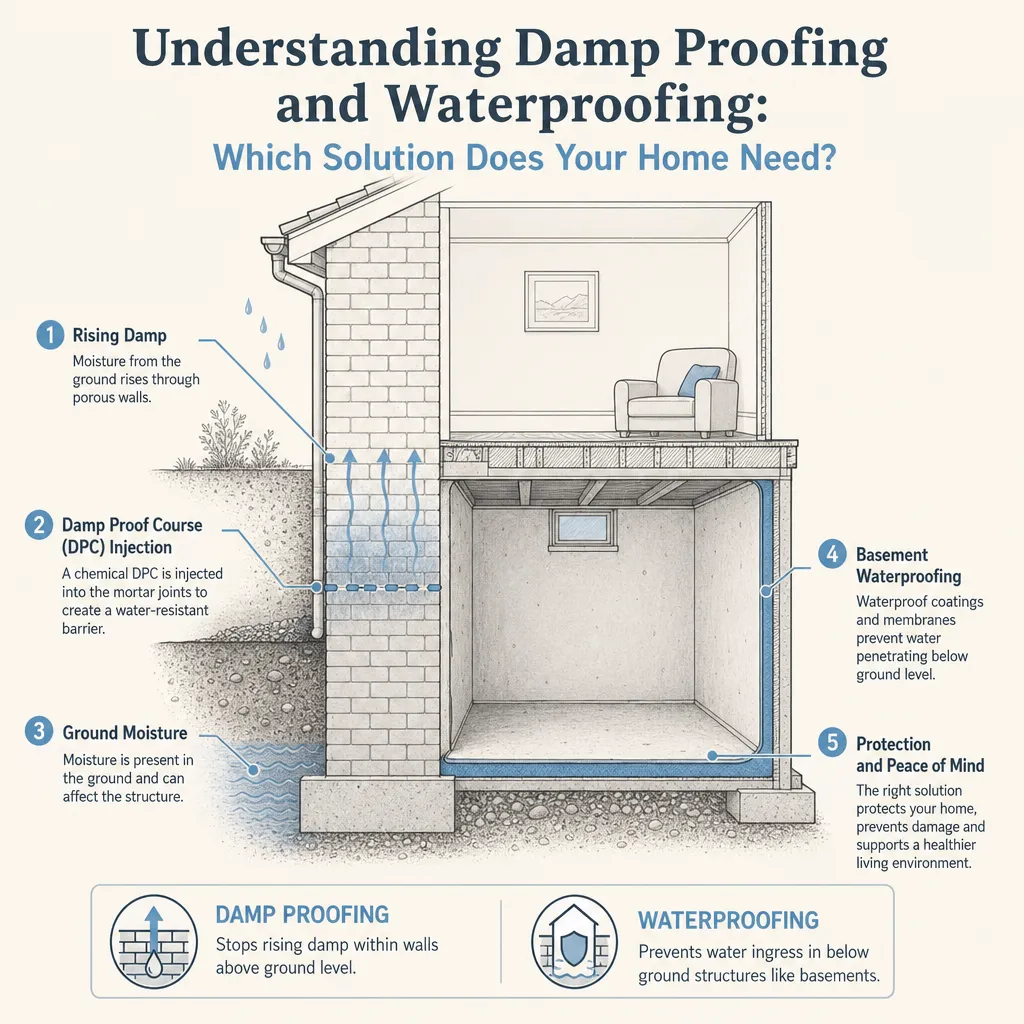
Understanding Damp Proofing and Waterproofing: Which Solution Does Your Home Need?
Damp proofing controls moisture movement through above-ground walls, while waterproofing excludes groundwater from below-ground structures.
 Surveys & Inspections
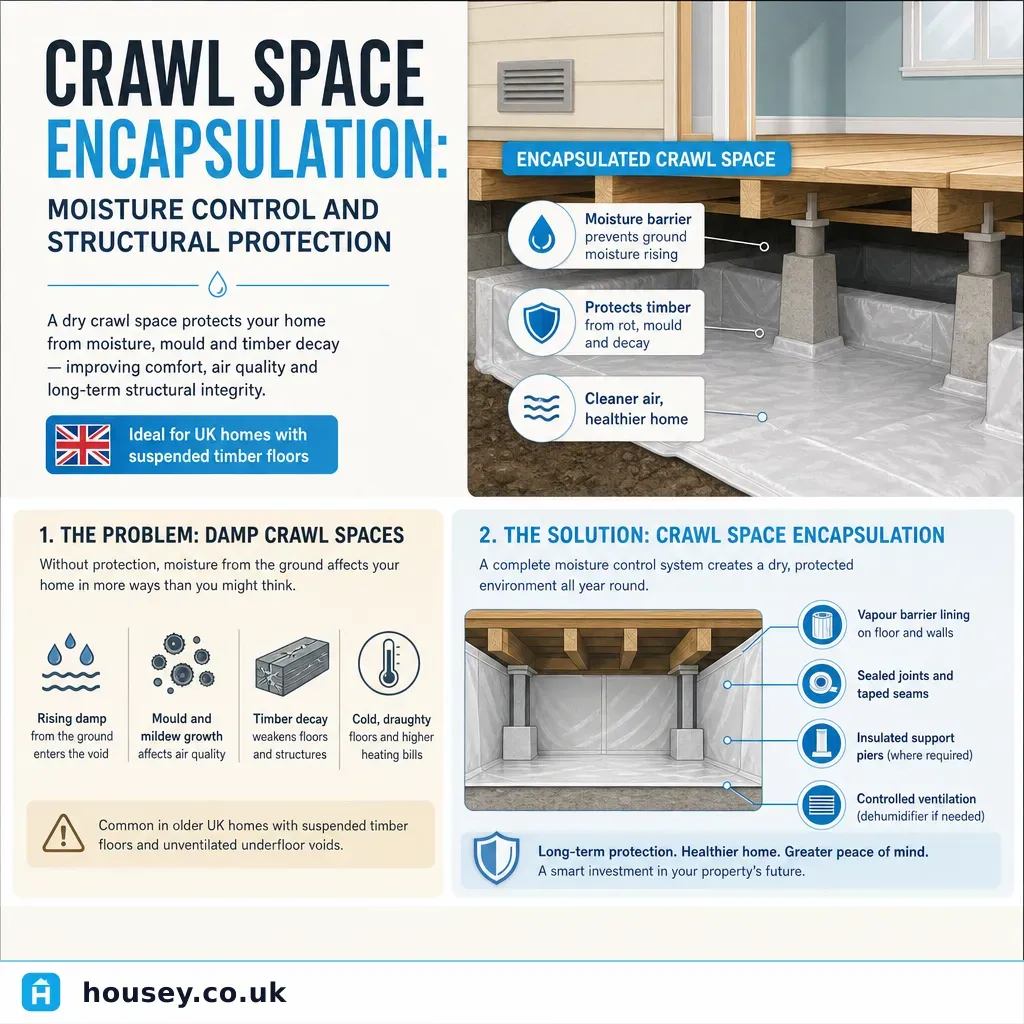
Crawl Space Encapsulation: Moisture Control and Structural Protection
Crawl space encapsulation seals the subfloor void beneath suspended timber floors with a vapour control layer and improved ventilation to prevent rising damp, condensation, timber rot and structural damage.