Crawl Space Encapsulation: Moisture Control and Structural Protection
By Housey · Last reviewed 1st of June 2026
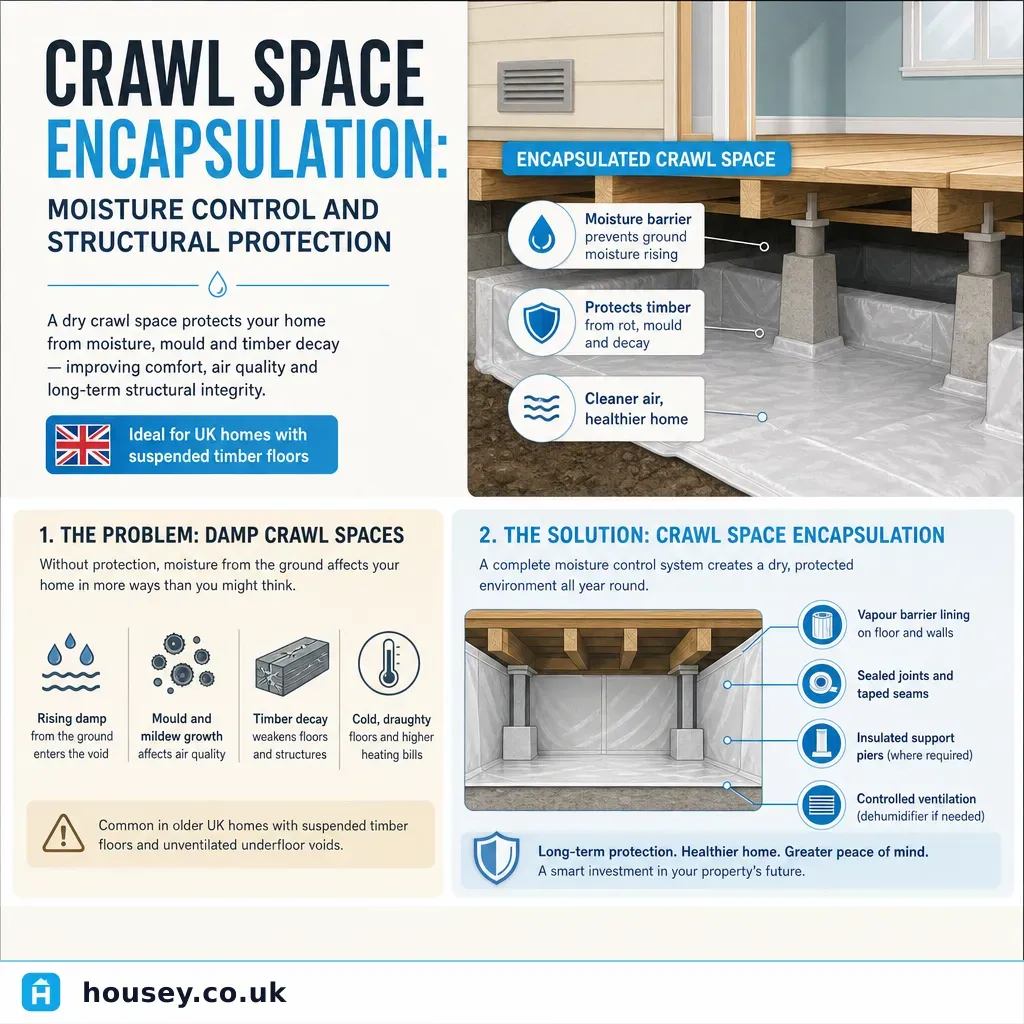
Crawl Space Encapsulation: Moisture Control and Structural Protection
Subfloor moisture is one of the most damaging and most overlooked problems affecting older UK homes. Properties built before the 1930s typically have suspended timber ground floors above an uninsulated void, and when that void becomes persistently damp, structural timbers deteriorate quietly — often invisibly until significant decay has already taken hold. Understanding what crawl space encapsulation involves, and whether it is appropriate for your property, starts with knowing what moisture is actually doing beneath your feet.
Key points
- Around one in three UK homes built before 1930 has a suspended timber ground floor above an unventilated or poorly ventilated subfloor void, making moisture ingress a common structural risk.
- Building Regulations Approved Document C sets out minimum requirements for moisture resistance at ground floor level in new and significantly altered dwellings.
- A specialist damp and timber survey, or a RICS Level 3 Building Survey, should be completed before any encapsulation works are specified — the correct method depends on identifying the moisture source first.
- Vapour control layers (VCLs) used in encapsulation should comply with BS EN 13984; drainage membranes must be correctly lapped and sealed to prevent water being channelled towards foundations.
- BS 5250:2021 (Management of Moisture in Buildings) recommends a minimum of 1,500 mm² of free ventilation per metre run of external wall in subfloor voids to prevent condensation.
What is crawl space encapsulation and why do UK homes need it?
"Crawl space encapsulation" is a term commonly used in North American building practice, but the problem it addresses is well established in British housing stock. In UK properties, the subfloor void beneath a suspended timber ground floor — typically 150 mm to 600 mm deep — sits directly above bare ground. Moisture from soil evaporation, surface water, and seasonal groundwater fluctuations can accumulate in this void if air bricks become blocked, are rendered over during repointing, or if drainage around the property is inadequate.
Encapsulation addresses both the moisture source and the conditions inside the void. Depending on the diagnosis, it may include:
- Vapour control layer (VCL): A heavy-duty polythene or reinforced membrane laid across the ground surface to reduce moisture evaporation rising into the void.
- Drainage membrane: A studded HDPE sheet over the ground, managing residual water ingress and directing it away from structural timbers.
- Ventilation improvement: Clearing blocked air bricks, adding new vents, or installing mechanical extract ventilation to maintain adequate airflow.
- Thermal insulation: In energy retrofit programmes, rigid insulation may be installed alongside the membrane to address heat loss as well as moisture — most relevant under PAS 2035-compliant whole-house retrofit.
The objective is not to seal the void completely — suspended timber floors need some air movement — but to control moisture at source rather than relying on ventilation alone when evaporation rates exceed the void's capacity to clear it.
Signs of subfloor moisture problems
Many subfloor moisture problems go unnoticed until significant decay has occurred. Look out for:
- Soft, springy, or uneven floorboards, particularly near external walls or beneath bay windows.
- A persistent musty or earthy smell rising through gaps in floorboards or floor coverings.
- Staining or tide marks on skirting boards at low level.
- White mineral deposits (efflorescence) on internal walls close to the floor.
- Sticking or warping internal doors on the ground floor, suggesting timber movement from moisture.
- Visible fungal discolouration on joists or floorboards, seen through an inspection hatch.
- Small round exit holes in joists or skirting boards, indicating past or active woodworm.
Encapsulation options: a comparison
Different moisture conditions require different approaches. The table below compares the main methods used in UK properties.
Method | Best for | Not ideal for | Typical professional | Key limitation |
|---|---|---|---|---|
Vapour control layer (VCL) only | Dry voids with adequate ventilation; reducing evaporation from bare earth | Active water ingress; blocked ventilation routes | Damp specialist or experienced builder | Does not manage water already entering the void |
VCL + ventilation improvement | Voids with blocked air bricks or reduced airflow; minor condensation | Significant water ingress; very low void height | Damp specialist | Ventilation routes must remain clear long-term |
Drainage membrane + VCL | Periodic water entry from rainfall or seasonal groundwater | Continual water flow without a drainage outlet | Specialist damp contractor | Drainage outlet required; must be correctly routed away from foundations |
Full system (membrane, drainage, sump pump) | Chronically wet voids; properties near high water tables | Sites where no drainage outlet is feasible | Specialist damp contractor | Higher cost; pump requires regular maintenance |
Thermal insulation + VCL (retrofit) | Whole-house energy retrofit addressing heat loss and moisture together | Listed buildings without prior consent | PAS 2035-qualified retrofit coordinator | Requires whole-house moisture risk assessment under PAS 2035 if publicly funded |
Indicative UK costs, last reviewed 2026-06-01. Costs vary by property size, void height, access conditions, and moisture severity. Obtain at least three written quotes from accredited contractors before proceeding.
Which professional do you need?
Situation | Professional to contact | What they provide |
|---|---|---|
Independent opinion before committing to any treatment | CSRT- or CSSW-accredited damp and timber surveyor | Written defect report, identified moisture source, specification for works |
Buying the property; want a full structural picture | RICS Level 3 Building Survey | Comprehensive condition report covering subfloor, structure, and all elements |
Active dry rot, wet rot, or significant timber decay suspected | Specialist damp and timber contractor (PCA member) | Treatment programme, timber replacement, written guarantee |
Joists visibly failing, sagging, or structurally compromised | Structural engineer (MIStructE or CEng) | Structural assessment and remediation specification |
Works form part of a publicly funded energy retrofit (ECO4, GBIS) | PAS 2035-qualified retrofit coordinator | Whole-house assessment, moisture risk management, coordination of works |
Choosing the right assessor: a decision guide
- Choose an independent damp and timber surveyor if you suspect a problem and want an unbiased diagnosis before any contractor is involved.
- Choose a RICS Level 3 Building Survey if you are purchasing the property and have not yet exchanged contracts.
- Ask a structural engineer if any joist is visibly sagging, spongy under pressure, or if load-bearing elements may be affected.
- Involve a retrofit coordinator before installing subfloor insulation as part of a funded scheme — PAS 2035 requires a whole-building moisture risk assessment.
- Be cautious of free surveys offered by contractors who also sell the treatment; independent assessment first is best practice.
Important limitations
This article provides general information for UK homeowners and is not a substitute for a professional inspection. The appropriate encapsulation method depends on the specific moisture source, void depth, drainage conditions, subfloor construction, and property type. Incorrectly specified or poorly installed membranes can trap moisture, redirect water towards foundations, or create condensation problems elsewhere in the building fabric.
Rules and requirements can vary between properties, local authorities, and funding schemes. If the property is listed or within a conservation area, additional consents may be required before works proceed. Always verify requirements with your local planning authority or building control body before starting.
When this becomes urgent
Seek professional assessment immediately — do not delay — if you observe any of the following:
- Visible dry rot fruiting bodies: rust-orange bracket growths, white mycelium spreading across timber, or a distinctive mushroom-like smell. Dry rot (Serpula lacrymans) spreads through masonry and can cause serious structural damage within months. Do not disturb affected material before obtaining professional guidance.
- Joists that visibly sag or feel noticeably spongy when pressure is applied through the floor above.
- Standing water in the subfloor void after rainfall or during winter.
- A surveyor or mortgage lender flagging timber decay in a survey report or valuation — this may affect mortgage eligibility and the terms of any offer.
What to ask a qualified professional
Before instructing a damp surveyor or remediation contractor, ask:
- What is the precise source of the moisture — rising damp, condensation, lateral penetration, or drainage failure?
- What evidence did you find in the subfloor void, and can I receive photographs and a written schedule of defects?
- Does any timber show signs of active dry rot, wet rot, or woodworm, and what is the extent of the affected material?
- What remediation options are available, and what are the relative risks and costs of each approach?
- Does the proposed work include a guarantee, and which body backs it (for example, Guarantee Protection Insurance via the Property Care Association)?
- Are you acting as an independent assessor, or do you also carry out the remediation works you are recommending?
- Will any of the proposed works require Building Regulations notification or consent?
When to get professional help
Commission a professional inspection if:
- A homebuyer's survey, mortgage valuation, or condition report has flagged damp, timber decay, or subfloor concerns.
- You are purchasing a pre-1930s property and the subfloor void has not been independently inspected.
- Floor movement, musty smells, or skirting staining have worsened noticeably over a short period.
- You are planning a ground floor energy retrofit and want moisture risks properly assessed before insulation is installed.
How Housey can help
Housey connects UK homeowners with accredited surveyors for damp and timber surveys — the essential first step before committing to any remediation programme. An independent survey report gives you an unbiased diagnosis, a specification you can put to multiple contractors for quotes, and the evidence you need to negotiate on purchase price if a problem is found before exchange.
Frequently asked questions
Does crawl space encapsulation always need professional installation?
Minor ventilation improvements — such as clearing blocked air bricks — can sometimes be tackled by a competent homeowner. However, specifying and installing a vapour control layer, drainage membrane, or full encapsulation system correctly requires identification of the moisture source and knowledge of drainage conditions. Poorly installed membranes can cause more harm than good. Professional assessment before any materials are installed is strongly recommended.
How long does subfloor encapsulation typically last?
Heavy-duty reinforced vapour control layers and drainage membranes are typically rated for 25 years or more when correctly installed. Effectiveness depends on ongoing maintenance of ventilation routes and drainage outlets. Any pump installed as part of a managed drainage system requires periodic servicing — ask the contractor what maintenance schedule they recommend and whether this is included in any guarantee.
Will encapsulation fix existing dry rot or timber decay?
No. Encapsulation controls moisture conditions to prevent further decay and inhibit future fungal growth, but it does not treat active dry rot or restore structurally compromised timber. Affected timber must be assessed by a specialist and, where necessary, treated or replaced before or alongside any encapsulation work. Do not delay if dry rot is suspected.
Is subfloor moisture damage covered by home insurance?
Standard UK home insurance policies generally exclude gradual deterioration, damp, and rot. Cover may be available if damage resulted from a sudden identifiable event — such as a burst pipe or flood — but policy wording varies significantly between insurers. Check your policy carefully and speak to your insurer before assuming any remediation cost is covered.
Does crawl space encapsulation require Building Regulations approval?
Installing a vapour control layer in an existing subfloor void does not typically require Building Regulations approval. However, adding insulation to the subfloor as part of a retrofit project, or making structural alterations to the floor system, may require a Building Regulations application or notification. Check with your local building control authority before starting any works.
Sources and further reading
- Approved Document C: Site Preparation and Resistance to Contaminants and Moisture — GOV.UK
- BS 5250:2021 Management of Moisture in Buildings — BSI Group
- Property Care Association: Guidance on subfloor ventilation and moisture — Property Care Association
- RICS Home Survey Standard — Royal Institution of Chartered Surveyors
- Energy Saving Trust: Floor insulation — Energy Saving Trust
Useful next reads
 Surveys & Inspections
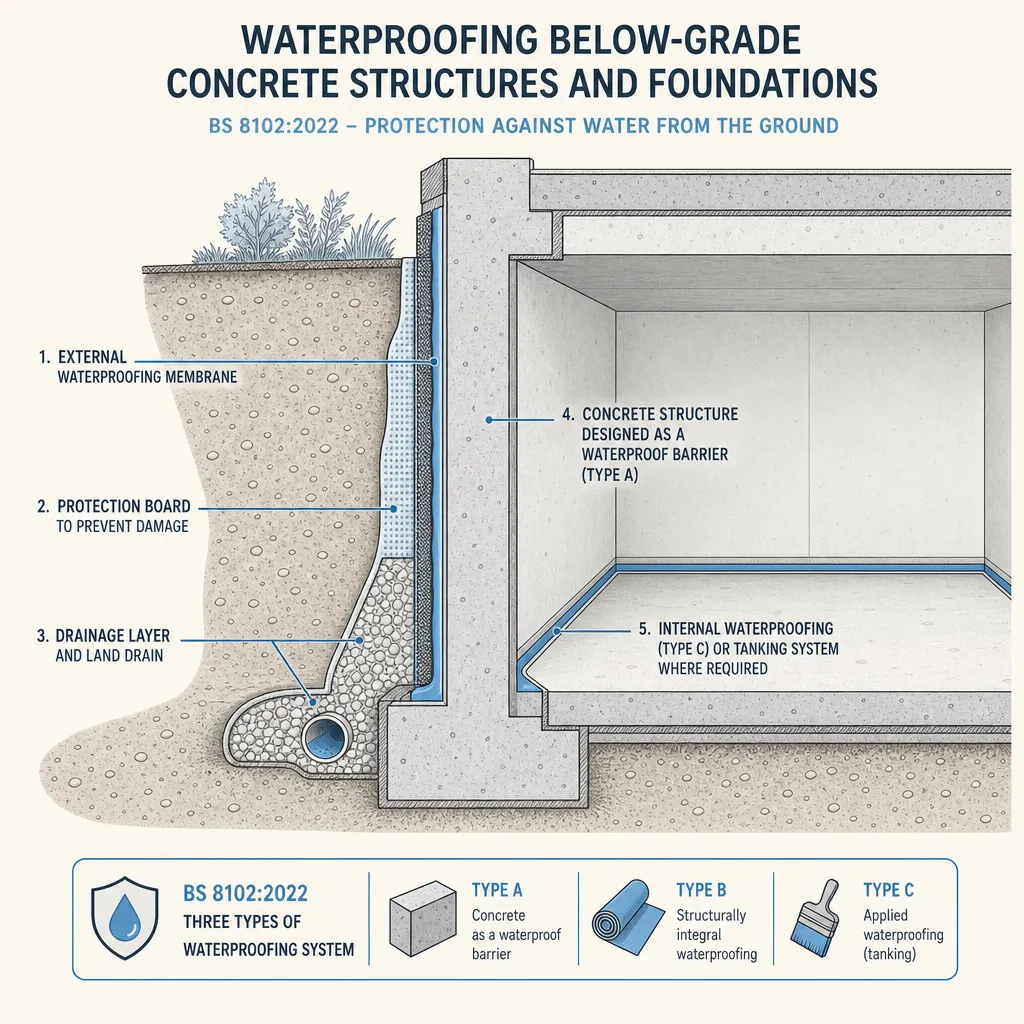
Waterproofing Below-Grade Concrete Structures and Foundations
Below-grade waterproofing in the UK should be designed to the grade of protection required under BS 8102:2022.
 Surveys & Inspections
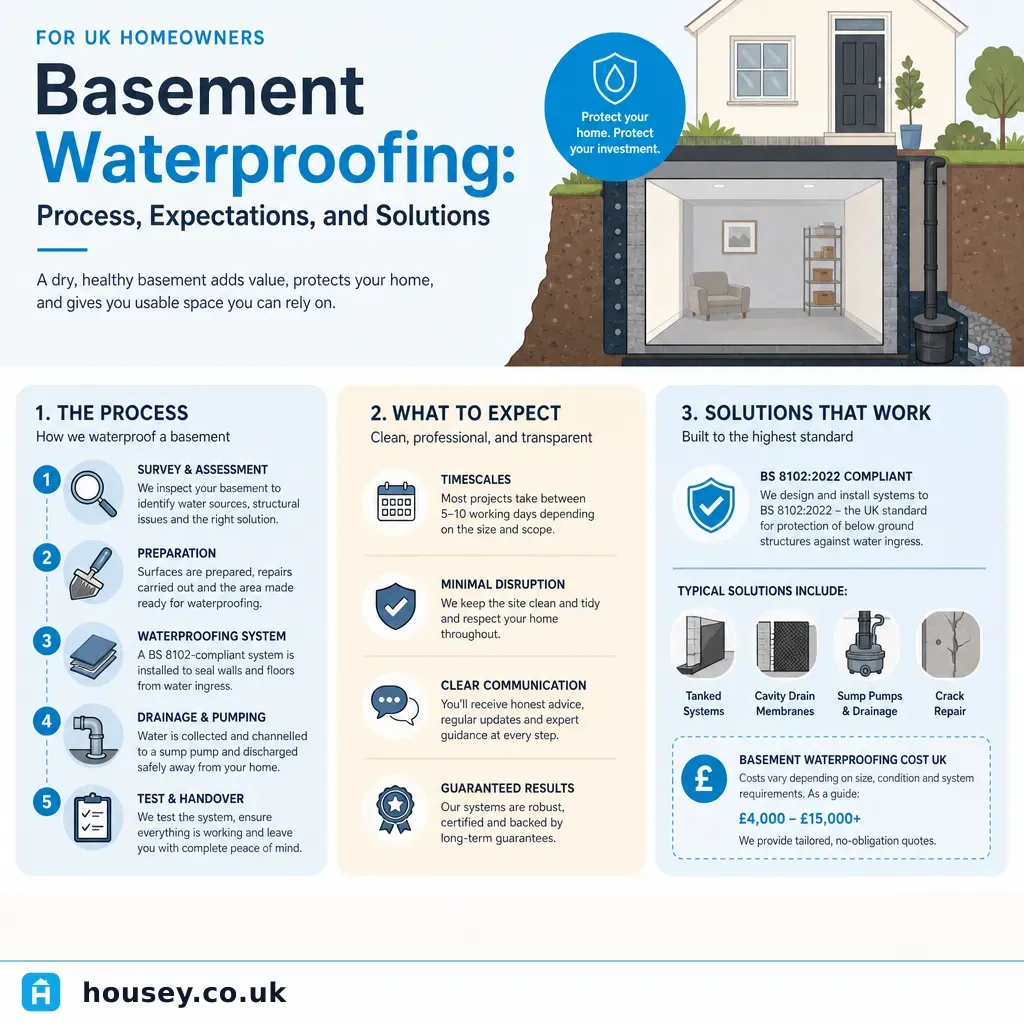
Basement Waterproofing: Process, Expectations, and Solutions
Basement waterproofing in the UK is governed by BS 8102:2022, which defines three protection grades and three system types: Type A barrier tanking, Type B structurally integral concrete, and Type C cavity drain membranes.
 Surveys & Inspections
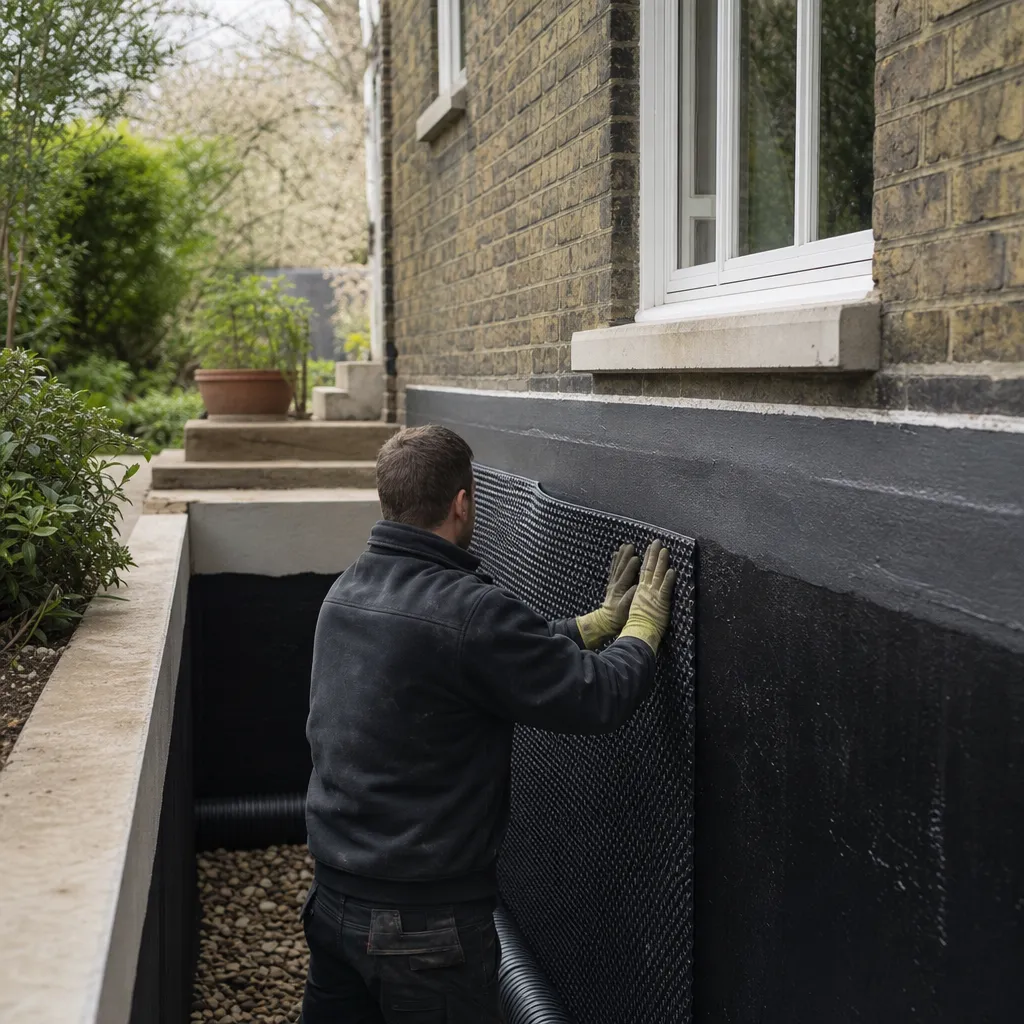
Basement Waterproofing Solutions for Damp Prevention
Basement waterproofing in the UK is governed by BS 8102:2022, which defines three system types: Type A (barrier coatings), Type B (structurally integral concrete), and Type C (cavity drain membrane with sump pump).
 Surveys & Inspections
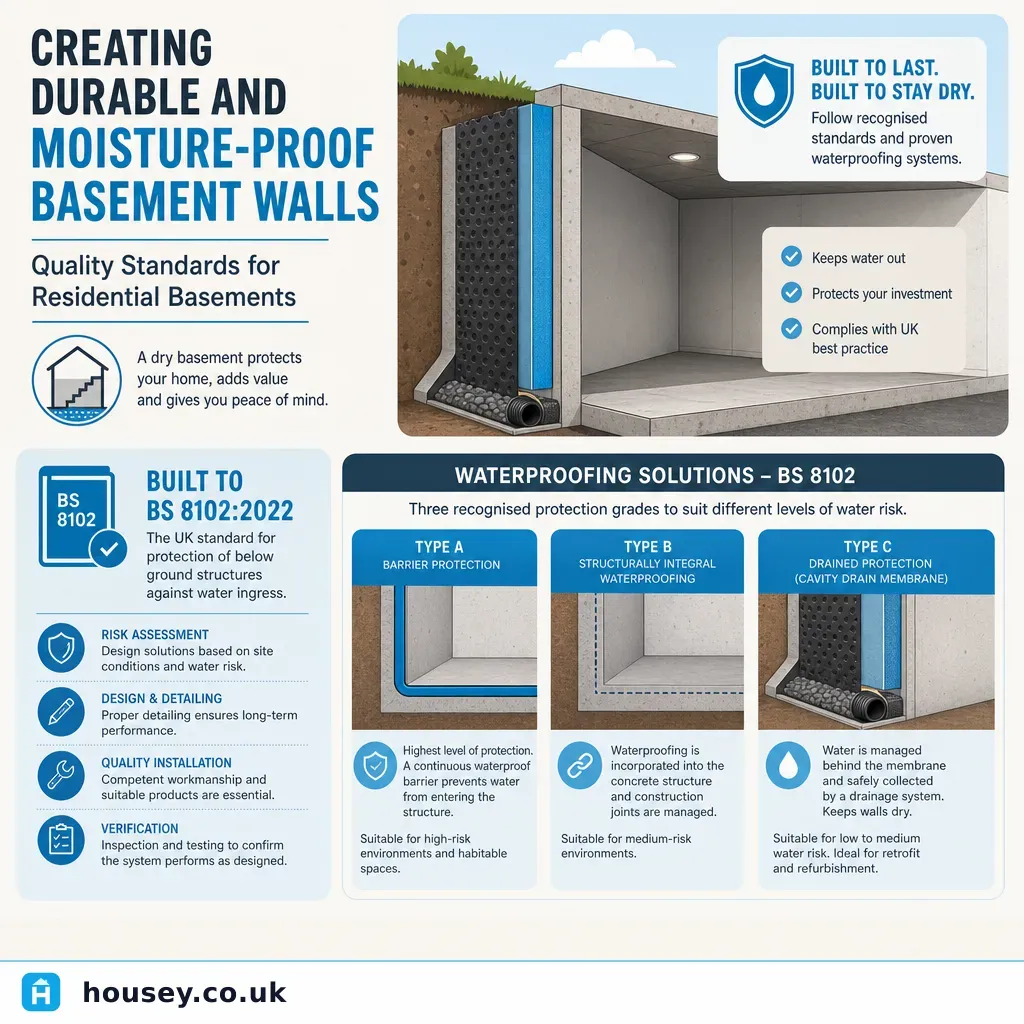
Creating Durable and Moisture-Proof Basement Walls: Quality Standards for Residential Basements
Basement waterproofing in UK homes must meet BS 8102:2022 requirements.
 Surveys & Inspections
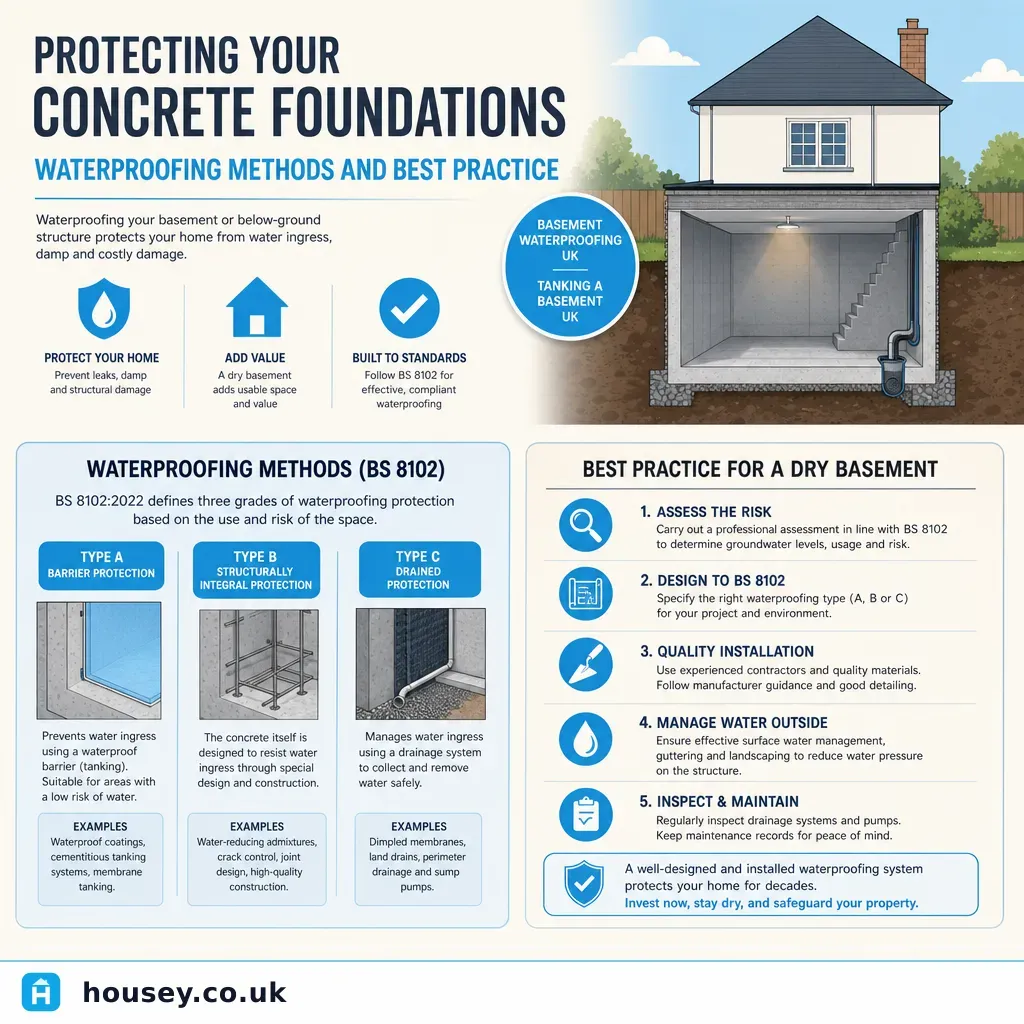
Protecting Your Concrete Foundations: Waterproofing Methods and Best Practice
Foundation waterproofing protects below-ground concrete structures from hydrostatic pressure and soil moisture.