Basement Waterproofing Solutions and Protection Methods
By Housey · Last reviewed 5th of May 2026
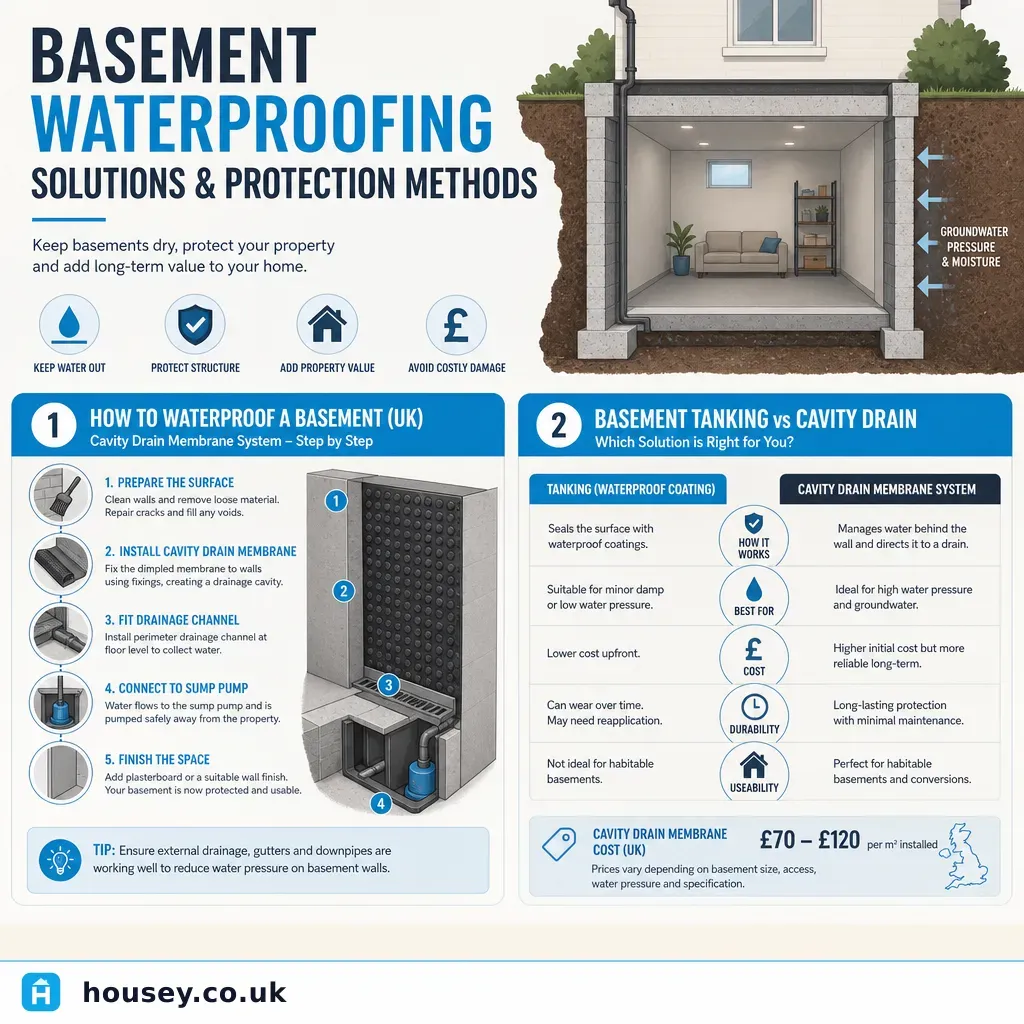
Basement Waterproofing Solutions and Protection Methods
Basement water ingress is one of the more costly problems a UK homeowner can face, and the risks compound quickly — unchecked moisture damages finishes, corrodes structural elements, and creates conditions for mould growth. The question of which waterproofing system to use arises most often when converting a basement into habitable space, remedying a wet cellar in an older Victorian or Edwardian property, or preparing below-ground areas before a wider renovation. Getting the specification right at the outset is far cheaper than remedial work after a system fails.
Key points
- BS 8102:2022 (Protection of below-ground structures against water from the ground) is the British Standard governing basement waterproofing design in the UK.
- There are three recognised system types: Type A (barrier/tanking), Type B (structurally integral concrete), and Type C (drained cavity systems with a sump pump).
- The Property Care Association (PCA) is the principal professional body for damp and waterproofing contractors in the UK; membership and the CSSW (Certificated Surveyor in Structural Waterproofing) qualification signal recognised competence.
- Converting a basement to habitable use usually requires Building Regulations approval under Part C (resistance to moisture) and Part A (structure).
- A 10-year or 25-year guarantee is standard for professionally installed cavity drain membrane systems; always confirm the guarantee is insurance-backed, not just contractor-backed.
The three types of waterproofing system explained
BS 8102:2022 classifies below-ground waterproofing into three types, and most projects specify a combination of more than one.
Type A — Barrier (tanking)
Type A systems apply a physical barrier — typically a cementitious slurry, bituminous coating, or crystalline material — to the inner or outer face of the structure to resist water ingress directly. They are most effective on the exterior (positive side) of the wall, applied during construction or excavation. Interior tanking works against negative water pressure, which limits its long-term reliability; any failure in the bond or substrate allows water to bypass the membrane with no drainage path available.
Type A is commonly specified alongside new-build or major renovation projects where external access is available before backfilling.
Type B — Structurally integral concrete
Type B relies on the concrete structure itself — typically poured reinforced concrete with a low water-cement ratio and carefully designed construction joints — to resist water. Specialist admixtures may be added to reduce permeability. This approach is used mainly in new construction or major structural rebuilds; it is rarely appropriate for retrofitting existing brick or block cellars in older UK housing stock.
Type C — Drained protection (cavity drain membrane)
Type C is the most widely used system for retrofit waterproofing of existing UK basements and cellars. A studded polypropylene cavity drain membrane is fixed to the walls and floor, creating a drainage gap. Any water that penetrates the structure travels behind the membrane to a perimeter channel and is collected in a sump pit, where an electric pump discharges it to drainage.
Type C systems accept that water will enter the structure and manage it rather than exclude it. This makes them more tolerant of minor structural movement and is why they are often preferred for Victorian and Edwardian properties where some wall movement is expected.
Comparison: which system for which situation?
System type | Best for | Less suitable for | Key requirement |
|---|---|---|---|
Type A — tanking | New build with external access; solid masonry in good condition | Retrofit in older properties with cracks or active movement | Sound substrate; professional surface preparation |
Type B — integral concrete | New-build basement structures; full structural rebuilds | Retrofitting existing brick or block cellars | Structural engineer involvement |
Type C — cavity drain | Retrofit waterproofing of existing UK cellars and basements | Where floor height is critical (membrane raises floor level slightly) | Functioning sump pump with battery backup |
Combined A + C | Basement conversions requiring Grade 3 (habitable) environment | Low-budget or short-term remedial work | Specialist design to BS 8102:2022 |
Grade of use (BS 8102:2022): Grade 1 = car parking; Grade 2 = utility or plant room; Grade 3 = habitable rooms; Grade 4 = archive or high-value storage.
Do you need building regulations approval?
Converting a cellar or basement into habitable accommodation almost always requires Building Regulations approval. Part C of the Building Regulations (site preparation and resistance to contaminants and moisture) requires that walls and floors resist moisture that could damage the building or health. Part A covers structural elements, and Part B may apply if you add a fire escape or alter means of escape.
A straightforward waterproofing repair in an existing non-habitable cellar may not require formal approval, but confirm with your local building control authority before starting work. If the work involves altering drainage for the sump pump discharge, you may also need to comply with Building Regulations Part H.
Permitted development rights do not apply to new basements under most properties — planning permission is typically required for excavating a new basement. Waterproofing an existing cellar is different from excavating a new one; check with your local planning authority if you are uncertain about scope.
How to choose a waterproofing contractor
Homeowner checklist — before instructing a contractor
What does basement waterproofing cost in the UK?
Costs vary significantly depending on system type, basement size, access, ground conditions, and whether structural or drainage works are needed alongside the waterproofing.
Indicative UK costs, last reviewed 2026-05-05. Quotes vary widely; treat these as planning figures only.
Scope | Indicative cost range |
|---|---|
Small cellar — Type C membrane only (up to 20 m²) | £3,000–£7,000 |
Medium basement — Type C full system with sump and pump | £8,000–£20,000 |
Combined Type A + C for habitable conversion | £15,000–£40,000+ |
Exterior waterproofing (Type A, excavation required) | £15,000–£50,000+ depending on excavation depth |
These figures exclude structural repairs, drainage alterations, insulation, finishes, or party wall costs if the basement adjoins a neighbour's property. Always request itemised quotes so you can compare like for like.
Red flags to watch for
- A contractor provides a quote without visiting the site.
- No reference to BS 8102:2022 appears in the written specification.
- The guarantee is contractor-backed only, with no insurance underwriting.
- The proposed system uses interior tanking alone on a wall with active water pressure and known cracking.
- No sump pump battery backup is included in a Type C system.
- The contractor cannot confirm whether building regulations approval is needed for your project.
- No mention is made of the grade of use for your intended basement use.
When to get professional help
Basement waterproofing is not a DIY task. Water entering below ground can be under hydrostatic pressure, and an incorrectly specified or installed system can fail — sometimes causing flooding, damage to finishes, and long-term structural deterioration.
You should seek a CSSW-qualified professional if you notice any of the following:
- Water pooling on the basement floor after heavy rain.
- Efflorescence (white salt deposits) on masonry walls.
- Persistent damp smell or visible mould in a below-ground room.
- Structural cracks in basement walls, particularly horizontal or stepped cracks in blockwork.
- Staining at the base of walls indicating rising or lateral damp ingress.
For projects where structural cracks are present, input from a structural engineer may be needed before the waterproofing specification is finalised. A CSSW surveyor will advise if this is the case.
How Housey can help
Housey connects you with qualified damp proofing specialists who can survey your basement, produce a BS 8102:2022-compliant specification, and provide written, insurance-backed guaranteed quotes.
Frequently asked questions
Does basement waterproofing require building regulations approval?
Converting a basement to habitable use — a bedroom, home office, or living space — almost always requires Building Regulations approval under Parts A, B, and C. A straightforward repair to an existing non-habitable cellar may not, but confirm with your local building control body before starting. Any drainage alterations for a sump pump discharge may also need approval under Part H.
How long does a professionally installed waterproofing system last?
A correctly specified and installed Type C cavity drain membrane system can last 25 years or more, provided the sump pump is maintained and serviced. Most reputable installers offer a 10-year or 25-year guarantee — check carefully whether it is insurance-backed and what maintenance obligations are required to keep it valid.
What is the difference between tanking and a cavity drain membrane?
Tanking (Type A) applies a physical barrier to the wall surface to try to exclude water. A cavity drain membrane (Type C) accepts that some water will penetrate and manages it by directing flow behind the membrane to a sump for pumping away. Type C is generally more forgiving of structural movement and is the more common retrofit solution in older UK properties.
Can a basement be waterproofed from the inside only?
Interior waterproofing is possible and often necessary when external excavation is impractical, but it must be designed by a CSSW-qualified surveyor. Interior tanking alone on a wall under active water pressure can fail without a drainage path. A full Type C cavity drain system with a sump is generally more reliable for interior-only approaches.
How much does basement waterproofing cost in the UK?
Costs depend on system type, basement size, access, and whether structural or drainage works are needed. Indicative ranges for a small cellar start around £3,000–£7,000 for a basic cavity drain installation, rising to £40,000 or more for a large habitable conversion with combined systems. Always obtain at least three itemised written quotes. Indicative UK costs, last reviewed 2026-05-05.
Sources and further reading
- BS 8102:2022 — Protection of below-ground structures against water from the ground — BSI Group
- Property Care Association — Structural Waterproofing guidance — Property Care Association
- Approved Document C — Site preparation and resistance to contaminants and moisture — GOV.UK
- Certificated Surveyor in Structural Waterproofing (CSSW) — Property Care Association
- Planning permission guidance — GOV.UK
Useful next reads
 Improvement & Build
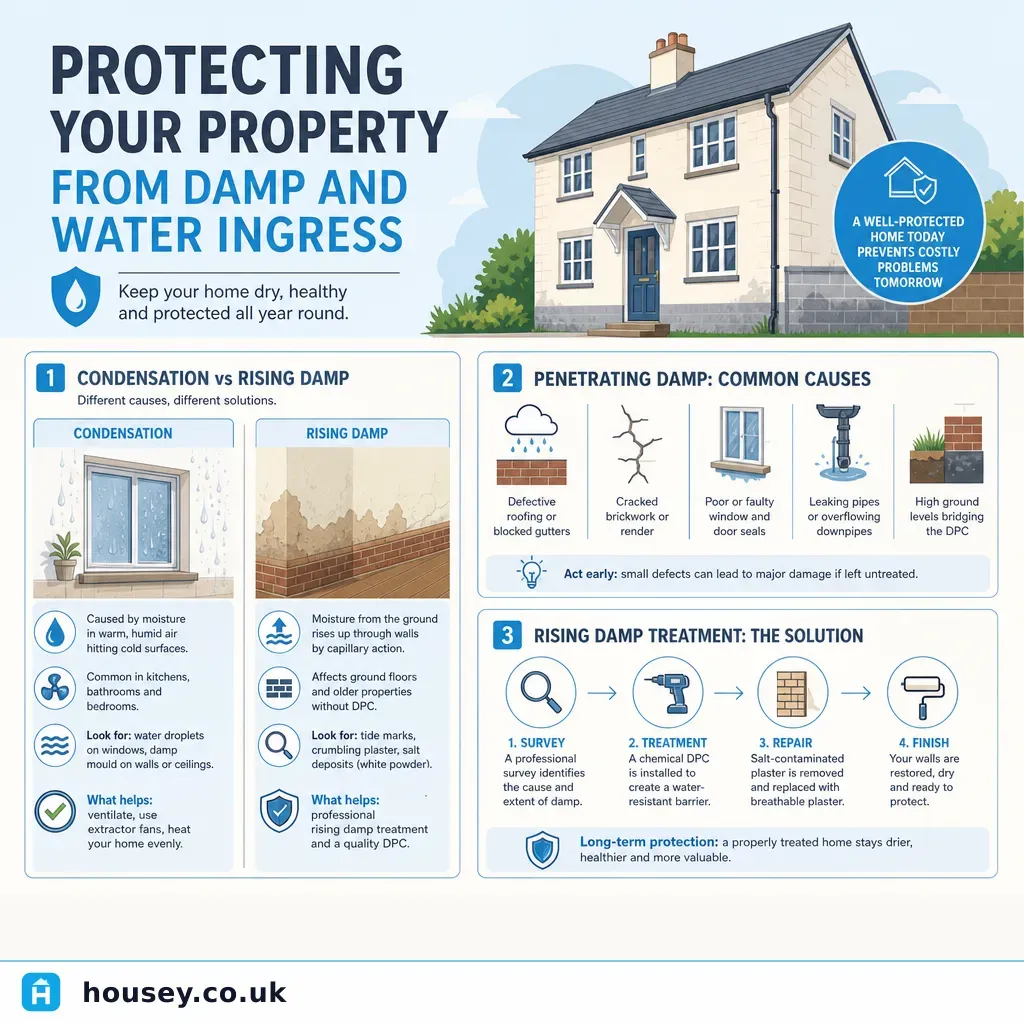
Protecting Your Property from Damp and Water Ingress
Damp in UK homes usually falls into three categories: rising damp (groundwater drawn up through walls), penetrating damp (rain or groundwater entering through the building envelope), and condensation (moisture from warm internal air meeting a cold surface).
 Improvement & Build
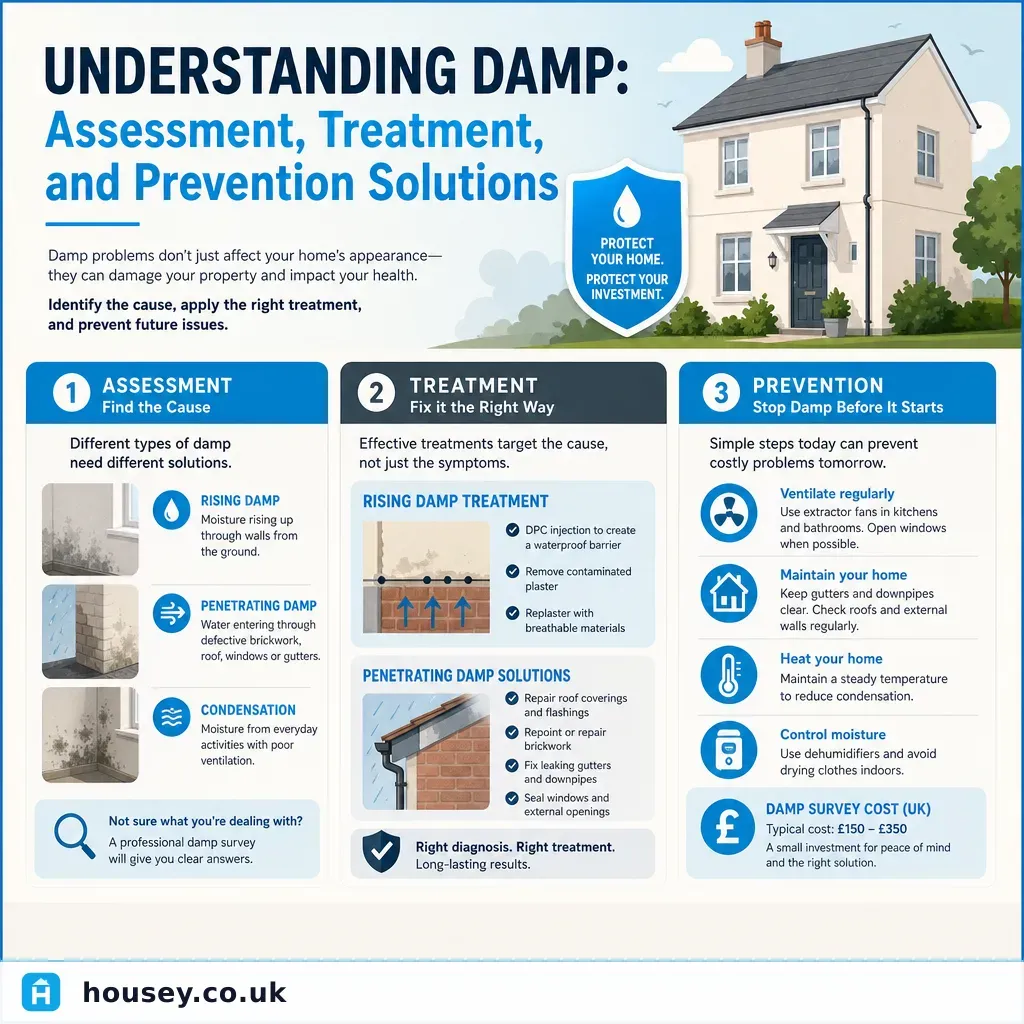
Understanding Damp: Assessment, Treatment, and Prevention Solutions
Damp in UK homes usually falls into three categories — rising damp, penetrating damp, and condensation — each requiring a different remedy.
 Improvement & Build
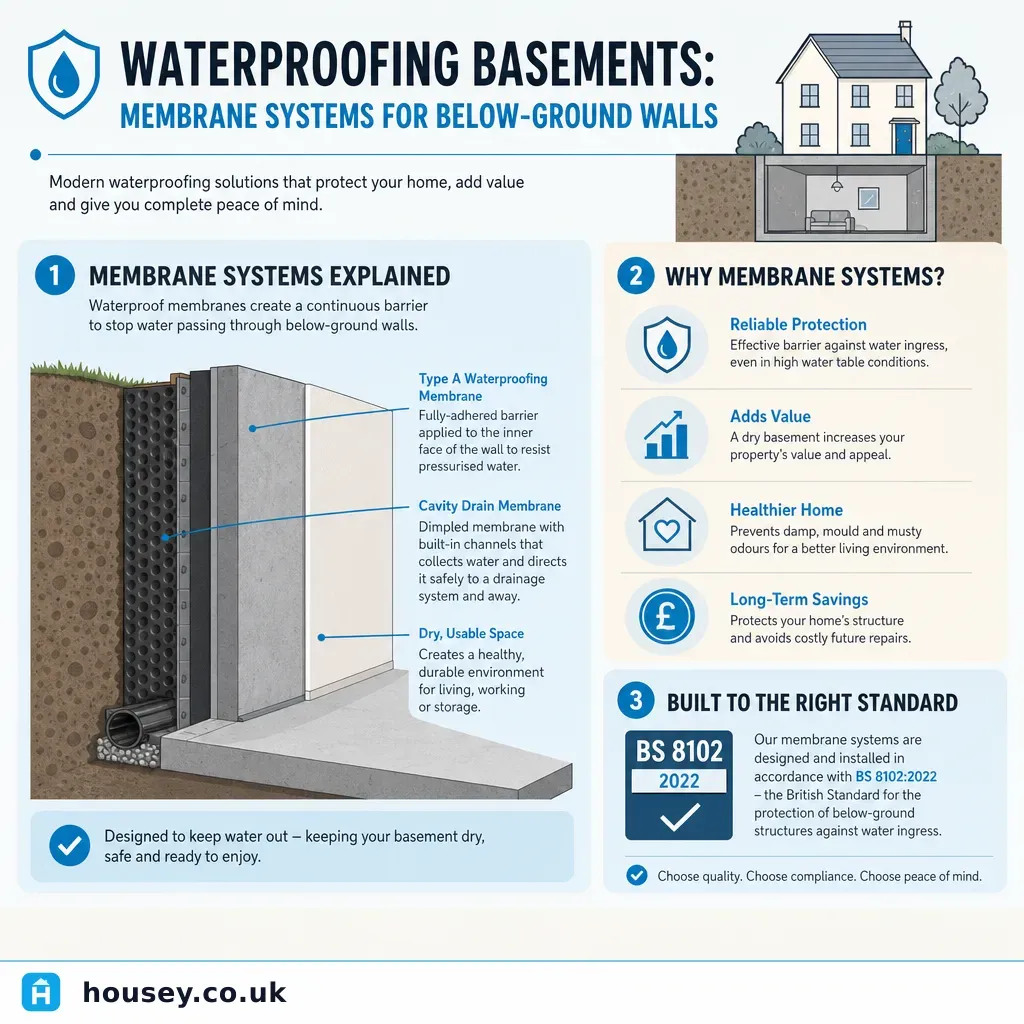
Waterproofing Basements: Membrane Systems for Below-Ground Walls
The three principal below-ground waterproofing systems under BS 8102:2022 are Type A (barrier membranes such as tanking or crystalline coatings), Type B (structurally integral waterproof concrete), and Type C (cavity drain membranes that collect and redirect water).
 Improvement & Build
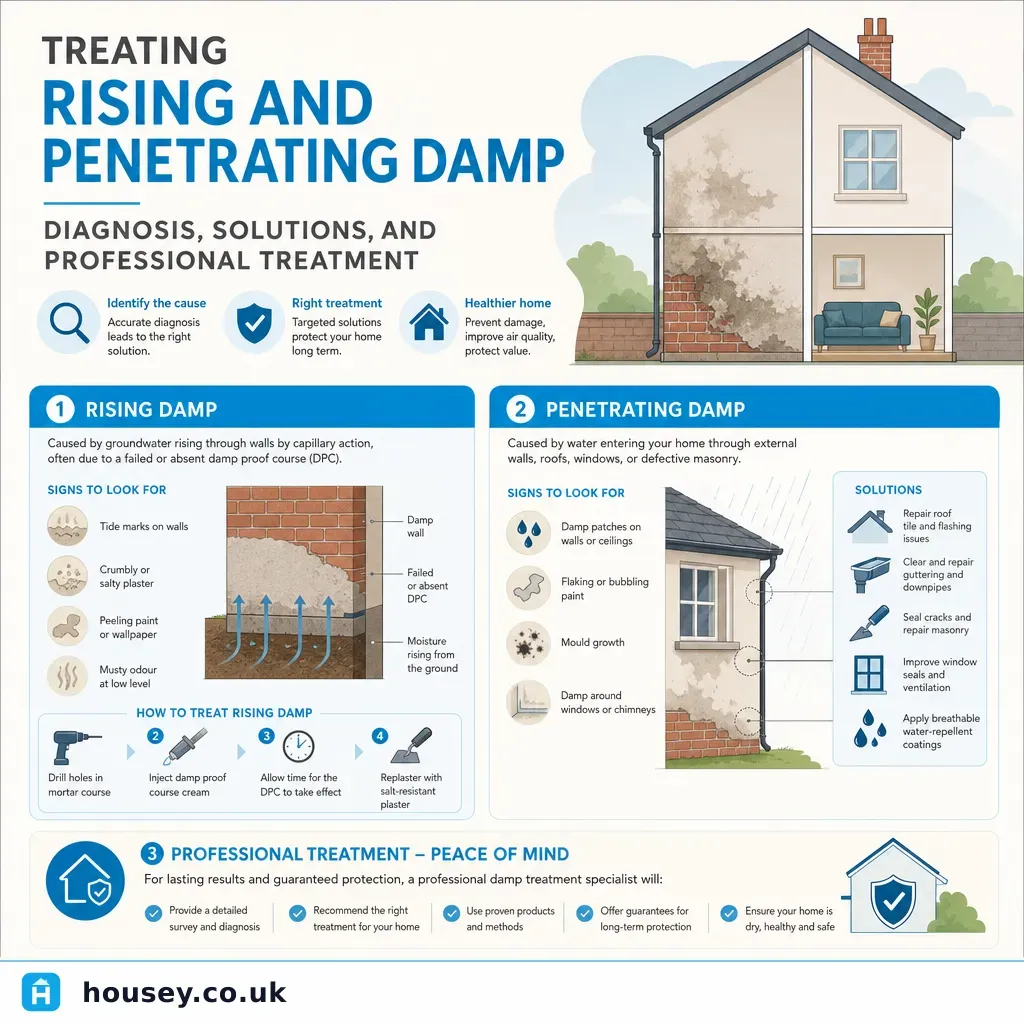
Treating Rising and Penetrating Damp: Diagnosis, Solutions, and Professional Treatment
Rising damp appears as a tide mark at the base of ground-floor walls and is caused by a failed or absent damp-proof course.
 Improvement & Build
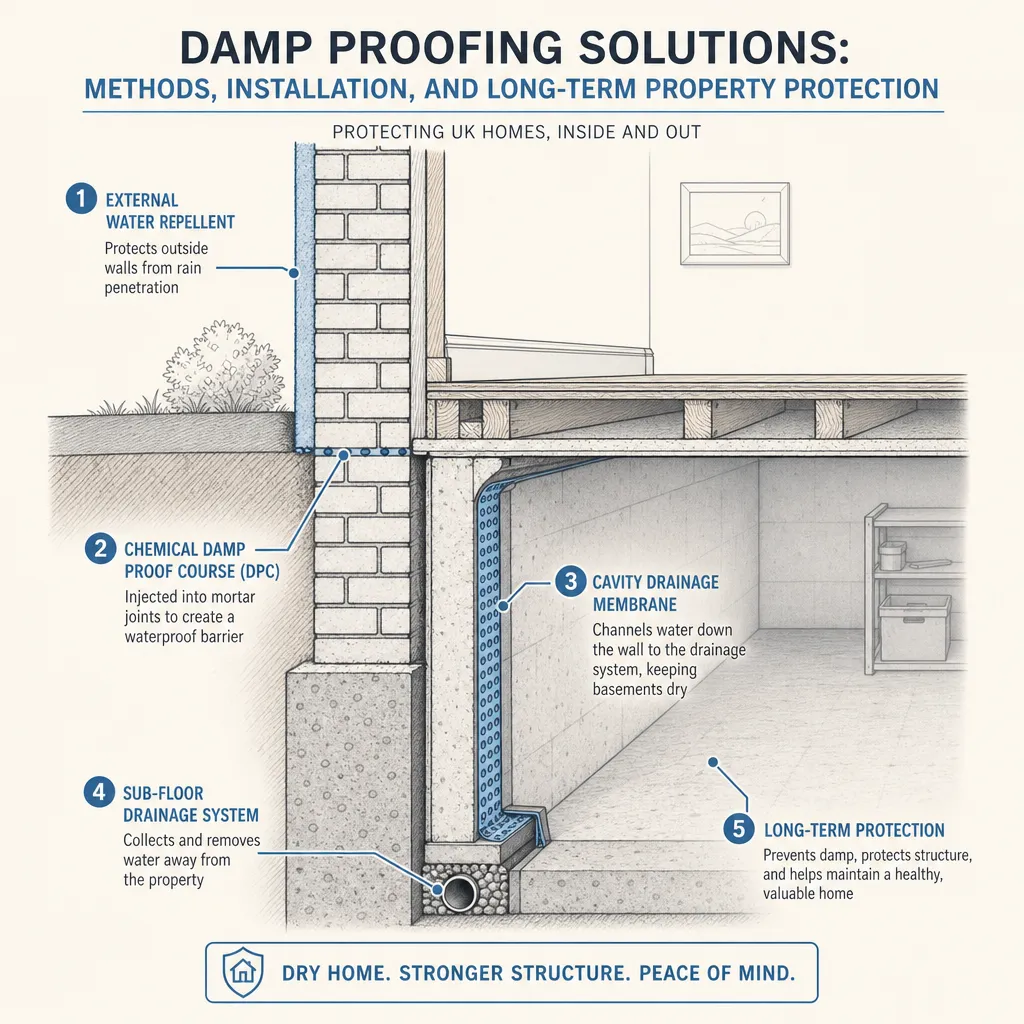
Damp Proofing Solutions: Methods, Installation, and Long-Term Property Protection
Damp proofing in UK homes typically involves chemical damp proof course (DPC) injection for rising damp, cavity drainage membranes for basement or below-ground moisture, and tanking for waterproofing solid walls.