Bathroom building regulations: what you must comply with
By Housey · Last reviewed 11th of May 2026
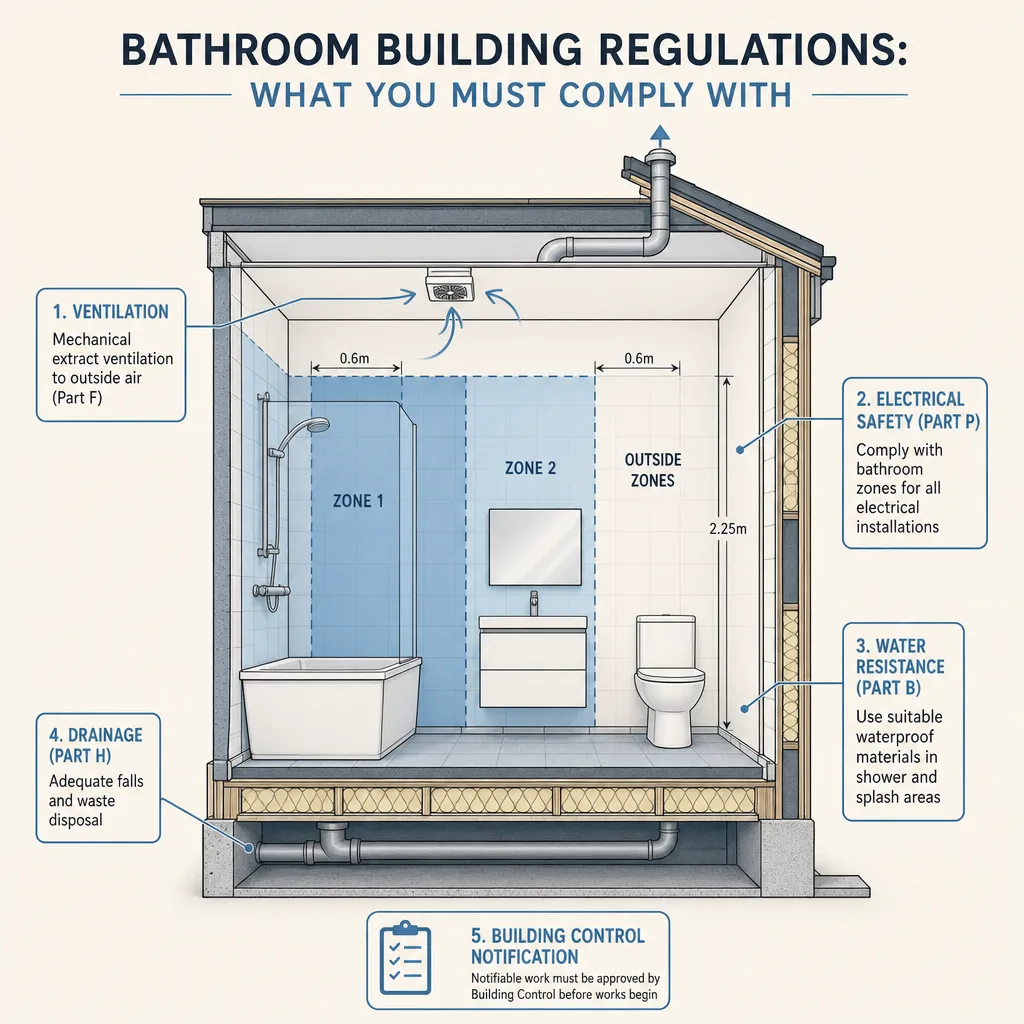
Bathroom building regulations: what you must comply with
Whether you are refitting an existing bathroom or creating a new one, building regulations apply to a wider range of work than most homeowners realise. The consequences of non-compliance — from enforcement notices to complications at point of sale — make it worth understanding your obligations before work begins rather than after. In England, several Approved Documents govern bathroom work, and some activities that feel purely cosmetic can trigger formal notification requirements.
Key points
- Approved Document G requires hot water supplied to baths to be limited to a maximum of 48 °C by a thermostatic blending valve (TBV) or equivalent device — this applies to new and replacement bath installations, not just new builds.
- Approved Document F (2021 edition) requires mechanical extract ventilation at a minimum of 15 litres per second during use, with a 15-minute overrun timer; a fan discharging into a loft void does not comply.
- Bathrooms are "special locations" under BS 7671 (IET Wiring Regulations 18th Edition), dividing the room into electrical zones 0, 1, and 2 that restrict equipment types and minimum IP ratings.
- Moving a soil stack, altering drainage, adding a bathroom in a new room, or installing new electrical circuits are all notifiable to building control — unless the electrical work is self-certified by a Part P registered competent person.
- Completion certificates from building control (or Part P self-certification notices) are routinely requested by solicitors during property transactions — retain them after sign-off.
What counts as notifiable work?
Like-for-like replacement of a bath, basin, or WC using unchanged drainage connections is generally not notifiable. The following work typically is:
- Moving or extending the soil stack or any drainage connection.
- Adding a bathroom in a room not previously used for that purpose — a loft conversion, garage conversion, or ground-floor room change of use.
- Structural alterations: removing or altering load-bearing walls, inserting new lintels, widening doorways.
- New electrical circuits — shower circuits, towel rail wiring, additional lighting — unless self-certified under Part P by a registered electrician.
- Relocating or installing a gas appliance as part of the bathroom project.
If you are unsure whether your planned work is notifiable, the safest approach is a brief conversation with your local authority building control team before starting. Contact details are available via the Planning Portal.
Electrical zones: what can go where
Bathrooms are divided into electrical zones under BS 7671 to protect against electric shock in wet environments. Each zone defines the minimum IP (ingress protection) rating and the type of equipment permitted.
Zone | Location | Minimum IP rating | Permitted equipment |
|---|---|---|---|
Zone 0 | Inside the bath or shower basin | IPX7 | Purpose-made fittings rated for Zone 0; SELV at max 12 V AC |
Zone 1 | Directly above bath or shower up to 2.25 m from floor | IPX4 (IPX5 where jets used) | Showers, waterproof luminaires, SELV equipment, shower pumps |
Zone 2 | Within 0.6 m horizontally of Zone 1, same height | IPX4 | Standard bathroom equipment rated IPX4 or above; BS EN 61558-2-5 shaver sockets |
Outside zones | Beyond the above limits | Standard | Standard wiring and fittings |
Standard 13 A socket-outlets must not be installed in Zones 0, 1, or 2. Shaver sockets complying with BS EN 61558-2-5 are the only socket-outlet type permitted in bathrooms, and only in Zone 2 or beyond.
Ventilation requirements under Approved Document F
Poor ventilation causes condensation, mould growth, and long-term structural damage. Approved Document F (2021 edition) sets minimum performance for bathroom extract fans:
- Extract rate during use: minimum 15 litres per second for rooms containing a bath or shower.
- Background ventilation: 8 litres per second continuous background rate, or equivalent trickle ventilation allowance.
- Overrun: the fan must continue operating for at least 15 minutes after the room is vacated — timer- or humidity-controlled.
- Duct routing: must discharge to outside air; discharging into a roof void, loft, or wall cavity does not comply.
A fan that extracts at the correct rate but lacks an overrun timer, or that discharges into a roof space, fails to comply — a common defect identified during building control inspections on completed bathroom work.
Hot water and water efficiency under Approved Document G
- Temperature limitation: hot water at baths must not exceed 48 °C. A thermostatic blending valve (TBV) is the standard compliance method, required for all new and replacement bath installations.
- Water efficiency: for new dwellings and certain conversions, total whole-dwelling consumption must not exceed 125 litres per person per day. Low-flush WCs, aerated taps, and efficient showerheads all contribute to compliance.
- Hot water storage: vessels must be adequately insulated and installed in accordance with manufacturer instructions and relevant British Standards.
Which professional do you need?
Work element | Professional | Qualification / registration |
|---|---|---|
New or modified electrical circuits | Registered electrician | Part P competent person scheme: NICEIC, NAPIT, or SELECT (Scotland) |
Gas boiler relocation or new gas connection | Gas Safe engineer | Gas Safe Register |
Structural alteration — wall removal, lintels | Structural engineer or experienced builder | IStructE, or contractor with relevant structural experience |
Building control application and inspections | Local authority BCO or Approved Inspector | Local authority or CICAIR-accredited Approved Inspector |
Full plans drawings | Architectural technologist or architect | CIAT or RIBA |
Decision tree: do you need building control approval?
- Adding a bathroom in a new room (loft, garage, extension)? → Yes — submit a building notice or full plans application.
- Moving or extending drainage or the soil stack? → Yes — notifiable to building control.
- Like-for-like swap of sanitaryware with identical drainage? → Not usually notifiable, but any electrical work still requires a competent person.
- New electrical circuits (shower, lighting, towel rail)? → Notify building control, or use a Part P registered electrician who self-certifies.
- Removing or altering a load-bearing wall? → Yes — structural calculations and building control notification required.
- Unsure? → Contact your local building control body before starting work.
Important limitations
This article describes building regulations for England as at the date of last review. Requirements differ in Scotland (Scottish Building Standards), Wales (Welsh Building Regulations), and Northern Ireland (Department for Communities). Approved Documents are updated periodically — always confirm the current edition on GOV.UK before relying on specific values. This is general information only and is not a substitute for professional building control advice specific to your project and property.
What to ask a qualified professional
Before instructing a contractor or building control body:
- Which Approved Documents apply to my planned work, and is a building notice or a full plans application more appropriate?
- Will the electrical work be self-certified under Part P, or is separate building control notification needed?
- What inspection stages are required, and when should they be booked relative to the programme of works?
- Will I receive a completion certificate on sign-off, and will it be formally registered with the local authority?
- Are there any conservation area, listed building, or Article 4 Direction constraints on this property?
- If I am a landlord, are there additional compliance obligations specific to a tenanted dwelling?
When to get professional help
Most bathroom projects benefit from at least a brief consultation with your local building control body before work starts. Seek professional input if:
- You are adding a bathroom to a room not previously used for that purpose.
- The project involves removing or altering any load-bearing wall.
- You are relocating a gas appliance or installing a new boiler as part of the scheme.
- You are uncertain whether existing wiring meets the electrical zone requirements of BS 7671.
- The property is listed or in a conservation area, where additional consents may be required.
- You are a landlord, where bathroom compliance intersects with your legal obligations to tenants.
How Housey can help
If your project requires formal building control sign-off or professionally prepared drawings, Housey connects you with experienced building control consultants who manage notifications and inspections, and with specialists who produce building regulations drawings for full plans applications.
Frequently asked questions
Do I need building regulations approval to replace a bathroom suite?
Like-for-like replacement of a bath, basin, or WC using unchanged drainage connections is generally not notifiable. If the work involves new or relocated drainage, new electrical circuits, or structural changes, those elements require either a building notice or self-certification by a Part P registered competent person.
Can I install a shower circuit myself?
You can carry out the work yourself if you notify building control before starting — they will arrange an inspection on completion. Alternatively, engage a Part P registered electrician who self-certifies the installation. The second route avoids inspection scheduling delays and is usually faster.
What happens if bathroom work was not signed off before a property sale?
Missing completion certificates are routinely flagged by solicitors. Resolution usually requires retrospective building control inspection, indemnity insurance, or remediation works — any of which can delay exchange. Obtaining sign-off at the time of the project is considerably simpler and avoids this risk.
How long does a building control application take for a bathroom?
A building notice allows work to begin immediately after submission. A full plans application requires drawings to be approved before work starts — typically three to five weeks for straightforward residential bathrooms. Discuss the appropriate route with your local authority building control body before starting.
Sources and further reading
Useful next reads
 Planning & Pre-Build
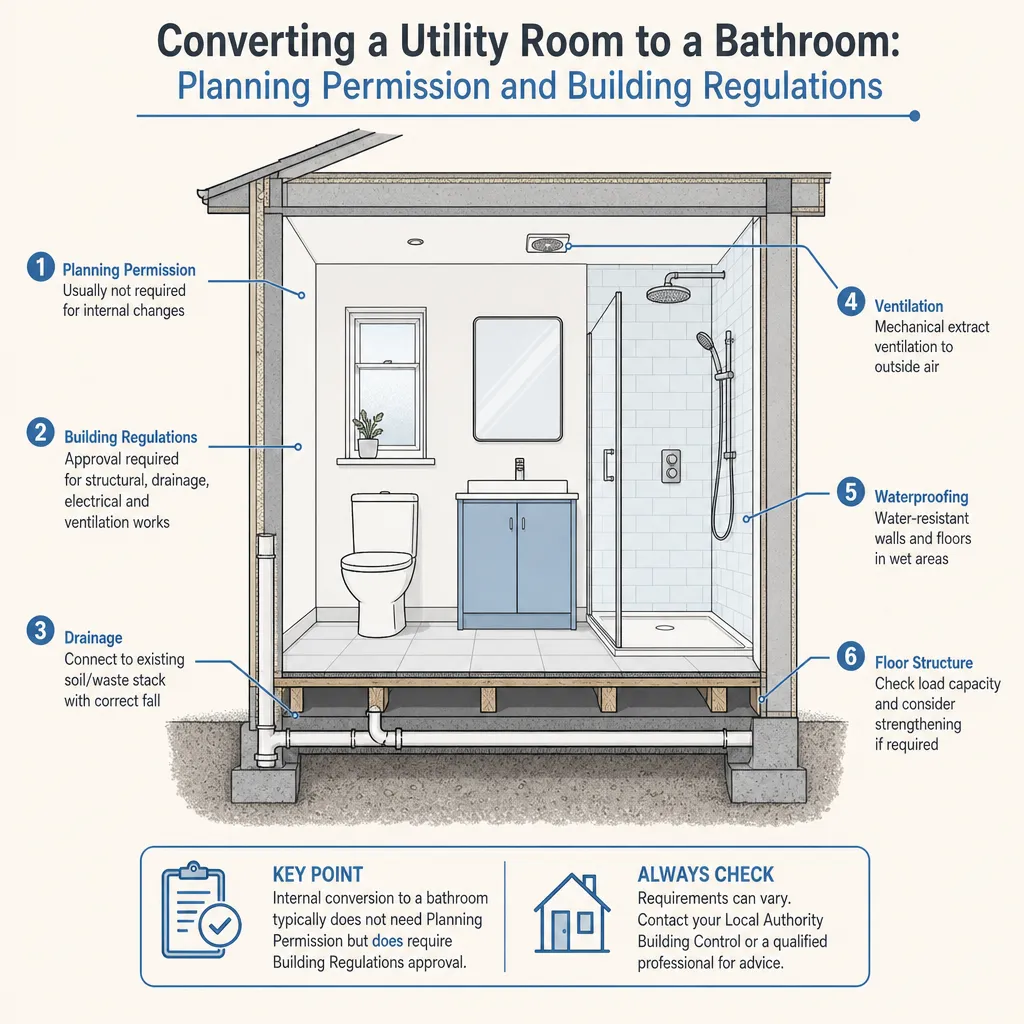
Converting a Utility Room to a Bathroom: Planning Permission and Building Regulations
Converting a utility room to a bathroom in England usually does not require planning permission, as it is an internal alteration.
 Planning & Pre-Build
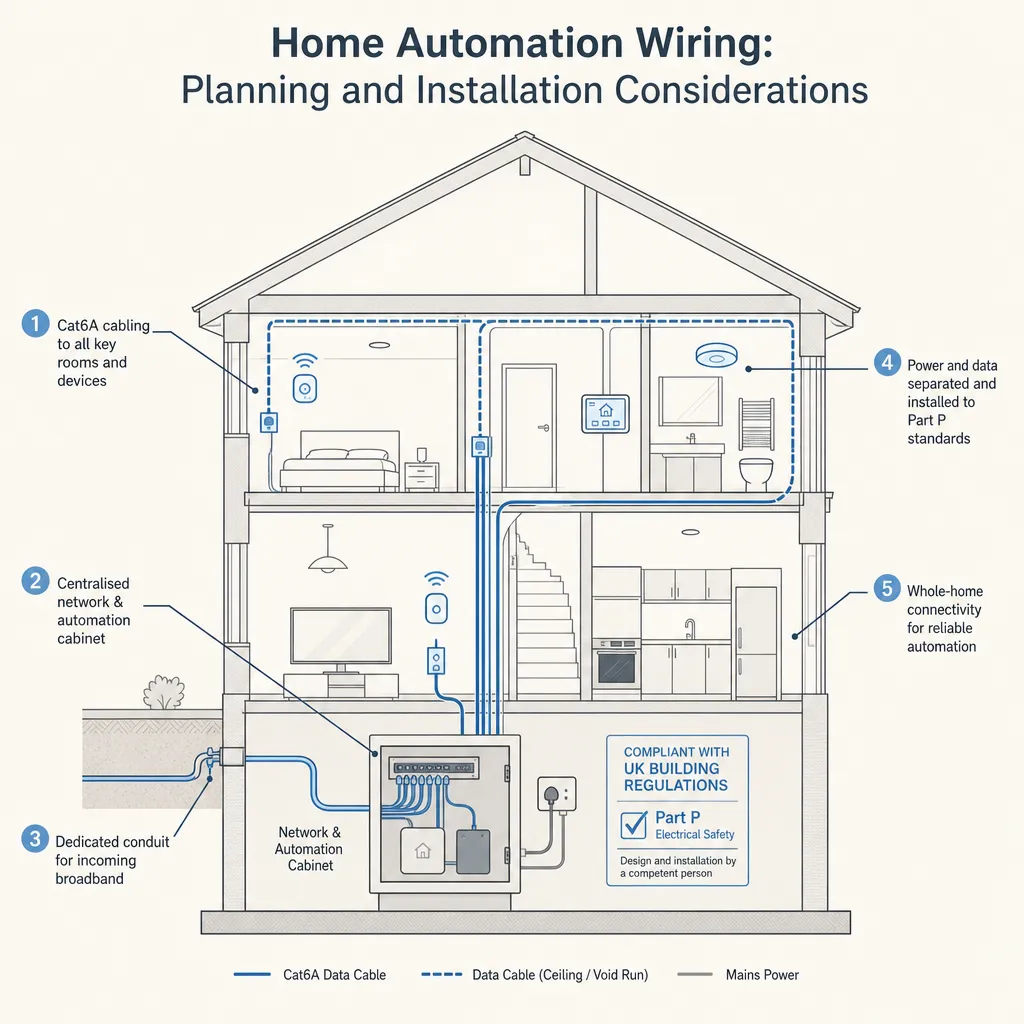
Home Automation Wiring: Planning and Installation Considerations
Home automation wiring decisions — data cabling, power circuits, control wiring — are most cost-effectively made during first-fix, before walls are closed.
 Planning & Pre-Build
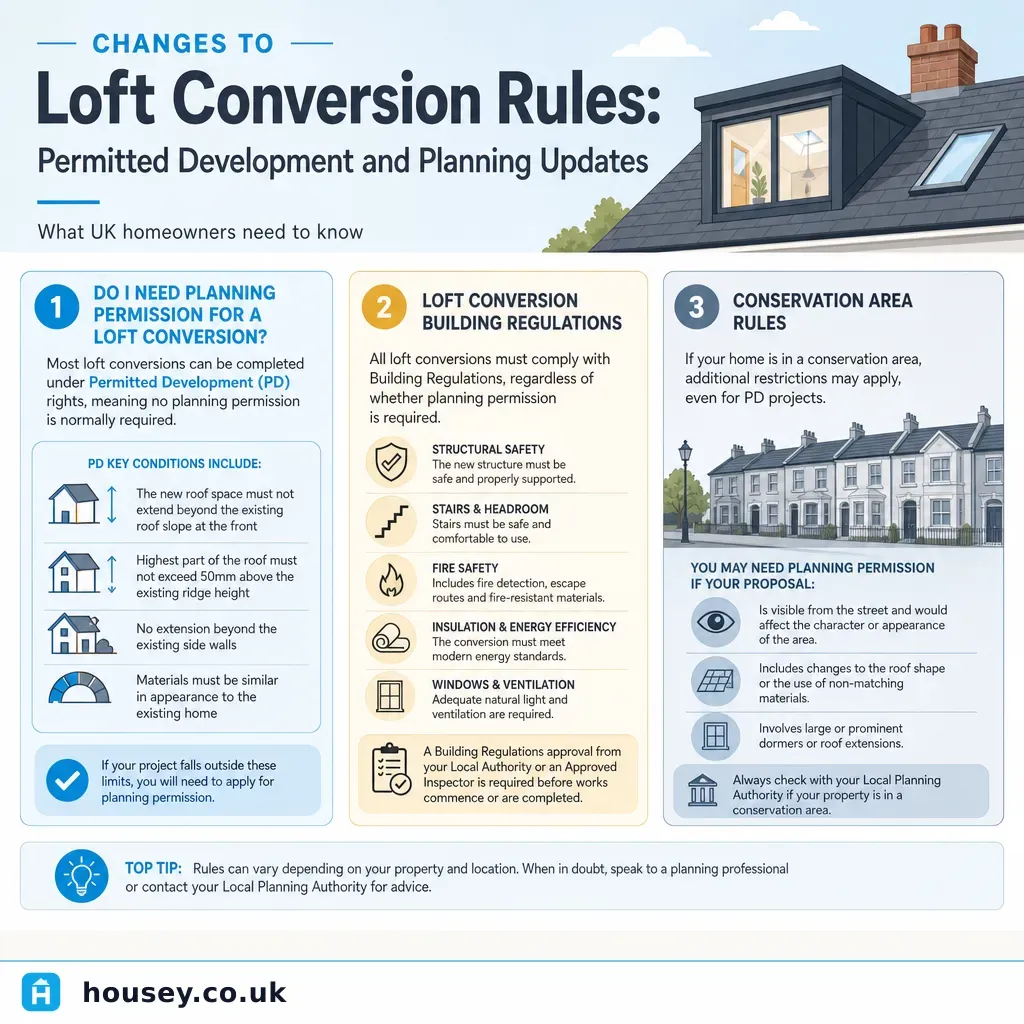
Changes to Loft Conversion Rules: Permitted Development and Planning Updates
In England, most loft conversions on standard houses qualify as Permitted Development under Class B of the GPDO 2015, allowing up to 40 cubic metres (terraced) or 50 cubic metres (detached or semi-detached) without a planning application — if conditions are met.
 Planning & Pre-Build
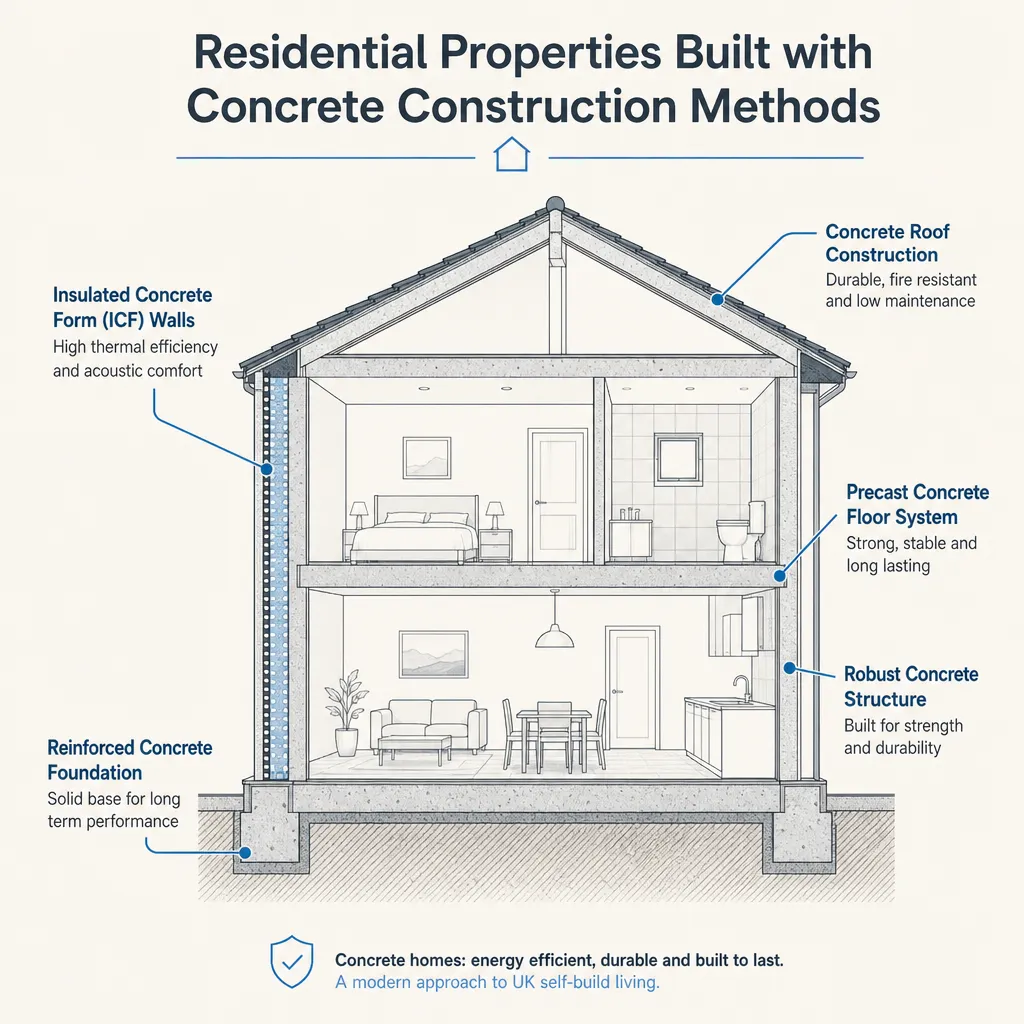
Residential Properties Built with Concrete Construction Methods
UK homes are built using several concrete methods: in-situ cast concrete, precast panel systems, insulating concrete formwork (ICF), and older non-traditional types such as Wimpey No-Fines and Laing Easiform.
 Planning & Pre-Build
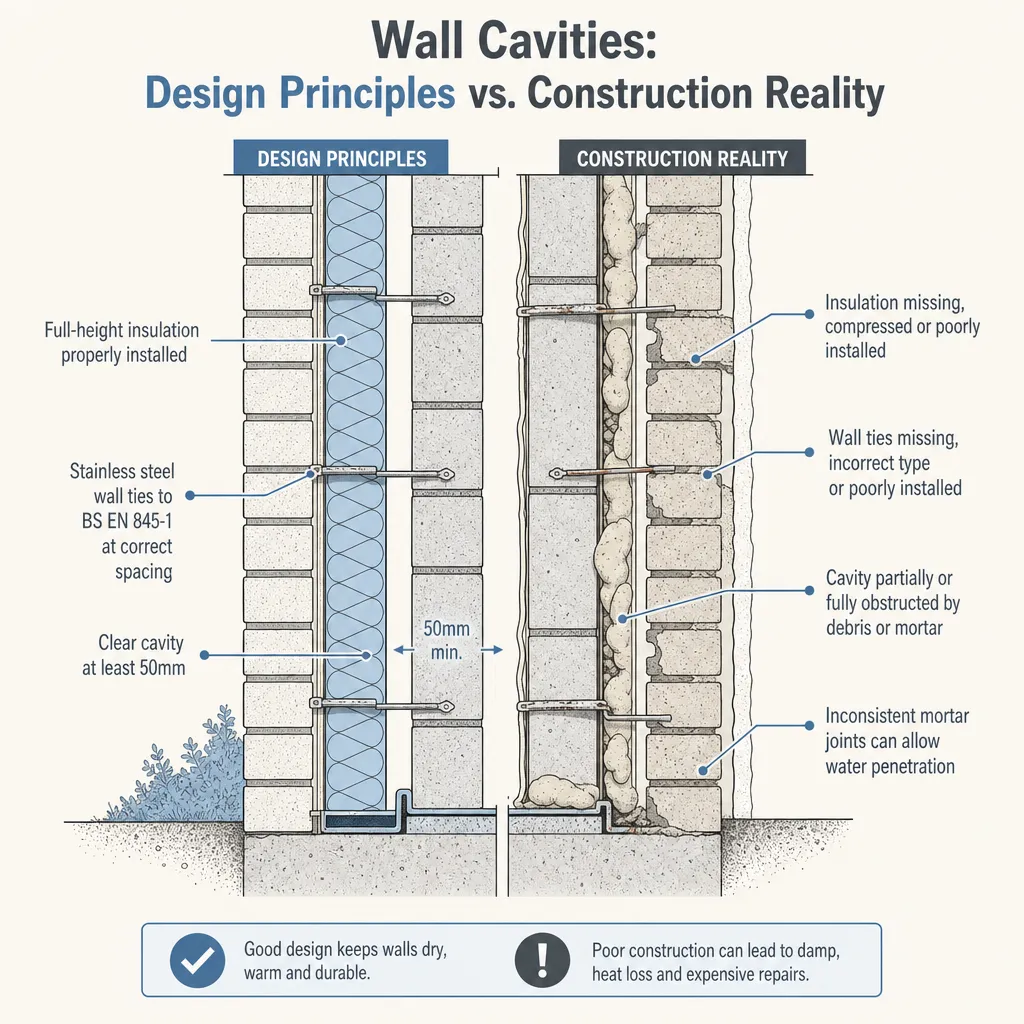
Wall Cavities: Design Principles vs. Construction Reality
A UK cavity wall is designed to resist weather, control heat loss, and structurally link two masonry leaves.