Converting a Utility Room to a Bathroom: Planning Permission and Building Regulations
By Housey · Last reviewed 4th of May 2026
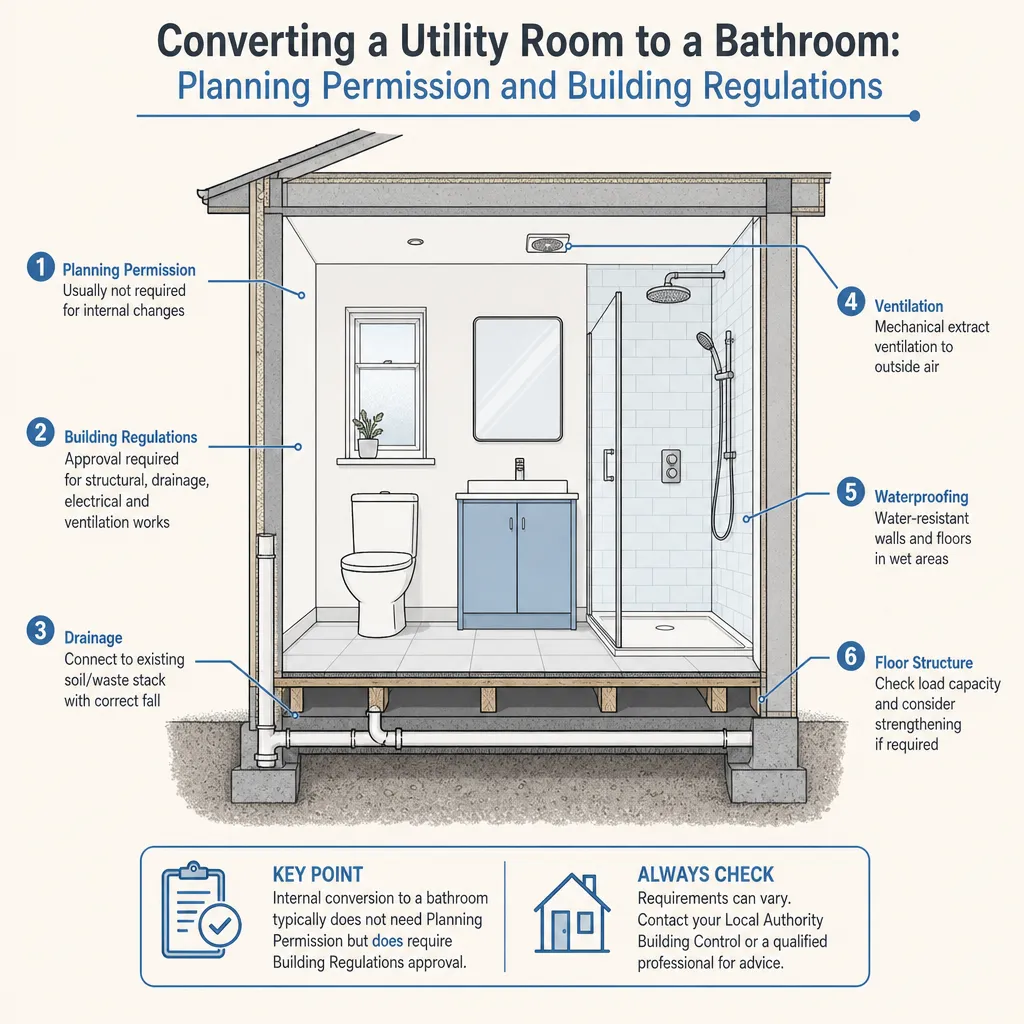
Converting a Utility Room to a Bathroom: Planning Permission and Building Regulations
A utility room is often well positioned near existing soil pipes, drainage runs, and water supplies, which makes it a practical candidate for conversion to a bathroom or WC. The regulatory questions — whether planning permission is needed and which building regulations are triggered — typically arise once plumbing quotes arrive and the scope of work takes shape. Getting this right before work begins avoids costly rework and ensures you can sell or remortgage without complications.
Key points
- Converting a utility room to a bathroom is almost always an internal alteration and does not require planning permission in England under the Town and Country Planning Act 1990, with narrow exceptions for listed buildings and some leasehold flats.
- Building regulations approval is required for drainage connections (Part H), ventilation (Part F), electrical installations (Part P), and structural alterations (Part A) where relevant.
- Approved Document F (2022 edition) requires a new bathroom to have either an openable window or mechanical extract ventilating at a minimum of 15 litres per second (l/s) intermittent or 8 l/s continuous.
- Electrical work in a bathroom — including new circuits, shower units, and fixed lighting in zones 0 to 2 — is notifiable under Part P and must be carried out by a registered electrician or notified to building control.
- If the property is leasehold, converting a room to a bathroom will almost certainly require landlord or freeholder consent and may require a formal licence to alter.
Does this conversion need planning permission?
In most cases, no. Internal alterations to a dwelling do not constitute development under the Town and Country Planning Act 1990 and do not require planning permission.
Exceptions where consent may be required:
- Listed buildings: Works affecting the character or fabric require listed building consent from the local planning authority.
- Flats and apartments: Some LPAs treat certain flat alterations differently; confirm with your LPA if uncertain.
- Change of use to HMO: If the property is being reconfigured as a house in multiple occupation, a change of use application may be required.
- Restrictive planning conditions: Prior permissions may include conditions restricting internal layouts. Check your planning history via the Planning Portal.
Decision tree: do you need planning permission?
- Is the property a listed building? → Seek listed building consent before proceeding.
- Is the property a leasehold flat? → Obtain landlord or freeholder consent and review the lease first.
- Is the conversion part of a larger project already requiring planning permission? → The bathroom scope may need to be included in that application.
- None of the above? → Planning permission is likely not required for the internal conversion.
What building regulations apply?
Building regulations will apply to most elements of this conversion.
Regulation | Approved Document | What triggers it |
|---|---|---|
Drainage | Part H | Any new connection to a soil stack, waste pipe, or underground drainage |
Ventilation | Part F | A new bathroom lacking an openable external window, or relying on mechanical extract |
Electrical safety | Part P | New circuits, shower units, or fixed installations in bathroom zones |
Structural | Part A | Removal or alteration of load-bearing walls |
Energy efficiency | Part L | Adding a heated towel rail circuit or electric underfloor heating |
Water efficiency | Part G | All new sanitary fittings and water supply connections |
Part G is particularly important. It governs sanitary pipework gradients and sizes, protection against mains water contamination, maximum WC flush volumes (6/4 litre dual-flush or 6 litre single flush), and hot water storage and delivery temperatures — stored at minimum 60°C to control Legionella risk, delivered at maximum 48°C to prevent scalding, per HSE guidance.
Do you need building control approval?
Yes, unless every notifiable element is carried out by a tradesperson registered with a recognised competent person scheme. CIPHE or WaterSafe-registered plumbers can self-certify drainage and plumbing work; NICEIC or NAPIT-registered electricians can self-certify electrical work. Both notify building control on your behalf and issue a completion certificate.
If any trade is not scheme-registered, you or your contractor must:
- Submit a building notice or full plans application to your local authority building control (LABC) or an approved inspector before work begins.
- Allow staged inspections — drainage before backfilling, first-fix electrics before boarding, and on completion.
- Obtain a completion certificate once all work passes inspection.
A completion certificate is increasingly requested by mortgage lenders and conveyancers for bathroom works where drainage has been altered.
Documents and information to prepare
Before instructing trades, gather:
- A sketch or floor plan showing the utility room layout, the proposed bathroom layout, and the location of the nearest soil stack and drain runs.
- Confirmation of whether gravity drainage is achievable from the room's position, or whether a macerator pump is needed.
- Lease documents (if leasehold) to check alteration consent requirements.
- Planning history search results if conditions from prior approvals are suspected.
- Quotes from a qualified plumber and electrician, with confirmation of their scheme registration (CIPHE/WaterSafe and NICEIC/NAPIT).
- If structural changes are involved, a structural engineer's assessment and drawings before building regulations drawings are finalised.
Important limitations
This article provides general information for England. Building regulations and planning rules differ in Wales, Scotland, and Northern Ireland. Requirements also vary by property type, construction, planning history, and whether the building is listed, leasehold, or in a designated area. Nothing here replaces advice from a qualified architect, building control officer, structural engineer, or planning consultancy. Always verify with your local authority building control or an approved inspector before committing to a scope of works.
What to ask a qualified professional
Before instructing a building control consultant or plumber:
- Does this conversion require a building notice or full plans application, given the drainage and electrical scope?
- Is the existing soil stack suitable for a new branch connection without hydraulic overloading?
- Does the utility room have or require a ventilation route to an external wall?
- Are there any lease conditions, landlord consent requirements, or planning conditions to address first?
- Will you provide a building regulations completion certificate on completion?
- If structural walls are affected, do I need a structural engineer's drawings before building control submission?
When to get professional help
Seek professional input before starting work if:
- The utility room requires structural changes to accommodate the bathroom layout.
- Drainage routing is uncertain — gravity feasibility requires assessment of pipe levels relative to the drainage exit point.
- The property is a leasehold flat with ambiguous lease wording on alteration consent.
- You are unsure whether prior planning conditions apply.
- You need a valid completion certificate for a forthcoming sale or remortgage.
For the technical drawings needed for building control submission, consider commissioning building regulations drawings from an architectural technologist or architect.
How Housey can help
Housey connects homeowners with qualified professionals across the UK. If your utility to bathroom conversion involves building control submission, structural changes, or planning queries, you can request quotes from building control consultants and other specialists through the platform.
Frequently asked questions
Does converting a utility room to a bathroom need planning permission?
In most cases, no. It is an internal alteration and does not constitute development under the Town and Country Planning Act 1990. Exceptions include listed buildings, which require listed building consent, and leasehold flats, which may require landlord consent under the lease. Properties where prior planning conditions restrict internal layouts are a further exception, though uncommon.
What building regulations apply to a new bathroom?
The key regulations are Approved Document H (drainage), Part F (ventilation), Part P (electrical safety), Part G (sanitary fittings and water supply), and Part A (structural) where walls are altered. Each notifiable element must be either self-certified by a registered competent person or approved by building control, with a completion certificate issued at the end.
Do I need building control sign-off for a utility room to bathroom conversion?
Yes, unless all notifiable work is carried out by tradespeople registered with recognised competent person schemes — CIPHE or WaterSafe for plumbing, NICEIC or NAPIT for electrics — who can self-certify. If trades are not scheme-registered, a building notice or full plans application to building control is required before work begins, followed by staged inspections and a completion certificate.
What drainage work is required for a new bathroom?
A new bathroom needs waste connections for each fitting — WC, basin, bath, and shower — connecting to the existing soil stack or external drainage run. Pipe gradients, sizing, and access provision must comply with Approved Document H. If gravity drainage is not achievable from the utility room position, a macerator may be considered, though this has specific installation and maintenance requirements.
Sources and further reading
Useful next reads
 Planning & Pre-Build
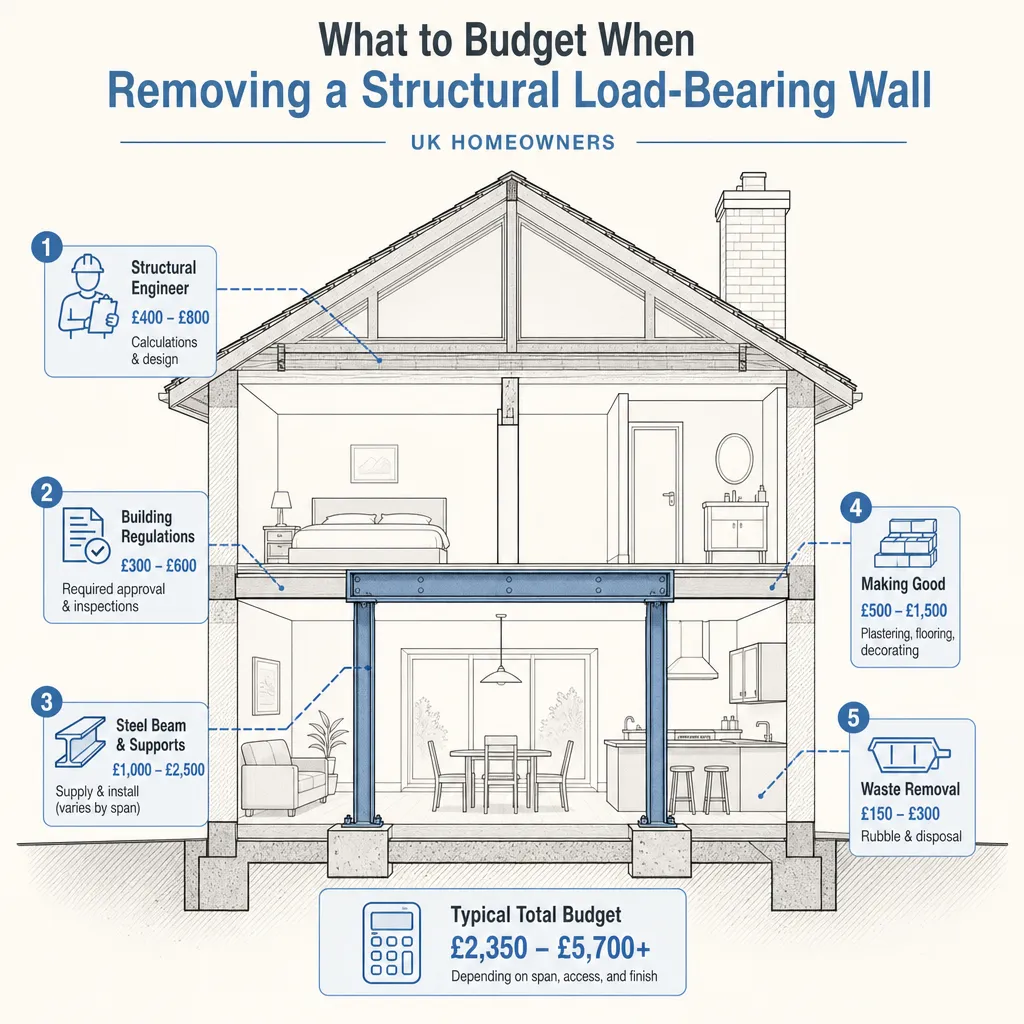
What to Budget When Removing a Structural Load-Bearing Wall
Removing a load-bearing wall in a typical UK home costs £2,500–£8,000 or more in total, covering a structural engineer's calculations, Building Regulations approval, the steel beam, builder's labour, and replastering.
 Planning & Pre-Build
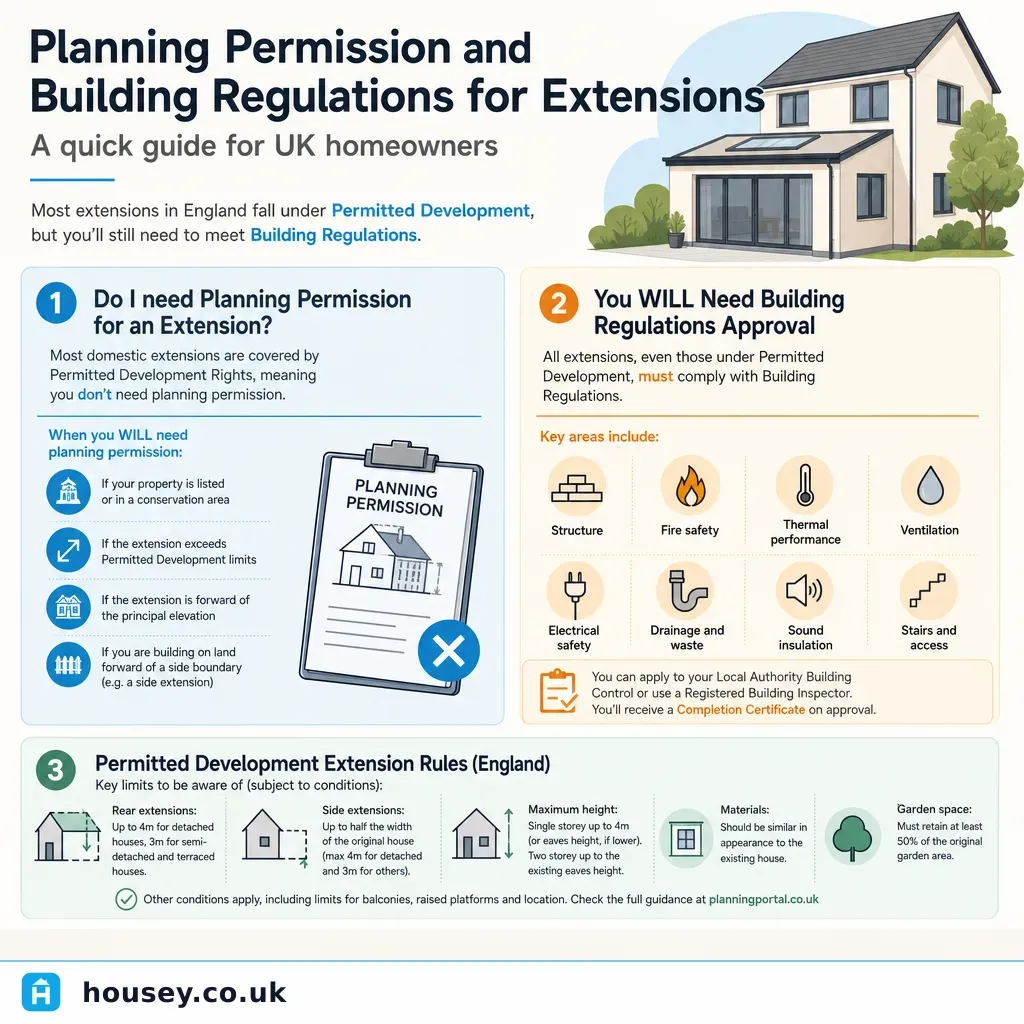
Planning Permission and Building Regulations for Extensions
UK home extensions usually require both planning permission and Building Regulations approval, though most smaller rear extensions qualify as Permitted Development under the GPDO 2015 and need no planning application.
 Planning & Pre-Build
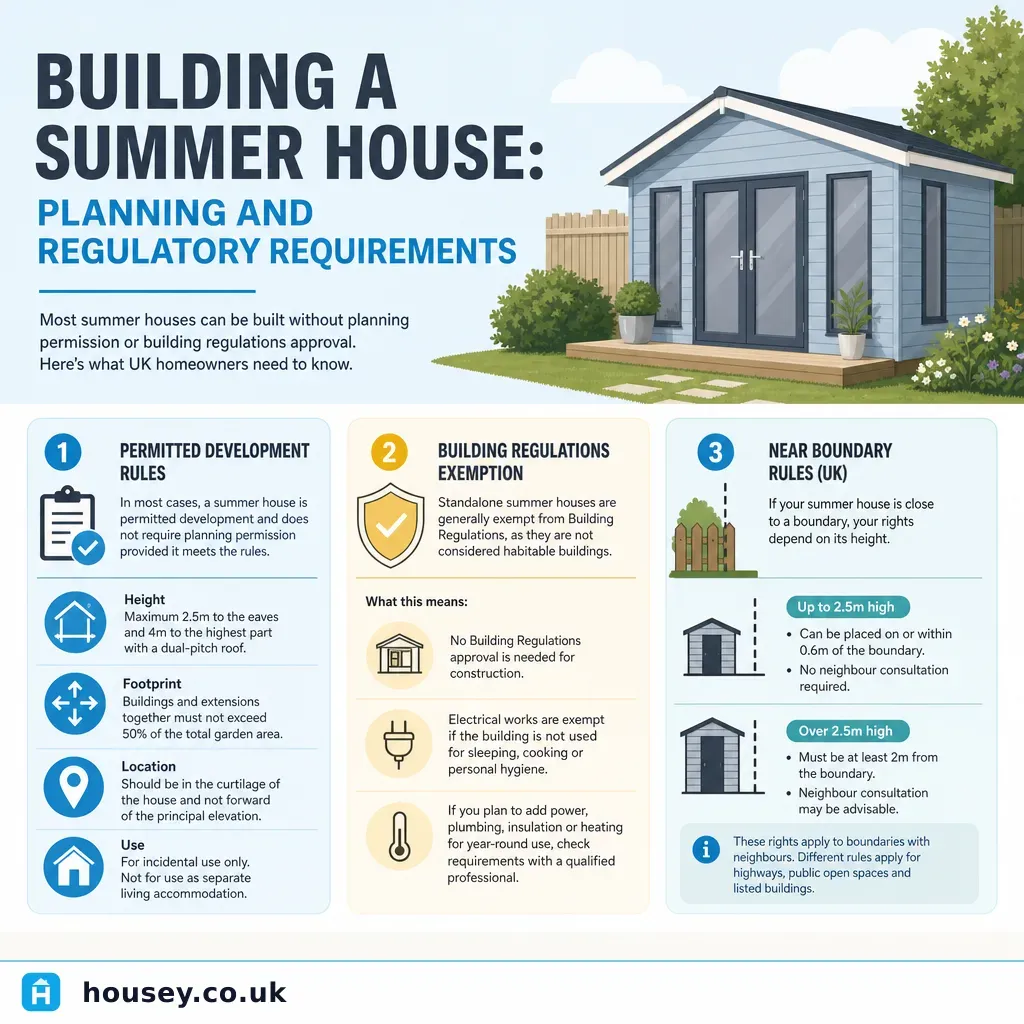
Building a Summer House: Planning and Regulatory Requirements
Most garden summer houses in England fall under Class E permitted development and need no planning permission, provided they are single-storey, within height limits, and not used for sleeping.
 Planning & Pre-Build
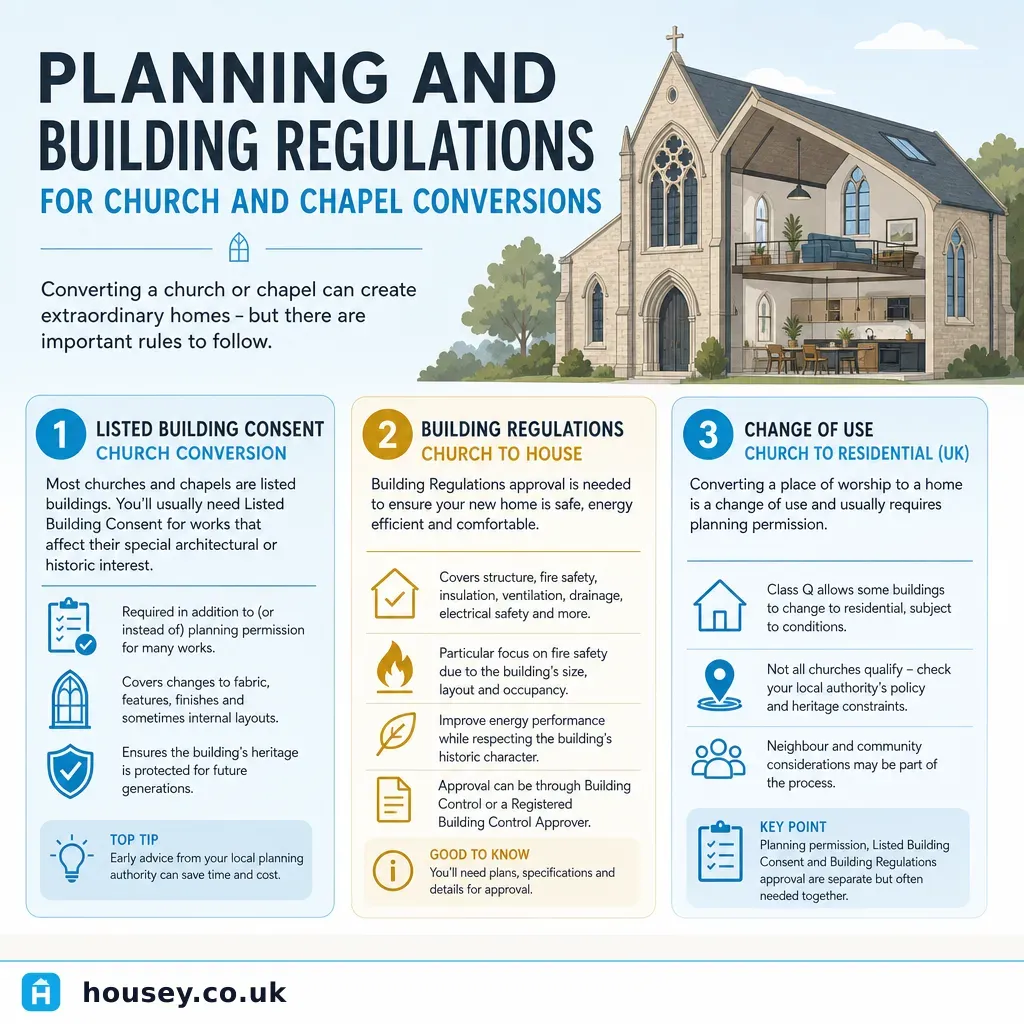
Planning and Building Regulations for Church and Chapel Conversions
Converting a church or chapel to residential use requires planning permission for change of use from Class F1 to Class C3, and listed building consent if the building is listed.
 Planning & Pre-Build
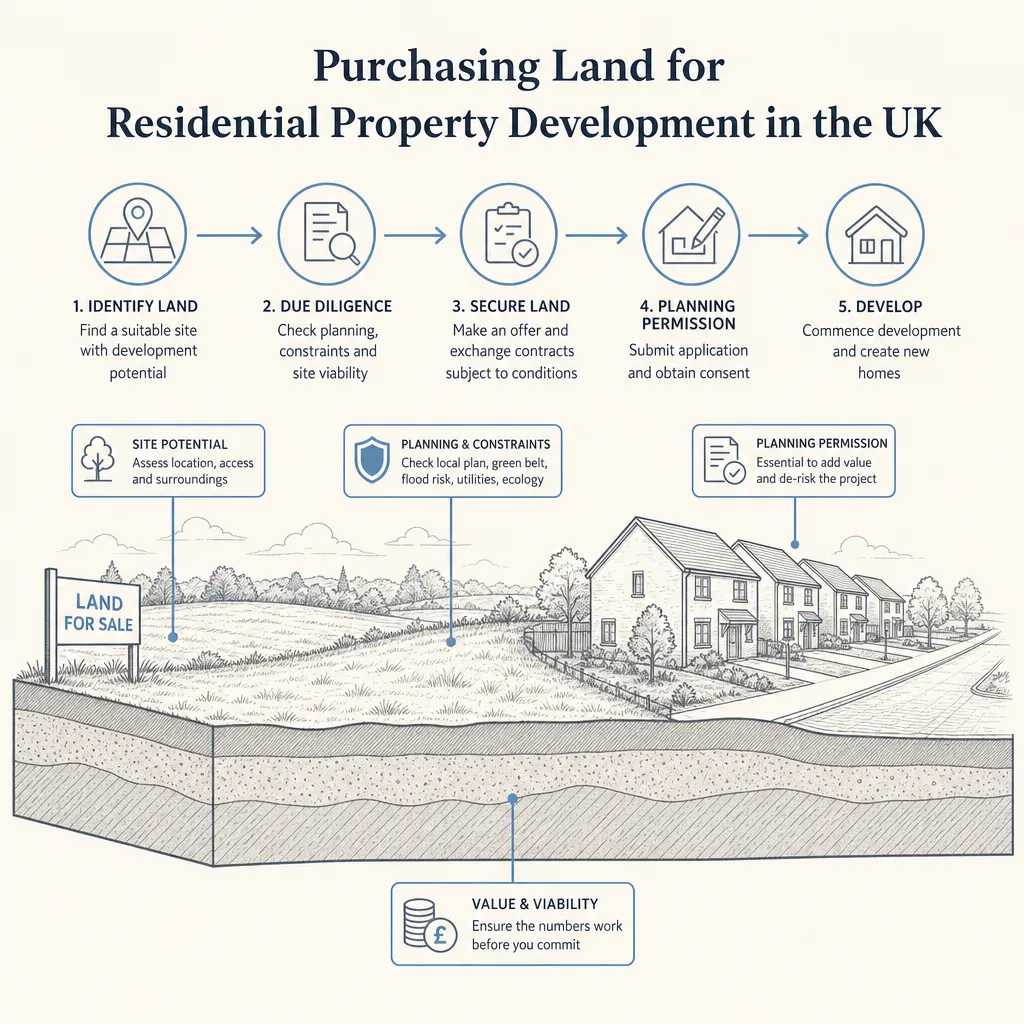
Purchasing Land for Residential Property Development in the UK
Buying development land in the UK involves due diligence on planning status, ground conditions, legal title, and utilities access before exchange.