Bathroom Design Ideas: Fireplaces and Features
By Housey · Last reviewed 30th of May 2026
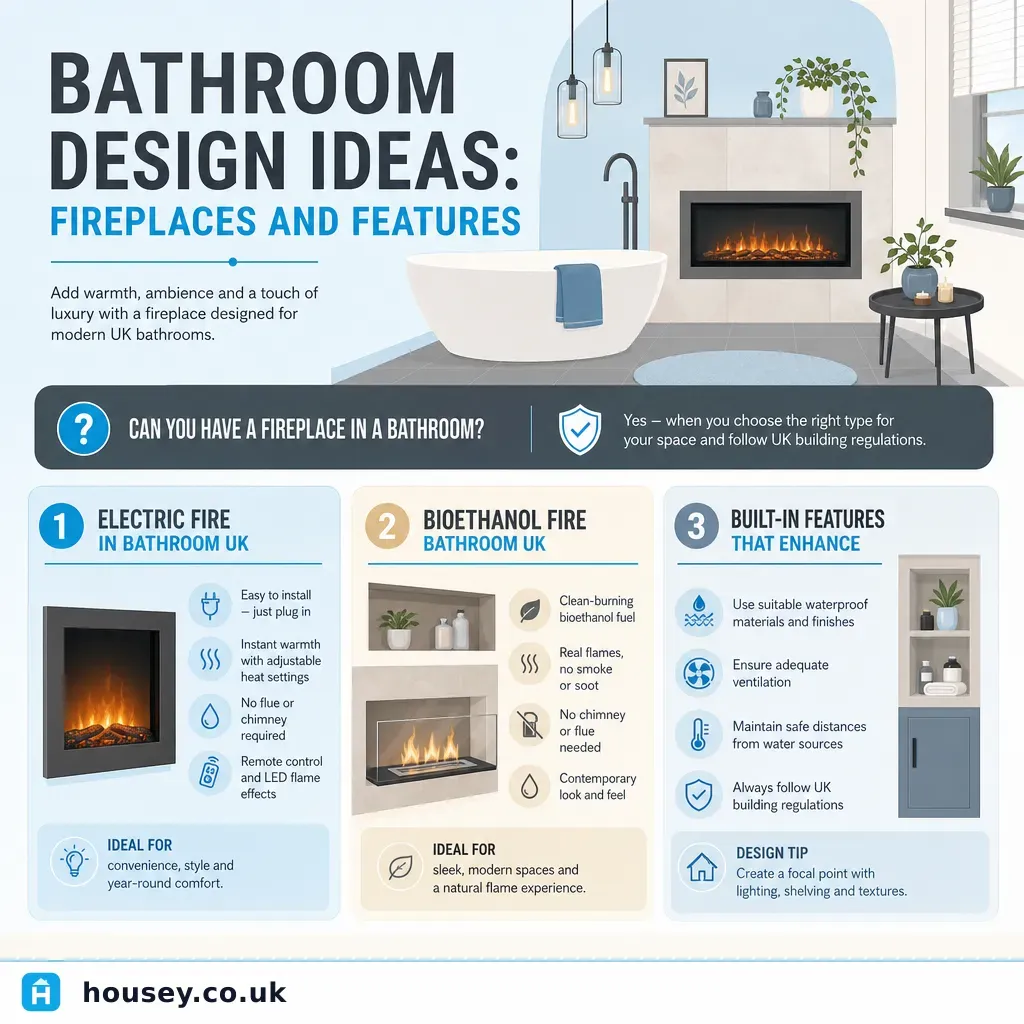
Bathroom Design Ideas: Fireplaces and Features
Incorporating a fireplace or flame feature into a bathroom is an aspiration that appears regularly in high-end renovation briefs — but in the UK, the regulatory picture sharply limits what is actually permissible. Understanding those limits before specifying a feature or instructing trades could save significant cost and, more importantly, prevent a safety risk that regulators treat seriously. This article sets out what is and is not permitted, which design approaches comply, and when to involve a qualified professional.
Key points
- Gas fires in bathrooms and shower rooms are effectively prohibited under the Gas Safety (Installation and Use) Regulations 1998; a room-sealed (balanced flue) gas appliance is technically the only exception, but this specification is almost never used in domestic bathrooms.
- Electric flame-effect fires and infrared heating panels may be installed in bathrooms but must comply with IET Wiring Regulations (BS 7671) bathroom zone requirements — the IP rating of any electrical product must match the zone in which it is positioned.
- Bioethanol fires produce real flames, carbon dioxide, and water vapour; Building Regulations Part F ventilation requirements are relevant, and bathrooms are typically unsuitable environments for bioethanol combustion.
- Any electrical installation in a bathroom, including fitting an electric fire or infrared panel, must be carried out by a Part P-registered electrician or notified to local authority building control.
- A purely decorative fireplace surround — with no heat source and no fuel — carries no specific regulatory restrictions beyond standard building and planning rules.
What is actually permitted in a UK bathroom?
The regulatory position on fires and heat sources in bathrooms is clear on the most important point:
Gas fires (open-flued): prohibited in bathrooms under the Gas Safety (Installation and Use) Regulations 1998. An open-flued gas fire draws combustion air from the room and must not be installed in a room used as a bathroom or shower room.
Gas fires (room-sealed/balanced flue): technically permitted under the regulations, as the appliance takes combustion air from and exhausts to the outside with no connection to the internal bathroom air. In practice, this configuration is rarely if ever specified in domestic UK bathrooms, and no competent Gas Safe registered engineer should be installing an open-flued gas appliance in a bathroom.
Electric flame-effect fires and infrared panels: permitted subject to the electrical zone requirements of BS 7671. Bathrooms are divided into zones — Zone 0 is inside the bath or shower tray, Zone 1 extends above and immediately around the bath or shower to a height of 2.25 m, and Zone 2 extends up to 0.6 m beyond Zone 1. Most electric fires must be positioned outside Zone 1 at minimum, with an appropriate IP (ingress protection) rating for the zone (IP44 minimum for Zone 2; higher ratings required for Zones 0 and 1). All electrical installations in bathrooms must be carried out by a Part P-registered electrician.
Bioethanol fires: not specifically prohibited by a named regulation, but they burn real fuel, produce open flames, carbon dioxide, and water vapour. Building Regulations Part F (ventilation) and Part J (combustion appliances) are relevant. Most manufacturers specify minimum room volumes and ventilation rates that domestic bathrooms rarely meet.
Decorative fireplace surrounds (no heat source): no regulatory restrictions specific to fire, gas, or electrical safety. Standard building and planning rules apply. In a listed building, any alteration to a chimney breast requires Listed Building Consent.
Electric flame-effect fires in bathrooms
Electric flame-effect fires use LED technology to simulate flame and may produce heat or function as purely decorative features. For bathroom applications:
- The product must carry an IP rating appropriate to its proposed zone. Most electric fires suitable for bathroom use are rated IP44 (Zone 2) at minimum; products for closer installation may require IP65 or higher.
- Installation must be carried out by a Part P-registered electrician.
- Wiring must run from a fused connection unit (FCU), not a plug socket — sockets are not permitted within bathroom Zones 0, 1, or 2.
- If the fire produces heat, Building Regulations Part F ventilation requirements apply: a warm, steamy room with inadequate ventilation creates mould risk and can be uncomfortable.
Decorative surrounds and design approaches
For homeowners who want the visual appeal of a fireplace without regulatory complexity, several approaches are used in UK bathrooms:
- Marble or stone fireplace surround with a rated LED insert: a reproduction or antique mantelpiece professionally fixed, fitted with a high-quality LED flame-effect unit carrying the correct bathroom IP rating. Creates a convincing traditional aesthetic with manageable compliance.
- Feature niche built to suggest a fireplace recess: entirely architectural — tile or stone construction with low-voltage LED strip lighting positioned outside the electrical zones. No electrical compliance issue in wet zones.
- Battery-powered decorative candles or flame-effect inserts: positioned on a freestanding or built-in surround; battery versions carry no electrical compliance issue in wet zones.
- Infrared radiant heating panels: wall- or ceiling-mounted, efficient, responsive, and entirely flameless. A practical luxury-bathroom heating supplement when positioned and wired correctly by a Part P electrician.
Comparing bathroom flame and heat features
Feature type | Real flame | Heat output | Permitted in UK bathrooms | Key regulatory requirement | Specialist installer needed? |
|---|---|---|---|---|---|
Gas fire (open-flued) | Yes | Yes | No | Gas Safety Regulations 1998 — prohibited | N/A |
Gas fire (room-sealed) | Yes | Yes | Technically yes; exceptionally rare in practice | Gas Safe Register; Building Regs Part J | Yes — Gas Safe registered engineer |
Bioethanol fire | Yes | Moderate | Not prohibited but very high risk | Building Regs Part F, Part J; manufacturer ventilation spec | Strongly recommended |
Electric flame-effect (LED) | No | Optional | Yes — subject to zone and IP rating | BS 7671; Part P electrician | Yes — Part P electrician |
Decorative surround (no heat or fuel) | No | None | Yes | Standard building and planning rules | No specialist required |
Infrared heating panel | No | Yes (radiant) | Yes — subject to zone and IP rating | BS 7671; Part P electrician | Yes — Part P electrician |
Important limitations
This article provides general design and regulatory guidance only. The rules on gas appliances, electrical zone compliance, and ventilation requirements are specific to individual installations — room geometry, zone boundaries, and ventilation provision must be assessed on site by a qualified professional. Nothing in this article should be treated as a site-specific safety assessment or as a substitute for advice from a Gas Safe registered engineer, a Part P-registered electrician, or a building control surveyor.
Bioethanol fire guidance and product-specific installation requirements may change. Always check current GOV.UK guidance and the manufacturer's installation specifications before proceeding.
When this becomes urgent
Seek qualified professional advice immediately if any of the following apply:
- An existing gas appliance is present in a bathroom and you are unsure whether it is room-sealed or open-flued — do not use the appliance until a Gas Safe registered engineer has inspected it.
- An electric fire or heating product in a bathroom has no visible IP rating, was installed without a Part P certificate, or shows signs of moisture ingress or arcing.
- A bioethanol fire has been installed in a sealed or poorly ventilated room and any occupant has reported symptoms such as headache, nausea, or dizziness — these may indicate oxygen depletion or carbon dioxide build-up.
- Any fire feature, surround, or related electrical wiring in a bathroom is in a listed building and no Listed Building Consent was sought for structural alterations.
What to ask a qualified professional
Before specifying any fire or flame feature in a bathroom, ask the following:
For an electric flame-effect fire or infrared panel:
- What is this product's IP rating, and is it appropriate for the proposed bathroom zone?
- Are you Part P-registered, and will you issue a building regulations compliance certificate on completion?
- What RCD circuit protection will be installed?
For a gas appliance enquiry:
- Is this appliance room-sealed? Can you confirm it complies with the Gas Safety (Installation and Use) Regulations 1998 for bathroom installation?
- Are you Gas Safe registered, and will you issue a Gas Safety Record on completion?
For a bioethanol fire:
- What ventilation does the manufacturer specify as a minimum, and does the existing bathroom ventilation meet that requirement?
- Has the proposed installation been checked against Building Regulations Part F and Part J?
For structural work on a chimney breast or feature wall:
- Has the structural impact been assessed, and will a structural calculation be provided?
- Is Listed Building Consent required for this property and these alterations?
When to get professional help
Any bathroom installation involving electrical work, real flame, or heat sources requires qualified professional involvement. In summary:
- Electric fire or panel installation — always use a Part P-registered electrician; do not use a standard plug socket in a bathroom for any heat or flame appliance.
- Gas appliance query — consult a Gas Safe registered engineer who will confirm the legal position for your specific bathroom configuration.
- Bioethanol fire — consult a ventilation engineer and review the manufacturer's installation guide carefully before purchasing.
- Structural alterations — commission a structural engineer if any chimney breast, party wall, or load-bearing element is to be modified.
How Housey can help
Housey connects homeowners with vetted local renovation specialists and qualified trades who can advise on bathroom design features within the UK's regulatory framework. Search for bathroom renovation professionals, Part P-registered electricians, and project managers through the Housey platform to receive competitive quotes and independent expertise before any work begins.
Frequently asked questions
Can I have a real fire in a UK bathroom?
Gas fires are effectively prohibited in bathrooms under the Gas Safety (Installation and Use) Regulations 1998 — the only technically permitted type (room-sealed/balanced flue) is almost never installed in domestic bathrooms. Bioethanol fires carry significant ventilation and combustion risks. Electric flame-effect fires are the most practical compliant option for achieving a flame aesthetic in a bathroom.
What is the safest heating option for a luxury bathroom?
Electric underfloor heating and infrared radiant panels are both widely used in high-specification UK bathrooms, offering responsive heat without flame or combustion risks. Both must be installed by a Part P-registered electrician. Water-fed underfloor heating is another option where a wet heating system is already present in the property.
Does a decorative fireplace in a bathroom need building regulations approval?
A purely decorative fireplace surround with no heat or fuel source does not require building regulations approval in most cases. If the installation involves any electrical work — such as a wired LED insert — Part P applies and a Part P-registered electrician must carry out or certify the work. In a listed building, alterations to a chimney breast require Listed Building Consent.
Can I use a bioethanol fire in my bathroom?
It is not specifically prohibited, but most bathrooms are unsuitable environments. Bioethanol combustion consumes oxygen and produces carbon dioxide and water vapour — problematic in a small, sealed, steam-filled space. Manufacturer ventilation requirements almost certainly exceed what standard bathroom extractor fans can provide. Most fire safety professionals advise against bioethanol fires in bathrooms.
Sources and further reading
- Gas Safety (Installation and Use) Regulations 1998 — legislation.gov.uk
- Building Regulations Approved Document P: Electrical Safety — GOV.UK
- Building Regulations Approved Document F: Ventilation — GOV.UK
- Building Regulations Approved Document J: Combustion Appliances — GOV.UK
- Gas Safe Register: gas appliances in the home — Gas Safe Register
- IET Wiring Regulations BS 7671 — Institution of Engineering and Technology
Useful next reads
 Improvement & Build
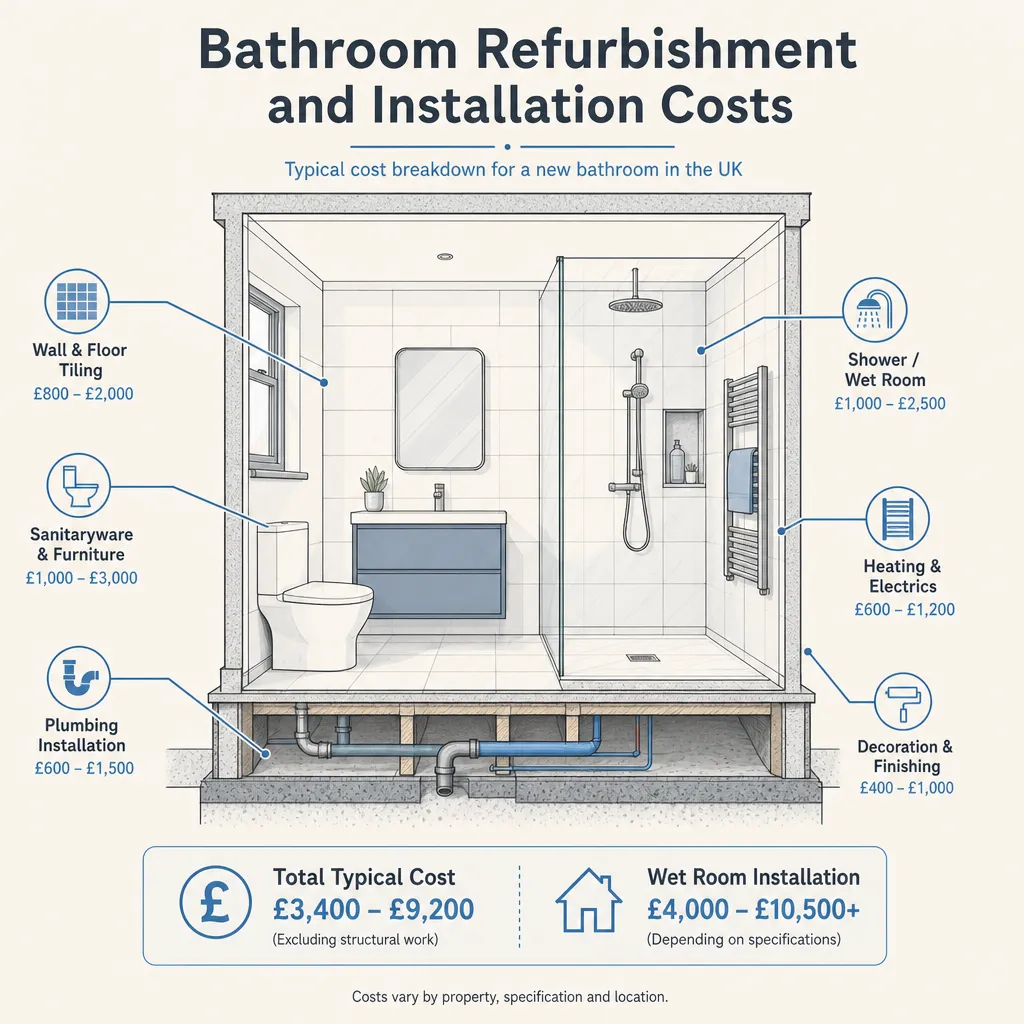
Bathroom Refurbishment and Installation Costs
A basic UK bathroom refurbishment typically costs £2,500–£5,000; a mid-range renovation with a revised layout runs £5,000–£10,000; a high-end or wet room installation can reach £12,000–£16,000 or more.
 Improvement & Build
Complete Bathroom Renovation: Design and Installation
A complete bathroom renovation in the UK involves strip-out, first-fix plumbing and electrics, waterproofing, tiling, sanitaryware installation, and second-fix trades.
 Improvement & Build
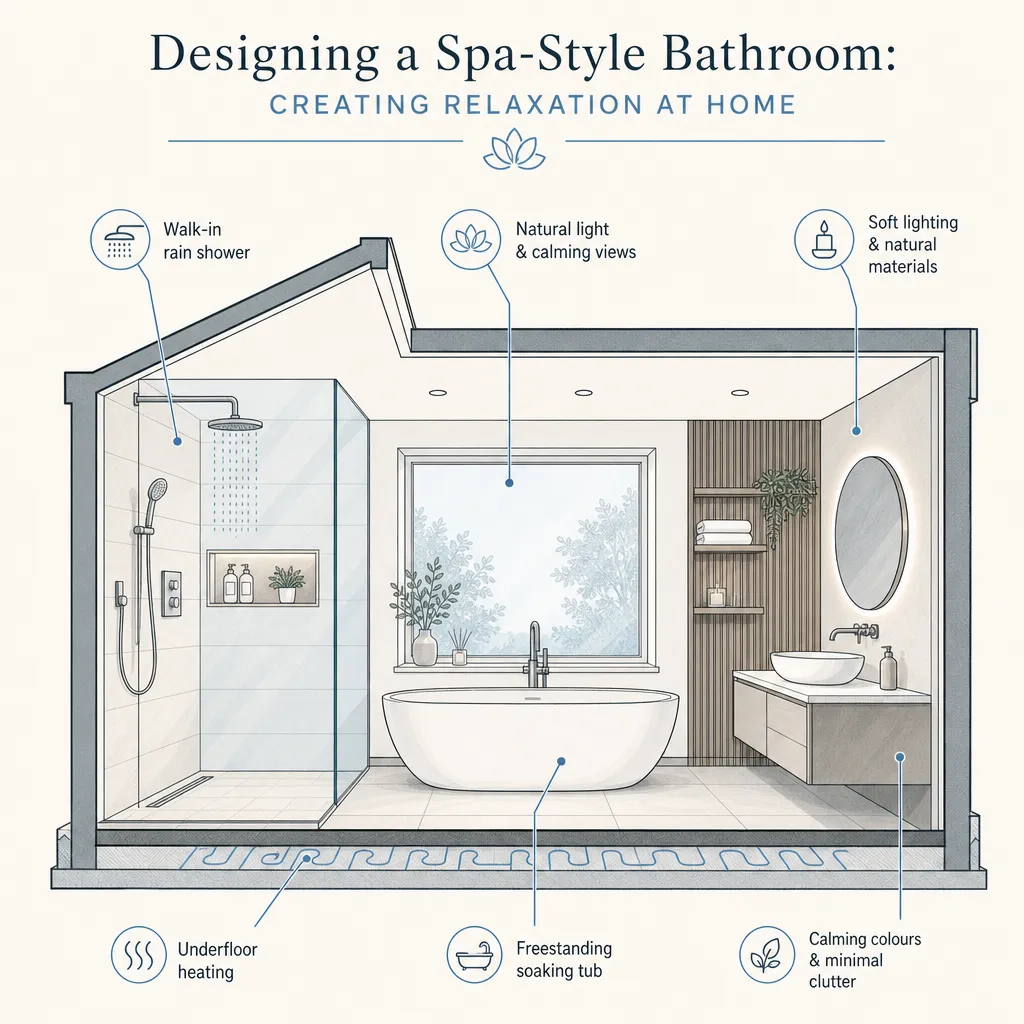
Designing a Spa-Style Bathroom: Creating Relaxation at Home
A spa-style bathroom combines a rainfall shower or freestanding bath, natural materials such as stone or wood-effect tiles, dimmable lighting, underfloor heating, and effective ventilation.
 Improvement & Build
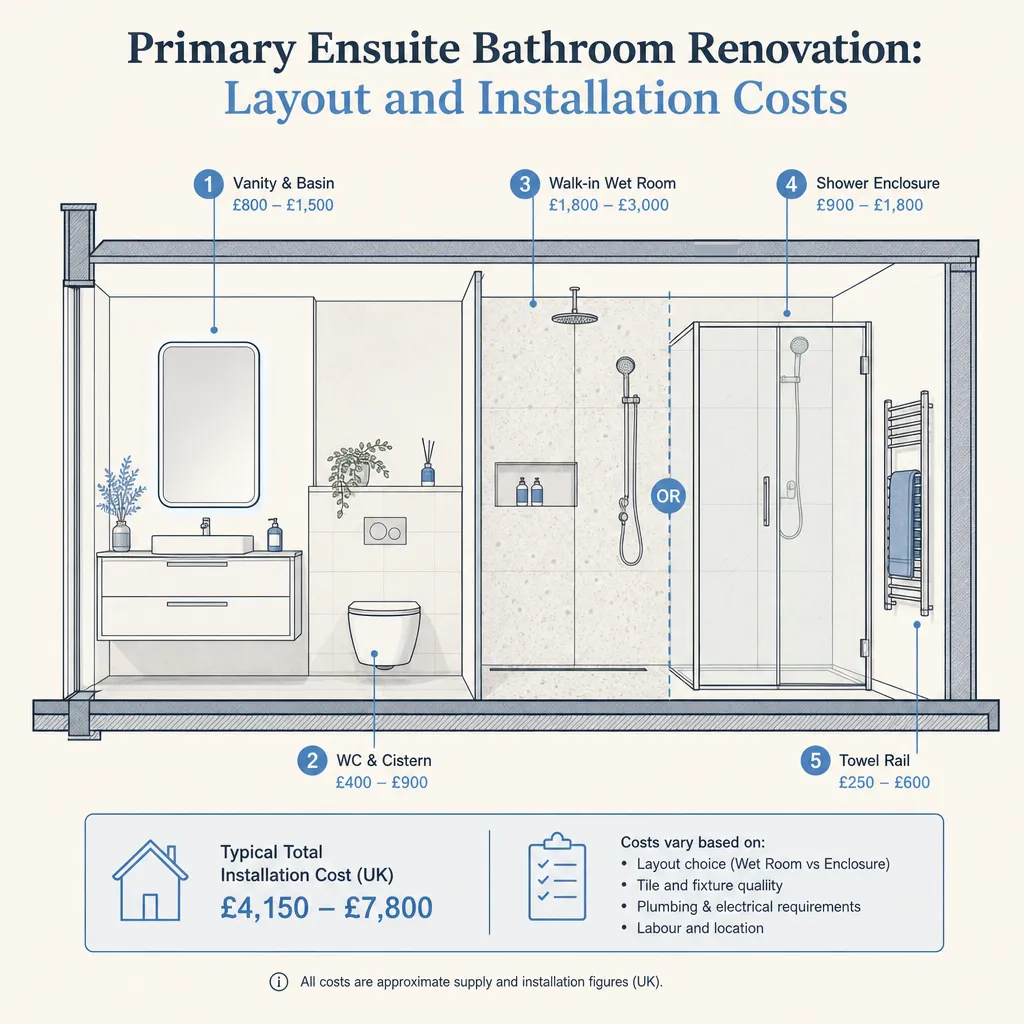
Primary Ensuite Bathroom Renovation: Layout and Installation Costs
A primary ensuite renovation in the UK typically costs between £3,000 and £12,000, depending on size, layout, and specification.
 Improvement & Build
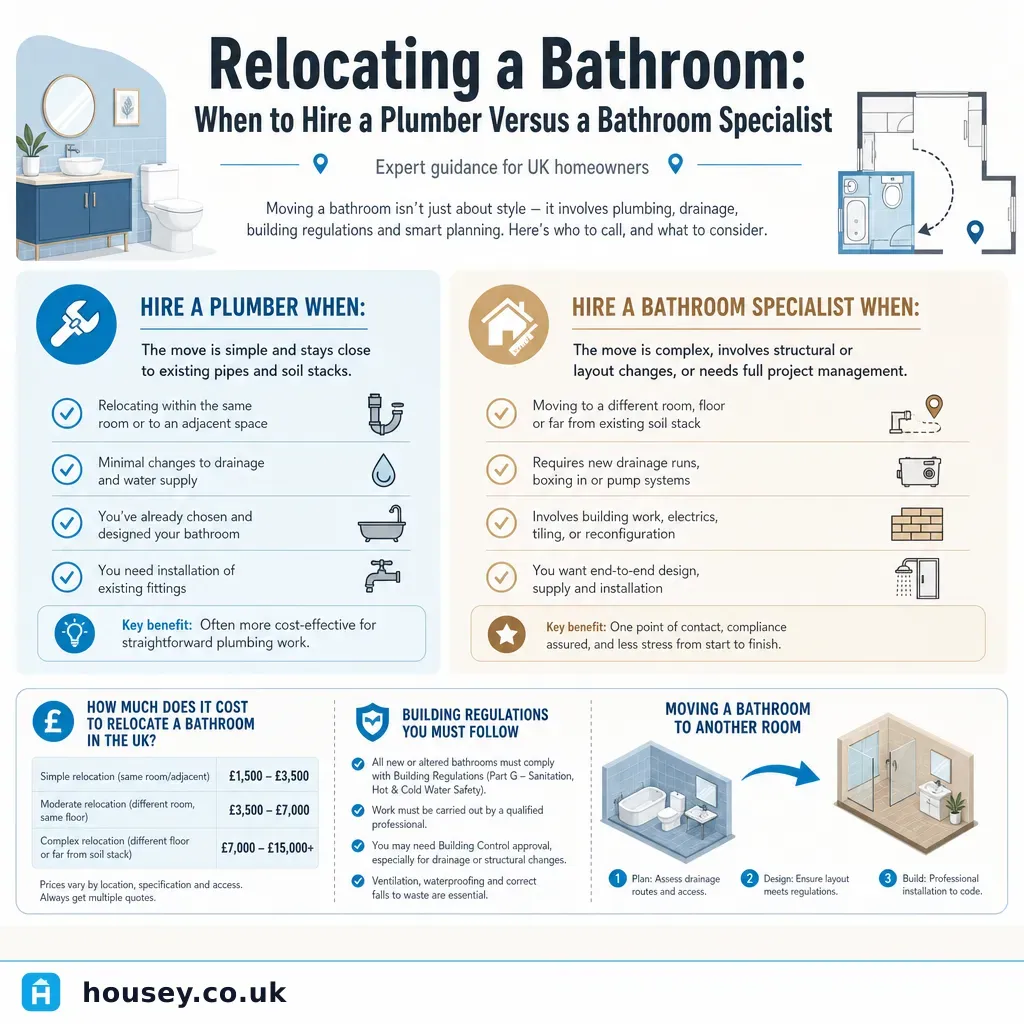
Relocating a Bathroom: When to Hire a Plumber Versus a Bathroom Specialist
Relocating a bathroom usually requires both a qualified plumber for pipework and drainage and other specialist trades for electrics, tiling, and finishes.