Designing a Spa-Style Bathroom: Creating Relaxation at Home
By Housey · Last reviewed 30th of May 2026
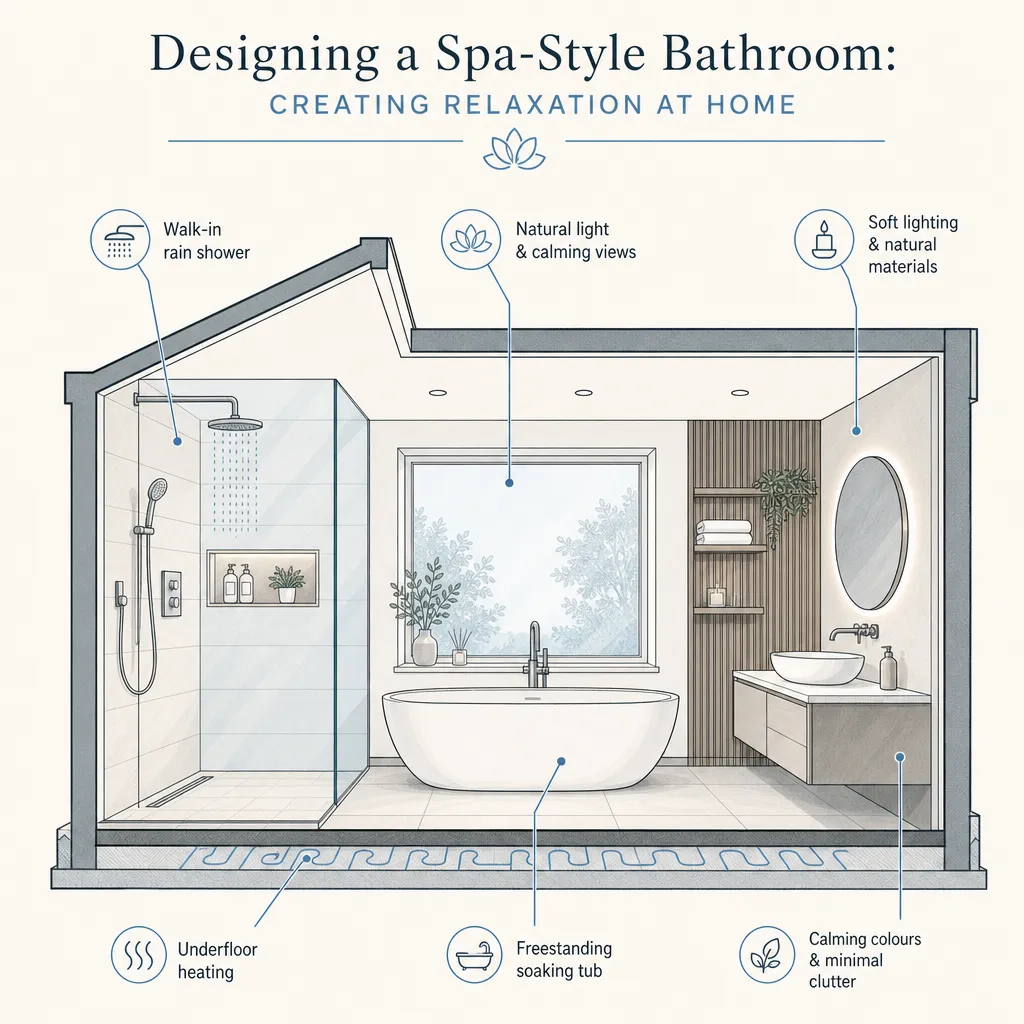
Designing a Spa-Style Bathroom: Creating Relaxation at Home
Bathroom renovations are consistently among the most popular home improvement projects in the UK, and the ambition to create a spa-like retreat at home is driving demand for natural materials, quality fittings, and thoughtful layouts. Whether you are renovating a Victorian terrace bathroom, refreshing a 1990s en-suite, or planning a wet room as part of a loft conversion, the principles that make a bathroom feel genuinely restful apply across property types — and none of them require a large footprint or an unlimited budget.
Key points
- Building Regulations Part F requires bathroom ventilation of at least 15 litres per second for intermittent extract fans — inadequate ventilation causes condensation, mould, and long-term surface damage regardless of how much was spent on finishes.
- Electric underfloor heating mats can be retrofitted under most tile finishes without significantly raising floor height; hydronic (water-fed) systems are better suited to new-build or major refurbishments where pipe runs can be planned into the floor build-up.
- A fixed rainfall shower head typically requires a minimum working water pressure of 1 bar — gravity-fed systems may need a pump; check your household pressure before specifying fittings.
- Natural stone tiles (marble, travertine, slate) must be sealed on installation and re-sealed periodically — often annually in wet areas — to prevent staining and moisture penetration.
- If a bathroom renovation involves altering a window opening, the installer should be FENSA-registered to self-certify compliance with Building Regulations without a separate building control application.
What defines a spa-style bathroom?
A spa bathroom is less about size and more about sensory calm: reduced visual clutter, warm natural tones, tactile materials, and layered light. In practice, the defining characteristics are:
- A walk-in shower with a fixed rainfall head, a freestanding bath, or both where space allows
- Surfaces in stone, wood-effect porcelain, or matte finishes rather than high-gloss white ceramic
- Concealed or integrated storage so worktops remain clear
- Dimmable lighting at a warm colour temperature (2,700–3,000 K)
- Underfloor heating as the primary heat source, removing the need for a bulky radiator or towel rail
- A neutral palette — off-whites, stone, sage, clay — rather than stark white
You do not need a large bathroom to achieve this. A well-planned 4 m² wet room can feel far more considered than a sprawling, cluttered en-suite.
Choosing materials and finishes
Material selection does more than anything else to establish the mood. The table below compares the most common options for a UK spa-style bathroom.
Material | Spa feel | Maintenance | Indicative cost | Watch out for |
|---|---|---|---|---|
Marble tiles | Very high | Annual sealing required | High | Etching from acidic cleaning products |
Travertine | High | Periodic sealing; fill natural voids | Medium–high | Porous surface needs regular attention |
Wood-effect porcelain | High | Low | Medium | Grout lines need cleaning; check non-slip rating for floors |
Slate | Medium–high | Low–medium | Medium | Can feel cold underfoot without underfloor heating |
Plain white ceramic | Low | Very low | Low | Appears clinical without warm accessories |
Terrazzo | High | Low once sealed | High | Heavy — check structural floor loading beforehand |
Indicative UK costs, last reviewed 2026-05-30. Prices vary significantly by tile size, source, and installation complexity — obtain quotes before specifying.
Grout choice matters. Epoxy grout is far more stain-resistant than standard cement grout and is worth the additional cost in wet areas, particularly in and around shower enclosures.
Sanitaryware finishes. Brushed brass, gunmetal, and matt black fittings suit the spa aesthetic well. Chrome remains easier to maintain in hard-water areas — broadly the south and east of England — where limescale accumulates quickly on darker or brushed surfaces.
Lighting for ambience and practicality
Bathroom lighting must serve two distinct needs: bright, even illumination for tasks such as shaving or skincare, and soft, dimmable light for relaxation. A layered approach works best.
- Ambient lighting — recessed downlights on a dimmer circuit, positioned to avoid unflattering shadows. All bathroom fittings must carry an appropriate IP rating: IP44 minimum in zone 2 (within 0.6 m of a bath or shower), IP65 for zone 1 (directly above the bath or inside the shower enclosure).
- Task lighting — a backlit mirror or wall-mounted lights at head height on either side of the vanity eliminates the under-chin shadow created by ceiling-only lighting.
- Feature or accent lighting — LED strip lighting beneath a floating vanity unit, or recessed lighting in a shower niche, achieves the hotel-bathroom effect at modest additional cost.
All electrical work in a bathroom must comply with Part P of the Building Regulations and must be carried out by a registered electrician.
Heating and ventilation: practical essentials
Good ventilation is the single most important technical decision in any bathroom renovation. Without it, condensation accumulates on cold surfaces, mould follows, and tiled finishes can be damaged within a few years — regardless of specification or budget.
Decision tree: heating and ventilation options
- Choose electric underfloor heating (mat system) if you are tiling an existing floor on a modest budget; mat systems are straightforward to retrofit and are connected to the existing circuit by a qualified electrician.
- Choose hydronic underfloor heating if the bathroom is part of a larger renovation involving a new boiler or heat pump, where pipe runs can be built into the floor structure from the outset.
- Add a heated towel rail if the room is large or poorly insulated, or if you want a secondary drying rail alongside underfloor heating.
- Install continuous mechanical ventilation (MEV or MVHR) if the bathroom has no external window, or if you are improving airtightness elsewhere in the dwelling and need a compensating ventilation strategy.
- Always include an intermittent extractor fan rated at ≥15 l/s (Part F requirement) where a continuous system is not installed — and ensure the duct terminates externally, not into a roof void.
Layout and space planning
Before finalising fittings, produce a scaled floor plan to confirm that the bath, shower, WC, and vanity can all be accessed comfortably. Key minimum clearances:
- 600 mm in front of a WC pan
- 700 mm between the side of a bath and an opposing wall for comfortable step-in access
- Walk-in shower: 900 mm × 900 mm is a comfortable working minimum; 700 mm is possible but tends to feel constrained
Wet rooms — fully waterproofed, level-access shower spaces with a linear or central drain — suit the spa aesthetic well and also improve accessibility. The floor must be tanked to a recognised waterproofing system; look for products that comply with BS 8000-0 workmanship standards or an equivalent manufacturer-warranted system.
Storage and the clutter-free principle
Spa bathrooms fail when surfaces are crowded with products. Plan storage before finalising the layout.
- Recessed wall niches in shower areas, tiled to match the surround, eliminate the need for wire caddies or suction-cup shelves.
- Floating vanity units with internal drawers keep daily essentials hidden while visually freeing up floor space.
- Large mirror cabinets conceal medicines and toiletries while adding perceived depth to a small room.
- Towel hooks or recessed pegs rather than multiple towel rings reduce visual noise at eye level.
Homeowner checklist: spa bathroom planning
When to get professional help
A spa bathroom renovation typically involves multiple trades: plumber, tiler, electrician, and possibly a plasterer and a joiner. For straightforward like-for-like replacements in the same layout without structural changes, a competent bathroom fitter can coordinate most of the work.
Seek specialist advice if:
- You are moving the soil stack or any soil and waste pipework
- You are converting a bedroom into a bathroom (floor loading, structural, ventilation implications)
- You are creating a wet room in a timber-framed floor (tanking and structural engineering input may be required)
- Any electrical work involves new circuits or consumer unit alterations
- The property is listed or in a conservation area
How Housey can help
Housey connects UK homeowners with vetted local tradespeople for bathroom renovations — from single-trade plumbing or tiling work to full project coordination. Post your project, compare quotes, and read verified reviews from homeowners who have completed similar work in your area.
Frequently asked questions
Do I need planning permission for a bathroom renovation in the UK?
Planning permission is not usually required for internal bathroom renovations, including moving sanitary ware within an existing bathroom. Permission may be needed if you are adding a bathroom to a room not currently used as one, or if the property is listed or in a conservation area. Always check with your local planning authority if you are unsure.
How long does a bathroom renovation typically take?
A full bathroom renovation in a typical UK home usually takes one to three weeks, depending on scope and the number of trades involved. Allow 24–48 hours drying time between tiling, grouting, and sealing stages. Lead times for bespoke or imported tiles and sanitaryware can add weeks to the overall programme, so order materials early.
What tile size works best for a small bathroom?
Larger format tiles — 600 mm × 600 mm or bigger — reduce the number of grout lines, which can help a small bathroom feel less busy. However, large tiles require a very flat, solid substrate. Mosaic tiles suit shower niches and feature areas well. The right choice depends on your floor condition, budget, and personal preference.
Is underfloor heating worth the cost in a bathroom?
For most UK homeowners, electric underfloor heating in a bathroom offers good value. Running costs are low because bathrooms are small and the system operates in short bursts. Electric mat systems typically add to the renovation budget — get itemised quotes from a qualified electrician. Warm tiles underfoot are consistently valued and may add to resale appeal.
Sources and further reading
- Approved Document F: Ventilation — GOV.UK
- Approved Document P: Electrical Safety — GOV.UK
- FENSA: Registered Glazing Installers — FENSA
- Heating Your Home — Energy Saving Trust
Useful next reads
 Improvement & Build
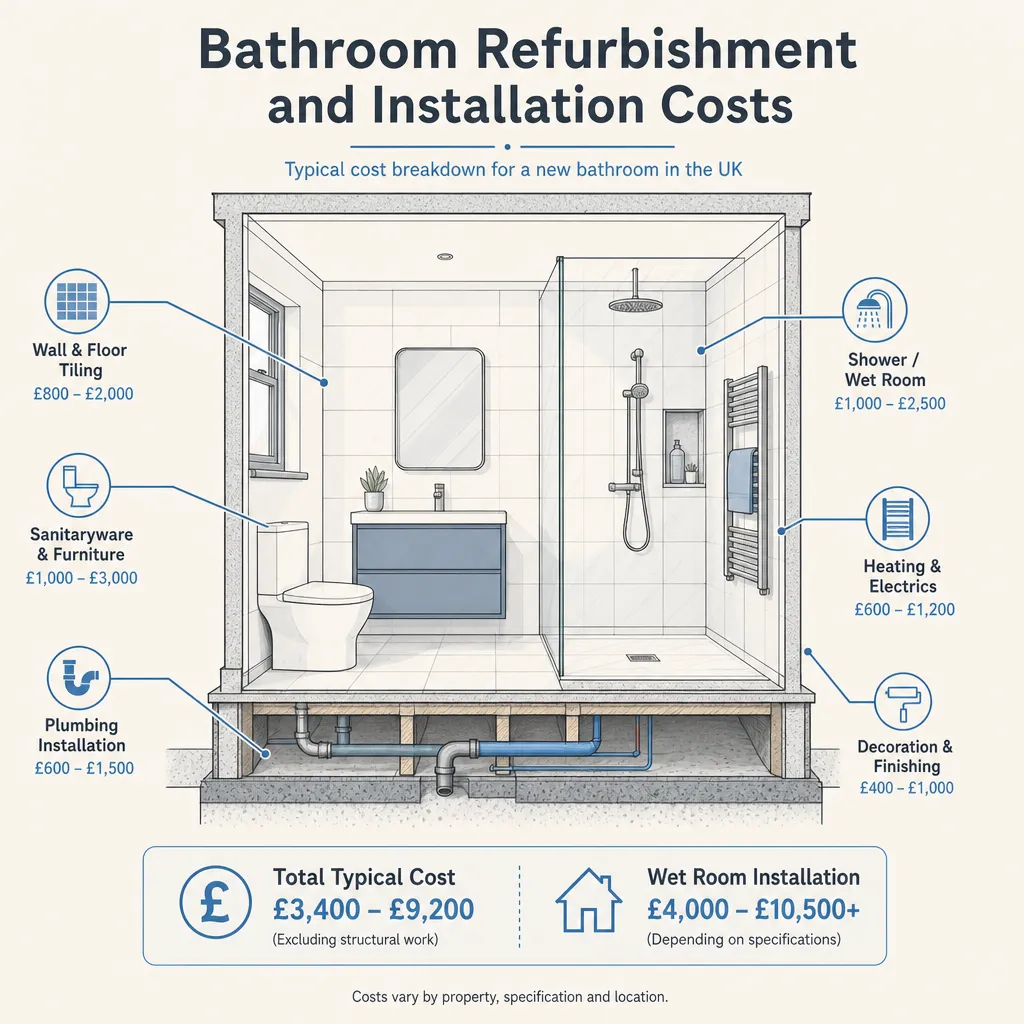
Bathroom Refurbishment and Installation Costs
A basic UK bathroom refurbishment typically costs £2,500–£5,000; a mid-range renovation with a revised layout runs £5,000–£10,000; a high-end or wet room installation can reach £12,000–£16,000 or more.
 Improvement & Build
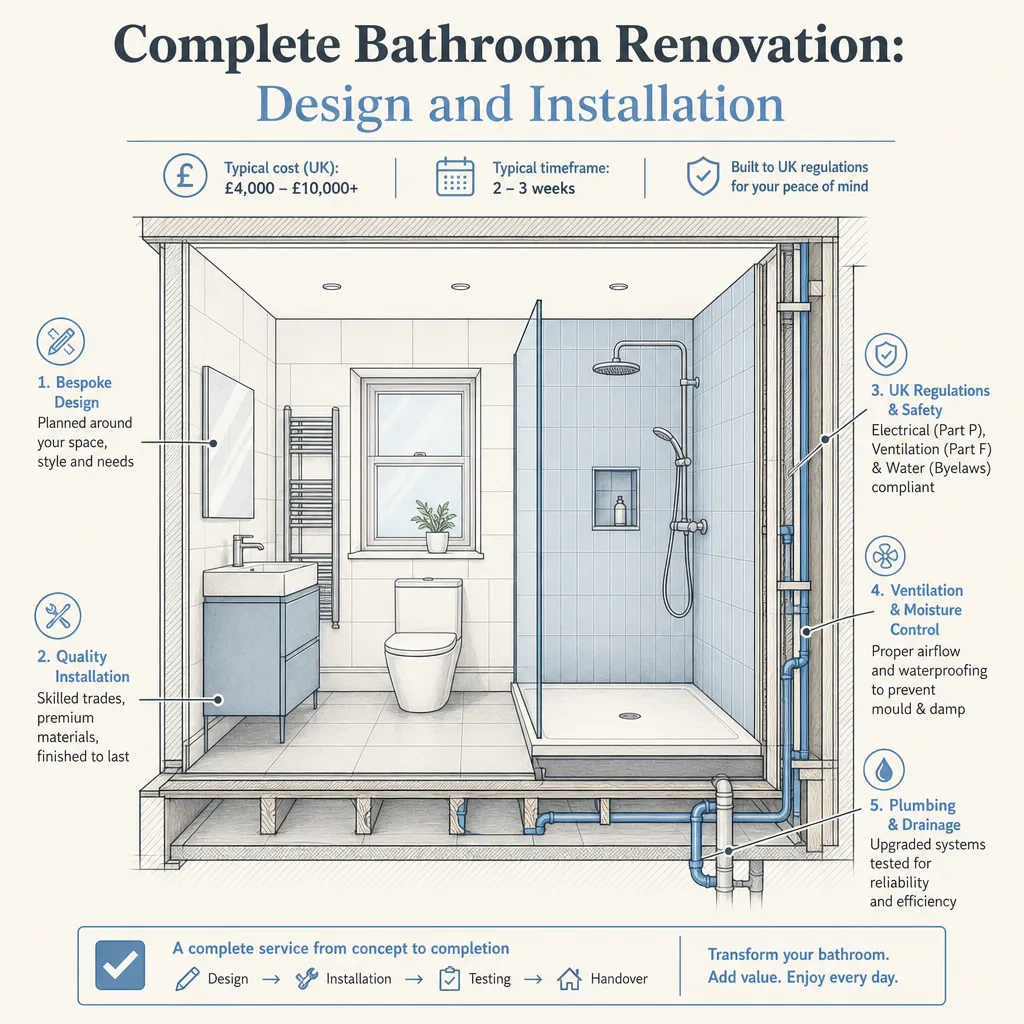
Complete Bathroom Renovation: Design and Installation
A complete bathroom renovation in the UK involves strip-out, first-fix plumbing and electrics, waterproofing, tiling, sanitaryware installation, and second-fix trades.
 Improvement & Build
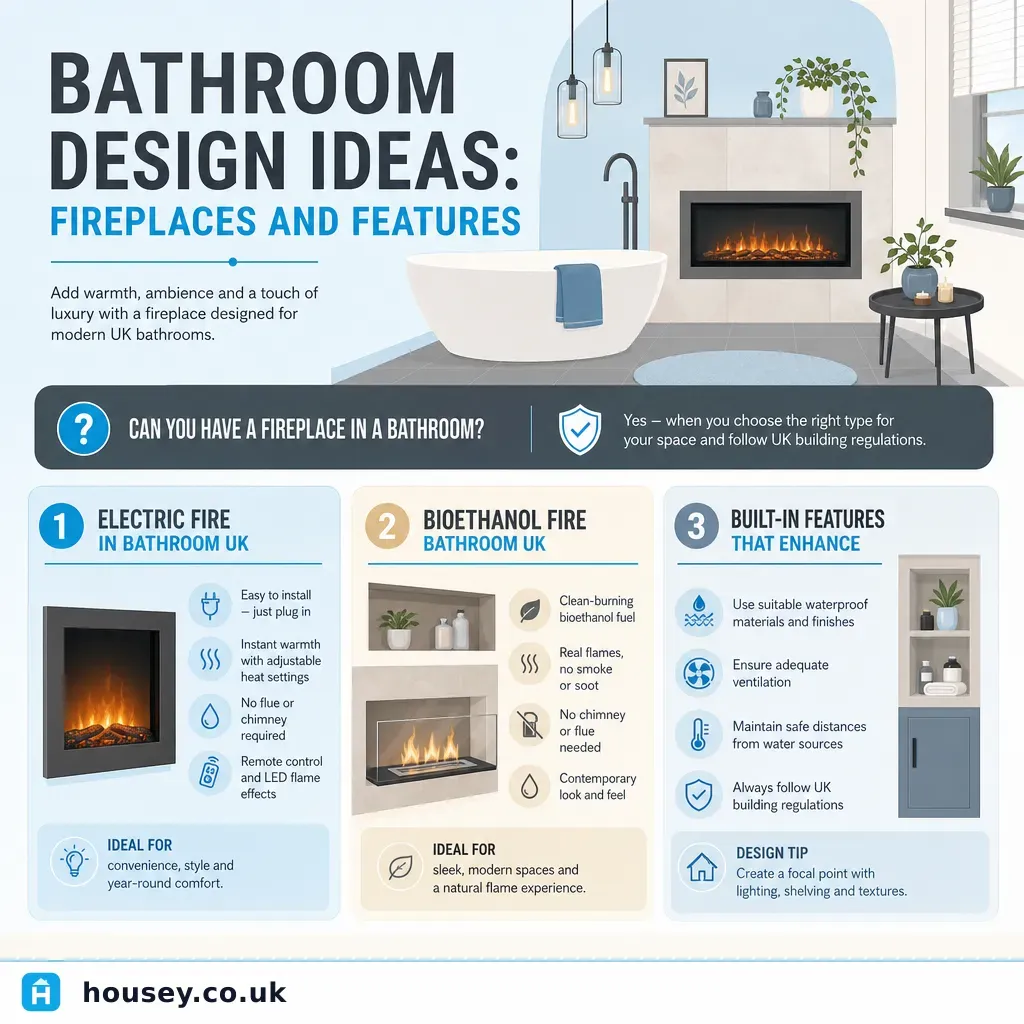
Bathroom Design Ideas: Fireplaces and Features
Gas fires in UK bathrooms are effectively prohibited under the Gas Safety (Installation and Use) Regulations 1998.
 Improvement & Build
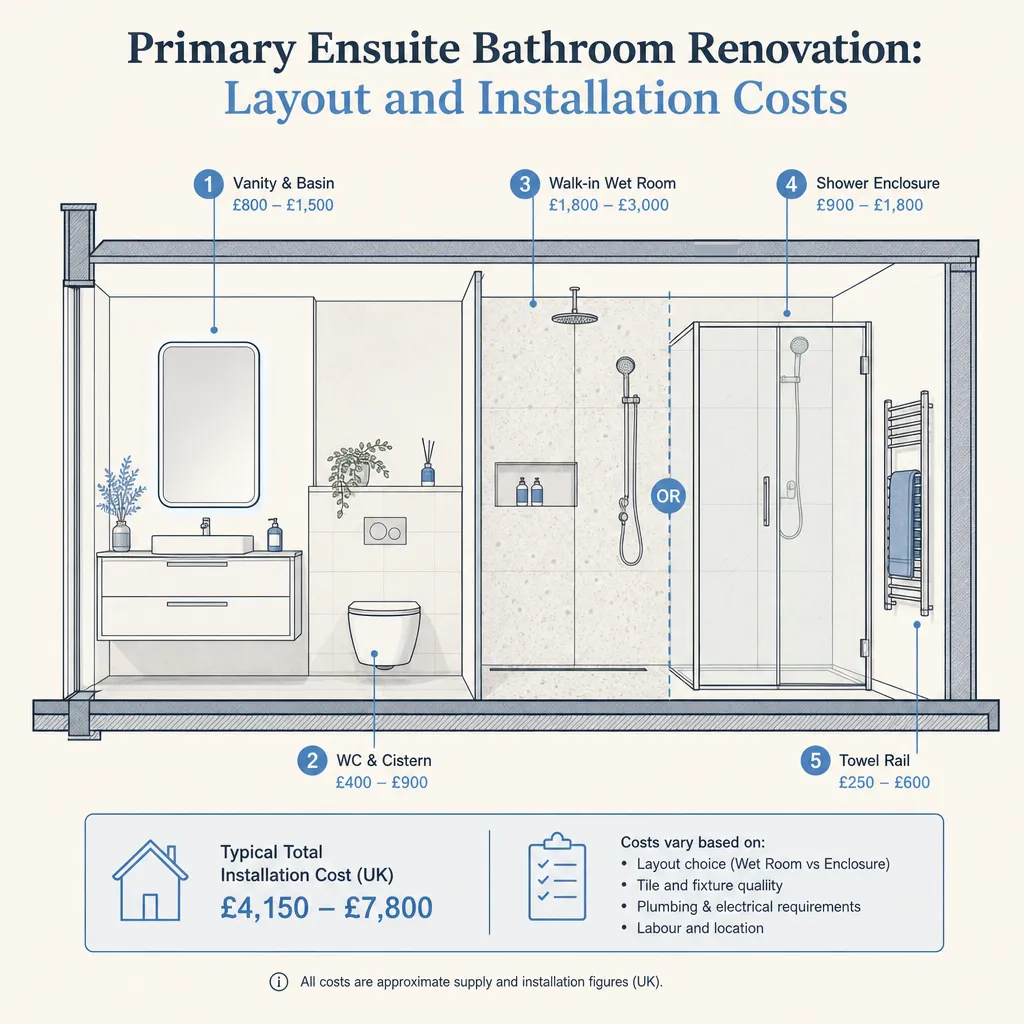
Primary Ensuite Bathroom Renovation: Layout and Installation Costs
A primary ensuite renovation in the UK typically costs between £3,000 and £12,000, depending on size, layout, and specification.
 Improvement & Build
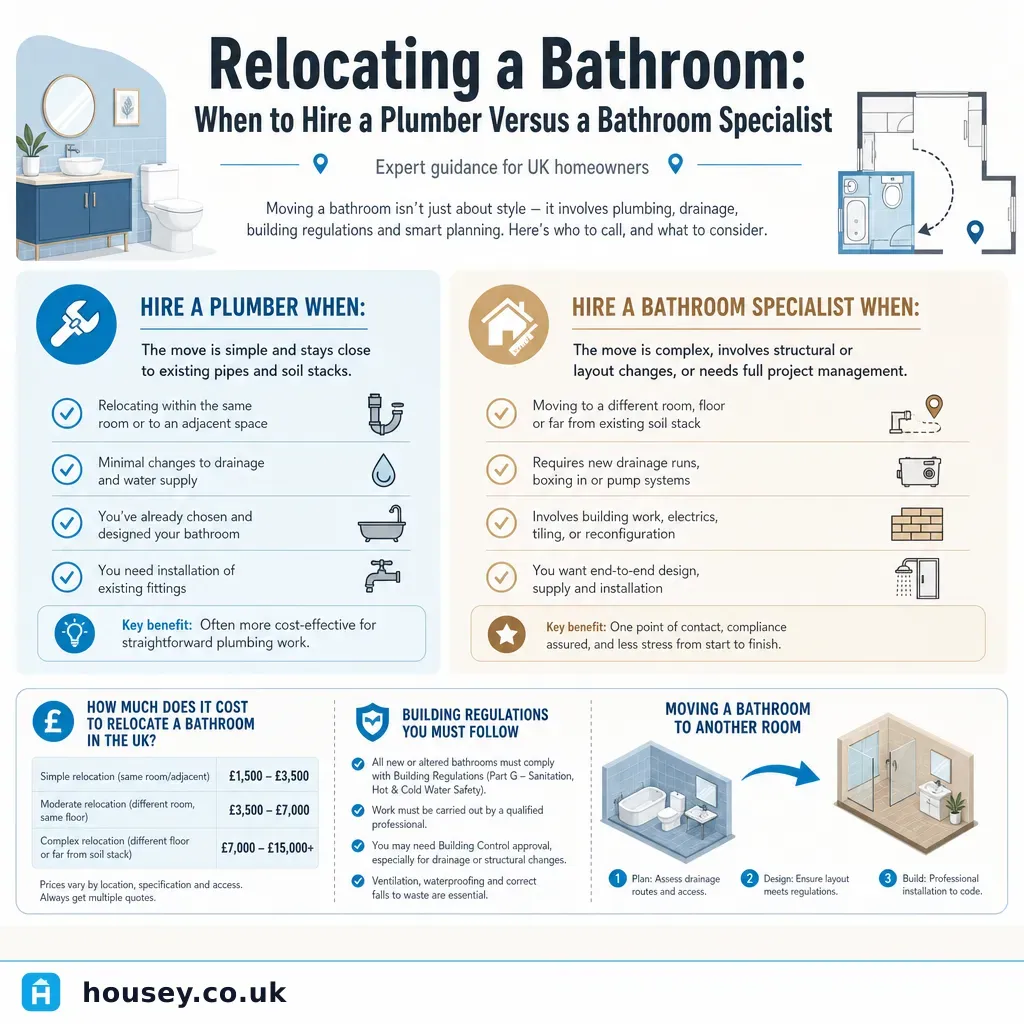
Relocating a Bathroom: When to Hire a Plumber Versus a Bathroom Specialist
Relocating a bathroom usually requires both a qualified plumber for pipework and drainage and other specialist trades for electrics, tiling, and finishes.