Bathroom Refurbishment and Installation Costs
By Housey · Last reviewed 7th of May 2026
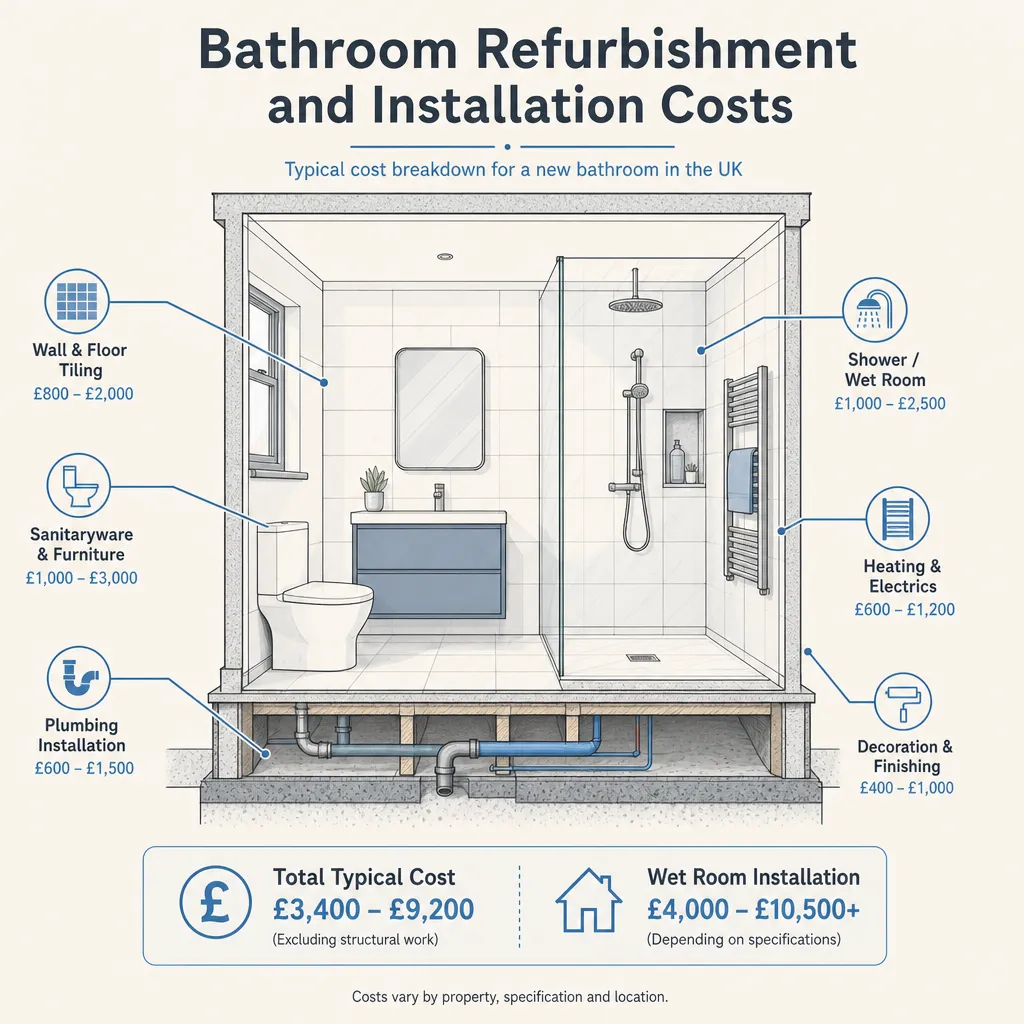
Bathroom Refurbishment and Installation Costs
Bathrooms are one of the most frequently updated rooms in UK homes, whether the trigger is ageing fixtures, a change in household needs, or preparing a property for sale. Scope can creep quickly from a simple like-for-like refit to a full-scale wet room conversion, and costs can vary by a factor of six or more depending on specification. Getting the budget right before committing to a contractor is the single most effective way to keep a bathroom project on track and avoid mid-project surprises.
Key points
- A basic like-for-like bathroom refit in the UK typically costs £2,500–£5,000; mid-range renovations with a revised layout run £5,000–£10,000; high-specification installations often exceed £12,000. (Indicative UK costs, last reviewed 2026-05-07.)
- Electrical work in a bathroom must comply with Part P of the Building Regulations; a notifiable installation requires a completion certificate from a competent-person scheme registered electrician (NICEIC, NAPIT, or equivalent).
- Drainage alterations — moving a soil stack, adding a waste connection, or converting to a wet room — may require a Building Regulations application under Approved Document H and should be scoped by a qualified drainage contractor early in the planning process.
- Wet rooms require a continuous waterproof tanking membrane beneath all tiles and a correctly graded drain; inadequate tanking is the most common cause of wet room water ingress after installation.
- Where a bathroom window is replaced as part of a refurbishment, the glazing must meet Part L energy performance requirements and be covered by a FENSA or CERTASS certificate — this is a legal requirement under the Building Regulations.
What does a bathroom refurbishment involve?
A bathroom refurbishment can range from swapping sanitaryware in existing positions to a full-strip gut with a completely revised layout. The scope determines the cost more than any other single factor.
Typical scope levels:
- Basic refit (like-for-like): New bath, basin, toilet, taps, and accessories fitted in existing positions. Retile floors and/or walls. No drainage changes. Decorator finishes.
- Mid-range renovation: New layout with repositioned sanitaryware. Underfloor heating added. Shower enclosure replacing a bath or added alongside it. Updated lighting and mechanical ventilation.
- Full refurbishment or wet room conversion: Strip to bare walls and floor. New waterproofing, drainage, and floor screed. Full tiling package. Bespoke storage. Premium fixtures, concealed cisterns, and feature lighting.
How much does a bathroom refurbishment cost in the UK?
The table below shows indicative cost ranges by scope for a standard UK bathroom of 4–6 m², including materials and labour. Costs increase for larger rooms, premium fixture choices, and drainage or structural alterations.
(Indicative UK costs, last reviewed 2026-05-07. Costs vary by region, specification, and site access.)
Scope | Typical cost range | What is usually included |
|---|---|---|
Basic like-for-like refit | £2,500–£5,000 | Sanitaryware swap, basic tiling, replumbing in existing positions |
Mid-range renovation | £5,000–£10,000 | New layout, shower enclosure, underfloor heating, updated lighting |
High-end full refurbishment | £10,000–£16,000 | Premium fixtures, bespoke joinery, full retile, feature lighting |
Wet room conversion | £6,000–£15,000+ | Tanking, level-access drain, full waterproofing, thermostatic shower system |
Regional variation: London and south-east labour rates typically add 20–30% compared to northern England and Scotland. Get at least three quotes regardless of location.
What drives the cost of a bathroom refurbishment?
Understanding cost drivers lets you compare quotes meaningfully rather than simply accepting the lowest figure without knowing what it includes or excludes.
- Fixture and fitting quality: Entry-level suites start from around £400–£700; mid-range suites £800–£1,500; designer suites £2,000–£5,000+. Thermostatic shower valves alone range from £80 to over £800.
- Tiling specification: Porcelain floor tiles range from £15 to £100+ per m². Full floor-to-ceiling tiling in a 5 m² bathroom may require 20–30 m² of tile, meaning tile selection alone can swing total cost by £2,000–£3,000.
- Drainage repositioning: Moving a toilet soil connection by even 1 metre can add £500–£1,500, particularly in older homes with cast iron or clay pipework.
- Structural changes: Removing a wall to create an en suite, or widening a doorway, requires structural assessment and potentially a Building Regulations application.
- Ventilation: Part F of the Building Regulations requires mechanical extract ventilation in bathrooms; a new fan installation typically costs £150–£400.
- Plastering and decoration: Often excluded from bathroom installer quotes. Plaster skim on walls after tiling preparation can add £400–£800.
Fixture and finish tiers: a comparison
Tier | Sanitaryware | Tiling | Taps and shower | Best suited to |
|---|---|---|---|---|
Budget | Basic white suite, standard close-coupled toilet | Ceramic, 20–40 cm format | Chrome single-lever mixer | Rental properties, quick refresh before sale |
Mid-range | Rimless toilets, concealed cisterns, 1700 mm bath | Porcelain, large format (60×60 cm+) | Thermostatic shower valve, individual tap sets | Family bathrooms, pre-sale upgrade |
High-end | Wall-hung sanitaryware, freestanding bath | Book-matched stone effect, feature wall tiles | Concealed thermostatic systems, digital valves | Primary bathrooms, design-led projects |
Wet room | Level-access screed floor, linear drain | Full floor and wall tile package, slip-rated floor finish | Rain-head with body jets, thermostatic bar valve | Accessibility needs, contemporary aesthetic |
What building regulations apply to bathroom work?
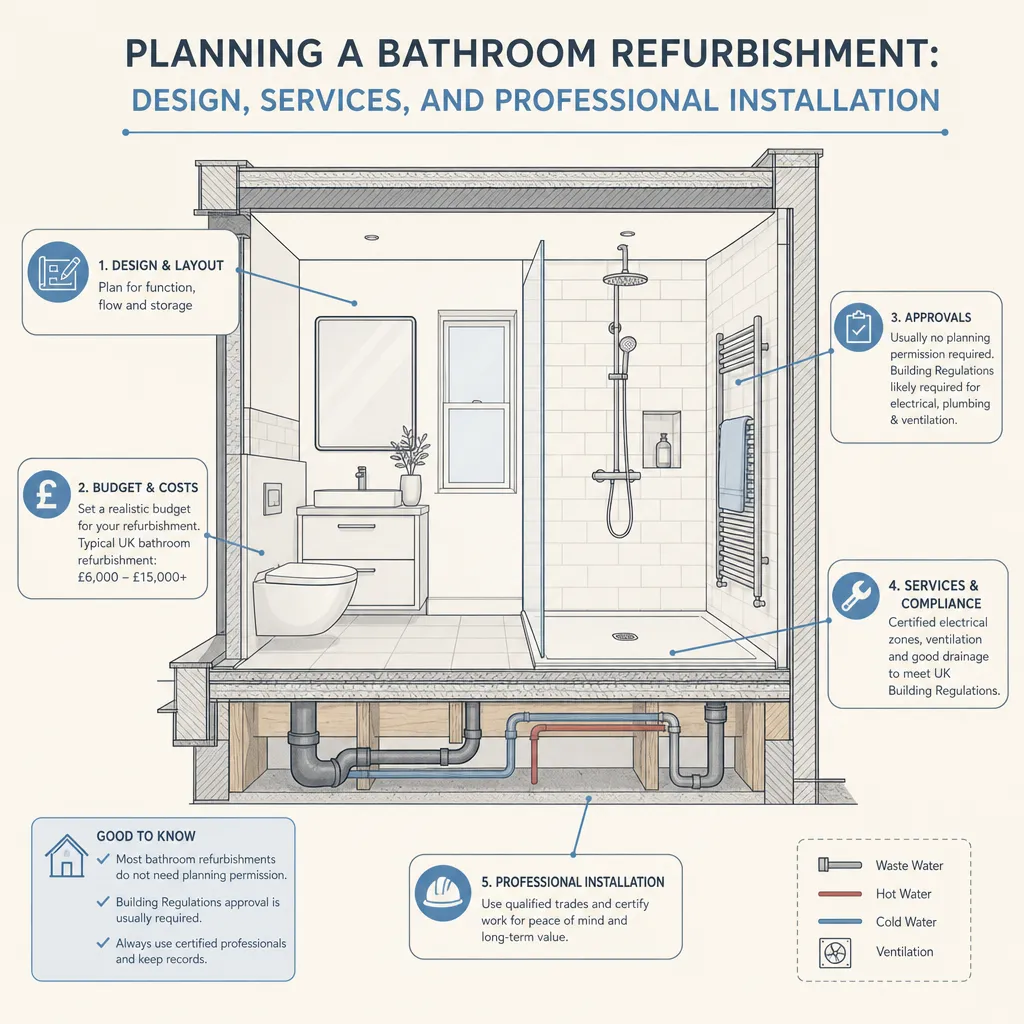
Most bathroom refurbishments do not require planning permission. However, Building Regulations apply in several specific areas:
- Part P (Electrical Safety): New or altered circuits in a bathroom are notifiable if they are within the defined bathroom zones or involve a new circuit from the consumer unit. Always use a registered competent-person scheme electrician.
- Part H (Drainage): Altering drainage, repositioning a soil stack, or creating a new waste run may require a building regulations application, or use of a competent-person scheme contractor who self-certifies their work.
- Part F (Ventilation): Mechanical extract ventilation must meet minimum flow rates as set out in Approved Document F — 15 litres/second for intermittent extract in a bathroom.
- Part L (Conservation of Fuel and Power): If a window is replaced as part of the works, it must meet current U-value requirements and be covered by a FENSA or CERTASS certificate.
If you are uncertain whether your project requires consent, contact your local building control authority or use a competent-person scheme registered contractor who can self-certify.
Checklist: what to prepare before getting bathroom quotes
Having this information ready means every contractor receives the same brief, so you can compare quotes on a genuinely like-for-like basis:
What to ask before accepting a bathroom quote
- Is the price fixed, or is it a day-rate estimate? What circumstances could increase the final cost?
- Which trades carry out the work — plumber, tiler, electrician — and are they employed or sub-contracted?
- Does the price include waste removal and protection of surrounding rooms and flooring?
- What Part P completion certificate will I receive for electrical work, and from whom?
- Will drainage alterations be self-certified through a competent-person scheme, or submitted to building control?
- What is the workmanship warranty, and how long does it run?
- What happens if waterproofing failures or leaks are identified after project completion?
- Is VAT included in the quoted price, and can it be shown separately?
When to get professional help
Bathroom refurbishments involve multiple overlapping trades. Consider bringing in a specialist contractor or design-and-build firm to coordinate the full project when:
- The project involves moving the soil stack or a full wet room conversion with screed floors
- You are converting a bedroom or creating a new en suite where no bathroom previously existed
- You suspect damp, rot, or historic leaks behind existing tiles or beneath the floor
- The existing floor structure may need reinforcing to support a heavy freestanding bath
- Significant electrical changes are needed, including a new circuit from the consumer unit
For complex drainage work — including adding a bathroom to a storey without existing drainage — consult a drainage contractor early in the planning stage, before finalising the layout or accepting a bathroom installer's quote.
How Housey can help
Housey connects you with vetted local installers and design-and-build firms who can manage your bathroom refurbishment from initial specification through to sign-off. If your project involves wet room drainage, repositioning a soil stack, or adding drainage to a new floor, you can also find experienced drainage contractors through the platform.
Frequently asked questions
Do I need planning permission for a bathroom refurbishment?
In almost all cases, no. Internal bathroom refurbishments are permitted development. Planning permission may be required if you are creating a new bathroom in a listed building, converting part of a commercial property, or making external changes in a conservation area. Check with your local planning authority if you are uncertain about your specific property.
How long does a bathroom refurbishment take?
A basic like-for-like refit typically takes 3–5 working days. A mid-range renovation with a new layout usually takes 7–10 working days. A full strip-out and wet room conversion can take 2–4 weeks depending on waterproofing, screeding, and drying times before tiling can begin.
Can I install a bathroom myself?
Some elements — painting, fitting accessories, and replacing like-for-like fixtures with push-fit connections — are suitable for a competent DIYer. However, any new electrical circuit in a bathroom must be carried out by a Part P registered electrician, and drainage alterations require a qualified plumber. Work that is not properly certified may cause problems when selling the property.
What is the difference between a wet room and a walk-in shower?
A walk-in shower uses a tray — which may be low-profile — within a defined enclosure. A wet room has no tray: the entire floor is waterproofed and graded to drain, with a flush or linear drain set into the floor screed. Wet rooms require specialist tanking and are typically more expensive to install, but offer greater accessibility and a seamless aesthetic.
Do bathroom refurbishments add value to a property?
A well-executed bathroom refurbishment can improve saleability and support a better asking price, but return on investment varies. Estate agents commonly suggest a quality bathroom may add 3–5% to perceived value, though this is anecdotal and market-dependent. Practical condition — no leaks, no visible mould, working ventilation — matters more to surveyors and mortgage lenders than specification level.
Sources and further reading
Useful next reads
 Improvement & Build
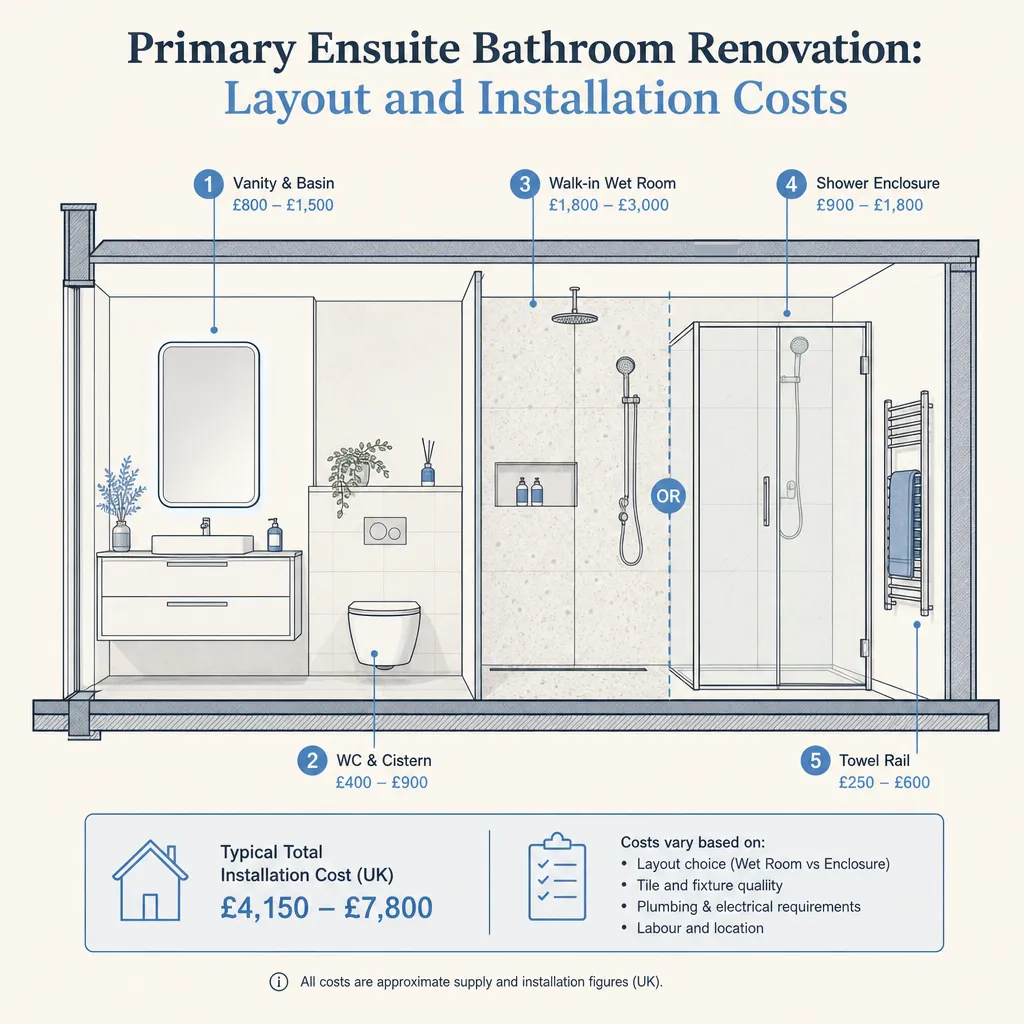
Primary Ensuite Bathroom Renovation: Layout and Installation Costs
A primary ensuite renovation in the UK typically costs between £3,000 and £12,000, depending on size, layout, and specification.
 Improvement & Build
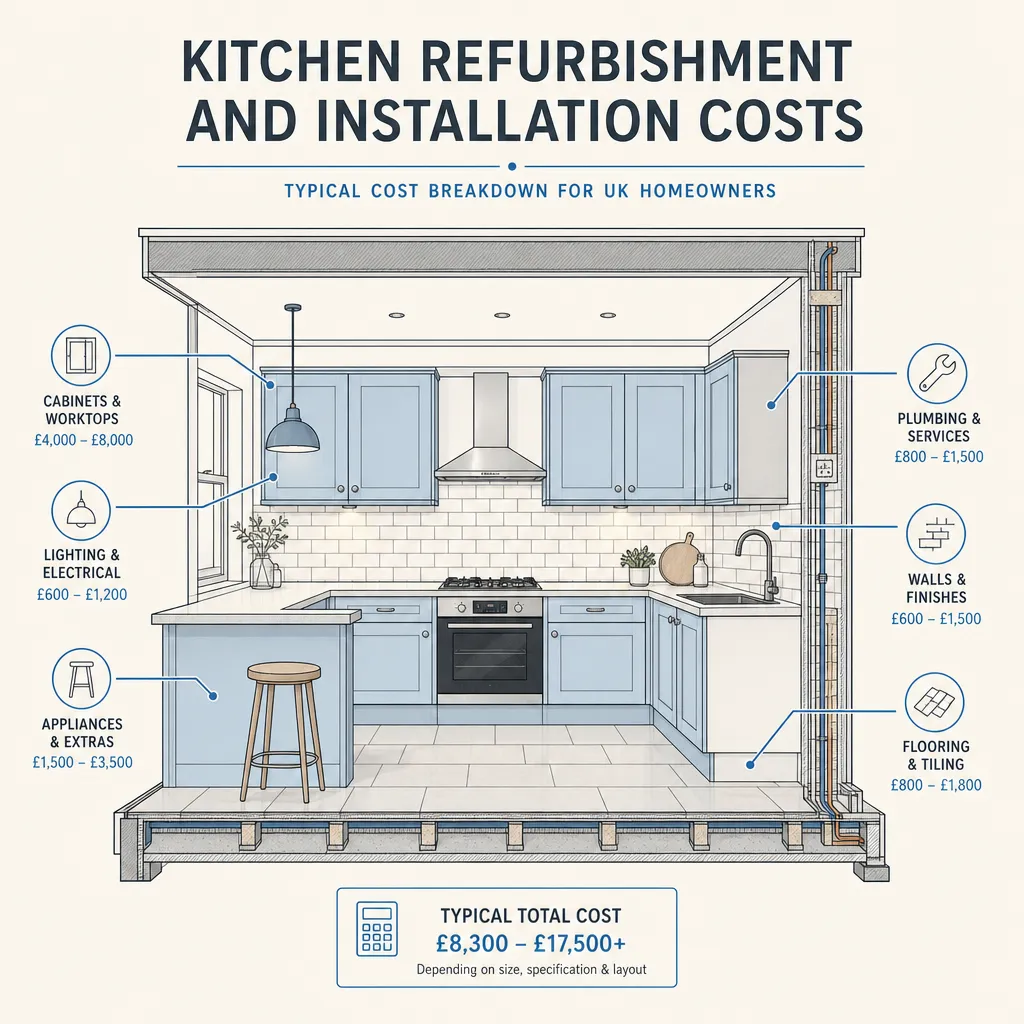
Kitchen Refurbishment and Installation Costs
A kitchen refurbishment in the UK typically costs between £3,000 and £40,000 or more, depending on whether you are replacing units only or carrying out a full design-and-build project.
 Improvement & Build
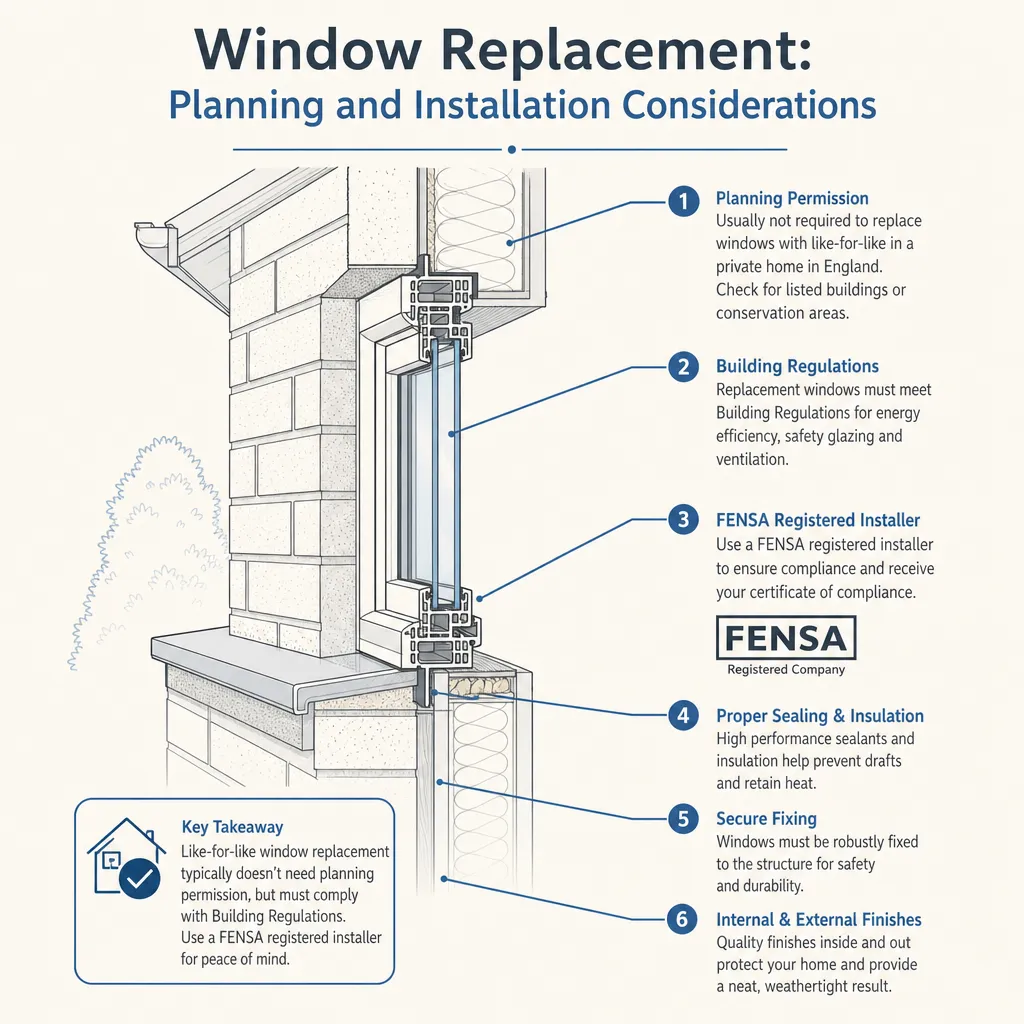
Window Replacement: Planning and Installation Considerations
Most window replacements in England fall under permitted development and do not need planning permission, though listed buildings, flats, and conservation areas are exceptions.
 Improvement & Build
Planning a Bathroom Refurbishment: Design, Services, and Professional Installation
A bathroom refurbishment in the UK typically involves at least three trades — plumber, electrician, and tiler — and costs £4,000–£12,000 for a full project.
 Improvement & Build
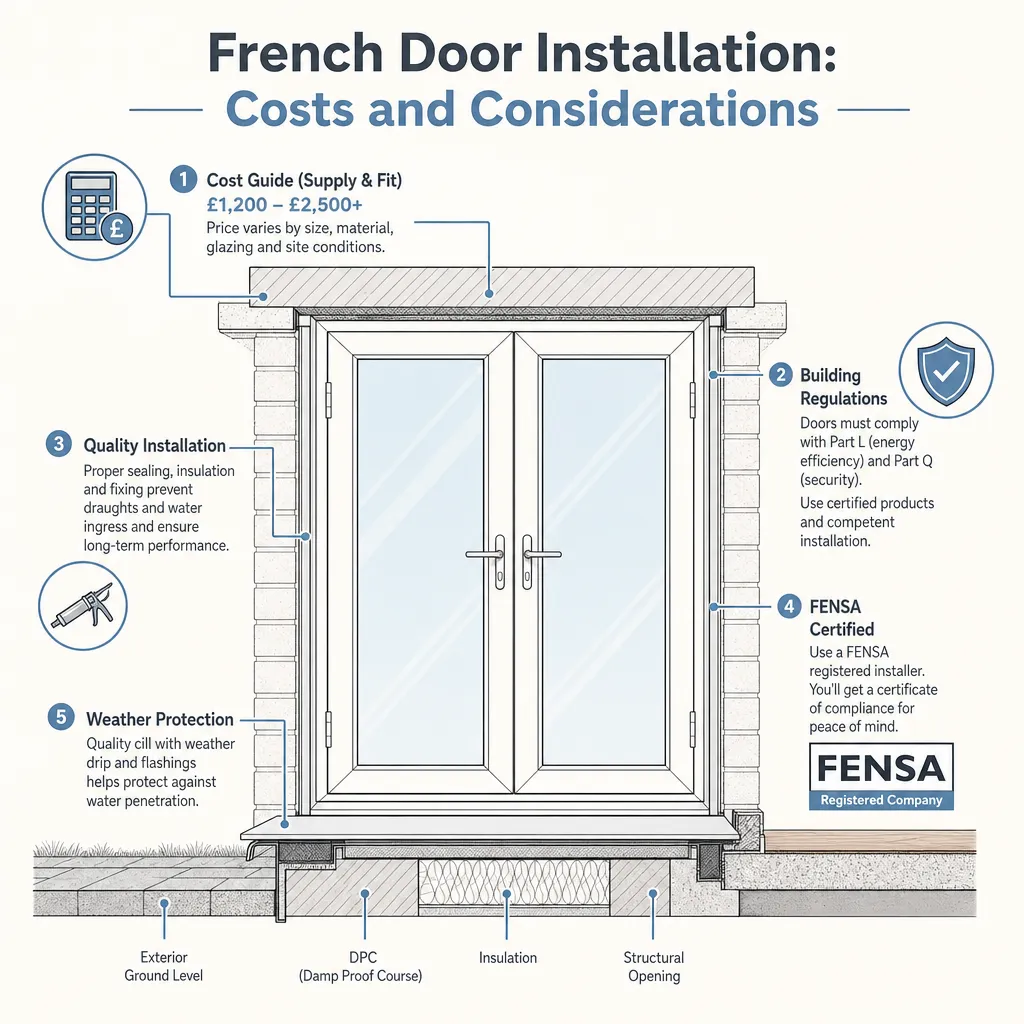
French Door Installation: Costs and Considerations
External French door installation typically costs £1,500–£4,000 in the UK, including supply and fitting, depending on material, glazing specification, and whether structural alterations are needed.