French Door Installation: Costs and Considerations
By Housey · Last reviewed 9th of May 2026
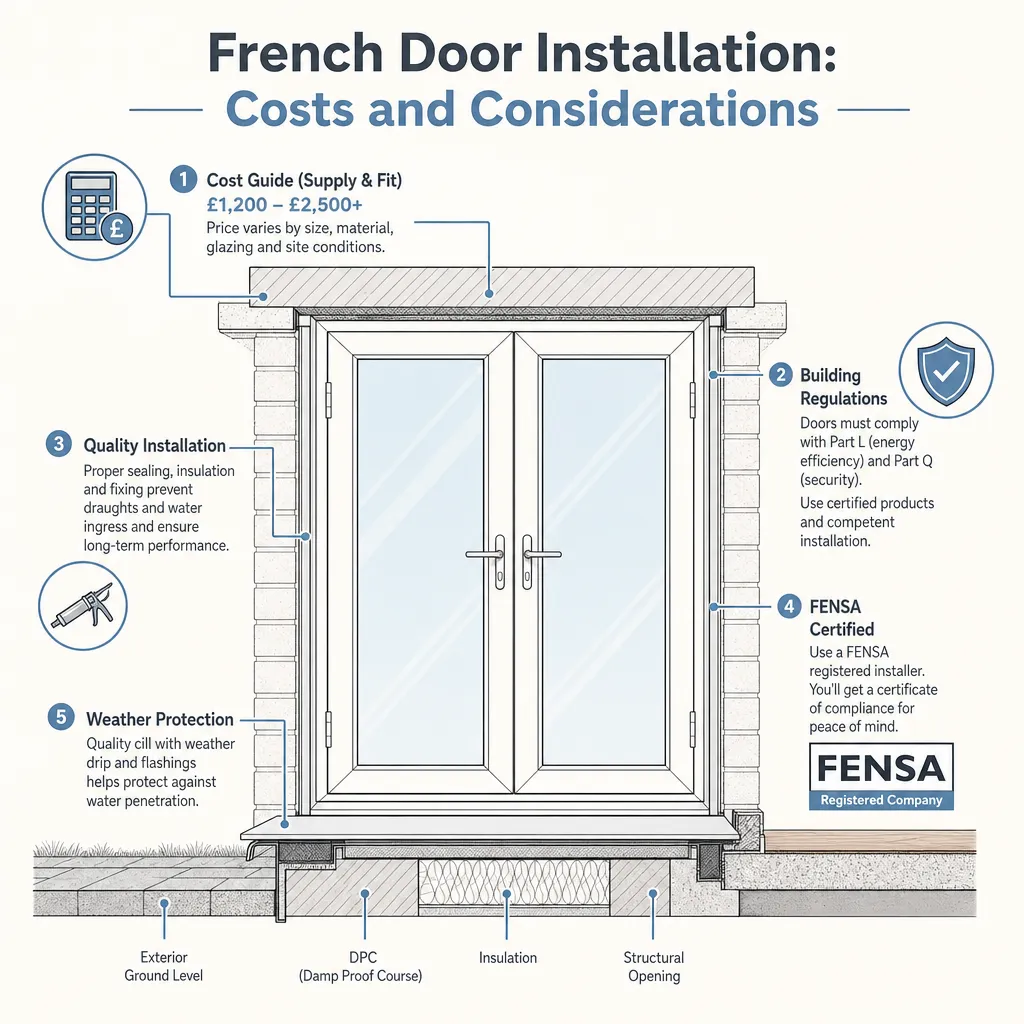
French Door Installation: Costs and Considerations
External French doors are a popular upgrade in UK homes, most commonly when a living room or kitchen is opened onto a rear garden as part of a renovation or extension project. They also arise as a straightforward replacement of ageing timber back doors or aluminium patio units that have reached the end of their serviceable life. The material you choose, the glazing specification, and whether structural alterations are required will all affect cost, compliance with building regulations, and long-term performance.
Key points
- External French door installation typically costs £1,500–£4,000 in the UK, including supply and fitting (Indicative UK costs, last reviewed 2026-05-09).
- All replacement external glazed doors must meet the thermal performance requirements of Building Regulations Approved Document L; the current minimum whole-door U-value is 1.4 W/m²K.
- A FENSA- or CERTASS-registered installer can self-certify compliance and issue you a completion certificate — required by conveyancers when you sell the property.
- uPVC is the most affordable option; aluminium offers slimmer sightlines; timber suits period properties but requires more maintenance; composite balances aesthetics with lower upkeep.
- Planning permission is generally not required for like-for-like door replacement, but listed buildings require listed building consent and conservation areas may restrict material and colour choices.
What are French doors and when do UK homeowners fit them?
French doors are a pair of glazed doors that open outward (or inward) from a central meeting point, typically used as an external opening onto a garden, terrace, or patio. In UK homes they are most commonly installed as part of a rear extension or kitchen renovation, to replace existing patio or back doors for improved natural light, or where a single back door opening is being widened to improve access to the garden.
They differ from bi-fold doors, which fold and stack to one or both sides, in that they open on conventional hinges and retain a central threshold post. French doors suit openings of approximately 1,200–1,800mm wide; wider openings are generally better served by bi-folds or sliding doors.
How much do French doors cost in the UK?
Costs depend on material, glazing specification, opening width, whether structural alterations are needed, and regional labour rates. The table below gives a broad overview.
Material | Typical supply cost (pair) | Typical installed cost (pair) | Best for |
|---|---|---|---|
uPVC | £600–£1,200 | £1,200–£2,200 | Budget, low maintenance, modern and post-war homes |
Aluminium | £1,200–£2,500 | £2,000–£3,800 | Contemporary design, slim sightlines, maximum glazing area |
Composite (aluminium + timber core) | £1,500–£3,000 | £2,500–£4,500 | Performance combined with warmer aesthetics |
Timber | £1,200–£3,500 | £2,000–£5,000+ | Victorian, Edwardian, and period-styled properties |
Indicative UK costs, last reviewed 2026-05-09. Prices vary by glazing specification, hardware choices, and regional labour rates.
Additional costs to budget for separately:
- Structural lintel work if widening the opening: £500–£2,000+ depending on wall construction
- Plastering and making good around the new frame: £150–£400
- Removal and disposal of existing doors: usually included in installer quotes, but confirm upfront
Building regulations and FENSA: what applies to French door installation?
Any replacement external door with glazing in England or Wales must comply with Part L of the Building Regulations, which sets minimum thermal performance standards. As of 2022, the minimum whole-door U-value for replacement door units is 1.4 W/m²K. This applies to the entire door assembly including the frame, not just the glass pane.
How compliance is certified:
- If you use a FENSA- or CERTASS-registered installer, they self-certify compliance with building regulations and issue a completion certificate directly to you. This certificate is important at the point of sale — conveyancers routinely ask for it, and its absence can delay a transaction.
- If your installer is not registered with either scheme, they must notify your local authority building control before work begins and obtain sign-off separately. This adds cost and time.
Always ask which scheme your installer is registered with before work starts. You can verify FENSA registration directly on the FENSA website.
Listed buildings and conservation areas: Planning permission is generally not required for replacing external doors in England under permitted development rights. However, listed buildings require listed building consent for any material alteration, and conservation areas may restrict door style, material, finish, and colour. Check with your local planning authority before ordering.
Decision tree: which French door material should you choose?
- Choose uPVC if budget is the primary driver and the property is a post-war or modern home where timber or metal aesthetics are not essential.
- Choose aluminium if you want contemporary slim sightlines and maximum glazing area, and are willing to pay a premium for a sharper finish.
- Choose timber if the property is Victorian, Edwardian, or period-styled and you want to match existing joinery — bearing in mind the higher maintenance commitment of regular repainting or oiling.
- Choose composite if you want the external warmth of a timber-look finish with lower maintenance requirements and strong thermal performance.
- Consult your local planning authority or a conservation officer before selecting any material if the property is listed or within a conservation area.
- Ask a structural engineer or experienced installer to assess the opening before ordering if the aperture is being widened or there is any doubt about lintel condition.
What to ask before accepting a quote
A reliable French door installer should answer all of the following clearly before you commit:
French doors vs bi-fold doors: a quick comparison
| French doors | Bi-fold doors |
|---|---|---|
Typical opening width | 1,200–1,800mm | 1,800–6,000mm+ |
Unobstructed opening when open | ~45–50% of total width | Up to 90% of total width |
Indicative installed cost | £1,500–£4,500 | £3,500–£12,000+ |
Security options | Strong (PAS 24 available) | Strong (PAS 24 available) |
Threshold and draught sealing | Excellent (single threshold) | Good (more panels and seals) |
Best for | Smaller rear openings, period homes | Wide openings, contemporary extensions |
Maintenance | Low to medium | Low to medium |
When to get professional help
French door installation is specialist work and should be carried out by a qualified and registered installer. Professional input is particularly important when:
- The opening is being widened or a structural alteration is needed — a structural engineer or highly experienced installer must assess lintel load and wall construction before any work begins.
- The property is listed or within a conservation area — contact your local planning authority before ordering anything, as non-compliant work may need to be reversed at your cost.
- You are unsure whether the door unit meets Approved Document L thermal requirements — ask for the manufacturer's published whole-door U-value data sheet.
- Existing frames or surrounding masonry show signs of subsidence, damp, or decay — these issues must be resolved before new doors are fitted.
How Housey can help
Housey makes it straightforward to find and compare qualified local professionals for window and door projects across the UK. You can request quotes from window and door installers through Housey, compare credentials including FENSA registration, and appoint with confidence.
Frequently asked questions
Do I need planning permission for French doors in the UK?
In most cases, replacing external doors with French doors is permitted development in England and does not require planning permission. However, if the property is listed, within a conservation area, or if the work materially alters the external appearance beyond a like-for-like replacement, permission or listed building consent may be required. Check with your local planning authority if you are in any doubt before ordering.
How long does French door installation take?
A standard replacement French door installation — removing existing doors, fitting the new frame and glazing, and making good — typically takes one to two days. If structural work such as widening the opening and installing a new lintel is required, allow two to four days plus a curing period for any new masonry before the door frame can be correctly fitted and sealed.
What is FENSA and why does it matter when installing French doors?
FENSA is a government-authorised scheme allowing registered window and door installers to self-certify that their work complies with building regulations. When you use a FENSA-registered installer, you receive a completion certificate at the end of the job. This is important when you sell your home — your conveyancer will ask for it, and its absence can delay or complicate a property sale.
Are French doors energy efficient?
Modern French door units can achieve whole-door U-values of 1.4 W/m²K or below, meeting the current minimum under Approved Document L. Some premium triple-glazed units achieve 0.8–1.0 W/m²K. Always request the published whole-door U-value rather than the centre-pane figure, as the whole-door value is the legally relevant measurement for building regulations compliance.
Can French doors be installed in a solid wall with no existing opening?
Yes, but this is considerably more complex and expensive than a like-for-like replacement. Creating a new opening in a load-bearing wall requires a structural engineer to specify a suitable lintel, and building regulations approval from your local authority building control is required before work begins. Only experienced contractors with the relevant qualifications and insurance should undertake this type of structural alteration.
Sources and further reading
- Approved Document L: Conservation of Fuel and Power — Ministry of Housing, Communities & Local Government
- FENSA: Glazing Compliance and Certification — FENSA
- Planning Portal: Doors and Windows — Planning Portal
- Citizens Advice: Home Improvements and Building Regulations — Citizens Advice
Useful next reads
 Improvement & Build
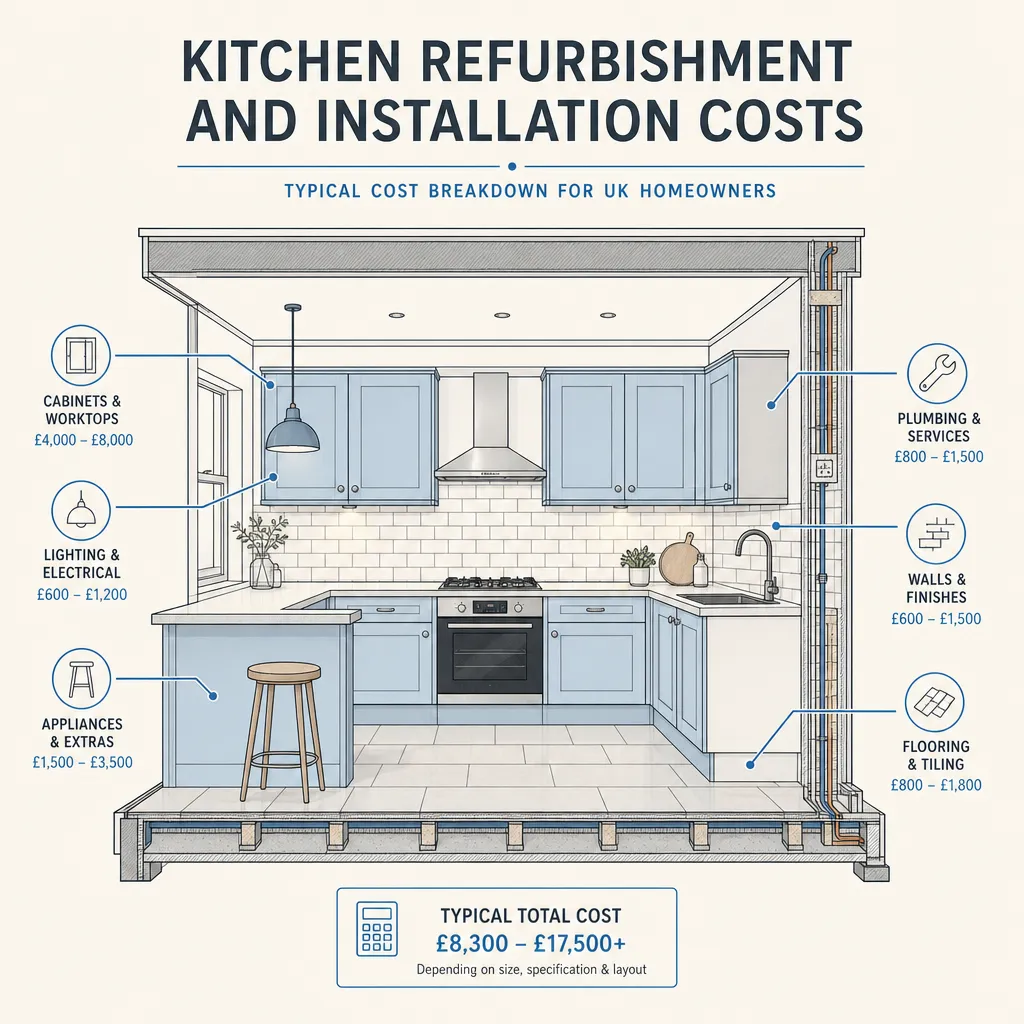
Kitchen Refurbishment and Installation Costs
A kitchen refurbishment in the UK typically costs between £3,000 and £40,000 or more, depending on whether you are replacing units only or carrying out a full design-and-build project.
 Improvement & Build
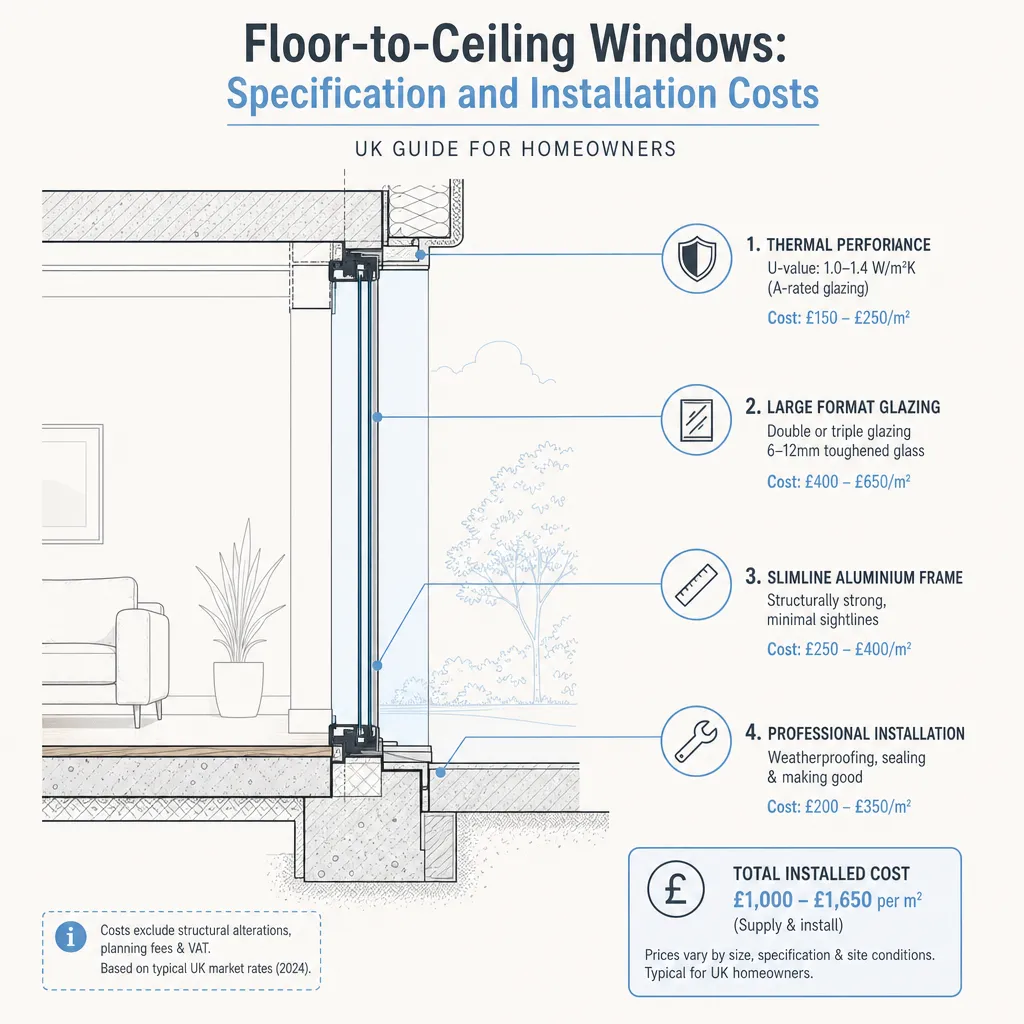
Floor-to-Ceiling Windows: Specification and Installation Costs
Floor-to-ceiling windows in the UK typically cost £1,800–£6,500 per unit installed, depending on glazing type, frame material, and whether structural alterations are needed.
 Improvement & Build
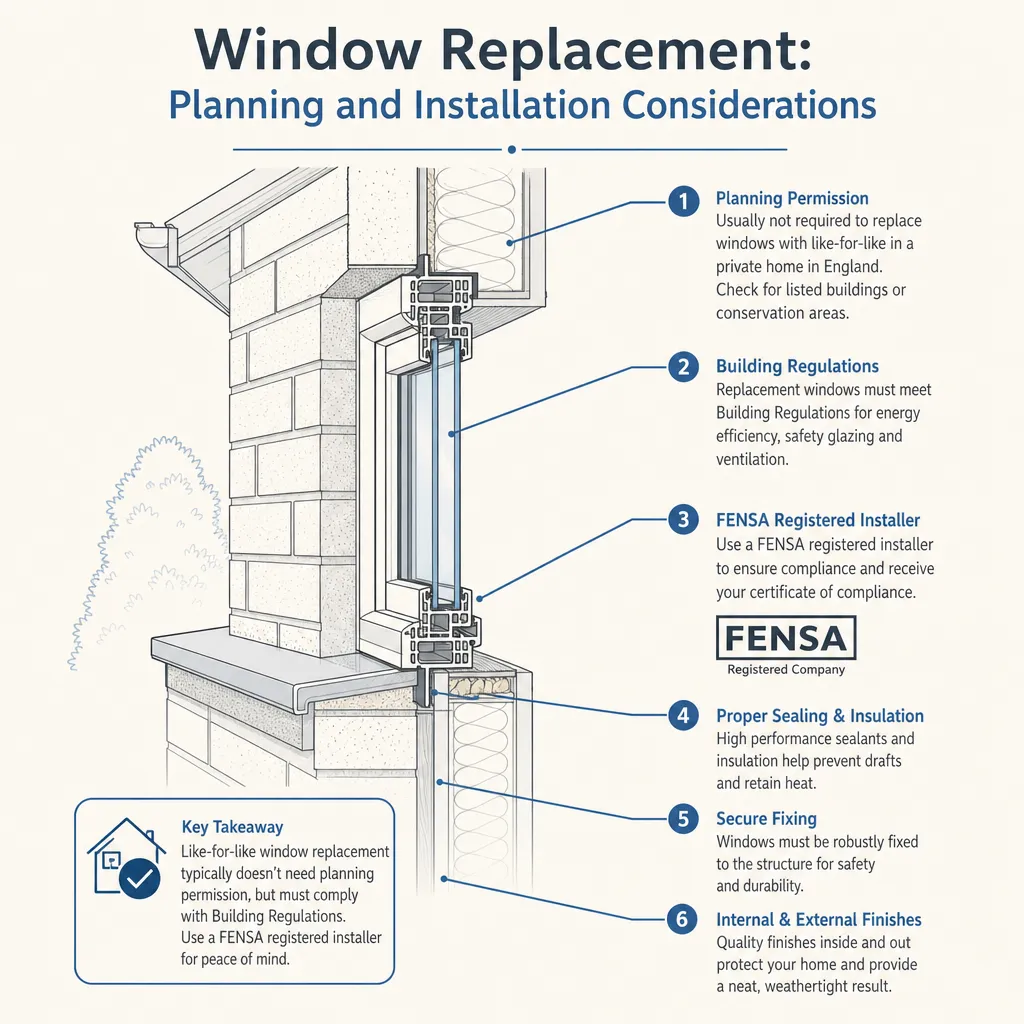
Window Replacement: Planning and Installation Considerations
Most window replacements in England fall under permitted development and do not need planning permission, though listed buildings, flats, and conservation areas are exceptions.
 Improvement & Build
Composite French Doors: A Complete Buyer's Guide
Composite French doors combine a GRP or timber-effect outer skin with a solid insulated core, offering durability and low maintenance suited to UK weather.
 Improvement & Build
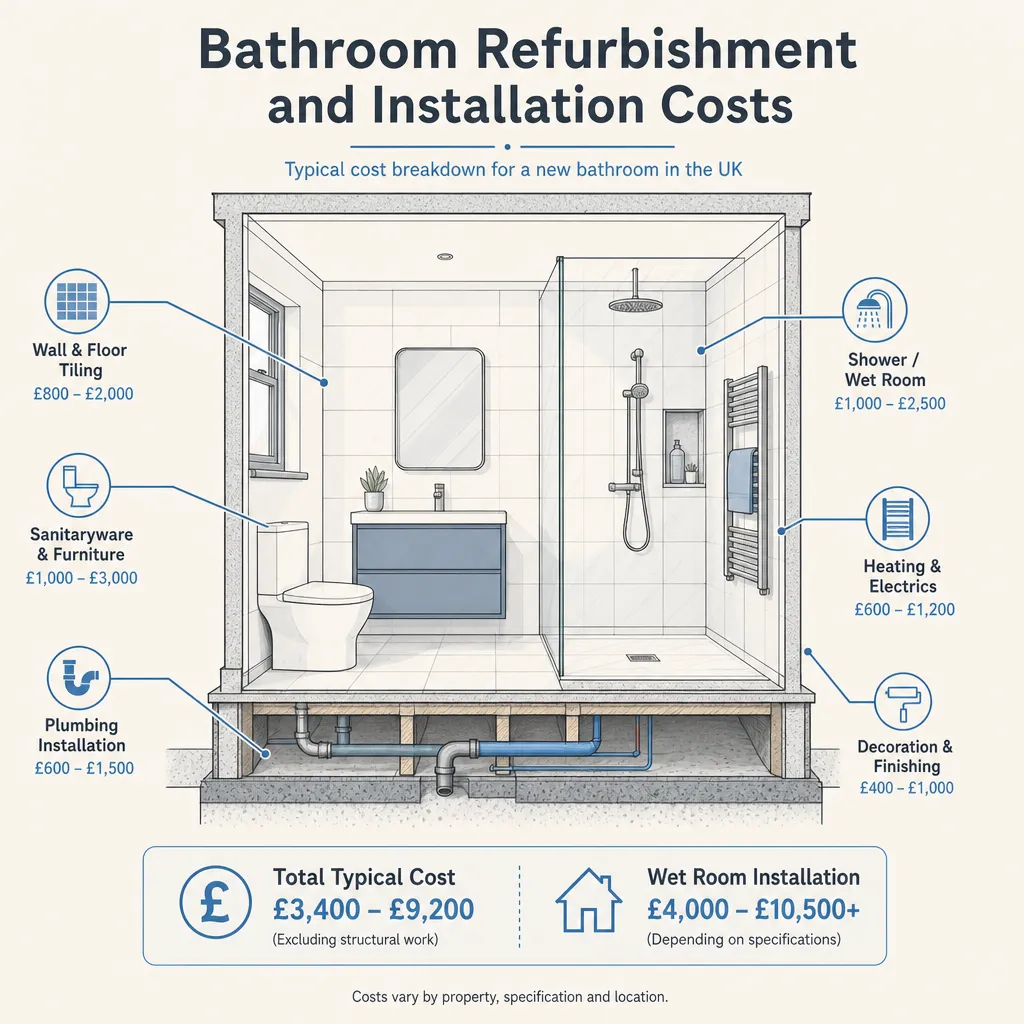
Bathroom Refurbishment and Installation Costs
A basic UK bathroom refurbishment typically costs £2,500–£5,000; a mid-range renovation with a revised layout runs £5,000–£10,000; a high-end or wet room installation can reach £12,000–£16,000 or more.