Bay Window Foundations: Structural Design and Support Requirements
By Housey · Last reviewed 11th of May 2026

Bay Window Foundations: Structural Design and Support Requirements
Bay windows are a defining feature of Victorian, Edwardian, and interwar British housing stock, but their foundations are also among the most common sources of structural movement in UK homes. Whether you are planning a replacement bay, restoring a failing one, or purchasing a property with a bay window, understanding how the structural support works — and when it fails — is essential before any work begins.
Key points
- Bay window foundations typically need to reach a bearing stratum independent of the main wall; on shrinkable London Clay, this can mean depths of 1 m or more, compared with 450–600 mm on stable ground.
- Building Regulations Approved Document A (Structure) applies to new or replacement bay windows that alter structural loadings; a Full Plans or Building Notice application is usually required.
- Diagonal stair-step cracking from bay corners into adjacent brickwork is a common indicator of differential settlement between the bay foundation and the main structure.
- Listed buildings and conservation area properties require additional consent under the Planning (Listed Buildings and Conservation Areas) Act 1990, separate from and in addition to Building Regulations.
- A structural engineer (MIStructE or CEng accredited) must specify foundation type and produce drawings for Building Regulations submission for any new or structurally compromised bay.
What are bay window foundations and why do they fail?
A bay window projects beyond the main building line and must transfer its weight — masonry, roof structure, glazing, and any upper floor bay above — down to the ground independently of the main wall. In older UK properties, this is typically achieved through brick piers set on a shallow concrete or rubble footing, sometimes with no formal foundation meeting modern standards.
Failure modes commonly identified in UK building surveys include:
- Differential settlement: the bay settles at a different rate to the main structure, causing diagonal cracking at the junction.
- Shallow foundation depth: Victorian footings are often only 300–450 mm deep, leaving them vulnerable to tree-root activity and seasonal clay shrinkage.
- Poor drainage: water ponding against a bay plinth saturates the ground and reduces bearing capacity over time.
- Thermal movement: large expanses of glazing create significant thermal cycling, which without proper movement joints can open bed-joint cracks in the masonry.
Understanding which failure mode is present is the essential starting point for any structural solution.
Foundation types used for bay windows
Foundation type | Typical use | Indicative depth | Main risk if undersized |
|---|---|---|---|
Mass concrete strip | New brick bay on firm, stable ground | 450–750 mm | Settlement and cracking |
Reinforced concrete pad | Heavy masonry or two-storey bay | Engineer-specified to bearing stratum | Differential movement |
Steel angle shelf (lintel support) | Ground-floor timber-framed bay | Fixed to main structure wall | Rotation and detachment |
Mini-piled raft | Shrinkable clay or near-tree locations | Typically 3–6 m depth | Bypasses active clay zone |
Underpinning to existing footing | Repair of settled bay | Mass concrete or resin injection | Depends on cause assessment |
Indicative information only. Specification must come from a structural engineer following site investigation.
Do I need Building Regulations approval for a bay window?
In most cases, yes — if the bay window involves structural alterations. Building Regulations apply when you:
- Remove or alter support provided by an existing structural wall or lintel.
- Install a new bay that creates new structural openings or loading paths.
- Replace a bay that has failed and requires foundation repair or strengthening.
Purely cosmetic replacement of glazing within an existing structurally sound bay frame may be exempt, but the distinction is not always obvious. Your local Building Control authority can confirm whether a Full Plans application, Building Notice, or Certificate of Regularisation is required for retrospective works. GOV.UK provides current guidance on when Building Regulations apply to window and structural work.
Separately, listed buildings and conservation area properties require additional consent under the Planning (Listed Buildings and Conservation Areas) Act 1990, regardless of whether structural work is involved.
Which professional should I instruct?
- Structural engineer (MIStructE or CEng): required to specify foundation type, calculate loads, and produce drawings for Building Regulations submission. Essential for all new bays, structurally failing bays, and any two-storey bay.
- RICS Level 3 Building Survey: appropriate when purchasing a property with a suspect bay, or for a thorough condition assessment before planning works. A surveyor will identify cracking patterns and recommend further investigations.
- Architect or Architectural Technologist (CIAT-registered): useful for design and planning drawings, but must collaborate with a structural engineer for all load-bearing elements.
- Building contractor: for build and installation, following engineer-approved drawings and a Building Regulations-compliant specification; should provide a completion certificate on sign-off.
Worked example: 1900s Edwardian semi on London Clay
A buyer in south London instructs a RICS Level 3 survey on an Edwardian semi before exchange. The report flags diagonal cracking at both upper corners of the ground-floor bay and rotation of the bay roof lead flashing away from the main wall. The surveyor notes the likely presence of London Clay — a highly shrinkable soil that moves seasonally.
Recommended steps taken:
- A structural engineer is instructed before exchange to assess crack width, pattern, and age.
- The engineer confirms shallow brick footings at approximately 380 mm and recommends mini-piled foundations to 4 m depth, bypassing the active clay zone.
- A Building Regulations application is submitted under Full Plans; building control approves the structural engineer's drawings.
- Work is carried out under the approved drawings; a completion certificate is issued.
- The buyer retains the engineer's drawings and completion certificate — essential documents for future sale conveyancing.
This scenario illustrates why a pre-purchase structural assessment typically costs less than discovering failing foundations after completion.
Decision tree: do I need a structural engineer?
- Adding a new bay window → Yes. A structural engineer is required for foundation design and Building Regulations sign-off.
- Replacing an existing bay like-for-like on apparently sound foundations → Confirm with your local Building Control authority. If there is any uncertainty, instruct a structural engineer.
- Visible cracking, leaning, or separation from the main wall → Yes. Do not proceed with any remedial work until a structural engineer has diagnosed the cause.
- Property on shrinkable clay or within 5 m of established trees → Yes. A soil assessment and possibly an arboricultural report are also advisable.
- Listed building or conservation area property → Yes, plus planning consent; consult your local authority conservation officer before any work begins.
Important limitations
This article provides general information about bay window foundation principles and UK regulatory frameworks. Foundation design is site-specific and depends on soil conditions, loading, existing construction, and local ground conditions — factors that vary significantly between properties. Nothing in this article constitutes structural advice for any specific building. A qualified structural engineer must assess your property before foundation or structural work is designed or carried out.
What to ask a qualified professional
- What ground investigation do you recommend before designing a solution (trial pits, soil samples, crack monitoring)?
- Will the foundation design be submitted under Full Plans or Building Notice, and what documentation will I receive at completion?
- Who holds professional indemnity insurance for the design, and can I see evidence of cover?
- Are there tree proximity or drainage constraints that could affect long-term foundation performance?
- What happens if unexpected ground conditions are encountered during excavation?
- What is the likely programme from design to building control sign-off?
When to get professional help
Instruct a structural engineer promptly if you notice:
- Diagonal stair-step cracking from bay corners into the main brickwork.
- The bay visibly leaning or rotating away from the house.
- Gaps opening at the junction between the bay roof and the main wall.
- Sticking doors or windows in rooms adjacent to the bay.
- Cracking that has reappeared after previous cosmetic repairs.
Do not fill or mask structural cracks without identifying the cause — this risks concealing active movement and can complicate future surveys and sale.
How Housey can help
If you are planning a bay window project or have concerns about an existing bay, Housey connects you with accredited professionals in your area. Compare quotes from structural engineering specialists for foundation design and Building Regulations sign-off, or request a structural survey to understand the condition of an existing bay before committing to purchase or works.
Frequently asked questions
How deep should bay window foundations be?
Building Regulations Approved Document A does not prescribe a single depth; the minimum depends on soil type, loading, and proximity to trees. On stable non-shrinkable ground, strip foundations are typically 450–750 mm deep. On shrinkable clay, especially where trees are within 5 m, foundations may need to extend to 1 m or more, with piled options considered for very poor ground. A structural engineer will specify the appropriate depth following site investigation.
Can a bay window be added without planning permission?
Many ground-floor bays fall within permitted development under the Town and Country Planning (General Permitted Development) (England) Order 2015, subject to volume thresholds, roof matching, and materials rules. Permitted development does not apply to listed buildings, conservation areas, or properties where PD rights have been removed by condition. Always confirm with your local planning authority before work starts.
What causes cracking around a bay window?
The most common causes are differential settlement between the bay foundation and the main structure, shallow Victorian-era footings on shrinkable clay, and thermal movement in large glazed areas without movement joints. Tree root activity, leaking gutters saturating ground near the bay, and poor original construction are also frequent contributors. A RICS Level 3 survey or structural engineer's assessment can distinguish cosmetic surface cracking from active structural movement.
Is bay window repair covered by buildings insurance?
This depends on your policy and the cause of damage. Sudden structural damage from a storm may be covered, but gradual settlement is typically excluded as a maintenance issue. Some policies cover underpinning costs; many do not. Check your policy wording and consult your insurer before carrying out any repair work, as unauthorised remediation can affect future claims.
Sources and further reading
Useful next reads
 Planning & Pre-Build
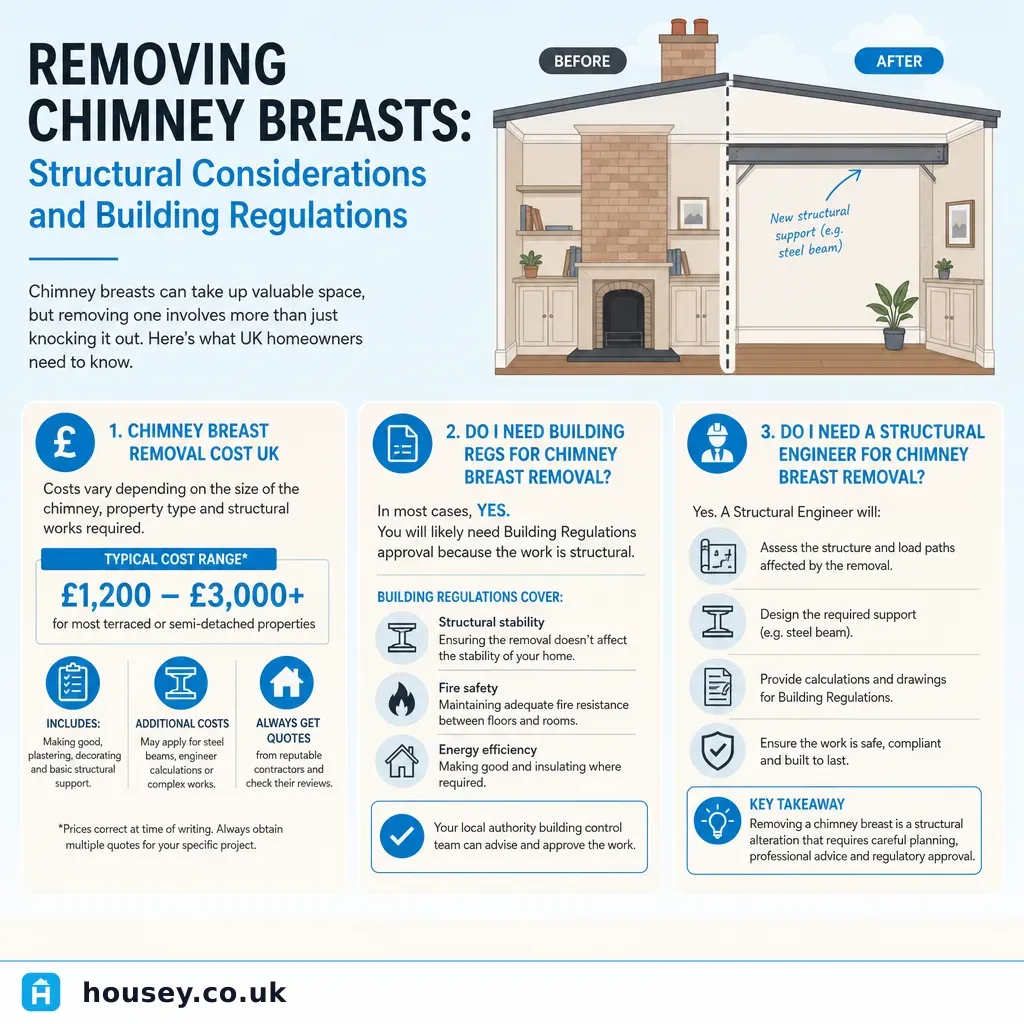
Removing Chimney Breasts: Structural Considerations and Building Regulations
Removing a chimney breast in England and Wales almost always requires building regulations approval because it is structural work.
 Planning & Pre-Build
Building Climate-Resilient Homes: Design and Energy Strategies
A climate-resilient UK home handles hotter summers, wetter winters, and rising energy costs through high-performance insulation, overheating mitigation, flood-resilient construction, low-carbon heating, and good water management.
 Planning & Pre-Build
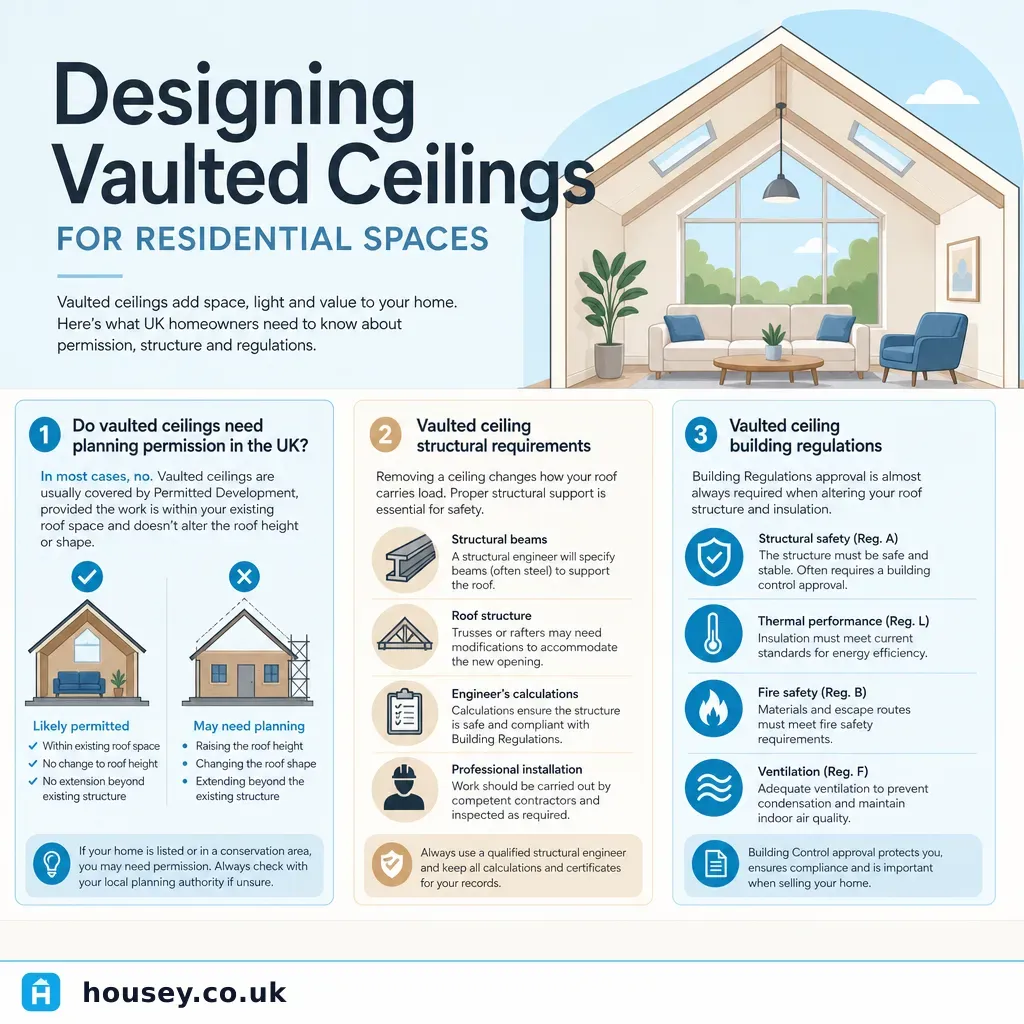
Designing vaulted ceilings for residential spaces
Creating a vaulted ceiling in an existing home involves restructuring the roof timbers that form the structural triangle, which always requires a structural engineer's calculations and Building Regulations approval under Approved Document A.
 Planning & Pre-Build
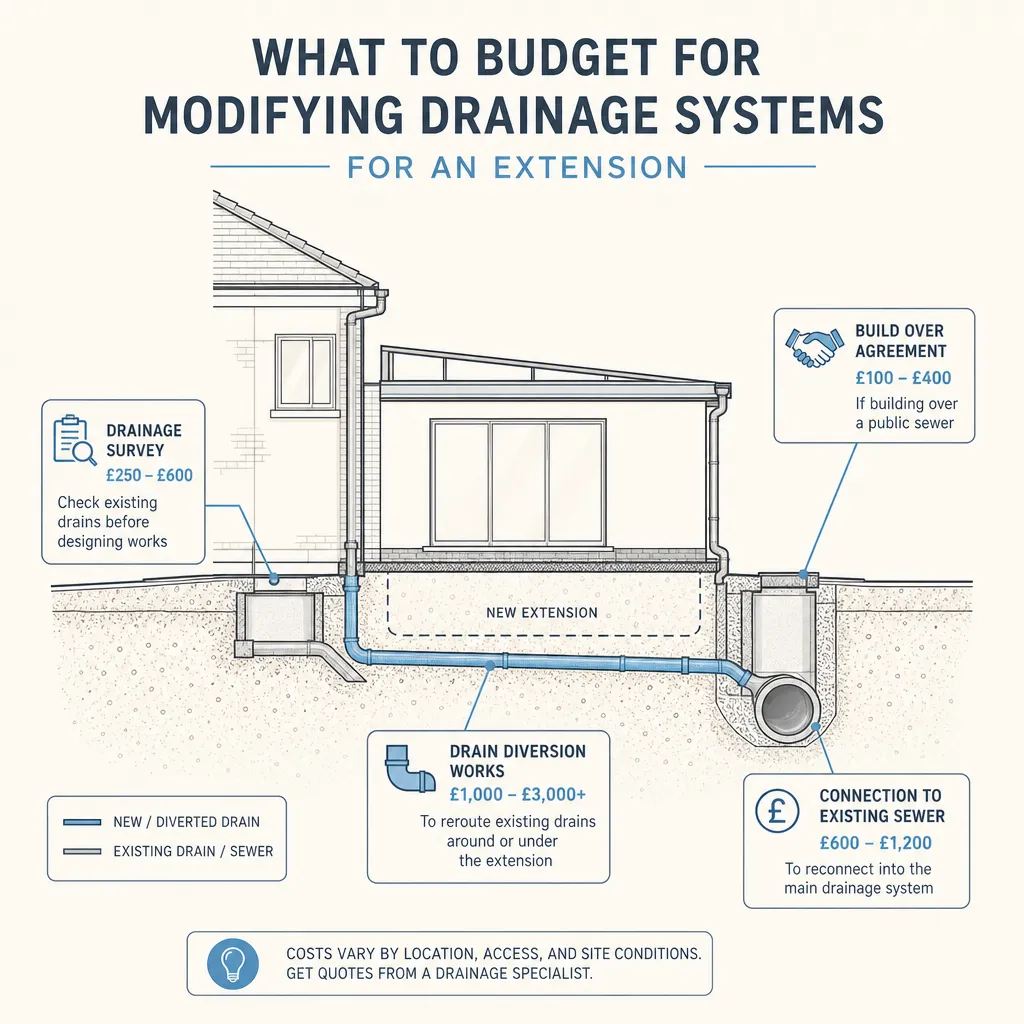
What to budget for modifying drainage systems for an extension
Modifying drainage for a house extension can cost from a few hundred pounds for a Build Over Agreement application to £40,000 or more for diverting a public sewer.
 Planning & Pre-Build
Architectural Design Services for Home Extensions and Renovations
Architectural design services for UK extensions and renovations span initial feasibility, planning drawings, building regulations packages, and site monitoring.