Removing Chimney Breasts: Structural Considerations and Building Regulations
By Housey · Last reviewed 19th of May 2026
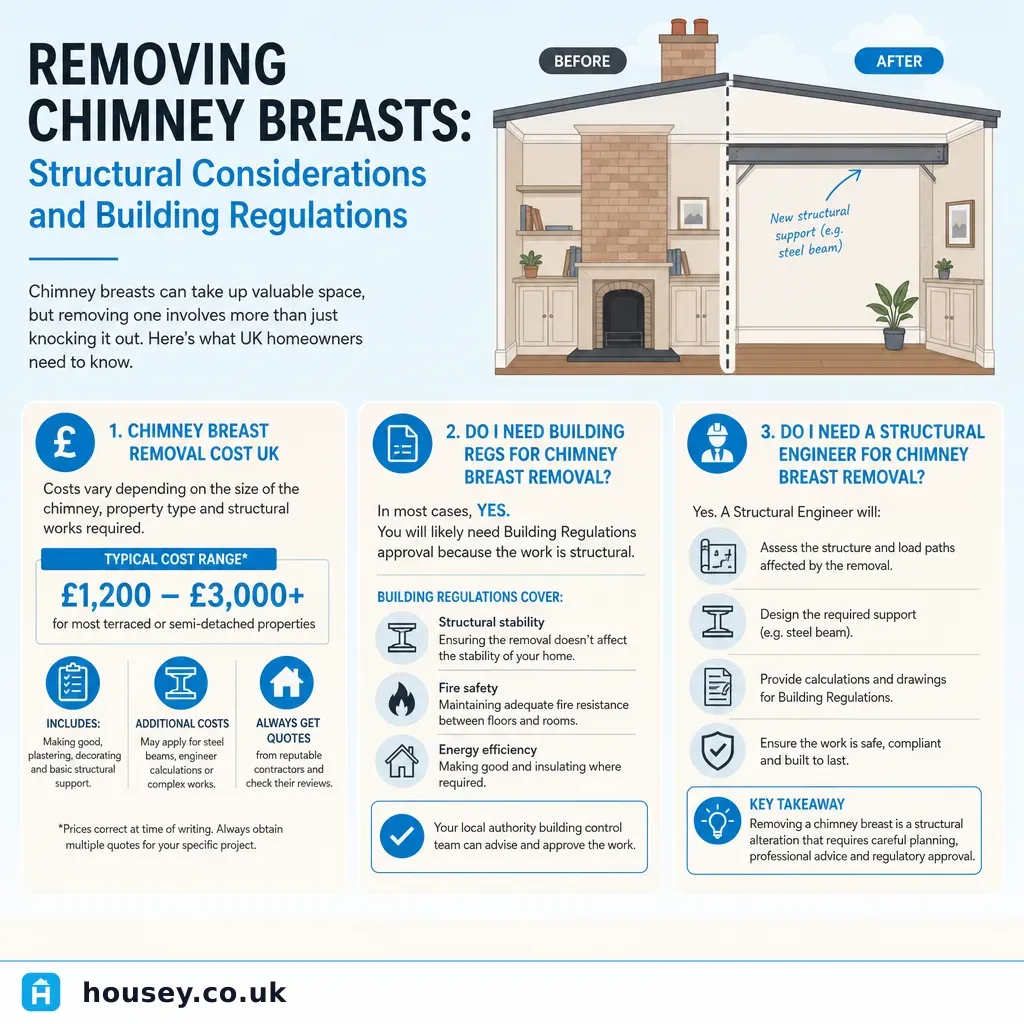
Removing Chimney Breasts: Structural Considerations and Building Regulations
Chimney breasts are a structural and visual feature of most Victorian, Edwardian, and interwar properties in the UK, projecting into living rooms and bedrooms at each floor. When a fireplace is no longer in use, a breast can feel like wasted space — and removing it is a popular project for homeowners seeking a flat wall or a larger room footprint. However, it is a structural alteration with serious consequences if not properly engineered and approved: the breast supports the weight of the chimney above it at every floor level, and removing a section without adequate steel support can cause partial collapse of the structure above.
Key points
- Chimney breast removal in England and Wales almost always requires building regulations approval under Part A (Structure) of the Building Regulations 2010; there is no permitted development route for structural alterations of this kind.
- A structural engineer must calculate and specify the steel beam — typically an RSJ (rolled steel joist) or universal beam — needed to carry the chimney load above the removed section.
- If the chimney breast sits on or against a party wall, common in terraced and semi-detached homes, the Party Wall etc. Act 1996 is likely to apply and a Party Wall Notice must be served on adjoining owners.
- Properties built before the late 1980s may contain asbestos in fireplace rope seals, insulation boards, and textured coatings; a UKAS-accredited asbestos survey should be carried out before demolition begins.
- Carrying out the work without a completion certificate from building control creates a serious obstacle at the point of sale; solicitors routinely ask for this documentation.
Does chimney breast removal need building regulations approval?
Yes, in almost all cases. A chimney breast is structural because at each floor level, the chimney stack and the breast above rest on the breast below. When a section is removed, the load path is broken and must be reinstated via a steel beam bearing onto the surrounding walls.
Building Regulations Part A (Structure) requires any structural alteration to maintain the integrity of the building. To comply, you will need to:
- Engage a structural engineer to specify the beam, padstones, and temporary propping sequence before demolition begins.
- Submit a Full Plans application or a Building Notice to your local building control body or an approved inspector.
- Have the work inspected by building control at agreed stages — typically at beam installation and at practical completion.
- Obtain a completion certificate upon satisfactory sign-off.
Permitted development rights do not cover structural alterations: there is no route to carry out this work without building control involvement. The absence of a completion certificate will be flagged by a conveyancing solicitor during any future sale or remortgage.
Structural support: the engineer's role
The structural engineer calculates the loads and specifies the support system. For a typical single-storey breast removal — ground floor only, with the upper breast and stack retained — the engineer will normally specify:
- Beam type and size: usually an RSJ or universal beam, sized for the dead load of the retained chimney above and any imposed loads from the floors.
- Padstones: reinforced concrete or engineering-brick pads at each end of the beam to distribute the point load safely into the supporting masonry.
- Temporary propping: the structure above must be propped before any structural demolition takes place; the propping sequence is critical and must be followed exactly by the contractor.
- Gallows brackets or independent support frame: where the stack and upper breast are retained above a removed lower section, the upper breast requires lateral restraint tied back to the floor structure.
The engineer will provide calculation notes and a specification drawing, which form part of the building regulations submission. Keep this documentation with the property deeds — it will be requested by solicitors and mortgage lenders if you sell or remortgage.
Which removal scenario applies to your property?
- Remove breast at ground floor only, retain stack and upper breast: the most common scenario; requires a beam at ground-floor ceiling level; gallows brackets may be needed to tie the upper breast to the floor joists above.
- Remove breast at all floors, retain stack above roofline: structurally more complex; the roof structure may need modification and a licensed asbestos survey is particularly important given the range of materials that may be encountered.
- Remove breast and stack entirely: requires scaffold; the stack is taken down from above, the flaunching and chimney pot removed, and the roof made good after the stack is gone.
- Listed building or conservation area property: listed building consent is required in addition to building regulations approval; contact your local planning authority before any work starts.
- Unsure whether the wall is structural or a party wall: instruct a structural engineer to assess before demolition begins, not after.
Party wall obligations
In terraced and semi-detached Victorian, Edwardian, and interwar houses, chimney breasts typically sit on or directly against a party wall. Any work involving cutting into, building on, or altering a party wall triggers the Party Wall etc. Act 1996.
You must serve a Party Wall Notice on all adjoining owners at least two months before work begins. The adjoining owner may:
- Consent in writing, allowing the work to proceed on the agreed terms.
- Dissent, triggering the appointment of a Party Wall surveyor to prepare a Party Wall Award.
- Fail to respond within 14 days, which is treated as dissent.
Failing to serve notice does not prevent the work but removes legal protections and can expose you to liability if damage occurs to the neighbouring property. A Party Wall surveyor typically charges £700–£1,500 per party depending on complexity (Indicative UK costs, last reviewed 2026-05-19).
Asbestos and hidden hazards
In properties built before the late 1980s, chimney breasts frequently contain materials that may include asbestos:
- Rope seals and gaskets around fireplace openings and damper plates.
- Insulating board panels behind cast-iron back plates.
- Textured coatings such as Artex on chimney breast surfaces.
- Loose-fill or vermiculite insulation within the flue cheeks or cavity.
If you suspect asbestos, do not disturb the material. Commission a type 2 (sampling and analysis) asbestos survey from a UKAS-accredited surveyor before any demolition begins. The HSE provides guidance on asbestos in domestic properties.
Red flags: stop and seek professional advice immediately
Do not proceed with chimney breast removal if any of the following apply:
- The chimney breast above the section to be removed shows signs of cracking, leaning, or stepped masonry damage — this may indicate existing structural distress.
- Floor joists in the adjacent room appear to bear onto the breast rather than onto the side walls; this changes the structural assessment significantly and requires engineer review.
- The property has had previous unreported removal work with no beam visible and no building control records — this is a serious red flag when buying.
- A contractor quotes for the work without requesting structural calculations, or says building regulations approval is not required.
- You have recently purchased a property where a breast has been removed and you cannot obtain any documentation about the work.
Important limitations
This guide provides general information about chimney breast removal in England and Wales. Building regulations requirements, structural solutions, and Party Wall obligations vary considerably depending on the specific property, its construction history, the scope of works proposed, and local circumstances. This information is not a substitute for a structural engineer's site-specific assessment or formal building regulations advice. Always instruct qualified professionals before any structural demolition begins.
When this becomes urgent
Contact a structural engineer or your local building control body immediately — and avoid using the affected rooms — if:
- You discover that a chimney breast has been removed in a property you are buying or have recently purchased, with no visible beam and no building control certificate.
- You notice new, widening, or stepped cracks, or visible movement above or around an existing chimney breast.
- A contractor has already begun demolition without installing temporary propping or obtaining structural calculations.
What to ask a qualified professional
Before instructing a structural engineer or contractor for chimney breast removal:
- Have you carried out chimney breast removal on properties of this type, age, and construction method before?
- Will you provide structural calculations and a specification drawing suitable for building regulations submission?
- Who is responsible for preparing and submitting the building regulations application — you or me?
- What temporary propping sequence do you propose, and who is responsible for putting it in place before demolition?
- Will a Party Wall surveyor be needed for this project, and can you recommend one?
- What is your approach to asbestos risk — will you arrange or recommend a pre-demolition survey?
- What completion certificate or documentary evidence will I receive at the end of the project?
How Housey can help
Housey connects UK homeowners with the qualified professionals needed for a safe and compliant chimney breast removal. You can request a structural engineering assessment to confirm beam specifications and loading calculations, commission building regulations drawings for your local building control submission, and source experienced demolition contractors with a track record in period-property structural work.
Frequently asked questions
How much does chimney breast removal cost in the UK?
Indicative costs for single-storey removal (ground floor only, stack retained) are typically £1,500–£3,500 including structural engineering fees, building control charges, and labour. Full removal of breast and stack, including scaffold, can cost £3,000–£6,000 or more depending on access, property height, and the extent of making good required. (Indicative UK costs, last reviewed 2026-05-19.)
Do I need planning permission to remove a chimney breast?
Planning permission is not normally required for internal chimney breast removal under permitted development. However, listed buildings require listed building consent for any material alteration, and conservation area properties may face additional restrictions. Always check with your local planning authority before beginning work to confirm what consents apply to your specific property.
Can I remove just the fireplace surround without touching the breast?
Yes. Removing a decorative fireplace surround and hearth does not normally require building regulations approval if the structural breast is left intact. You should still check for asbestos before disturbing any materials in properties built before the 1980s, and seal the flue opening properly afterwards to prevent downdraughts and vermin ingress.
What happens if I sell a property where chimney breast removal was done without building control sign-off?
Solicitors acting for the buyer will flag the absence of a completion certificate. You may be asked to obtain a retrospective building control inspection or indemnity insurance. However, an indemnity policy is not a guarantee of structural adequacy. The safest course is to apply for regularisation through your local building control body before the property is marketed.
Sources and further reading
- Building regulations: when you need approval — GOV.UK
- Asbestos in the home — Health and Safety Executive
- Party Wall etc. Act 1996 — legislation.gov.uk
- Listed building consent — Historic England
- Party wall legislation and procedure — RICS
Useful next reads
 Planning & Pre-Build
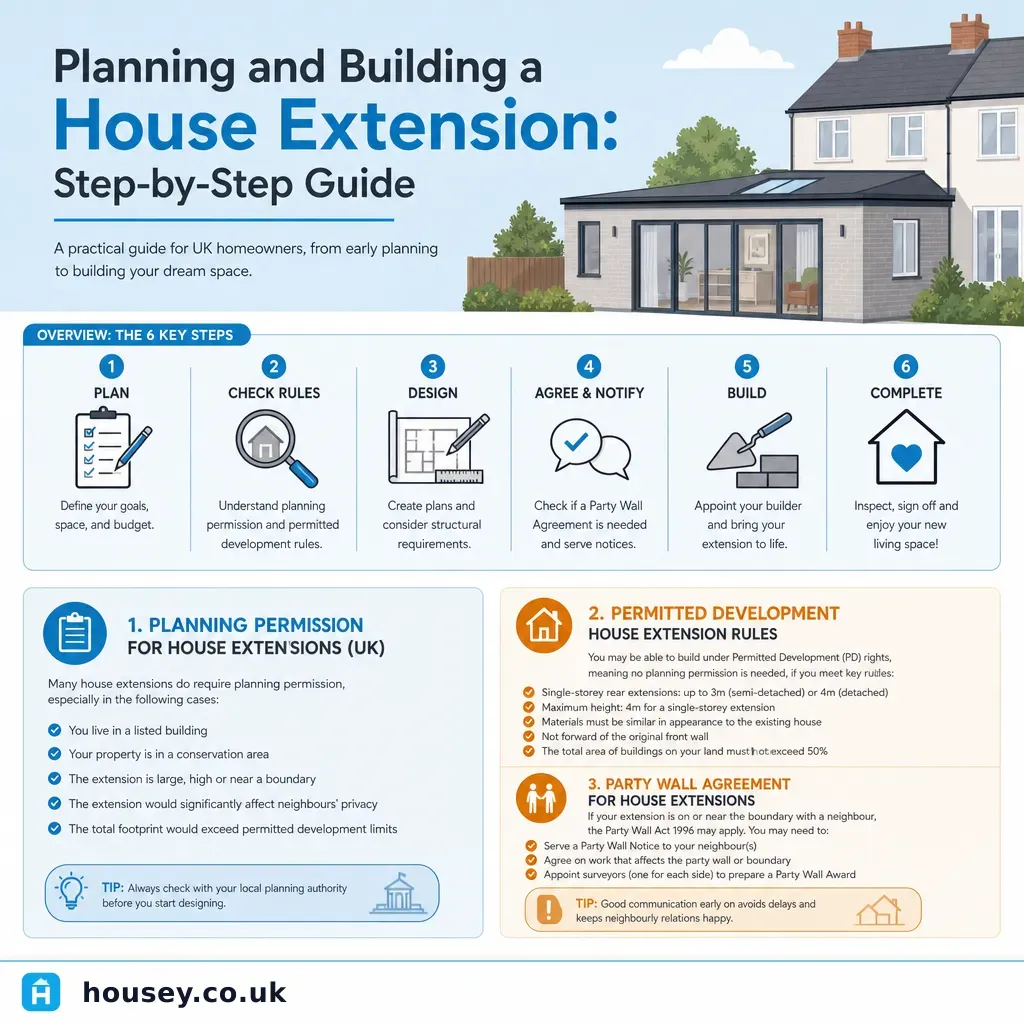
Planning and Building a House Extension: Step-by-Step Guide
A house extension in the UK usually requires either planning permission or confirmation of permitted development rights, Building Regulations approval, and — where work affects a shared wall or boundary — compliance with the Party Wall etc.
 Planning & Pre-Build
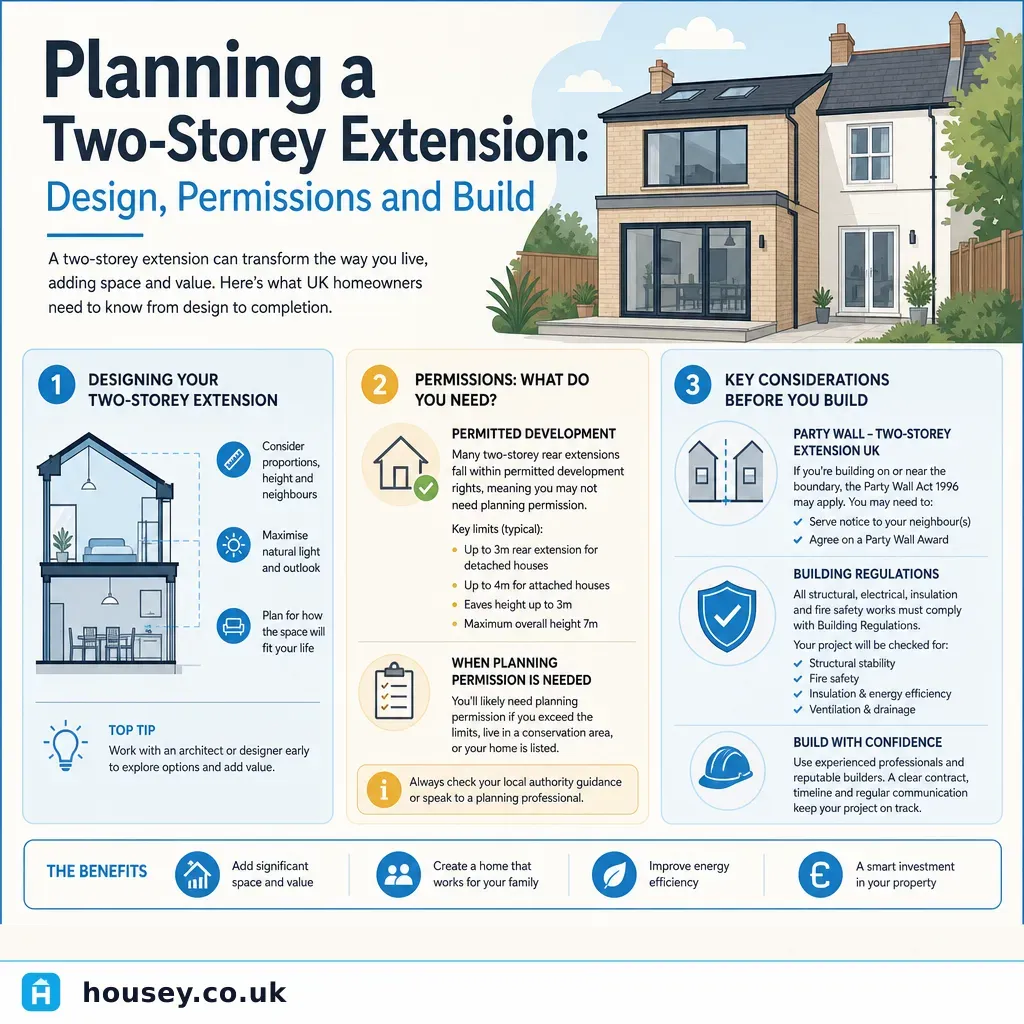
Planning a Two-Storey Extension: Design, Permissions and Build
A two-storey extension usually requires full planning permission, though a rear extension may fall within Permitted Development if it projects no more than 3 metres.
 Planning & Pre-Build
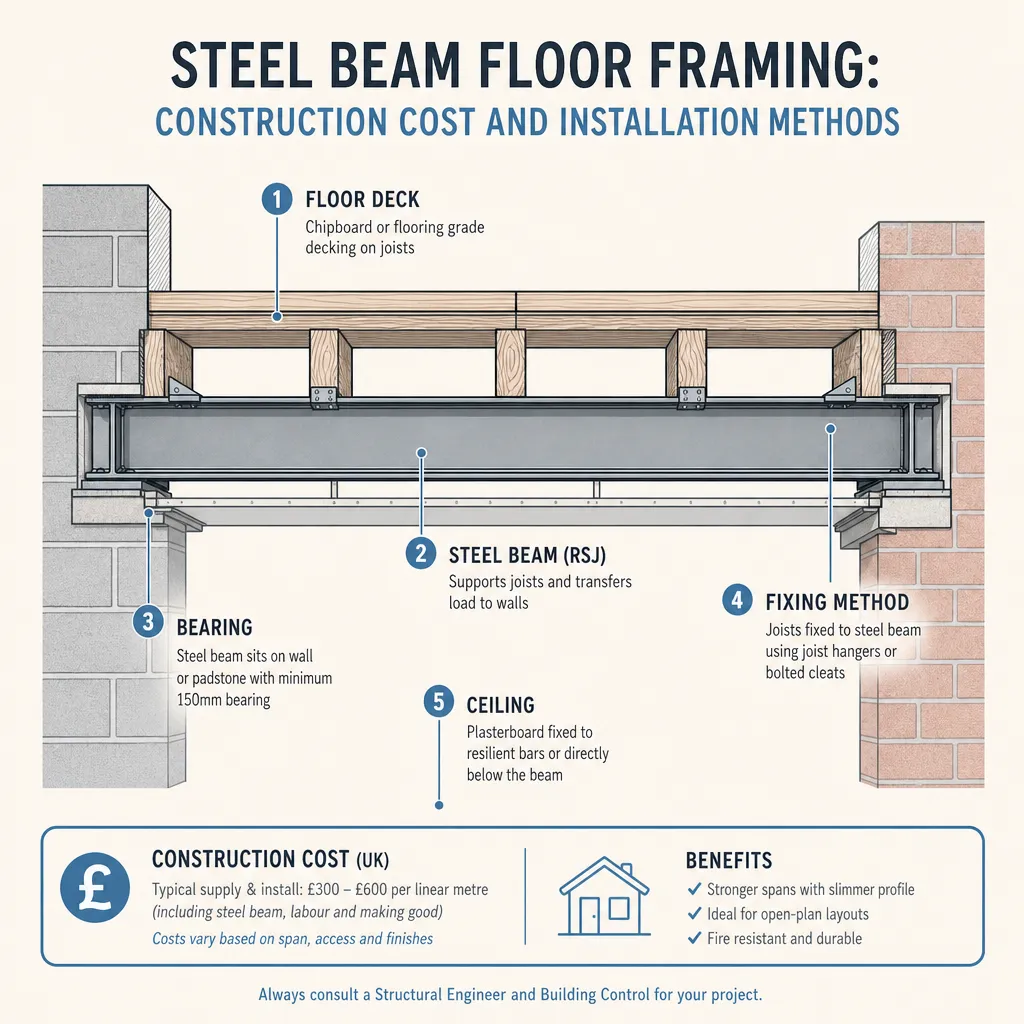
Steel Beam Floor Framing: Construction Cost and Installation Methods
Steel beam floor framing is used in UK homes when spans are too wide for timber joists, or when a load-bearing wall is removed.
 Planning & Pre-Build
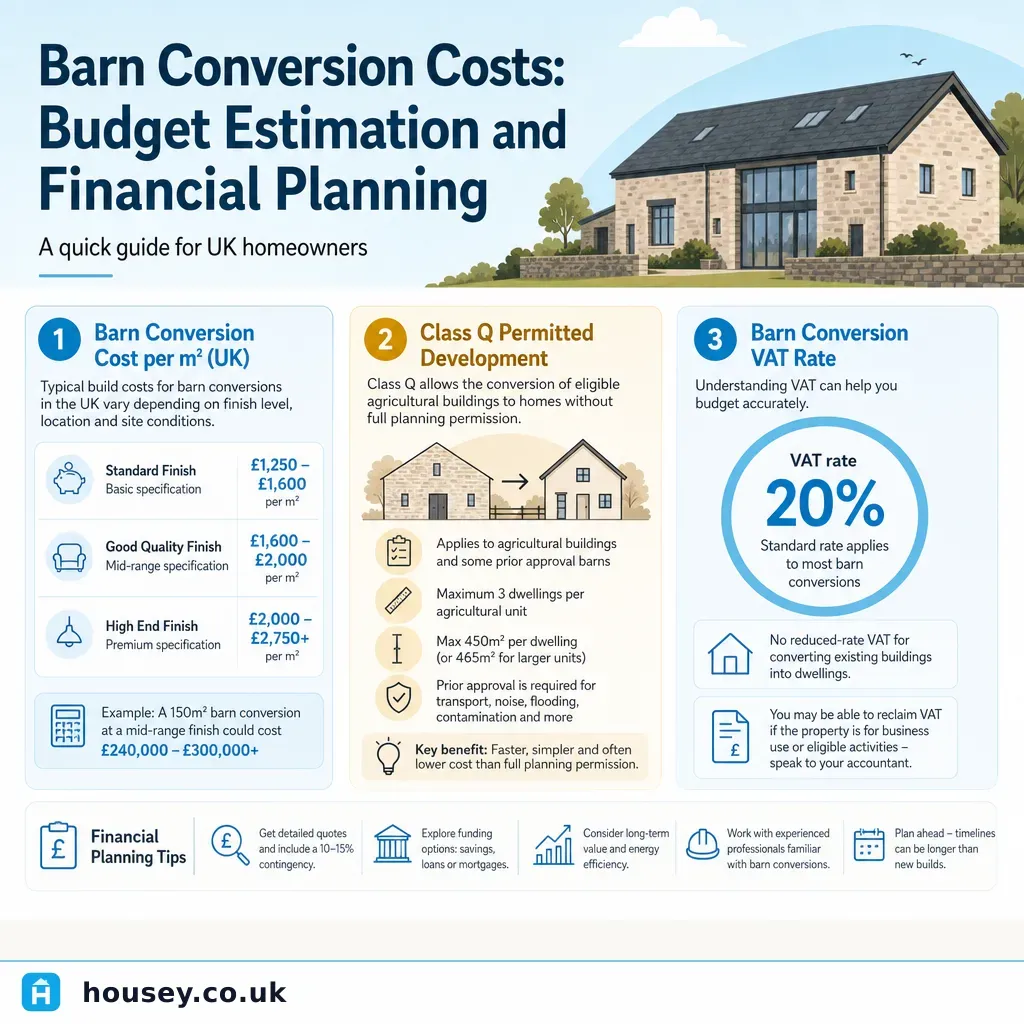
Barn Conversion Costs: Budget Estimation and Financial Planning
Barn conversions in the UK typically cost £1,500–£3,000 or more per square metre depending on structural condition, specification, and location.
 Planning & Pre-Build
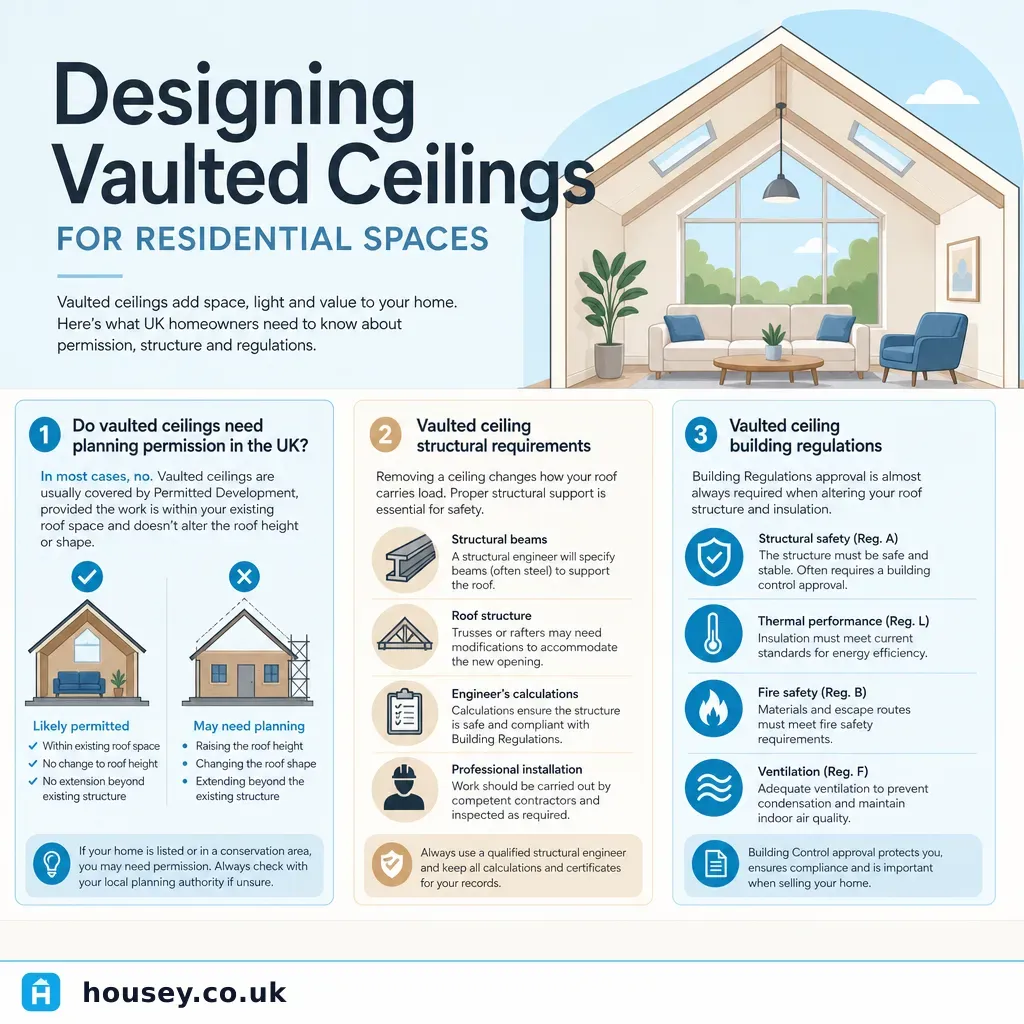
Designing vaulted ceilings for residential spaces
Creating a vaulted ceiling in an existing home involves restructuring the roof timbers that form the structural triangle, which always requires a structural engineer's calculations and Building Regulations approval under Approved Document A.