Bay Window Installation: Costs, Types, and Considerations
By Housey · Last reviewed 5th of May 2026
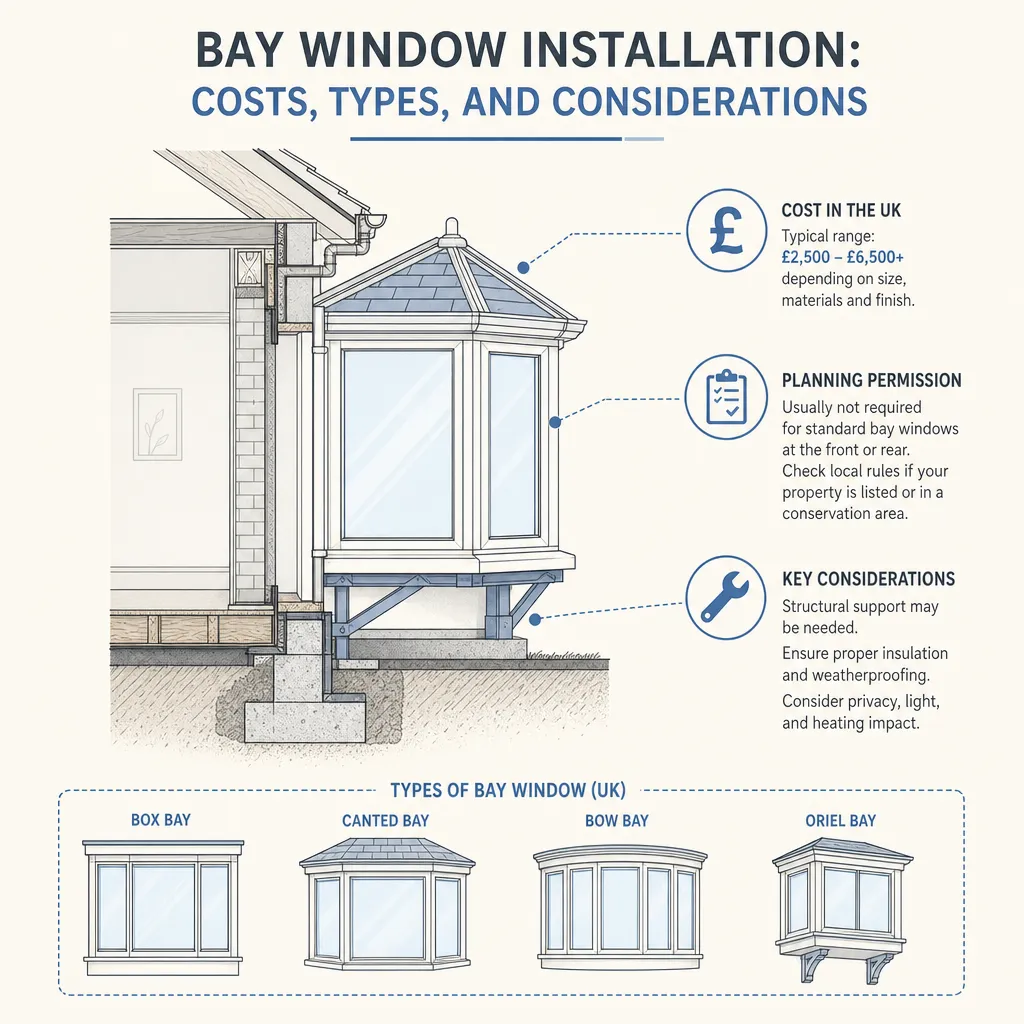
Bay Window Installation: Costs, Types, and Considerations
Bay windows are a defining feature of many UK homes, particularly Victorian and Edwardian terraced and semi-detached properties, and installing or replacing one requires careful thought about structure, planning rules, and glazing specification. Whether you are replacing a failed existing bay or creating a new one by projecting outward from a flat facade, the project almost always involves structural work alongside joinery and glazing. Getting the structural and regulatory questions right before ordering prevents costly surprises once work has started.
Key points
- Under Permitted Development rights in England, a new bay window that materially alters the roofline or projects significantly from the principal elevation may require planning permission; always verify with your local planning authority before starting.
- Replacement windows must achieve a minimum energy performance standard under Building Regulations Part L — typically a whole-window U-value of ≤1.6 W/m²K or a Window Energy Rating (WER) of Band C or better.
- A new bay window in a load-bearing wall requires structural engineer calculations and a building control application; this work cannot be self-certified through FENSA or CERTASS.
- FENSA or CERTASS registered installers can self-certify like-for-like replacement bay windows under the building regulations competent-person scheme, removing the need for a separate building control application.
- Listed buildings and properties in conservation areas require separate consent before altering or replacing windows — contact your local planning authority before ordering.
Types of bay window
Bay windows are broadly categorised by their plan shape. The choice of type affects cost, structural complexity, and visual impact on the property.
Type | Plan shape | Typical projection | Best for | Structural complexity |
|---|---|---|---|---|
Box (square) bay | Three flat panels at 90° corners | 400–600mm typical | Victorian and Edwardian terraces; period character | Moderate — flat or splayed structural head |
Canted (angled) bay | Three panels with angled returns | 300–500mm typical | Most UK house styles; slimmer projection | Moderate — angled structural head required |
Bow window | Multiple curved or faceted panels | 300–600mm | Georgian, Regency, and contemporary properties | Higher — curved head or multiple structural members |
Oriel window | Upper-floor only, corbelled or bracketed | Varies | Period properties; where ground-floor space is constrained | Higher — support brackets or corbels carry the load |
Do you need planning permission for a bay window?
Whether planning permission is required depends on several factors specific to your property and location. Work through these conditions before proceeding:
- If the property is listed: You will need Listed Building Consent for any external alteration, including window replacement or profile change. Contact your local planning authority before ordering.
- If the property is in a conservation area: Replacing a window with a different style, material, or profile usually requires a planning application. Permitted Development rights are often restricted or removed in conservation areas.
- If it is a flat in a converted house: Permitted Development rights do not apply to flats. A planning application is generally required for any new bay or window alteration.
- If it is a standard house with a new bay on the front elevation: Most modest replacements fall within Permitted Development, but additions that materially alter the roofline or project significantly may require permission. Check the specific limits with your local planning authority.
- If prior extensions have already used up your Permitted Development allowance: Further works — including new bays — may require a full planning application.
- If you are unsure in any case: Submit a pre-application enquiry to your local planning authority, or instruct a planning consultant to advise before proceeding.
Always confirm the position using the Planning Portal Permitted Development guidance before starting work.
Structural considerations
Adding a new bay window to an existing flat wall — or replacing a bay in a masonry property — almost always involves structural work. The wall above the window opening must be adequately supported during and after installation.
For a new bay in a load-bearing wall:
- A structural engineer must calculate the load path and specify the required lintel (steel or precast concrete) or structural frame.
- A building control application is required — either full plans or a building notice. The installer cannot self-certify structural work through FENSA or CERTASS.
- Groundworks may be needed: a new bay window adds load and, in some cases, requires foundation work, particularly on older properties with shallow foundations.
For a replacement bay window (same structural opening):
- If the structural opening is unchanged and you are replacing like-for-like, a FENSA or CERTASS registered installer can self-certify the installation under the competent-person scheme.
- If the bay's roof structure (typically a flat or pitched mini-roof over the projection) is being altered, structural sign-off may still be required.
Energy performance and glazing specification
All replacement windows and new window installations in dwellings must comply with Building Regulations Part L. The requirements in England as at 2026 include:
- A whole-window U-value of ≤1.6 W/m²K, or a Window Energy Rating (WER) of Band C or better.
- Double glazing with low-emissivity (low-E) glass coatings is the standard specification for qualifying units.
- Triple glazing achieves lower U-values (typically ≤0.8 W/m²K) but adds weight and cost; it is worth considering for north-facing bays or homes targeting higher energy efficiency standards.
- Bay windows present a larger glazed area than flat windows, making their contribution to whole-house heat loss proportionally significant — specifying a good U-value is worthwhile.
Frame material comparison
Material | Maintenance | Thermal performance | Typical lifespan | Best for |
|---|---|---|---|---|
UPVC | Low — wipe clean | Good with multi-chamber profiles | 20–30 years | Post-1950s homes; budget-conscious projects |
Painted softwood timber | Higher — regular repainting required | Good with double glazing | 40+ years if maintained | Period properties; budget timber option |
Engineered hardwood timber | Moderate | Very good | 50+ years | High-specification period projects |
Aluminium (powder-coated) | Low | Very good with thermal break | 30–40 years | Contemporary properties; slim sightlines |
Composite (timber-aluminium) | Low externally | Very good | 30–50 years | Conservation areas requiring timber appearance externally |
In conservation areas, timber or composite frames that closely match the original profile are often required or strongly preferred by the local planning authority.
Costs: what to budget for a bay window installation
Indicative UK costs, last reviewed 2026-05-05. Actual costs vary significantly by region, window size, material, structural complexity, and ground conditions. Always obtain at least three written quotes from registered installers.
Scope | Indicative cost range |
|---|---|
UPVC replacement bay (like-for-like, standard size) | £2,500–£5,000 |
Timber replacement bay (like-for-like) | £4,000–£9,000 |
New UPVC bay (new structural opening in existing house) | £6,000–£12,000 |
New timber or aluminium bay (new structural opening) | £10,000–£20,000+ |
Structural engineer fee (for new openings) | £500–£1,500 |
Building control fee (England) | £200–£800 depending on local authority |
These ranges are indicative only. The structural element, scaffolding, and making good of internal plasterwork often account for a substantial portion of the overall cost on new installations.
What to ask before accepting a quote
- Is the installer registered with FENSA or CERTASS? Ask for their registration number.
- Who handles the building regulations notification — the installer via self-certification, or must I commission a separate building control application?
- Is a structural engineer's calculation included in the quote, or must I commission one separately?
- What is the specified U-value or Window Energy Rating of the glazed units?
- What head and sill details will be used to ensure weathertightness at the junction with the existing wall?
- Does the quote include scaffolding, making good of internal reveals and plasterwork, and external mastic sealing?
- What manufacturer's warranty applies to the sealed glazing unit, and what workmanship guarantee does the installer provide?
- Is VAT included in the quoted price?
Red flags to watch for
Be cautious if any of the following arise during the quoting or installation process:
- An installer who does not ask about the structural head above the opening before quoting.
- A written quote that does not specify the glazing U-value or WER rating.
- An installer who cannot provide a FENSA or CERTASS registration number on request.
- No mention of building control notification for a project involving a new or enlarged structural opening.
- Very low quotes that exclude scaffolding, making good, or building control fees — these frequently reappear as additional charges after the contract is signed.
- No written specification of materials, sizes, U-values, and programme — reputable installers always provide this in writing before work begins.
When to get professional help
Always instruct a structural engineer before removing or modifying a load-bearing wall for a new bay window. For listed buildings or conservation area properties, consult the local planning authority or a planning consultant before ordering — specifying the wrong frame material can result in enforcement action requiring removal and reinstatement at your own cost.
If the existing bay shows signs of movement — cracked or stepped brickwork, sloping window sills, or gaps opening up in the masonry around the frame — have a chartered surveyor or structural engineer inspect the structure before any installation work begins.
How Housey can help
Housey connects UK homeowners with vetted window and door installers who can handle bay window replacement and new installation projects. Request quotes from FENSA or CERTASS registered local providers, compare specifications and costs side by side, and check credentials before committing to any contract.
Frequently asked questions
Do I need planning permission to replace an existing bay window?
Replacing a like-for-like bay window on a standard house generally falls within Permitted Development and does not require planning permission — provided the frame material and profile are similar and the structural opening is unchanged. However, listed buildings, conservation area properties, and flats are subject to different rules. Always confirm with your local planning authority if there is any doubt about your specific property.
How long does bay window installation take?
Replacement of an existing bay window typically takes one to two days for a competent installation team. A new bay window involving structural work, groundworks, and making good of internal plasterwork can take five to ten working days or more, depending on the scope of structural alterations and drying times for plasterwork and screeds.
What is the best glazing specification for a UK bay window?
Double-glazed units with a low-emissivity (low-E) coating and warm-edge spacer bars are the standard specification. Look for a whole-window U-value of 1.4 W/m²K or below, or a Window Energy Rating of Band B or above. Triple glazing offers lower U-values and may be worthwhile for north-facing or exposed bays, but adds cost and weight to the installation.
Will a new bay window add value to my home?
Bay windows can improve kerb appeal and usable floor space, which may positively influence valuation in some markets. However, the impact varies by property type, location, and execution. A poorly detailed or out-of-character bay window can detract from the appearance of a period property. Consult a RICS-registered valuer if you are making investment decisions based on expected value uplift from any single alteration.
Does a bay window roof need building regulations approval?
Replacing an existing bay window roof on a like-for-like basis — for example, a flat lead or felt covering — may not require a formal building control application. If the structure is being altered, or if the bay forms part of a larger project involving the structural opening, building regulations approval is likely required. Check with your local building control body before starting any structural roof work.
Sources and further reading
- Planning Portal — Permitted Development for householders — Planning Portal
- Building Regulations Approved Document Part L (Conservation of fuel and power) — GOV.UK
- FENSA — find a registered window and door installer — FENSA
- CERTASS — registered window and door installers — CERTASS
- Historic England — guidance on windows in listed buildings — Historic England
- GOV.UK — listed buildings and consent — GOV.UK
Useful next reads
 Improvement & Build
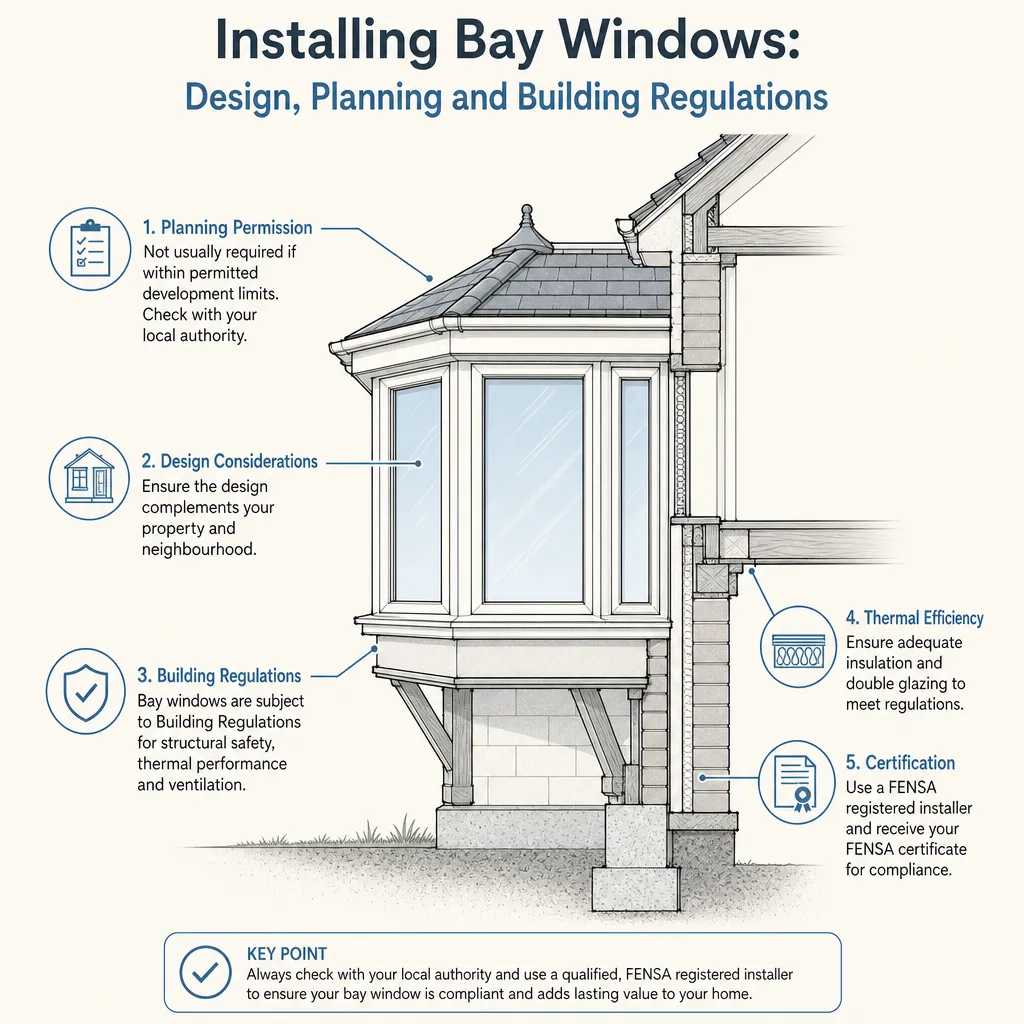
Installing Bay Windows: Design, Planning and Building Regulations
Most like-for-like bay window replacements are permitted development — no planning permission is needed unless the property is listed or in a conservation area.
 Improvement & Build
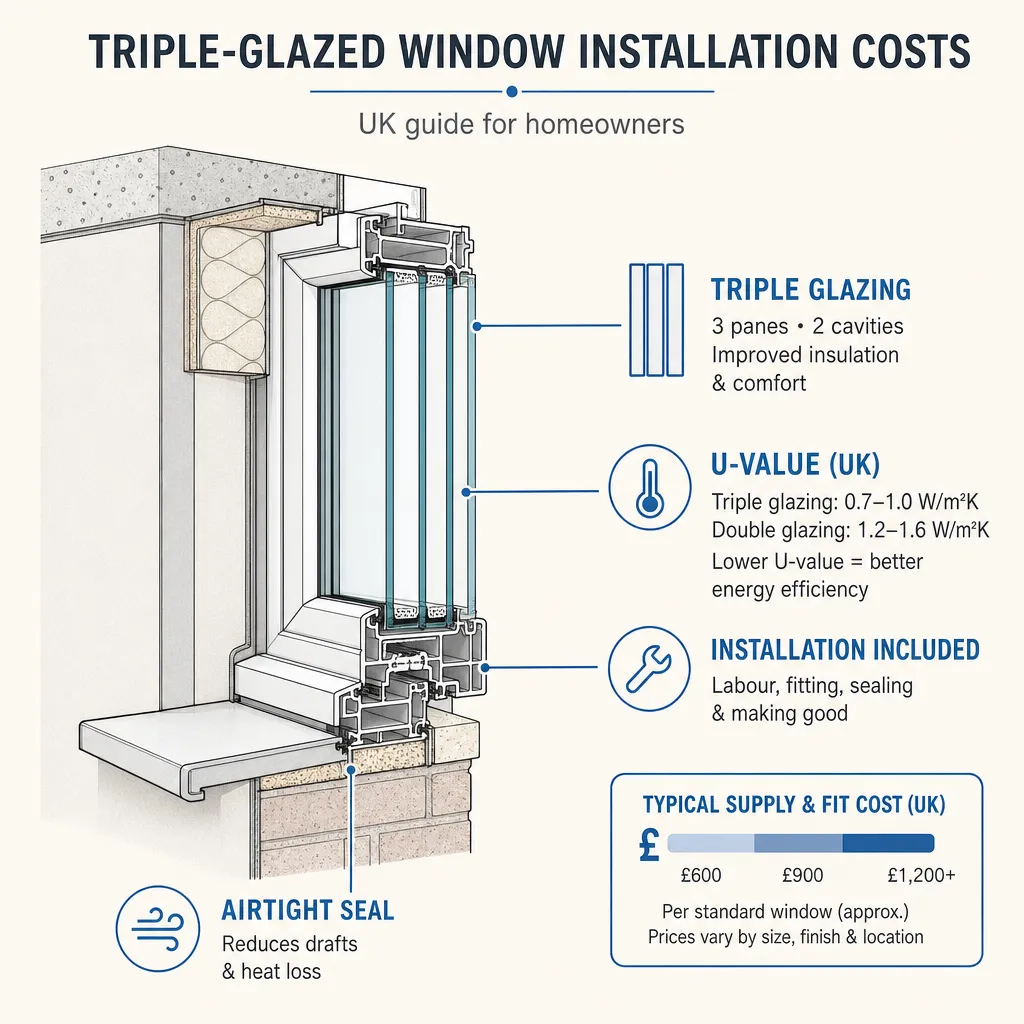
Triple-Glazed Window Installation Costs
Triple-glazed window installation in the UK typically costs £800–£1,800 per window, depending on size, frame material, and glazing specification.
 Improvement & Build
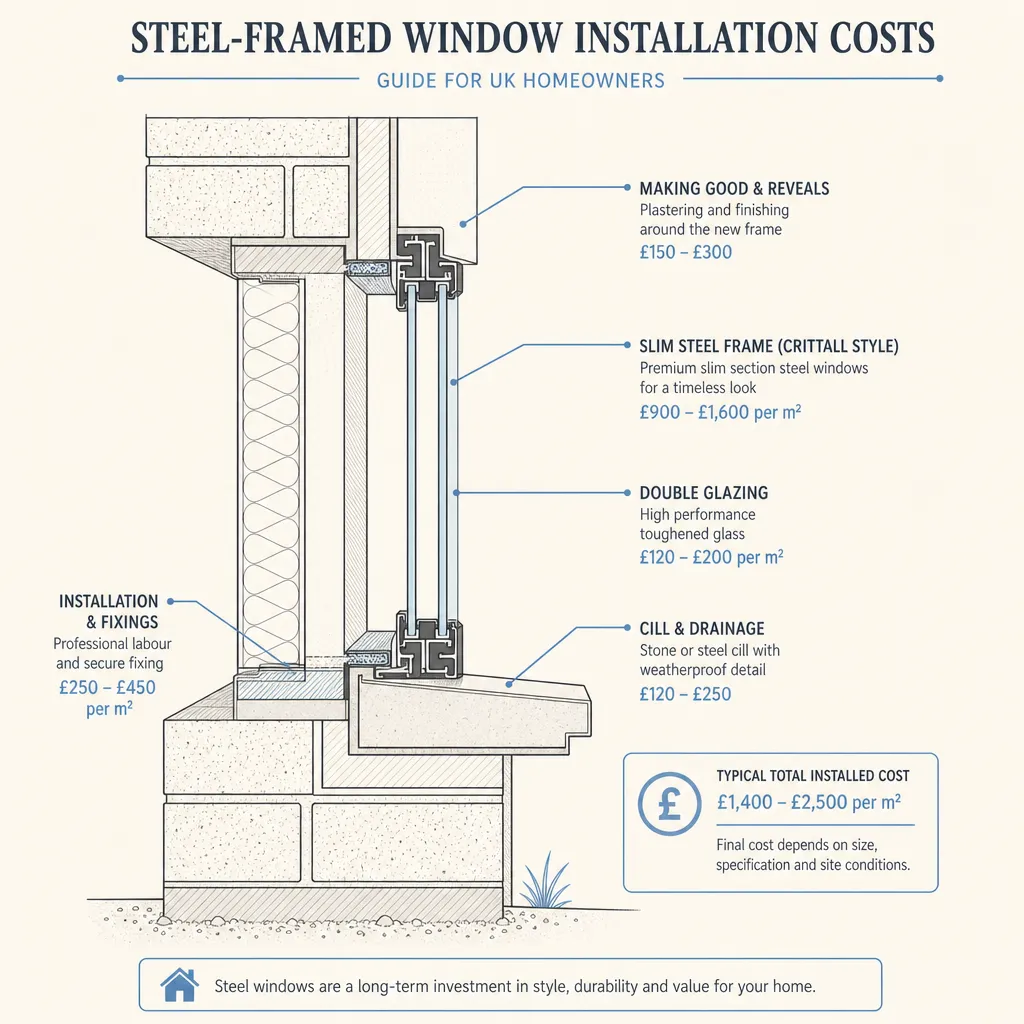
Steel-Framed Window Installation Costs
Steel-framed windows cost between £800 and £3,500 or more per window installed in the UK, depending on size, profile type, glazing specification, and whether old frames need removing.
 Improvement & Build
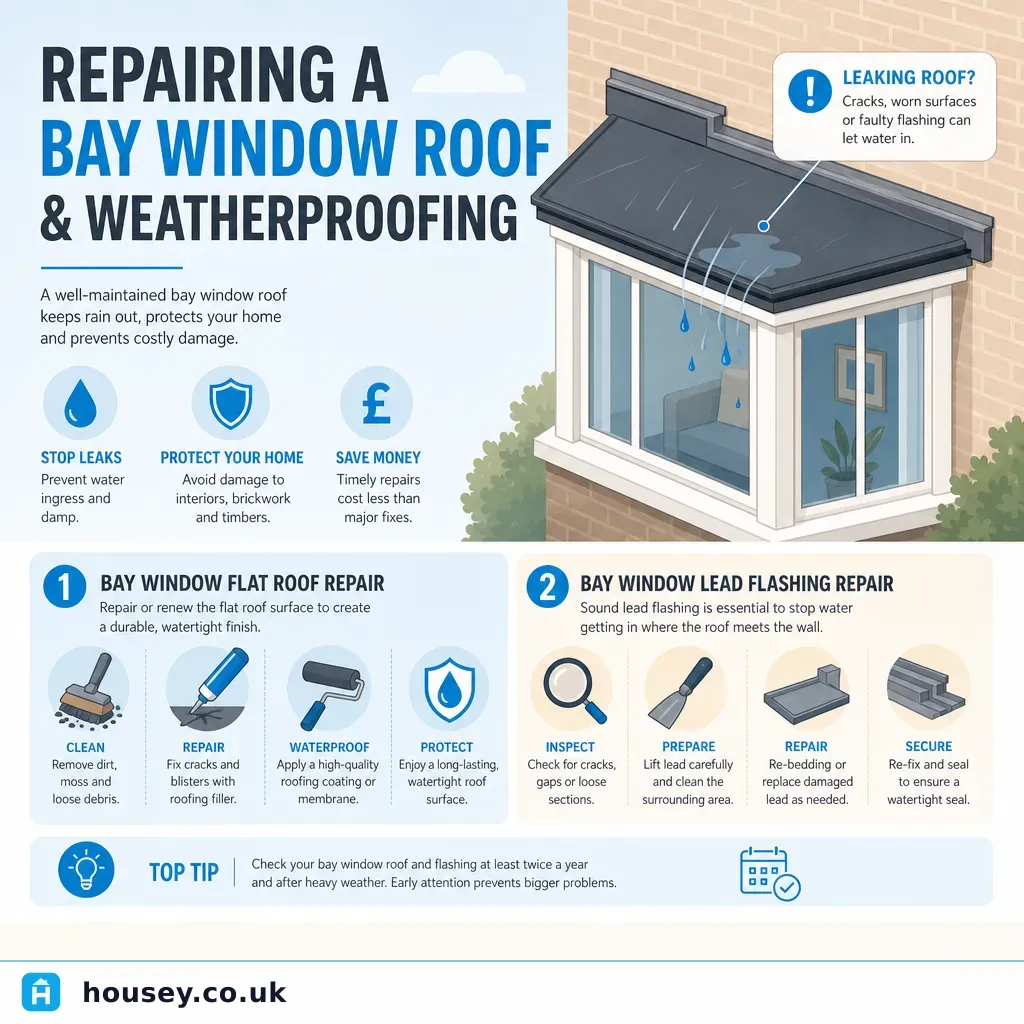
Repairing a Bay Window Roof and Weatherproofing
A bay window roof typically uses felt, lead, or EPDM rubber as its waterproof covering.
 Improvement & Build
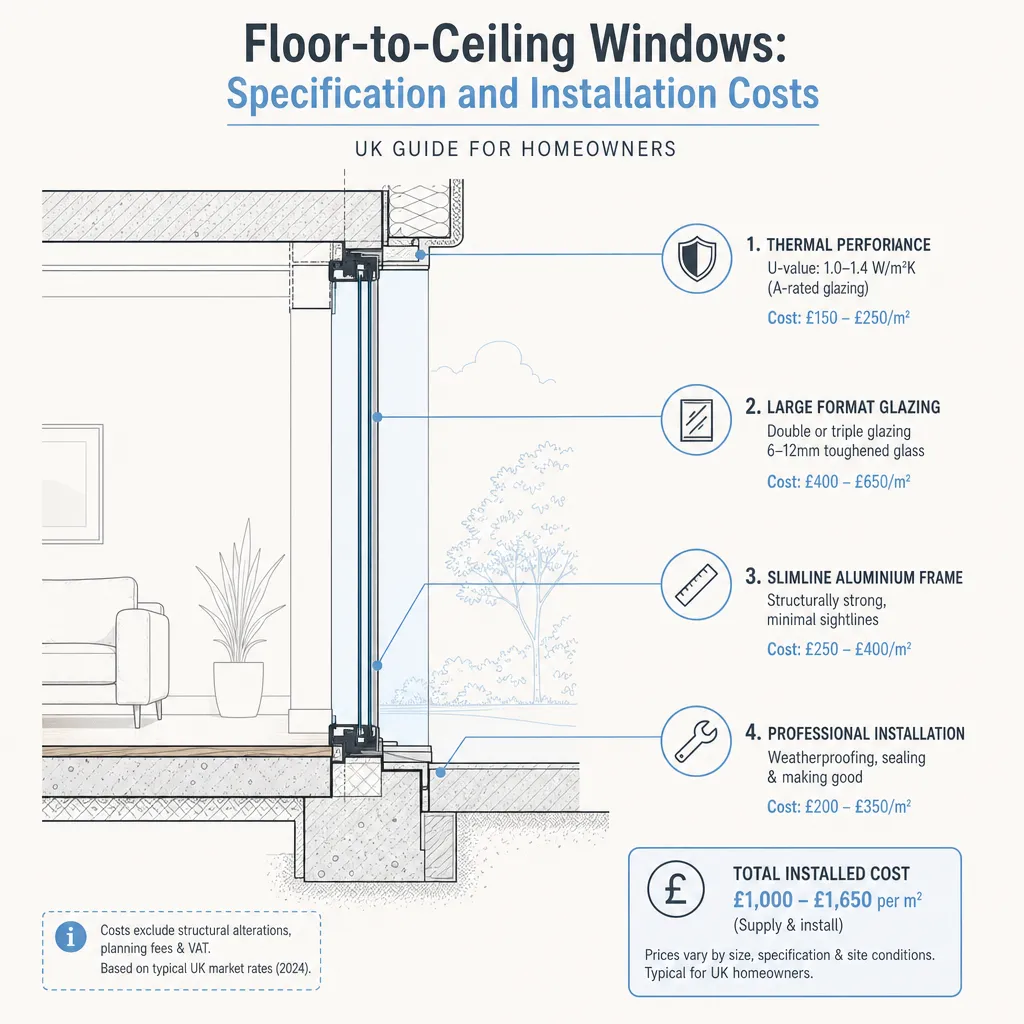
Floor-to-Ceiling Windows: Specification and Installation Costs
Floor-to-ceiling windows in the UK typically cost £1,800–£6,500 per unit installed, depending on glazing type, frame material, and whether structural alterations are needed.