Triple-Glazed Window Installation Costs
By Housey · Last reviewed 11th of May 2026
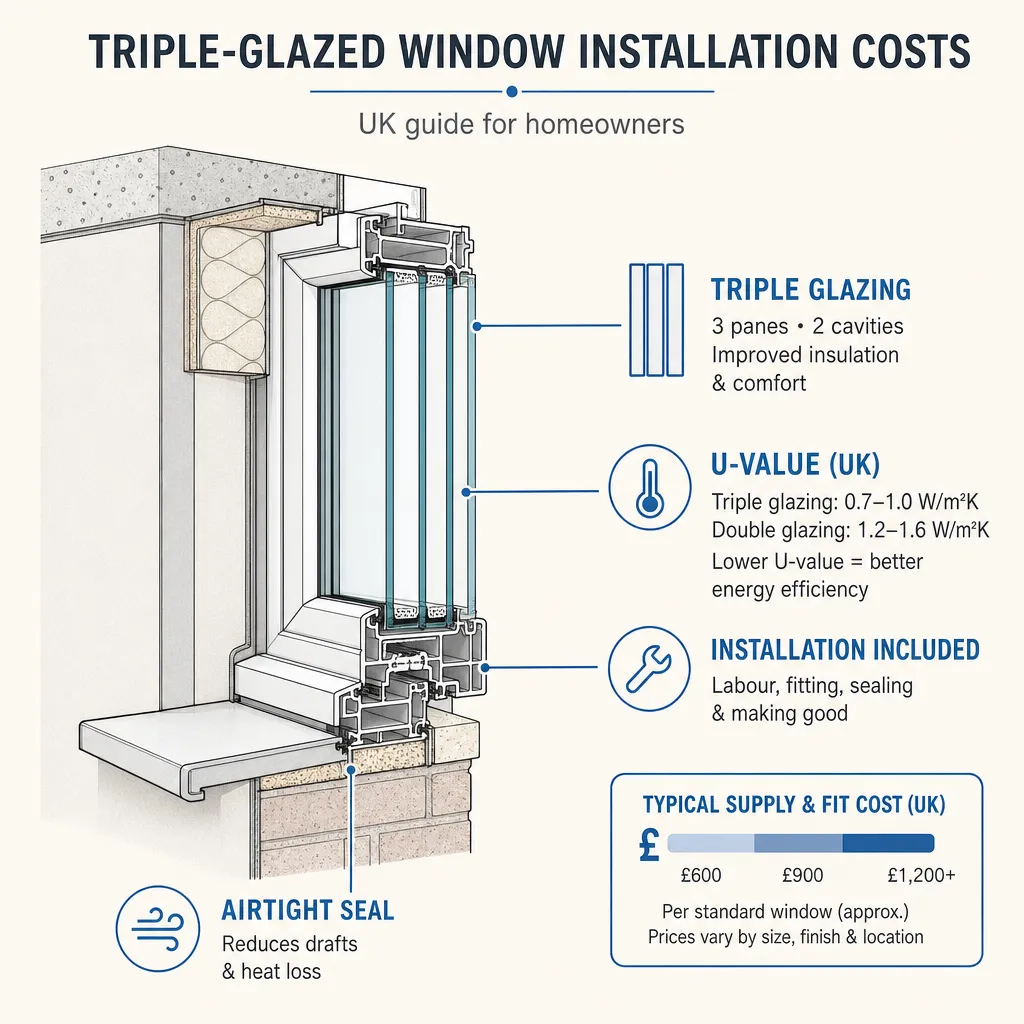
Triple-Glazed Window Installation Costs
Window replacement decisions typically arise during major renovations, when existing double glazing approaches the end of its working life, or when a homeowner is targeting a higher Energy Performance Certificate (EPC) rating for rental compliance or sale. Triple glazing — a sealed unit with three panes of glass and two gas-filled cavities — is now standard in Scandinavian and German construction and is increasingly specified in UK new builds and deep retrofits seeking to meet current Building Regulations Part L requirements.
Key points
- Triple-glazed windows in the UK typically cost £800–£1,800 per window installed, depending on size, frame material, and glazing specification. Indicative UK costs, last reviewed 2026-05-11.
- Triple glazing achieves whole-window U-values of 0.6–1.0 W/m²K; modern A-rated double glazing achieves 1.0–1.4 W/m²K — a meaningful but not dramatic difference for most UK homes.
- Replacement window installations must comply with Building Regulations Part L (thermal performance) and Part N (safety glazing); work carried out by a FENSA- or CERTASS-registered installer is self-certified, avoiding a separate building control application.
- The Green Homes Grant closed in 2021; as of May 2026 there is no UK-wide grant specifically for window replacement, though ECO4 and some local authority schemes may cover glazing as part of a whole-house retrofit package.
- Triple glazing typically adds sound insulation of 35–42 dB Rw compared with 28–34 dB Rw for standard double glazing — a significant benefit near busy roads or flight paths.
How much does triple glazing cost in the UK?
Costs vary substantially based on window type, size, and frame material. The following ranges are for common UK residential window types.
Window type | Approx. size | Double-glazed replacement | Triple-glazed replacement |
|---|---|---|---|
Standard casement (uPVC) | 1,000 × 1,200 mm | £350–£600 | £550–£950 |
Bay window (3-panel, uPVC) | 2,400 × 1,200 mm | £800–£1,400 | £1,200–£2,200 |
Sash window (uPVC, vertical sliding) | 900 × 1,500 mm | £650–£900 | £900–£1,400 |
Aluminium casement (thermally broken) | 1,000 × 1,200 mm | £600–£900 | £900–£1,500 |
Roof window (Velux-type) | 780 × 1,400 mm | £500–£900 | £800–£1,400 |
Indicative UK costs, last reviewed 2026-05-11. Prices include supply and installation. Confirm VAT treatment with your installer — see FAQ below.
For a typical three-bedroom semi-detached house with 10 windows, a full triple-glazing replacement might cost £9,000–£16,000.
Triple vs double glazing: is the upgrade worth it?
The performance gap between modern double glazing and triple glazing is real but narrower than many homeowners expect.
Feature | Modern double glazing (A-rated) | Triple glazing |
|---|---|---|
Typical whole-window U-value | 1.0–1.4 W/m²K | 0.6–1.0 W/m²K |
Centre-pane U-value | 1.0–1.2 W/m²K | 0.5–0.7 W/m²K |
Sound attenuation (typical) | 28–34 dB Rw | 35–42 dB Rw |
Frame weight | Standard | 15–30% heavier |
Internal condensation risk | Low with modern units | Very low |
External condensation | Possible in cold weather | More common (sign of efficiency) |
Typical installed cost premium vs double | Baseline | £150–£400 extra per window |
Approximate payback period (heating savings only) | N/A | 20–40 years (varies by fuel type and property) |
Sources: Energy Saving Trust, BEIS building envelope thermal performance guidance.
The Energy Saving Trust notes that moving from older single glazing to modern A-rated double glazing saves more energy per pound spent than upgrading from double to triple. The case for triple glazing is stronger in high-heat-loss homes, properties near noise sources, Passivhaus-standard builds, and homes in Scotland or northern England where heating seasons are longer.
Which frame material should you choose?
Frame choice affects aesthetics, performance, maintenance requirements, and cost.
- uPVC: The most common and least expensive option. Modern uPVC frames achieve good thermal performance and require minimal maintenance. Less suitable for period properties in conservation areas where local planning guidance may require timber or aluminium.
- Aluminium (thermally broken): Slimmer sight lines for a contemporary look; more durable; higher cost. Thermally broken frames use a polyamide strip to separate inner and outer aluminium sections, preventing cold bridging.
- Timber: Most appropriate for period and listed properties; requires periodic painting or staining. Can be glazed to high thermal performance with triple units.
- Timber-aluminium composite: Timber interior with aluminium exterior cladding — a premium option combining traditional aesthetics with low external maintenance.
Do I need planning permission for triple-glazed windows?
Replacing windows like for like — same size, same frame colour, same opening style — is usually permitted development in England and does not require planning permission. However:
- Conservation areas: You may need conservation area consent if removing original timber sash windows or noticeably changing the appearance of the property. Check with your local planning authority before ordering.
- Listed buildings: Listed building consent is required for any material change, including window replacement. An inappropriate specification can result in enforcement action.
- Leasehold flats: Your lease may restrict alterations. Check your lease and obtain freeholder or management company consent before instructing an installer.
All replacement window work must comply with Building Regulations Parts L and N. A FENSA- or CERTASS-registered installer self-certifies and notifies the local authority — you receive a certificate to retain for future sale or remortgage.
Which option should you choose?
- Choose triple glazing if you are targeting a Passivhaus standard, a deep whole-house retrofit, EPC band A or B, or you have a significant noise problem from road or air traffic.
- Choose A-rated double glazing if your primary goal is cost-effective energy saving on a standard UK property that already has functional double glazing.
- Prioritise draught-proofing first if your windows are draughty but otherwise structurally sound — sealing gaps often delivers greater energy savings per pound spent than a full glazing upgrade.
- Ask a TrustMark-registered retrofit coordinator (PAS 2035 compliant) if you are planning multiple energy measures, to ensure glazing is specified as part of a coherent whole-house package that avoids moisture and ventilation problems.
- Check with your local planning authority before specifying any replacement windows if the property is listed, in a conservation area, or subject to an Article 4 direction.
When to get professional help
- If your property is listed or in a conservation area and you are unsure whether the replacement is permitted, seek pre-application planning advice before placing an order.
- If you are planning a wider energy retrofit, involve a TrustMark-registered retrofit coordinator before specifying glazing to ensure the package of measures is coherent and PAS 2035-compliant.
- If an installer quotes a whole-window U-value below 0.6 W/m²K, ask for the independently tested figure and the test standard used (EN ISO 10077) before accepting the claim.
How Housey can help
Housey connects you with FENSA-registered window and door installers who can survey your property, specify the right glazing for your budget and building type, and self-certify building regulations compliance. Describe your project once to receive up to four competitive quotes from vetted providers in your area.
Frequently asked questions
Is VAT charged on triple-glazed window installation?
As of May 2026, the installation of energy-saving materials including glazing in residential properties is subject to 0% VAT in Great Britain. Supply-only orders or commercial properties may be charged at the standard rate. Confirm the VAT treatment with your installer before accepting a quote and ask for it to be clearly shown on the quotation, as the applicable rate can depend on how the contract is structured.
How long do triple-glazed sealed units last?
The sealed unit typically lasts 20–25 years before the gas seal fails and condensation appears between panes. Frame life depends on material: quality uPVC and aluminium frames routinely last 30–40 years. Manufacturers' unit warranties typically run 10–20 years. Keep your installation certificate and warranty documentation safe, as you will need both when selling or remortgaging.
Can I get grants for triple glazing in the UK?
There is no UK-wide grant specifically for window replacement as of May 2026. The Green Homes Grant closed in 2021. Glazing may be included within a whole-house retrofit funded through the ECO4 scheme for eligible low-income households, or through local authority Flexible Eligibility schemes. Check the Energy Saving Trust's grant-finding tool at energysavingtrust.org.uk for current options in your area.
Will triple glazing reduce condensation inside my home?
Triple-glazed units dramatically reduce internal surface condensation because the inner pane stays much warmer than with double glazing. However, very efficient triple glazing may cause condensation on the outside of the glass in cold weather. External condensation is a sign the glazing is performing well — warm indoor air is not reaching the cold outer pane — and is not a defect.
Sources and further reading
- Double and triple glazing — Energy Saving Trust
- Approved Document L: Conservation of fuel and power — HM Government
- FENSA consumer guide to replacement windows — FENSA
- Planning Portal: Windows and doors — Planning Portal
Useful next reads
 Improvement & Build
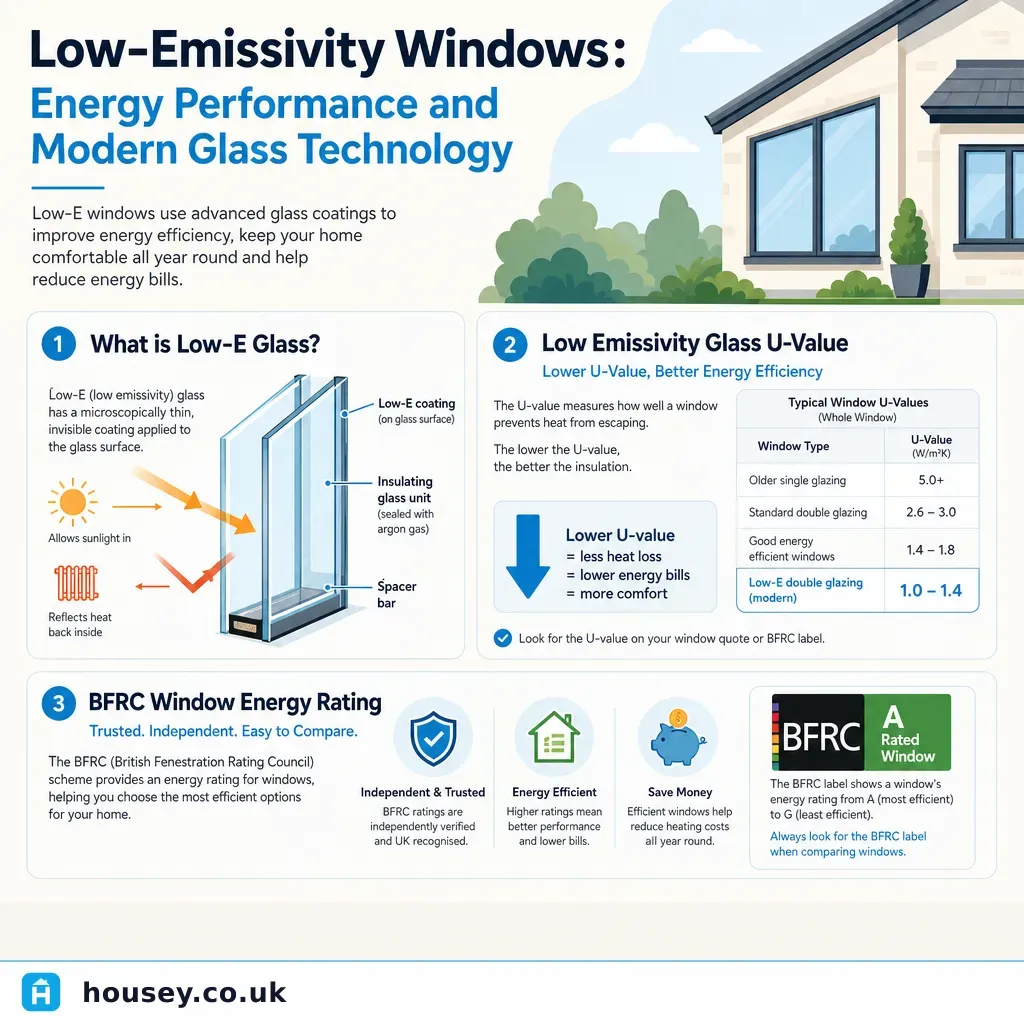
Low-Emissivity Windows: Energy Performance and Modern Glass Technology
Low-emissivity (low-E) glass has a microscopically thin metallic coating that reflects heat back into a room while allowing daylight through.
 Improvement & Build
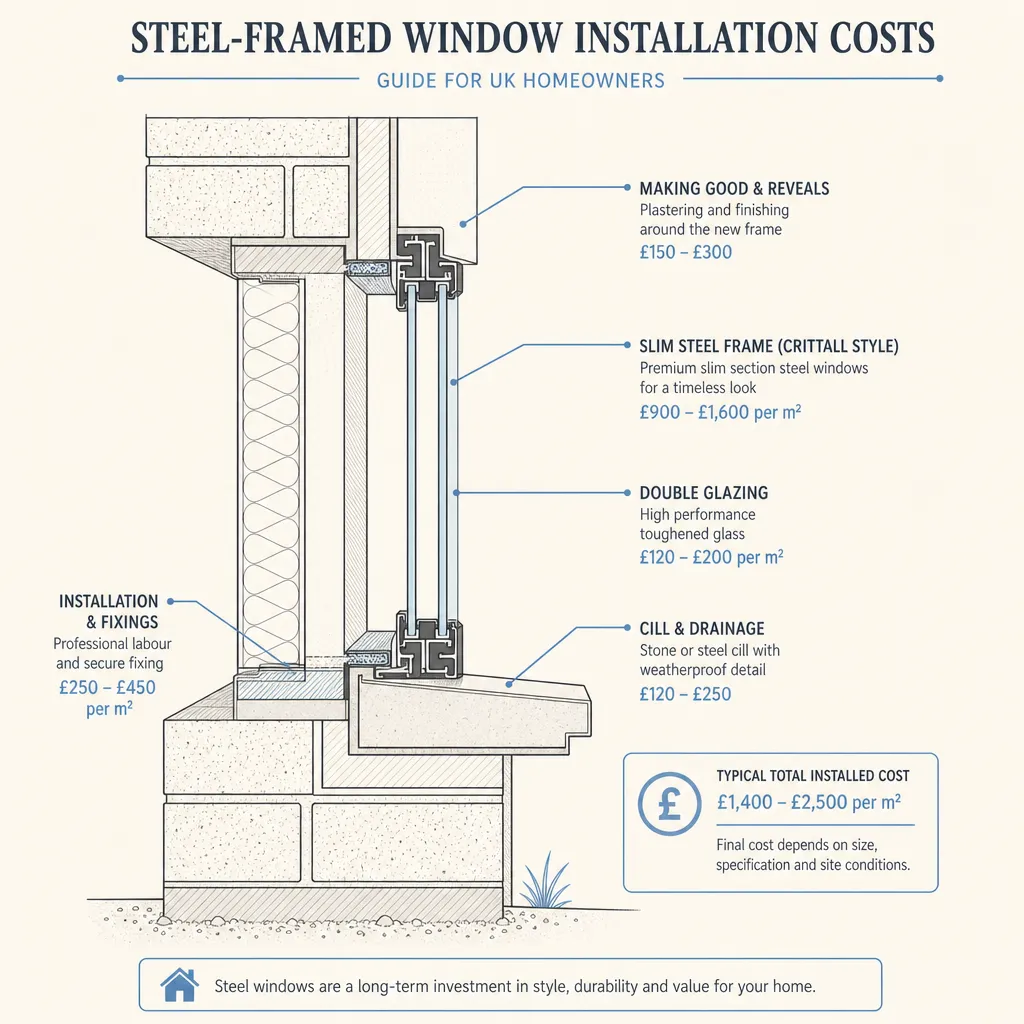
Steel-Framed Window Installation Costs
Steel-framed windows cost between £800 and £3,500 or more per window installed in the UK, depending on size, profile type, glazing specification, and whether old frames need removing.
 Improvement & Build
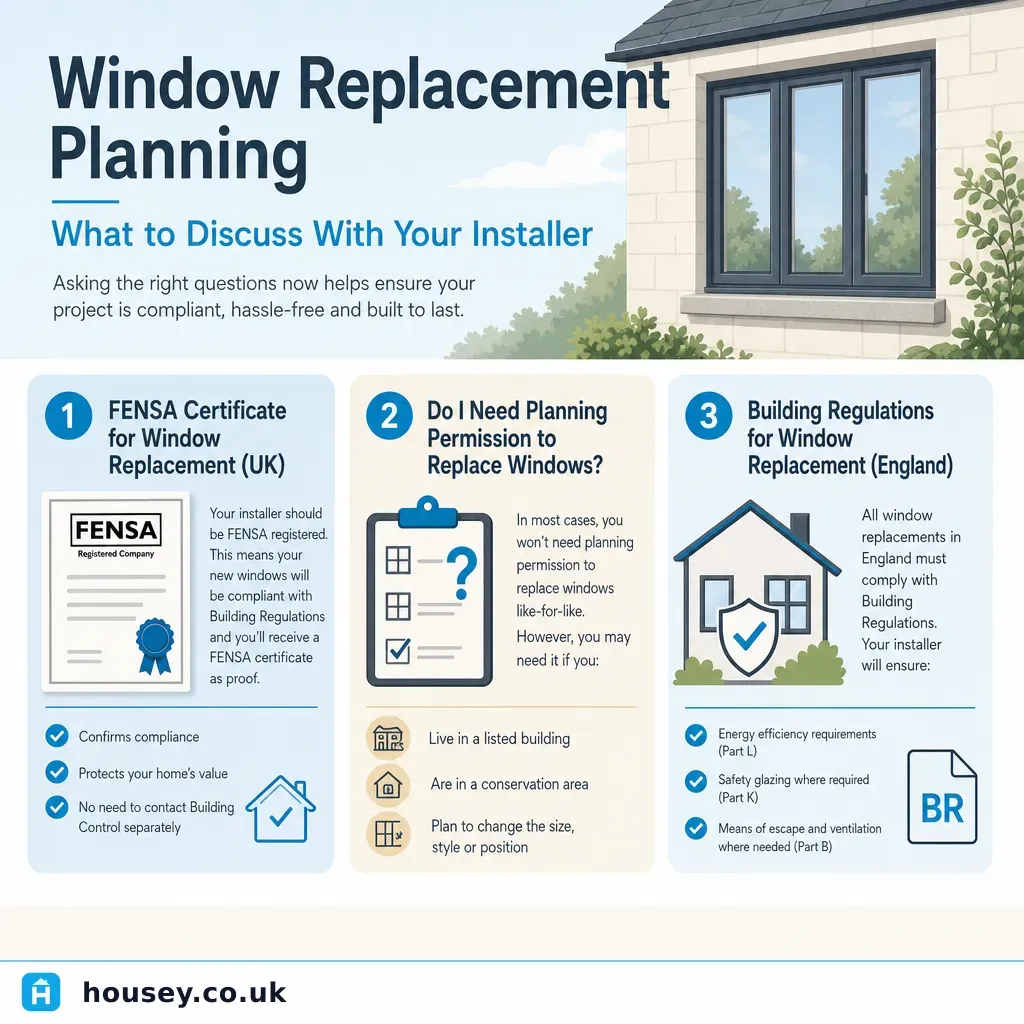
Window Replacement Planning: What to Discuss With Your Installer
Most window replacements in England fall under permitted development rights and do not require planning permission, but they must comply with Building Regulations Part L and Part K.
 Improvement & Build
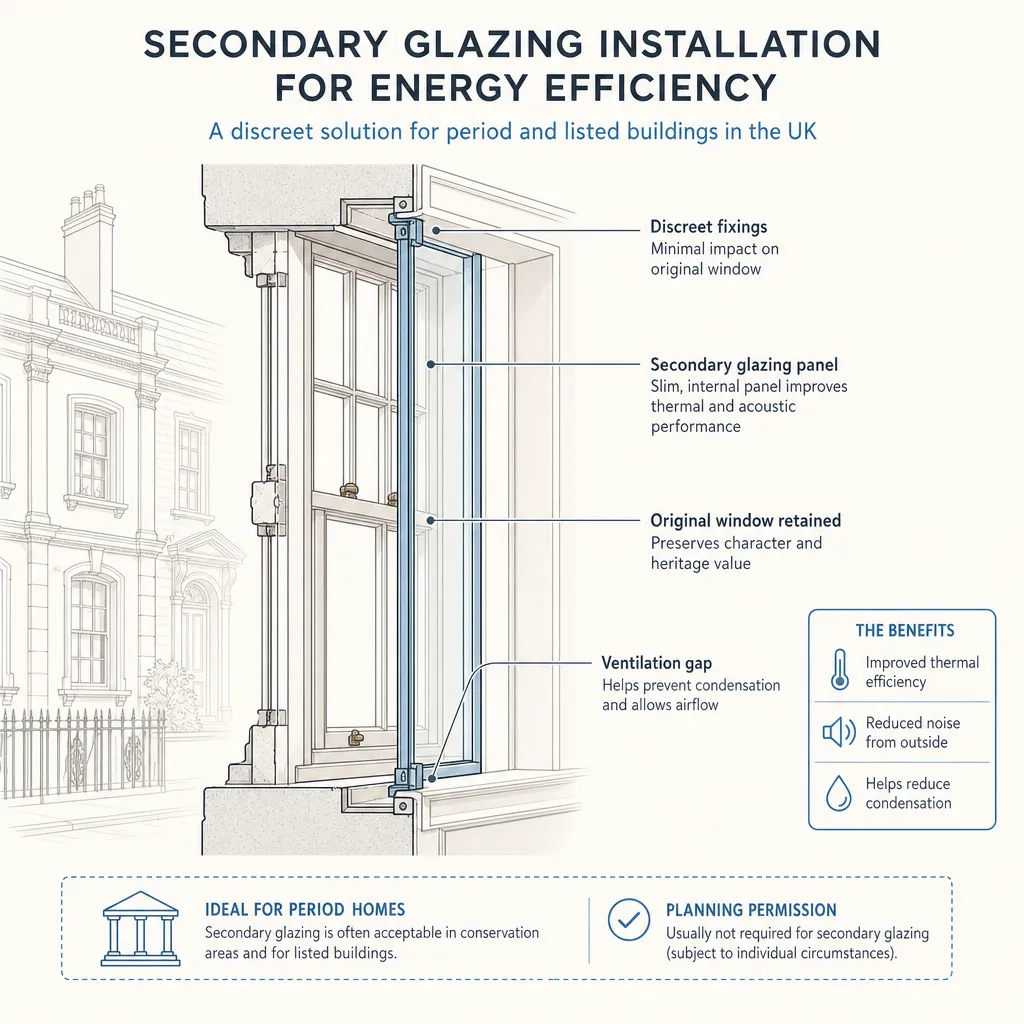
Secondary Glazing Installation for Energy Efficiency
Secondary glazing adds a separate inner pane to an existing window, improving thermal performance without replacing the original frame.
 Improvement & Build
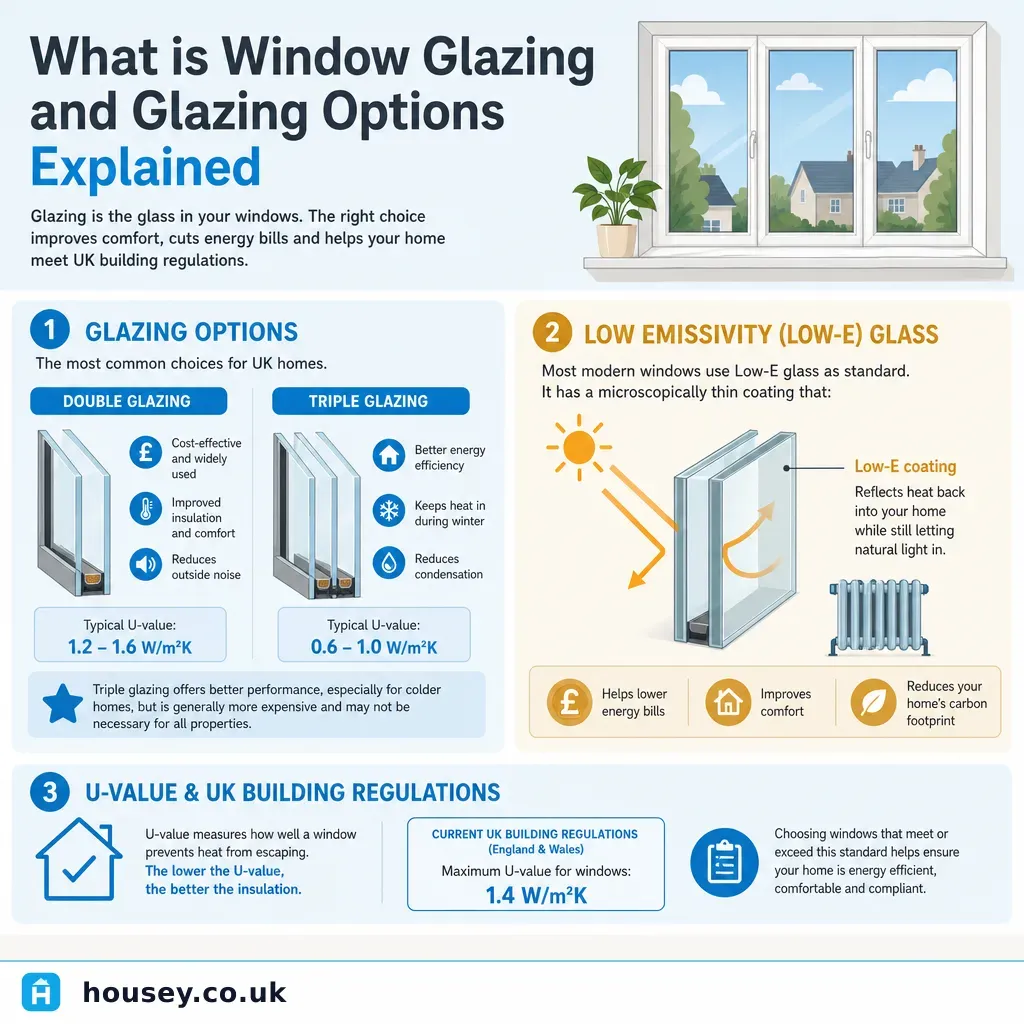
What is window glazing and glazing options explained
Window glazing refers to the sealed glass unit fitted within a window frame.