Repairing a Bay Window Roof and Weatherproofing
By Housey · Last reviewed 5th of May 2026
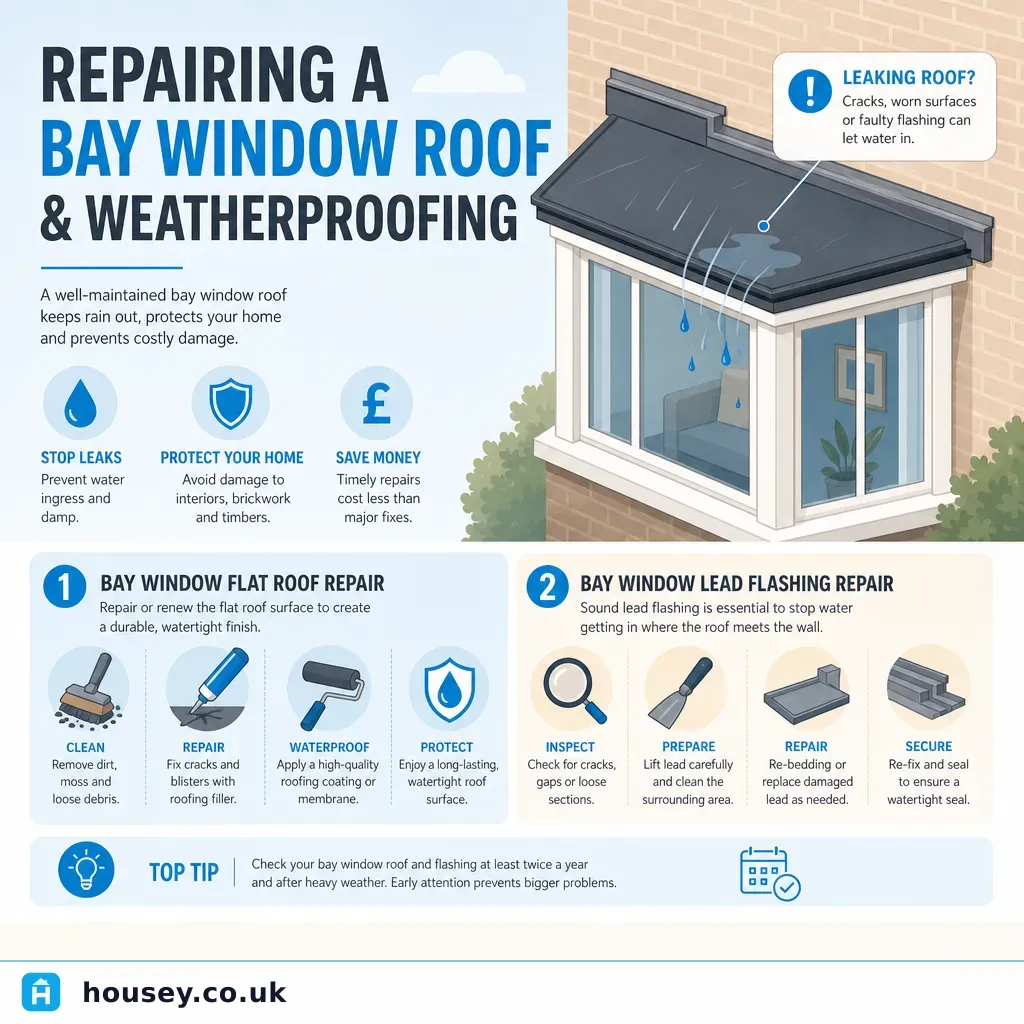
Repairing a Bay Window Roof and Weatherproofing
Bay window roofs are among the most maintenance-intensive parts of a UK home — yet they are often neglected until a damp patch appears on an interior ceiling or wall. Whether your property is a Victorian terrace with an original lead-clad bay or a 1930s semi with a felt-covered flat section, the small roof above a bay window is exposed to the full force of British weather and requires periodic attention. Understanding the common failure points, and knowing when to call a professional, can prevent a minor maintenance issue from becoming a costly structural repair.
Key points
- Bay window roofs are typically flat or low-pitched, covered with mineral felt, lead sheet, or EPDM rubber membrane; the material determines the repair approach and expected lifespan.
- Mineral felt typically lasts 10–20 years; EPDM rubber membranes 25–50 years; original lead sheet 60 years or more when well maintained.
- Lead flashing at the junction between the bay roof and the main house wall is a frequent leak point and must be correctly dressed and pointed to remain watertight.
- Work at height above 2 m should be carried out by a competent roofer — incorrect repair can worsen water ingress or seal moisture into the deck.
- Indicative UK repair costs range from approximately £150–£400 for a felt patch or flashing re-dress to £600–£1,500+ for a full bay roof replacement (Indicative UK costs, last reviewed 2026-05-05).
What type of roof does a bay window have?
Most bay window roofs are flat or very shallowly pitched. The waterproof layer is one of three main materials:
Material | Typical era | Expected lifespan | Key failure signs |
|---|---|---|---|
Mineral felt (three-layer) | 1950s–present | 10–20 years | Blistering, cracking, ponding water |
Lead sheet | Pre-1940s; heritage properties | 60–100+ years | Cracked or slipped sections, failed pointing at abutment |
EPDM rubber membrane | 2000s–present | 25–50 years | Lifting at edges, sealant failure around upstands |
Older properties may have a zinc or asphalt covering. If you are unsure of the material, a roofer can confirm before any work starts.
Common causes of bay window roof leaks
Failed or deteriorated felt is the most common cause on post-war properties. Felt becomes brittle with UV exposure and thermal cycling, developing small tears or delamination. Water tracks beneath the surface and into the structure.
Lead flashing failure at the abutment wall occurs when the lead has pulled away from the mortar joint or the pointing has failed. This junction between bay roof and main wall is a natural weak point.
Blocked or overflowing gutters cause water to back up onto the roof surface, accelerating felt failure even on otherwise sound roofs.
Condensation or interstitial moisture can mimic an external leak. If damp appears mainly in cold weather, a condensation assessment may be more appropriate than a roof repair.
What does bay window roof repair involve?
Patch repair suits localised splits on a roof that is otherwise in good condition. A roofer cuts out the damaged section, dries the substrate, and bonds a compatible patch. This is a short-term measure if the material is near end of life.
Re-dressing lead flashing involves raking out failed pointing, re-dressing the lead into the wall joint, and re-pointing with appropriate mortar or lead mastic. This addresses a specific leak point without a full re-roof.
Full felt replacement (strip and re-felt) is the standard approach when felt has reached end of life. The existing felt is stripped to the timber deck, the deck is inspected for rot, and new three-layer torch-on felt or EPDM is laid.
Deck replacement is required when the plywood or timber boarding has deteriorated due to prolonged water ingress. This adds cost and time to any re-roofing project.
Weatherproofing upgrades worth considering
If the bay roof is being re-done, discuss these upgrades with your roofer:
- EPDM over mineral felt — service life of 25–50 years vs 10–20; typically adds £100–£300 to a bay roof job.
- Improved gutter outlet or drainage channel — prevents water pooling at the roof edge.
- Warm roof insulation — placing insulation above the deck during re-roofing reduces condensation risk and can improve U-values under Building Regulations Part L. Check whether a building regulations notification is needed.
- Lead code upgrade — code 4 or code 5 lead at the abutment instead of code 3 provides a more durable flashing.
Red flags that mean you need a professional urgently
- Water is actively dripping into a room — arrange temporary internal protection immediately.
- Ceiling plasterwork is bulging or stained over a wide area — water has likely tracked laterally through the structure.
- Bay window timber framing is visibly wet, swollen, or showing mould — prolonged moisture risks structural timber deterioration.
- The deck feels soft or spongy when inspected from above — the boarding may have lost structural integrity.
- Any suspected asbestos-containing material is present — do not disturb it; consult a licensed asbestos surveyor.
What to ask a roofer before accepting a quote
- What material do you recommend, and what is the expected service life?
- Will you inspect the deck and report on its condition before starting?
- Is the quote for a full strip-and-re-roof or a patch repair?
- What flashing work is included, and what code of lead will you use?
- Are you NFRC-registered or do you hold another recognised trade accreditation?
- Does the price include materials, waste disposal, and making good?
- Is VAT included?
- What guarantee do you provide on the completed work?
- What happens if deck damage is found once the felt is stripped?
When to get professional help
Bay window roof repairs almost always require working above ground level — a typical bay sits 2.5–4 m above the pavement. The Health and Safety Executive (HSE) provides statutory guidance on working at height, and falls are a leading cause of serious injury on home improvement projects. Roof access should be left to a competent contractor unless you are fully equipped and experienced.
Incorrect repair can also worsen the situation: patching over a wet or deteriorating deck seals moisture in and accelerates rot. A roofer will also check related elements — fascias, soffits, gutters, and valley lead work — that may not be visible from ground level. If the bay is part of a listed building, check with your local planning authority before changing roofing materials.
How Housey can help
Housey can connect you with qualified roofers in your area who can inspect your bay window roof, provide a written quote, and carry out repair or replacement to a professional standard.
Frequently asked questions
How long does a bay window flat roof last?
A standard three-layer mineral felt bay window roof typically lasts 10–20 years depending on installation quality and maintenance. EPDM rubber membranes are expected to last 25–50 years, and original lead sheet can last 60 years or more when well maintained. Regular gutter clearing and prompt attention to small defects extend the service life of any covering.
Can I repair a bay window roof myself?
Minor tasks such as clearing gutters and checking visible flashing from a secure ladder at safe working height may suit a careful DIYer. However, working above 2 m, stripping and re-felting, or re-dressing lead flashing carries a real risk of injury and poor weatherproofing if not done by someone experienced. A professional roofer will carry appropriate insurance and provide a workmanship guarantee.
How much does it cost to replace a bay window roof?
Indicative UK costs, last reviewed 2026-05-05. A full strip and re-felt of a standard bay window roof typically costs £600–£1,200 depending on access, deck condition, and location. Upgrading to EPDM may add £100–£300. Re-dressing lead flashing alone is usually £150–£400. Always obtain at least two or three written quotes before proceeding.
Do I need planning permission to replace a bay window roof?
In most cases, replacing like-for-like roofing material on a bay window is a maintenance repair that does not require planning permission. However, if your property is listed or in a conservation area and the work would alter the building's appearance, you may need listed building consent or conservation area consent. Check with your local planning authority if in doubt.
What is the best material for a bay window flat roof?
EPDM rubber offers the best balance of longevity, ease of installation, and low maintenance for most bay window flat roofs. Lead remains the preferred choice for heritage properties and abutment flashings. Modern torch-on mineral felt is still widely used and performs reliably when correctly installed. Discuss options with your roofer given your property type, budget, and any conservation constraints.
Sources and further reading
- National Federation of Roofing Contractors (NFRC) — National Federation of Roofing Contractors
- Planning permission — GOV.UK — GOV.UK
- Working at height — HSE — Health and Safety Executive
- Maintaining and repairing your home — Historic England — Historic England
Useful next reads
 Improvement & Build
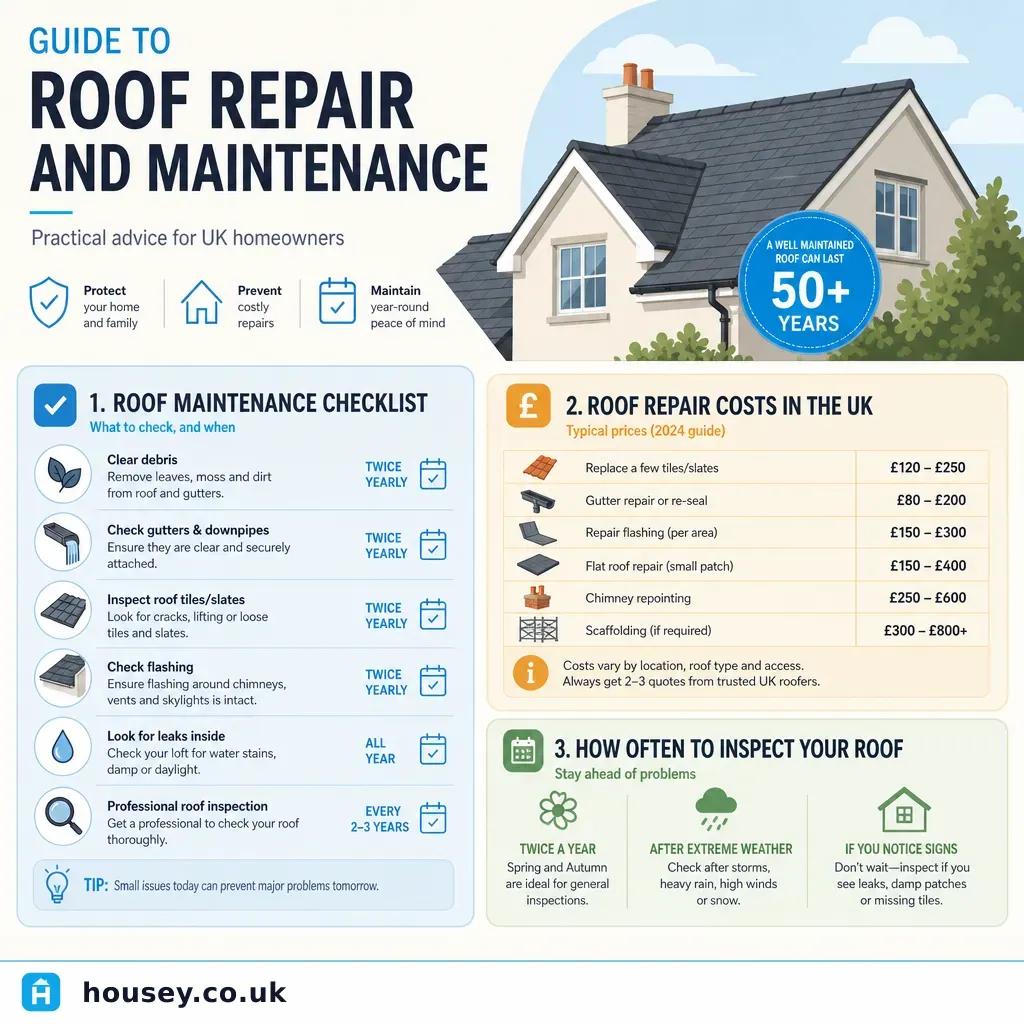
Guide to Roof Repair and Maintenance
Regular roof inspections every 3–5 years, prompt repair of damaged tiles and failed flashings, and annual gutter clearance are the core of effective UK roof maintenance.
 Improvement & Build
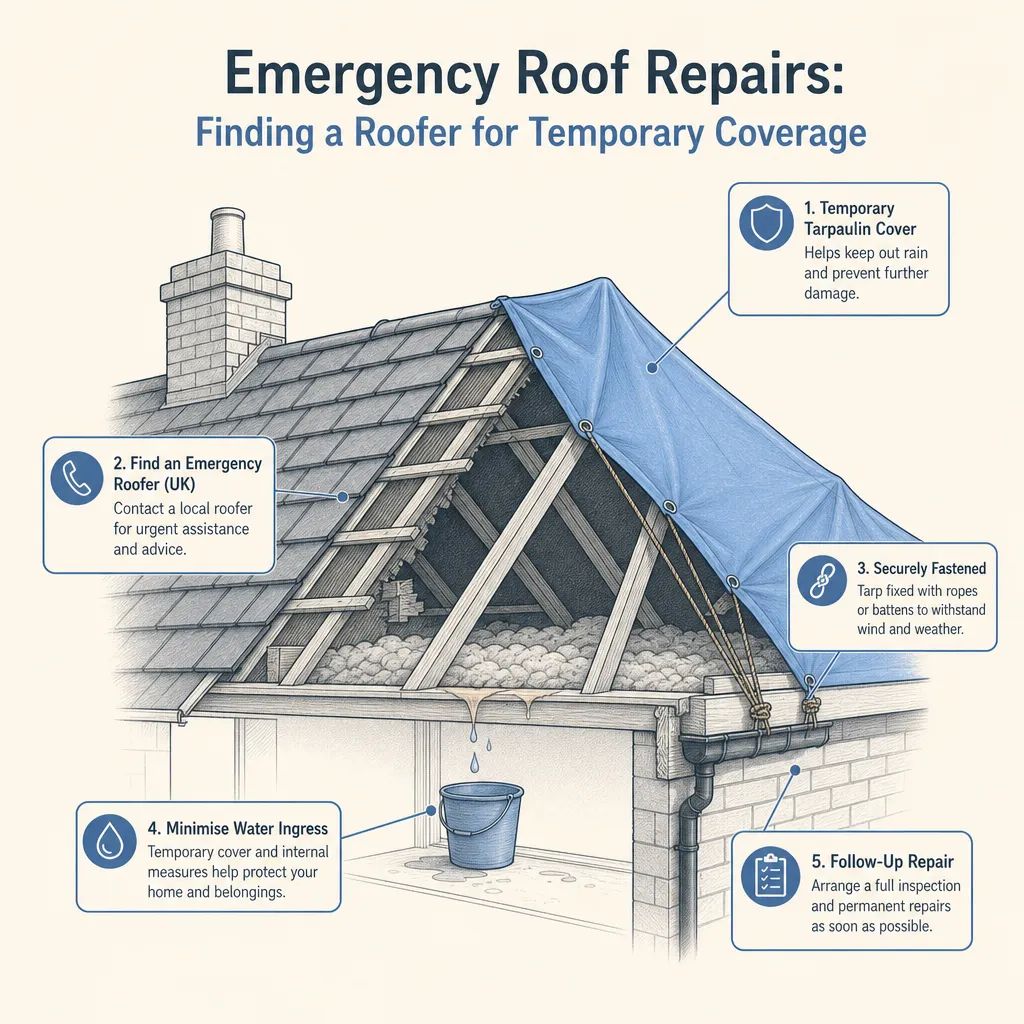
Emergency Roof Repairs: Finding a Roofer for Temporary Coverage
After storm or impact damage, the immediate priority is weatherproofing, not a permanent repair.
 Improvement & Build
Concrete Sealing: Protecting and Maintaining Your Driveway
Sealing a concrete driveway protects against water ingress, freeze-thaw damage, oil stains, and surface wear.
 Improvement & Build
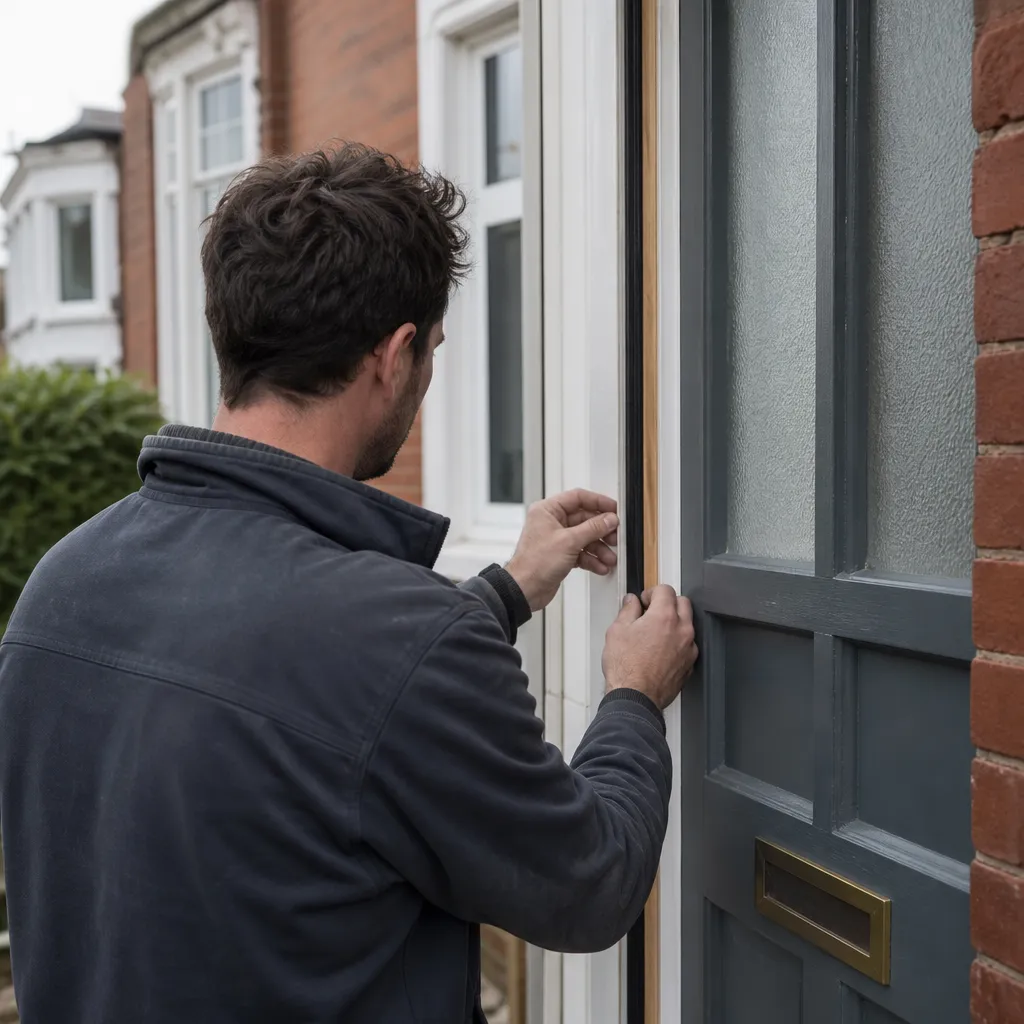
Door Weatherproofing And Sealing: Window And Door Contractors
Door weatherproofing involves fitting draught seals, threshold strips, letterbox brushes, and door sweeps to stop cold air and rain entering around the frame and threshold.
 Improvement & Build
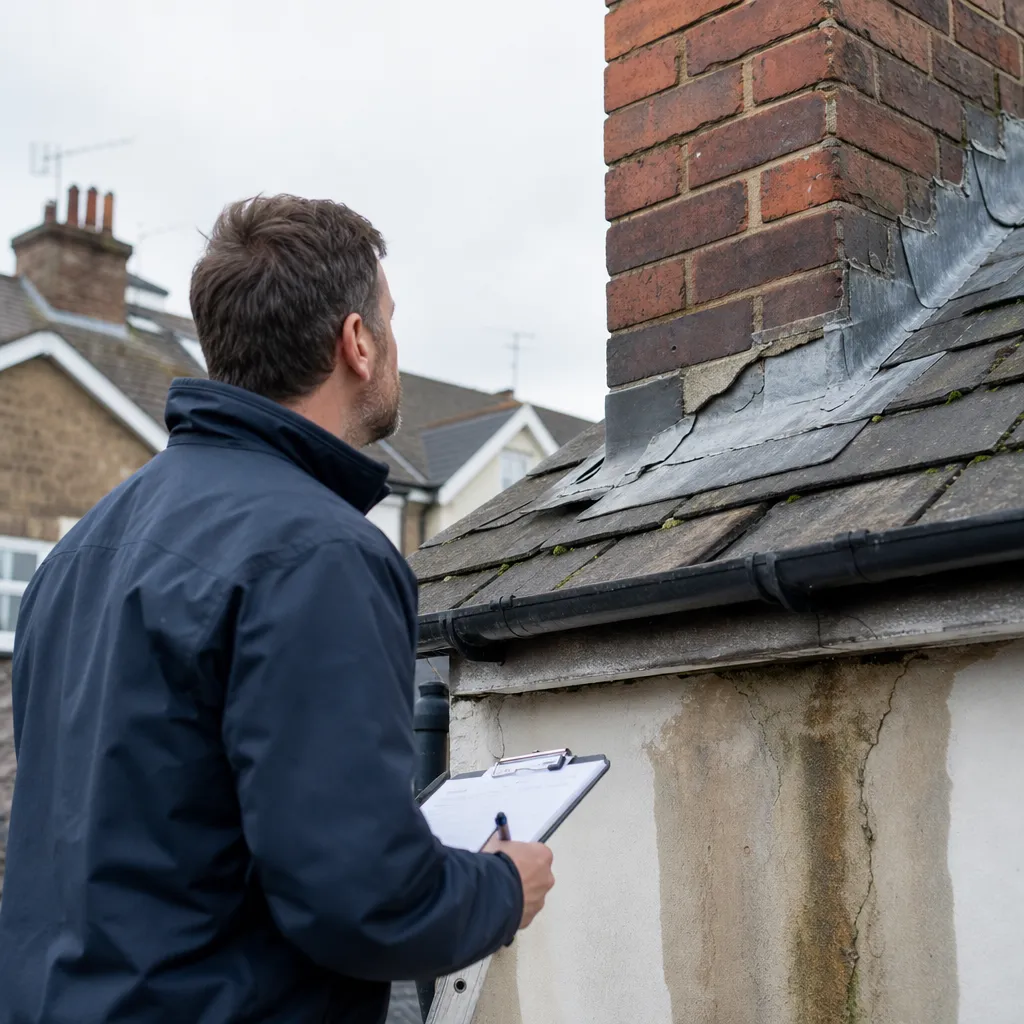
Why incorrect roof repairs lead to masonry water damage
Poorly executed roof repairs — including failed flashing, incorrect mortar on chimney stacks, and unrestored weathering details — allow water to track behind masonry, causing damp patches, spalling, and timber decay, often months after the original work.