Bay Windows versus Bow Windows: Design, Costs, and Installation Differences
By Housey · Last reviewed 11th of May 2026
Bay Windows versus Bow Windows: Design, Costs, and Installation Differences
Choosing between a bay window and a bow window is a decision that can feel cosmetic but has real implications for your property's character, planning status, structural requirements, and budget. The question most often arises when replacing failed existing windows, renovating a period reception room, or extending the front elevation of a house — and the right choice depends on your property's age, architectural style, and local planning context.
Key points
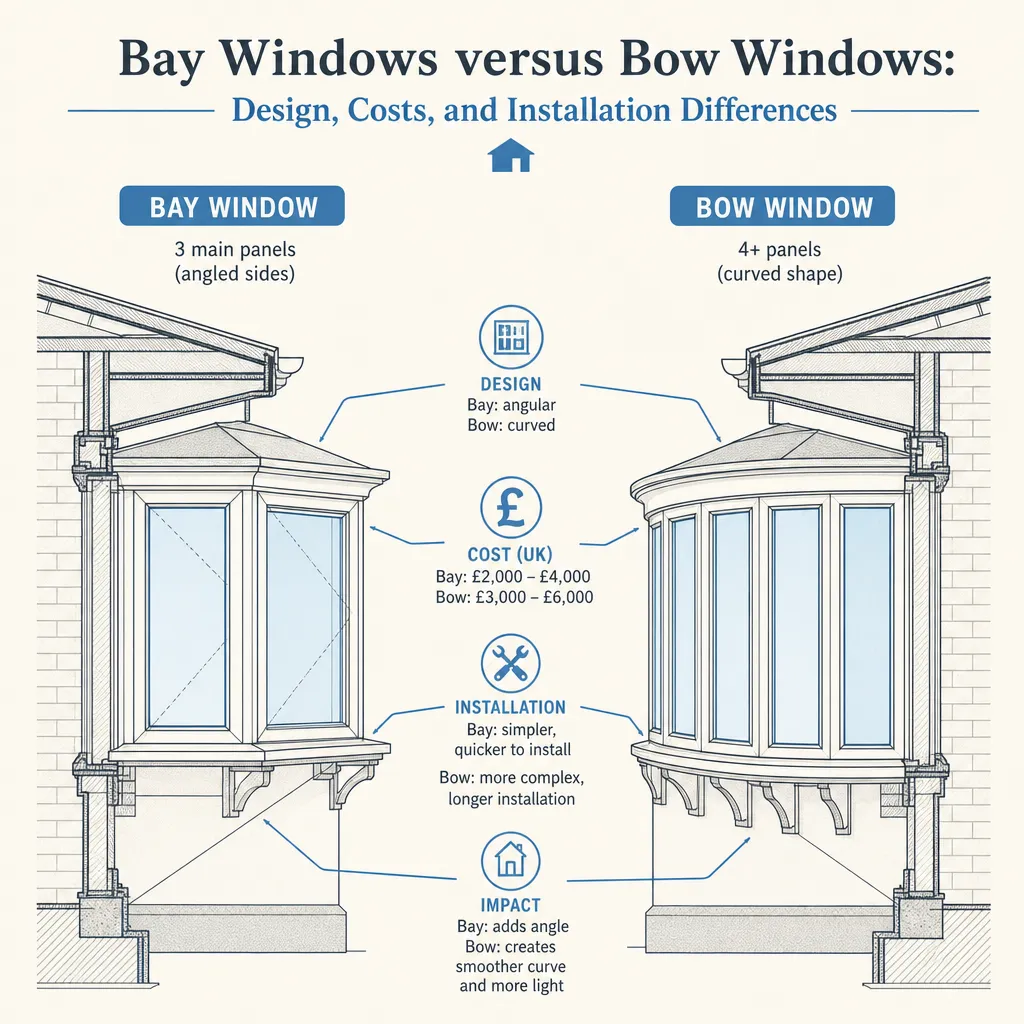
- A bay window projects outward from the wall in an angular formation — usually three panels at 90° or 135° — while a bow window uses four or more equal-width panels to create a continuous gentle curve.
- Most bay and bow window replacements in England fall under permitted development, but properties in conservation areas, AONBs, or subject to Article 4 directions may require planning permission for material alterations to front elevations.
- FENSA-registered installers self-certify compliance with Building Regulations Approved Document L (conservation of fuel and power); retain the FENSA certificate as it is required at resale and will be requested by your conveyancer.
- Indicative UK supply and installation costs range from approximately £1,500–£3,500 for a standard uPVC bay window to £3,000–£6,000 or more for timber or aluminium bow window installations (indicative UK costs, last reviewed 2026-05-11; quotes vary by material, glazing specification, size, and location).
- Both bay and bow windows require a roof structure — typically a flat or hipped lead or tile roof — which adds to installation cost and requires periodic maintenance over the life of the window.
What is the difference between a bay and a bow window?
Bay windows
A bay window consists of a central panel flanked by angled side panels, creating a rectilinear projection from the wall face. The most common configurations in UK residential property are:
- Square bay: side panels meet the wall at 90°, creating a box-like projection with a flat front
- Canted bay: side panels meet the wall at 45° (giving an interior angle of 135°), the most common form in Victorian and Edwardian terraces and semis
Bay windows are strongly associated with Victorian and Edwardian residential architecture and appear widely on period terraces, semis, and detached houses across Britain. They typically sit on a brick or stone plinth and are capped with a flat, pitched, or hipped roof section.
Bow windows
A bow window uses four or five panels of equal width arranged in a gentle arc. Because each panel is narrower, the overall curve appears smoother than a bay of equivalent span. Bow windows are more common in Georgian and Regency architecture and in some 1970s–1990s new-build developments. The projection is typically shallower than a bay of equivalent width.
Bay vs bow: a comparison
Feature | Bay window | Bow window |
|---|---|---|
Shape | Angular — 3 panels at 90° or 135° | Curved — 4 to 5 equal-width panels |
Common architectural styles | Victorian, Edwardian, 1930s | Georgian, Regency, modern new-build |
Usable floor space gained | More — deeper projection | Less — shallower arc |
Roof structure | Flat, pitched, or hipped lead or tile roof | Typically flat or gently curved roof |
Structural complexity | Requires lintel and padstone at each pier | Similar; wider spans need careful lintel specification |
Indicative installed cost (uPVC) | £1,500–£3,500 | £2,000–£4,500 |
Indicative installed cost (timber or aluminium) | £2,500–£5,500 | £3,000–£6,000+ |
Indicative UK costs, last reviewed 2026-05-11. Quotes vary by specification, glazing type, location, and contractor.
Materials: uPVC, timber, and aluminium
uPVC is the most common choice for budget-conscious replacements and suits 1930s to 2000s properties well. It is low-maintenance but less appropriate for listed buildings or conservation areas where planners may require traditional materials.
Timber — softwood or hardwood — is appropriate for period properties and is often required by conservation area conditions or listed building consent. Hardwood frames such as oak or sapele are more durable but significantly more expensive than softwood. Timber requires periodic repainting or restaining every five to eight years.
Aluminium, including slim-section heritage-style profiles, offers a slimmer sightline and suits contemporary properties and loft conversions. Powder-coated aluminium is low-maintenance and available in a wide range of RAL colours. It is generally more expensive than uPVC but less costly than premium hardwood.
Planning and permitted development
When planning permission is not usually required
Under the Town and Country Planning (General Permitted Development) (England) Order 2015, replacing an existing window like-for-like — including replacing a bay with a bay of similar dimensions and materials — is generally permitted development for most houses. The replacement must not project beyond the plane of the existing wall and must match in terms of materials and finish.
When planning permission is likely needed
- The property is in a conservation area and the change affects the front or side elevation visible from a highway
- The property is listed (listed building consent is required for any alteration affecting its character, including changes to glazing style, frame material, or window configuration)
- An Article 4 direction has removed permitted development rights in the area
- The new window forms a new opening or significantly enlarges an existing one in a loadbearing wall
Always check with your local planning authority before beginning work. A window and door installer with experience in conservation areas can advise on what has been accepted locally in similar properties.
Building regulations and FENSA
All replacement windows must comply with Building Regulations Approved Document L, meeting minimum thermal performance requirements. The most practical compliance route is to use a FENSA-registered company, which self-certifies the installation without the need for a separate local authority building control application. The FENSA certificate is required when selling the property and will be requested by your conveyancer or the buyer's solicitor. Verify your installer's FENSA registration on the FENSA online register before work begins.
What to ask before accepting a quote
- What exact frame material, profile, and glazing specification is included — U-value, gas fill, warm-edge spacer bar type?
- Is the existing lintel being assessed as part of the survey, and if replacement is needed, is that included in the price?
- What roof structure is included above the projection — lead flashing, felt, or tiles — and what is the warranty period?
- Is FENSA certification included, and will the certificate be provided on completion?
- Is scaffolding or access equipment costed within the quote, or quoted separately?
- Are existing window boards, reveals, and internal sills included in making-good works?
- Is VAT included in the figure quoted?
- What happens if structural issues — a failing lintel or inadequate padstone — are discovered during installation?
Homeowner installation checklist
Before installation day, confirm the following:
When to get professional help
Consult a structural engineer or chartered building surveyor before proceeding if:
- The opening is being newly formed or significantly enlarged in a loadbearing wall
- There is existing cracking, movement, or persistent damp above or beside the current opening
- The property is listed or you are uncertain of its planning history
- The existing bay structure shows signs of distress — cracked plinth, displaced brickwork, or water ingress into the bay roof void
How Housey can help
Housey connects homeowners with vetted window and door installers experienced with bay and bow window installations across a range of property types and conservation settings. Submit a request, compare quotes side by side, and choose an installer with the right specification experience for your home.
Frequently asked questions
Do bay windows add value to a house?
A well-maintained period bay window — authentic to the property's architecture — is generally considered a positive feature by RICS valuers and estate agents, particularly in Victorian and Edwardian stock where original character is intact. Poorly matched replacements or uPVC substitutions in period homes can have the opposite effect, so material choice and proportions matter.
How long does a bay or bow window installation take?
Most standard replacements complete in one to two days. A new opening with structural work, or a complex roof detail with lead, can extend the programme to three to five days. Listed building projects requiring bespoke joinery and conservation glazing may take considerably longer and need more planning lead time.
Can I replace the glazing in a bay window without replacing the frame?
If the existing frame is structurally sound and meets current thermal performance requirements, individual sealed units can often be replaced without full frame removal. A FENSA-registered glazier can assess whether the frame qualifies or whether a full replacement is the more practical and cost-effective option.
Do bow windows require planning permission in conservation areas?
If the property is in a conservation area and the bow window is on a front or side elevation visible from a public highway, planning permission is likely required — even for a like-for-like replacement if the style changes from angular to curved, or vice versa. Always check with your local planning authority before ordering.
Sources and further reading
Useful next reads
 Improvement & Build
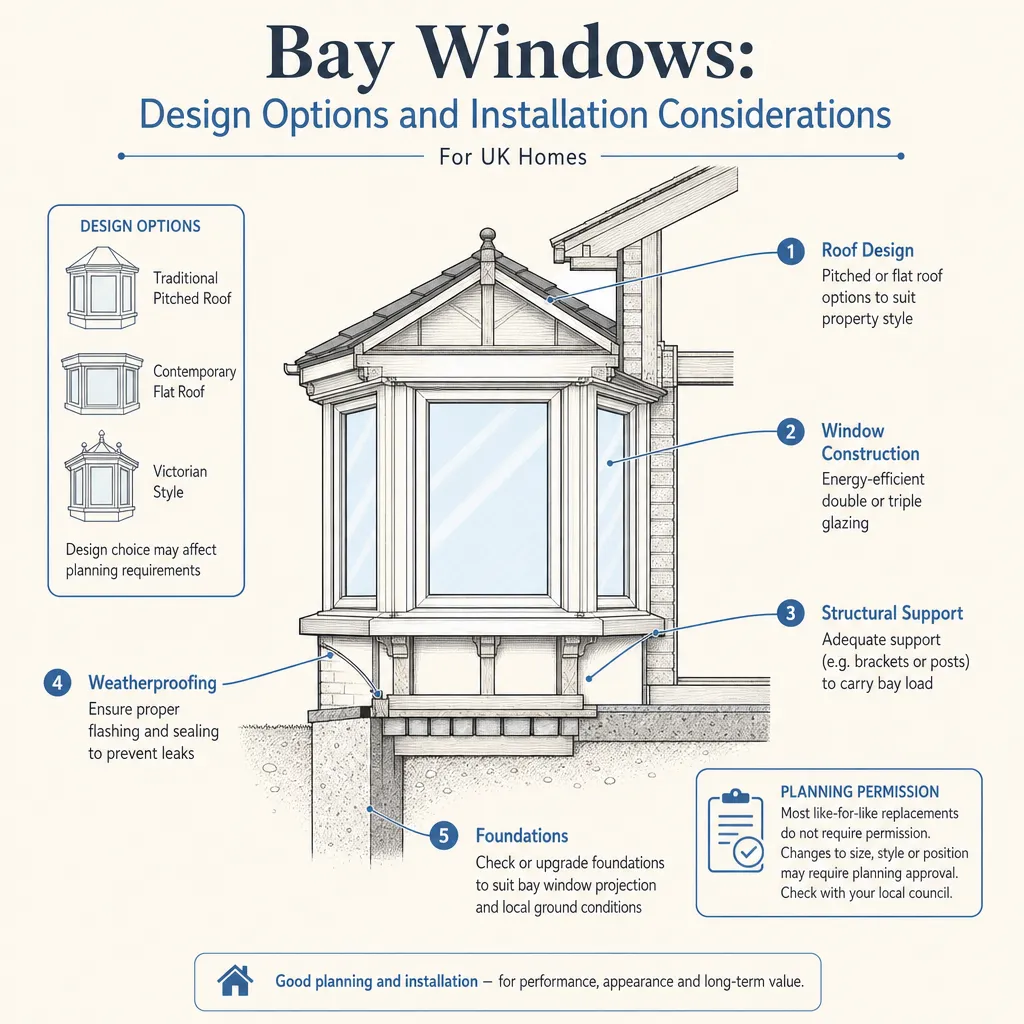
Bay Windows: Design Options and Installation Considerations
Bay windows project beyond the main wall of a house, increasing floor area and natural light.
 Improvement & Build
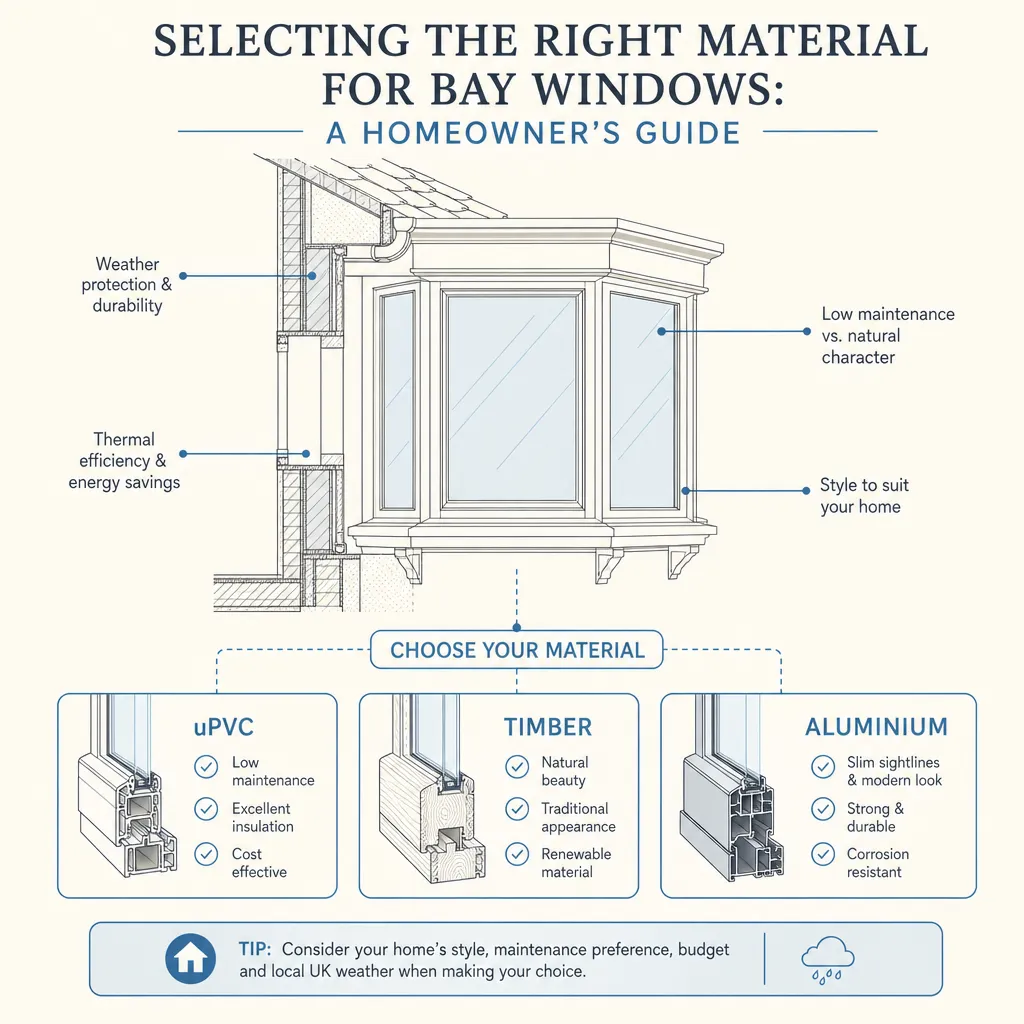
Selecting the right material for bay windows: a homeowner's guide
The main bay window materials in the UK are uPVC, timber, and aluminium.
 Improvement & Build
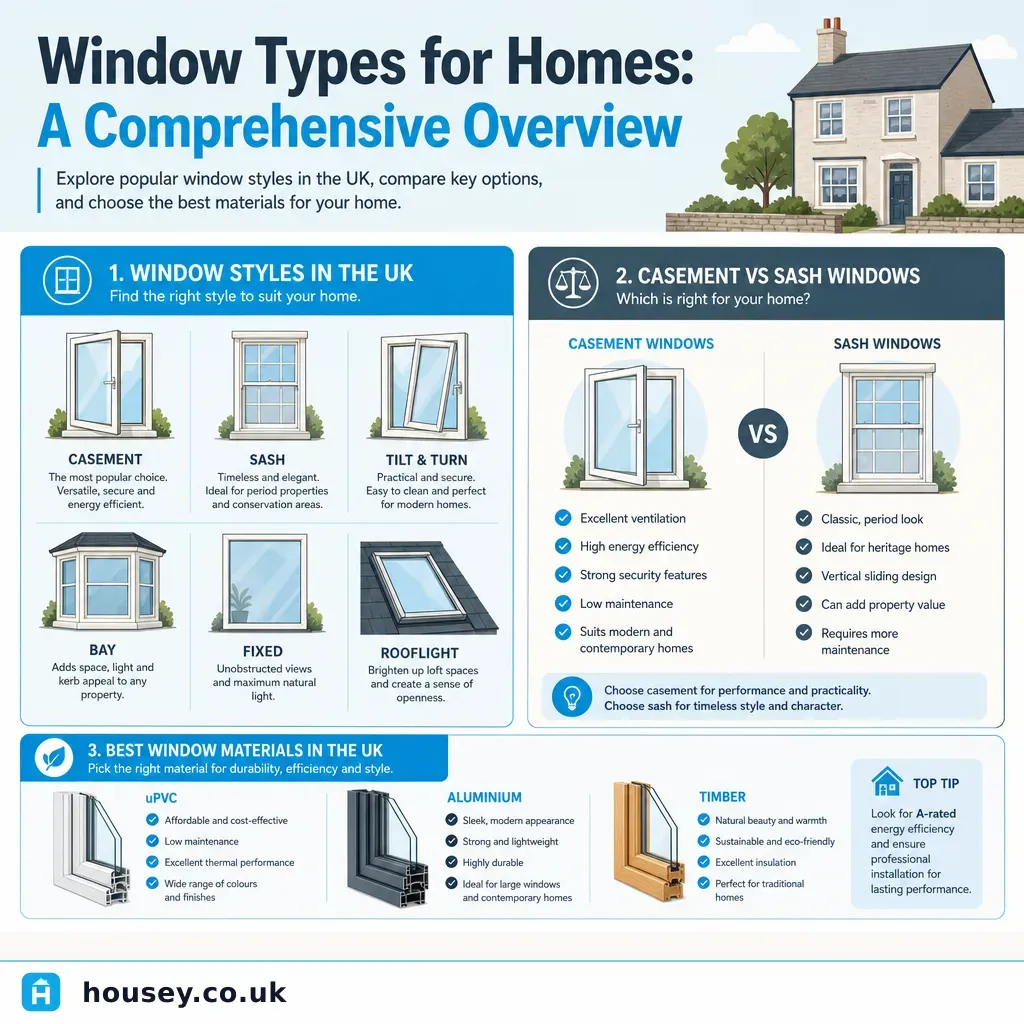
Window Types for Homes: A Comprehensive Overview
UK homes use several main window styles: casement (outward-swinging), sash (vertically sliding), tilt-and-turn, fixed light, and bay or bow.
 Improvement & Build
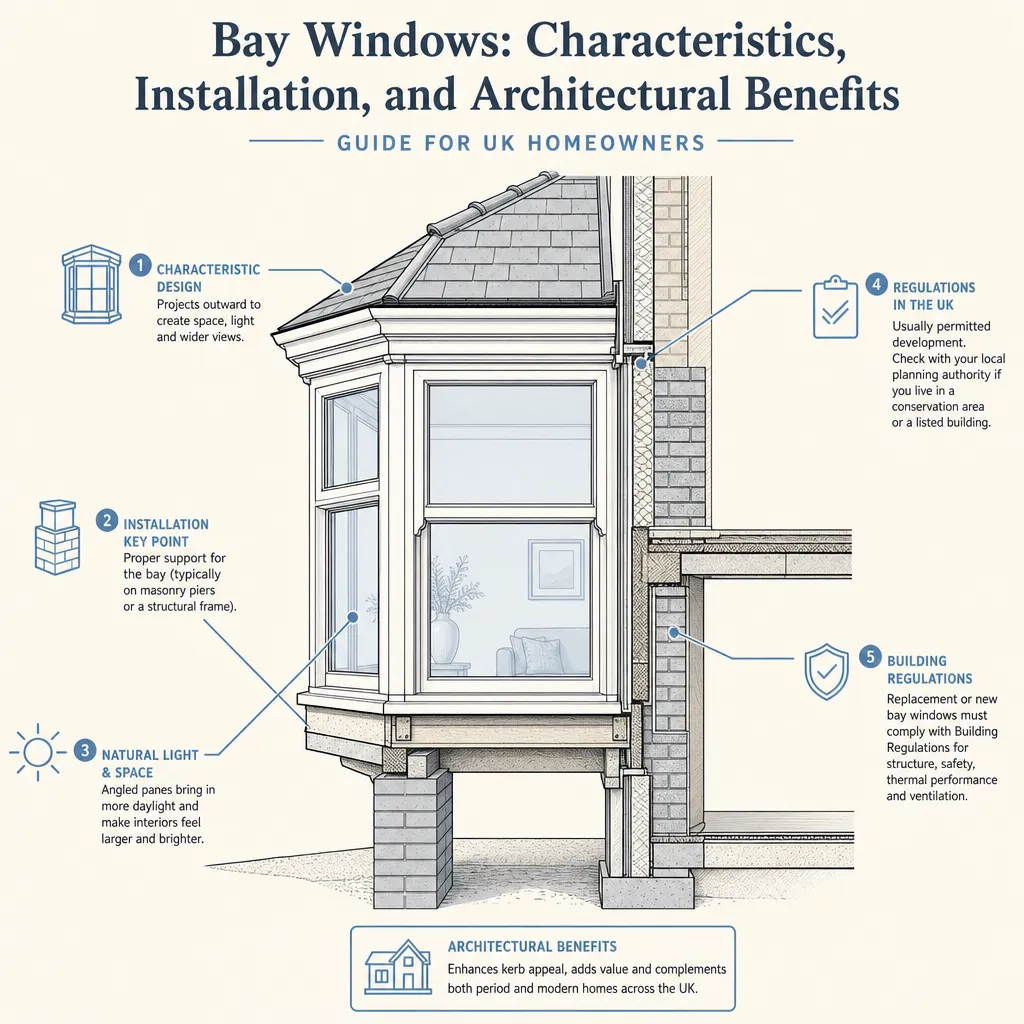
Bay Windows: Characteristics, Installation, and Architectural Benefits
Bay windows project outward from the main wall, adding floor space, natural light, and architectural character.
 Improvement & Build
Metal Roofing Systems: Materials, Performance and Installation
Metal roofing systems in the UK include standing seam zinc, coated steel, aluminium, and copper panels, as well as profiled sheets.