Selecting the right material for bay windows: a homeowner's guide
By Housey · Last reviewed 11th of May 2026
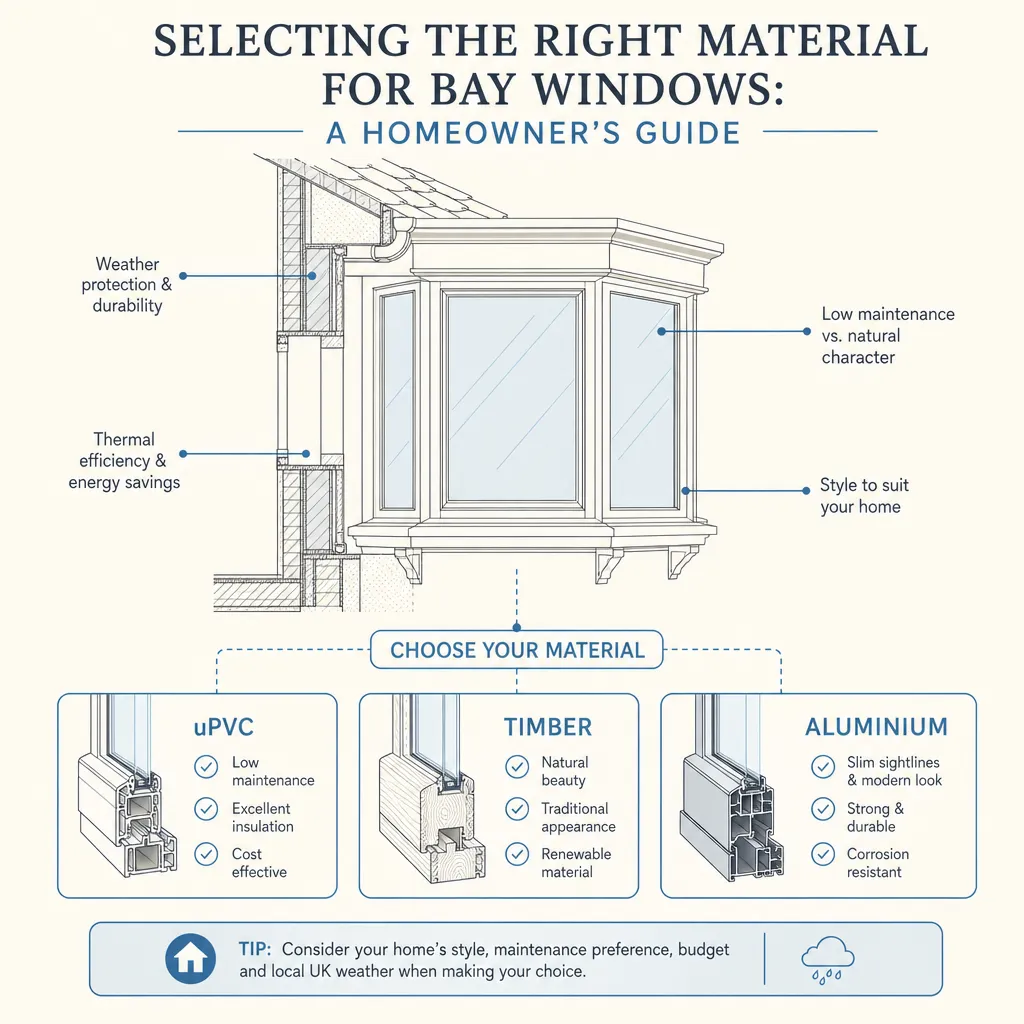
Selecting the right material for bay windows: a homeowner's guide
Bay windows are a defining feature of many UK property types — from Victorian terraces and Edwardian semis to 1930s suburbs and post-war estates. When replacing or installing a bay, material choice affects thermal performance, maintenance burden, visual character, and — in conservation areas or on listed buildings — what you are actually permitted to use. Getting the decision right from the outset avoids abortive spend on non-compliant products and ensures the replacement lasts.
Key points
- Timber bay windows are required or strongly preferred in most conservation areas and for listed buildings; confirm with your local planning authority before ordering any replacement windows.
- Replacing windows in England is usually permitted development, but conservation area Article 4 directions and listed building status often remove this right and require a planning application.
- All replacement windows must meet a whole-window U-value of 1.4 W/m²K or better under Building Regulations Approved Document L (2022 edition).
- Window replacements must be self-certified by a FENSA or CERTASS-registered installer, or inspected by local authority building control — without a certificate, you may encounter difficulty when selling.
- Aluminium bay windows require thermally broken frames to comply with Part L; older non-thermally-broken aluminium does not meet current standards and should not be specified for new work.
Bay window materials compared
Material | Typical lifespan | Maintenance | Thermal performance | Best suited to | Planning restrictions |
|---|---|---|---|---|---|
uPVC | 20–30 years | Very low (wipe clean) | Good (triple glazing available) | Post-war and estate homes | Often excluded from conservation areas |
Timber (softwood) | 30–60 years with care | High (paint/treat every 5–7 yrs) | Good with modern glazing | Victorian, Edwardian, period homes | Often required in conservation areas |
Timber (hardwood/Accoya) | 60+ years | Moderate (oil or paint) | Good with modern glazing | Period and higher-spec properties | Often required in conservation areas |
Aluminium (thermally broken) | 30–45 years | Very low | Good | Contemporary, extensions, refurbs | Generally acceptable; confirm with LPA |
Composite (timber-aluminium) | 30–40 years | Low (aluminium exterior) | Good | Period and modern properties | Varies — confirm with LPA |
Indicative UK costs, last reviewed 2026-05-11. Costs vary by size, specification, and installer; always obtain at least three quotes.
uPVC bay windows
uPVC is the dominant material in the UK replacement window market, favoured for its relatively low cost, low maintenance, and wide installer availability. Modern profiles are available in a range of colours and woodgrain finishes, though white and light grey remain the most common choices.
Advantages:
- Lowest installed cost of the main bay window materials
- No painting or treating required; clean with a damp cloth
- Double or triple glazed units are straightforward to accommodate in standard profiles
- Wide choice of FENSA-registered installers across the UK
Limitations:
- Damaged sections typically require full frame replacement rather than localised repair
- Not permitted in most conservation areas or on listed buildings
- Can look out of character on period properties even in woodgrain finishes
- Profile thicknesses are greater than aluminium, reducing the glass-to-frame ratio
Timber bay windows
Timber remains the material of choice for period properties and, in many cases, is the only option a local planning authority will approve in a conservation area. Softwoods (Scots pine, redwood) cost less but require painting or staining every 5–7 years. Hardwoods — particularly Accoya (acetylated softwood), European oak, and similar species — cost more initially but are more dimensionally stable and less prone to rot with normal maintenance.
Advantages:
- Authentic character for Victorian, Edwardian, and inter-war properties
- Required or strongly preferred in conservation areas and for listed buildings
- Can be repaired and refurbished rather than replaced entirely, lowering lifetime costs with good upkeep
- Excellent longevity when properly maintained
Limitations:
- Highest ongoing maintenance of all materials; lapses in care can lead to rot, swelling, or warping
- Higher upfront cost than uPVC — typically 40–80% more for a comparable specification
- Longer lead times, as bespoke joinery is often required for non-standard bay configurations
Aluminium bay windows
Thermally broken aluminium frames have improved substantially in thermal performance over older single-skin designs and now meet Building Regulations Part L requirements comfortably. Aluminium's structural properties allow slimmer profiles and larger glass areas than uPVC, which appeals for contemporary design and extension projects.
Advantages:
- Slim sightlines and larger glass areas compared with uPVC profiles
- Extremely durable and weather-resistant with very low ongoing maintenance
- Available in a wide RAL powder-coated colour palette, including dual-colour options
- Long lifespan of 30–45+ years
- Generally acceptable in conservation areas where the visual character is appropriate
Limitations:
- Higher upfront cost than uPVC — often 30–60% more for a comparable specification
- Fewer specialist installers than the uPVC market
- Always confirm the specification includes a thermal break; non-thermally-broken aluminium does not meet current Part L requirements
Which material is right for your property?
- Choose uPVC if your property is a 1960s–2000s home outside a conservation area, budget is a priority, and you want the lowest ongoing maintenance commitment.
- Choose timber if your property is Victorian, Edwardian, or inter-war, is in a conservation area, or is listed — verify with your LPA before ordering anything.
- Choose aluminium if you want slim profiles, a contemporary appearance, very low maintenance, and have the budget for the higher upfront cost.
- Choose composite (timber-aluminium) if you want the internal look and feel of timber combined with the weather durability of an aluminium exterior.
- Check with your LPA before committing to any material if your property is in a conservation area or under an Article 4 direction.
Planning and building regulations considerations
Replacing like-for-like windows in England is usually permitted development under Schedule 2, Part 1 of the GPDO 2015. However, several situations require planning permission or consent:
- Conservation areas: Article 4 directions frequently remove permitted development rights for window replacements; planning permission is usually required.
- Listed buildings: Listed Building Consent is required for any works affecting appearance — including window replacement, even if the material appears unchanged.
- Building Regulations Part L (Approved Document L, 2022 edition): replacement windows must achieve a whole-window U-value of 1.4 W/m²K or better.
- Self-certification: work must be carried out or certified by a FENSA or CERTASS-registered installer, or notified to and inspected by local authority building control. Without a certificate, the work may complicate a future property sale.
Always confirm the rules that apply to your property with your local planning authority before committing to a material or placing an order.
When to get professional help
Seek advice from a specialist joiner, a conservation architect, or a RICS-accredited building surveyor if:
- Your property is listed or in a conservation area and you are uncertain what material or style the LPA will accept
- The bay window structure shows signs of movement — cracked or stepped brickwork, settling sills, or bowing
- You are replacing windows on a property where the bay may have been built to non-standard dimensions requiring bespoke joinery
- There is evidence of damp, rot, or a failed lintel above the bay opening
How Housey can help
Housey connects homeowners with experienced window and door installers who hold FENSA or CERTASS registration, can advise on the right material for your property type, supply accurate quotes for your specific bay window configuration, and ensure work meets Building Regulations requirements.
Frequently asked questions
Do I need planning permission to replace bay windows?
In most cases in England, replacing windows is permitted development and does not require planning permission, provided the replacement is in a similar style and the property is not in a conservation area, under an Article 4 direction, or listed. Always check with your local planning authority if in doubt, particularly for older or period properties.
Can I replace uPVC bay windows with timber in a conservation area?
Yes — and in many conservation areas, timber is the only material the LPA will approve. You will usually need to submit a planning application. Some councils publish preferred window specifications in their conservation area appraisals, which is a useful starting point before preparing your application.
How long does bay window installation take?
A straightforward replacement typically takes 1–3 days depending on size and complexity. Bespoke timber joinery may require lead times of 6–12 weeks, followed by a further 1–2 days for installation. Allow additional time if structural investigation, lintel replacement, or decorative masonry repairs are needed.
Will new bay windows reduce my energy bills?
Modern double or triple glazed units can significantly reduce heat loss compared with single glazing or aged failed units. Energy Saving Trust guidance suggests replacing single-glazed windows in a typical semi-detached home could save around £105–£155 per year, though actual savings vary with energy prices, property size, and heating habits.
Sources and further reading
- Windows, doors and glazing — Planning Portal — permitted development rules for England
- Building regulations approval — GOV.UK — Part L compliance and self-certification schemes
- Windows in listed buildings — Historic England — guidance for listed building owners
- FENSA scheme — self-certification for window and door replacements in England and Wales
- Double glazing — Energy Saving Trust — energy savings guidance
Useful next reads
 Improvement & Build
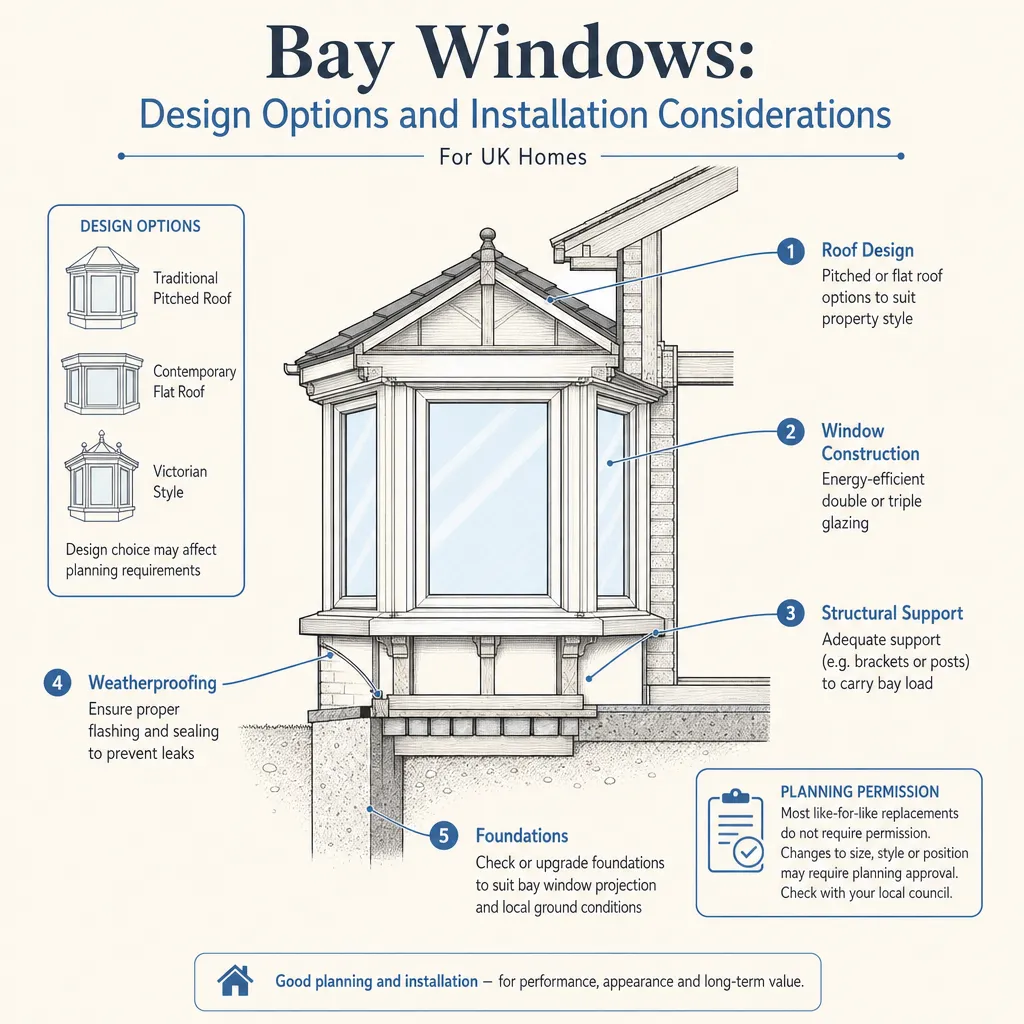
Bay Windows: Design Options and Installation Considerations
Bay windows project beyond the main wall of a house, increasing floor area and natural light.
 Improvement & Build
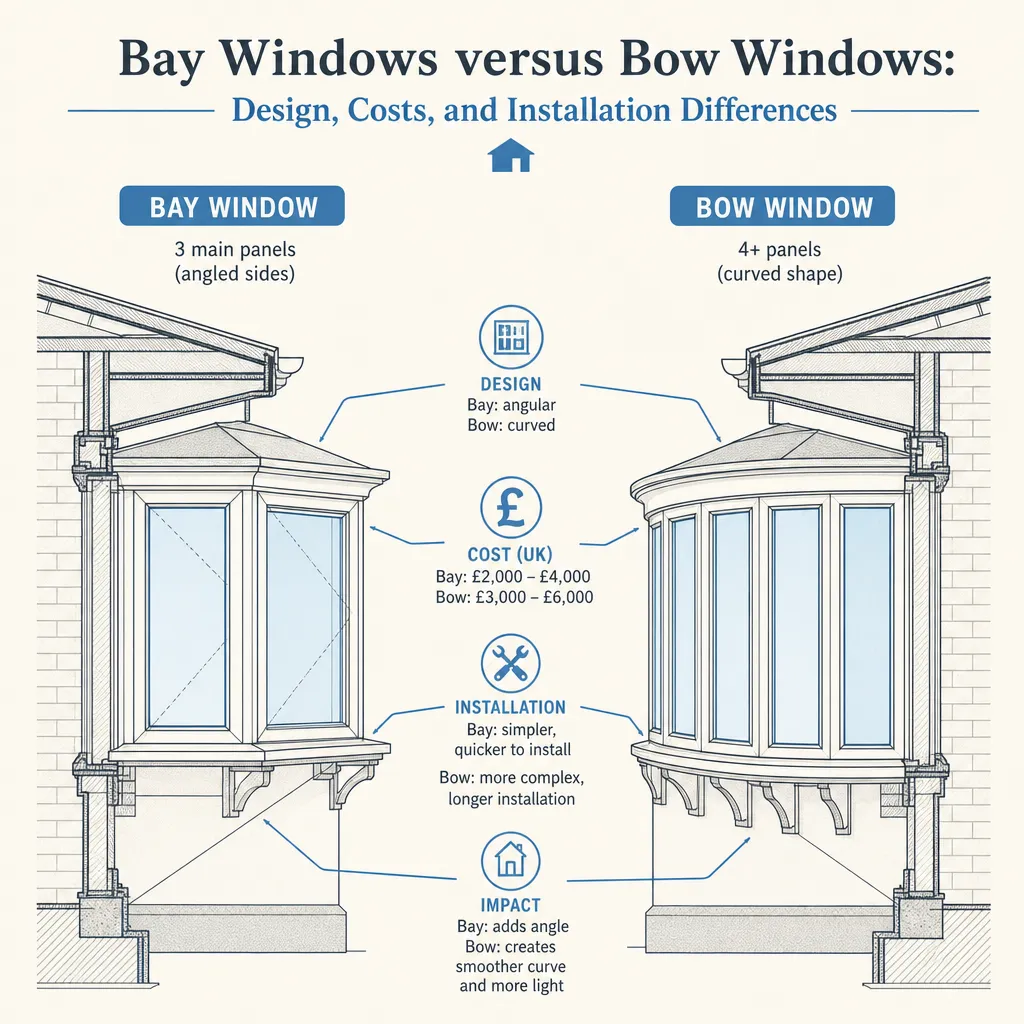
Bay Windows versus Bow Windows: Design, Costs, and Installation Differences
Bay windows project outward at angles — usually three panels at 90° or 135° — creating more floor space inside.
 Improvement & Build
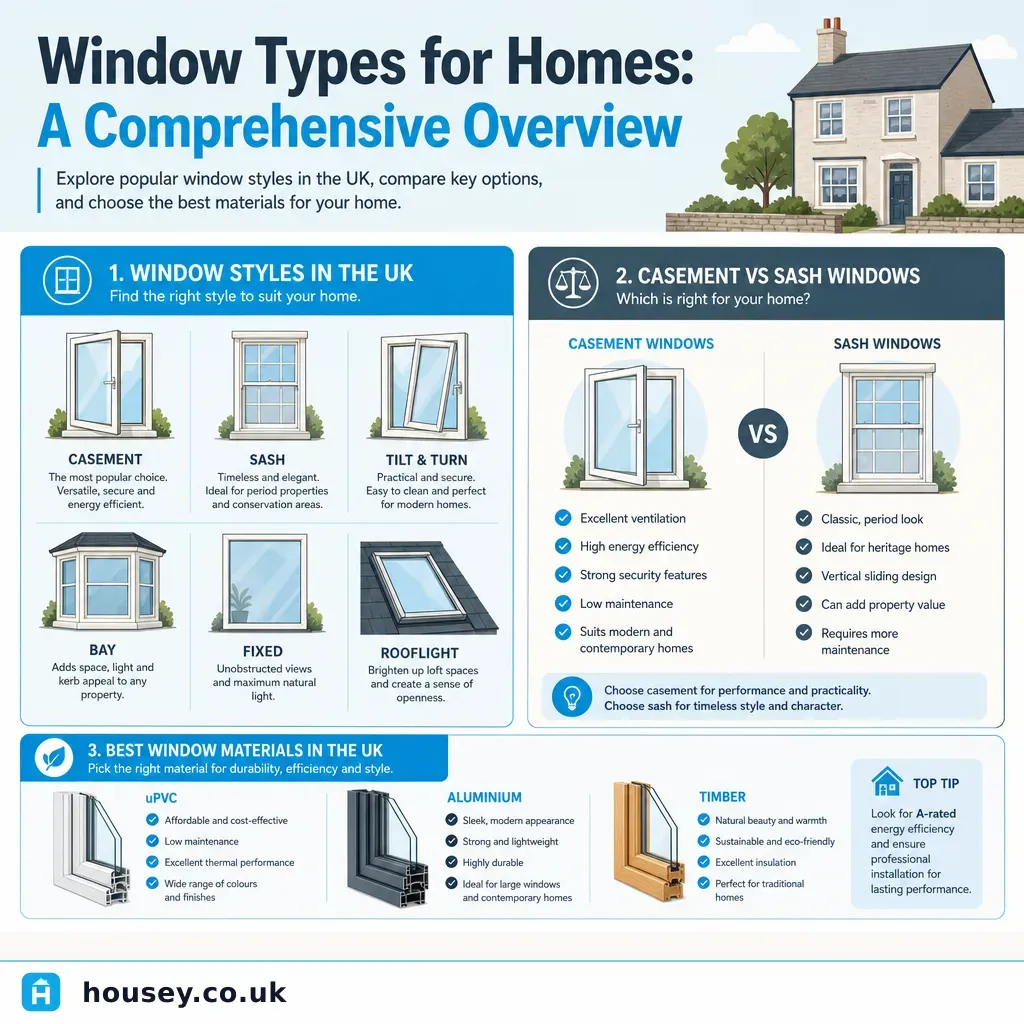
Window Types for Homes: A Comprehensive Overview
UK homes use several main window styles: casement (outward-swinging), sash (vertically sliding), tilt-and-turn, fixed light, and bay or bow.
 Improvement & Build
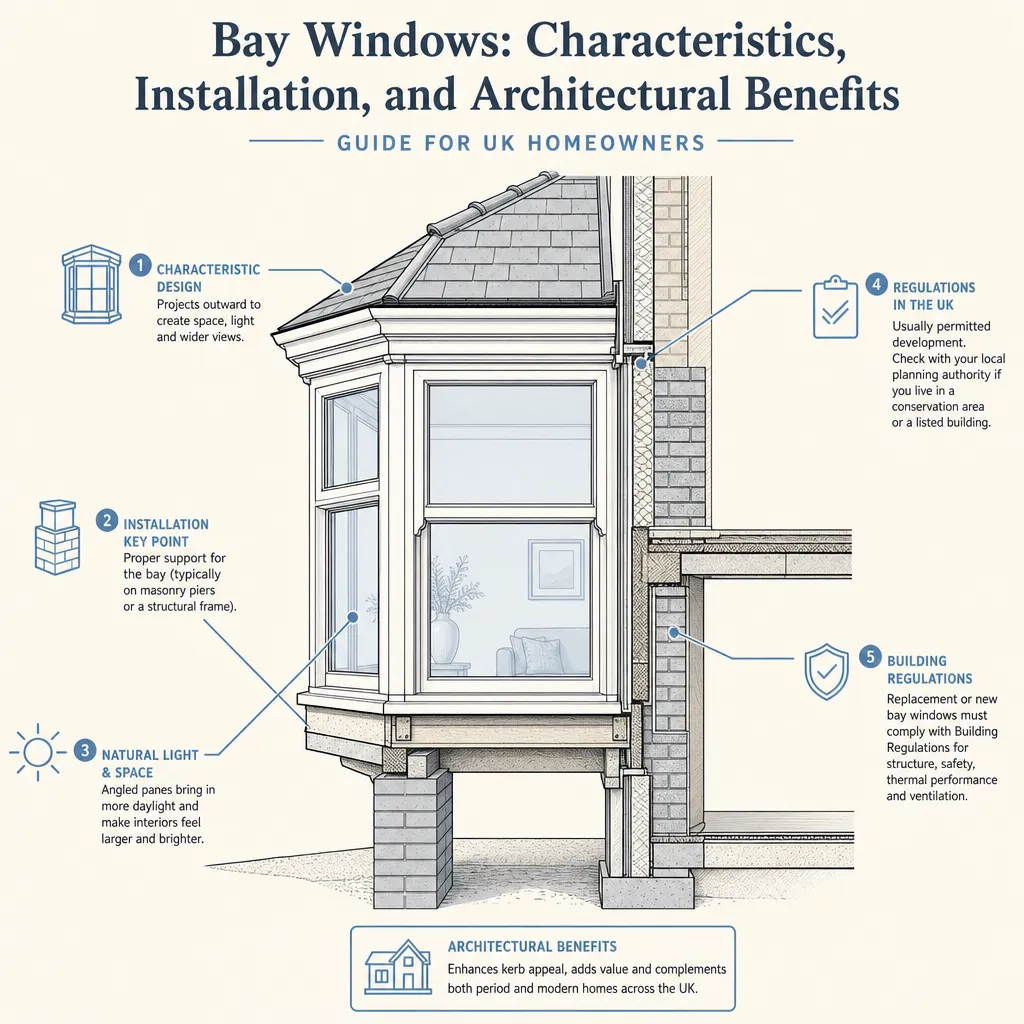
Bay Windows: Characteristics, Installation, and Architectural Benefits
Bay windows project outward from the main wall, adding floor space, natural light, and architectural character.
 Improvement & Build
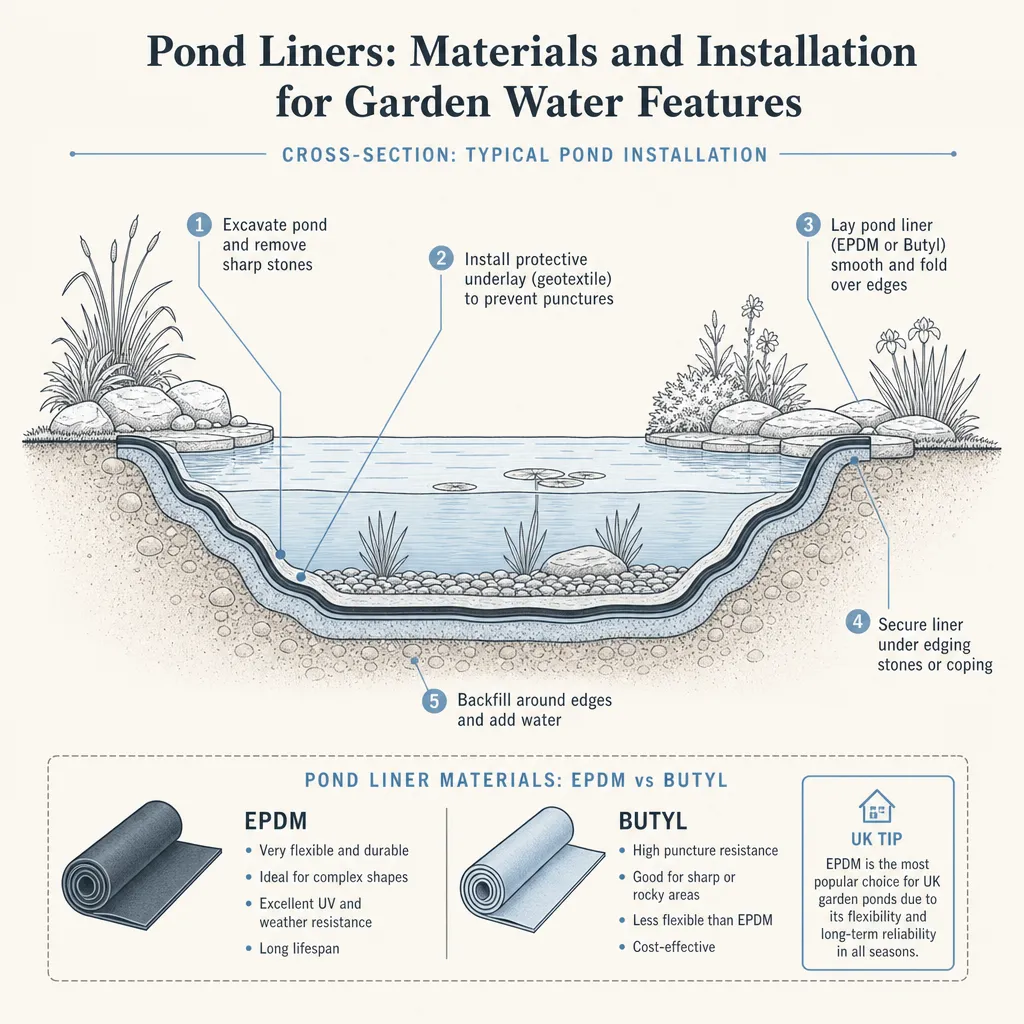
Pond Liners: Materials and Installation for Garden Water Features
Garden pond liners come in four main types: EPDM rubber, butyl rubber, PVC, and preformed fibreglass.