Renovating a Beach Hut: Planning and Costs
By Housey · Last reviewed 5th of May 2026
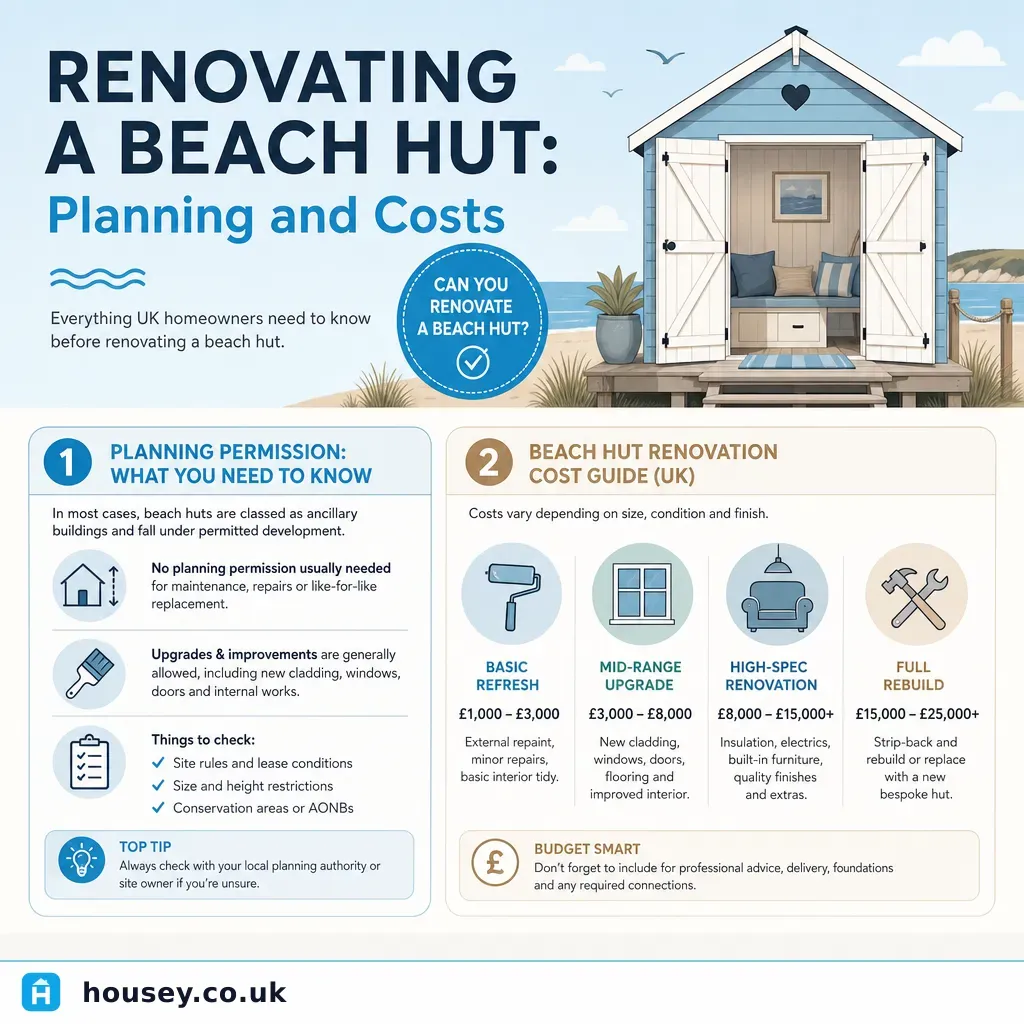
Renovating a Beach Hut: Planning and Costs
Beach huts are among the most distinctive fixtures of the British seaside — from Southwold's pastel-painted rows to Bournemouth's promenade chalets. But renovating one is rarely as simple as hiring a builder. Most beach huts sit on leased land owned by a local authority, estate, or beach hut association, and the combination of lease conditions, coastal planning designations, and restricted site access means that even modest work can involve more approvals than expected.
Key points
- Most beach huts in England are held on a licence or leasehold from a local authority or private landowner — the majority of leases require written permission before any structural changes are made.
- Many coastal sites fall within Areas of Outstanding Natural Beauty (AONBs), National Landscapes, or conservation areas where permitted development rights are curtailed or entirely removed.
- Re-roofing, re-cladding, or structural repair to a beach hut typically costs between £1,500 and £8,000 depending on size, materials, and site access; cosmetic refurbishment (repainting, new floor) typically costs £300–£1,500.
- Beach huts are classified as non-residential structures and cannot legally be used for overnight sleeping under most local authority leases — any renovation that implies sleeping accommodation may breach your lease.
- Building Regulations approval is generally not required for like-for-like maintenance, but new electrical installations, structural alterations, or extensions should be checked with your local building control office before work begins.
Who owns the land your beach hut sits on?
Before planning any renovation, establish the tenure of your beach hut. This has a direct bearing on what you can change and what consent you need to obtain first.
Tenure type | What it means for renovation |
|---|---|
Local authority licence | Most common. Annual or long-term licence. Structural changes almost always require landlord consent; some councils prohibit any change beyond repainting. |
Long leasehold (e.g. 99 years) | More flexibility than a licence but still subject to lease covenants. Structural changes need landlord consent; consult the lease carefully before spending. |
Freehold (rare) | You own the hut and the land. Still subject to planning and Building Regulations, but no lease restrictions. Confirm via HM Land Registry title register. |
Beach hut association lease | Collective ownership via an association. Rules set by the association, which often mirrors the original landowner's conditions. |
If you are unsure of your tenure, check your original purchase documents or contact the beach hut authority or estate office directly.
Does renovating a beach hut need planning permission?
Planning requirements depend on the nature of the work, the location of the site, and your tenure.
Work that usually does not require planning permission:
- Repainting the exterior in the same or a very similar colour
- Replacing like-for-like flooring or internal fittings
- Re-roofing with the same material, maintaining the same pitch and height
Work that may require planning permission:
- Increasing the height or footprint of the hut
- Materially changing the external appearance (for example, replacing timber cladding with composite boards)
- Adding decking, a verandah, a canopy, or ancillary storage structures
- Any external changes in a conservation area, AONB, or National Landscape — even repainting in a noticeably different colour may need consent in some designated areas
The Planning Portal notes that beach huts, as non-residential structures, are not automatically covered by the same permitted development rights that apply to dwelling houses. Rules vary between local authority areas. Always check with your local planning authority (LPA) before starting any work beyond straightforward maintenance. Many LPAs offer a pre-application advice service that can confirm whether a formal application is needed before you spend money on design or contractors.
A worked UK scenario: refurbishing a North Norfolk beach hut
This is a hypothetical example to illustrate typical decisions and costs.
A couple hold a 25-year lease on a timber beach hut in a coastal AONB in North Norfolk. The hut is approximately 3m × 2m with a pitched felt roof and a fold-down front panel. They want to replace the felt roof with cedar shingles, re-clad the exterior with composite timber-effect boards, install a new hardwood floor, and add a small covered verandah (0.5m projection).
What they needed to check first:
- Lease terms: the local authority's standard beach hut lease required written consent for any change to external materials or appearance. Consent was needed before engaging any contractor.
- Planning: the AONB designation restricted permitted development rights; re-cladding with a different material and adding a verandah each required a householder planning application.
- Design guidance: the LPA had a coastal structures design note; cedar shingles were acceptable but composite cladding was not.
Outcome: The couple applied for planning permission (householder application fee in England: £258 as of 2026). Consent was granted for the roof and floor but required painted timber cladding rather than composite. The verandah was refused. Total cost including the planning fee, landlord consent process, and contractor fees: approximately £5,200.
How much does beach hut renovation cost?
Indicative UK costs, last reviewed 2026-05-05. Costs vary significantly by region, site access, and contractor availability.
Scope of work | Typical cost range |
|---|---|
Full exterior repaint (timber, approx. 8m² surface) | £300–£800 DIY / £500–£1,200 contractor |
Roof replacement (felt to EPDM or cedar shingles, 6–9m²) | £800–£2,500 |
Full exterior re-clad (timber boarding, 10–15m²) | £1,500–£4,000 |
New internal floor (hardwood or composite, 6–9m²) | £400–£1,200 |
Structural repair (rotten frame section) | £500–£2,500+ |
Full refurbishment (roof, cladding, floor, internal fit-out) | £4,000–£10,000+ |
Householder planning application (England, 2026) | £258 |
Costs are influenced heavily by site access — beach huts on tiered promenades or shingle banks can be difficult to reach with equipment, and some sites restrict contractor vehicles or require materials to be hand-carried.
Homeowner checklist: before you start a beach hut renovation
Important limitations
This article provides general information about beach hut renovation in the UK. Planning rules, lease conditions, and permitted development rights vary significantly between local authority areas, individual leases, designated landscape areas, and specific sites. Nothing in this article constitutes planning, legal, or structural advice. Rules can change: always confirm current requirements directly with your local planning authority and your landowner before committing to any expenditure or engaging contractors.
What to ask a qualified professional
If your planned renovation involves changes to the external appearance, structure, or any element that might need planning consent, consider consulting a planning consultant or architect with coastal or heritage experience. Ask them:
- Does my proposed work require a planning application, prior approval, or any other formal consent from the LPA or the AONB or National Landscape authority?
- Are there design constraints or material restrictions I should know about before choosing finishes?
- Does my lease restrict any aspect of the work I am planning, and could I inadvertently be in breach?
- Does the work trigger any Building Regulations compliance obligations?
- What is the realistic timescale and cost for obtaining any necessary consents?
When to get professional help
Seek professional planning or legal advice before starting work if:
- The beach hut is in a conservation area, AONB, National Landscape, World Heritage Site, or other designated area
- Your planned changes materially alter the external appearance, footprint, or height of the hut
- You want to add any electrical installation
- Your lease contains covenants or restrictions you are unsure how to interpret
- You are considering any work that might imply residential or overnight use
How Housey can help
Beach hut renovation draws on many of the same skills as general property maintenance — roofing, timber cladding, structural repairs, flooring. Housey can help you find and compare quotes from local tradespeople for the practical elements of a beach hut refurbishment. Describe your project and we can connect you with relevant contractors in your area.
Frequently asked questions
Can I sleep overnight in a renovated beach hut in the UK?
Most beach hut leases in England explicitly prohibit overnight sleeping, and beach huts are legally classified as non-residential structures. Renovation that implies sleeping accommodation may breach your lease and lead to enforcement action by the landowner. A small number of beach chalets with residential status do exist, but these are rare exceptions. Check your lease and confirm with the landowner before making any design decisions that assume overnight use.
Do I need Building Regulations approval to refurbish a beach hut?
Like-for-like repairs — replacing a roof with the same material, renewing flooring, repainting — do not generally require Building Regulations approval. However, adding a new electrical installation, carrying out structural alterations, or significantly changing the thermal performance of the structure may trigger a requirement. Contact your local building control office for informal confirmation before beginning any work beyond straightforward maintenance.
How long does a beach hut renovation take?
Cosmetic work — repainting and a new floor — on a small beach hut can be completed in one to three days. Structural or external cladding work typically takes three to five days for a standard 3m × 2m hut. If planning permission is required, allow eight to twelve weeks for the application process before any construction work can begin.
What materials are best for a beach hut in a coastal location?
Coastal environments accelerate corrosion and timber decay. Preferred materials include hardwoods such as iroko or Western red cedar, stainless steel fixings, and marine-grade paint or oil finishes. EPDM rubber suits low-pitch roofs well. Composite or uPVC cladding is often excluded by design guidance in conservation areas and AONBs, so check with your local planning authority before specifying materials.
Sources and further reading
- Planning Portal: Householder applications and common projects — Planning Portal
- National Planning Policy Framework — GOV.UK / DLUHC
- Search the property register — HM Land Registry
- Areas of Outstanding Natural Beauty: designation and management — Natural England / GOV.UK
Useful next reads
 Improvement & Build
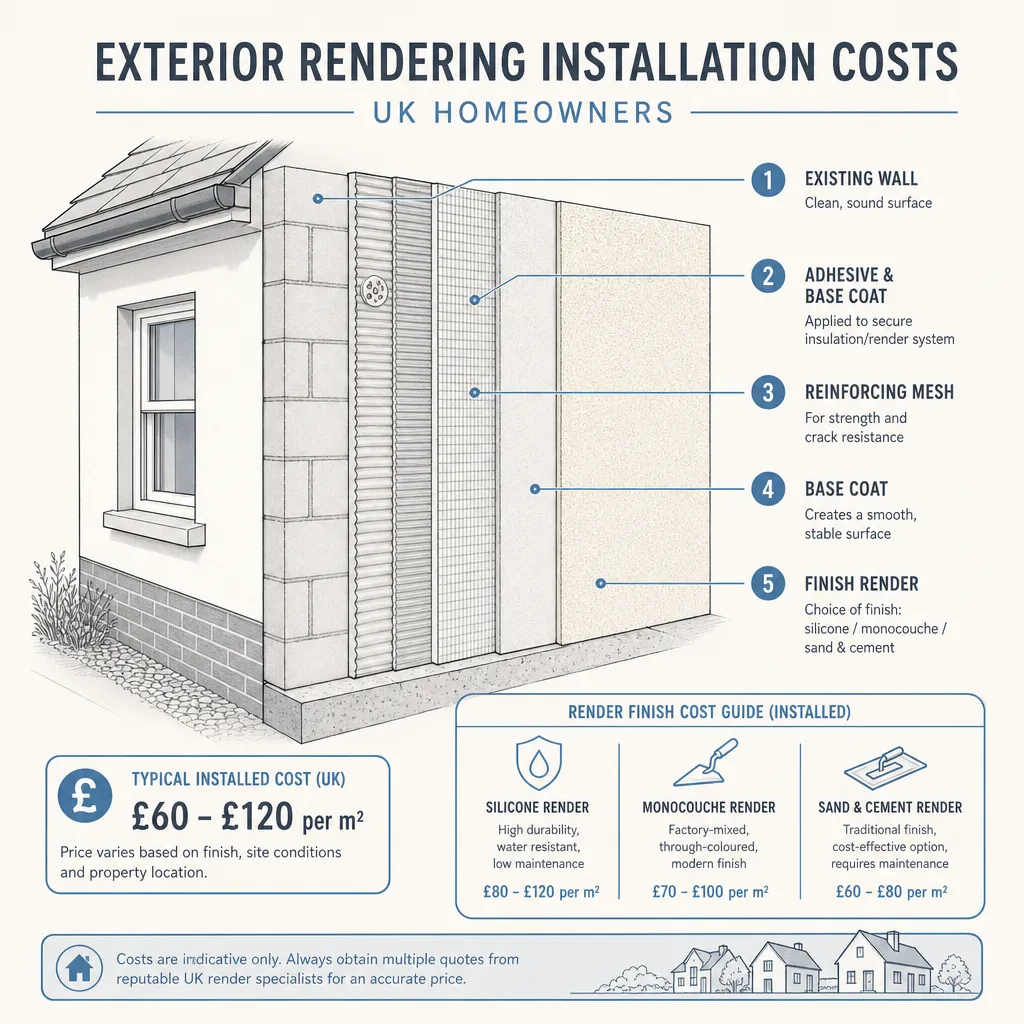
Exterior Rendering Installation Costs
Exterior rendering in the UK typically costs £20–£60 per square metre for standard render systems, or £80–£150 per square metre for External Wall Insulation with a render finish.
 Improvement & Build
Designing an outdoor kitchen for entertaining and garden living
An outdoor kitchen in a UK garden needs a stable, level base — typically a concrete slab or quality paving — with weather-rated materials such as stainless steel grade 316 or frost-rated porcelain.
 Improvement & Build
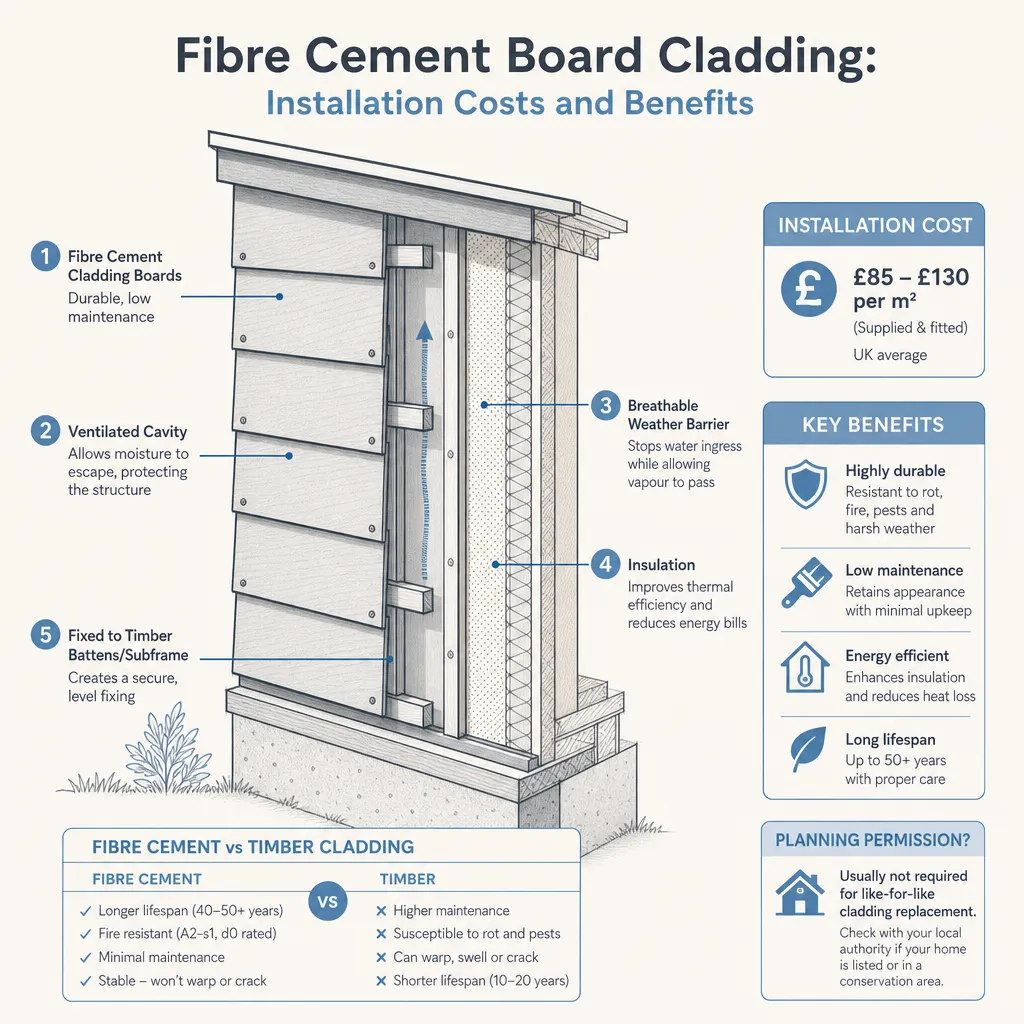
Fibre Cement Board Cladding: Installation Costs and Benefits
Fibre cement board cladding typically costs £80–£180 per m² installed in the UK, including boards, battens, breather membrane, and labour.
 Improvement & Build
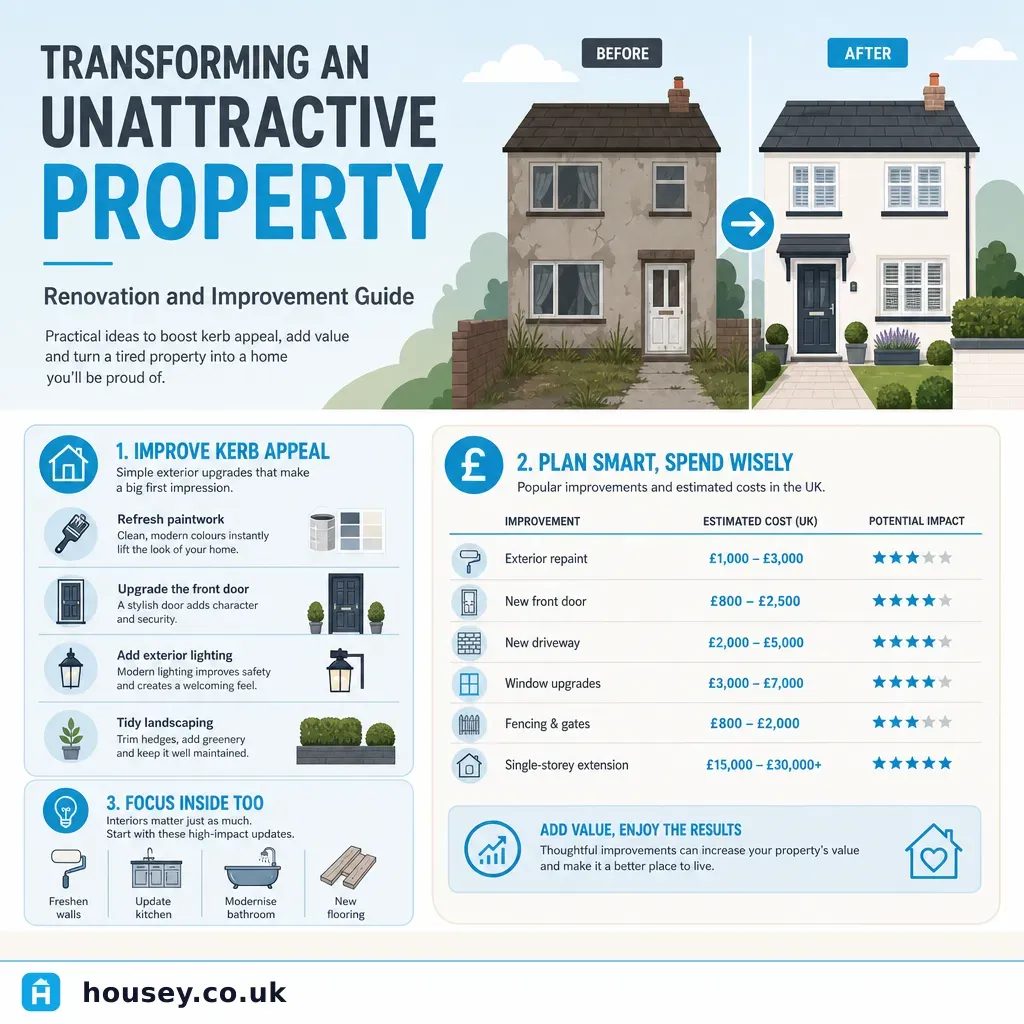
Transforming an Unattractive Property: Renovation and Improvement Guide
Transforming an unattractive UK property usually starts with surface-level improvements — render, windows, doors, and front landscaping — before tackling structural changes like extensions.
 Improvement & Build
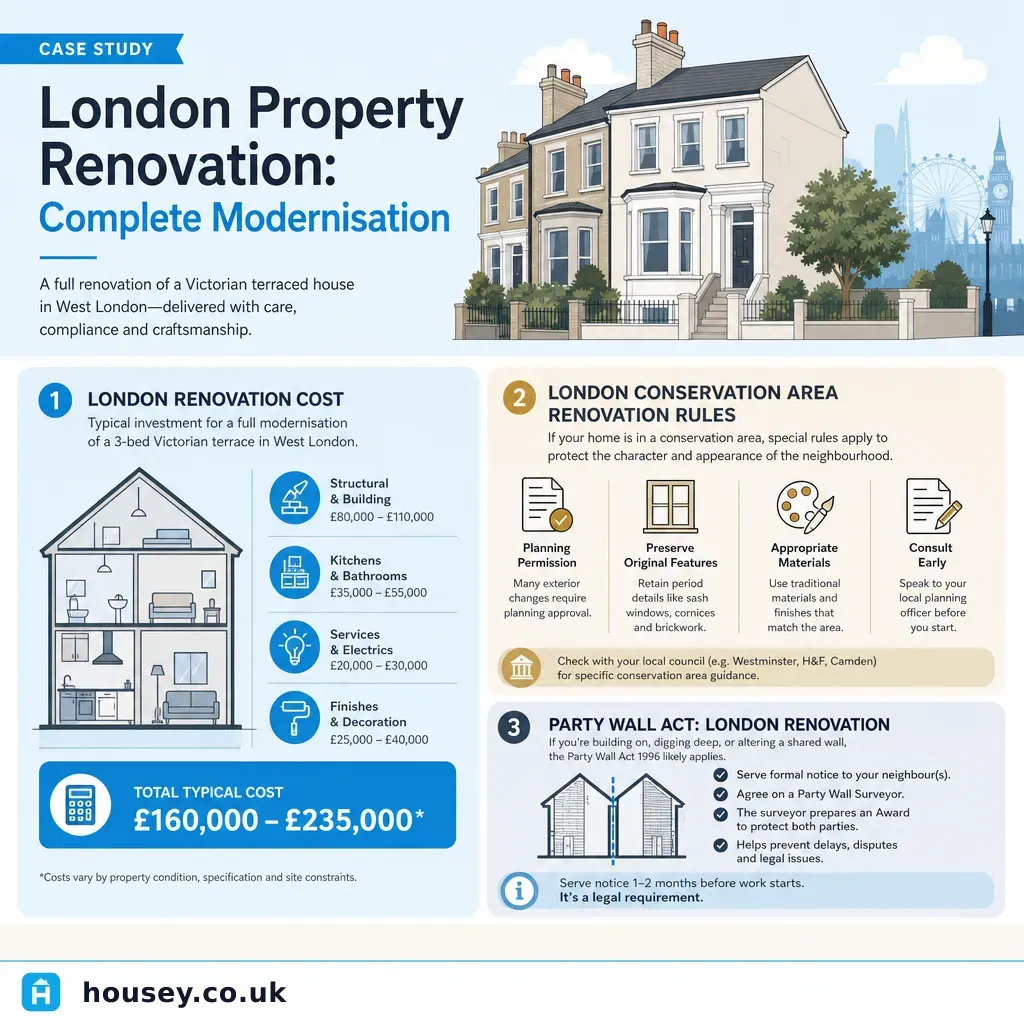
London Property Renovation: Complete Modernisation Case Study
Modernising a London property means navigating conservation area restrictions, party wall obligations, and Building Regulations alongside the build work itself.