Bespoke Interior Staircase Installation Costs
By Housey · Last reviewed 10th of May 2026
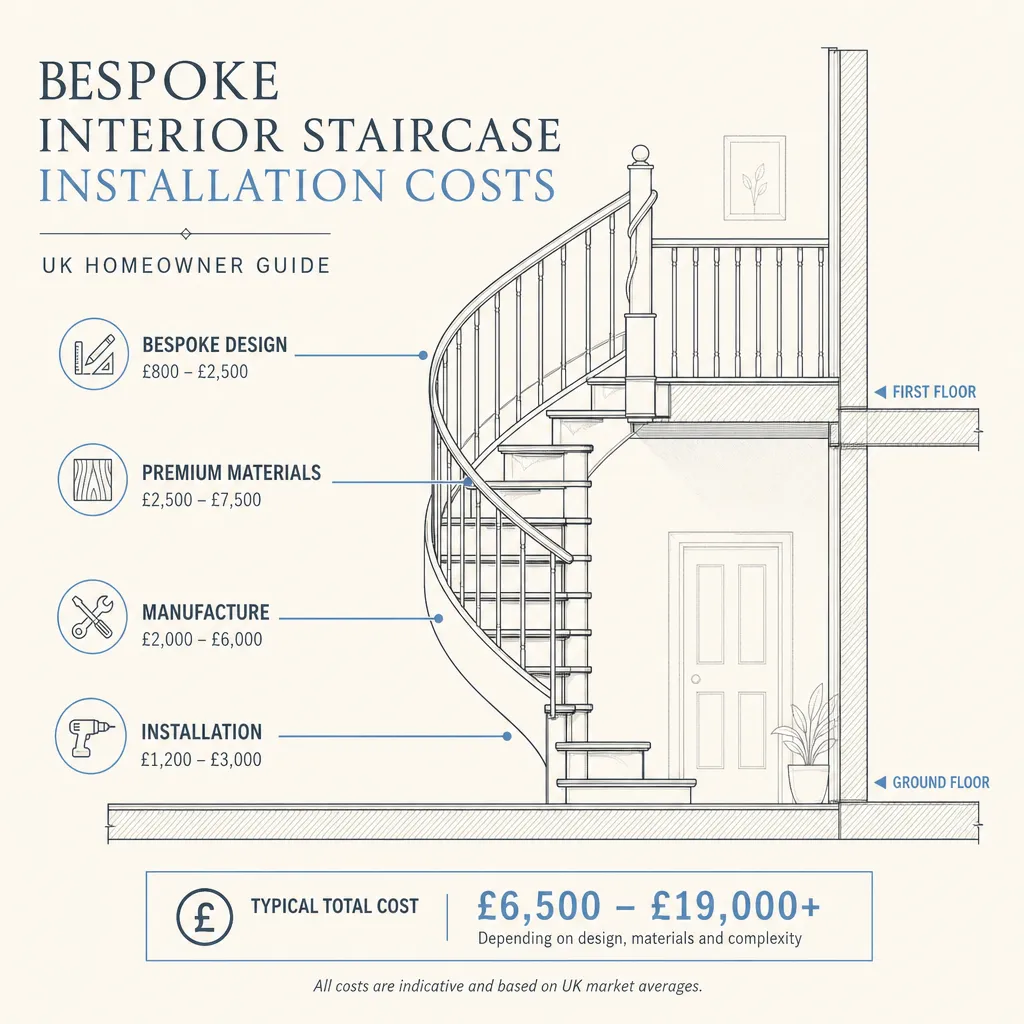
Bespoke Interior Staircase Installation Costs
When a staircase occupies the centre of a home — visible from the front door, the landing, or a double-height living space — it can become the focal point of an interior scheme rather than simply a means of moving between floors. Homeowners commissioning new builds, loft conversions, or significant renovations increasingly choose bespoke or designer staircases as a statement feature. Understanding what drives the cost helps you plan realistically before approaching manufacturers or specialist joiners.
Key points
- All new staircases and staircase replacements in England and Wales must comply with Building Regulations Approved Document K (protection from falling, collision and impact), covering rise, going, headroom, balustrade height, and baluster spacing.
- Spiral staircases are often the most space-efficient option for tight floor plans, but minimum diameter and tread-depth requirements under Approved Document K affect whether they can serve as the sole means of escape from a habitable room.
- Bespoke staircases are typically quoted as a supply-and-fit package covering design, manufacture, delivery, and installation — structural alterations, decoration, and building control fees are usually additional.
- Floor-to-floor height — often called the total rise — is the primary structural parameter: it determines the number of treads, the staircase pitch, and the overall footprint required in the floor plan.
- Building control sign-off is required for all new staircase installations; confirm whether your contractor includes the application in their scope or whether this is your responsibility as client.
What counts as a bespoke staircase?
A bespoke staircase is designed and manufactured specifically for your property — not a catalogue design adapted to fit a standard opening. Bespoke work typically covers:
- Spiral staircases in timber, steel, or glass: custom diameter, tread depth, and finish.
- Feature open-riser or floating-tread staircases: timber or stone treads cantilevered from a structural spine wall or steel stringer.
- Curved or helical staircases: complex geometry requiring specialist joinery or fabrication — often a centrepiece in double-height hall spaces.
- Mixed-material designs: for example, solid oak treads on a steel frame with a frameless glass balustrade.
Off-the-shelf staircase kits, available from timber merchants and builders' merchants, can be adapted to many openings but offer limited design flexibility.
Indicative installation costs
The table below gives broad indicative cost ranges for installed bespoke staircases in the UK. All figures cover supply and fitting but typically exclude structural alterations, decoration, and building control fees.
Indicative UK costs, last reviewed 2026-05-10. Prices vary significantly by design complexity, materials, manufacturer, and region. Obtain at least three quotes.
Staircase type | Typical specification | Indicative installed cost |
|---|---|---|
Simple bespoke timber staircase | Softwood or oak, straight or quarter-turn, custom sizing | £3,000–£7,000 |
Mid-range spiral staircase | Steel or timber spiral, standard finishes, 2.7 m floor-to-floor | £4,000–£10,000 |
Designer open-riser timber | Oak floating treads, steel stringer, glazed balustrade | £8,000–£18,000 |
Helical or curved staircase | Curved stringer, continuous handrail, specialist joinery | £15,000–£40,000+ |
Feature glass and steel | Frameless glass balustrade, brushed steel frame, stone or glass treads | £20,000–£50,000+ |
What drives the cost?
Materials. Solid oak costs considerably more than softwood. Stainless steel or structural glass balustrade panels add substantially to fabrication costs. Stone treads require additional structural support and are among the most expensive options.
Design complexity. A straight-run staircase costs less to manufacture than a quarter-turn (L-shaped), half-turn (U-shaped), or helical design. Curved geometry requires bespoke jigs and templates, and often specialist metalwork or handcraft joinery.
Manufacturer versus local joiner. Specialist staircase manufacturers — some operating nationally, others regionally — offer CAD-designed, factory-made staircases with precise tolerances. A skilled local joiner can produce excellent bespoke work, sometimes at lower cost, but may have less experience with highly complex designs.
Structural alterations. If the stair opening needs enlarging, a trimmer joist or steel beam may be required — this is structural work needing its own sign-off and adds to the overall project cost.
Access and removal. Getting a large fabricated staircase into an existing property, particularly a narrow Victorian terrace hall, requires careful planning. Some spiral designs are assembled in sections on site.
Which staircase type suits your project?
- Choose a bespoke timber staircase (straight or quarter-turn) if you want a substantial upgrade from a builder-grade stair, have a standard rectangular opening, and are working within a moderate budget.
- Choose a spiral staircase if floor space is limited — for example, a secondary stair to a loft room or mezzanine — and confirm with your designer that the design meets Building Regulations for its intended use and any fire escape requirements.
- Choose an open-riser floating-tread design if the staircase will be a visible feature in an open-plan space and the structure can accommodate cantilevering or a steel spine.
- Choose a helical or curved staircase if you have a large double-height hall, want an architectural focal point, and have both the budget (typically £15,000+) and lead time (often 12–20 weeks) the design requires.
- Ask a structural engineer before opening up any floor structure or enlarging a stair opening.
- Check Approved Document K — or ask your contractor to confirm — before finalising tread dimensions, rise, pitch, and balustrade design.
Worked example: loft conversion in a 1930s semi
A homeowner in the East Midlands converting their loft into a bedroom with en suite needed a new staircase to the second floor. The existing landing was narrow and the stair opening was small.
Options considered:
- A compact spiral staircase in painted steel — quoted at approximately £5,500 installed, but queried by the building control officer as the sole escape route from a habitable bedroom (Approved Document B, fire safety).
- A straight-run bespoke oak staircase with a dogleg landing — quoted at approximately £9,500 including minor structural work, but requiring layout changes to the existing landing.
- A space-saver staircase with alternating treads — quoted at approximately £4,200 installed, accepted by the building control officer as meeting requirements for secondary access to the loft.
The space-saver staircase was the practical choice for the constrained space and budget. Building control sign-off was achieved after a minor adjustment to handrail height. The homeowner directed the saving towards better-quality flooring in the new loft room.
What to ask before accepting a quote
- Does the quote cover manufacture, delivery, and installation, or supply only?
- Who handles the building control application and inspection — and is that fee included?
- What structural alterations are assumed, and what is excluded?
- What is the lead time from deposit payment to installation?
- What specification of timber grade, steel grade, or glass thickness is included?
- What finishing work is included — priming, painting, staining, or oiling?
- Is VAT included in the quoted price?
- What happens if site measurements differ from the dimensions taken at survey?
When to get professional help
A bespoke staircase installation always requires a specialist joiner or fabricator and building control sign-off. Additional professional input is needed in the following situations:
- If structural alterations to the floor or surrounding walls are required, engage a structural engineer before finalising the design.
- If the staircase will serve as the sole means of escape from a bedroom or habitable room, confirm compliance with Approved Document B (fire safety) as well as Approved Document K.
- If the property is listed or in a conservation area, the design and materials may be subject to consent from your local planning authority.
How Housey can help
Housey connects homeowners with vetted tradespeople for improvement and build projects. If you are planning a bespoke staircase installation — whether as part of a loft conversion, extension, or whole-home renovation — describe your project on Housey and receive quotes from qualified joiners and staircase specialists in your area.
Frequently asked questions
Do I need building regulations approval for a new staircase?
Yes. Replacing an existing staircase or installing a new one always requires Building Regulations approval in England and Wales. The work is covered by Approved Document K (protection from falling, collision and impact) and potentially Approved Document B (fire safety). Your contractor should either handle the building control application or clearly state in writing whose responsibility it is.
How long does a bespoke staircase take from order to installation?
Lead times vary considerably. A simpler bespoke timber staircase from a local joiner may be ready in 4–8 weeks. Specialist manufacturers producing helical or high-complexity designs often quote 12–20 weeks from sign-off to delivery. Factor in site preparation and any structural work that must be completed before the staircase can be installed.
Can a spiral staircase be used as the main staircase?
Under Approved Document K, a spiral staircase can serve as the principal staircase to a habitable room if minimum dimensions for rise, going, and diameter are met. However, a spiral staircase is often not accepted as the sole means of escape from a bedroom under Approved Document B. Always confirm the intended use with your building control officer before ordering.
Does a bespoke staircase add value to my home?
A well-designed feature staircase in a prominent location can enhance the appeal and perceived quality of a property, particularly in the mid-to-upper market. However, value uplift depends on installation quality, property type, location, and buyer preferences. There is no guarantee of a specific percentage increase, and the primary driver for most homeowners is the improvement to their own living experience.
Sources and further reading
- Approved Document K: Protection from Falling, Collision and Impact — GOV.UK
- Approved Document B: Fire Safety — GOV.UK
- Building Regulations overview — Planning Portal
Useful next reads
 Improvement & Build
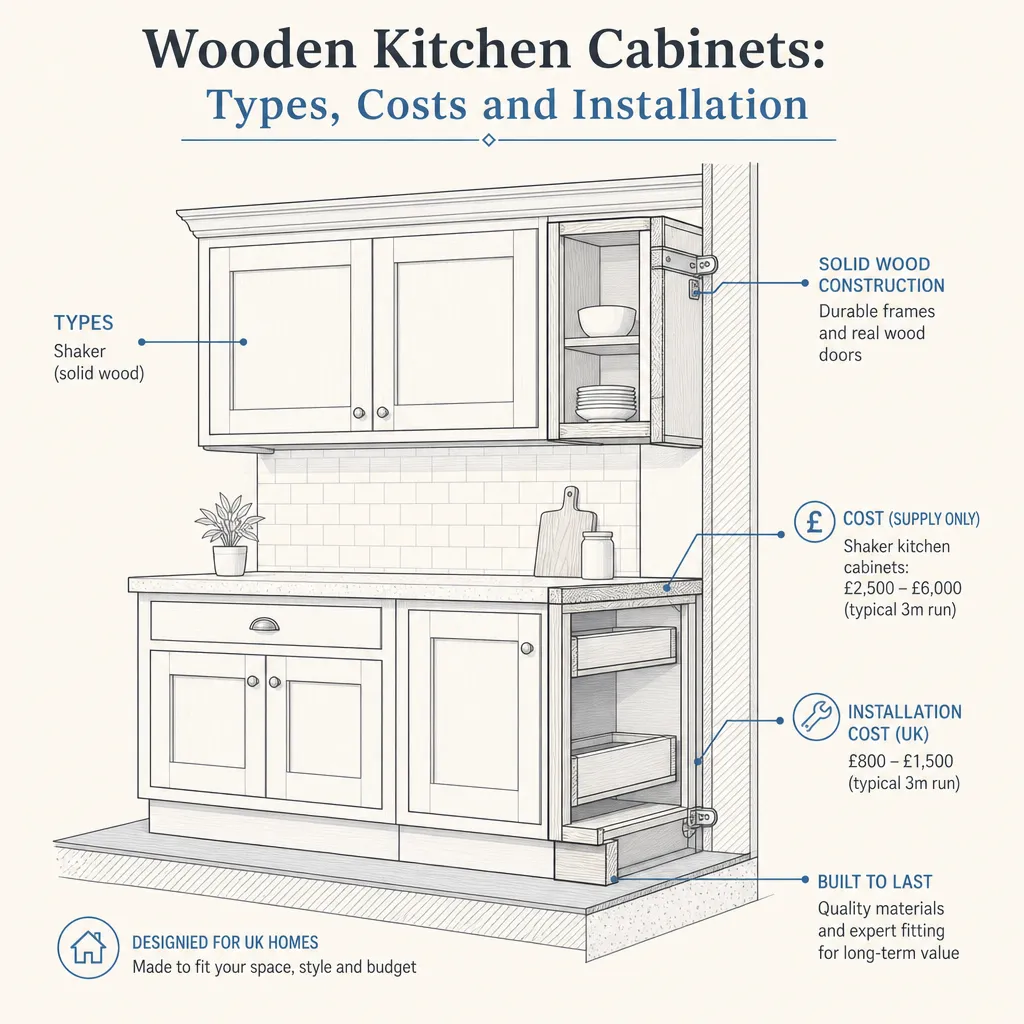
Wooden kitchen cabinets: types, costs and installation
Wooden kitchen cabinets in the UK range from around £4,000–£12,000 installed for mid-range painted shaker units to £10,000–£25,000 or more for solid hardwood kitchens.
 Improvement & Build
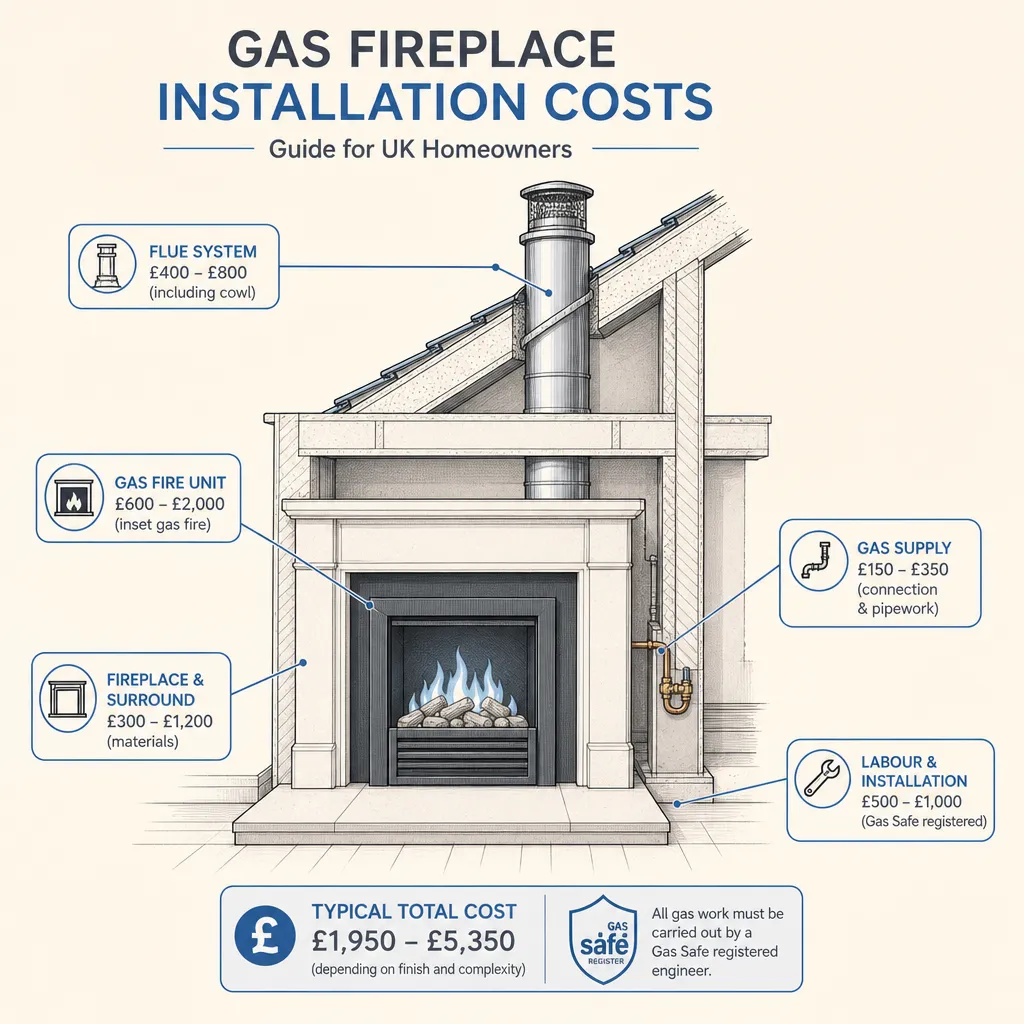
Gas Fireplace Installation Costs
Gas fireplace installation in the UK typically costs between £600 and £3,500 or more, depending on appliance type, flue requirements, and the complexity of the work.
 Improvement & Build
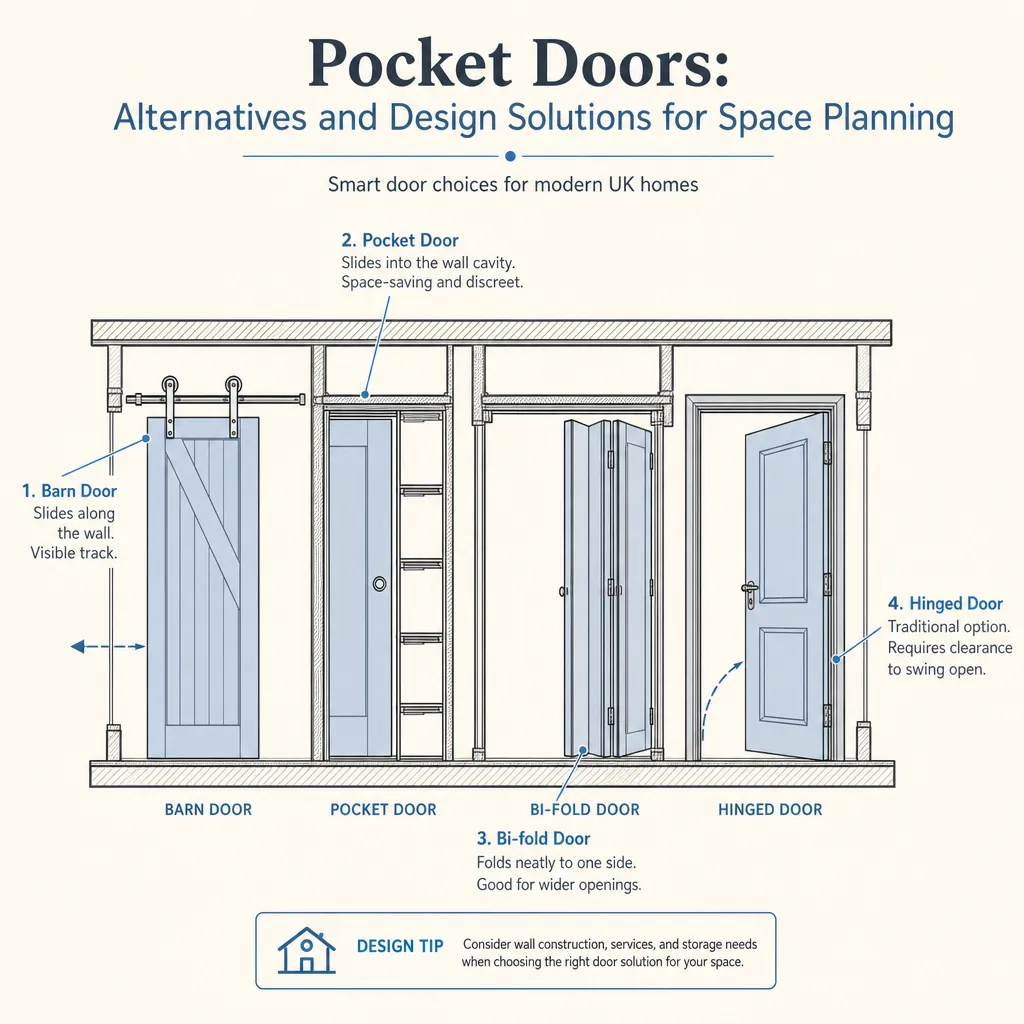
Pocket Doors: Alternatives and Design Solutions for Space Planning
Pocket doors slide into a wall cavity and free floor space where a hinged door would swing, but require a clear, service-free wall section to work.
 Improvement & Build
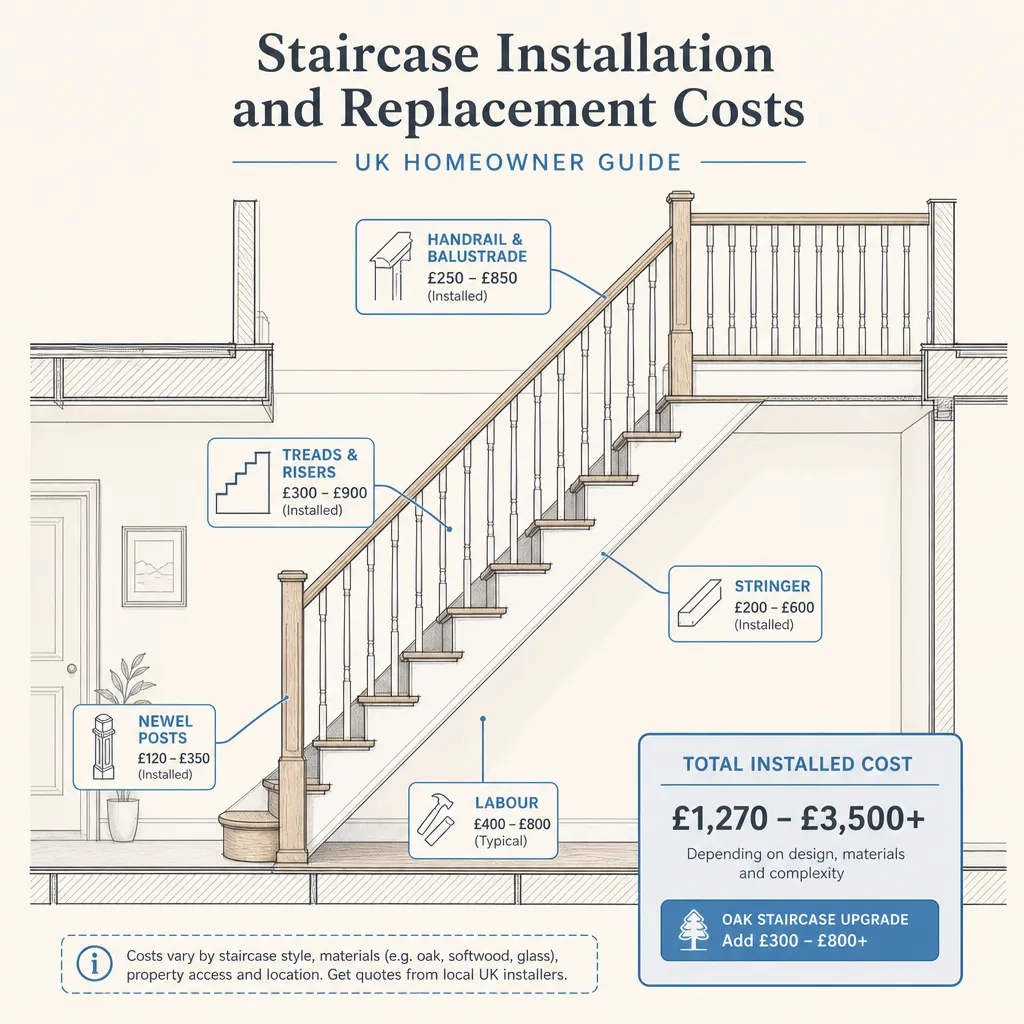
Staircase Installation and Replacement Costs
A straight-flight staircase replacement in the UK typically costs £1,500–£4,500 supply and fit.
 Improvement & Build
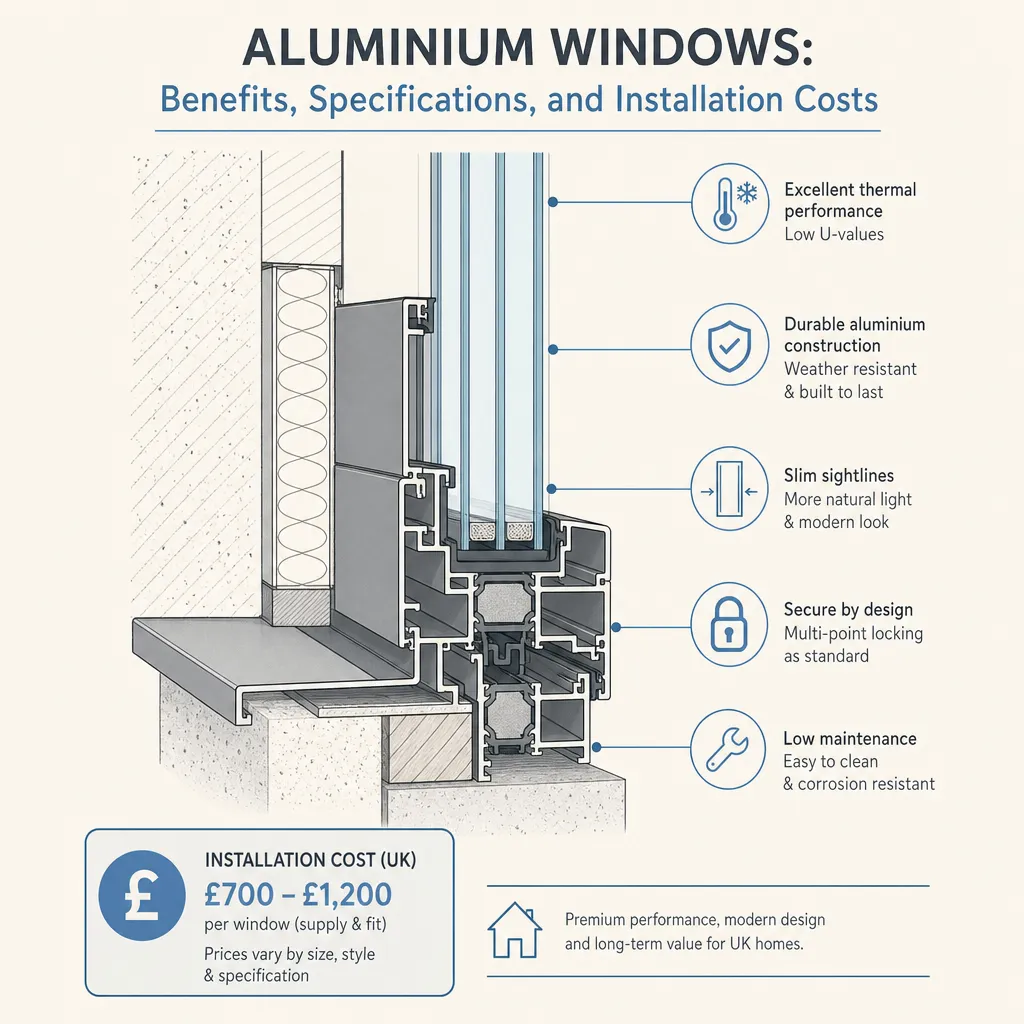
Aluminium Windows: Benefits, Specifications, and Installation Costs
Aluminium windows typically cost £600–£1,800 per window installed in the UK, depending on size and specification.